-
-

Corvex - Cardiovascular Risk Visualization & Prediction
-
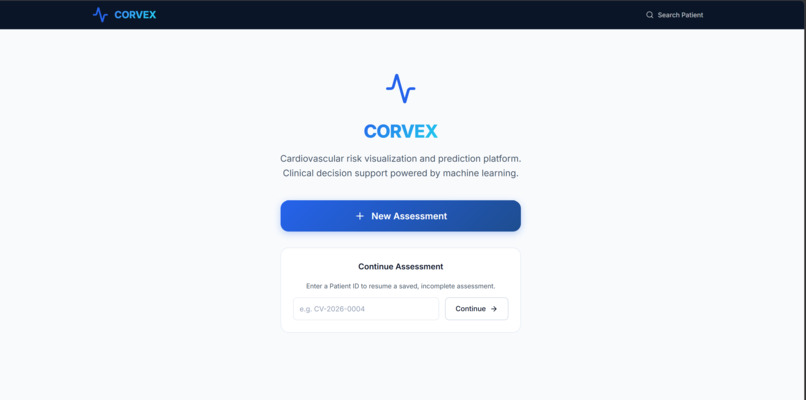
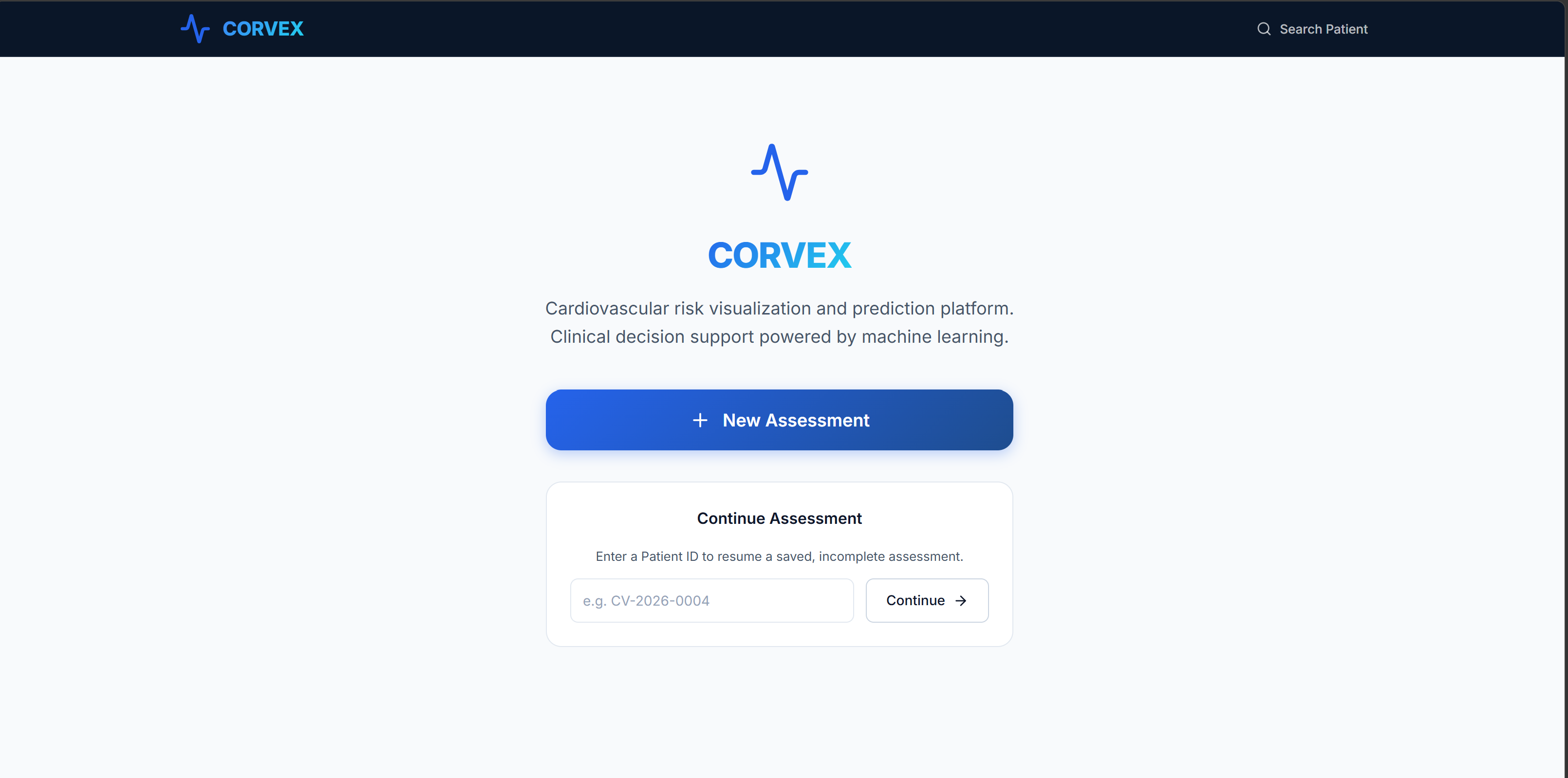
Home page
-
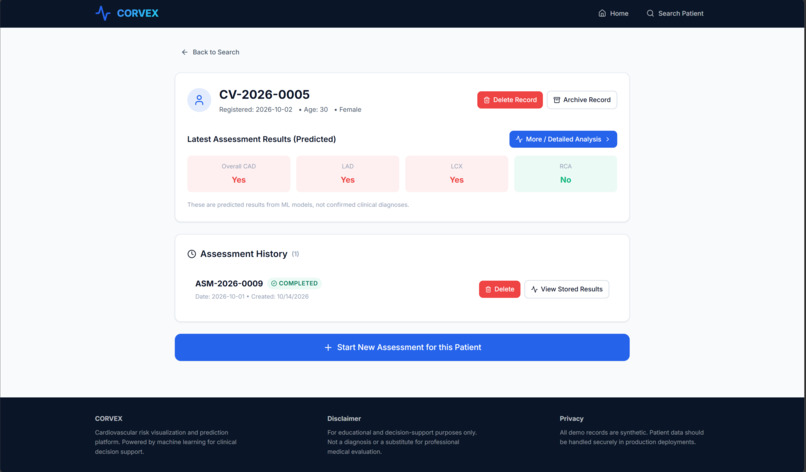
Patient data saved
-
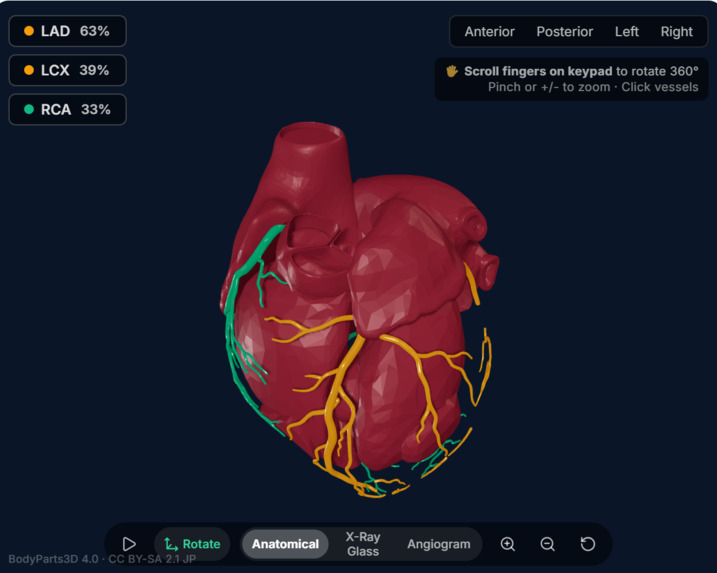
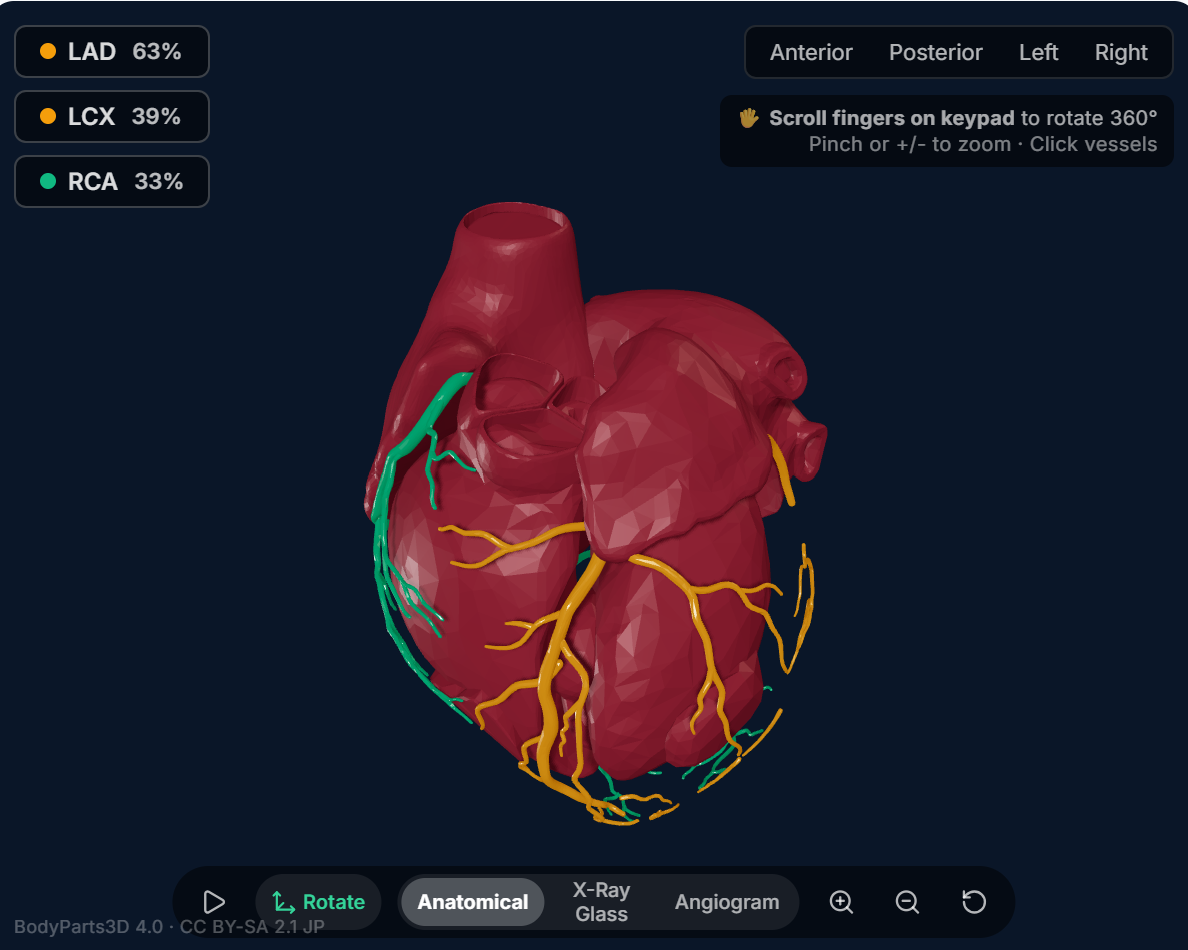
Interactive 3D Coronary Visualization
-
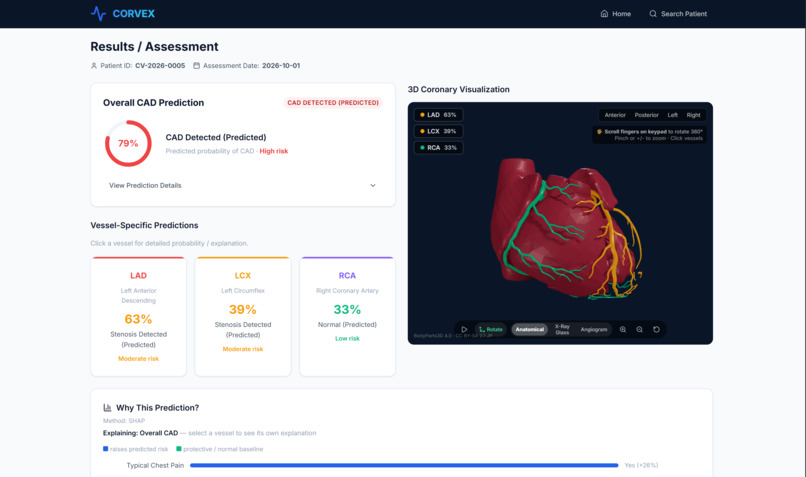
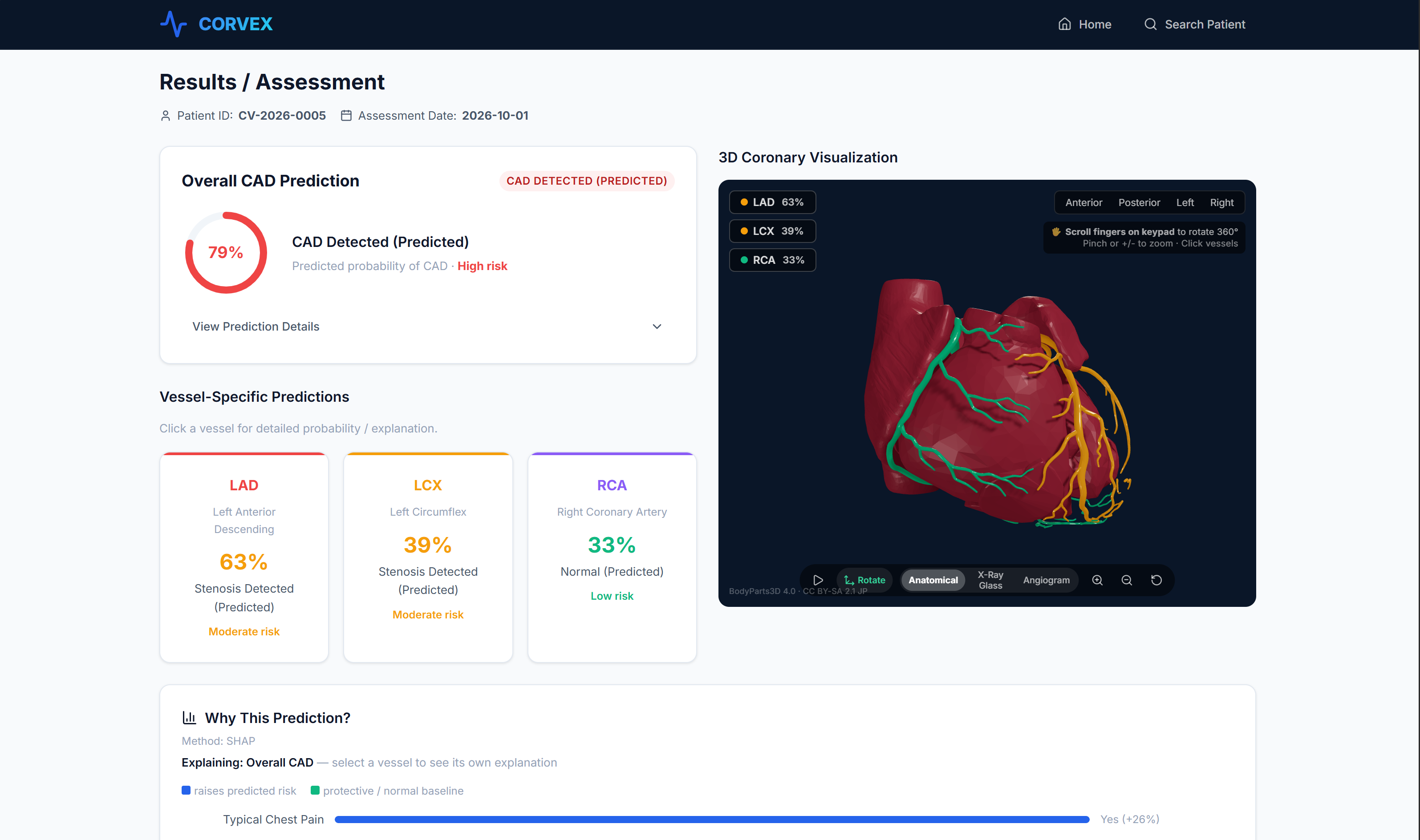
Corvex Prediction Dashboard
-
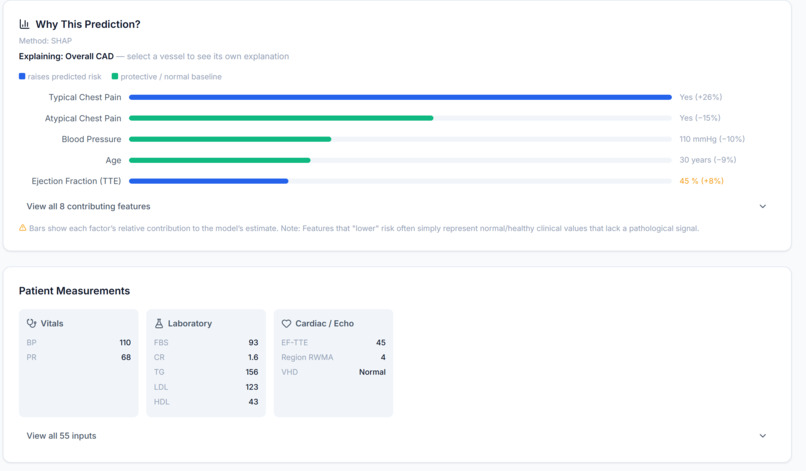
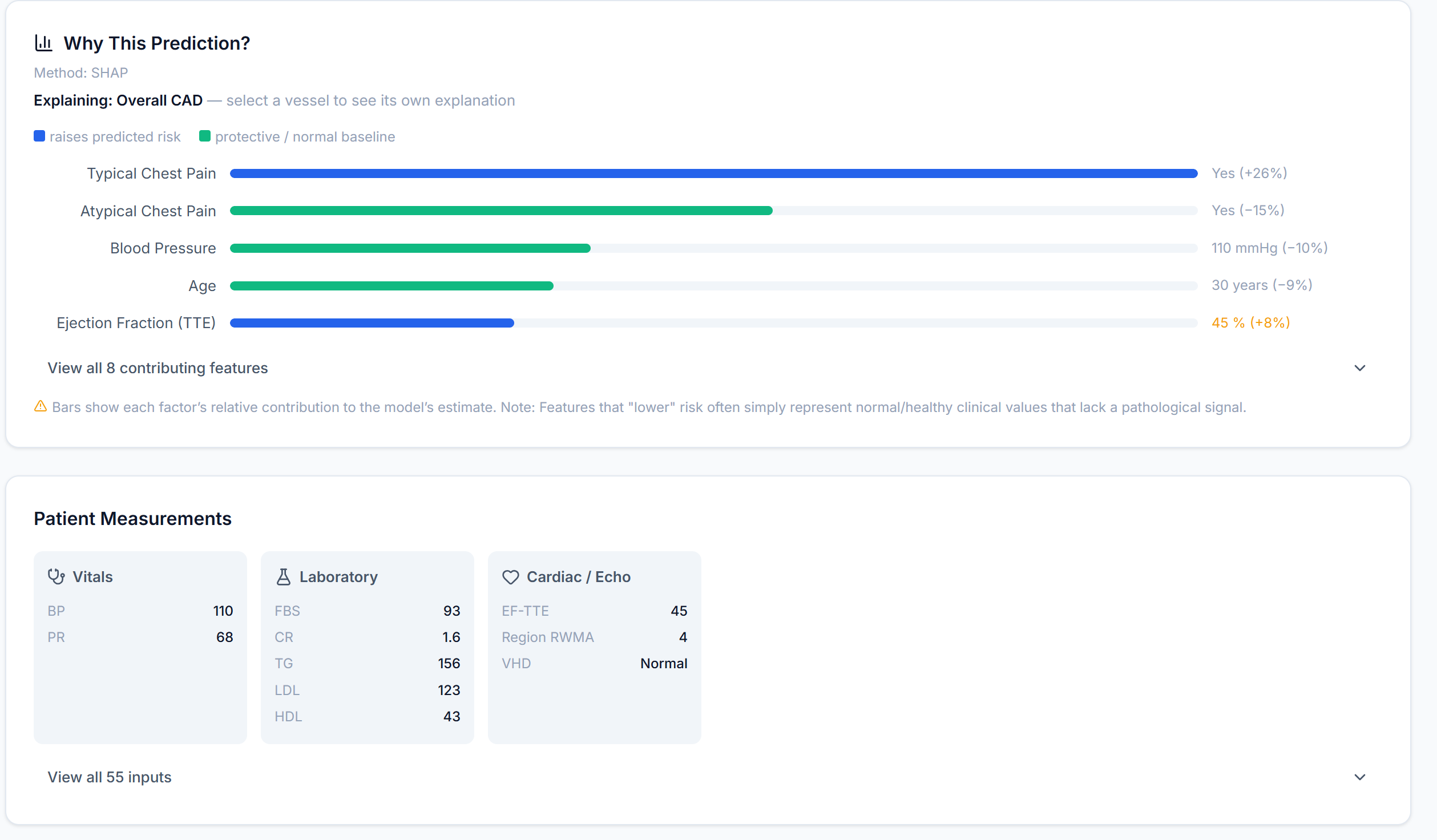
Explainable AI and Patient Measurements — SHAP-based feature contribution visualizations alongside key patient measurements
-
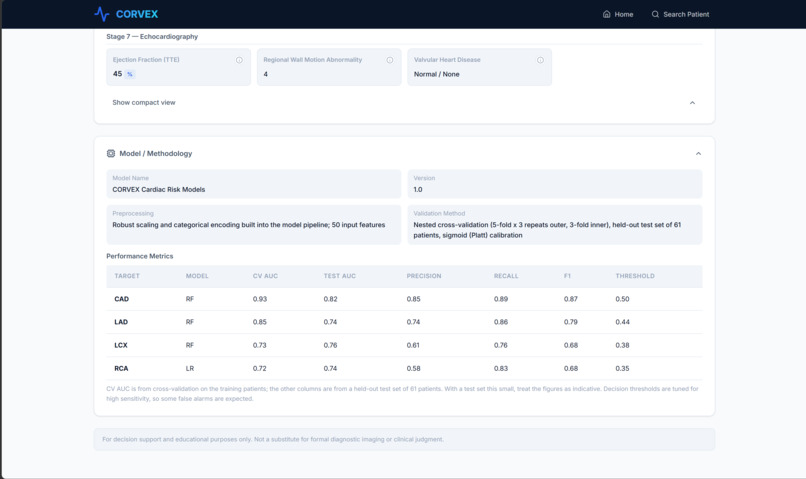
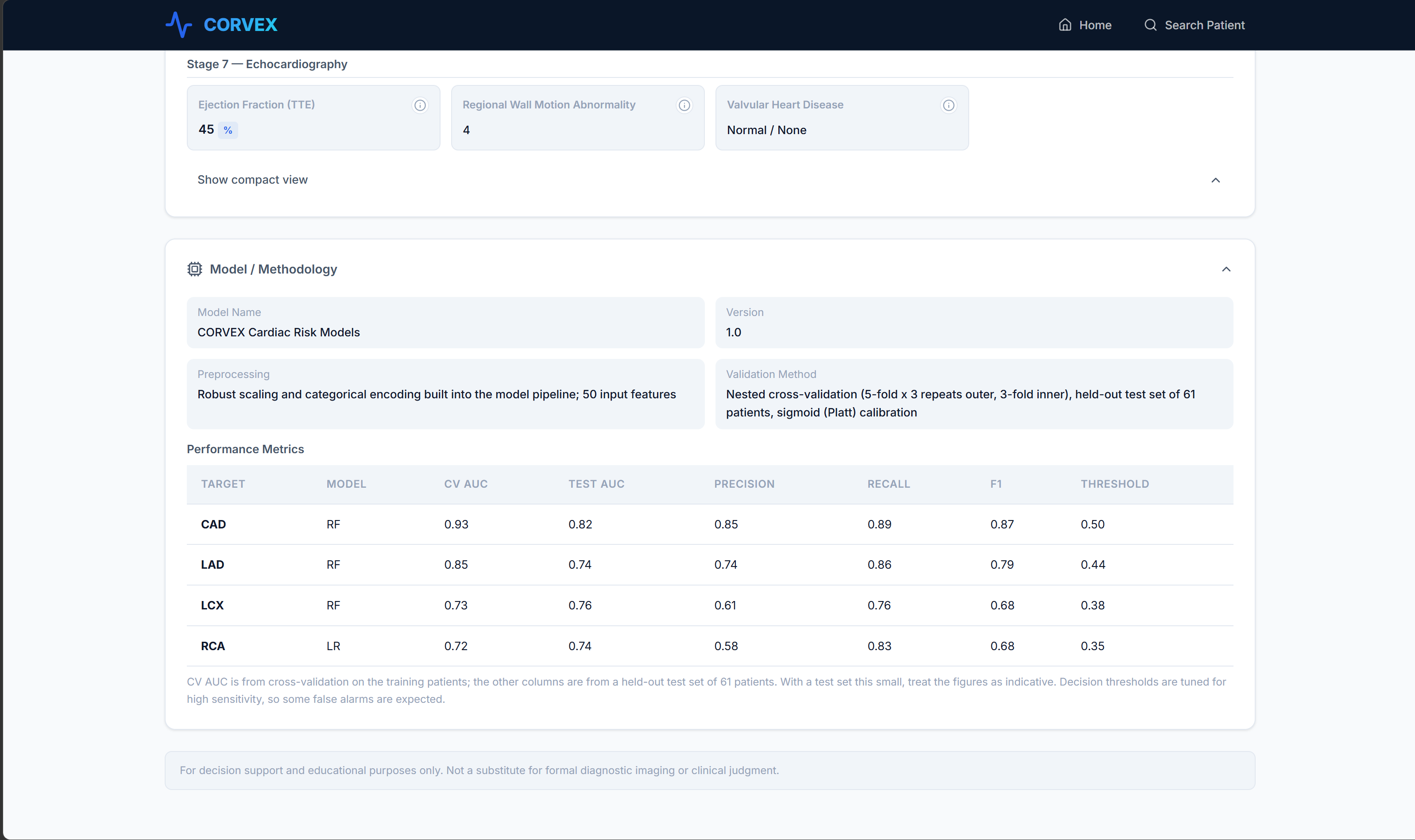
Model Performance and Evaluation
-
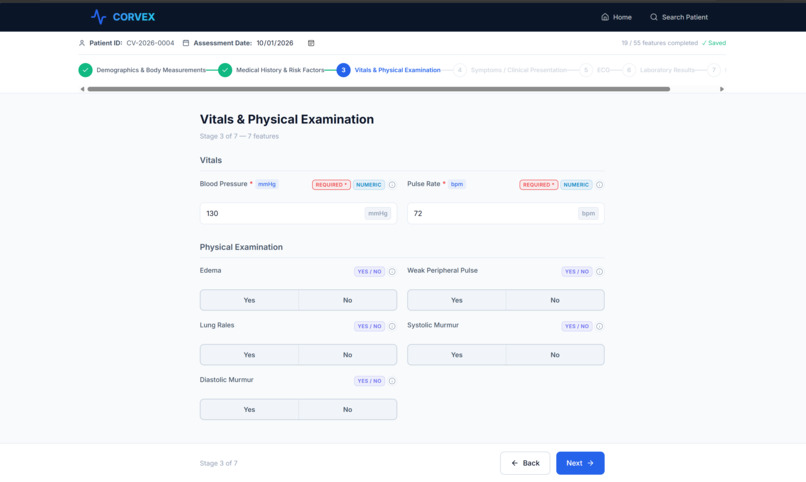
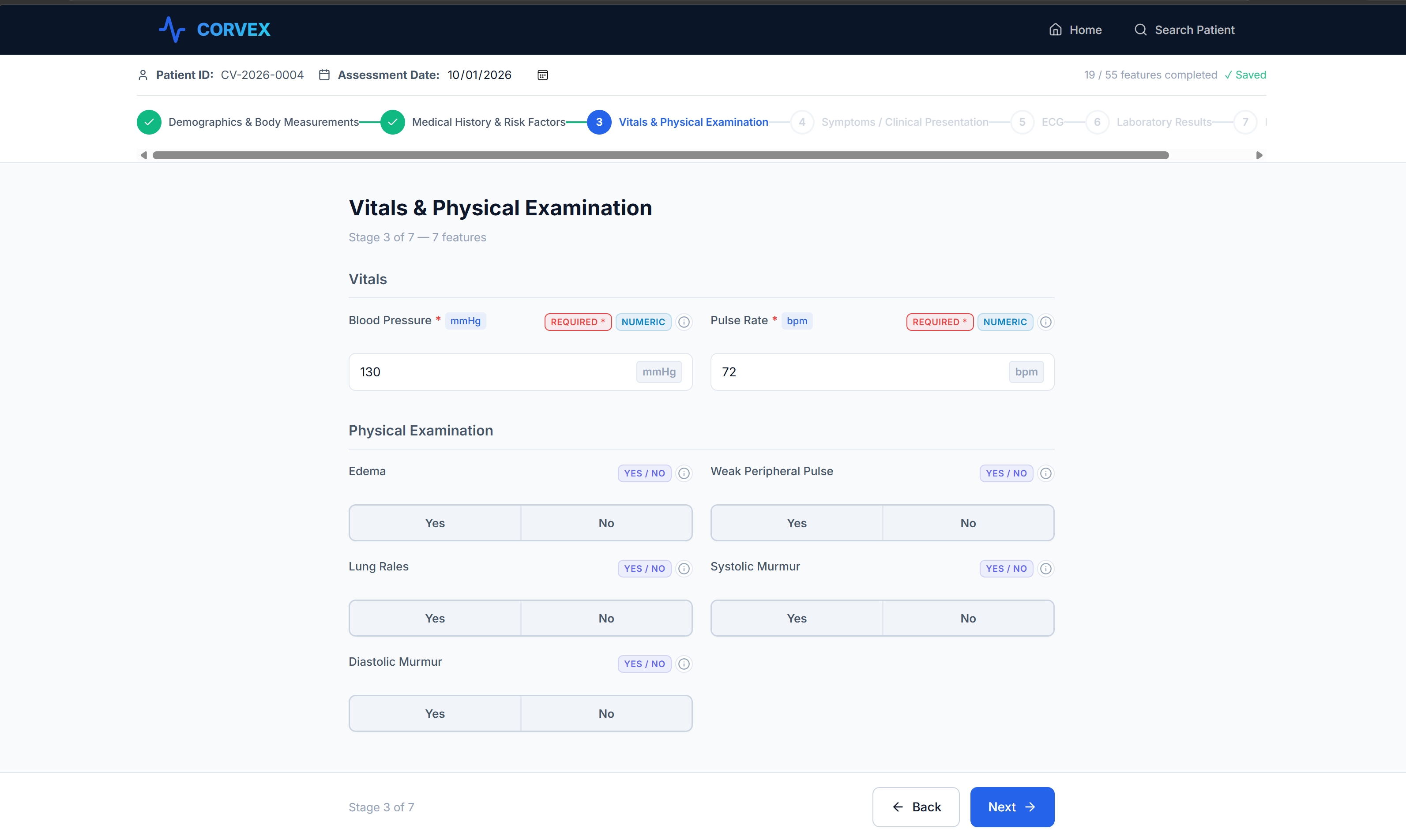
Seven-Stage Patient Assessment

Inspiration
We started working on Corvex because we wanted to explore how machine learning could help with cardiovascular risk assessment. We realised that getting a prediction from a model is only one part of the problem. Understanding the result and presenting it in a useful way are equally important.
This motivated us to build Corvex — Cardiovascular Risk Visualization & Prediction, combining machine learning, patient data and 3D visualization in one application.
What it does
Corvex is a cardiovascular risk prediction and visualization platform that takes patient information through a structured seven-stage assessment. It predicts coronary artery disease (CAD) and provides predictions for stenosis in three major coronary arteries: LAD, LCX and RCA.
The results dashboard displays the predictions and their associated probabilities. The platform also includes a 3D coronary visualization that allows users to explore the results visually. Our goal is to make the model outputs easier to understand rather than simply displaying a set of numbers.
How we built it
We developed Corvex by working on the frontend, machine learning pipeline and 3D visualization.
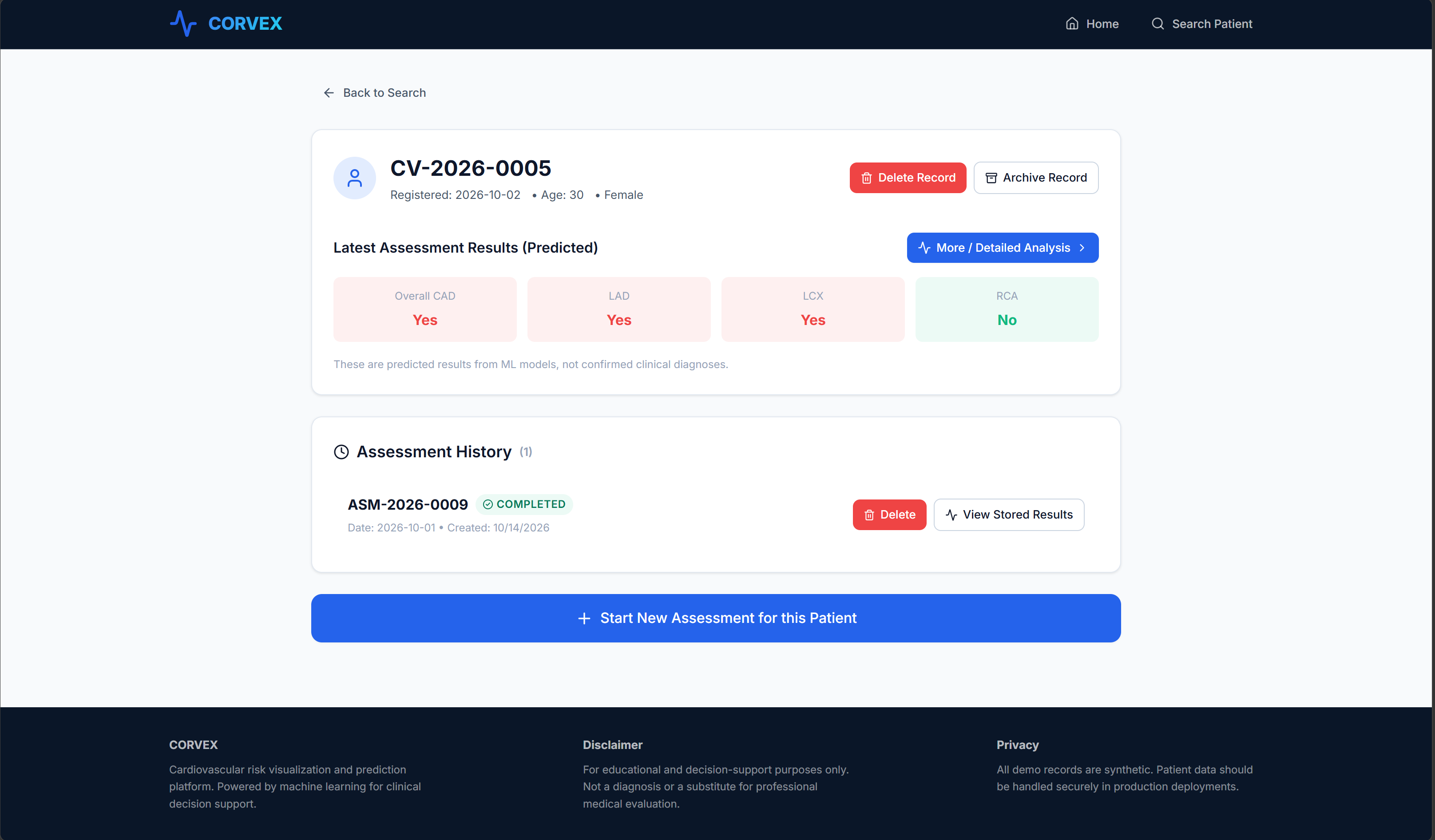
For the frontend, we organised patient data entry into seven stages instead of putting all the information into one long form. We designed the results dashboard to display the overall CAD prediction alongside predictions for individual coronary arteries.
For the machine learning component, we worked with the dataset, preprocessing requirements and prediction pipelines. We also worked on connecting the model outputs to the interface and presenting them through the visualization. Making sure that the values entered through the form matched the features expected by the models was an important part of the process.
Challenges we ran into
One of our main challenges was integrating the different parts of the project. The frontend, machine learning pipeline and 3D visualization each had their own requirements, and making them work together consistently required careful testing.
Another challenge was handling the dataset's feature values. Some features used numerical codes, while the interface needed labels that made sense to users. We had to ensure that these values were mapped correctly before being passed to the models.
We also had to think about how to present medical information without making the interface confusing. Organising the assessment and displaying the predictions clearly required as much attention as the technical implementation.
Accomplishments that we're proud of
We are proud of bringing several components together into one application rather than building only a standalone machine learning model. Corvex combines a structured patient assessment, predictions for CAD and individual coronary arteries, and a 3D visualization.
We are also happy with how the assessment is divided into stages, making the data entry process more organised. The separate LAD, LCX and RCA predictions provide more detailed outputs than a single overall CAD prediction.
Most importantly, this project gave us practical experience in connecting machine learning with web development and working through the challenges involved in building a complete application.
What we learned
Working on Corvex taught us that building an ML-based application involves much more than training a model. Data preprocessing, feature mapping, frontend development, model integration and visualization all need to work together.
We also learned that presenting technical results clearly is a challenge of its own. A model may generate predictions, but designing an interface that helps users explore those predictions requires a different kind of thinking. The project helped us understand both the technical and practical sides of building an ML-based application.
What's next for Corvex
We would like to improve Corvex by making its prediction explanations more informative, helping users better understand which patient features contribute to a model's output. We also want to refine the 3D visualization and make the assessment workflow smoother.
Another area for future development is extracting relevant information from uploaded medical records and pre-filling the assessment for users to review. We would also like to evaluate the models more extensively before considering any real-world clinical use.
Corvex is intended as a cardiovascular risk prediction and visualization project. It is designed to support understanding of model outputs, not to replace professional medical diagnosis or clinical judgment.


Log in or sign up for Devpost to join the conversation.