-
-
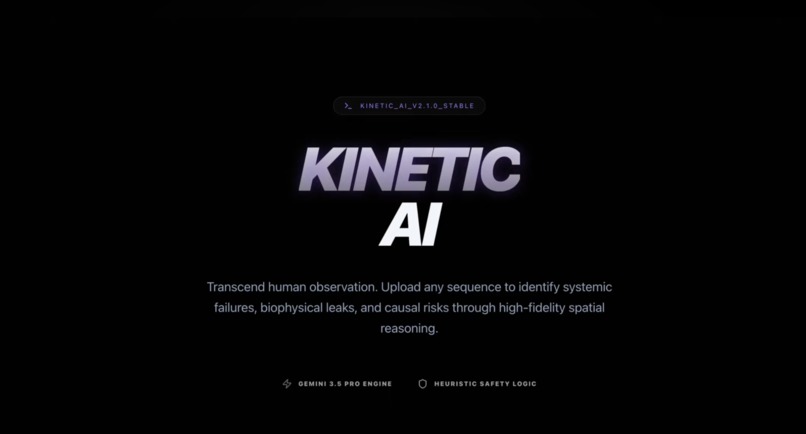
main
-
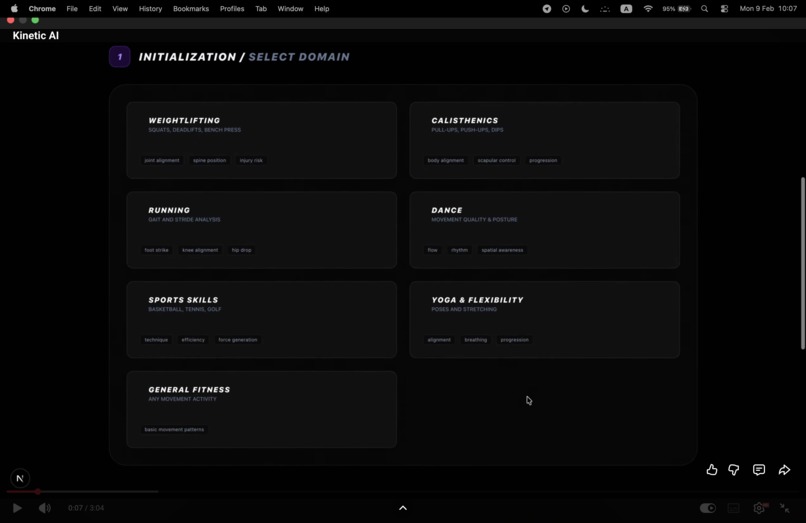
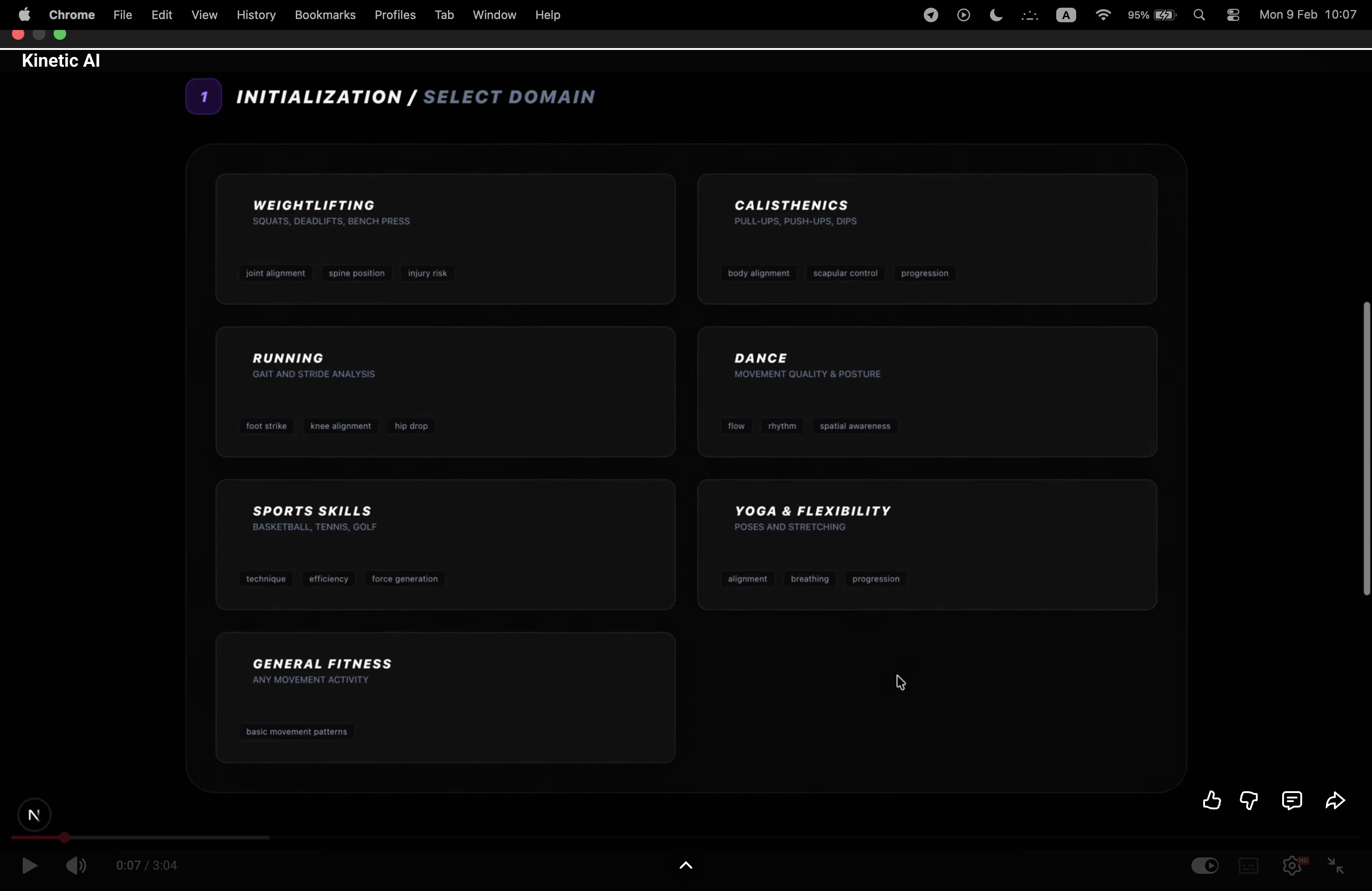
choosing category
-
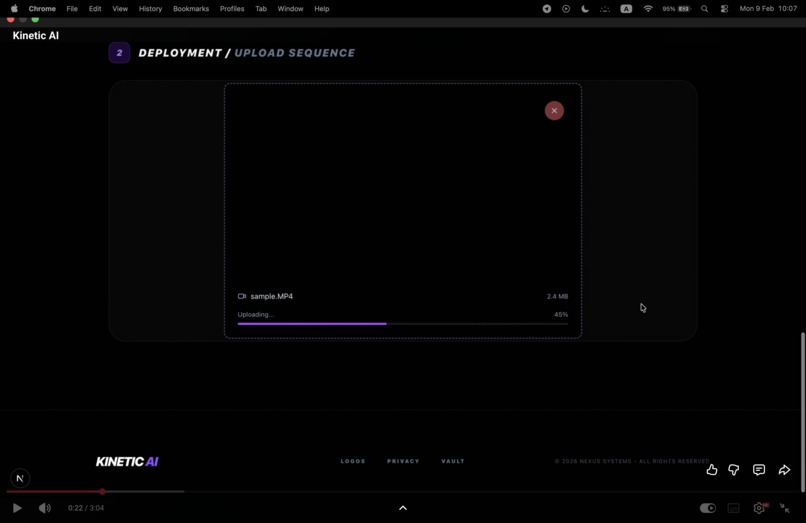
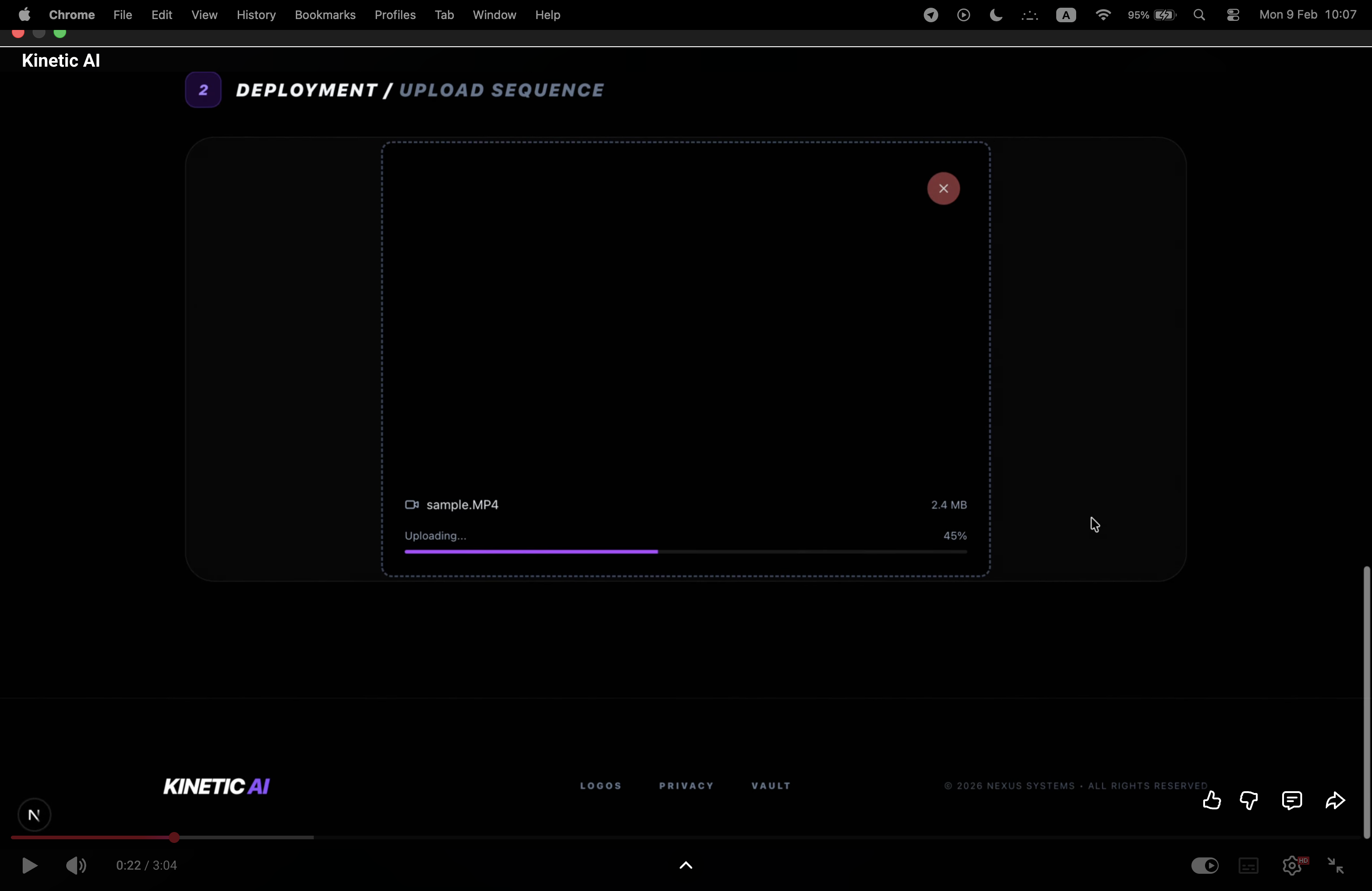
video upload
-
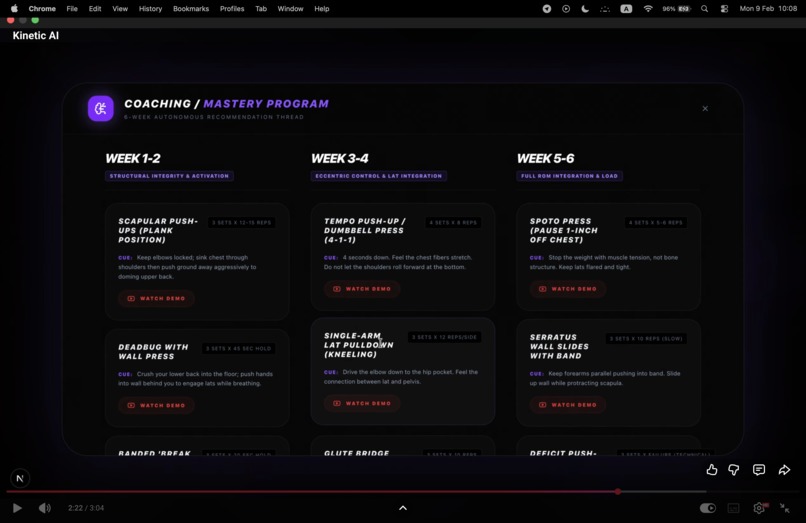
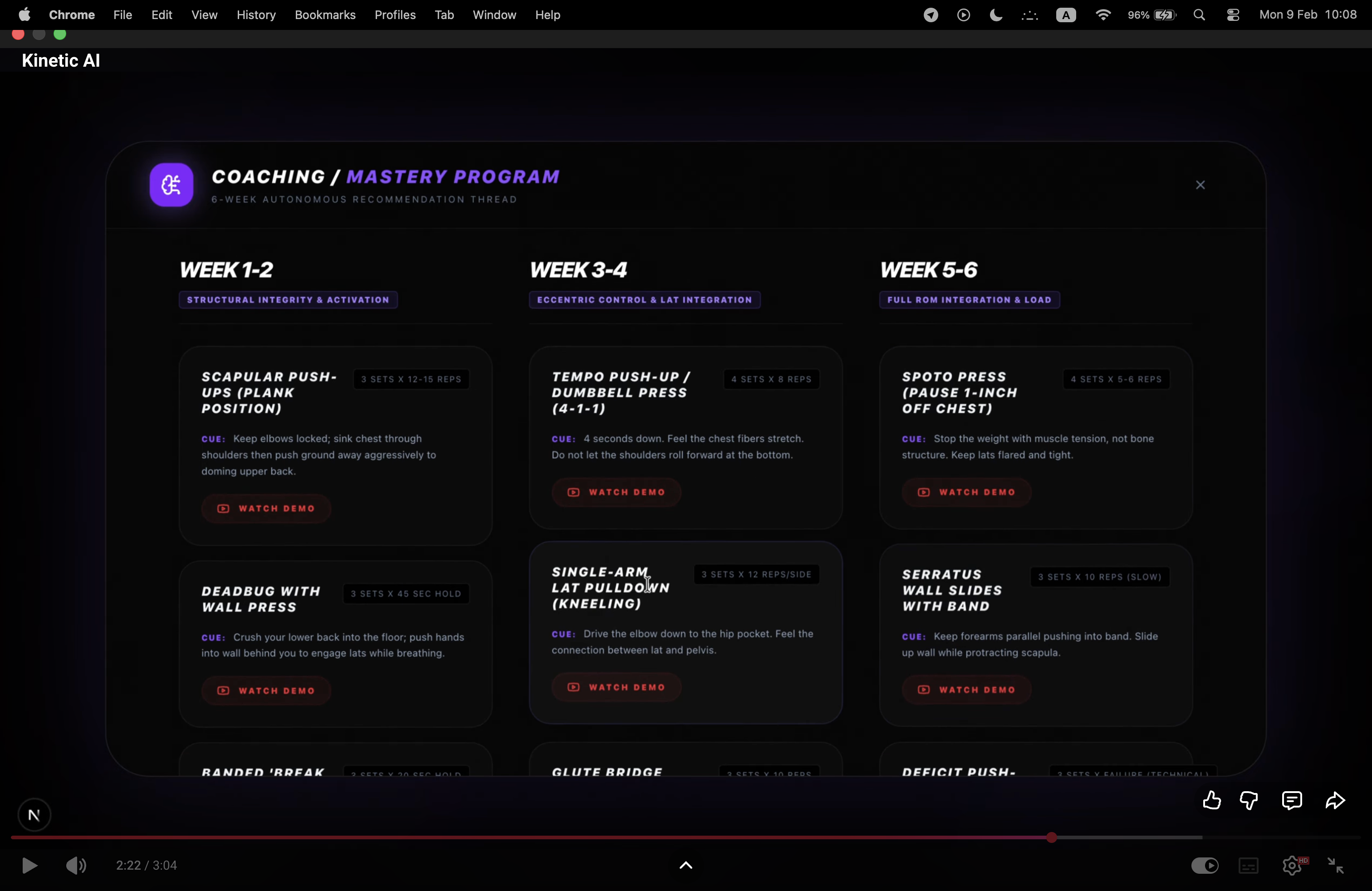
Links to youtube exercises (as an example)
-
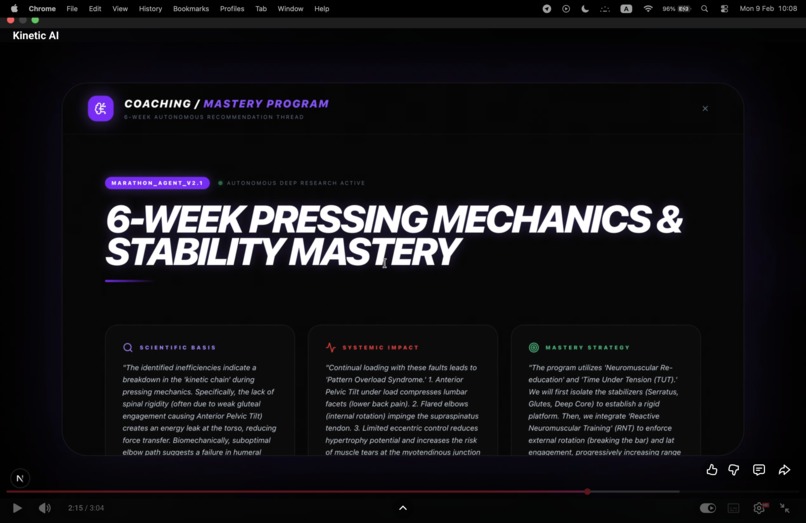
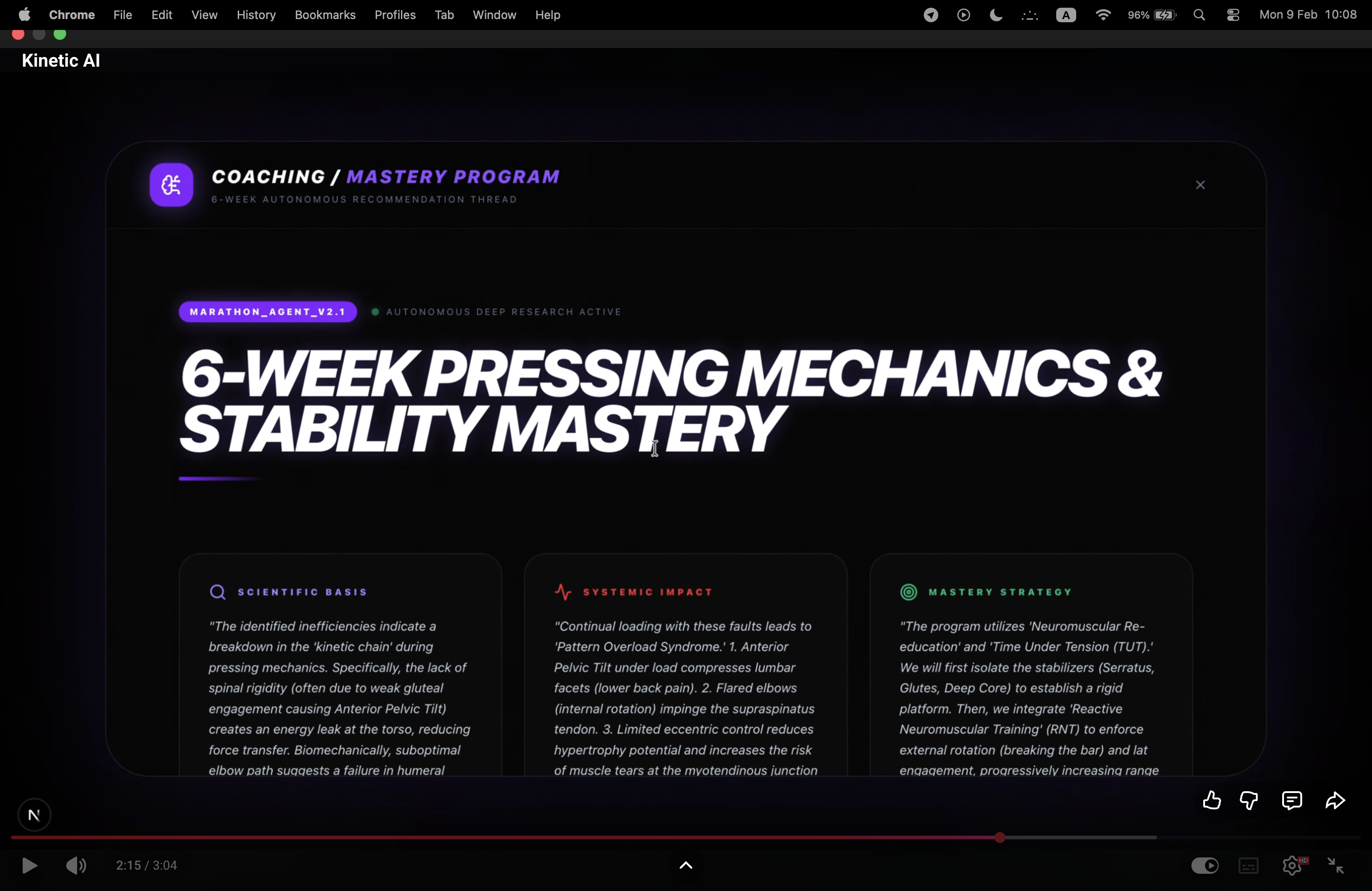
6 week program by Marathon AI Agent
-
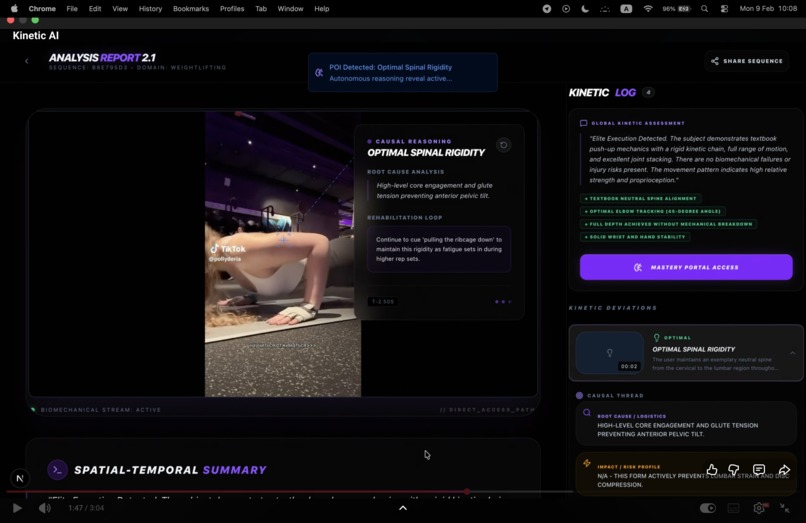
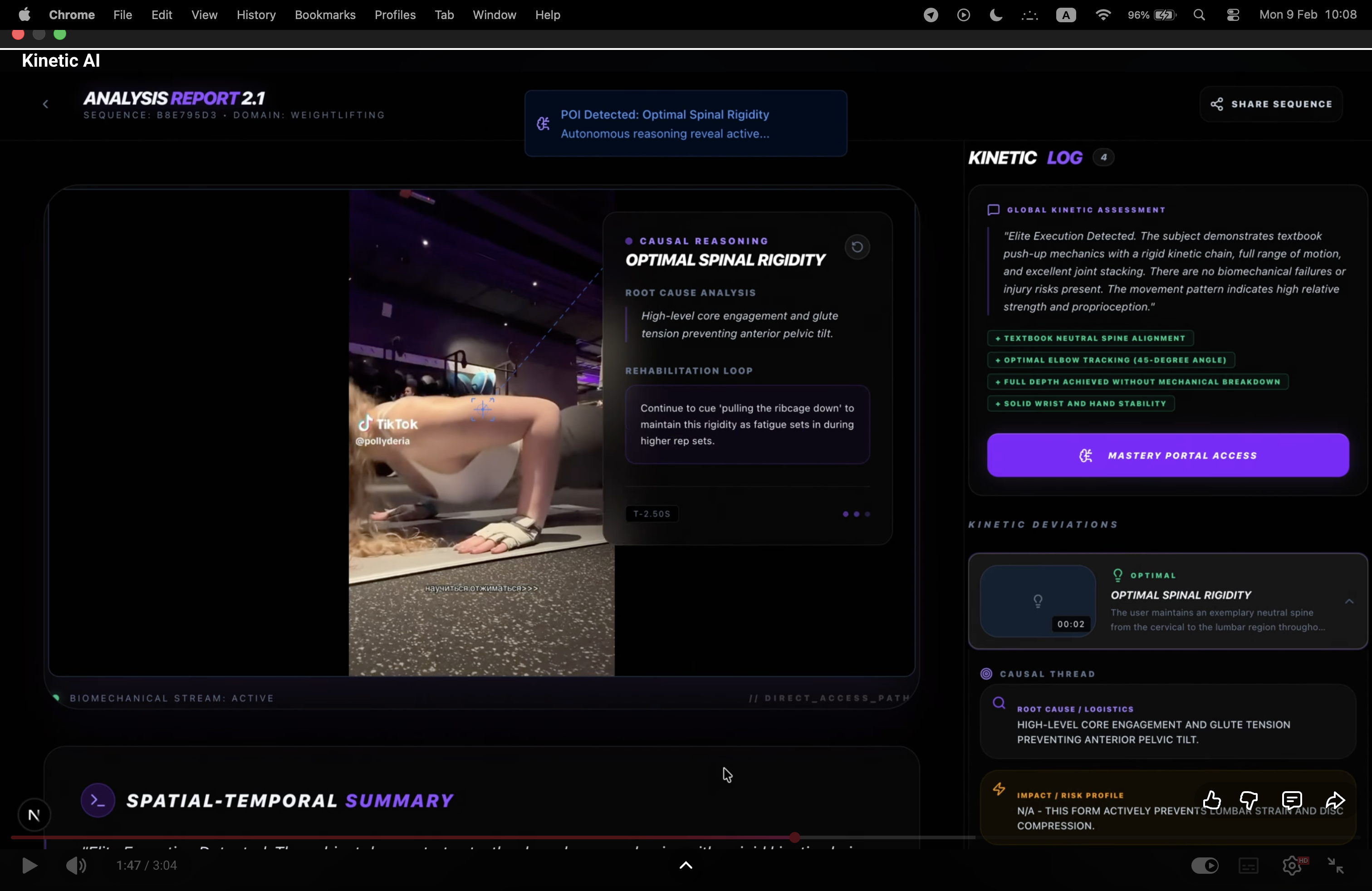
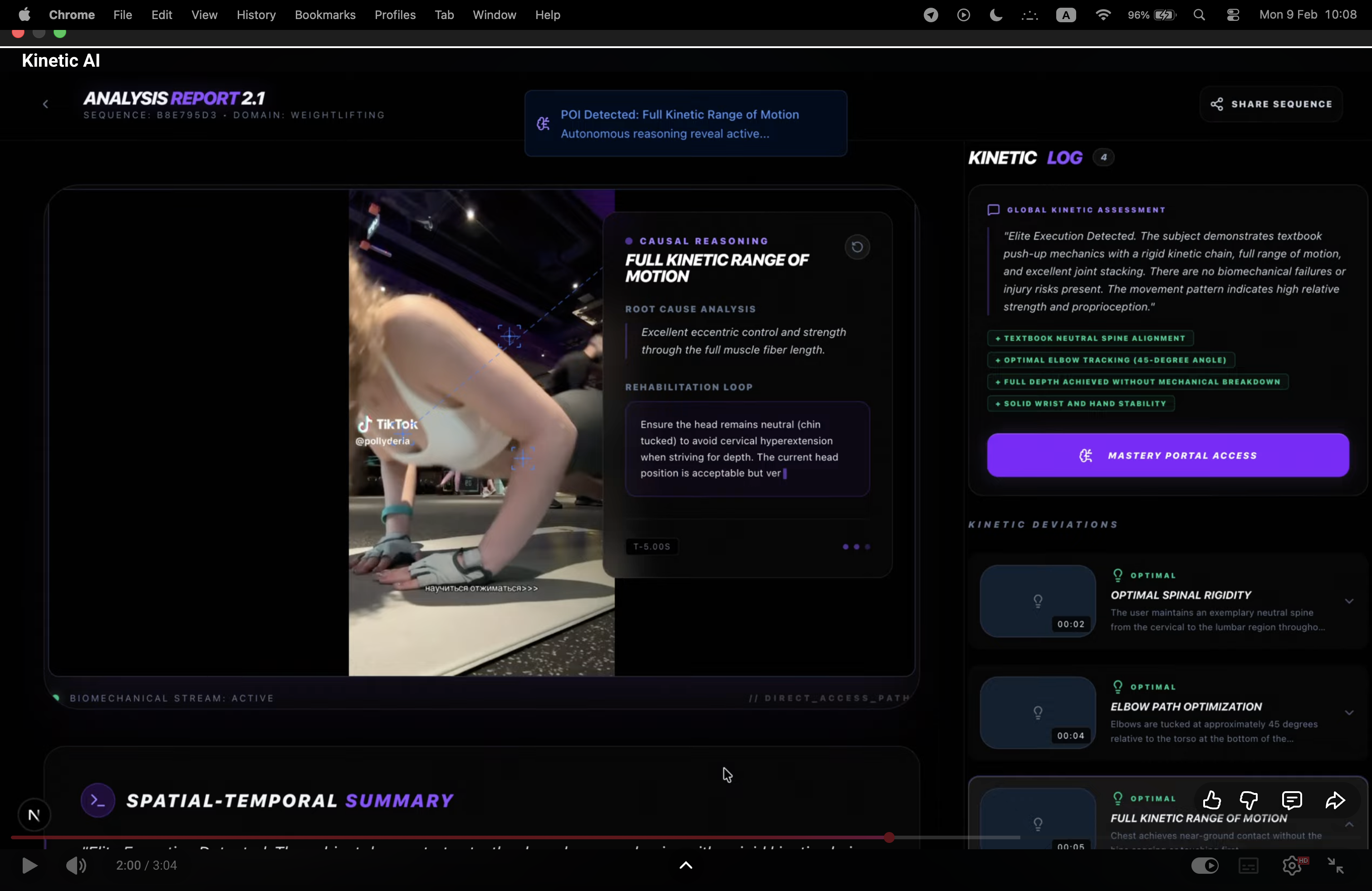
analysis results
-
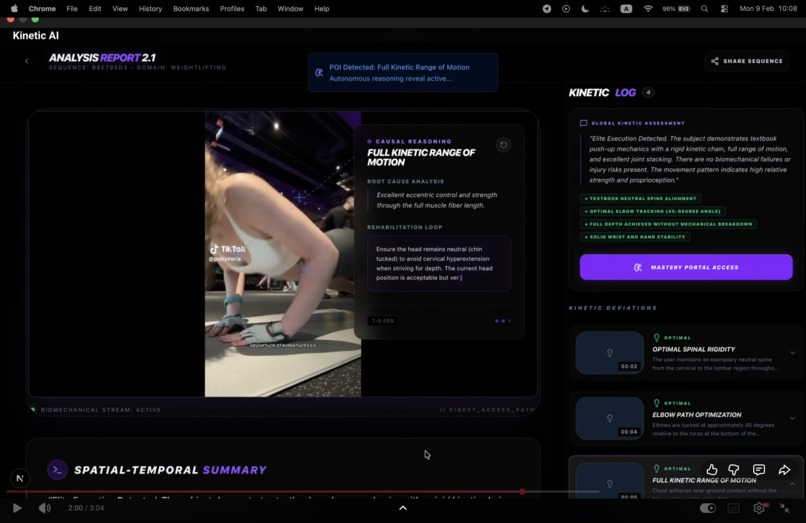
analysis results
Project Story
Inspiration
Most people don't know they're injuring themselves until it's too late.
A runner develops knee pain after months of overstriding. A weightlifter herniates a disc from years of squatting with a rounded back. A dancer tears their ACL from repeated knee valgus that nobody caught.
The pattern is always the same: small movement errors compound over time into serious injuries. The tragedy is that all of these are preventable. A coach watching you move can spot these issues immediately. But personal trainers cost $100+ per session, and most people can't access expert movement analysis.
I built Kinetic AI to solve this. Not as a replacement for human coaches, but as a tool that makes expert-level movement analysis accessible to everyone with a phone camera.
What it does
Kinetic AI analyzes videos of physical movement and identifies errors that lead to injury. But it doesn't stop at detection - it explains why the errors happen, what injuries they'll cause, and creates a complete program to fix them.
The analysis goes deeper than "your form is bad." When you upload a video of yourself doing squats, the system identifies that your knees are caving inward at 15 degrees. Then it explains the root cause: weak gluteus medius combined with limited ankle dorsiflexion. Then it shows the progression: this pattern increases ACL strain, which leads to patellar tendinopathy, which if uncorrected will result in a tear within 3-6 months of continued loading.
Then it fixes it. The Marathon Agent activates and researches your specific issue. It analyzes biomechanical studies, reviews correction protocols, and generates a personalized 6-week program. Week 1-2 focuses on ankle mobility drills. Week 3-4 adds glute strengthening. Week 5-6 integrates the corrections back into your squat pattern. Each week has specific exercises, cues, sets, reps, and demonstration videos.
Then it verifies the fix worked. After Week 2, you upload a new video. The system compares it to your baseline, measures improvement, and either continues the program or adjusts focus if progress is too slow. This creates a feedback loop that ensures corrections actually stick.
Gemini 3 Integration
Kinetic AI is built entirely on Gemini 3 Pro Preview, leveraging:
Multimodal Vision: Analyzes video frames spatially and temporally to understand 3D movement patterns, joint angles, and kinetic chains across time.
Extended Context: Processes entire movement sequences (50+ frames) while maintaining biomechanical context throughout the analysis.
Autonomous Reasoning: The Marathon Agent uses Gemini 3's advanced reasoning to independently research correction protocols, synthesize evidence, and generate structured 6-week programs without human intervention.
Cause-Effect Understanding: Goes beyond pattern matching to understand biomechanical causality-why errors happen, what they lead to, and how to fix them.
How we built it
The core insight was treating movement errors like software bugs. Bugs have symptoms (the visible error), root causes (why it happened), and fixes (code changes). Movement works the same way.
Gemini 3 Pro Preview's multimodal capabilities made this possible. Traditional computer vision can detect poses, but it can't understand biomechanics. Gemini can analyze video frames spatially and temporally—it sees that your knee caves inward at the bottom of the squat when hip flexion reaches maximum, and it understands this means your kinetic chain is breaking at the ankle.
We use category-specific prompts for different movement types. Weightlifting prompts focus on joint alignment and spine position. Running prompts analyze gait patterns and foot strike. Dance prompts evaluate flow and posture. Each category has different biomechanical markers to watch for.
The Marathon Agent uses Gemini 3 Pro Preview's extended thinking to generate correction programs. This isn't a simple prompt-response-it's a multi-step autonomous process. The agent researches the specific issue, synthesizes correction approaches from biomechanics literature, designs progressive exercise protocols, and packages everything into a structured program.
The testing loop compares videos over time and quantifies improvement. If your knee valgus goes from 15 degrees to 8 degrees after two weeks, that's 47% improvement and the program continues. If improvement is under 20%, the system knows the intervention isn't working and adjusts the approach—maybe the issue isn't ankle mobility after all, maybe it's motor control.
Challenges
Making AI understand biomechanics. Getting Gemini to analyze movement accurately required extensive prompt engineering. Early versions just said "bad form detected" without explaining why. We had to teach it to think causally—not just what's wrong, but what's causing it and what happens next.
Spatial-temporal synchronization. Videos aren't just sequences of frames—movement unfolds over time. An error at second 15 might be caused by what happened at second 10. We had to design prompts that analyze entire sequences, not isolated frames.
Balancing depth with accessibility. The system uses precise biomechanical terminology (knee valgus, scapular dyskinesis, anterior pelvic tilt) because precision matters for injury prevention. But we had to explain these concepts clearly so non-experts understand what they mean and why they matter.
Program adherence. Generating a great correction program is useless if people don't follow it. We designed the system to be motivating—showing injury risk creates urgency, progress metrics create satisfaction, and adaptive adjustments create trust that the system is actually working.
What we learned
AI isn't replacing coaches, it's scaling expertise. A human coach watching you move will always catch nuances an AI might miss. But most people don't have access to coaches. Kinetic AI brings expert-level analysis to everyone, and even if it's 80% as good as a human, that's infinitely better than the zero expertise most people have access to.
Injury prevention is an information problem. People aren't getting hurt because they're careless or weak. They're getting hurt because they don't know their form is dangerous. Give them that information and they'll fix it.
Autonomous agents enable new interaction patterns. The Marathon Agent doesn't just respond to prompts—it conducts independent research and creates complex outputs. This lets us build systems that do real work on behalf of users, not just answer questions.
What's next
The current version analyzes uploaded videos. The natural next step is real-time analysis using Gemini Live. Point your phone at yourself during a workout and get instant verbal coaching: "Push your knees out more. Good depth. Two more reps."
We also want to expand categories beyond fitness—analyzing presentation skills, musical instrument technique, cooking methods, any learnable physical skill. The same framework applies: identify errors, explain causes, create correction programs, verify improvement.
Long-term, this could integrate with wearable sensors to combine video analysis with force plate data, EMG signals, and motion capture. But the core value remains the same: making expert movement analysis accessible to everyone.
Why it matters
Every preventable injury is a failure of information. Someone hurt themselves because they didn't know they were moving dangerously. Kinetic AI is an attempt to solve that information problem at scale.
If this prevents even one ACL tear, one herniated disc, one rotator cuff injury—it's worth building.
Built With
- cloudflare-r2
- fastapi
- gemini-3-pro
- konva.js
- next.js
- postgresql
- python
- redis
- tailwind-css
- typescript

Log in or sign up for Devpost to join the conversation.