-
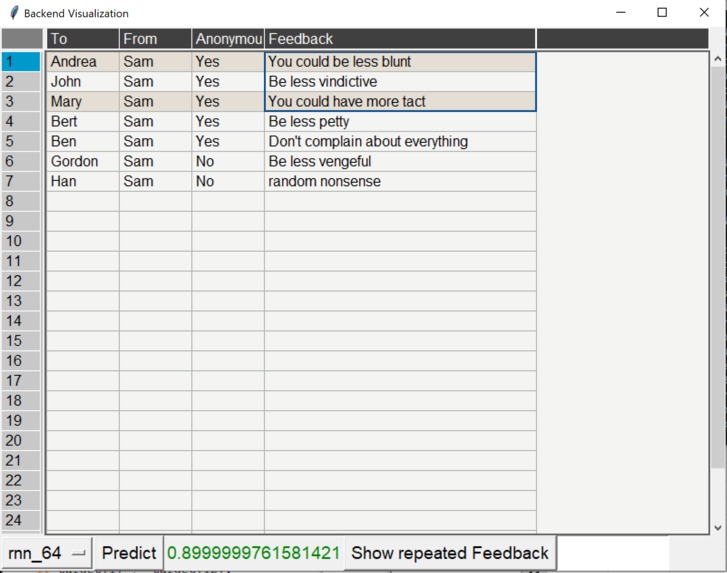
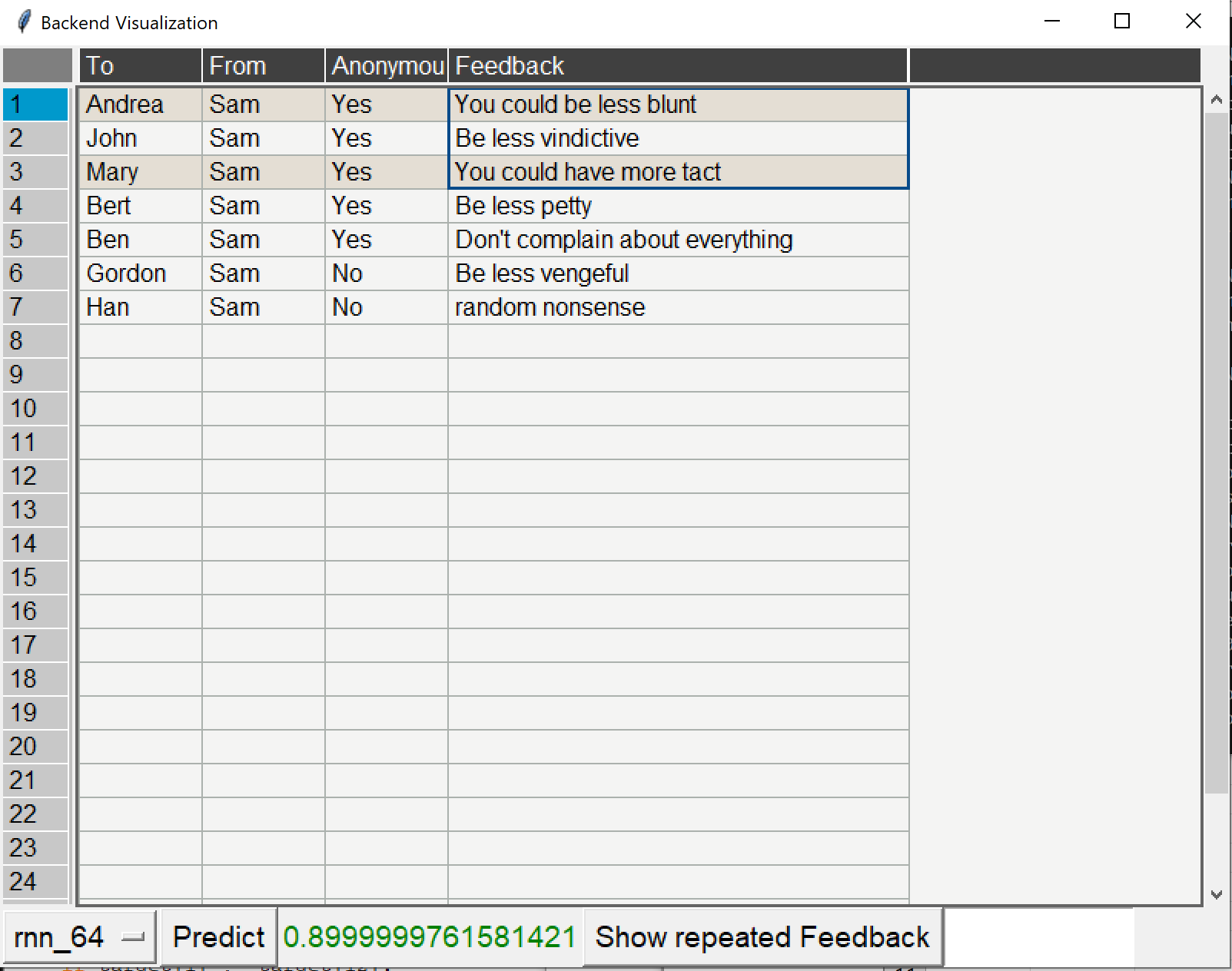
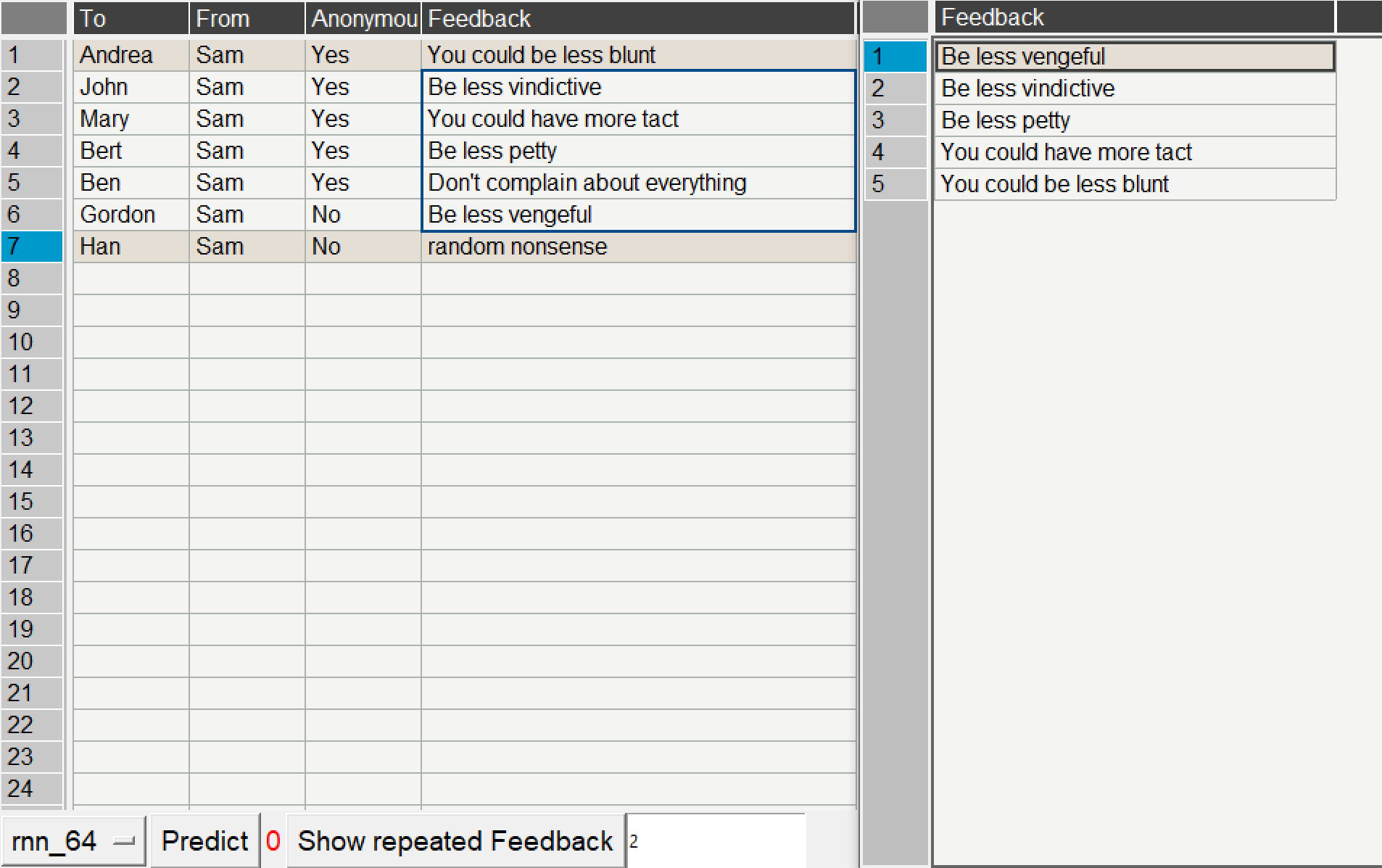
Similar sentences will have higher score
-
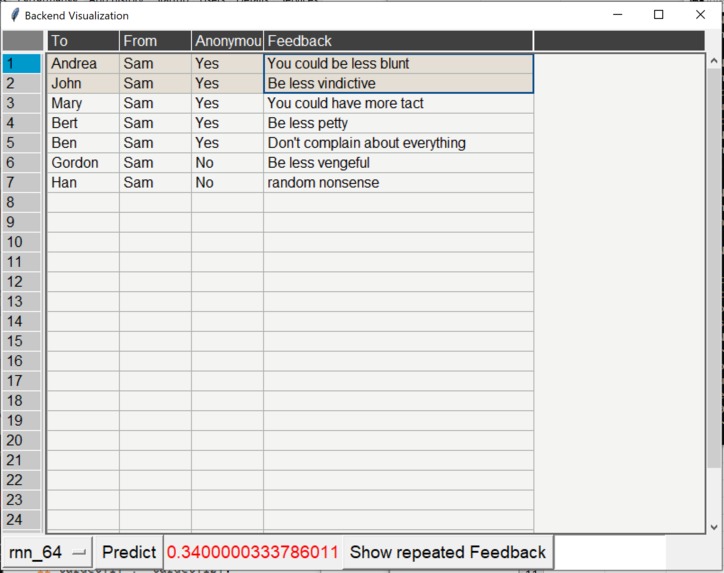
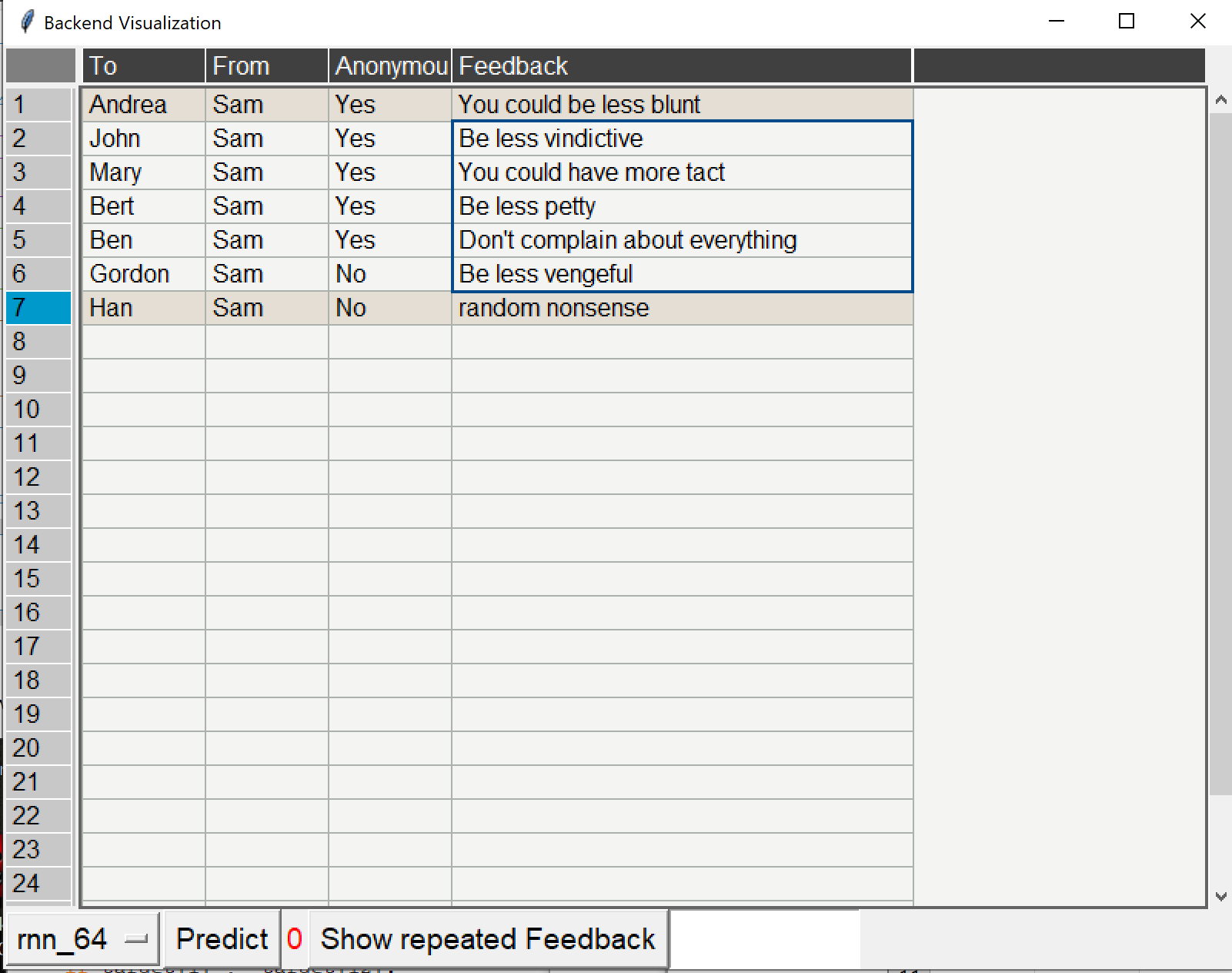
Dissimilar sentences have a lower score
-
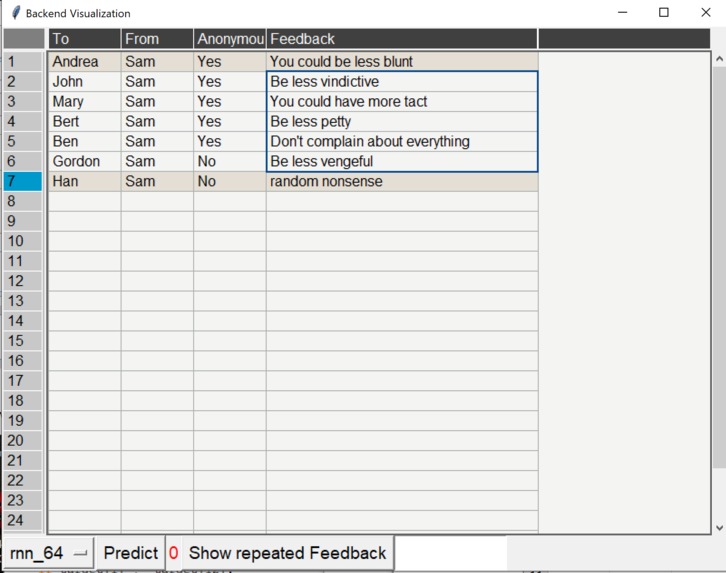
Sentences with no point will have no corroborative power
-
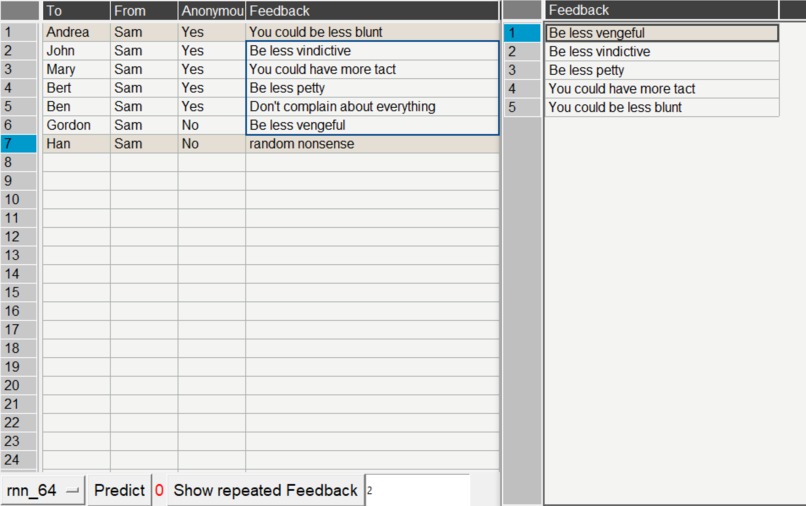
A threshold can be set for number of corroborative instances needed before he sees the feedback

Inspiration
I've always found it hard both to give and receive feedback from friends. When on the receiving end, getting feedback when I'm not ready to hear it can make me feel defensive which makes me less receptive. On the flip side, giving feedback is hard because I do not know if the feedback I want to give is just a personal issue I have with the person or something that is truly a large problem in their life. One possible solution is to discuss it with the persons's other friends before bringing it up to him but that can easily be misconstrued as talking behind the person's back which would make them feel even more defensive.
What it does
The app allows for anonymous yet corroborated feedback through the use of semantic similarity analysis. This allows people to give others feedback without having to worry about whether or not their feedback is significant since your feedback will only be shown to the person if enough people corroborate it. From the receiving end, this allows a person to set the number of corroborated instances of feedback before they are notified of it. This also allows the user to open up the feedback when they feel they are in the best mindset to be receptive to it.
How we built it
We used open source frameworks for semantic similarity analysis and fine tuned it towards our use case. We then used Python GUI to create visualize how the corroborative part of the application works
Challenges we ran into
We had no experience with Natural Language Processing and we had a tough time getting the model to work
Accomplishments that we're proud of
Not giving up and falling back on things we are more technically familiar with
What we learned
We learnt about the various ways meanings behind sentences can be extracted such as vectorization and we also got a look at the tremendous amount of math behind it.
What's next for Corroborated Anonymous feedback system
Currently we only have the corroborative model working. Going forward, we would need to create the rest of the application to make it deploy-able. We would also need to fine tune the semantic similarity analysis further
Log in or sign up for Devpost to join the conversation.