-
-
-
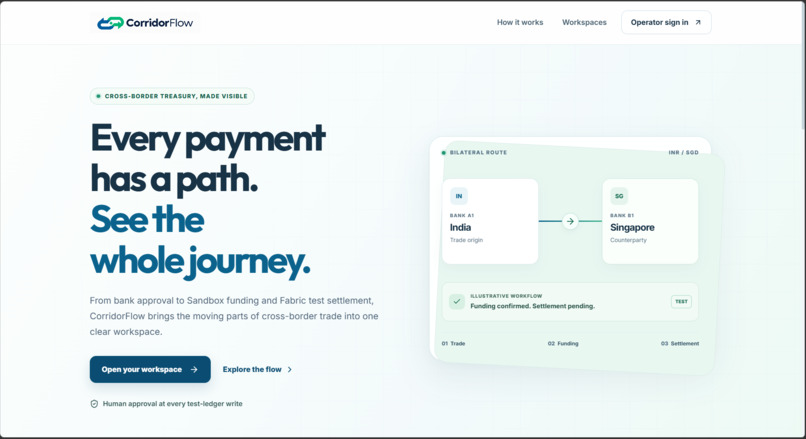
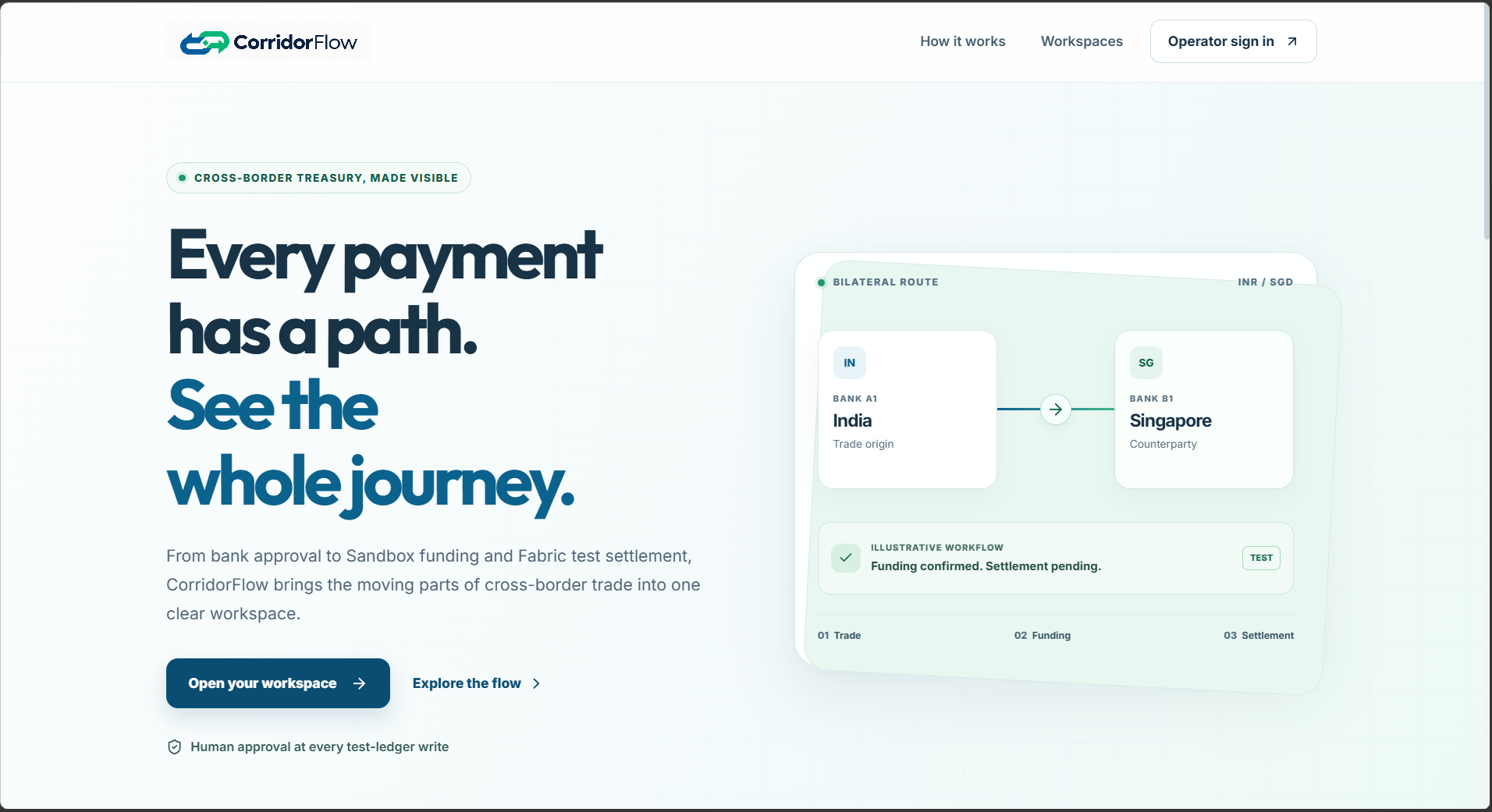
Landing page
-
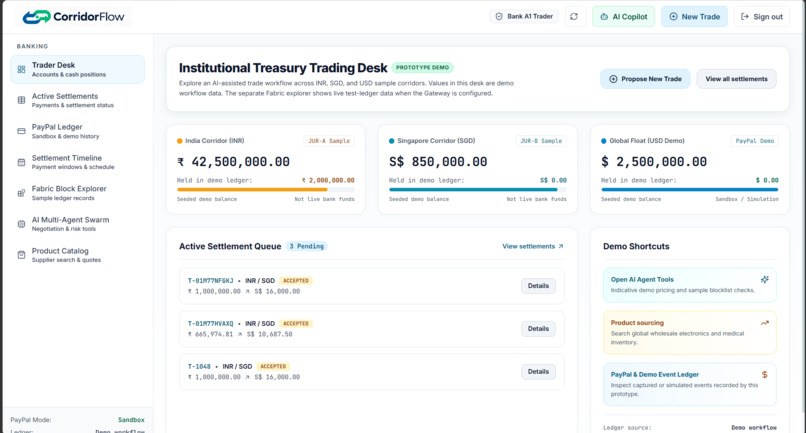
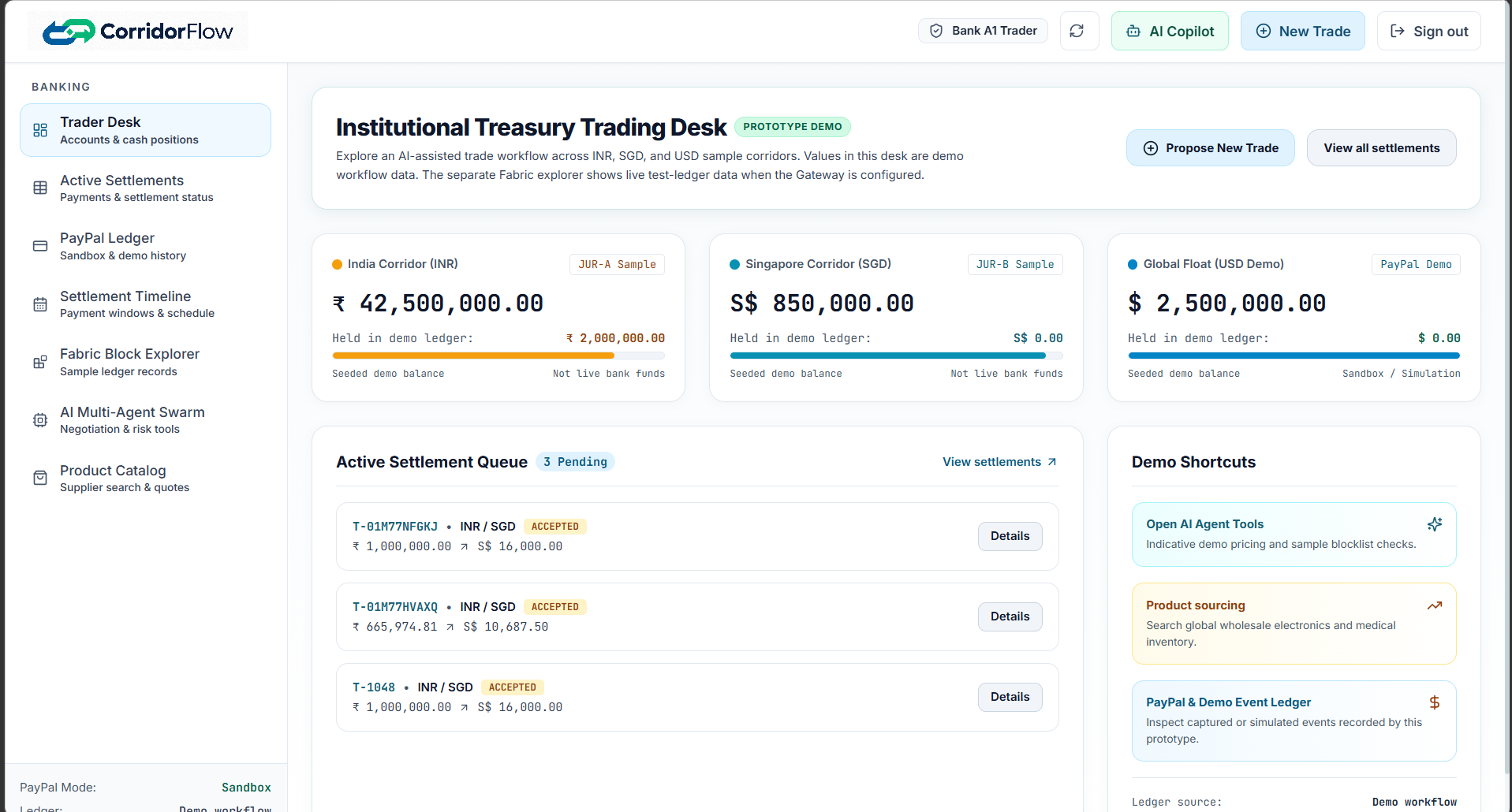
trader Dashboard
-
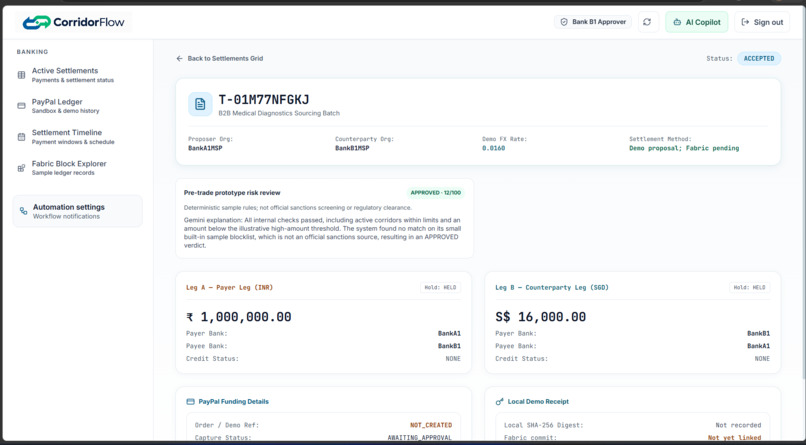
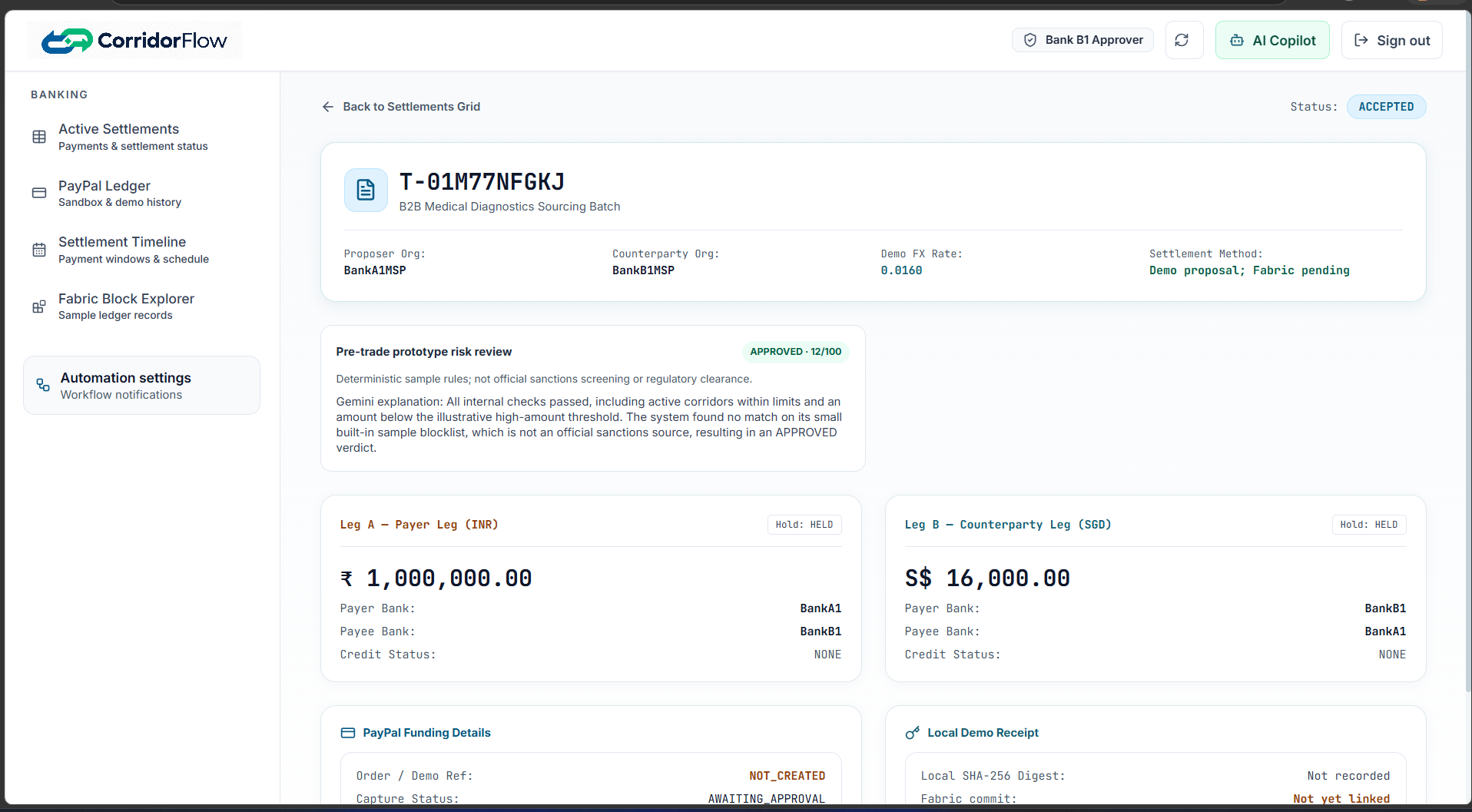
Approval Dashaboard
-
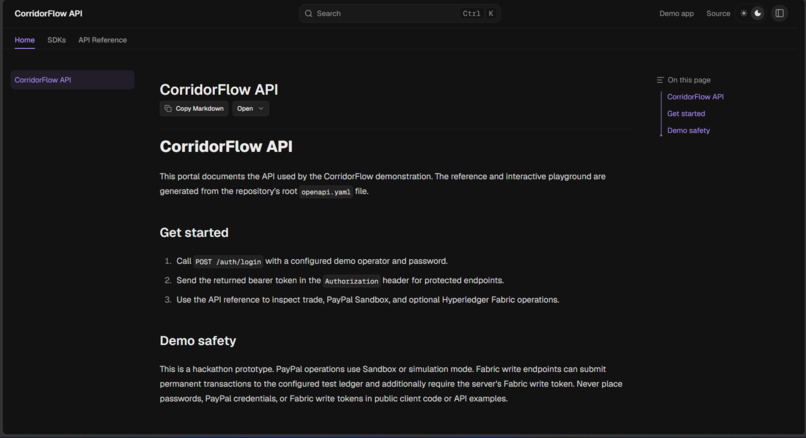
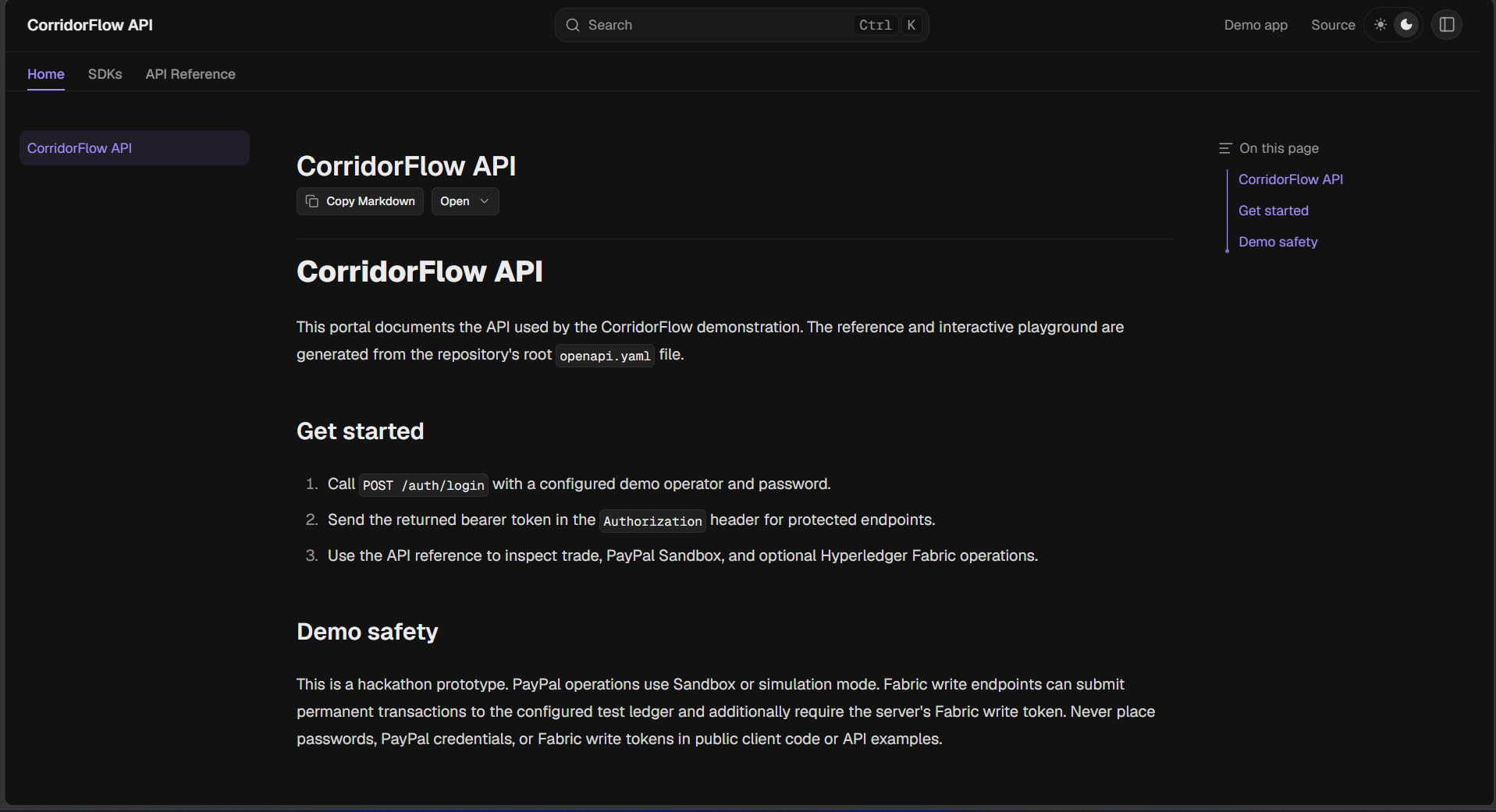
APImetric page
-
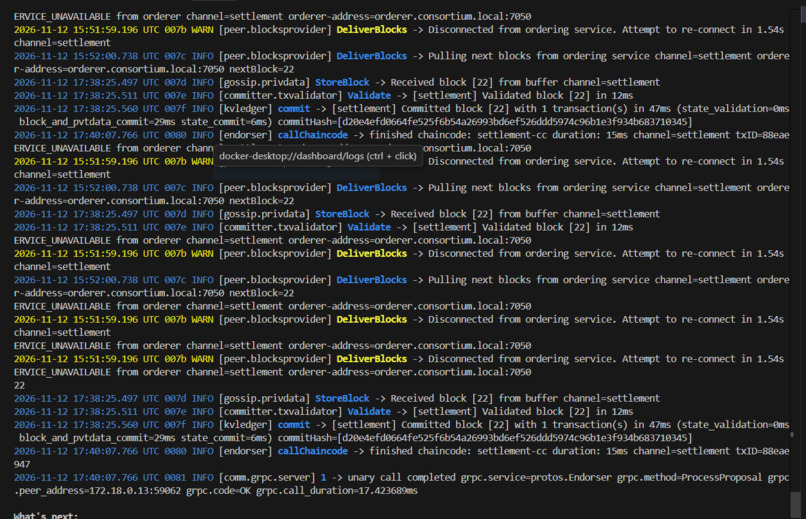
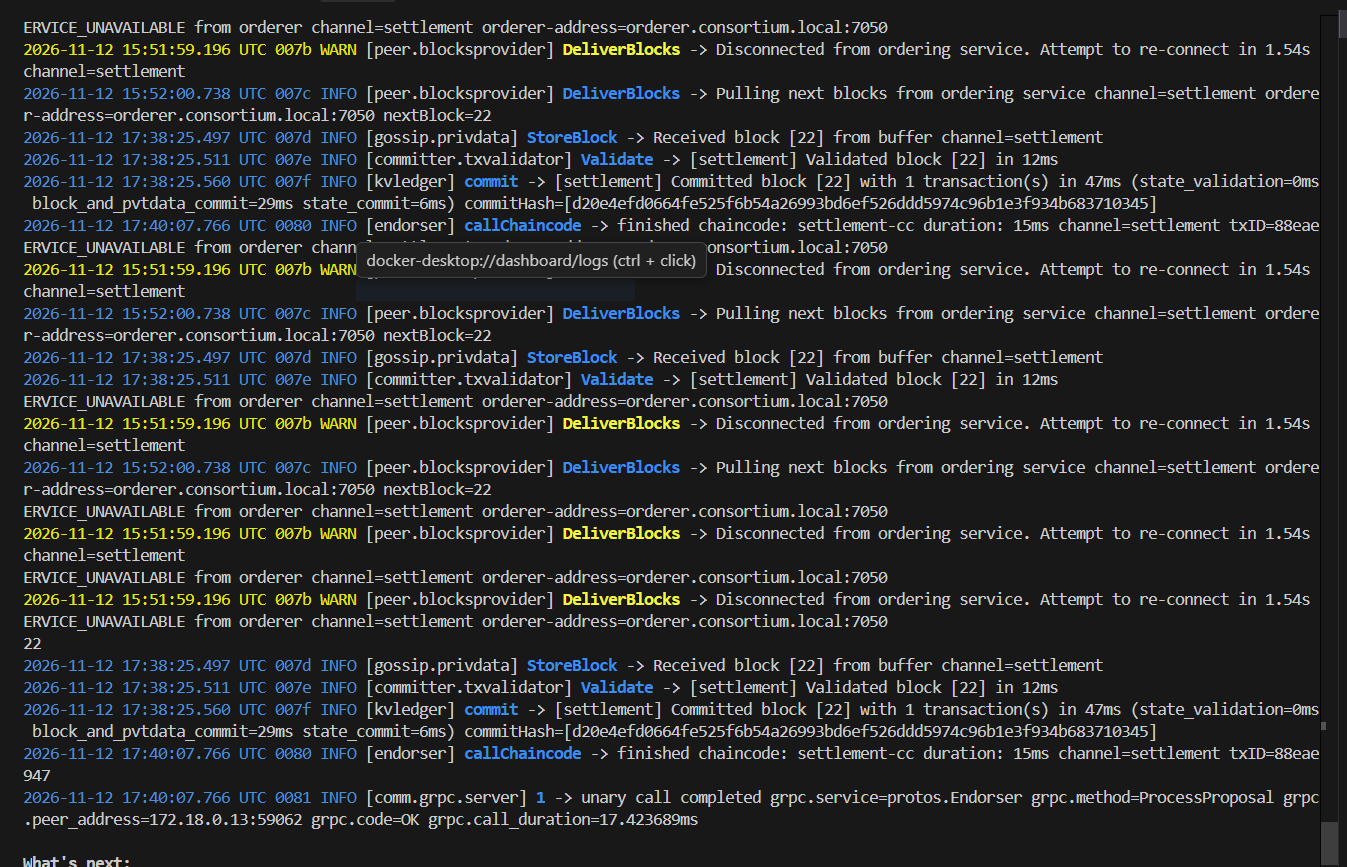
hyperledger Fabric Logs
-
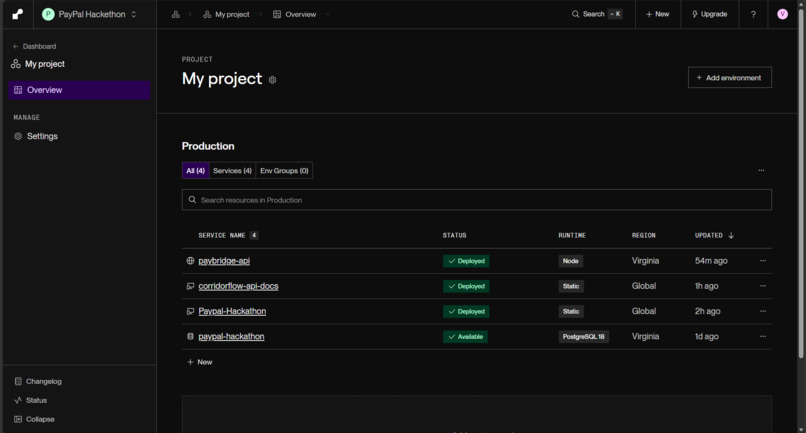
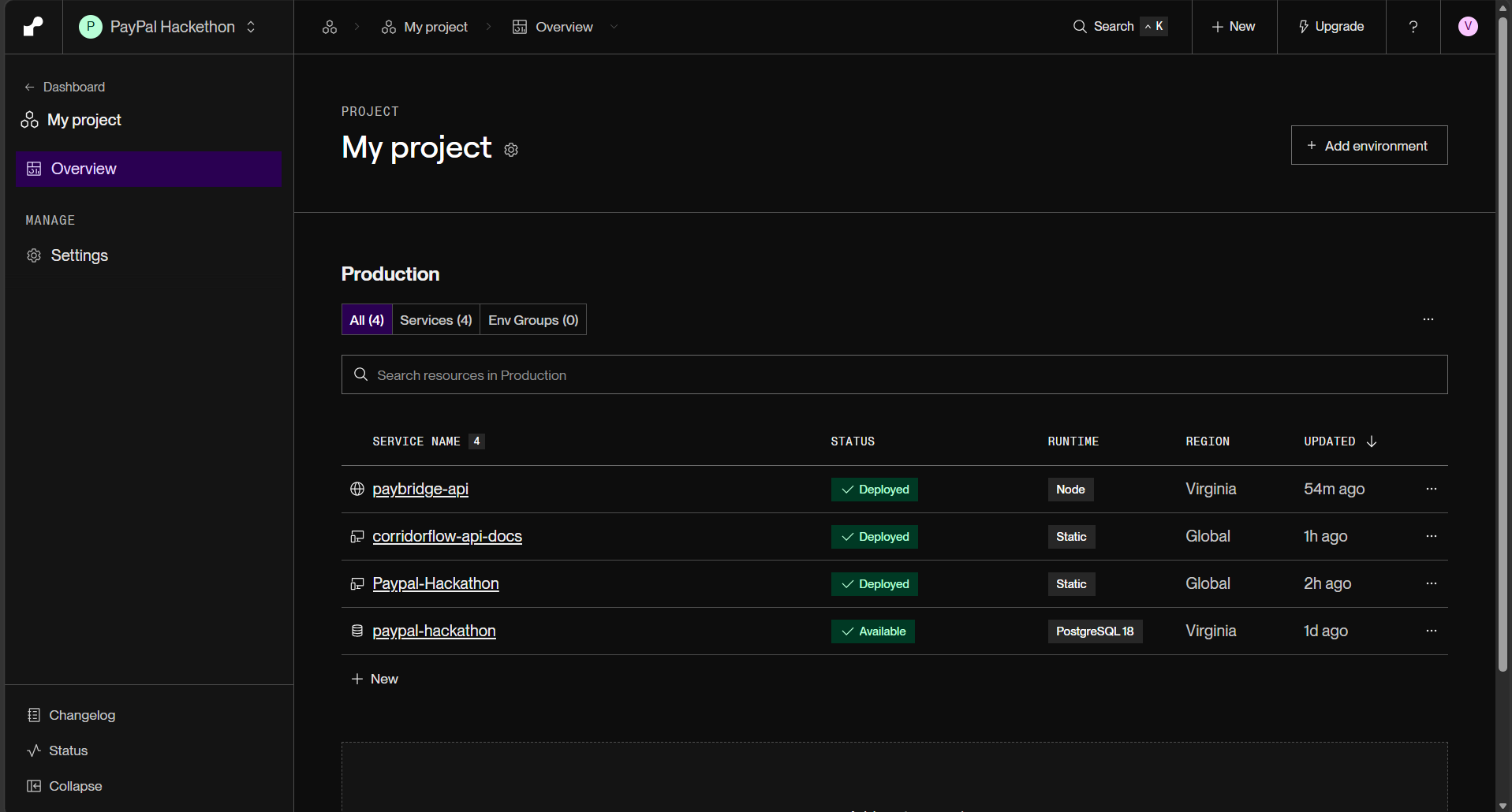
Render Dashboard
-
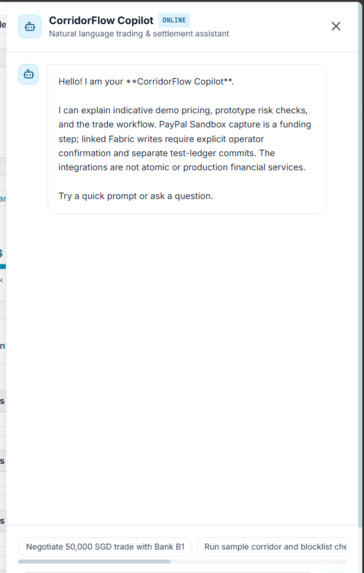
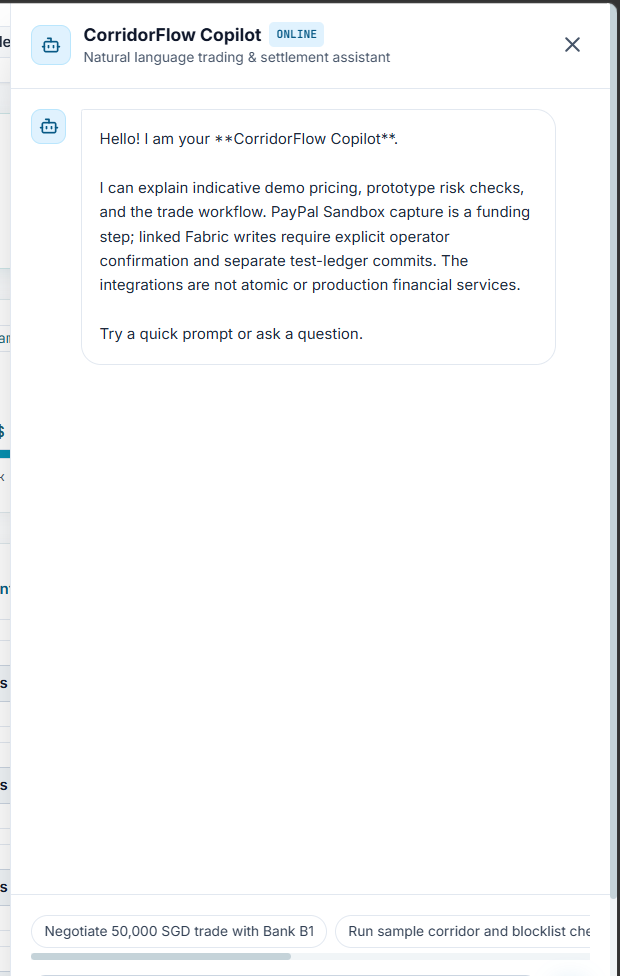
AI chat assisant
-
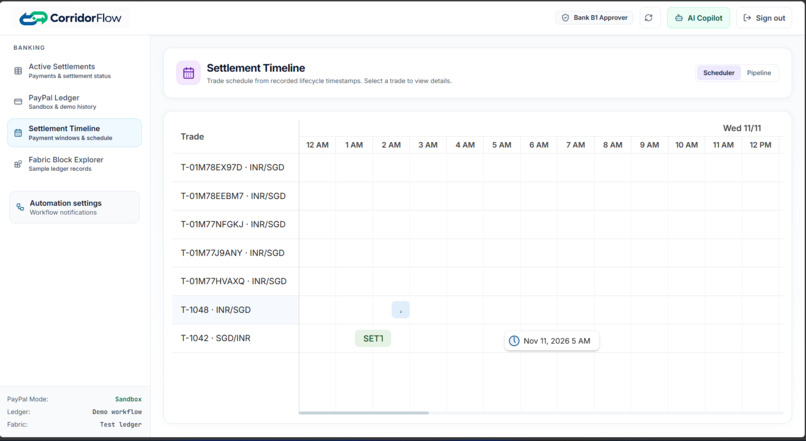
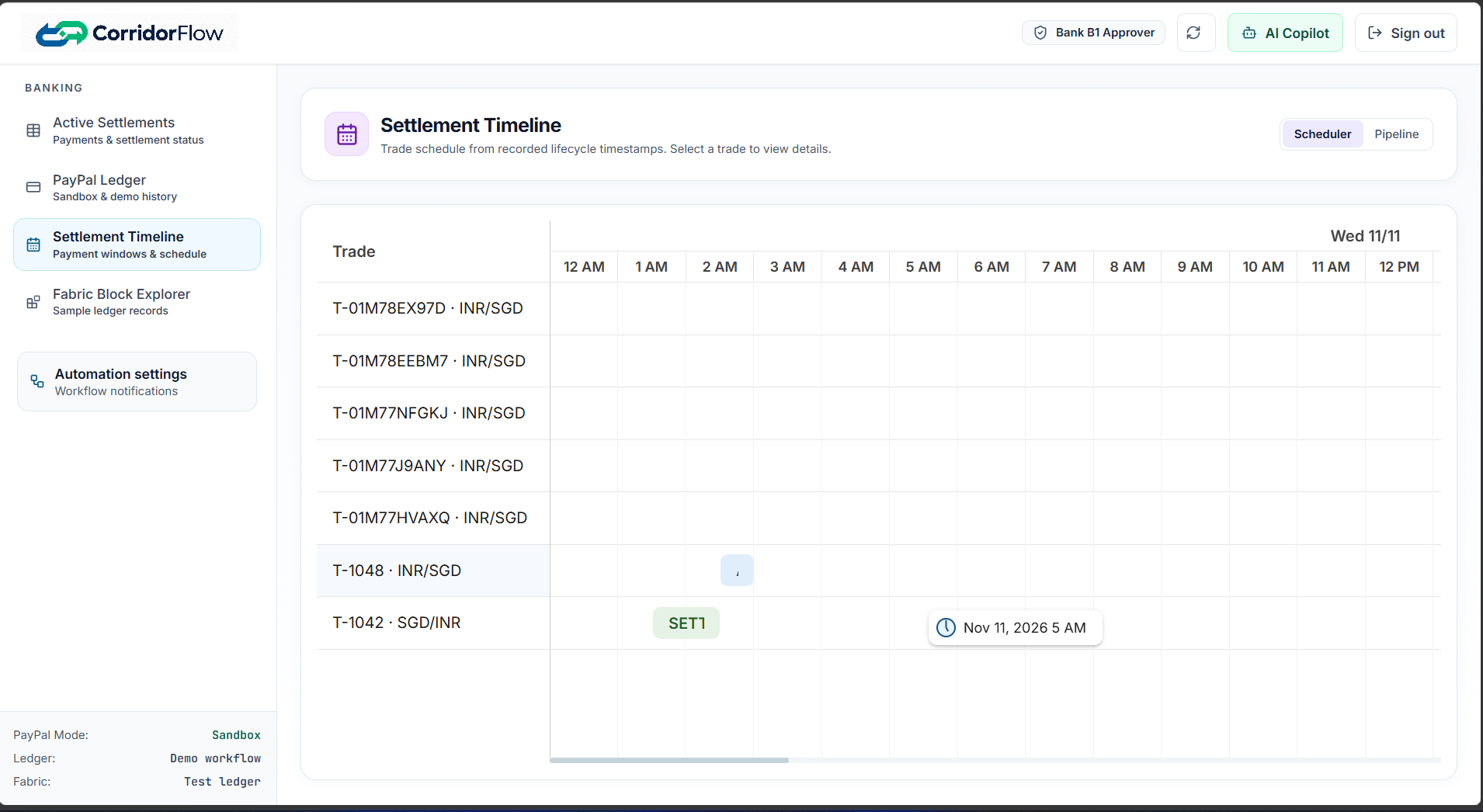
Bryntum scheduller
Inspiration
Cross-border trade involves more than moving money. Buyers, sellers, financial institutions, and reviewers need to understand transaction terms, assess risks, approve payments, and track settlement. When these steps are spread across different systems, it can be difficult to see the complete journey of a trade.
We built CorridorFlow to explore a more transparent and connected workflow—from a trade proposal to a human-approved payment and a recorded test settlement.
What it does
CorridorFlow is a prototype for reviewing and managing cross-border trade proposals. It brings together product sourcing, indicative quotes, sample risk checks, payment approval, and settlement tracking in one workflow.
Users can:
- Create and review trade proposals using illustrative exchange rates.
- Run deterministic demo risk checks and receive optional AI-generated explanations.
- Approve and capture a test payment through PayPal Sandbox.
- Link an accepted trade to a Hyperledger Fabric test ledger for operator-confirmed settlement.
- Review trade activity and receipts, with optional search and workflow notifications.
How we built it
We built the frontend with React, TypeScript, Vite, and AG Grid, and the backend with Node.js and Express. We integrated PayPal's Orders API to demonstrate Sandbox checkout and payment capture.
We wrote Go chaincode and added a Hyperledger Fabric Gateway integration for the optional test-ledger workflow. PostgreSQL can store application workflow data, while Fabric maintains separate ledger state.
We also added optional integrations for product discovery, Gemini-powered explanations, Elasticsearch indexing, and Zapier notifications.
Challenges we ran into
One challenge was coordinating services that operate independently. A PayPal capture and a Fabric settlement cannot commit as one atomic transaction, so we designed them as separate, visible steps. A verified Sandbox capture is required before a linked Fabric settlement can be submitted, and an operator confirms the ledger actions.
We also had to decide where AI should fit. We wanted risk results to remain traceable, so deterministic demo rules produce the results while Gemini can provide an explanation. AI does not authorize transactions.
Another challenge was making the demo usable without every integration configured. We added labeled simulation and fallback modes so reviewers can still explore the workflow.
Accomplishments that we're proud of
We're proud of bringing a trade proposal, risk review, PayPal Sandbox checkout, and optional Fabric test settlement into one experience.
We're also proud that the prototype makes important steps visible: users can review a proposal, approve a test payment, and see that payment capture and ledger settlement are distinct actions.
What we learned
We learned that a cross-border transaction depends on more than the payment itself: coordination, clear records, and visibility matter throughout the workflow.
We also learned how to connect PayPal Sandbox to a broader trade process, design around systems that can fail independently, and use AI to make results easier to understand while keeping decisions grounded in explicit rules.
What's next for CorridorFlow
We would like to improve reconciliation between payment and ledger steps, expand trade-data sources, and make the review experience more useful for each participant.
We also want to explore how stronger identity controls, more comprehensive risk data, and additional integrations could support a more complete workflow.
Prototype note: CorridorFlow uses illustrative exchange rates and demo risk checks. PayPal payments run in the Sandbox, and Fabric transactions use a test ledger. The project does not process real payments or provide official compliance screening.
Built With
- ag-grid
- ai
- blockchain
- cross-border-payments
- docker
- elasticsearch
- express.js
- fintech
- gemini
- go
- hyperledger-fabric
- node.js
- payment-workflows
- paypal-sandbox
- postgresql
- react
- regtech
- rest-api
- risk-assessment
- supply-chain
- trade-finance
- typescript
- vite
- zapier