-
-
App Icon
-
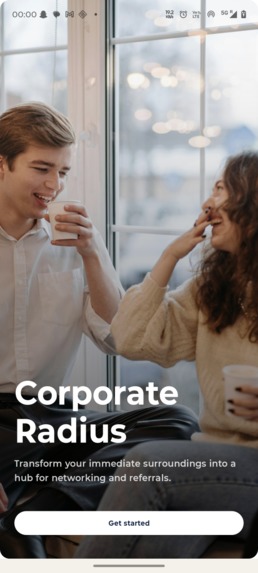
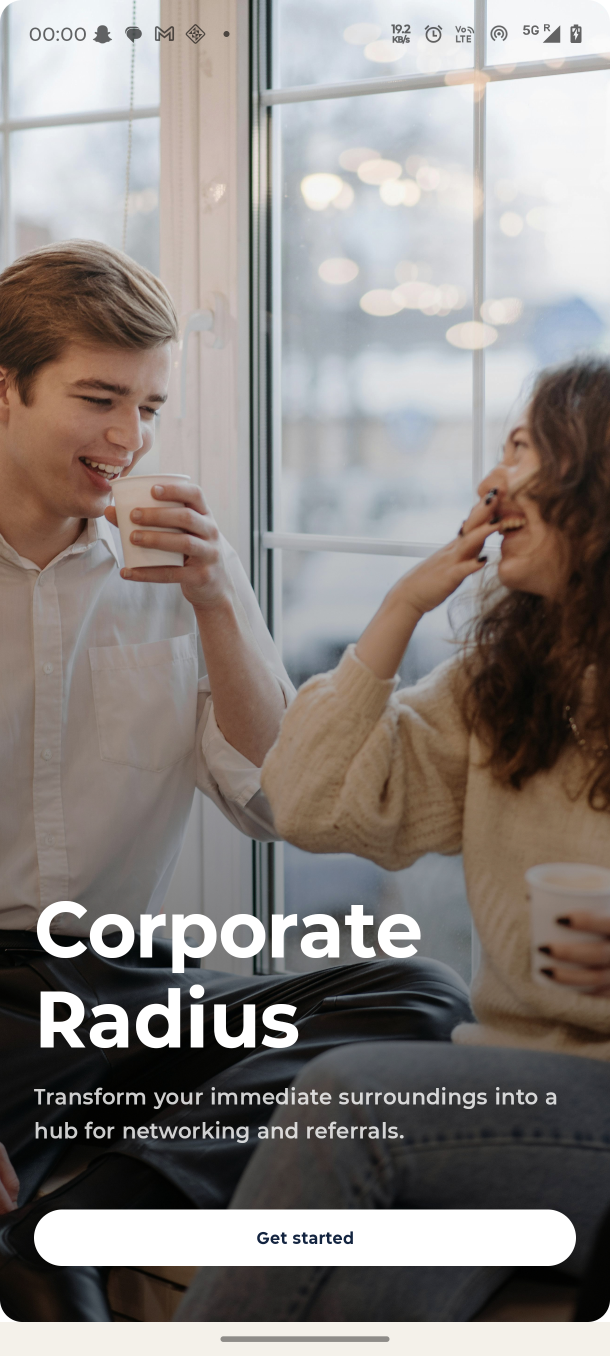
Splash Screen
-
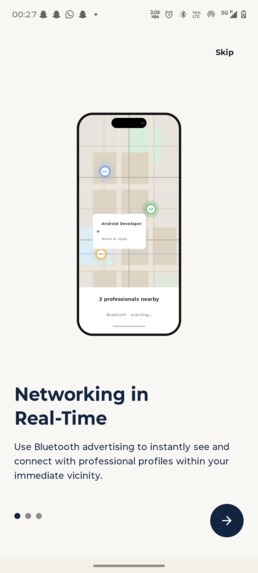
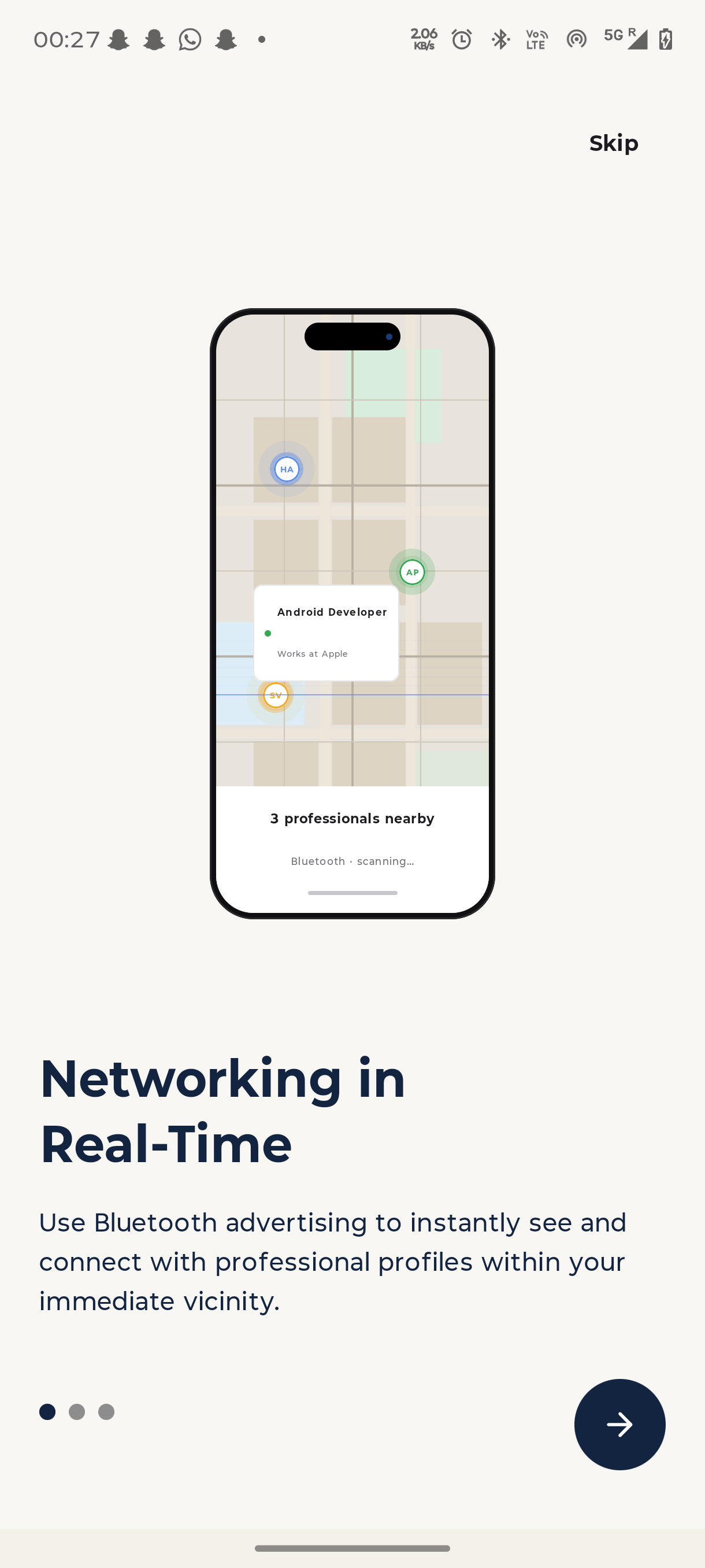
Onboarding Screen 1
-
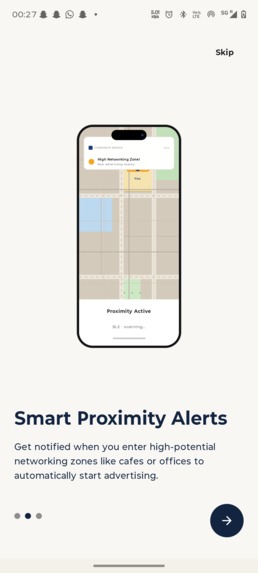
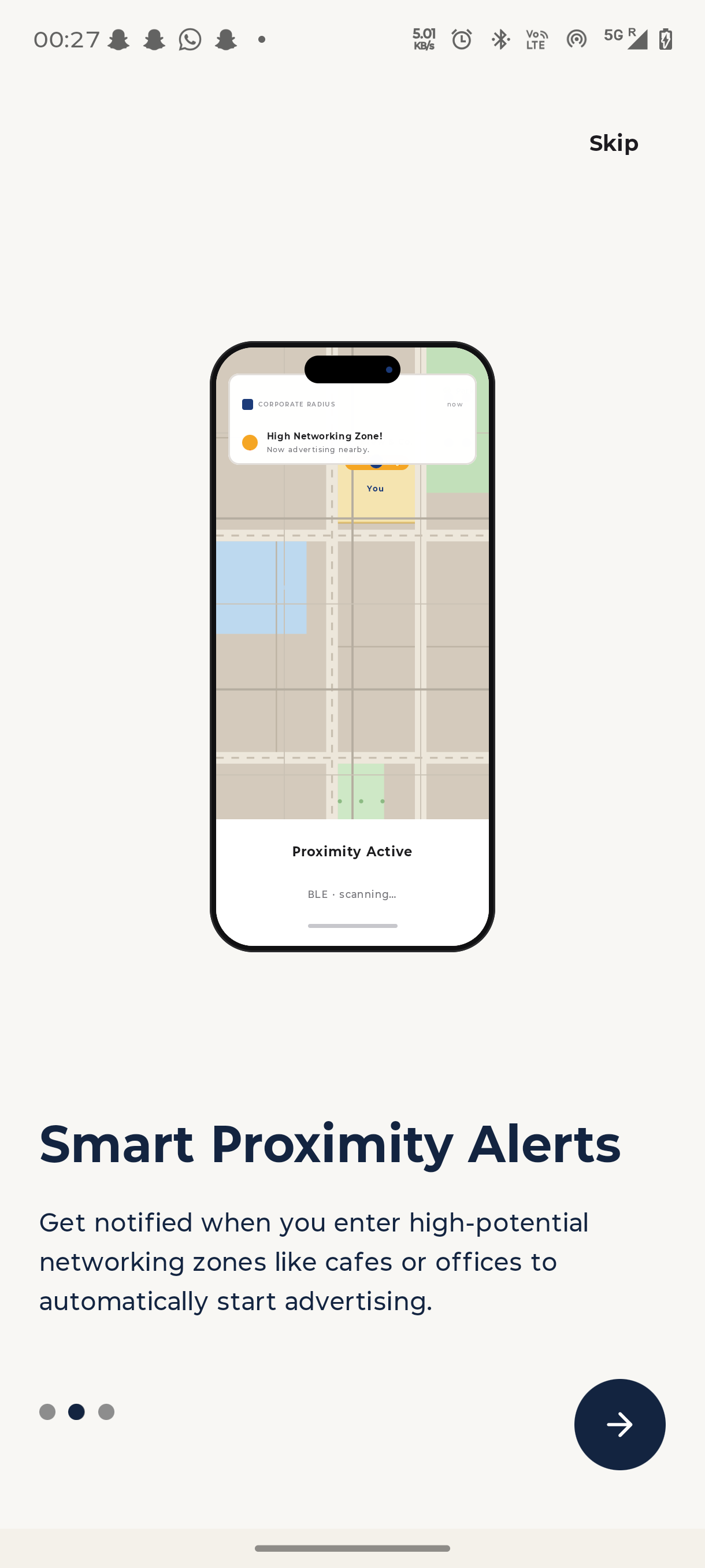
Onboarding Screen 2
-
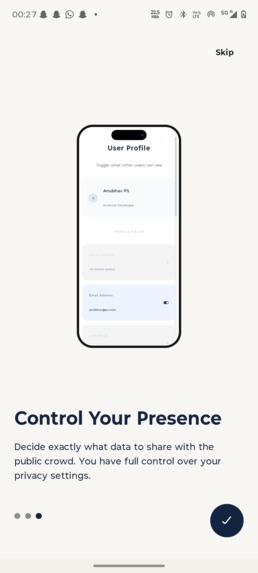
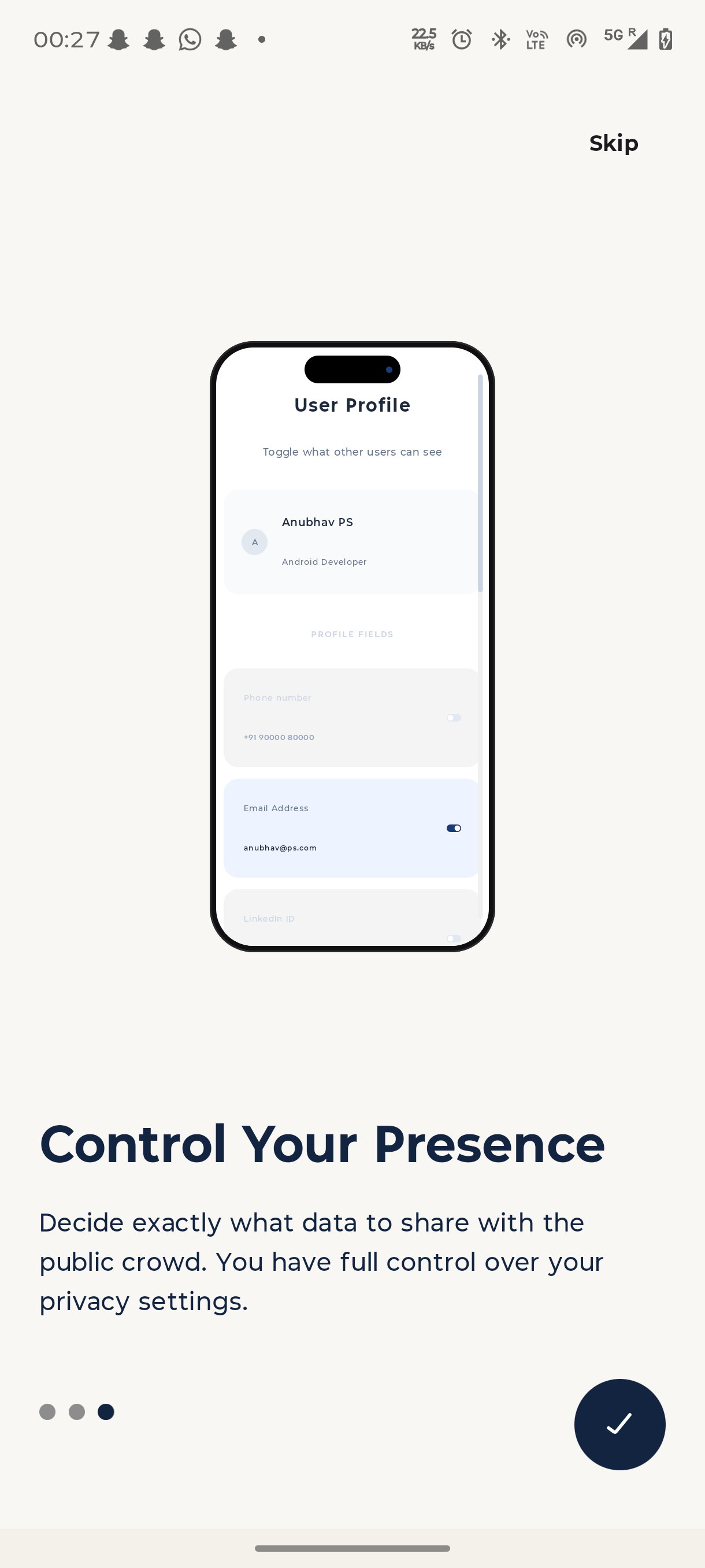
Onboarding Screen 3
-
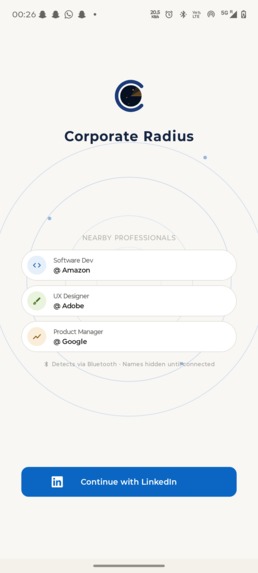
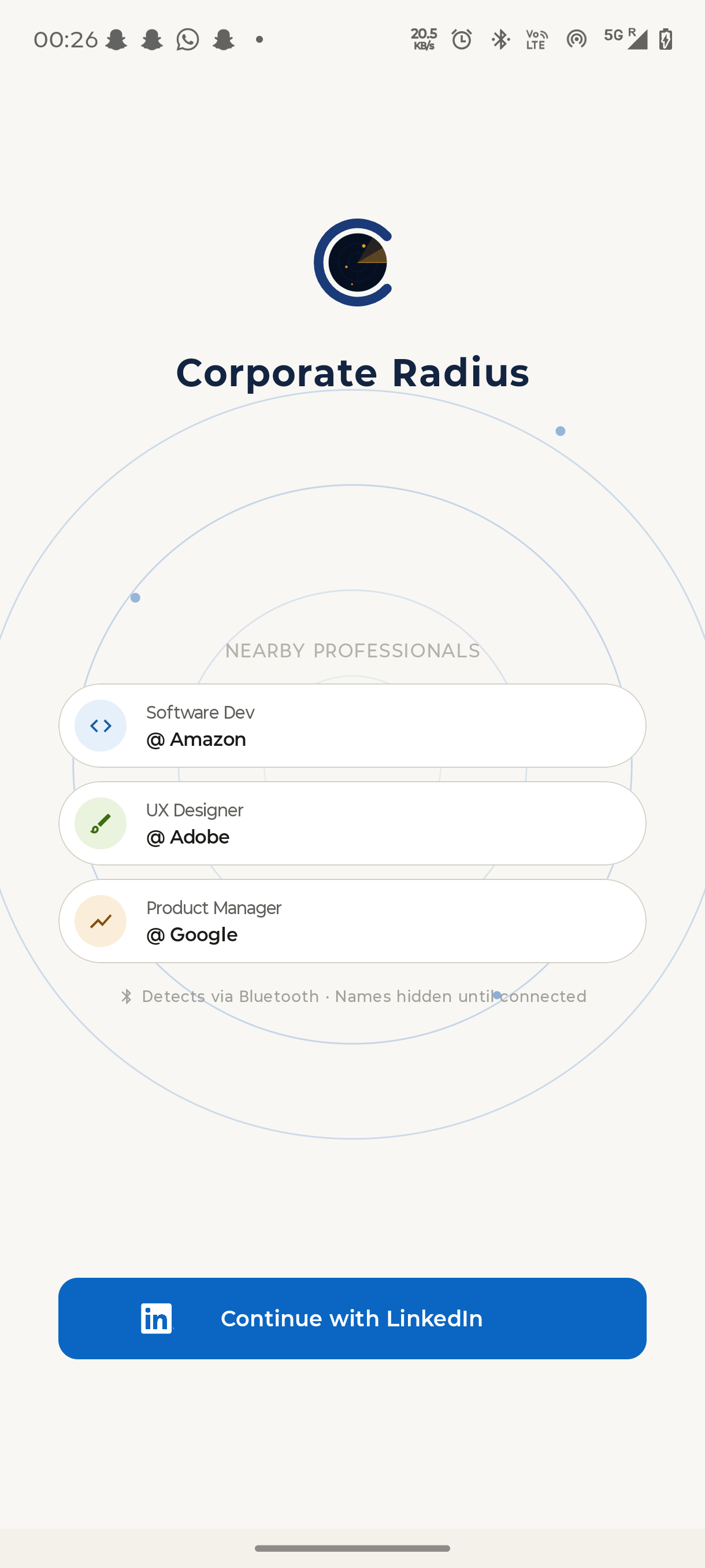
Sign In Screen
-
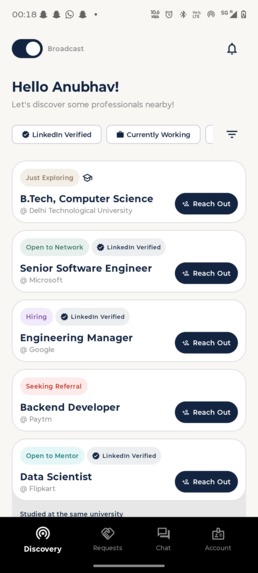
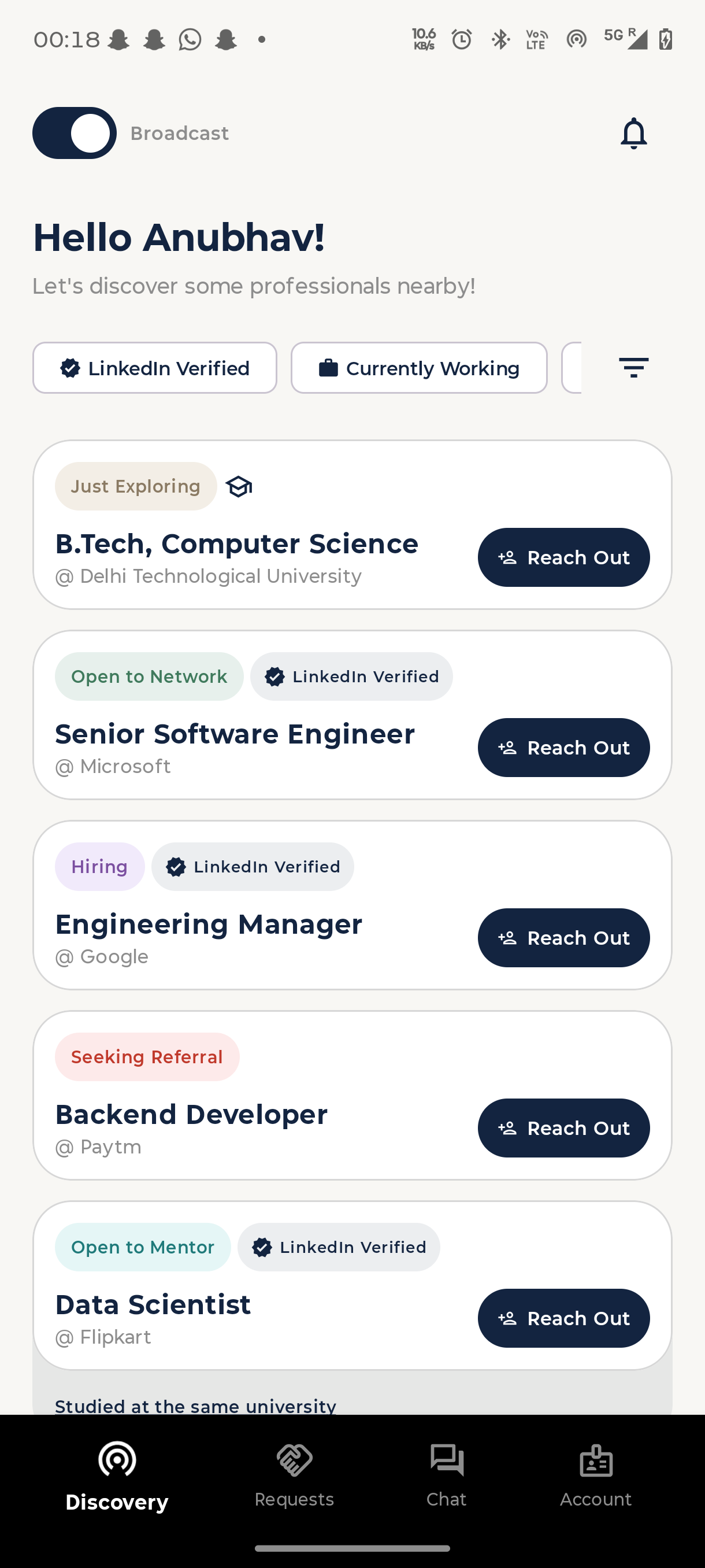
Discover Users Screen
-
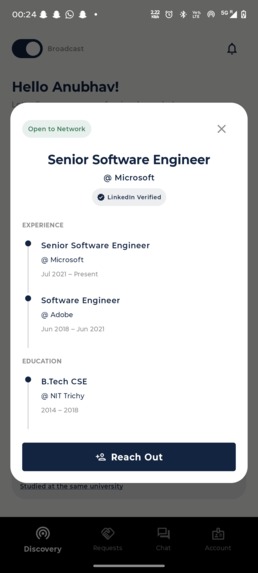
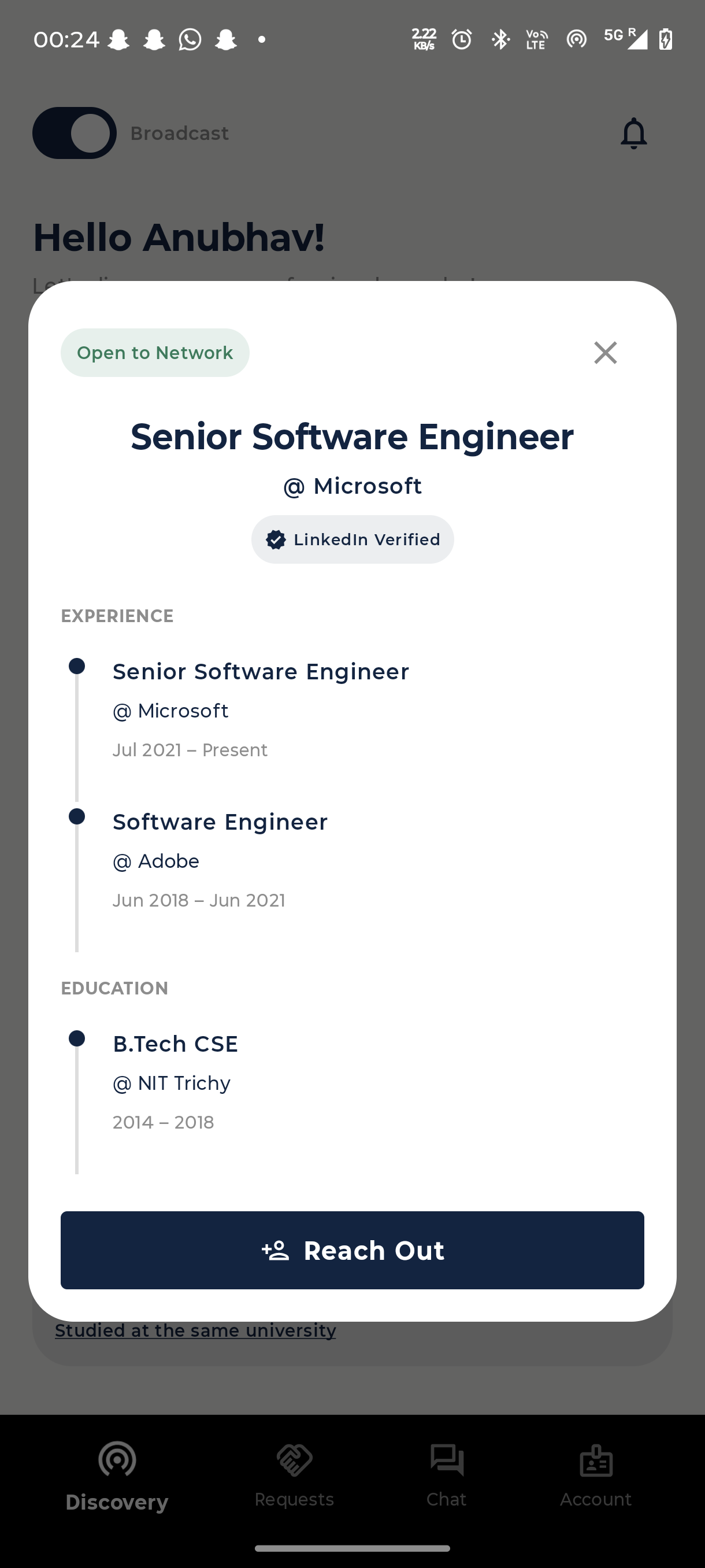
User Details
-
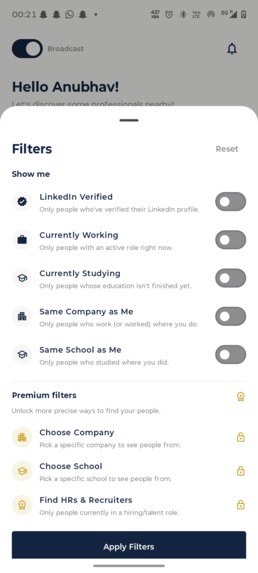
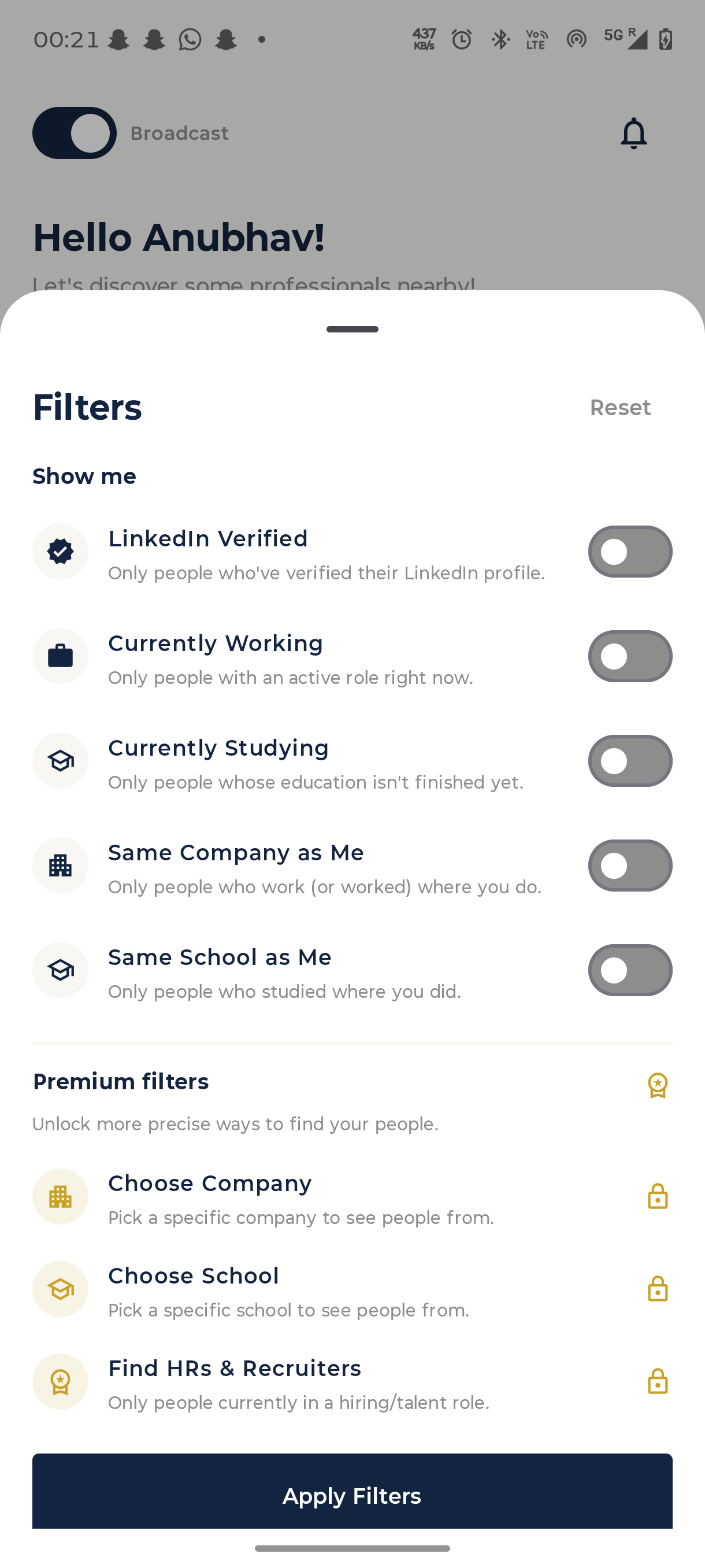
Filter Bottom Sheet
-
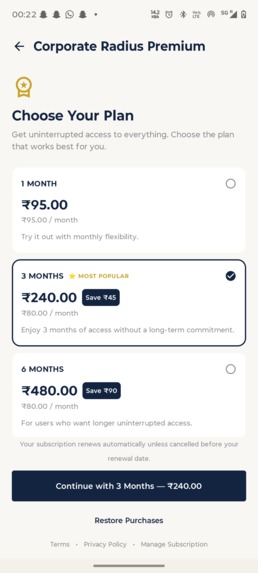
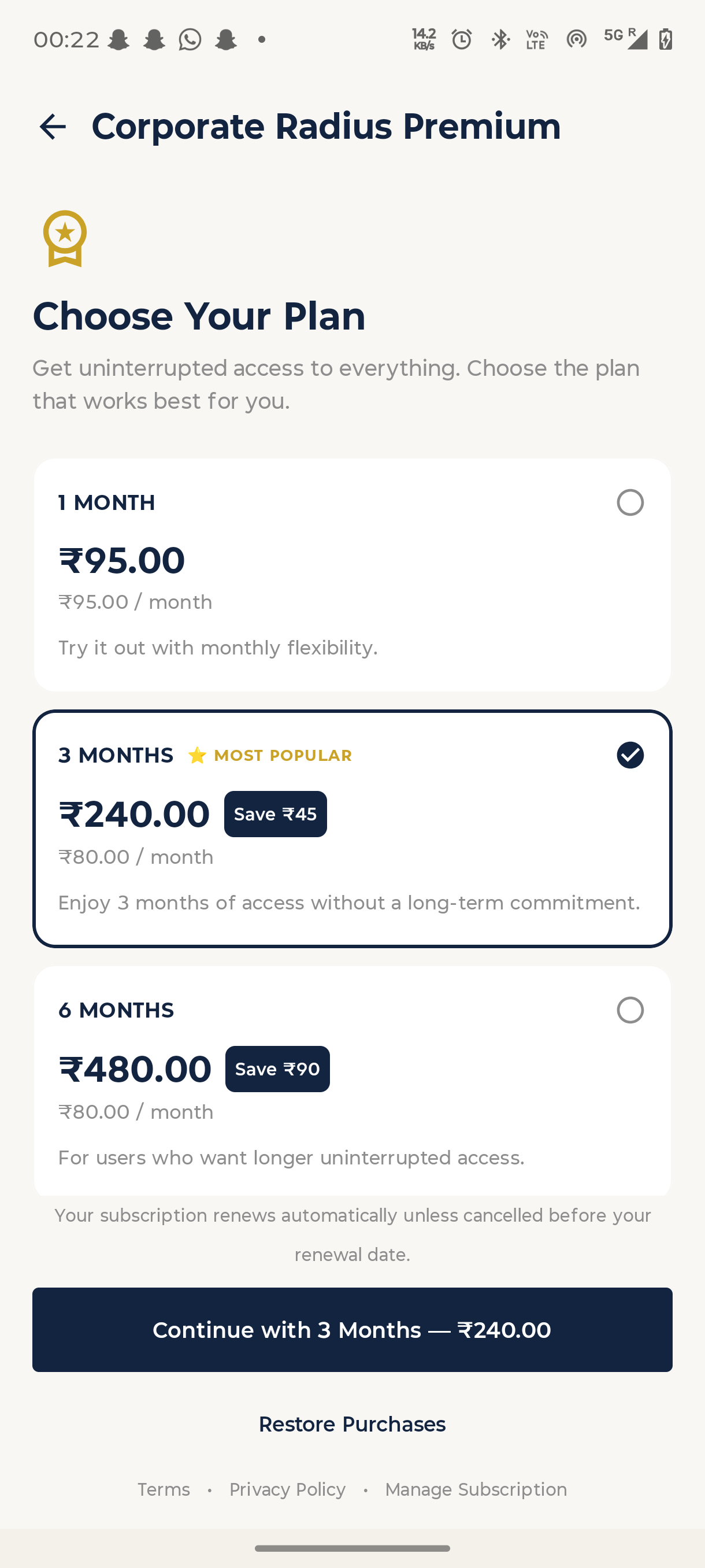
Premium Plan (Revenue Cat Offerings with custom Paywall)
-
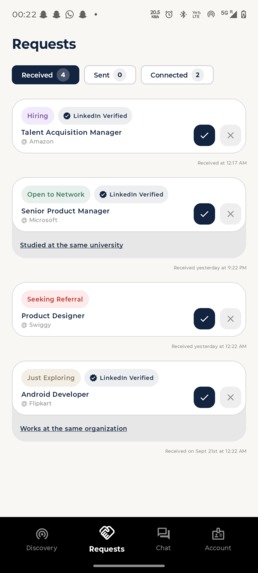
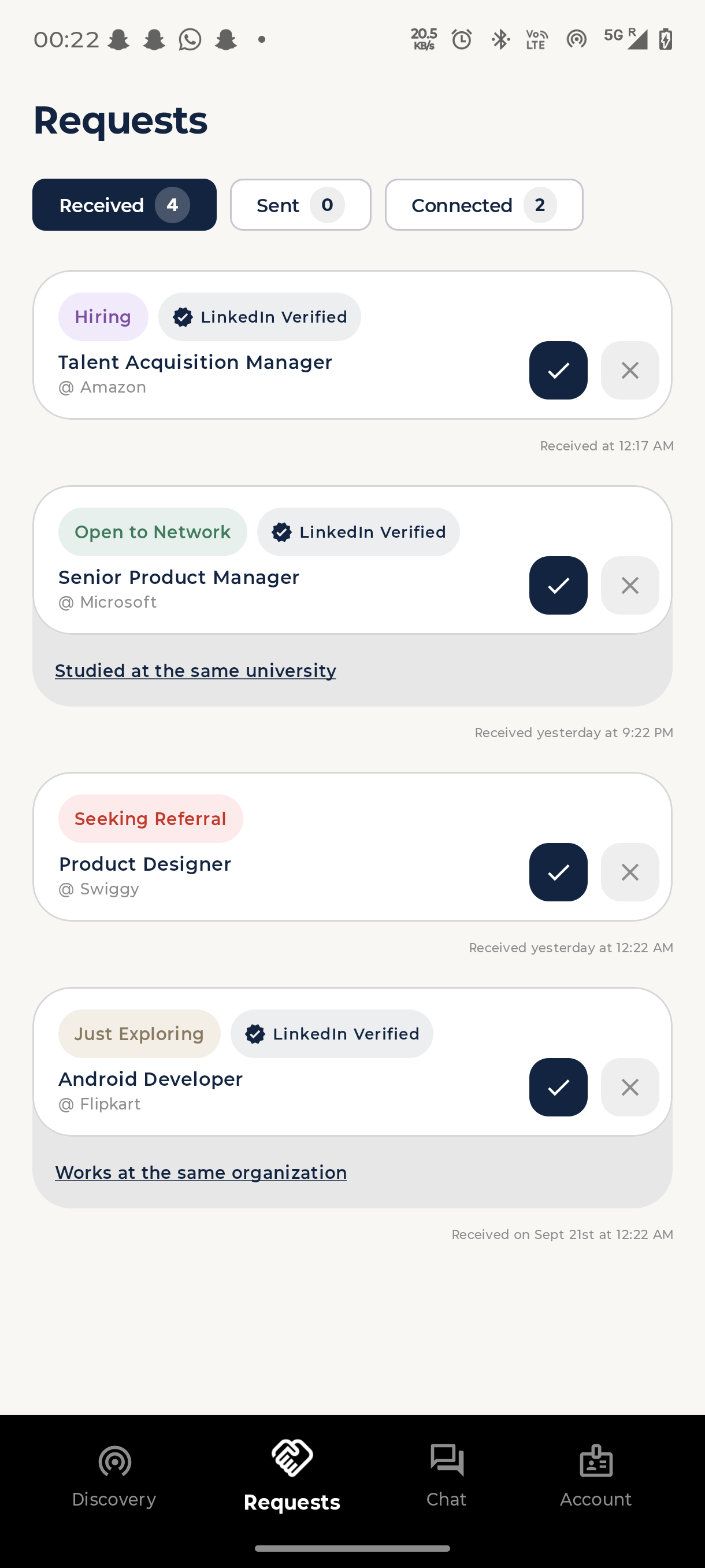
Request Received Screen
-
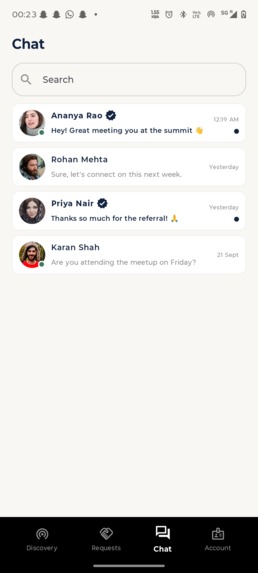
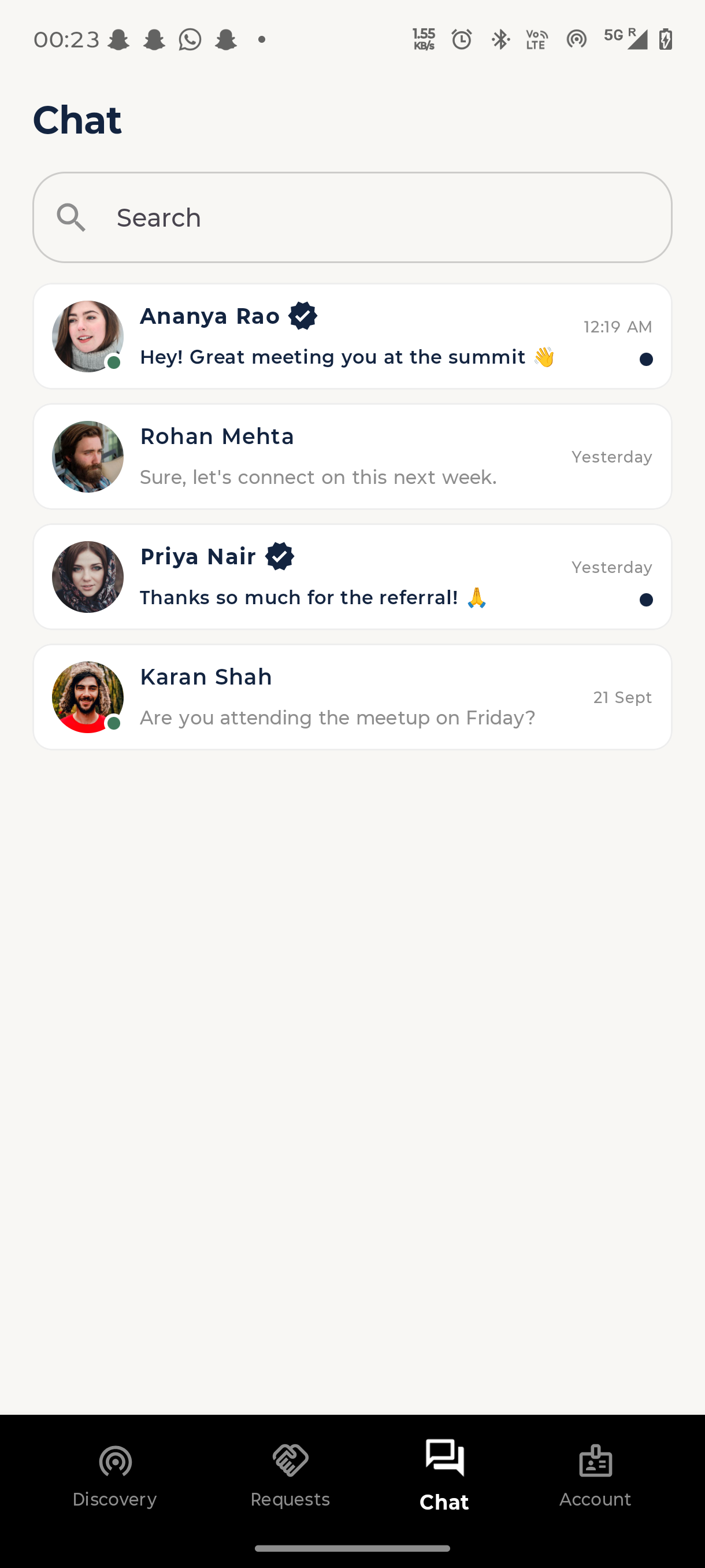
Chat List Screen
-
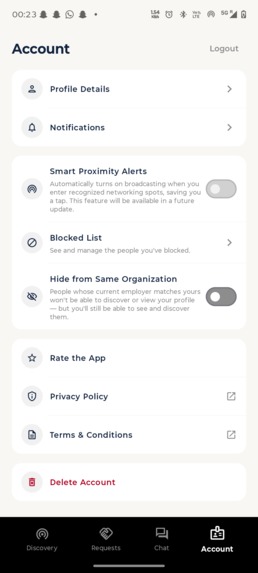
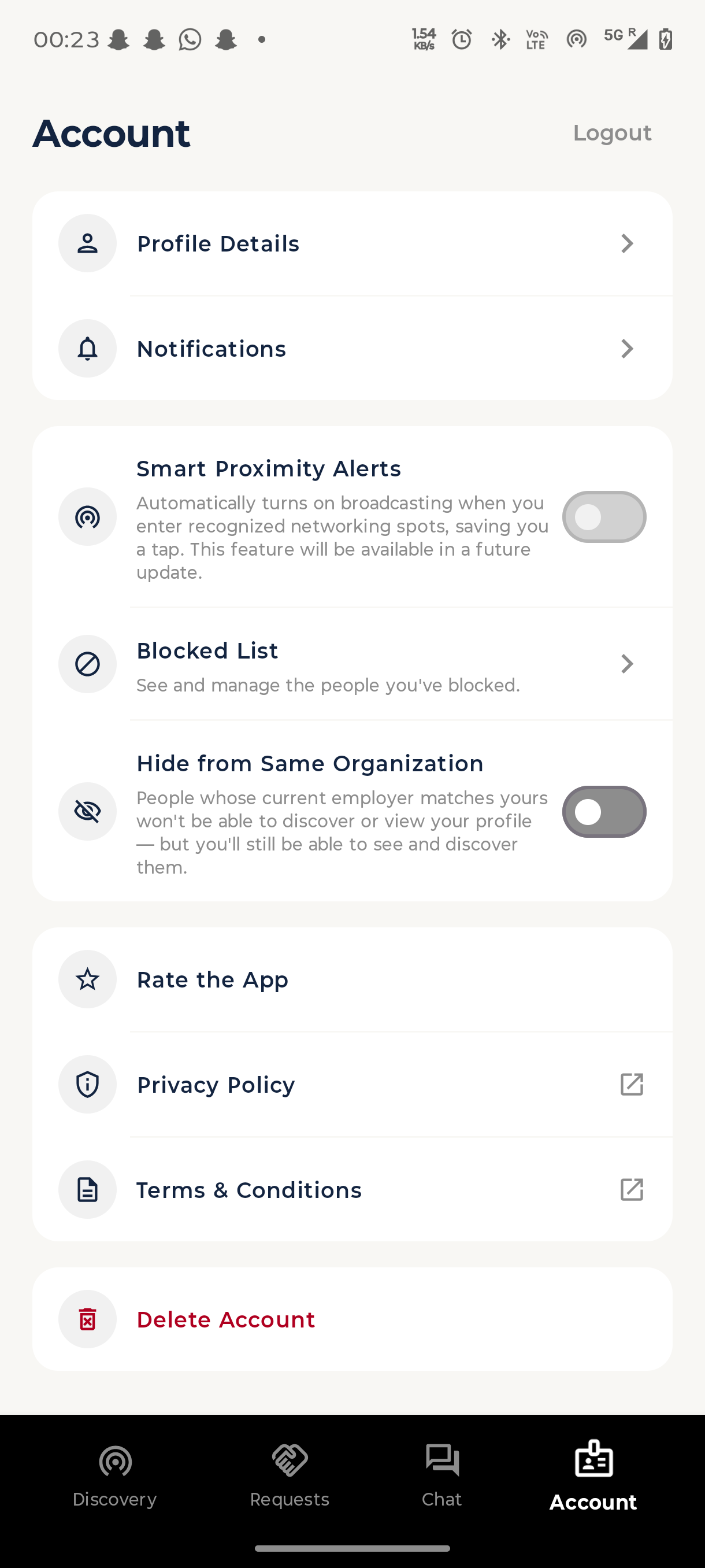
Account Screen
-
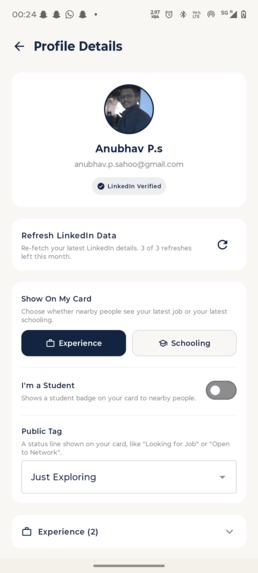
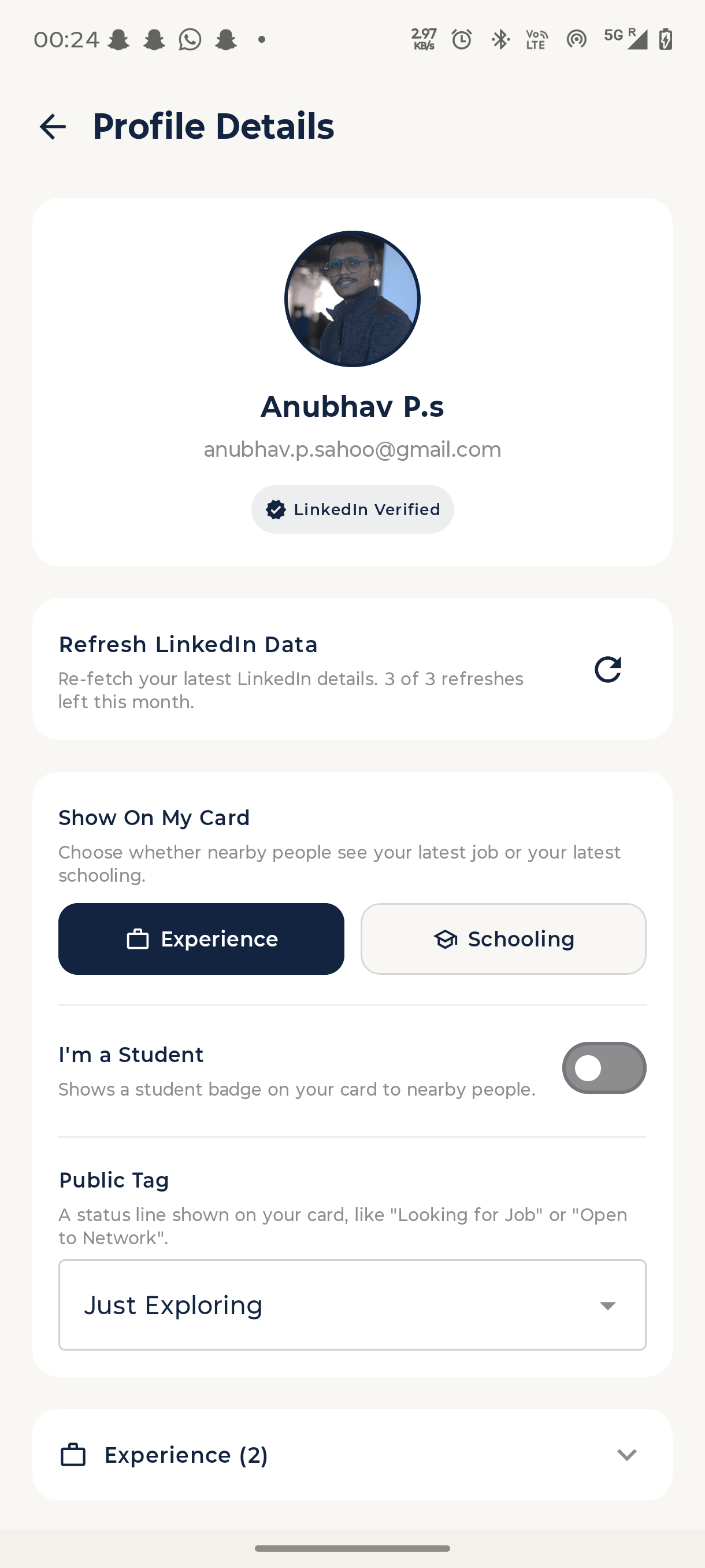
Profile Screen
-
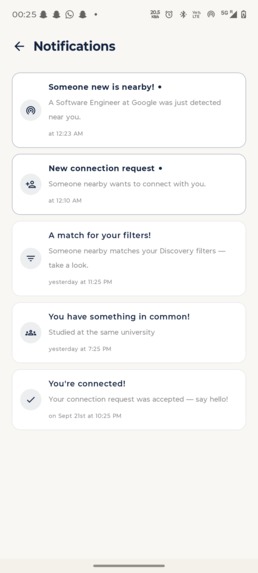
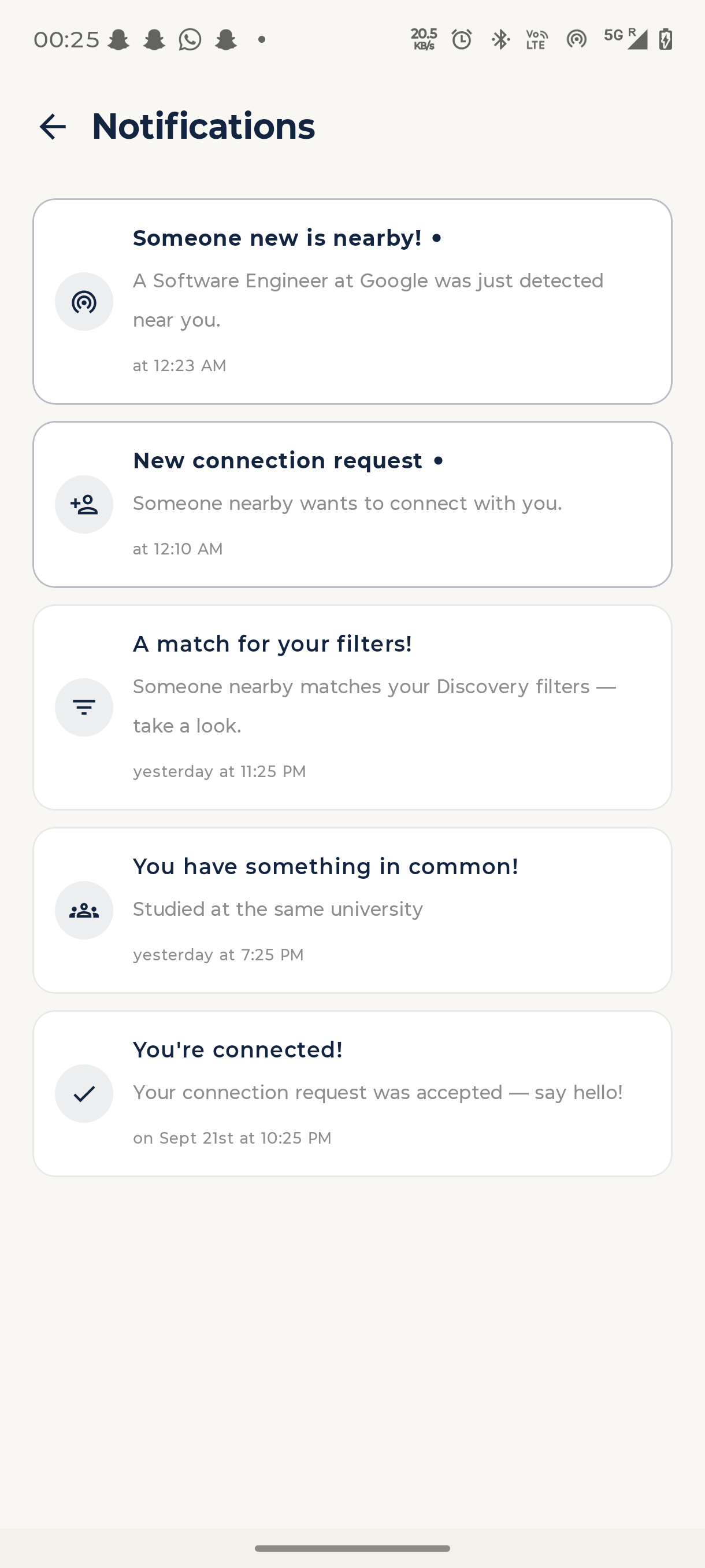
Notification Screen
Inspiration
The idea for Corporate Radius didn’t start with a hackathon prompt; it started with a problem that felt very real. India’s job market was going through wave after wave of layoffs, and it became personal when my own roommate lost his job. He had the skills, experience, and a solid resume, but for weeks, he struggled to find one thing that could actually open a door: a referral. LinkedIn seemed like the obvious place to find one, but reaching out meant sending cold connection requests and messages to complete strangers, most of which simply went unanswered. That made us question: what if professional networking didn’t always have to begin with a conversation?
As we dug deeper, we realised that this wasn’t just about finding a referral. People were looking for mentors, collaborators, recruiters, and even others navigating similar career challenges. Yet finding these people usually meant starting with a cold conversation, without knowing whether the person on the other side could actually help. What if you could know that first? What if your phone could quietly tell you, “There’s a Product Manager nearby who works at a company you want to join,” or “Someone here is hiring,” You wouldn’t have to walk up to a stranger at a conference, coworking space, or even your own office and awkwardly ask, “So, what do you do?” Technology could handle the discovery, and you could focus on the conversation. That became the premise of Corporate Radius: a professional discovery platform that helps you discover the valuable connections around you before you ever have to make the first move.
What it does
Corporate Radius takes a genuinely unconventional approach to professional networking: instead of another app where you search, scroll, and cold-message strangers, it uses Bluetooth Low Energy (BLE) advertisement to discovers real, verified professionals physically near you. It lets you reach out, without either of you ever needing to strike up a conversation first. It's a refreshingly different way to network — one that, as far as we've seen, nobody else has quite built this way.
BLE is a free, remarkably underused capability that's been sitting inside essentially every smartphone ever made, on every platform, for over a decade to make your phone itself the connector. No special hardware, no paid API, no platform-specific trick: just a basic radio feature already built into the device in your pocket, put to a use almost nobody else has thought to try.
Sign in with LinkedIn, and verify your real profile — no anonymous or fake accounts, ever. Turn on Discovery, and your phone starts broadcasting an encrypted presence signal and listening for others doing the same, purely over Bluetooth advertisement — the same free, near-universal radio capability every Android and iOS device already has, no pairing and no proprietary hardware required. No GPS check-ins, no "nearby" search radius you type in, just genuine physical proximity, sensed automatically.
See who's actually nearby — each person appears with a LinkedIn-verified badge, their current role and company, a short status tag ("Seeking Referral", "Open To Mentor", and more), and whether you share a company or school in common. This is the part that's truly one-of-a-kind: you learn all of this before a single word is exchanged — the technology does the small talk for you.
Filter who you see — by verification, current employment, shared background, and, for subscribers, a specific company, a specific school, or people currently working in HR/recruiting. If connection request is accepted, real-time chat unlocks: text, photos, documents, contact cards, location. Nothing is visible to anyone until they're actually near you and you choose to connect — a deliberately inventive privacy-first design: no name and no photo shown to a stranger before that point. Block or report anyone, any time; hide yourself specifically from people at your own current employer if you'd rather they not see you.
Put simply: it's networking re-imagined for the physical world you're already standing in, built on a piece of technology that's been free and available on every phone all along — turning your commute, your conference badge, your coworking desk, or your own office hallway into a genuinely novel discovery surface, something LinkedIn's own scroll-and-search model was never built to do.
How we built it
The app is built with Kotlin Multiplatform (Android and iOS sharing one Compose UI and business-logic layer), backed by a Go server on Cloud Run and Firestore.
The core of the whole product is the Bluetooth layer. Each device broadcasts a small, encrypted identifier that rotates on its own on a short timer — so even if someone captured the raw signal, they couldn't link the same phone's sightings together across time, and there's nothing in the broadcast itself that reveals who you are. Only our own server can ever translate that rotating signal back into an actual profile, and only for people you've chosen to interact with.
Once a nearby signal is decoded, we still have to decide whether that person is genuinely close by right now, not just "was nearby a while ago." We do this with a lightweight, battery-friendly proximity check using the device's own cached location — no continuous GPS tracking — so someone automatically drops off your list the moment they've actually moved on.
On the backend, the Go service handles LinkedIn identity verification (matching a submitted profile against the authenticated LinkedIn account, since LinkedIn's own sign-in doesn't expose a profile link on its own), the entire connection-request lifecycle (send, accept, reject, withdraw, disconnect, block — all built to survive a double-tap or a flaky connection without ever leaving things in a broken state), push notifications, and a live, server-driven catalog of status tags and companies/schools that grows automatically as more people join.
Chat runs in real time directly against our cloud database rather than through the backend API — live delivery, presence, and read receipts — and reuses the same underlying connection record as the chat "room," so blocking someone instantly and automatically shuts off their chat access too, with nothing extra to build for it.
Subscriptions run on RevenueCat on top of Google Play Billing, with a secure server-side webhook as the single source of truth for who's actually premium — the app's own local copy of that status is only ever used for cosmetic UI, never trusted for anything that actually costs money.
Challenges we ran into
BLE advertisement packets are tiny. A classic BLE advertisement gives you an extremely small usable payload, and we needed to fit an encrypted, rotating, per-account identifier into it while disguising it as an ordinary service UUID field, so it doesn't stand out as "this is clearly a custom app protocol."
Backgrounded Bluetooth is a genuinely different problem per platform. Android throttles or kills background radio work unless the app runs a foreground service with the correct declared type — a requirement that got stricter again with Android 14. iOS has its own, quite different background BLE model, where scanning gets coalesced and de-duplicated once the app isn't in the foreground. We had to design around each platform's real constraints rather than assume BLE behaves the same everywhere.
LinkedIn doesn't give you what you'd expect. There's no self-serve API to fetch a signed-in member's own profile URL — that requires LinkedIn's Partner Program, a slow approval process. We solved this by having the user paste their own URL and independently verifying it's really theirs, by cross-checking the name and a perceptual photo hash against what LinkedIn's own sign-in had already told us.
Accomplishments that we're proud of
- Real, pairing-free BLE discovery that actually works - not a demo, encrypted and rotating so it resists naive tracking, running reliably in the background on a real phone.
- Privacy by construction, not as an afterthought - nobody's identity is exposed to a stranger until both sides have chosen to connect; turning Discovery off makes you completely invisible.
- A connection flow that mirrors how real networking actually works without ever requiring the awkward opening conversation that stops so many people from reaching out in the first place.
- A monetization strategy built around real intent, not arbitrary limits - instead of paywalling something trivial, we deliberately placed our most valuable capabilities behind Premium: searching by a specific company, searching by a specific school, and finding HRs & recruiters nearby. These aren't random upsells, they're precisely the tools a job-seeker chasing a referral (the exact problem that inspired this app in the first place) wants the most: the ability to specifically find someone at your target company, or a recruiter standing right there, instead of hoping to stumble across them by chance. That keeps the free tier genuinely useful on its own - real discovery, verification, status tags and basic filters, while giving anyone seriously job-hunting or hiring an unmistakably high-intent reason to upgrade. It's the feature people actually came for, sitting one tap past the paywall, which is exactly the kind of conversion that sustains the business - covering RevenueCat, our backend infrastructure on Cloud Run and Firestore, and every other paid service the app depends on. And because the entitlement check is enforced server-side rather than just trusted from the client, that revenue can't be quietly bypassed by a modified app either.
What we learned
- Bluetooth Low Energy is a genuinely under-used tool outside of pairing-based use cases — most tutorials and tooling assume you want a persistent connection, when the simple fact of "something is near" is already a powerful signal on its own.
What's next for Corporate Radius
What's next for Corporate Radius
- App Store launch for iOS - the iOS build has been submitted to the App Store and is currently in review; we expect it to go live within about a week, bringing Corporate Radius to both Android and iPhone users.
- Smart Proximity Alerts - automatically turning on broadcasting the moment you walk into a recognized networking hotspot (a conference venue, your own office), instead of needing to remember to toggle it yourself.
- In-house professional verification - building our own verification of users' professional details, removing our dependency on LinkedIn data and APIs while keeping every profile trustworthy.
- Partner program with conferences, cafés and universities - teaming up with event organizers, coworking cafés and campuses so their venues become recognized networking hotspots, making it effortless for attendees and students to discover each other.
- AI-powered Smart Connect - using AI to analyze profiles, goals and public tags to suggest the people most worth connecting with nearby, so you know exactly who to talk to before you walk across the room.
- One-tap sharing - instantly share your resume, contact details and portfolio links with a new connection in a single tap, turning a quick hello into a lasting professional connection.
Built With
- ble
- bluetooth
- claude
- compose
- gcp
- go
- google-play
- kmp
- kotlin
- networking
- revenuecat
- social

Log in or sign up for Devpost to join the conversation.