-
-
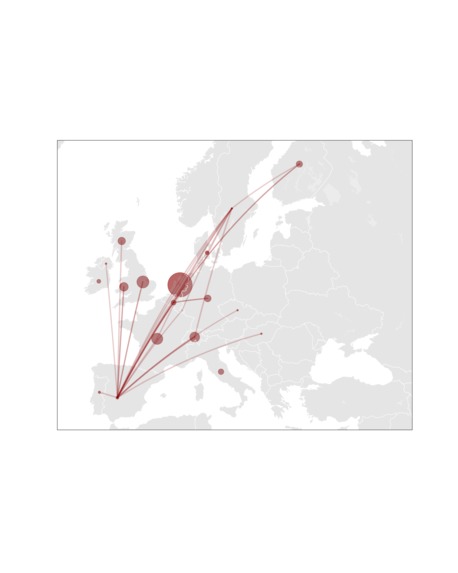
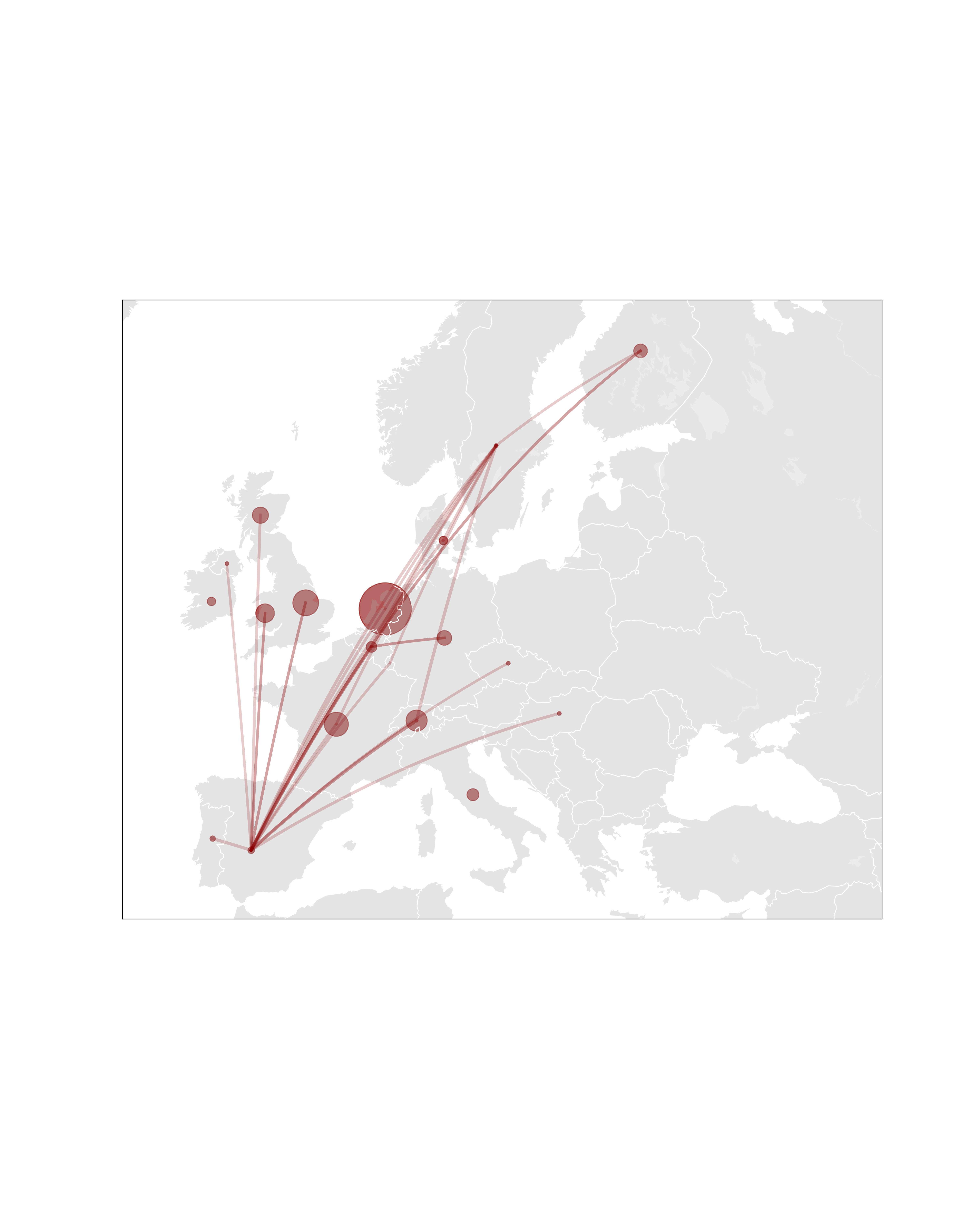
Spread within Europe based on sequencing information
-
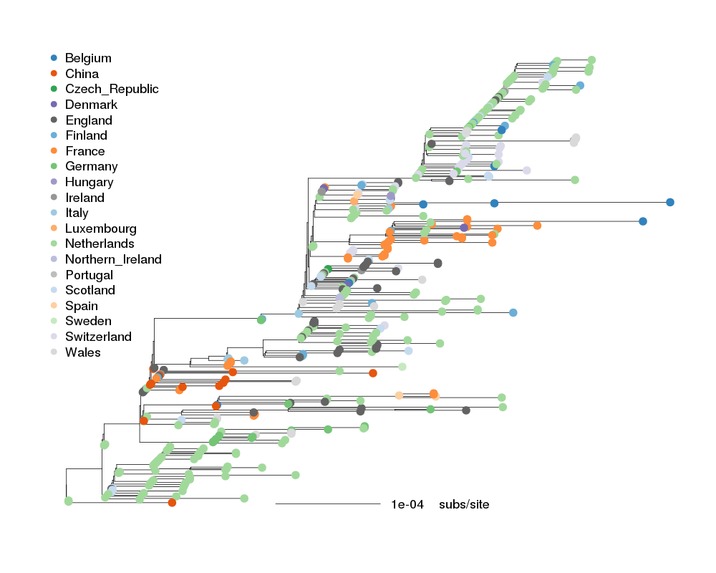
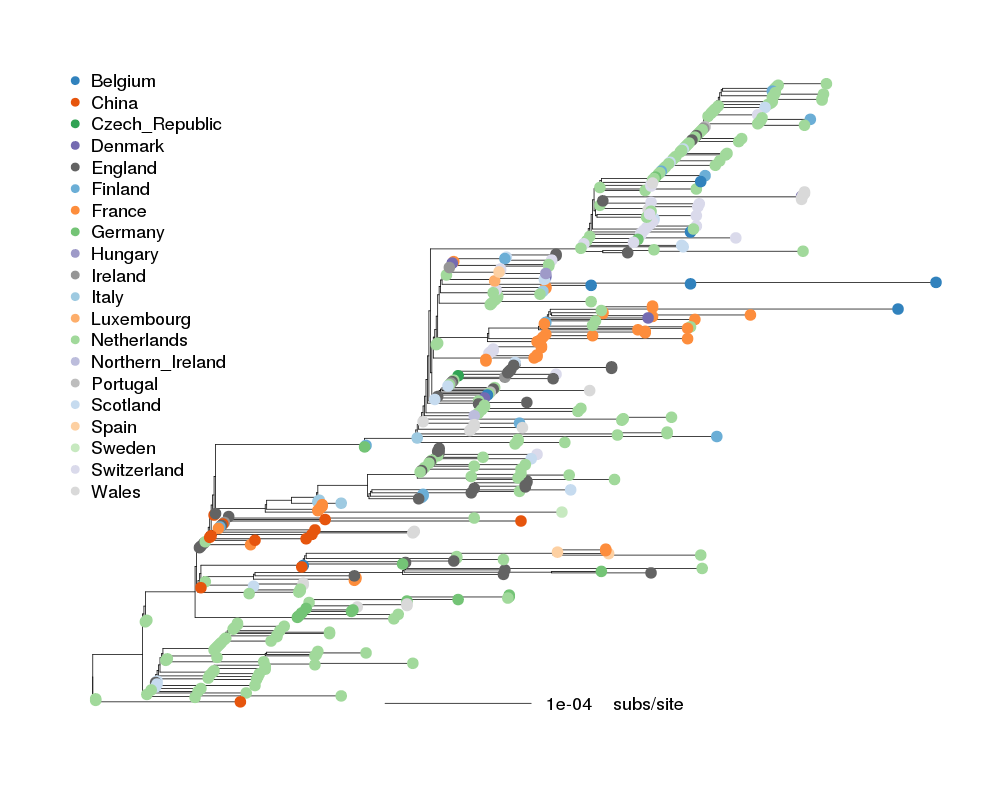
Phylogenetic tree of all available European virus sequences
-
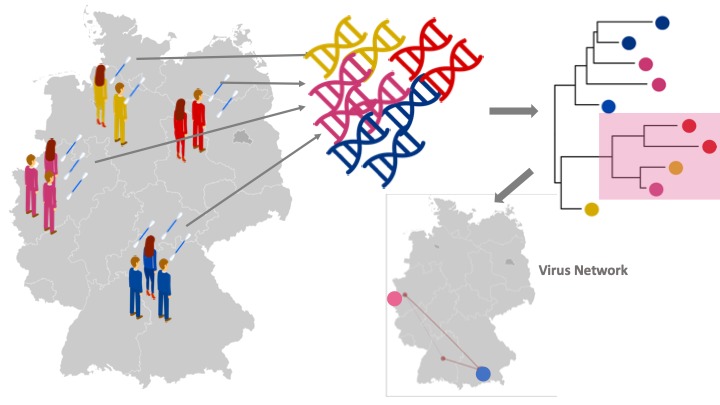
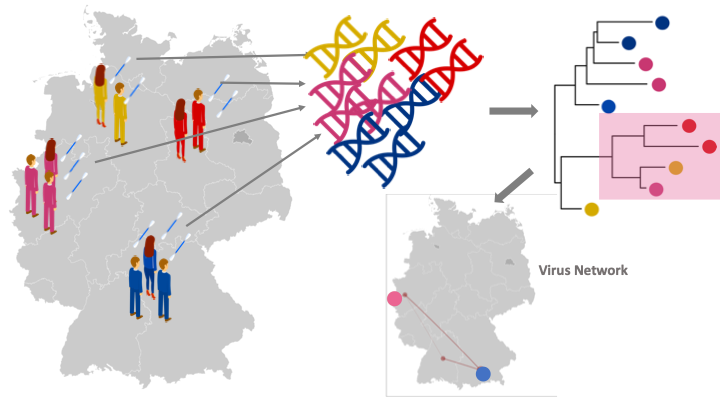
CoroNet Workflow
Inspiration
It is imperative to prioritize early detection of Covid-19 in order to slow down virus transmission and reduce the burden on the health care system. Rapidly growing transmission clusters, i.e, hotspots of epidemic spread, can be detected by inferring the evolutionary history of virus sequences that are sampled from infected individuals, and mapping the location of the individual on the phylogenetic tree of the virus.
What it does
Our project CoroNet wants to identify high-risk areas where the virus is spreading very fast. We want to use the genetic information of the virus and the similarities between them to identify hotspots with fast evolving virus. Our goal is to slow down the infection spread of the virus and to flatten the curve when we are able to identify early the high-risk areas and isolate them from other regions.
How I built it
We use genomic sequences from GISAID to build a phylogenetic tree of the virus. From that, we can infer the direction of the spread by comparing the virus sequences taken from patients. The code for the analyses is located at github.
What's next for CoroNet
For the future development we want to make an appeal to the policy makers to support the sequencing of the virus. WIth the modern technologies, this can be done in few hours and doesn’t cost much money. All sequences must be stored in public repositories such that all the researches will have access to them. With our joint forces we can fight the virus spread.
Challenges we had during the hackathon
Understand the Slack channels, challenges and ideas in the hackathon. Record videos including powerpoint slides and voice.
What we learned
How well can collaboration work remotely and online. How much progress we can make in only 48 hours.


Log in or sign up for Devpost to join the conversation.