-
-
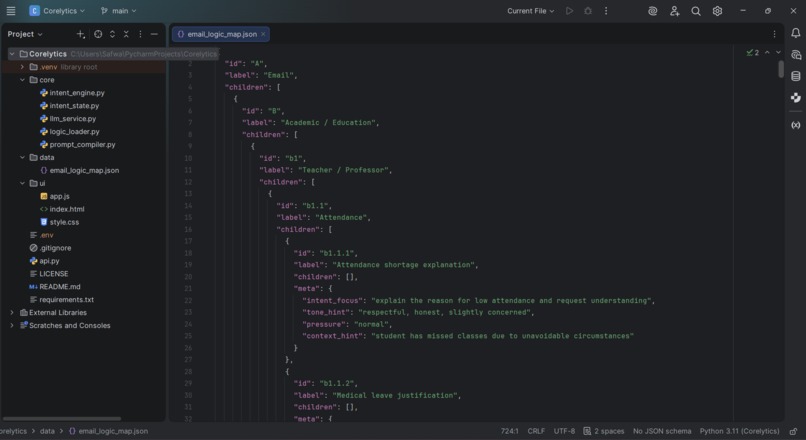
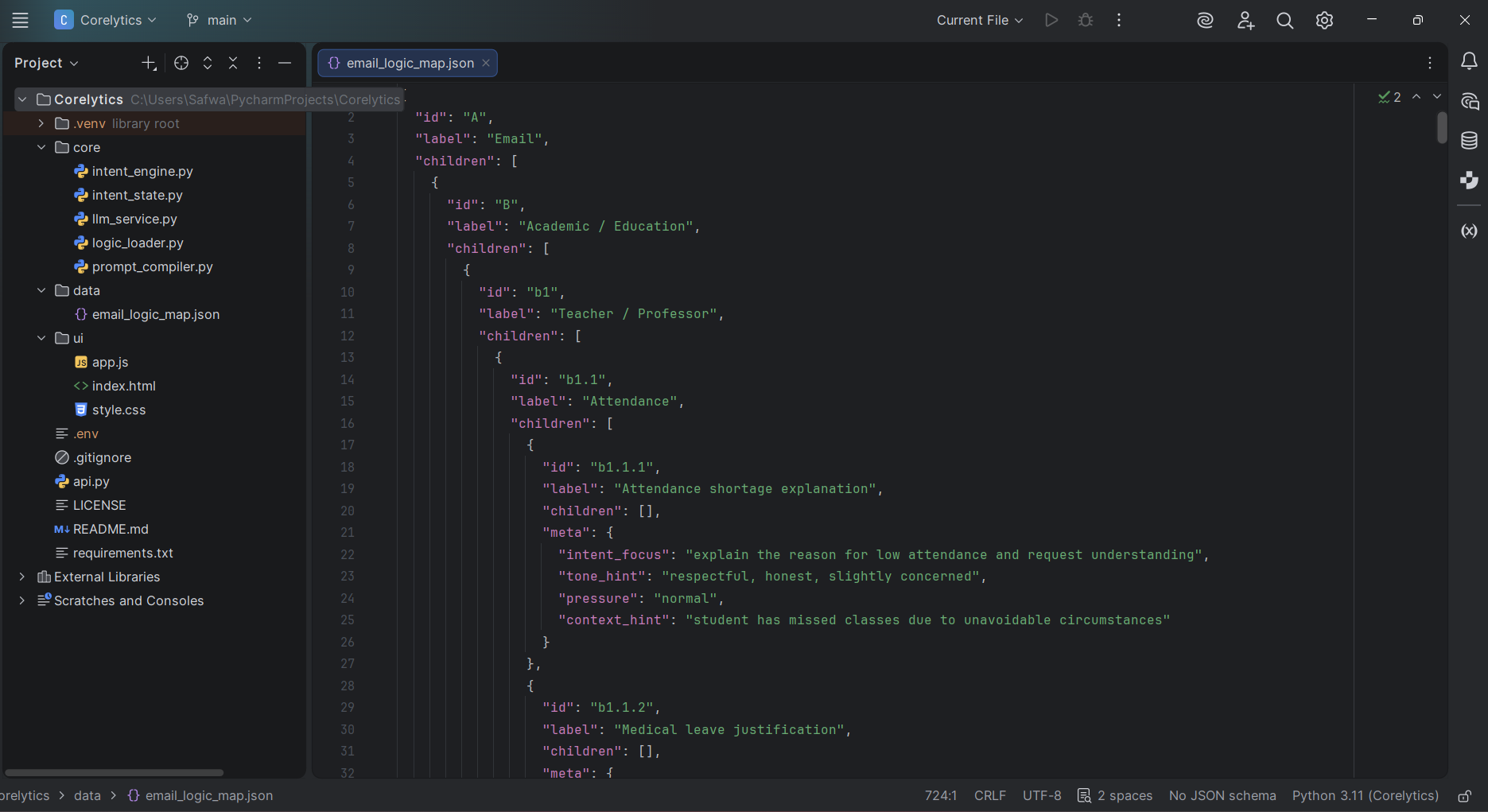
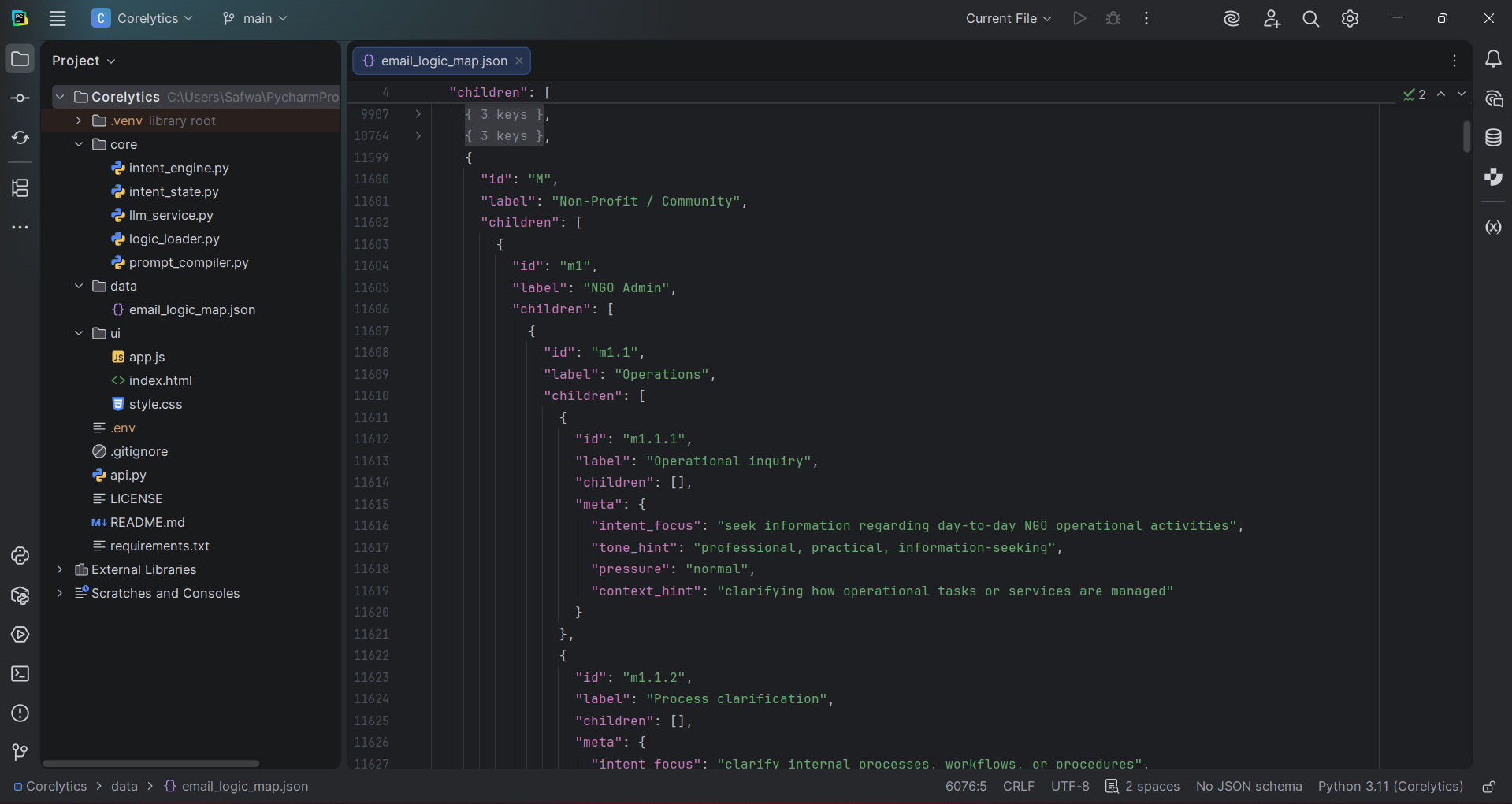
JSON Intent Tree Hierarchical JSON logic tree defining domains, recipients, categories, and scenarios for promptless communication.
-
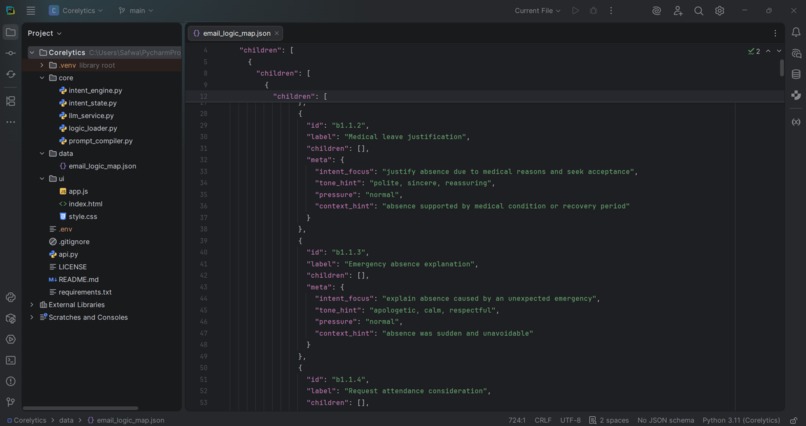
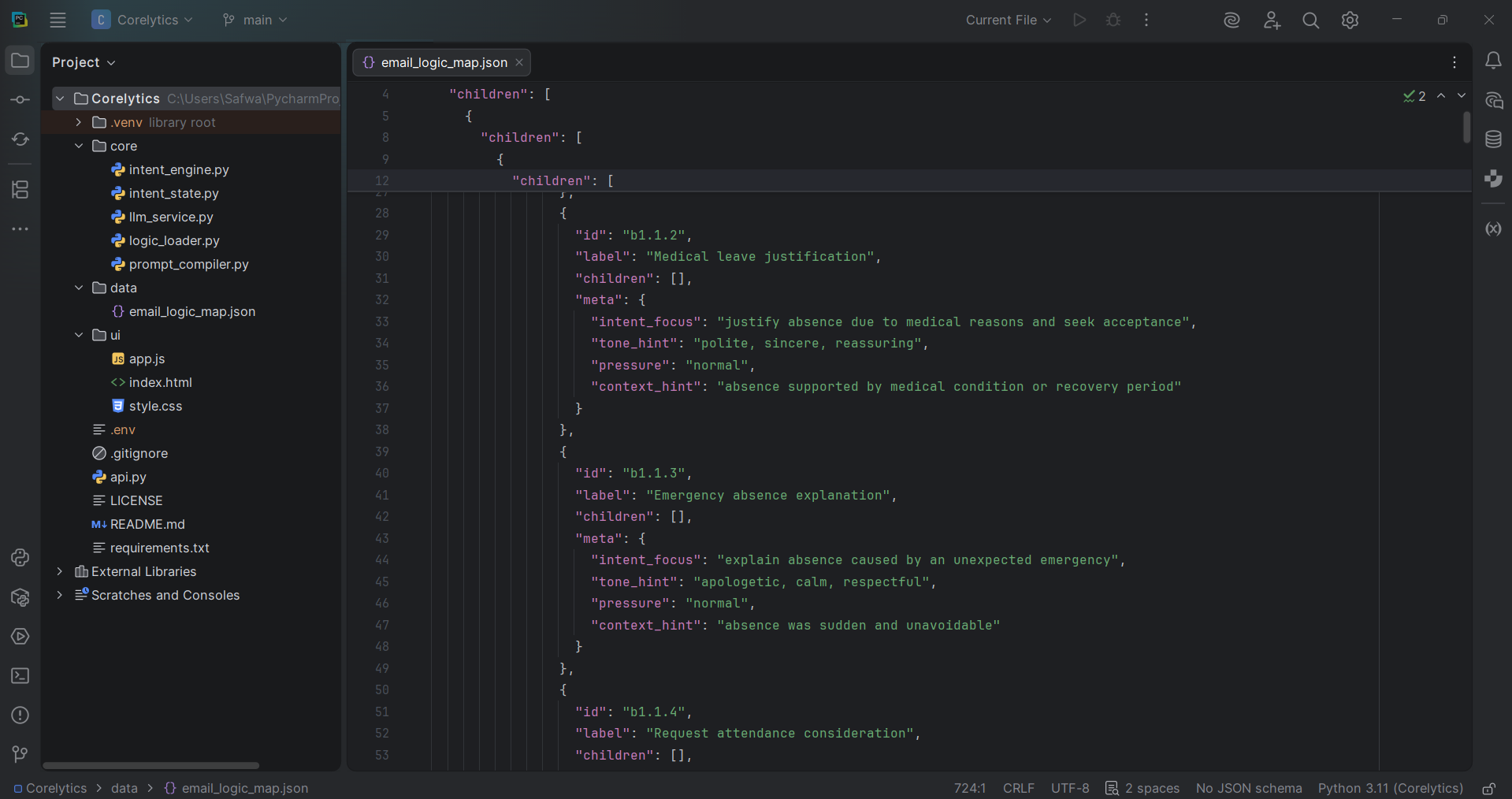
JSON Node (intent + meta) Each node encodes intent, tone, and context hints to guide consistent and context-aware email generation.
-
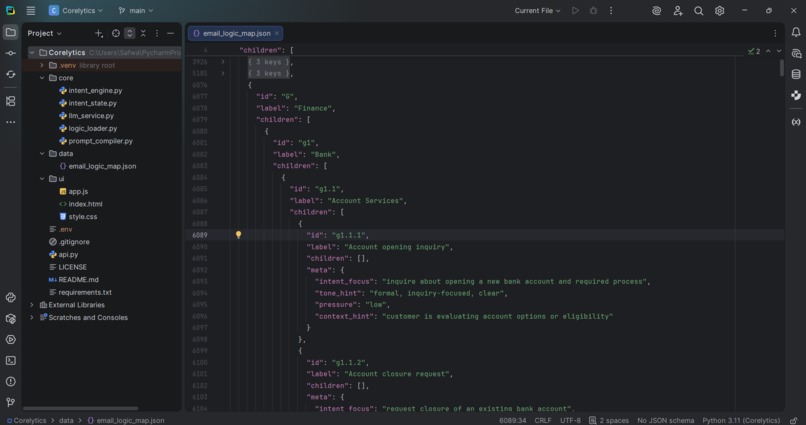
JSON Deep Hierarchy Deep structured design enables scalable expansion across multiple domains and real-world communication use cases.
-
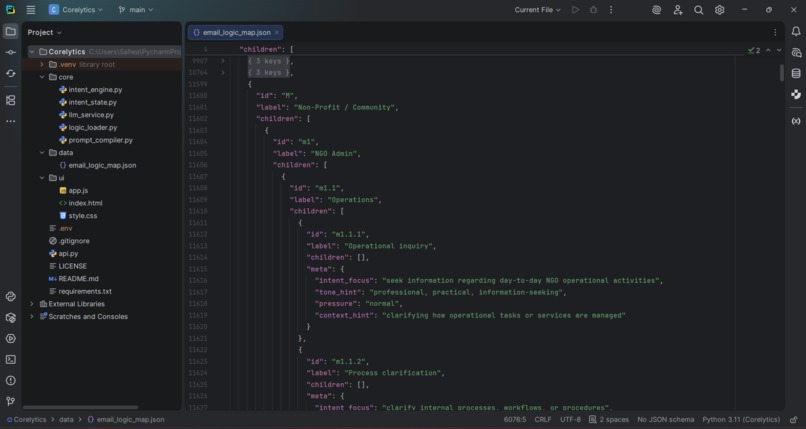
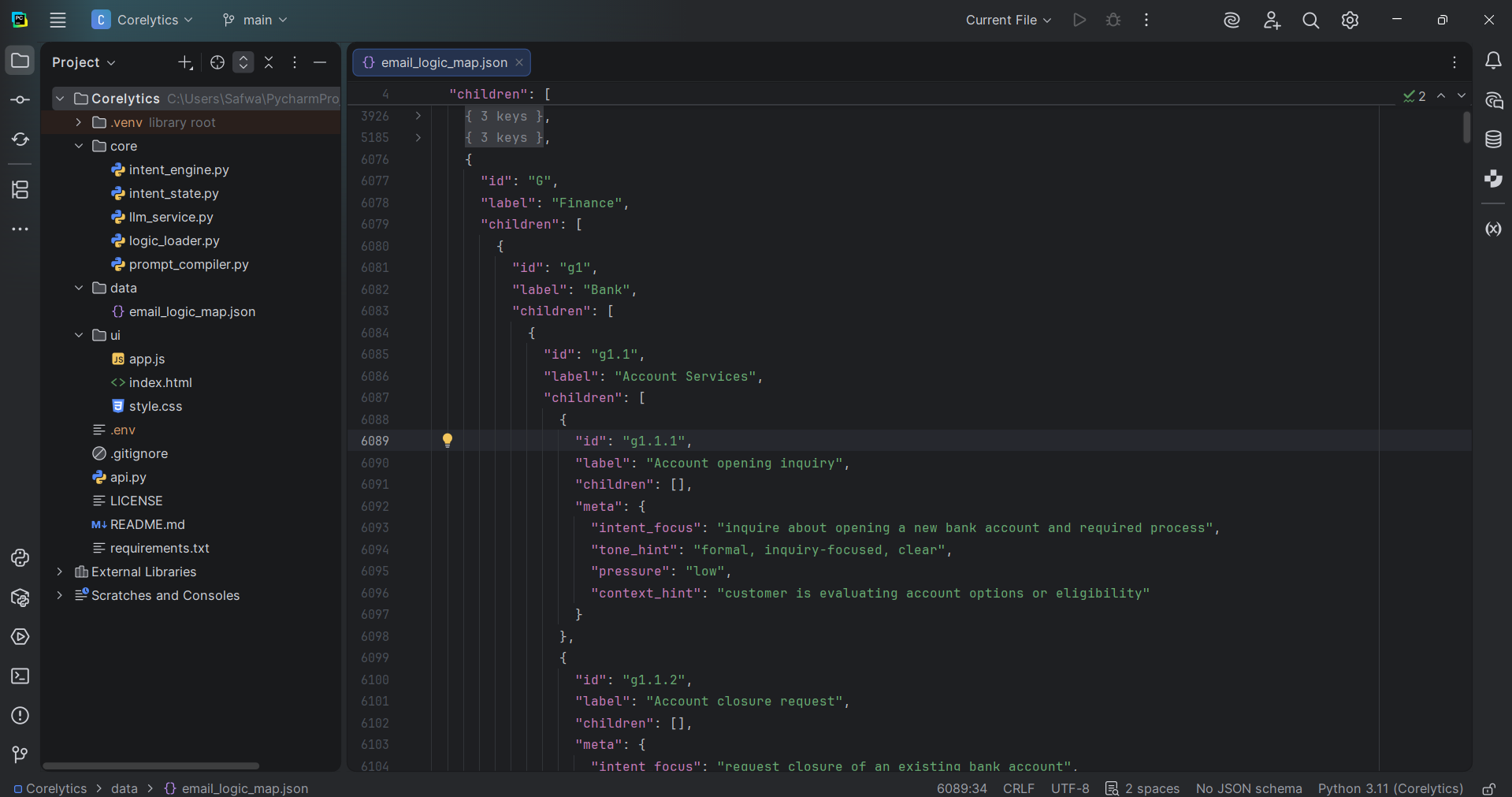
Domain Expansion Example(Finance/etc.) Domain-specific branche demonstrate flexibility and extensibility of the intent-driven architecture.
-
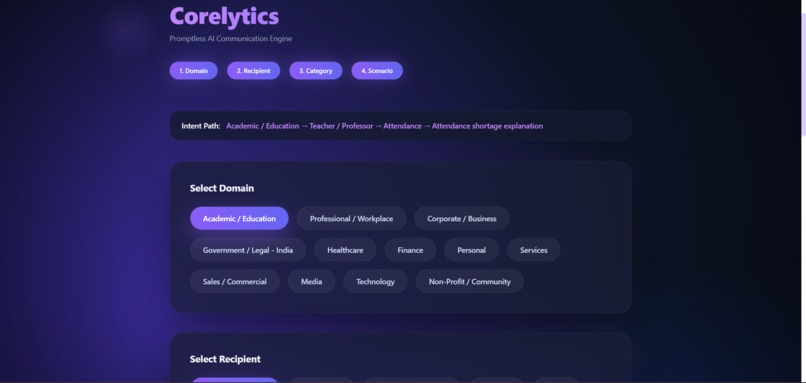
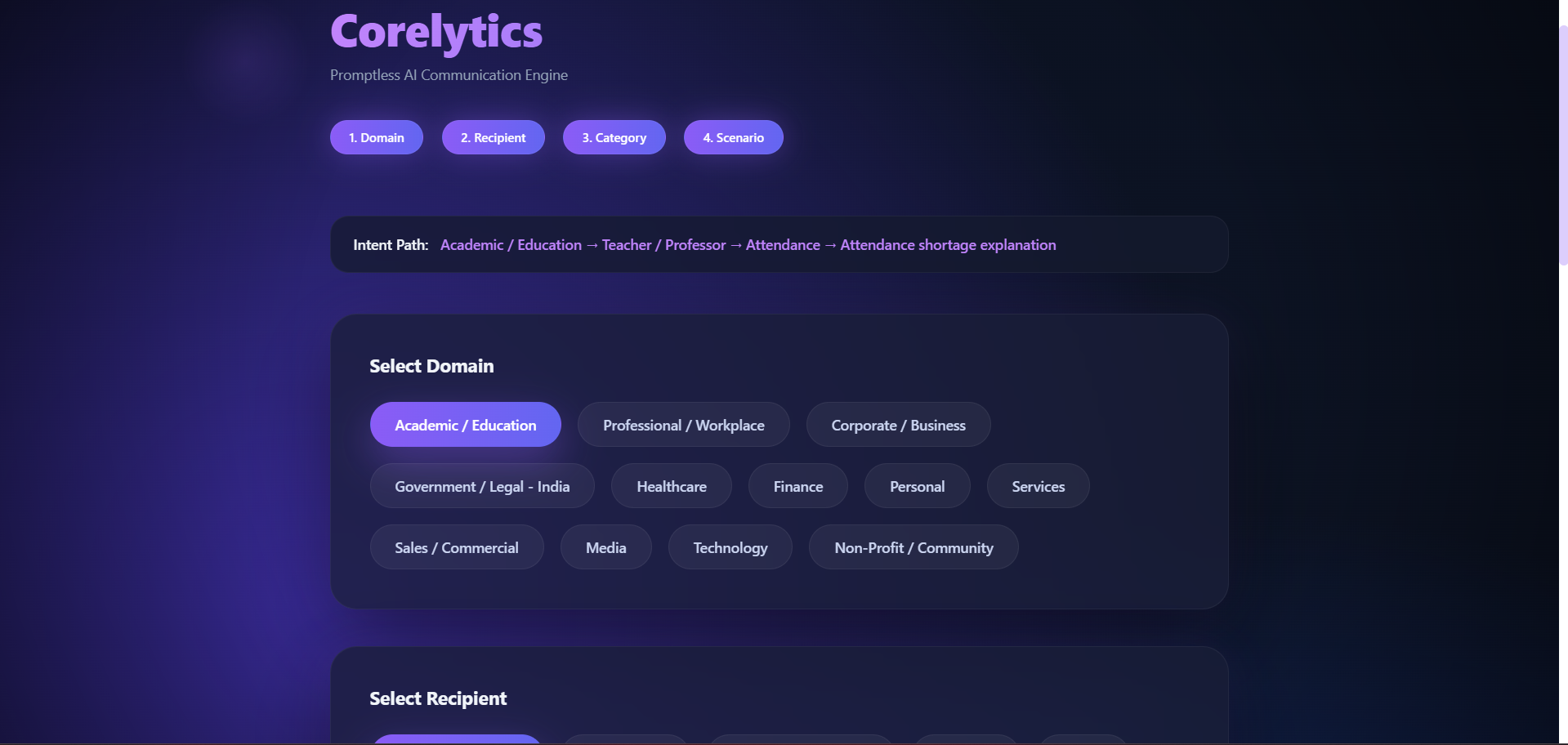
UI – Domain Selection Step 1: Users select domain through a guided interface, eliminating the need for manual prompt writing.
-
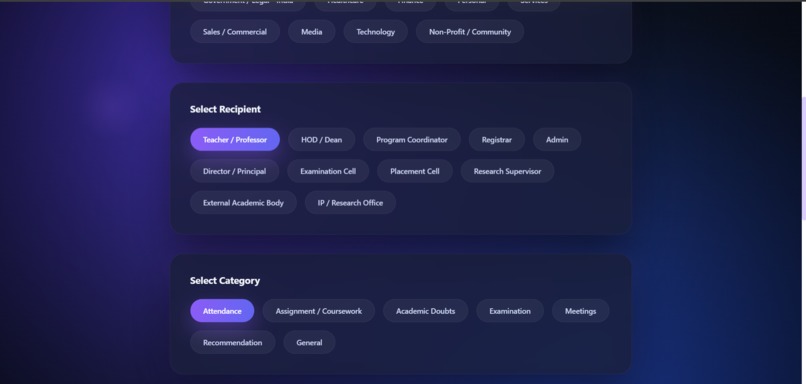
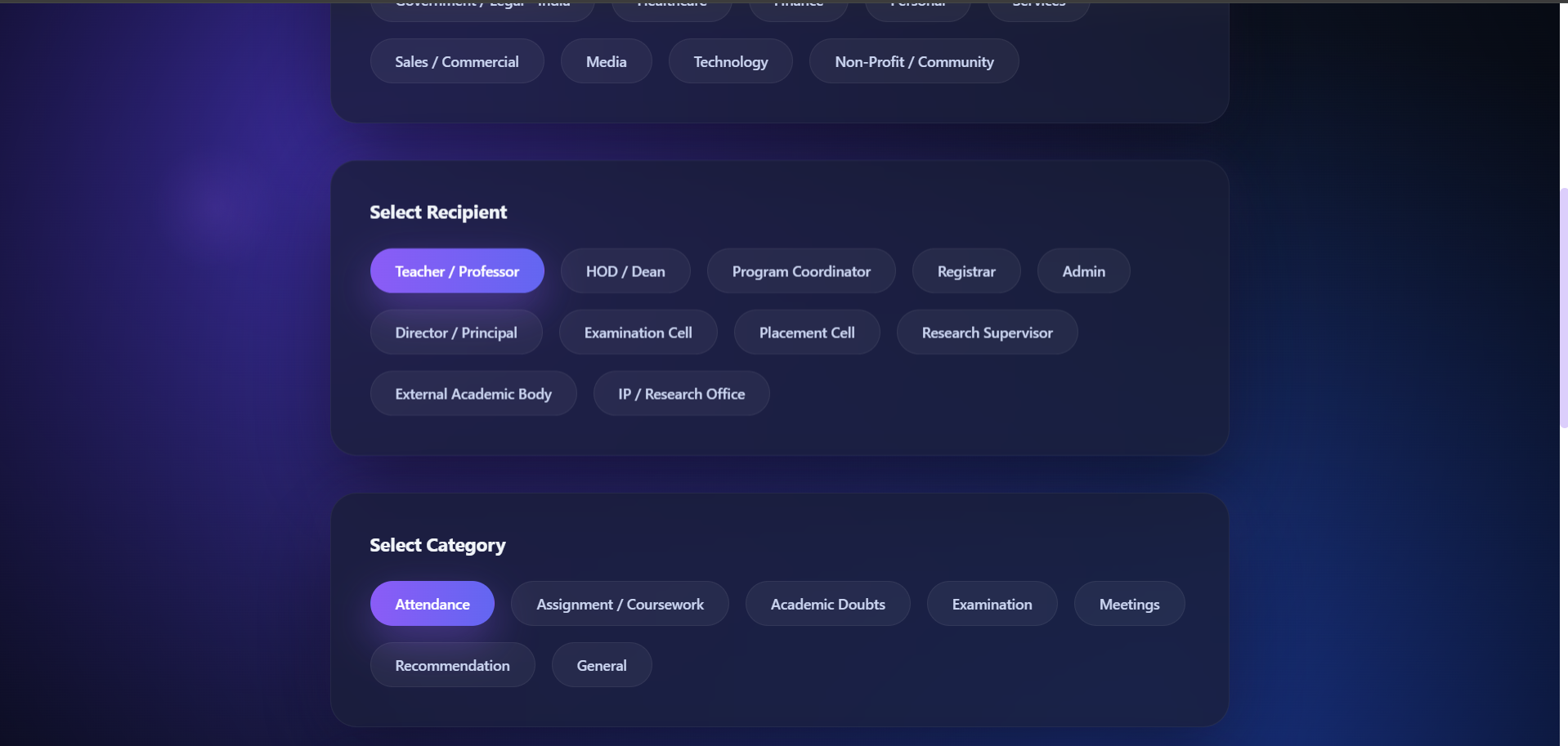
UI – Recipient + Category Step 2 & 3: Recipient and category refine communication intent and automatically adjust tone and structure.
-
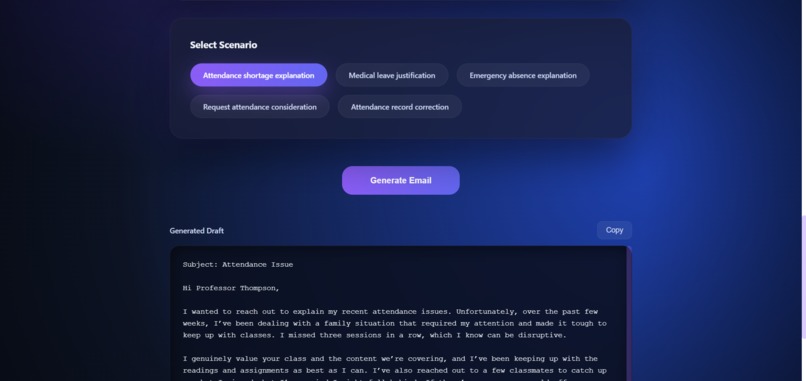
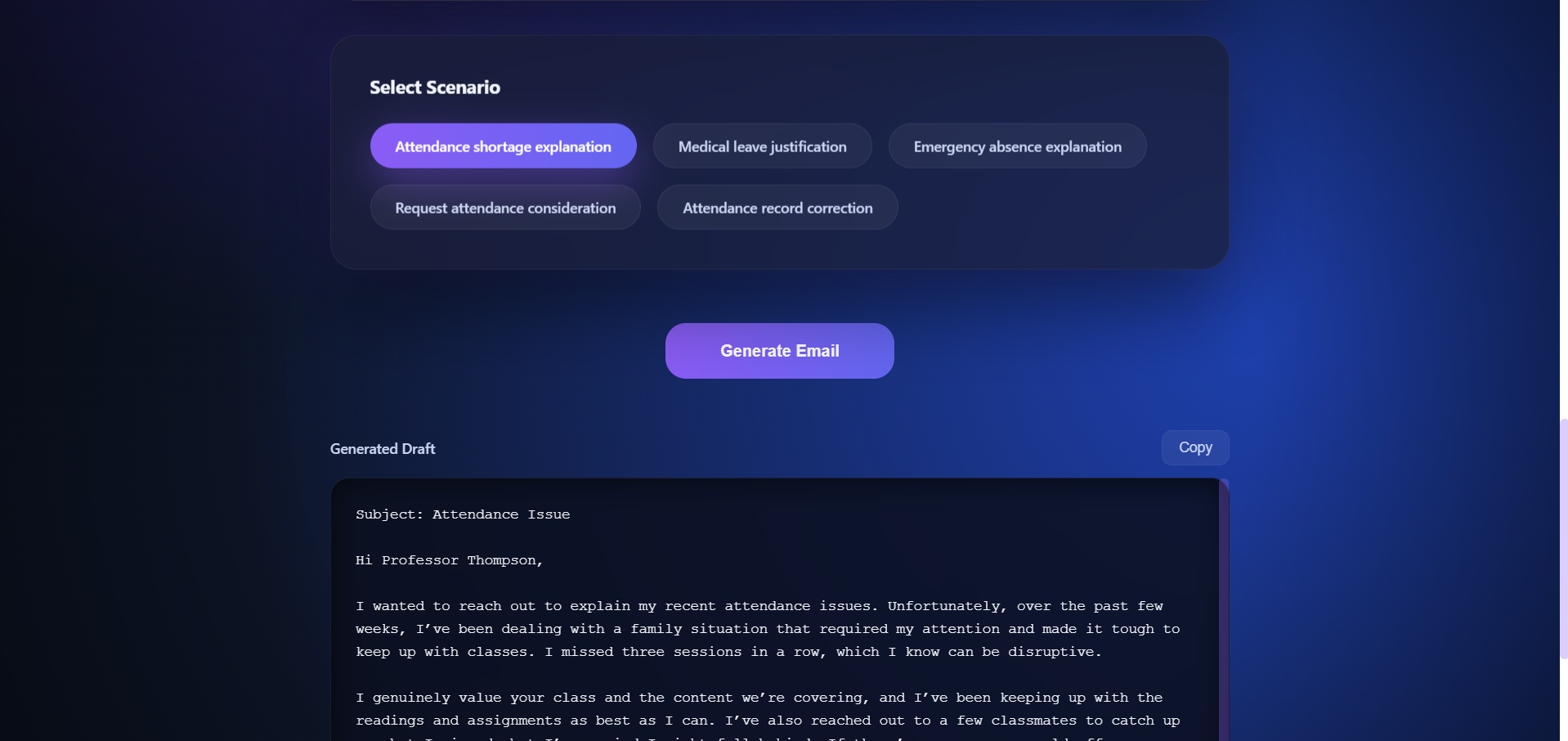
UI – Scenario Selection Step 4: Scenario selection defines the exact use case, completing structured intent input.
-
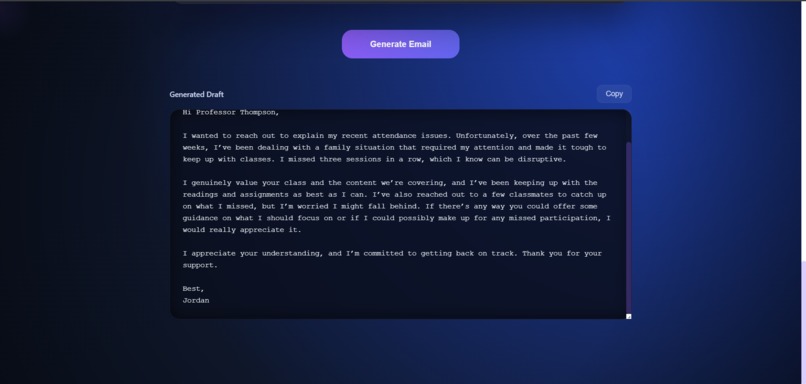
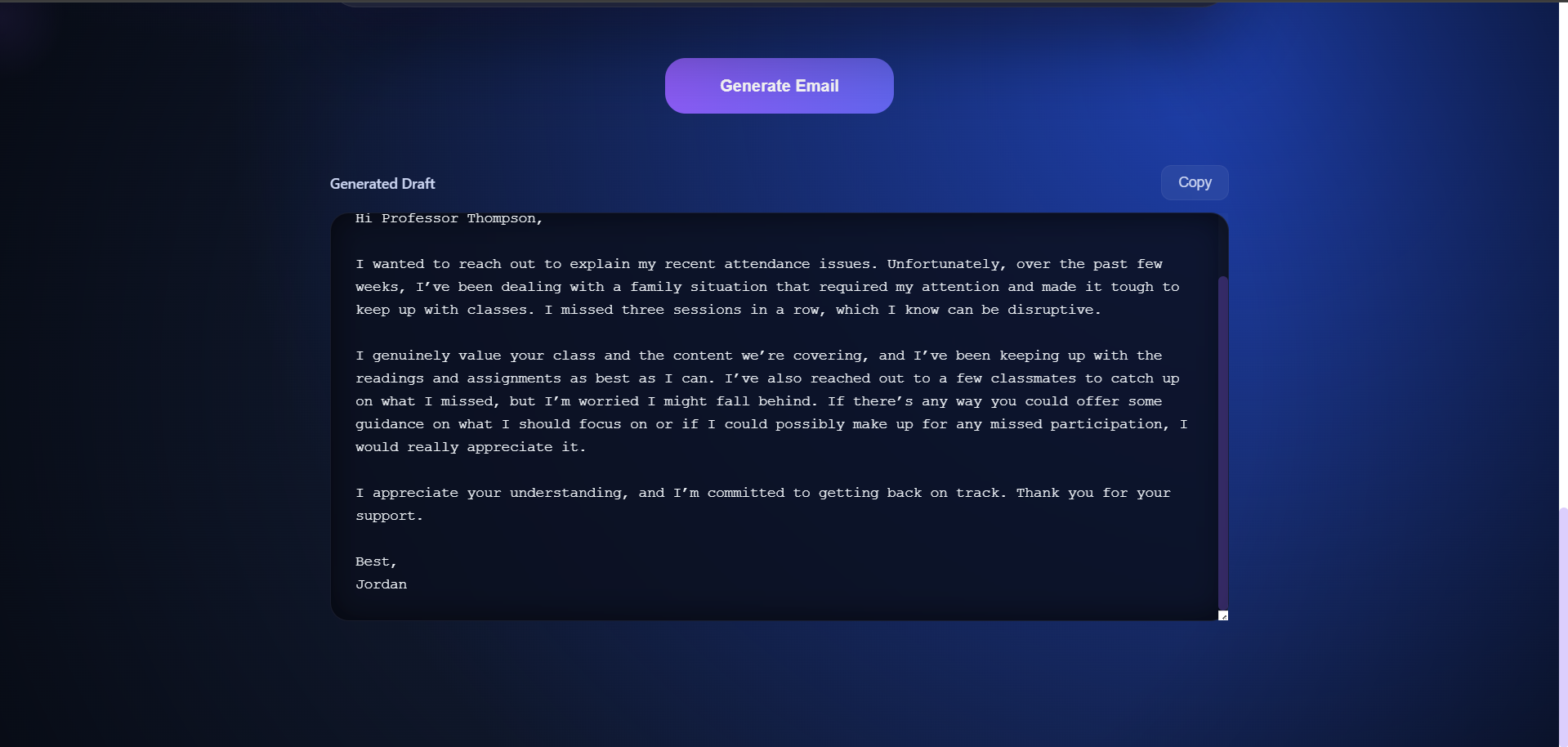
Generated Email Output Final output: fully structured, context-aware professional email generated without prompt engineering.
-
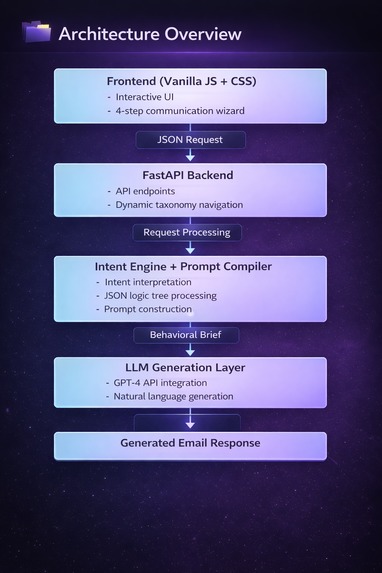
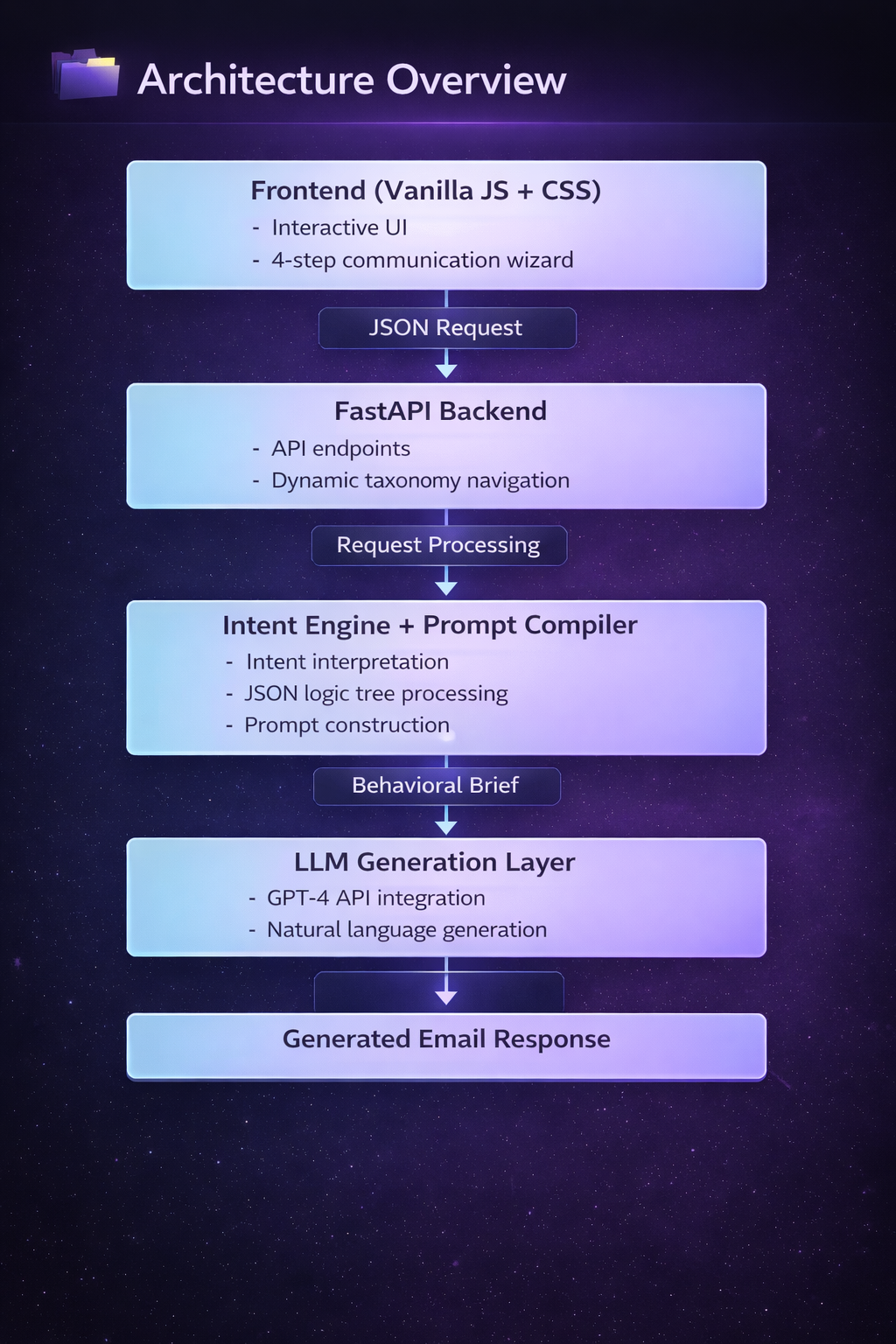
Architecture Overview End-to-end pipeline: UI → FastAPI backend → intent engine → prompt compiler → LLM → structured email output.
Inspiration
Most AI tools still depend on users knowing how to prompt them. In professional settings, this creates unnecessary friction where speed, clarity, and correctness are expected.
Writing emails is a daily task, yet generating a well-structured, context-aware email often requires multiple iterations or detailed prompt engineering. This defeats the purpose of using AI for efficiency.
We wanted to remove this dependency entirely. The idea behind Corelytics was to build a system where users don’t write prompts—they simply express intent through structured selections, and the system handles the rest.
This led to the concept of a promptless AI email generation system driven by a structured intent architecture.
What it does
Corelytics is an AI-powered email generation system that eliminates manual prompt writing by replacing it with a structured intent flow.
Instead of typing what they want, users navigate through:
Domain → Recipient → Category → Scenario
Based on these selections, the system automatically constructs the required context and generates a professional, ready-to-use email.
It supports multiple real-world use cases, including:
▸ Job applications ▸ Internship requests ▸ Meeting requests ▸ Follow-ups ▸ Professional inquiries
This approach reduces cognitive load, removes prompt dependency, and standardizes professional communication—making AI accessible even to non-technical users.
How we built it
Corelytics was designed as a modular, intent-driven AI system:
▸Intent Engine: A structured JSON logic tree that maps user selections to communication scenarios
▸State Manager: Tracks user inputs and manages interaction flow
▸Prompt Compiler: Converts structured intent data into optimized inputs for the language model
▸AI Generation Layer: Uses an LLM API to generate context-aware, professional emails
▸Backend System: Built using Python and FastAPI for a lightweight, scalable API architecture
This modular design ensures extensibility across new domains, scenarios, and communication types.
Challenges we ran into
The primary challenge was designing an intent architecture that balances structure and flexibility.
The system needed to:
▸ Cover a wide range of professional scenarios
▸ Avoid making the selection process overly complex
▸ Ensure outputs remain natural and contextually accurate
Another key challenge was building a prompt compiler that could translate structured selections into high-quality natural language outputs without losing nuance.
Achieving this balance required multiple iterations of the intent tree and continuous refinement of how context is constructed.
Accomplishments that we're proud of
▸Built a fully functional promptless AI email generation workflow
▸Designed a scalable intent-driven architecture
▸Developed a modular backend capable of expanding beyond email use cases
▸Demonstrated that AI usability can be significantly improved by removing prompt dependency
What we learned
This project reinforced that AI usability is as important as AI capability.
While powerful models exist, users often struggle with how to interact with them effectively. Structured interfaces can significantly reduce this gap and improve real-world adoption.
We also gained practical experience working with:
▸ FastAPI backend systems
▸ Intent-driven system design
▸ Prompt engineering pipelines
▸ LLM API integration
What's next for Corelytics
Corelytics currently focuses on structured email generation, but the long-term vision is to evolve into a broader professional communication platform.
Next steps include:
▸ Expanding beyond emails to support formal letters, notices, and internal communications
▸ Integrating with platforms like Gmail and Outlook for direct sending
▸ Introducing customizable templates for organizations
▸ Adding multi-language support
▸ Enhancing the web interface for faster and more intuitive interaction
The goal is to transform Corelytics into a structured AI communication system that streamlines professional workflows at scale.
Built With
- fastapi
- json-logic-tree
- llm-api
- prompt-engineering
- python
- render
- rest-api-architecture
- vercel

Log in or sign up for Devpost to join the conversation.