-
pitch deck
-
pitch deck
-
pitch deck
-
platform
-
platform
-
platform
-
pitch deck
-
platform
-
platform
-
pitch deck
-
platform
Inspiration
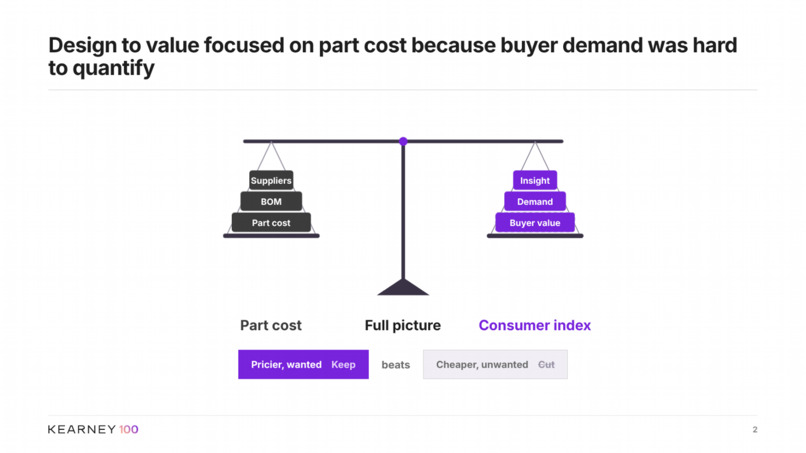
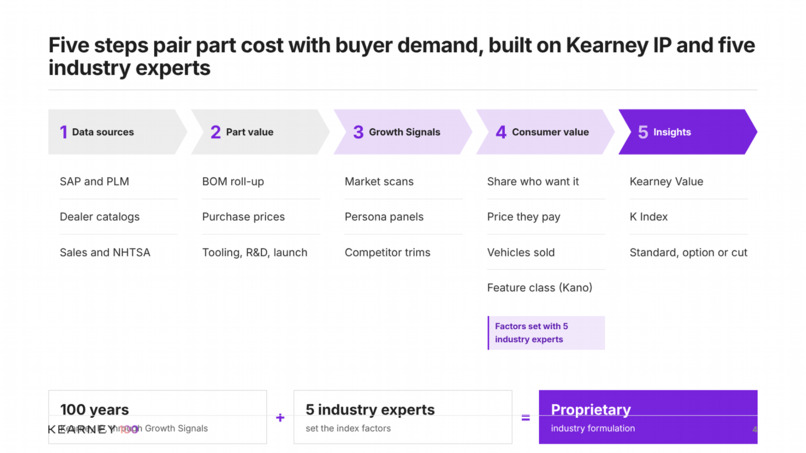
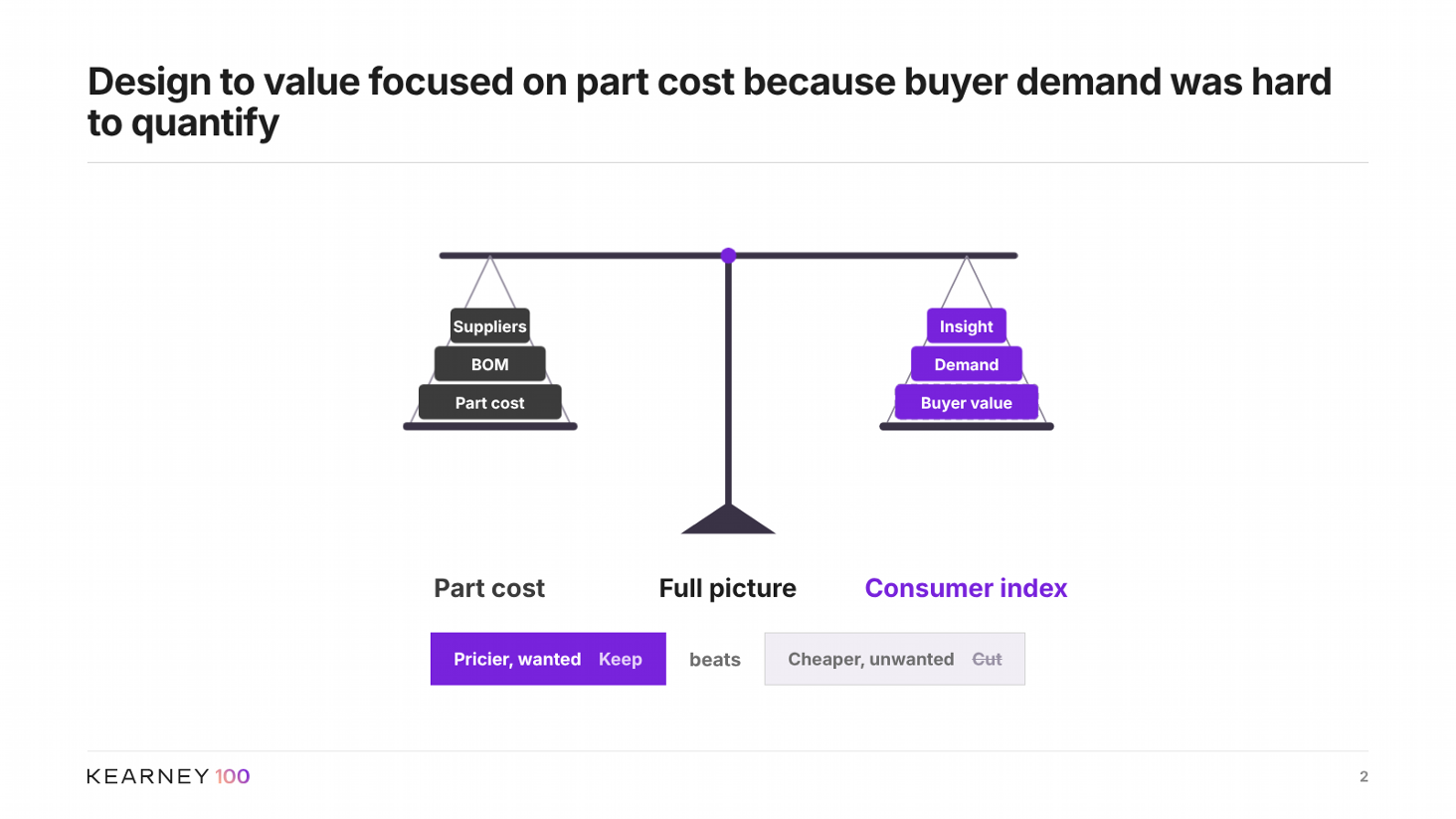
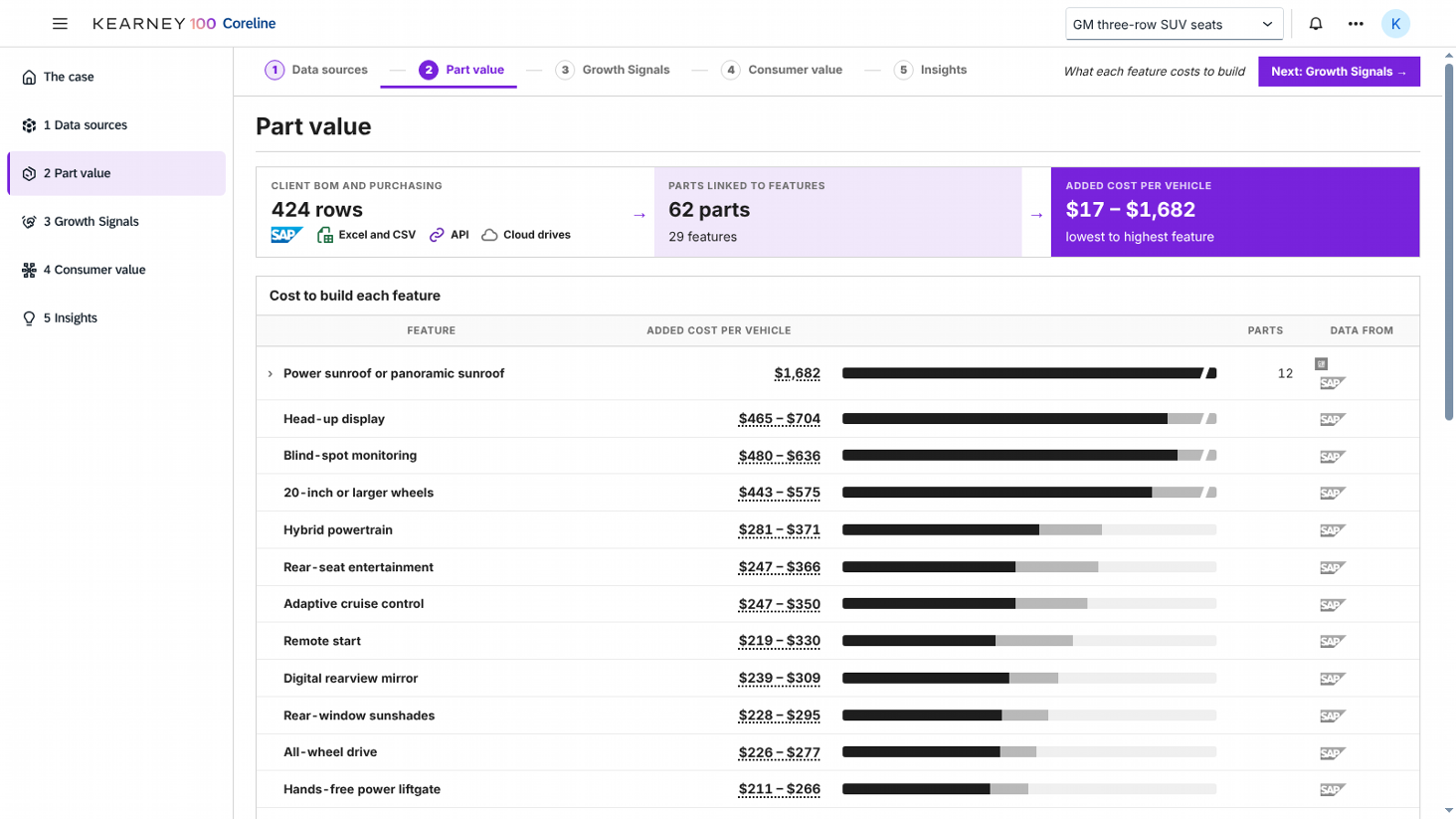
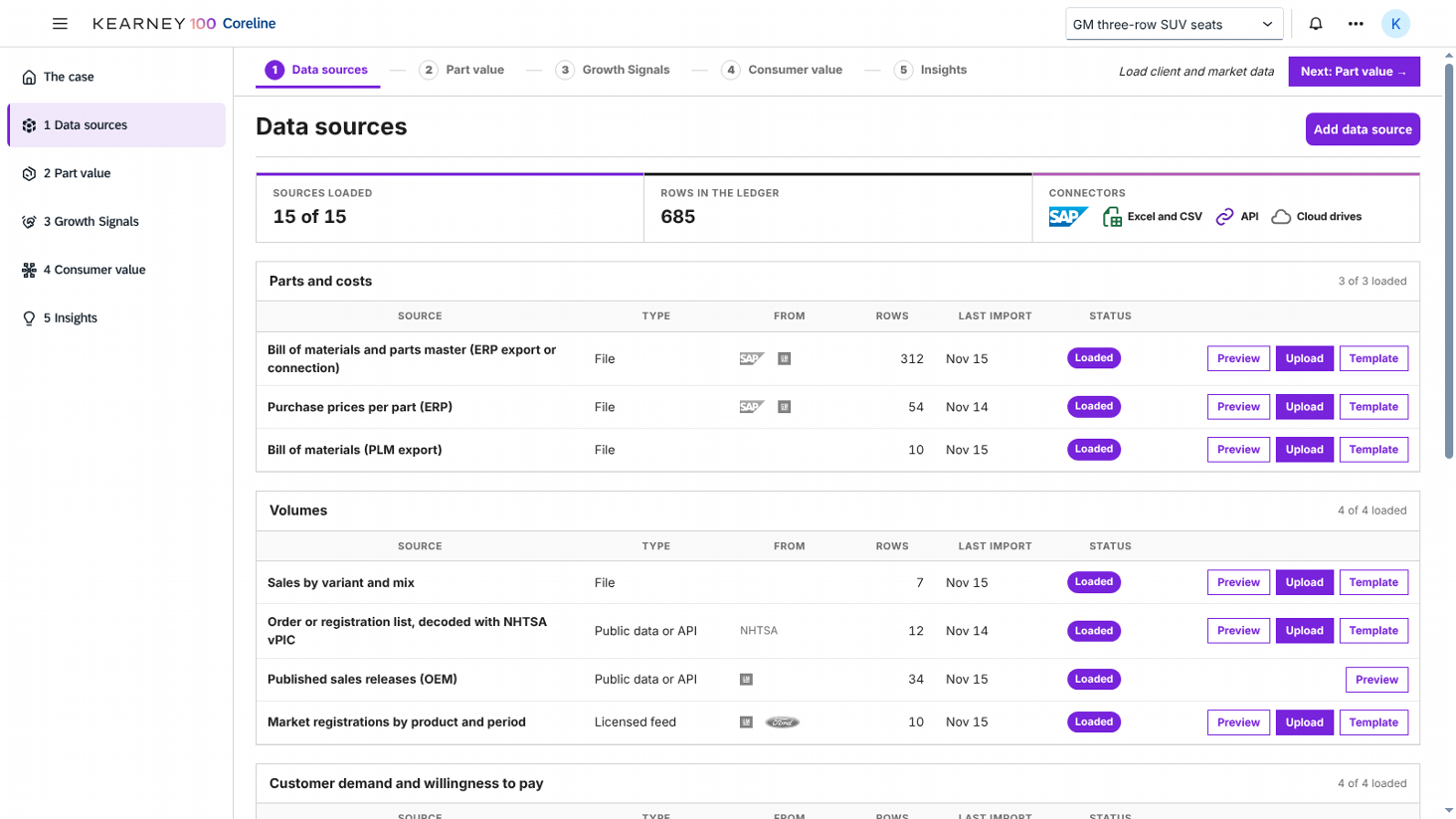
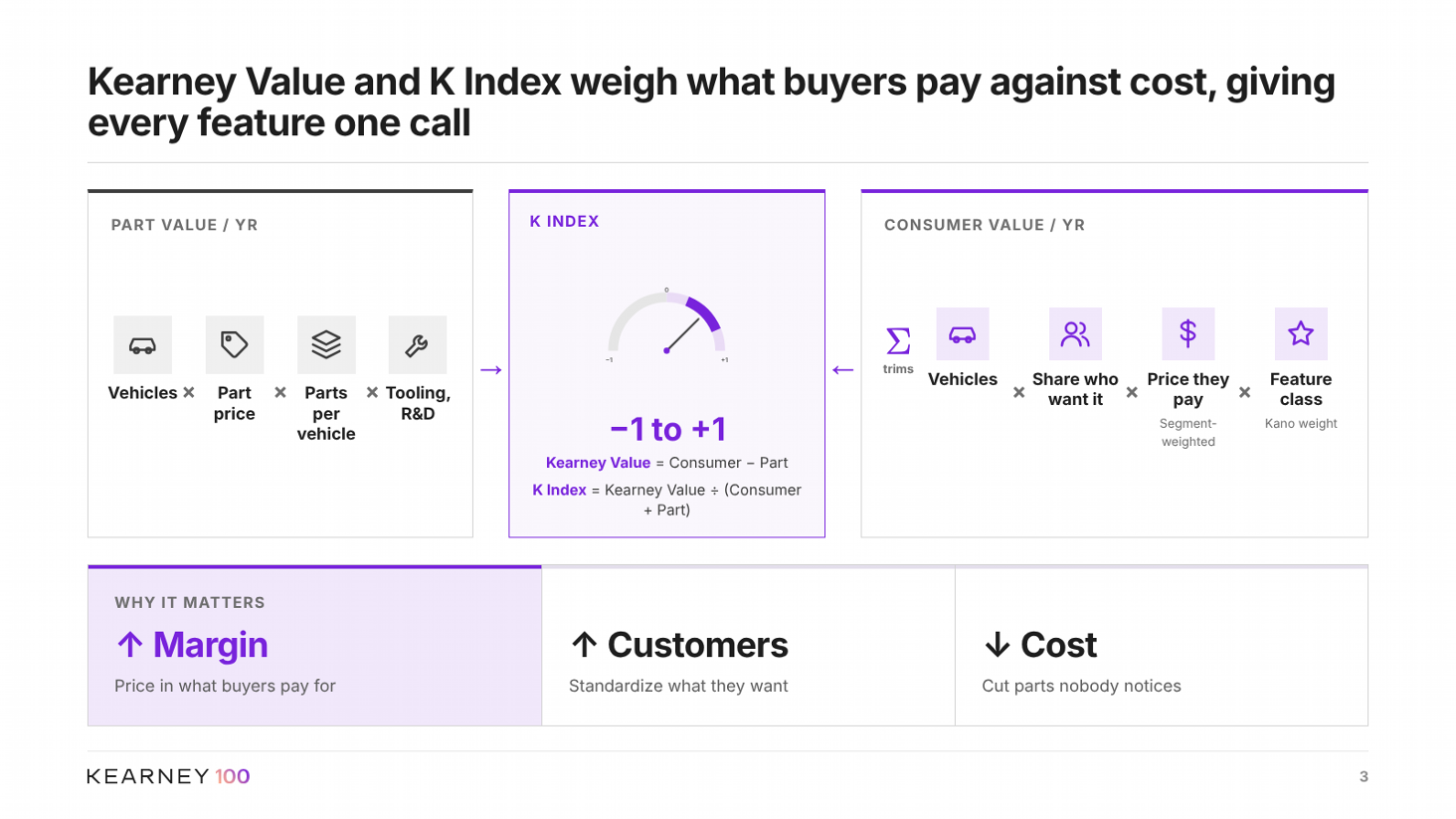
Design to value is decided from the cost side. Part costs sit in SAP down to the cent, but what buyers value is a guess, so cost wins every argument. Interviews with industry experts and Kearney consultants confirmed it: simplification projects stall because nobody can put a number on what customers want.
What it does
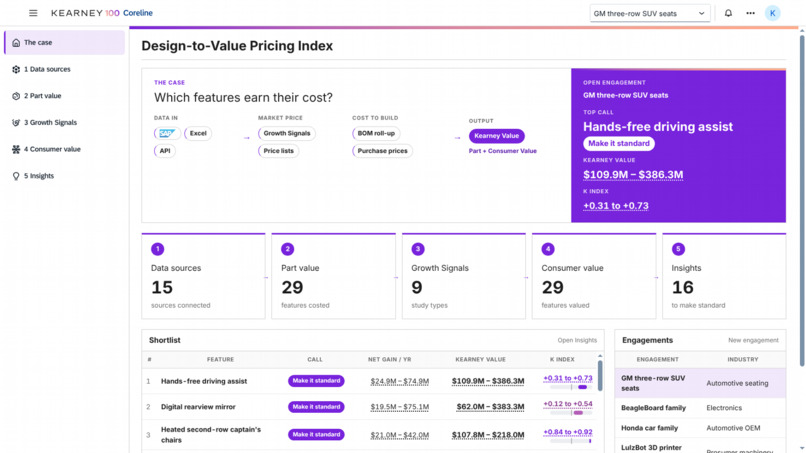
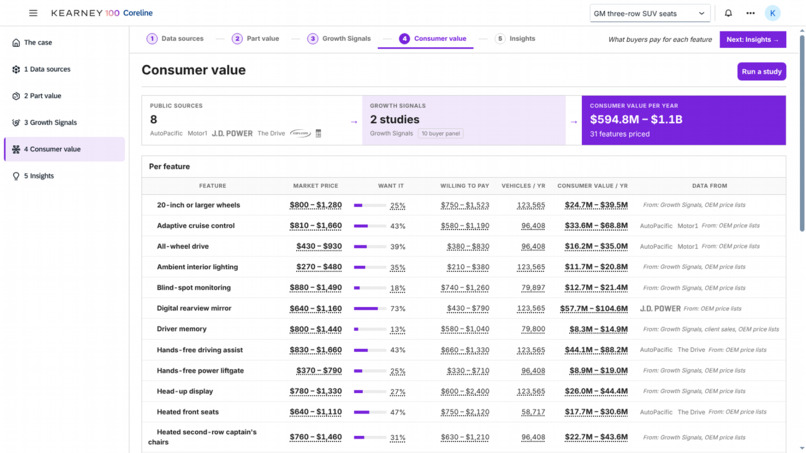
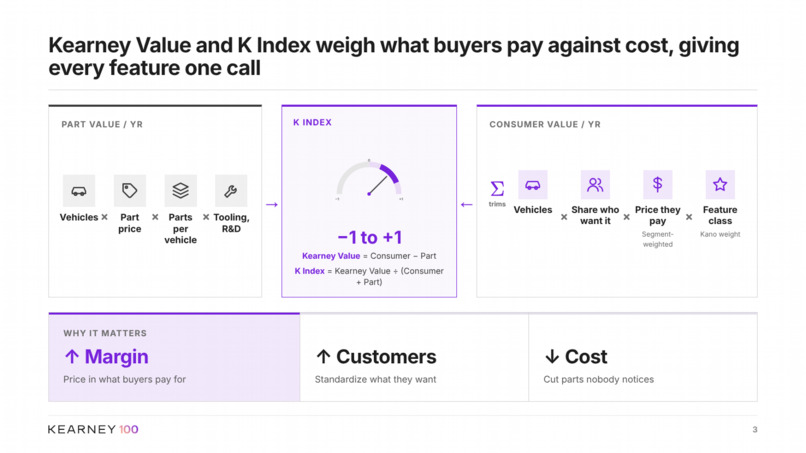
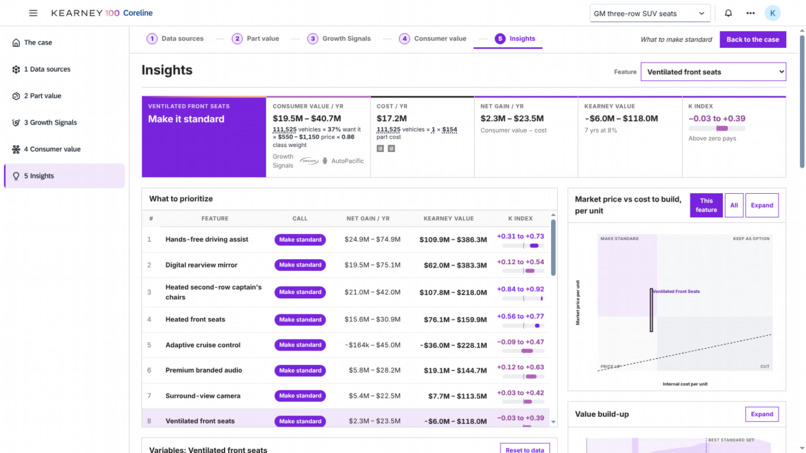
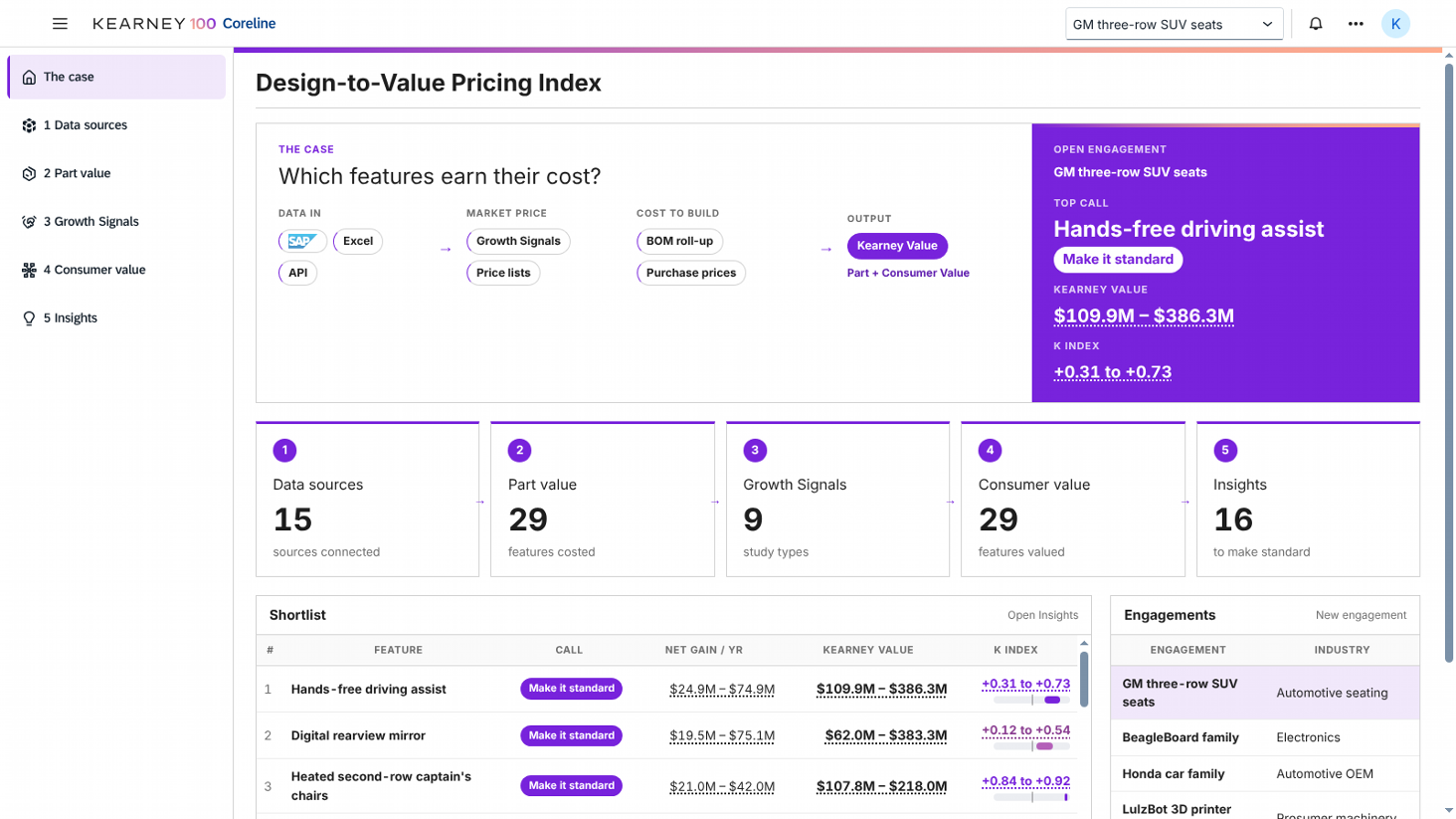
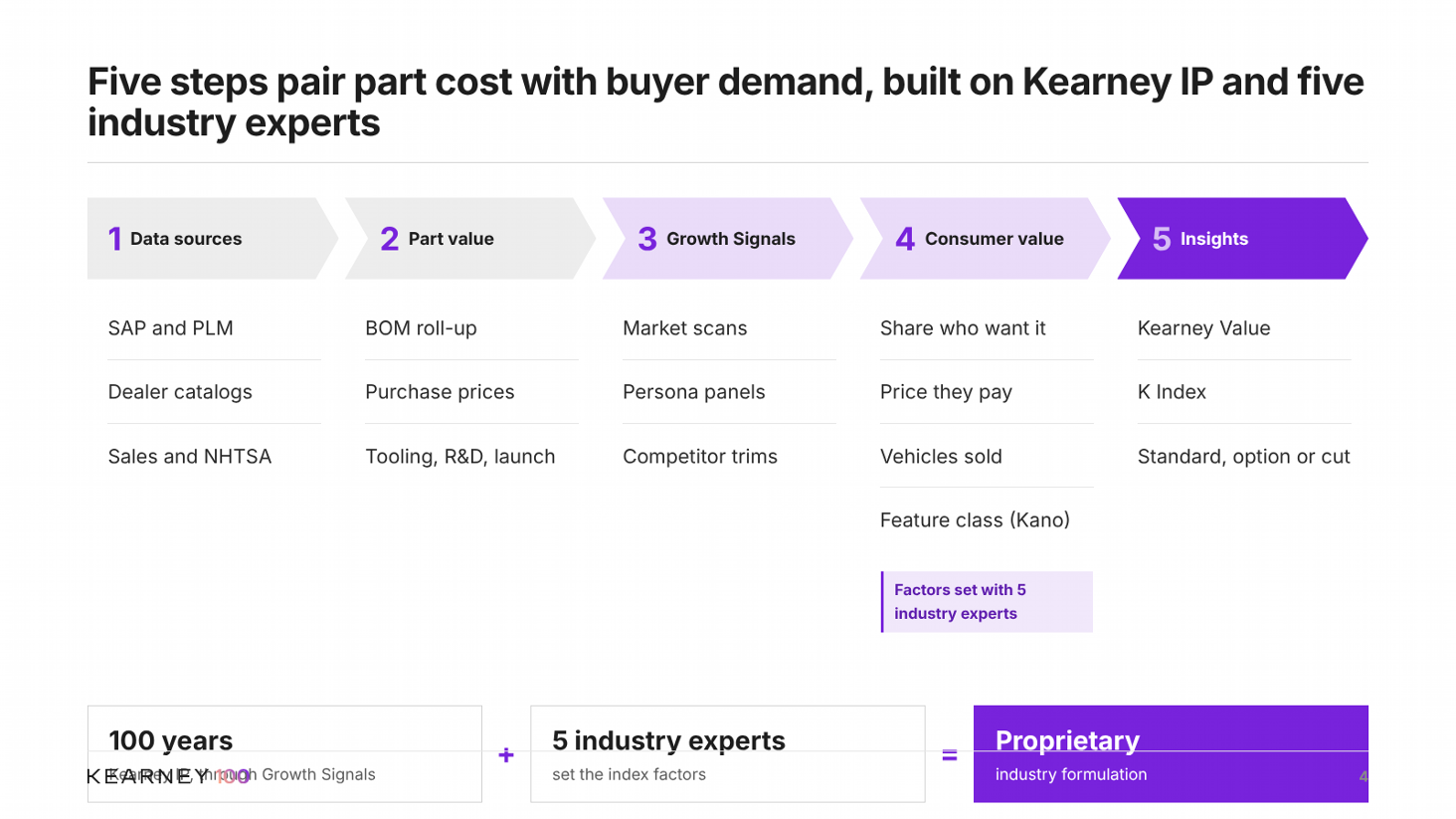
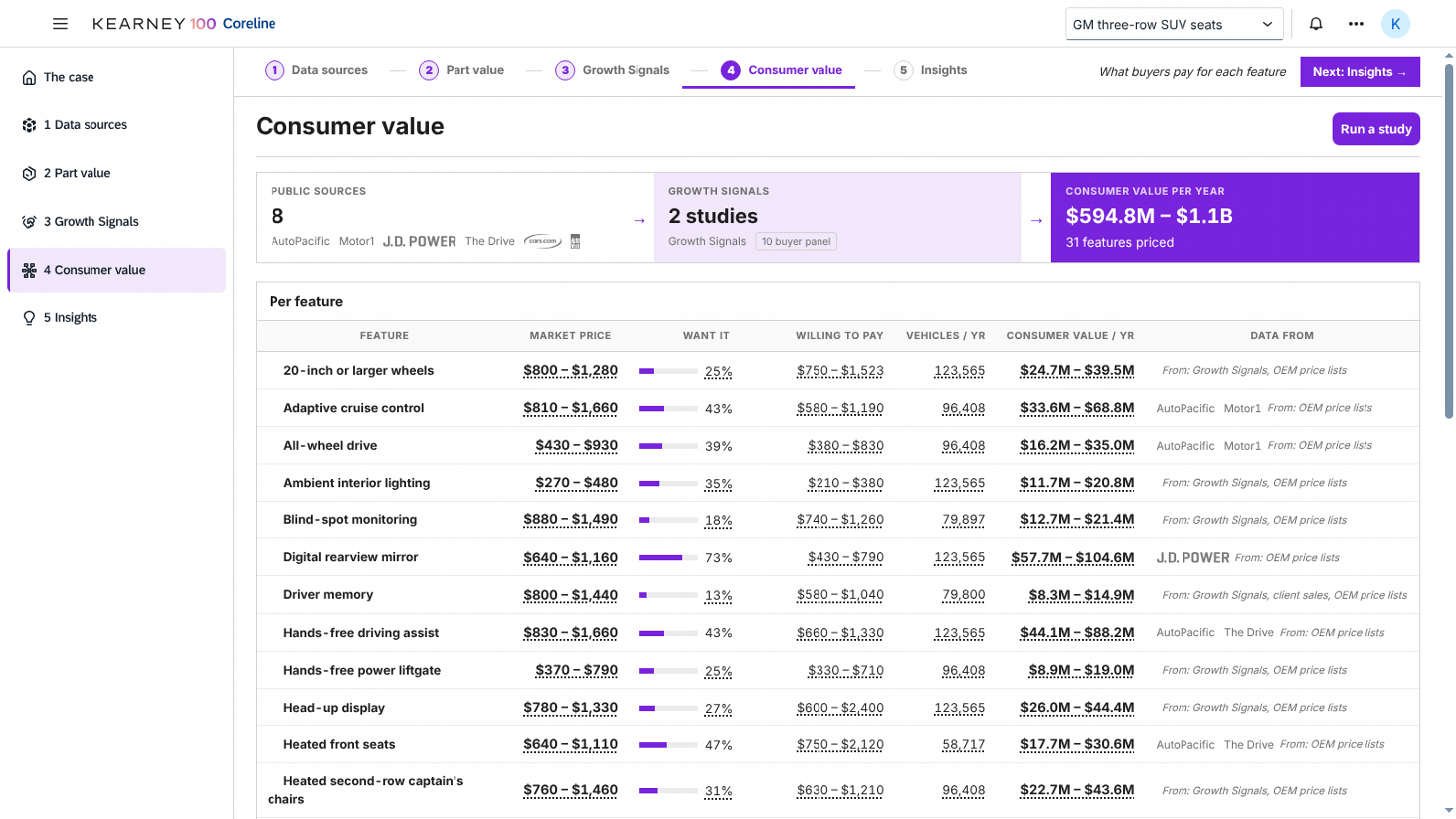
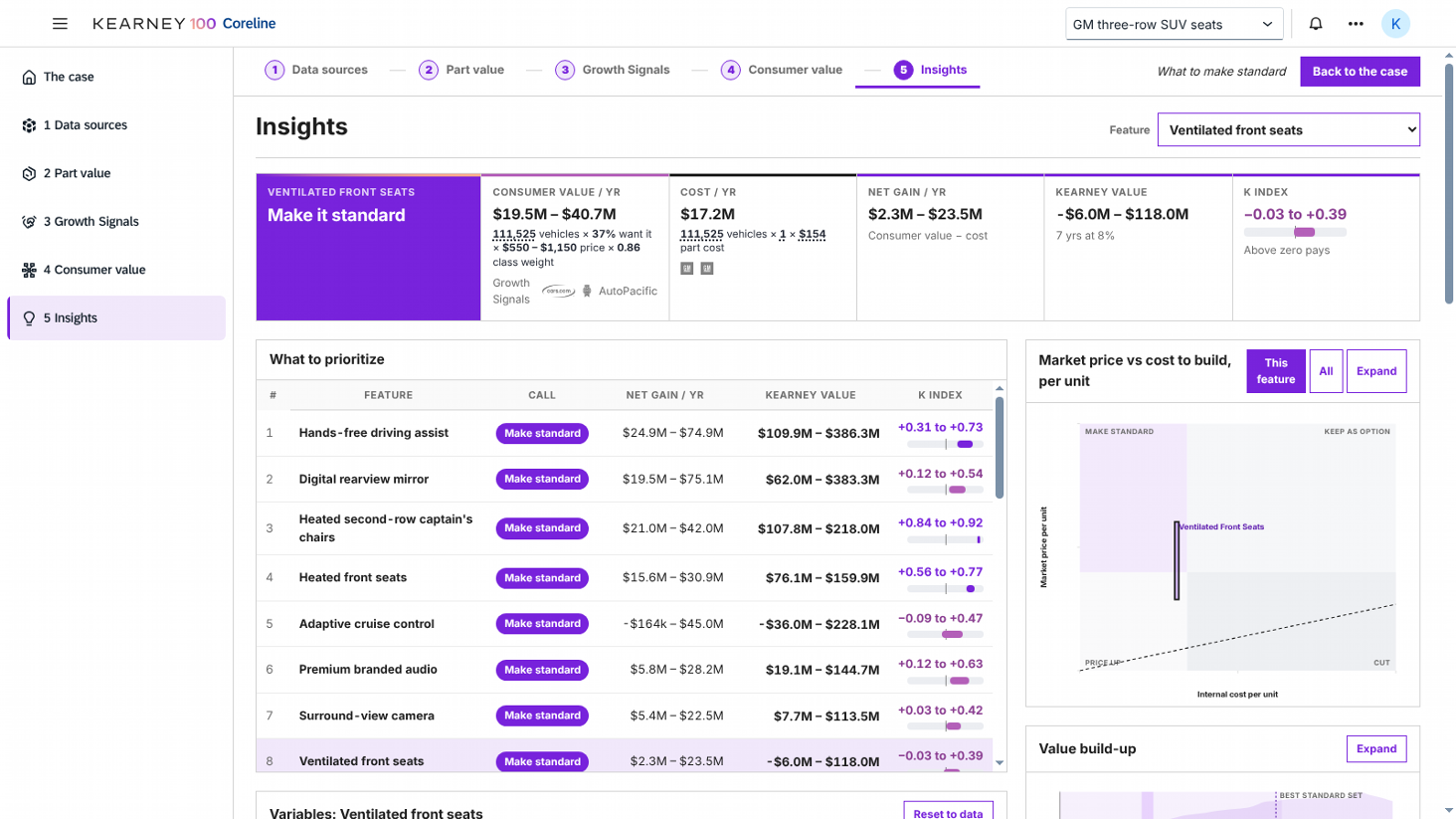
Coreline scores every feature of a product from minus one to plus one, weighing what it costs to build against what buyers will pay for it. Each feature gets one call: make it standard, keep it as an option or cut it, or too close to call. On a GM three-row SUV, it flagged 16 of 29 features to make standard, worth roughly $114M to $448M a year on our model.
How we built it
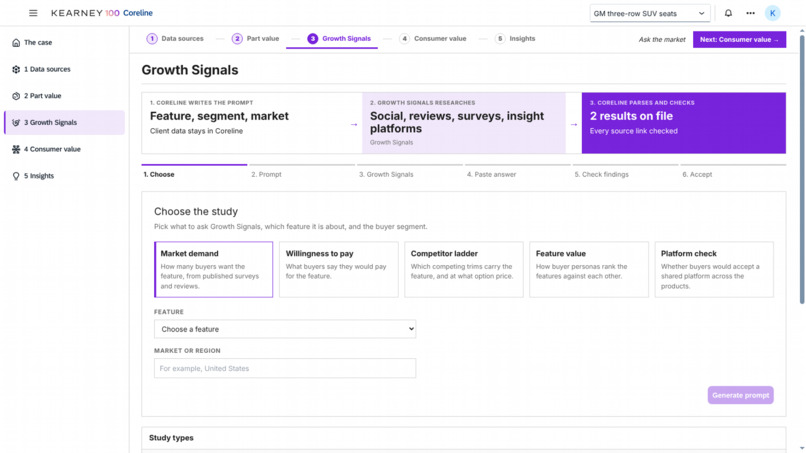
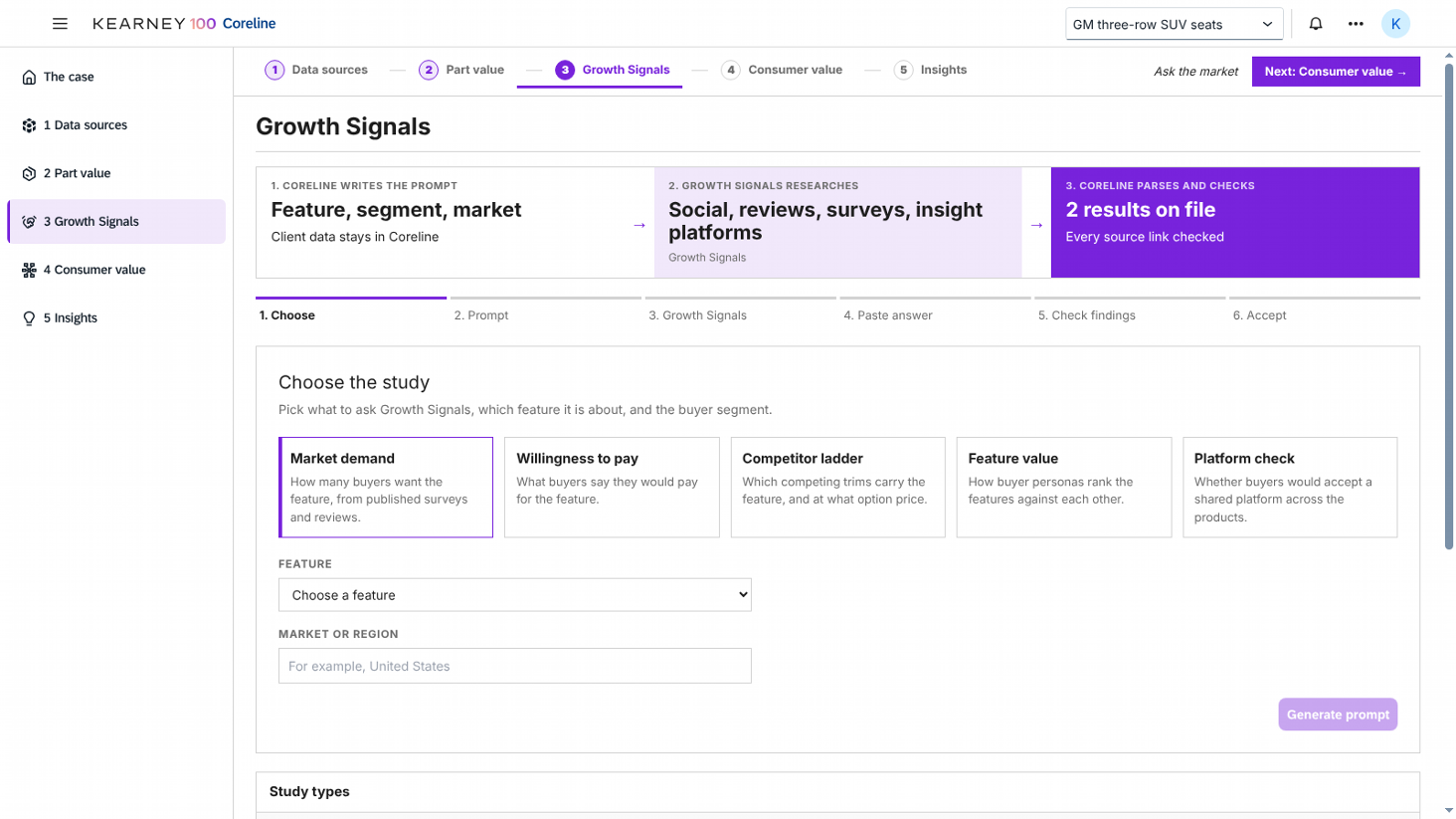
React and Node.js, built with Claude Code and deployed on Vercel. Kelley Blue Book and car datasets tailored to trim level, regression models for feature pricing, and Growth Signals Velocity AI for buyer demand.
Challenges we ran into
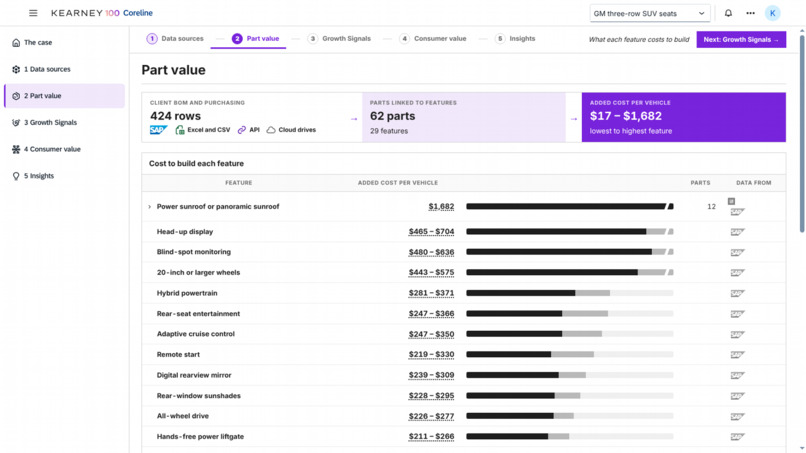
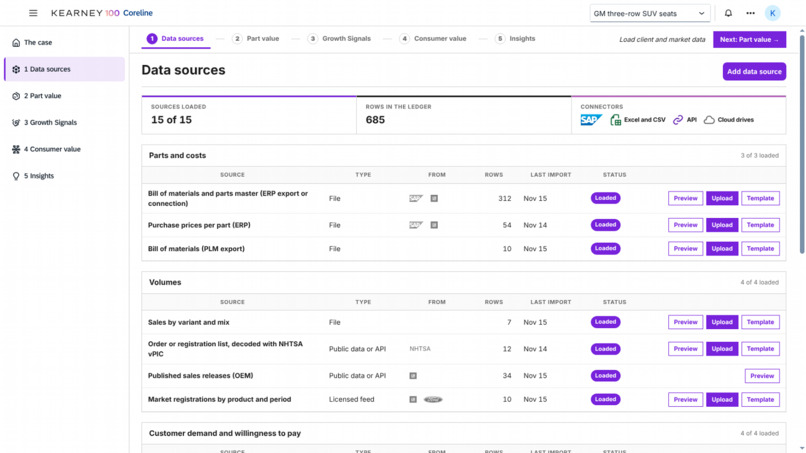
Car pricing data prices whole trims, not single features, so we had to tailor it to line up with our consumer value index. Without client SAP data, we used public cost estimates and show ranges instead of false precision.
What we learned
Talking to the people who make these decisions shaped the product more than any feature we built. User interviews with industry experts helped shaped usability. Talking to Kearney gave us a lot of insights into the decisions that go behind the engineering products as well.
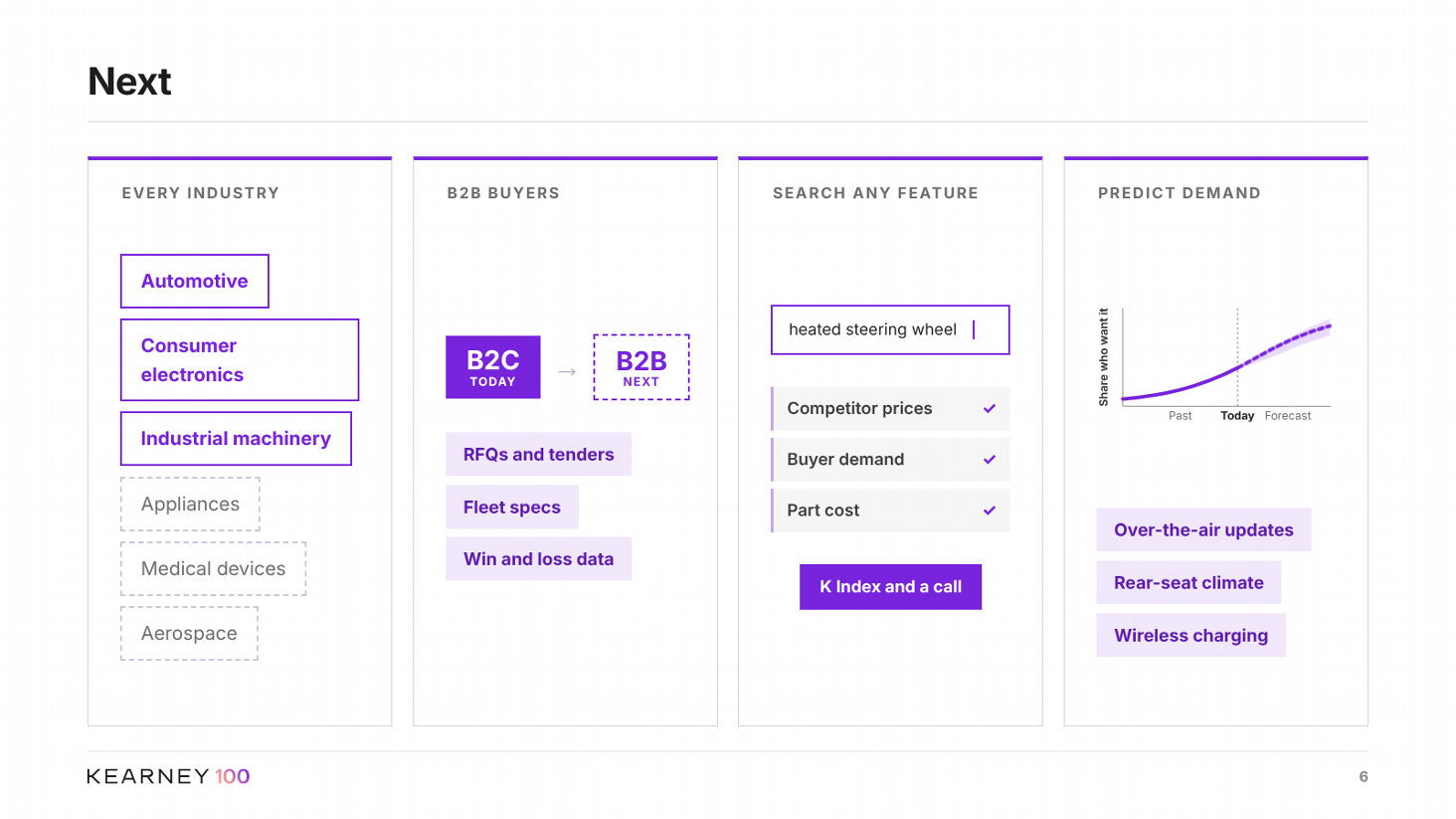
What's next for Coreline
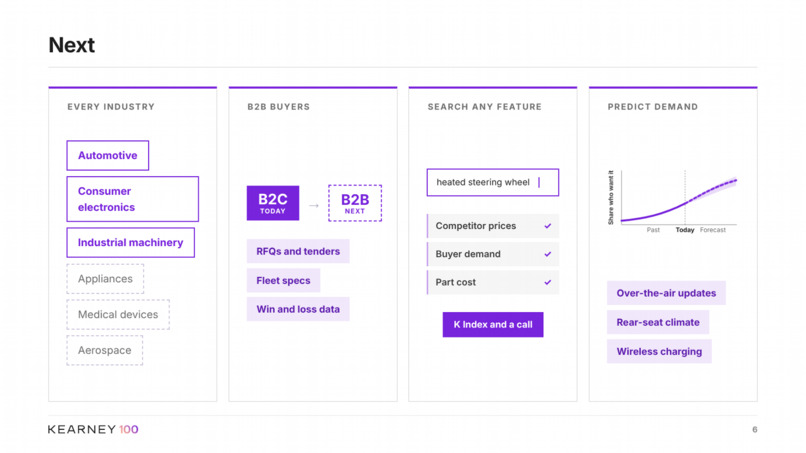
B2B buyers, demand forecasting, and search for any feature.
