-
Core Defense Tower Defense & Strategy
Inspiration
The core inspiration for this project stemmed from a simple spatial question: Why must tower defense games be static? On traditional mobile viewports, strategy layouts often feel like fixed spreadsheets where tactical positioning is completely solved minutes before waves arrive. I wanted to disrupt this predictable meta. I set out to design an unstable, high-stakes tactical experience where the primary target of your defense actively jumps positions mid-session. This forces players to continuously recalculate their defensive lines on a shifting battlefield.
What it does
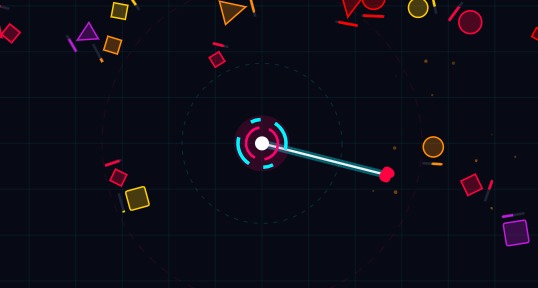
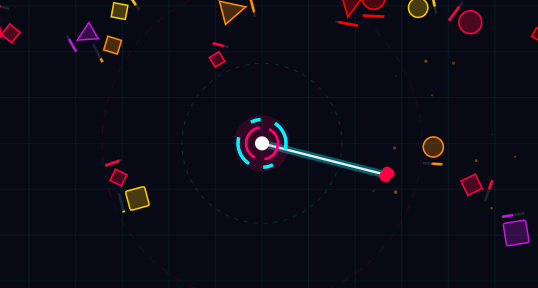
Core Defense is a portrait-oriented, 3D tactical web strategy game optimized for mobile screens. Players deploy automated defensive structures on a grid canvas to intercept descending geometric threats tracking toward a volatile core. At the start of escalating wave states, the central core dynamically shifts its coordinates across the matrix. This mechanism instantly alters the pathfinding trajectories of all incoming enemies, demanding rapid grid layout re-evaluation, tactical resource management, and on-the-fly defensive restructuring to survive.
How we built it
To focus entirely on structural responsiveness and game juice without wrestling with heavy game engines, I built the prototype as a single, self-contained HTML5 architecture using the Three.js 3D web framework. Operating as a Systems Architect alongside advanced AI orchestration, the code layout was established strictly within local parameters:
- Local Library Anchor: The entire 3D camera system and geometric assets load directly from a local path via
<script src="vendor/three.min.js"></script>, ensuring $100\%$ offline operational capabilities with zero Content Delivery Network (CDN) network requests. - Dynamic Interpolation Matrix: Enemy navigation calculations rely on runtime vector updates. At any time $t$, the entity's positioning updates toward the shifted core via linear interpolation equations:
$$ \vec{P}{enemy}(t + \Delta t) = \vec{P}{enemy}(t) + \vec{D}_{normalize} \cdot v \cdot \Delta t $$
Where $\vec{D}_{normalize}$ is the dynamic direction unit vector targeting the Core's shifted coordinate space, and $v$ is the wave velocity variable.
- Overlay Layout Mechanics: Custom CSS viewports wrap tightly around the 3D rendering pipeline, maintaining standard status overlays (Core Health, Energy Gold, Wave progression counters) cleanly across portrait web interfaces.
Challenges we ran into
The primary hurdle involved viewport coordinate mapping. Early testing phases showed that standard mouse and raycast screen-click calculations struggled to map placement actions reliably on 3D floor geometry across different mobile dimensions. Rather than letting the script bloat with heavy listener layers, I refactored the placement mechanics entirely. I re-engineered the logic to deploy defense towers relative to proximity vectors of active threats. This completely bypassed screen mapping bugs and organically created a rapid, single-handed input mechanic perfect for mobile strategy loops.
Accomplishments that we're proud of
I am incredibly proud of engineering an incredibly fluid, responsive 3D mobile game prototype inside a single unminified index.html file that operates with absolute zero network activity. Achieving high-performance tracking arrays, automated wave scaling loops, and complex object rotations under strict single-file limitations represents an incredible optimization milestone. Turning a problematic coordinate input obstacle into a satisfying, rapid-fire tactical deployment mechanic is a proud breakthrough.
What we learned
This development cycle completely transformed my perspective on rapid prototyping. I discovered that a compelling strategy game does not require millions of lines of proprietary code; it thrives on responsive game loops, concise visual feedback, and innovative mechanics. I mastered the art of working hand-in-hand with AI automation to enforce strict architectural rules, manage data structures efficiently, and write highly readable, human-verifiable web templates.
What's next for Core Defense Tower Defense & Strategy
If awarded the grant to rebuild on the early access creation tools, Core Defense will scale into a full rogue-lite tower builder. The roadmap introduces distinct elemental tower matrices—incorporating frost velocity modifiers ($v_{slow} = v \cdot 0.5$) and chain lightning arcs—alongside active kinetic shockwaves that alter enemy placement layout coordinates. I plan to build out persistent hull modification trees and interactive rogue-lite drafting card phases between active shift intervals to offer endless tactical replayability.
Built With
- ai
- googleai
- javascript
- word


Log in or sign up for Devpost to join the conversation.