-
-
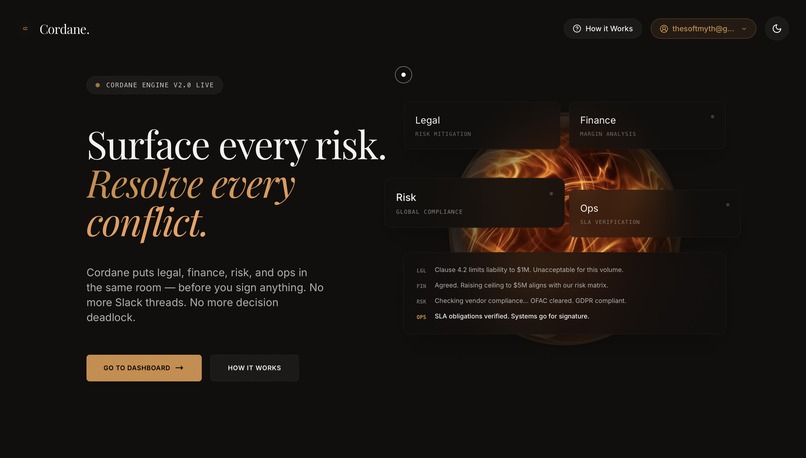
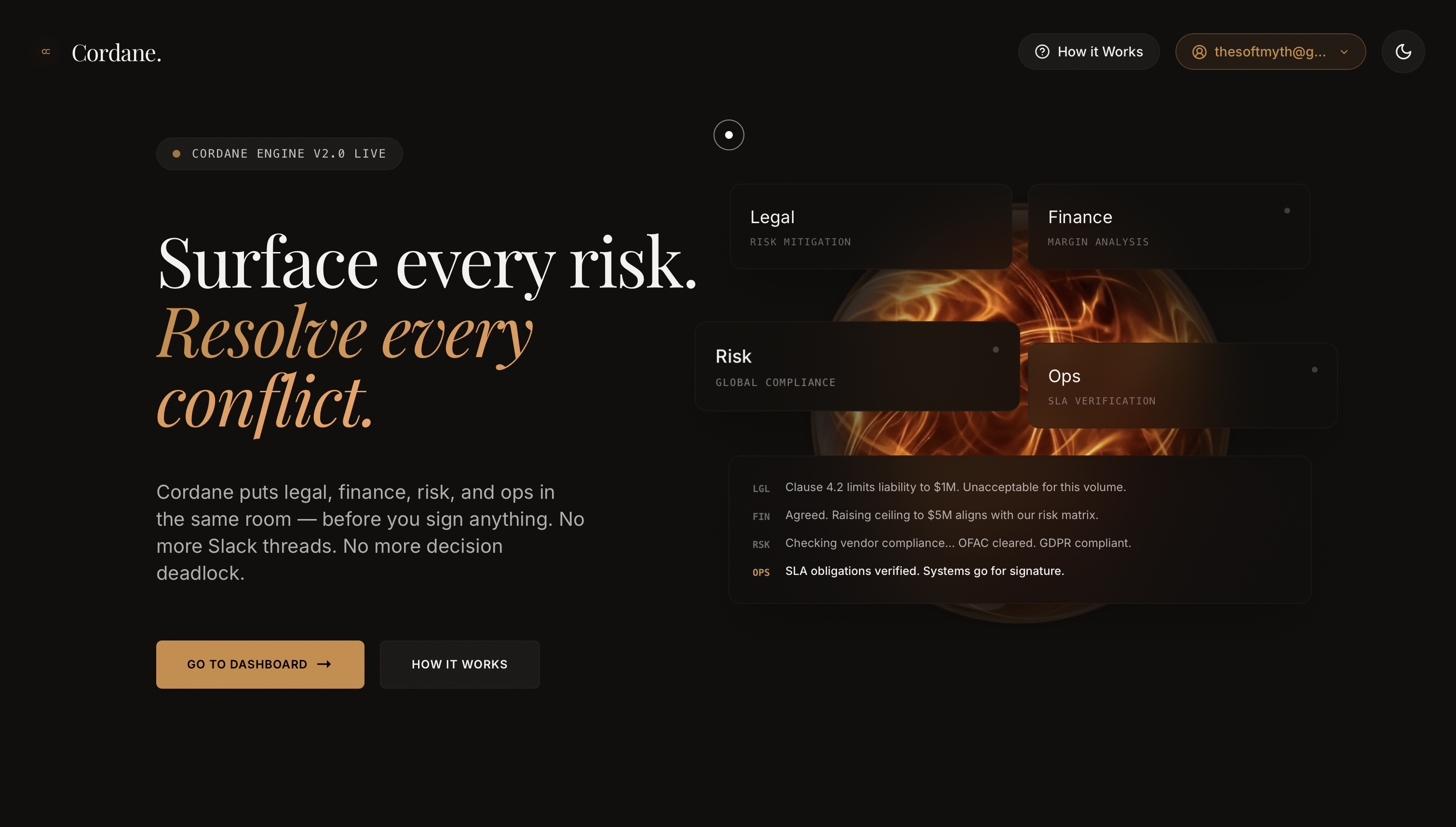
Cordane's landing page.
-
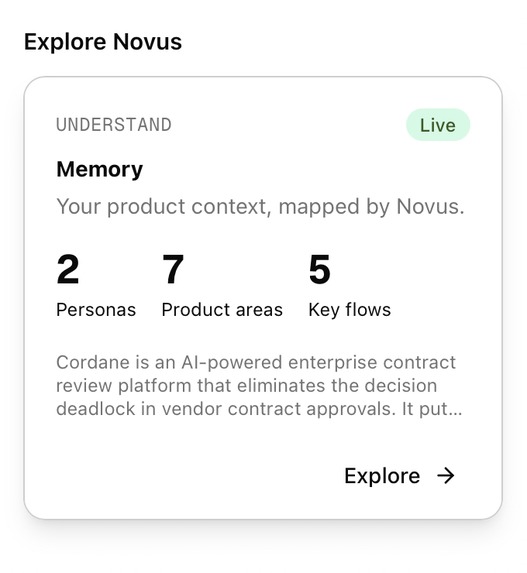
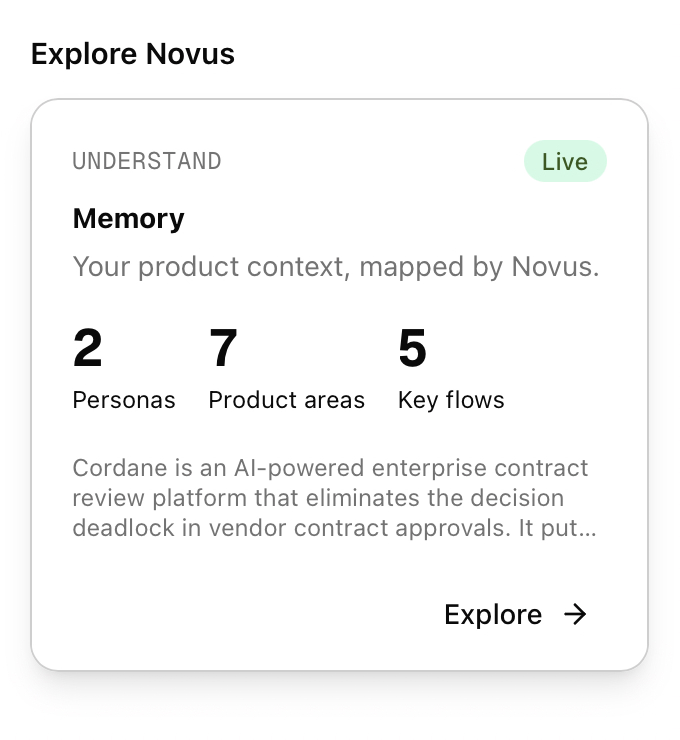
Novus mapped Cordane's real usage into 2 personas, 7 product areas, and 5 key flows.
-
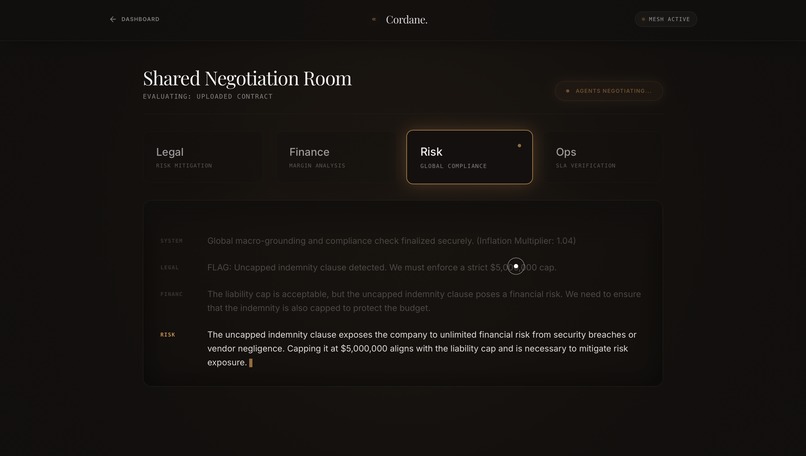
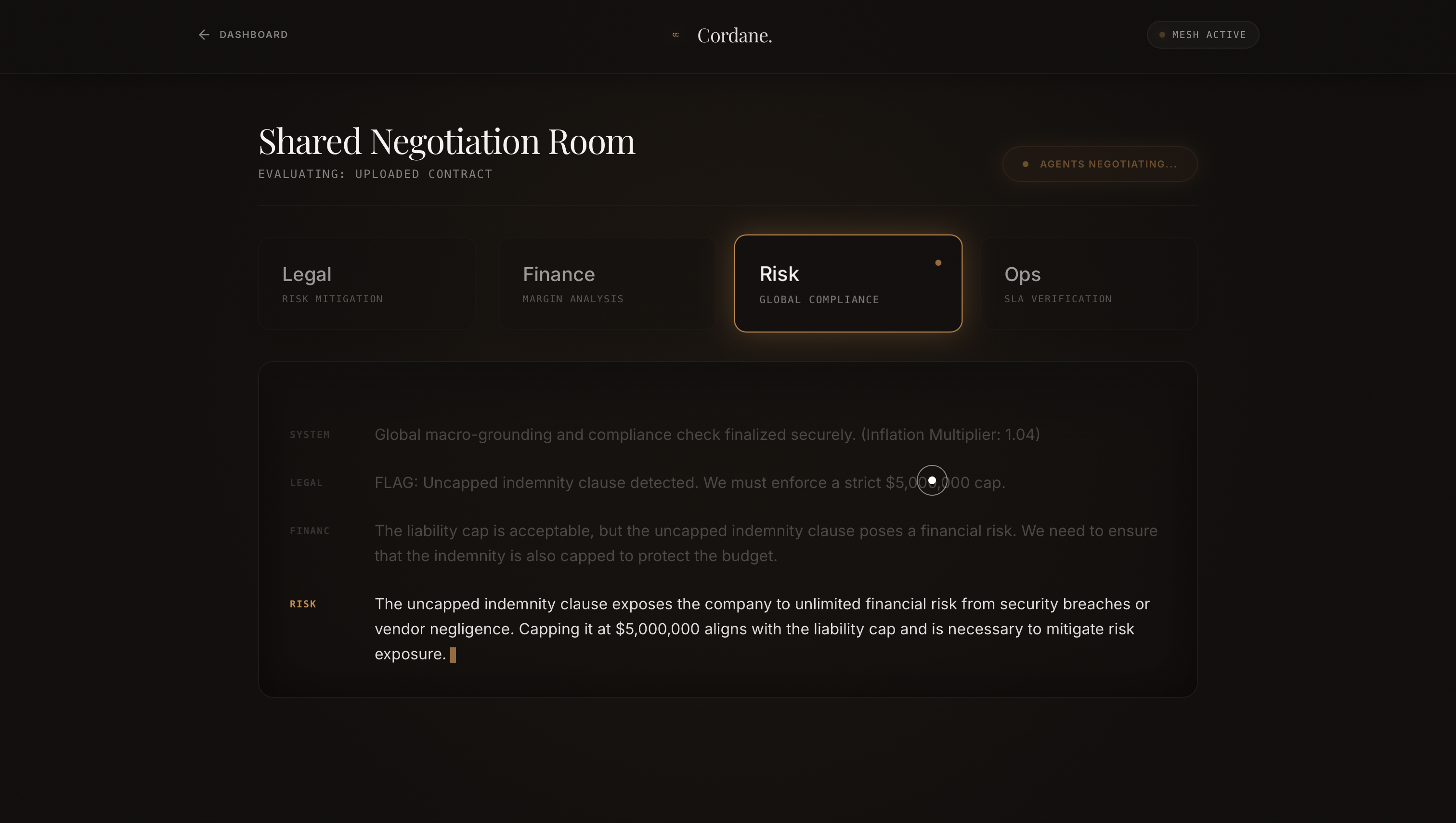
Legal, Finance, Risk, and Ops reacting to each other in real time inside the shared Band room.
-
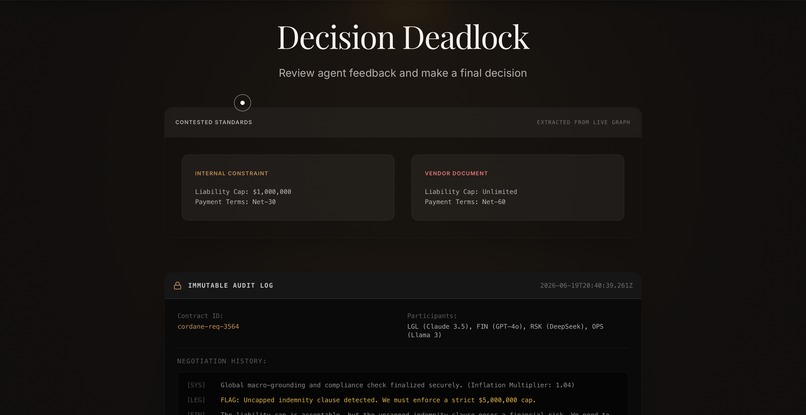
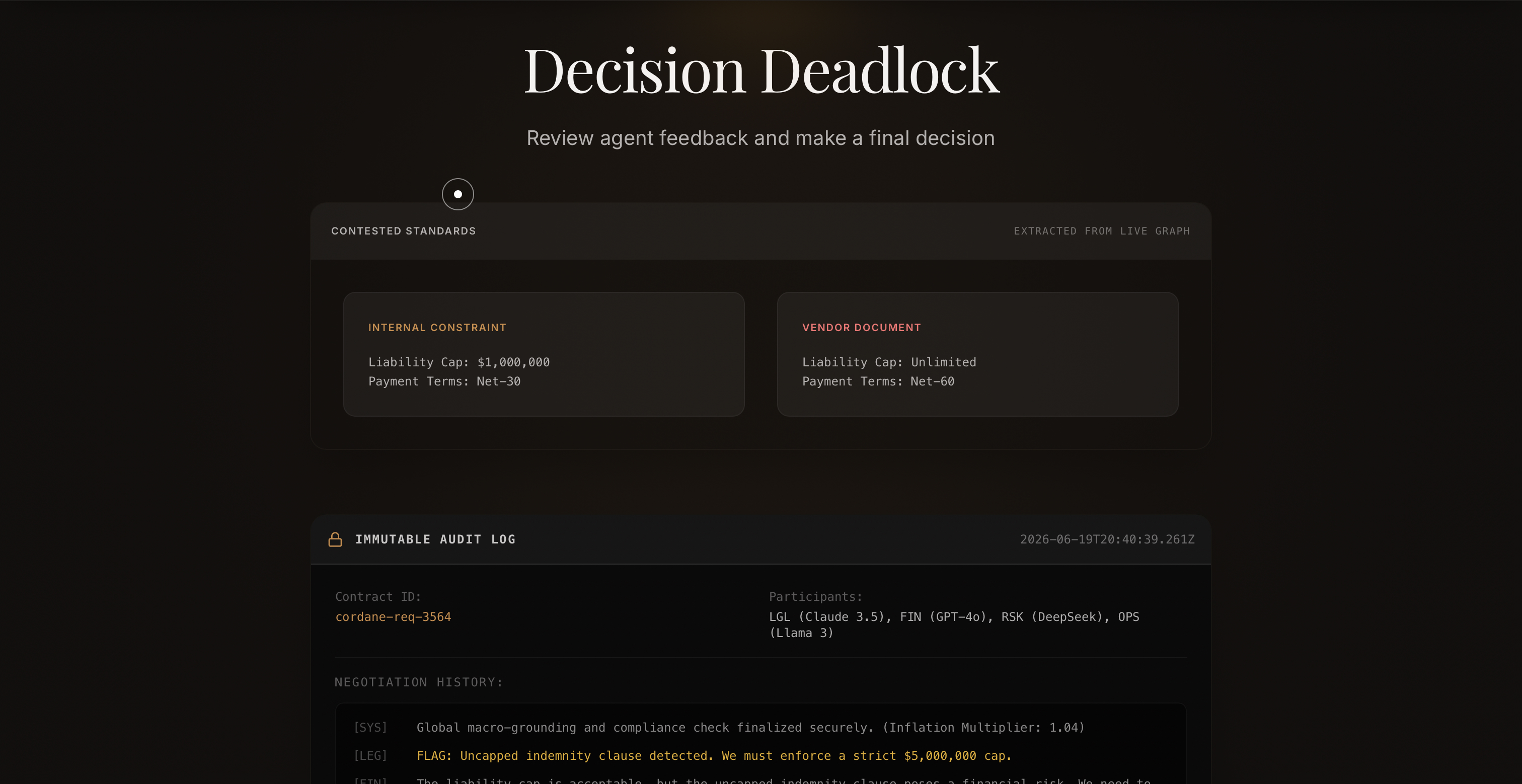
When the agents can't fully agree, Cordane escalates with a clear breakdown of who objected and why, instead of forcing a compromise.
Inspiration
The average vendor contract takes 11 days to clear internal review. Not because the terms are complicated. It's because Legal, Finance, Risk, and Ops each review it separately, in their own inbox, on their own timeline. Nobody sees what anyone else flagged until someone forwards an email. I built Cordane to put all four departments in the same room so they actually negotiate instead of taking turns.
What it does
Cordane is an autonomous consensus engine powered by four specialized AI agents. You submit a vendor contract, and the agents read it at the same time and react to each other in real time inside a shared room. When Legal flags an uncapped liability clause, Finance recalculates its budget threshold based on that. If the agents can't agree after three bounded rounds, Cordane triggers a deterministic veto and escalates the contract to a human executive with a clear summary of what's blocking approval. It doesn't force a compromise just to look done.
The person on the other end of this is usually a General Counsel or a procurement lead who's used to a contract sitting in their inbox for a week and a half with no visibility into why. With Cordane they open one screen, see who objected and why, and either approve it or send it back. No chasing four people across three email threads.
How we built it
The frontend is Next.js 14 on Vercel. The backend is FastAPI on Render. The system runs on the Band SDK, which gives the four agents a shared room to negotiate in. Without it they'd just be reasoning alone and never actually disagree with each other. Inference runs through the AI/ML API so each role gets the model suited to it. Claude 3.5 for Legal, GPT-4o for Finance, DeepSeek-Reasoner for Risk, Llama 3 for Ops.
Designing for people who didn't ask to learn a new tool
Enterprise compliance software is usually built for people who have no choice but to use it, so nobody bothers making it pleasant. I didn't want Cordane to feel like that. The dark interface turns four LLMs arguing with each other into something that reads like a normal conversation feed instead of a wall of logs. If a GC has to squint to understand what happened, the product already failed, no matter how good the negotiation logic underneath is.
Novus.ai is how I actually tested that. Watching real sessions land on the dashboard, I could see whether people made it to the Verdict screen cleanly or got stuck somewhere along the way. That told me the interface was working, not just the backend.
Challenges we ran into
The hardest problem was stopping the agents from hallucinating compromises. Left alone, four LLMs will often just agree with each other to end the conversation early, which defeats the point. I solved this with strict, deterministic veto rules. If an agent detects a hard constraint violation, like a severe GDPR risk, it's forced to block consensus no matter what the other agents decide.
What we learned
The hardest part of multi-agent systems isn't making the agents smart. It's deciding, in code, whose objection actually wins. Does Legal's GDPR flag outrank Finance's budget concern? In a real company that gets settled by whoever's more senior in the room. I had to make that decision explicit every time, which had less to do with AI and more to do with understanding how approval politics actually work inside a company.
What's next for Cordane
Right now Cordane only lives in its own dashboard. The next step is Jira and Slack integration. If Legal flags a severe risk, that shouldn't just sit on our screen, it should open a Jira ticket for Ops and ping the Legal channel in Slack automatically. Cordane should live where the team already works, not be one more tab they have to remember to check.
Built With
- deepseek
- fastapi
- microsoft-band
- next.js
- novus
- openai
- python
- tailwind.css
- typescript
- vercel

Log in or sign up for Devpost to join the conversation.