Inspiration: Seeing footage of the 2024 Great Barrier Reef mass bleaching event stopped us cold. Over 80% of corals bleached, with some species hitting 95% mortality — and scientists say by 2050, up to 90% of all coral reefs on Earth could be gone. Coral reefs aren't just beautiful, they feed half a billion people, support over a million jobs, and represent economies worth hundreds of billions of dollars. What struck us most was that bleaching doesn't happen overnight. It builds up over weeks of accumulated heat stress. That means there's a detection window, and we wanted to build something that lives inside it.
What it does: Coralytics is an early-warning system for coral bleaching, combining real-time IoT sensing with machine learning prediction.
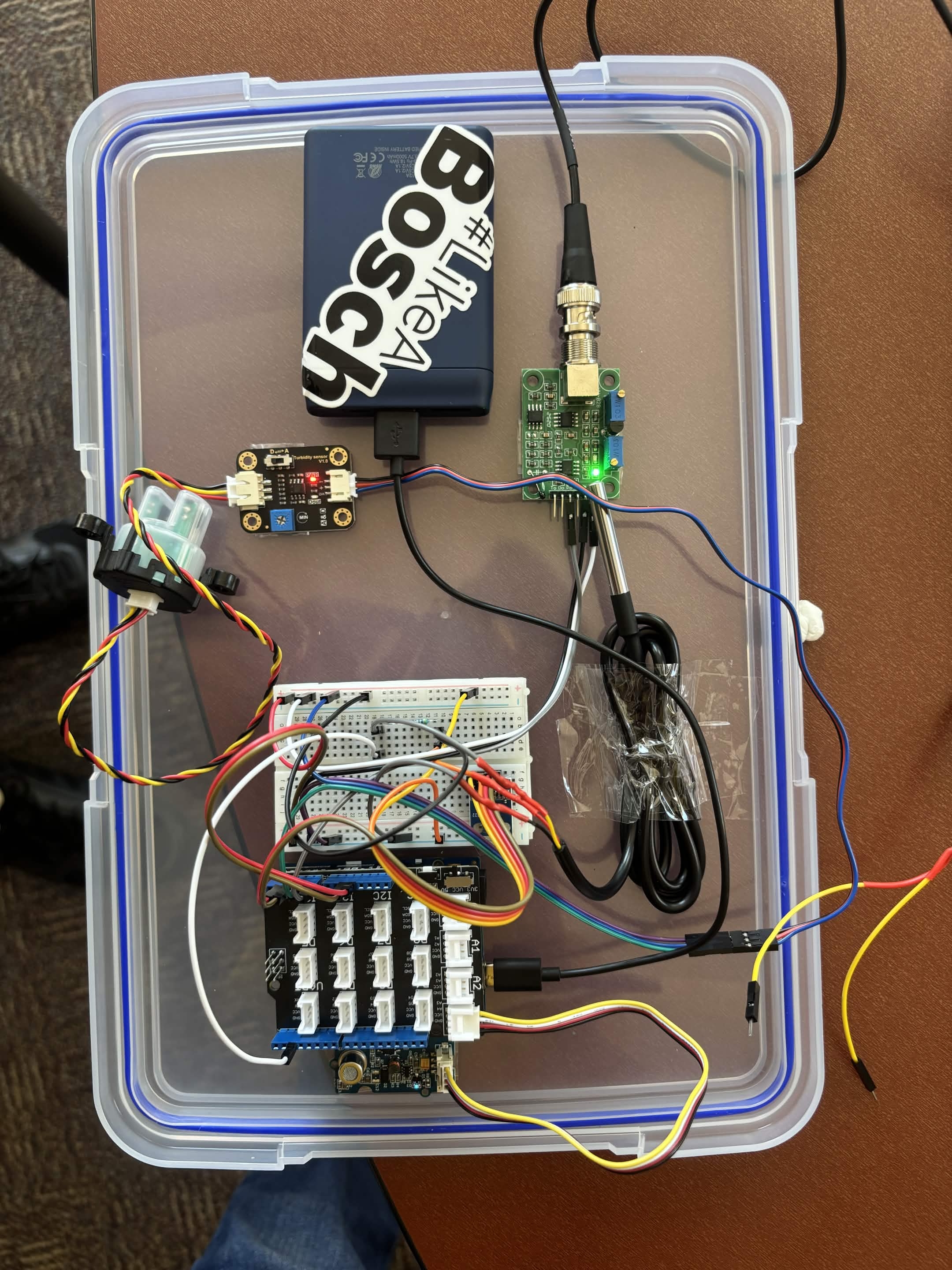
Hardware sensor streams live water conditions — temperature, turbidity, pH, and depth — directly from the reef environment
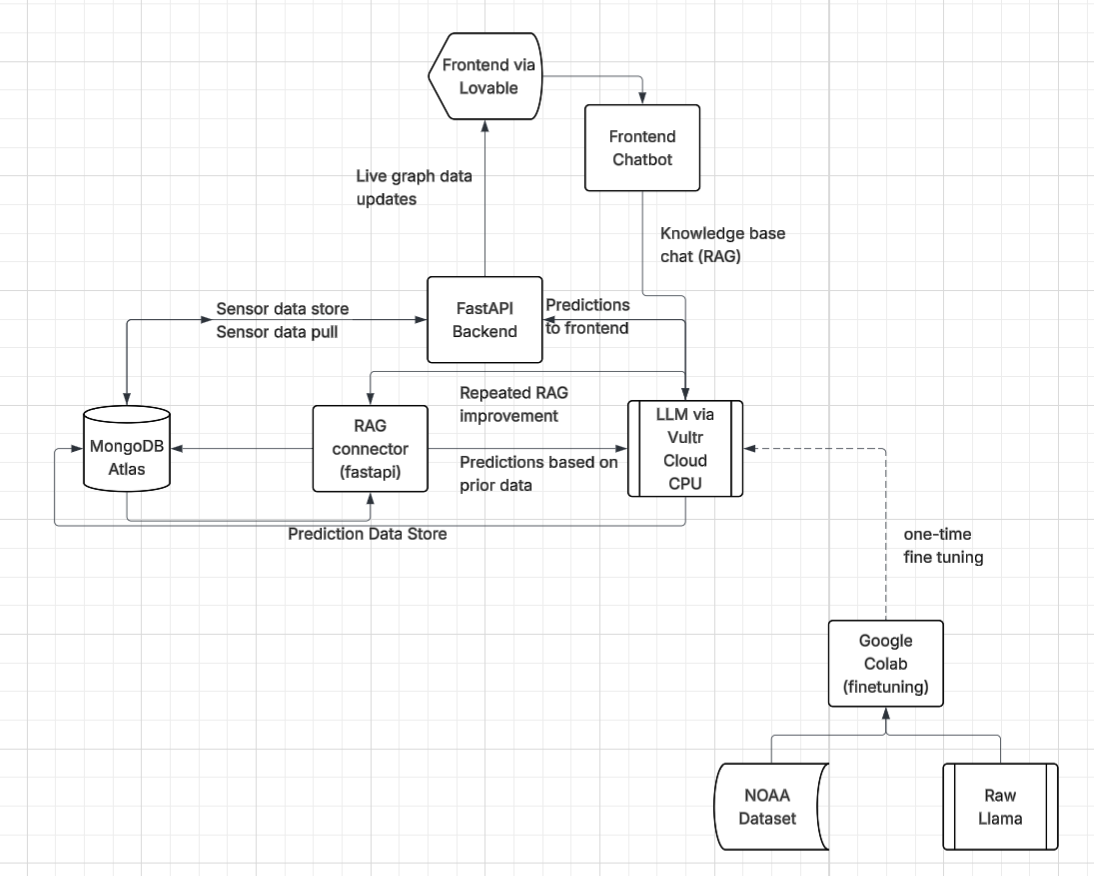
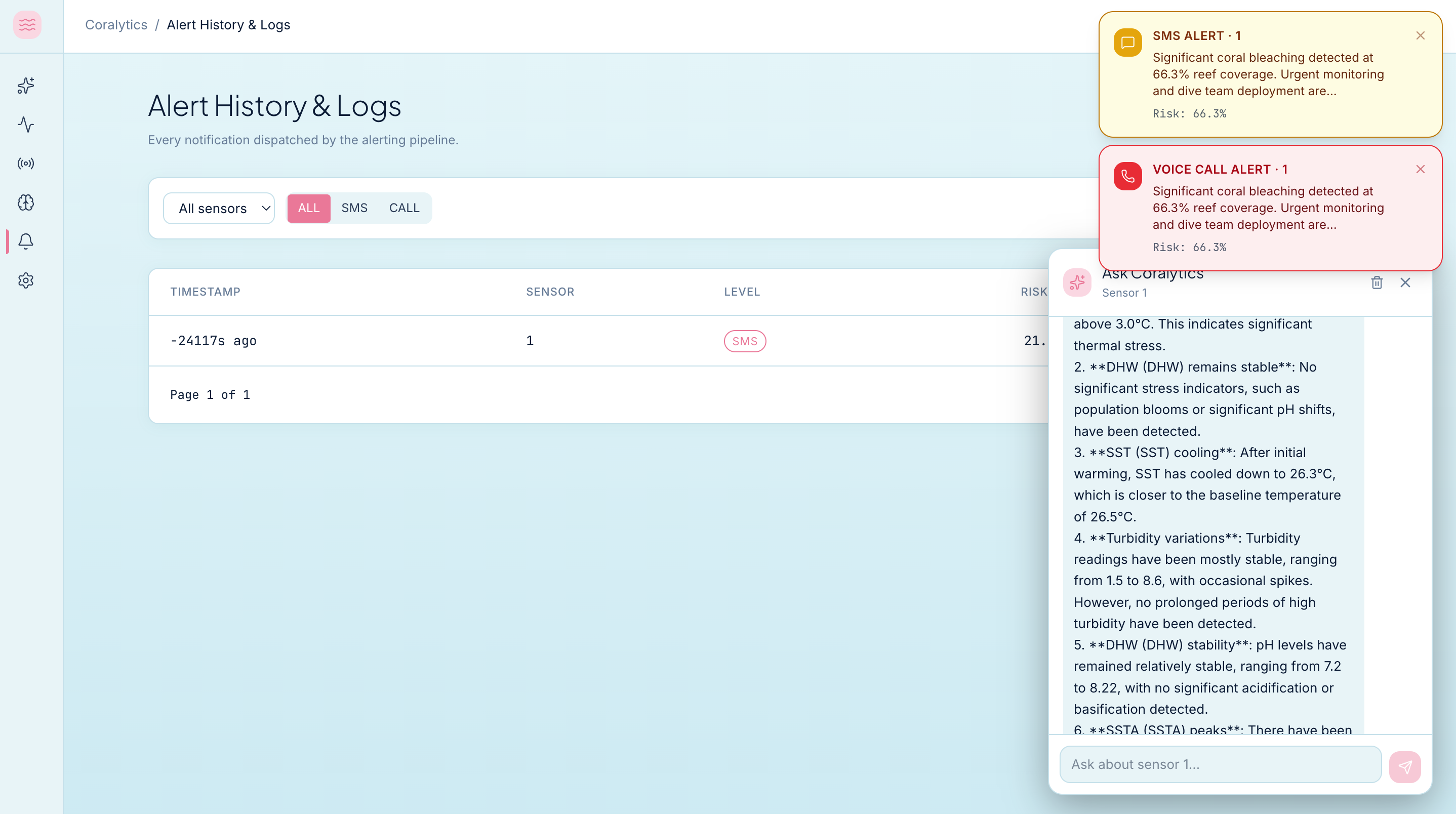
A fine-tuned machine learning model ingests that data and predicts bleaching risk, outputting a probability score and a Degree Heating Weeks (DHW) metric — the same standard NOAA uses for global bleaching alerts. The model continuously learns from new sensor readings over time. When DHW crosses critical thresholds (Warning at 4, Alert at 8), the system sends an automated SMS or voice call alert — putting actionable intelligence in the hands of reef managers weeks before visible bleaching begins.
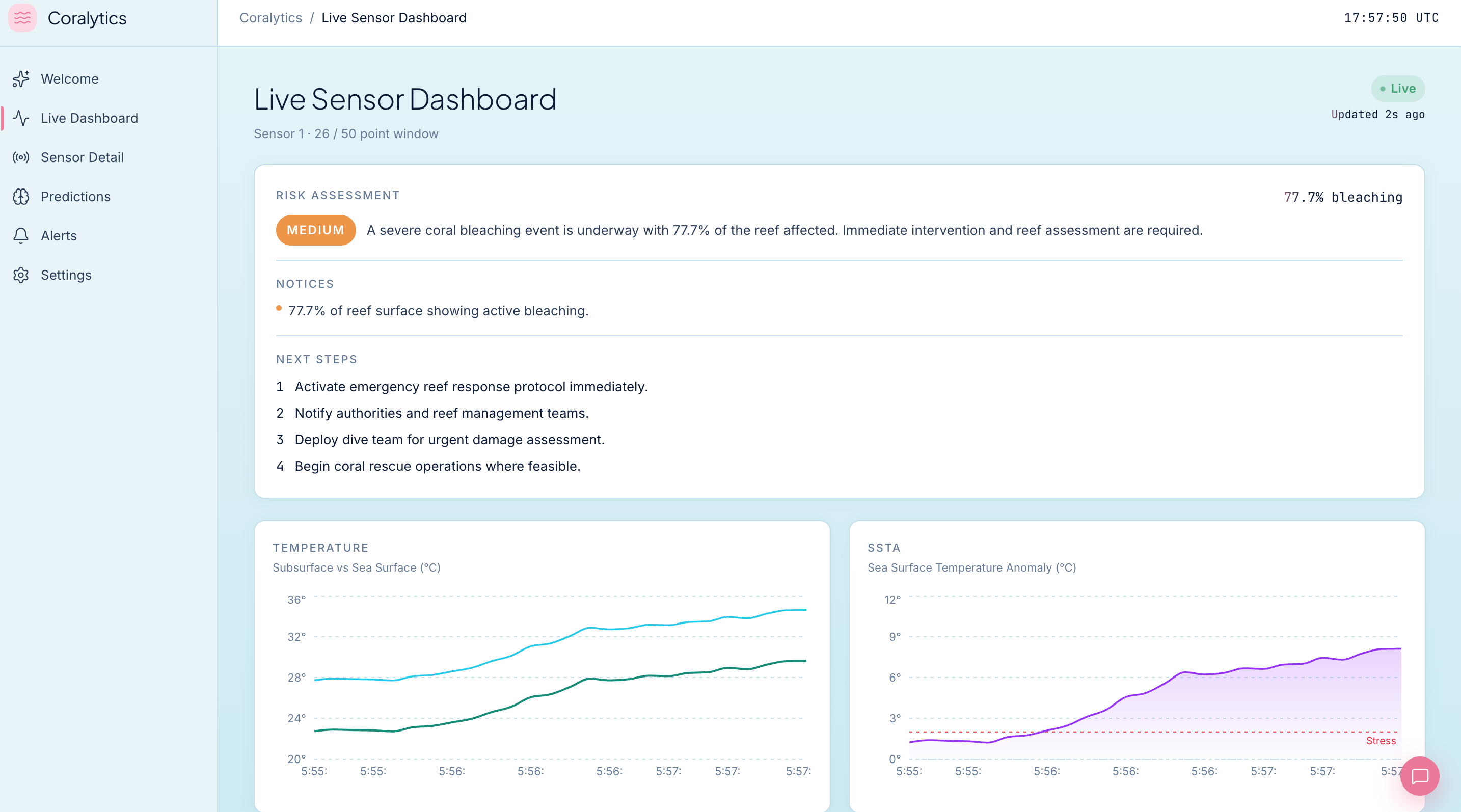
A live dashboard visualizes all sensor readings and model output in real time RAG-powered chat interface lets researchers query historical sensor data and bleaching predictions in natural language, powered by vector embeddings and semantic search
How we built it: Data & ML We trained our model on a NOAA global bleaching dataset containing over 41,000 real bleaching events, including records from the Great Barrier Reef. Features included sea surface temperature (SST) anomaly, DHW accumulation, depth, pH, turbidity, and light attenuation. We used this to build a classification model predicting bleaching probability from live sensor readings. Statistical analysis of the dataset revealed that DHW and SSTA were the strongest predictors of bleaching events, with logistic regression and random forest models both achieving over 85% accuracy — with random forest outperforming on imbalanced class distribution due to its ensemble averaging of decision boundaries.
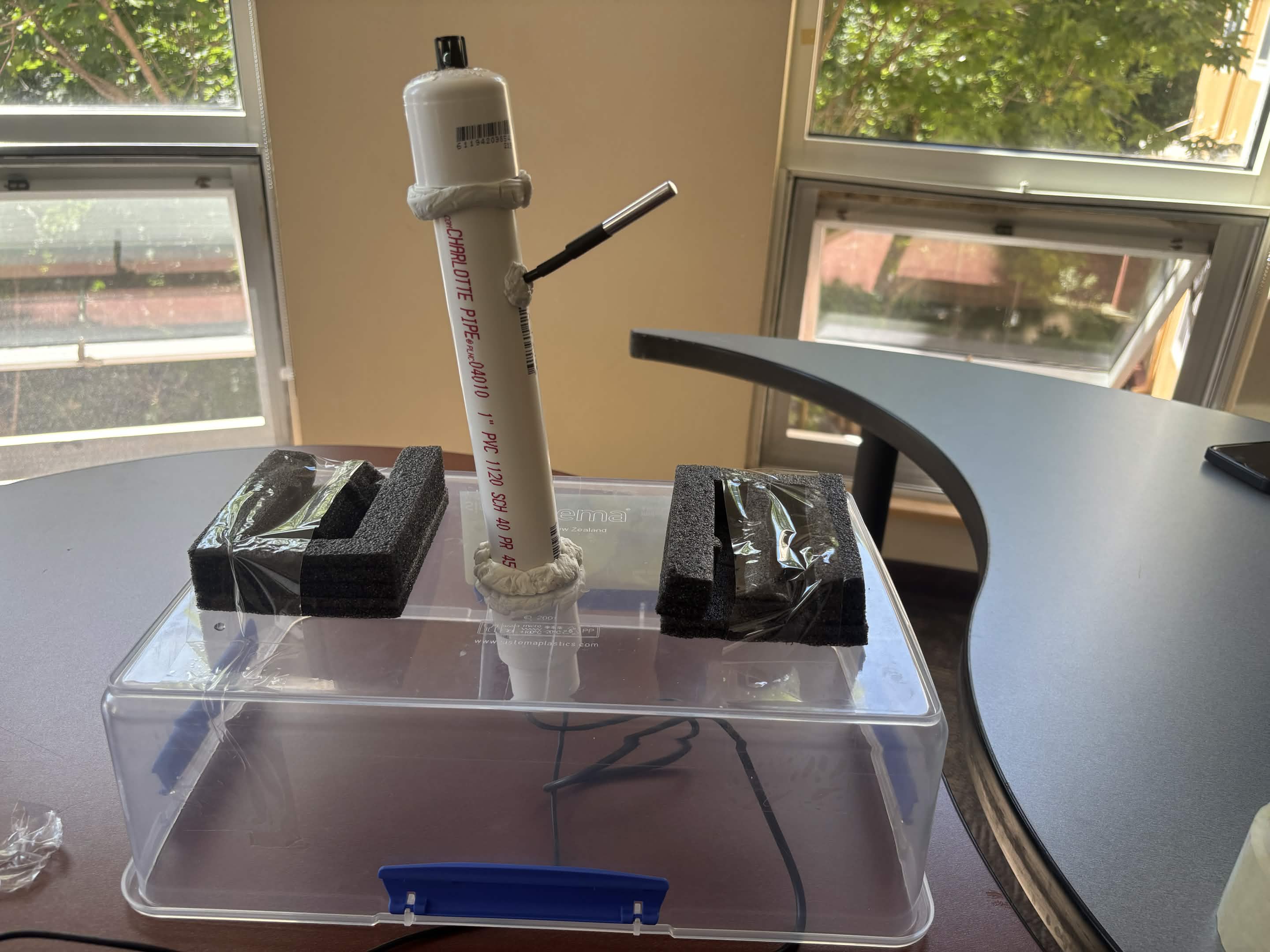
Hardware: We built a physical sensor unit that sits in water and streams real-time environmental readings including temperature, pH, turbidity, and light. The sensor feeds live data into our backend pipeline, which the ML model consumes continuously. Backend & Alerts FastAPI backend with async MongoDB (Motor) for time-series sensor storage. The LLM connector calls a Vultr-hosted model to generate structured health assessments from sensor windows. TextBee handles SMS delivery and ElevenLabs handles automated voice calls for critical alerts.
Frontend & Dashboard: We built a live dashboard that displays streaming sensor data and model predictions over WebSockets, with visual indicators for bleaching risk levels, 7-day and 14-day risk forecasts, and alert history.
Stack: Python · FastAPI · scikit-learn · NOAA dataset · IoT sensor · React · MongoDB · ElevenLabs · WebSockets · RAG · vector embeddings


Log in or sign up for Devpost to join the conversation.