-
-
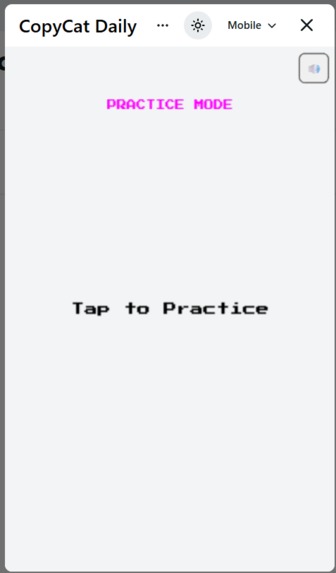
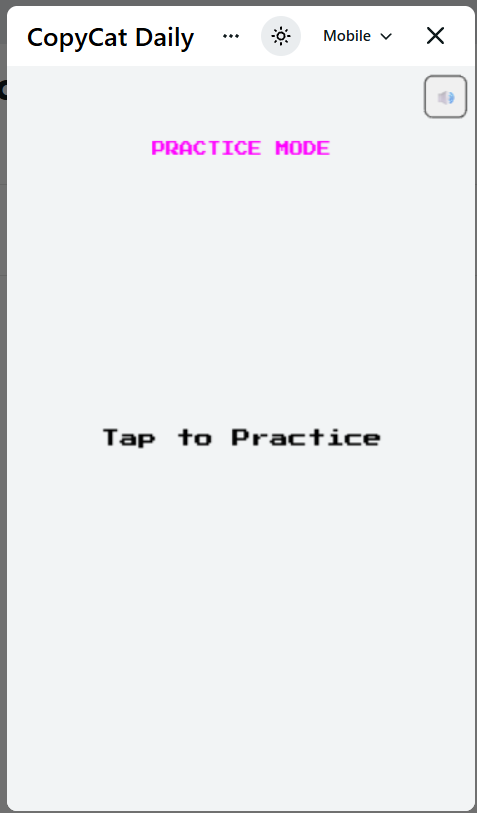
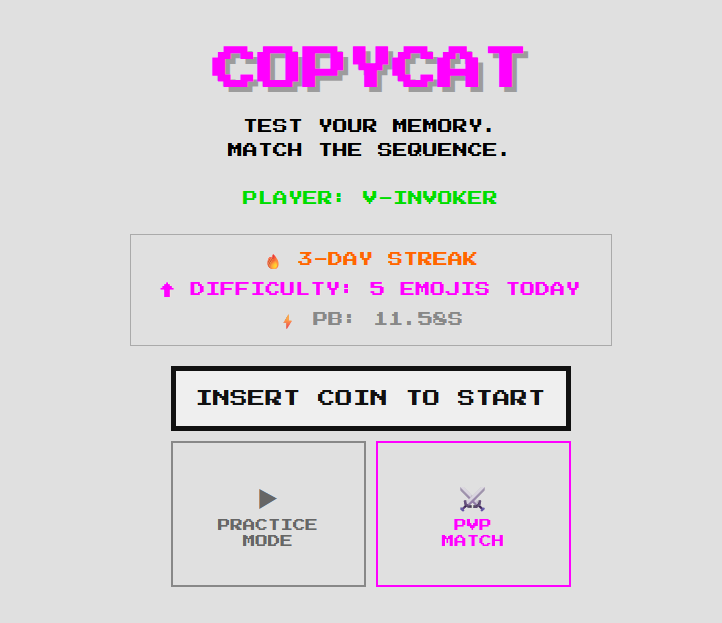
Start Screen
-
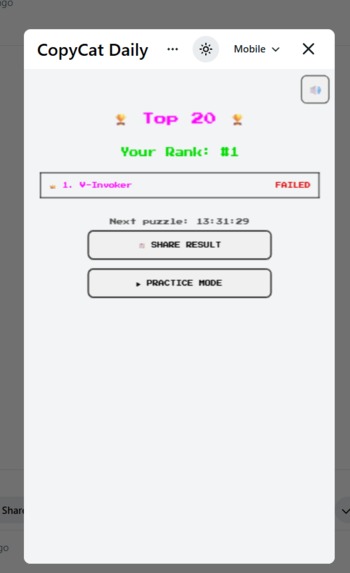
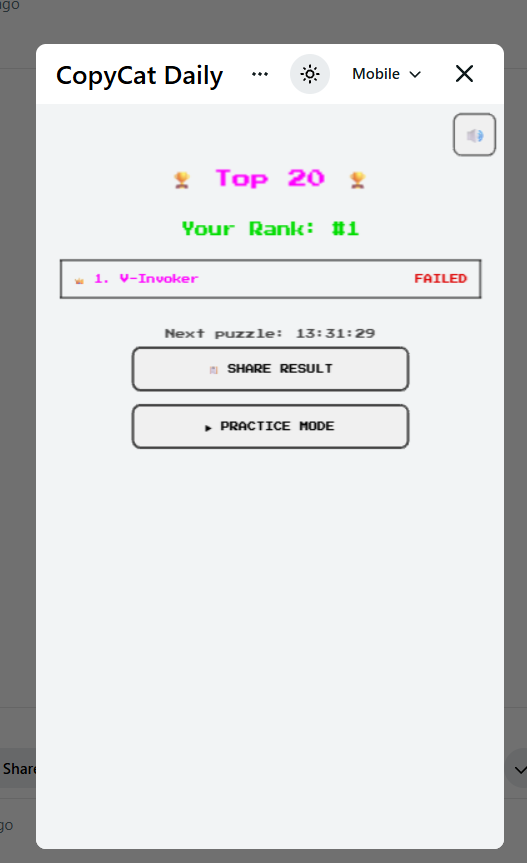
Leaderboard
-
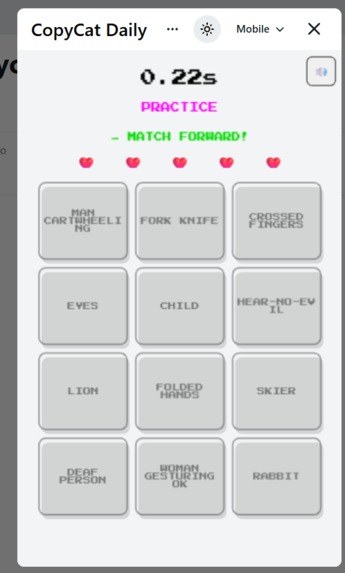
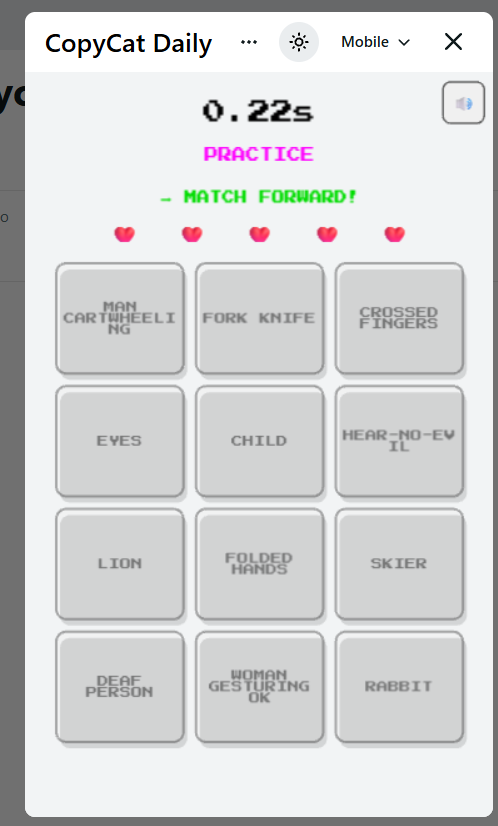
Sequence Selection
-
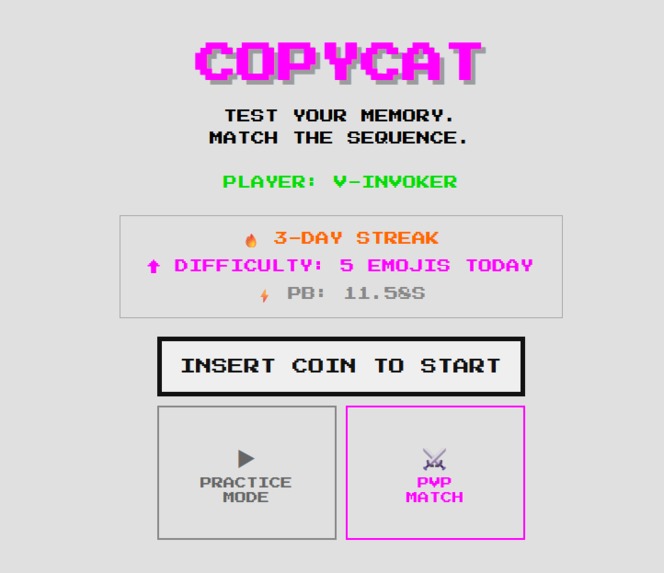
splash screen
Inspiration
I have wanted to build a game for as long as I can remember, but I never quite took the leap. Personally, I’ve always been drawn to games that test your brain and push your cognitive limits—especially memory challenges.
This game is the first stepping stone toward a much larger dream of mine: a deduction-focused "Sherlock" game that relies heavily on details, memory, and logic. CopyCat is the first chapter of that journey, taking those memory concepts and turning them into a fun, bite-sized daily challenge.
What it does
CopyCat is a fast-paced, retro-styled daily memory puzzle built natively for Reddit:
- The Challenge: Memorize a randomized sequence of emojis and match them against the clock.
- The Twist: It adapts to your skill. As you build your daily streak, the emoji sequence gets longer, and you start with fewer lives.
- The Brain Melt: You have to adapt instantly to dynamic modes—matching either Forward or Backward.
- The Community: Compete on the daily global leaderboard and share your score card directly in the subreddit comments. The PvP mode gives player for direct challenge.
- User Flair: This is a dev in progress to provide current champion a reigning copycat user flair.
How we built it
As my very first game, the learning curve was steep. I built it using:
- Phaser for the retro game canvas and mechanics.
- Devvit (Reddit's Developer Platform) for the server-side logic and Redis data hosting.
- React, Vite, and Hono for the client and API routing.
AI as the Ultimate Co-Pilot: Because this was my first time developing a game, AI helped immensely. It acted as an expert pair programmer, helping me translate raw ideas into structural code, math out cell heights to prevent screen cutoffs, and write logic for ZSET leaderboards in Redis.
Challenges we ran into
- Viewport Real Estate: Designing a grid layout that scales beautifully across desktop screens and various mobile chrome heights (without cutting off the bottom buttons) was a massive trial-and-error process.
- Difficulty Curve: Balancing the game so it feels rewarding for beginners but remains challenging for streak veterans. Finding the right mix of sequence length, mode reveals, and lives took a lot of tuning.
Accomplishments that we're proud of
- Actually Shipping: Taking a lifetime dream of game development and turning it into a playable, built reality.
- Polished UX: Implementing the dramatic "FORWARD/BACKWARD" reveal, dynamic spaced heart indicators, and a persistent custom audio engine with mute states.
What we learned
- How to orchestrate state between Hono backends, Redis storage, React screens, and Phaser game scenes.
- How to manage game loops, timers, and input zone coordinates in a responsive game framework.
What's next for CopyCat
Now that the core engine is solid, I want to use everything I've learned here to start sketching out the blueprints for the full Sherlock deduction game I've always wanted to create.

Log in or sign up for Devpost to join the conversation.