-
-
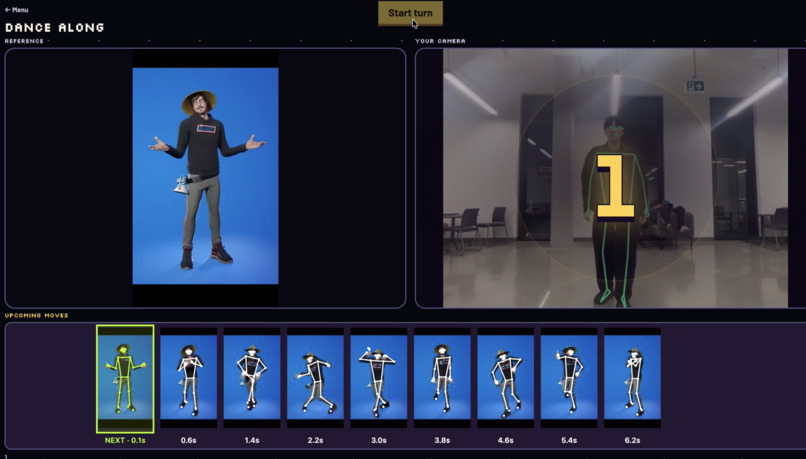
solo fortnite dance
-
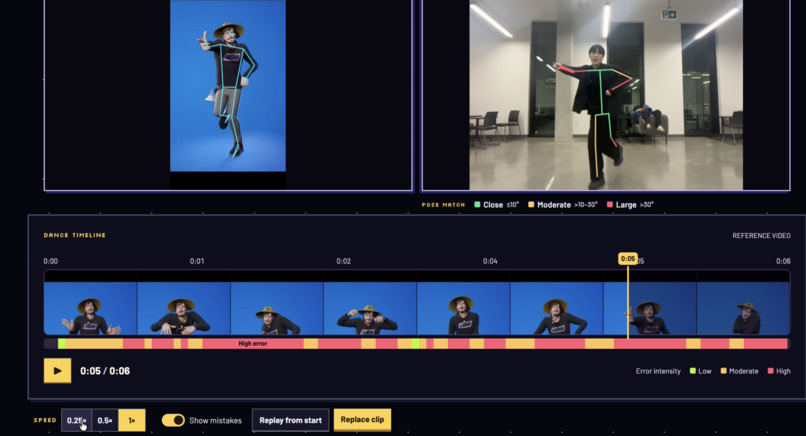
video playback
-
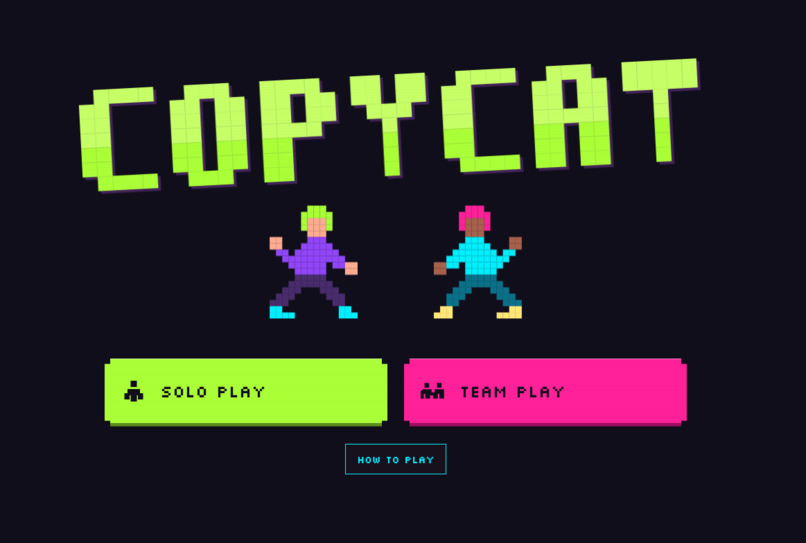
home screen
-
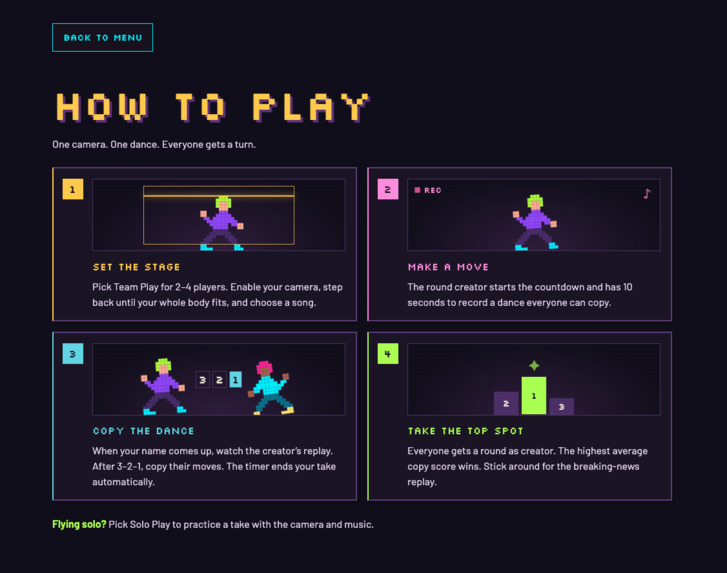
how to play
-
dancing
-
dancing outline
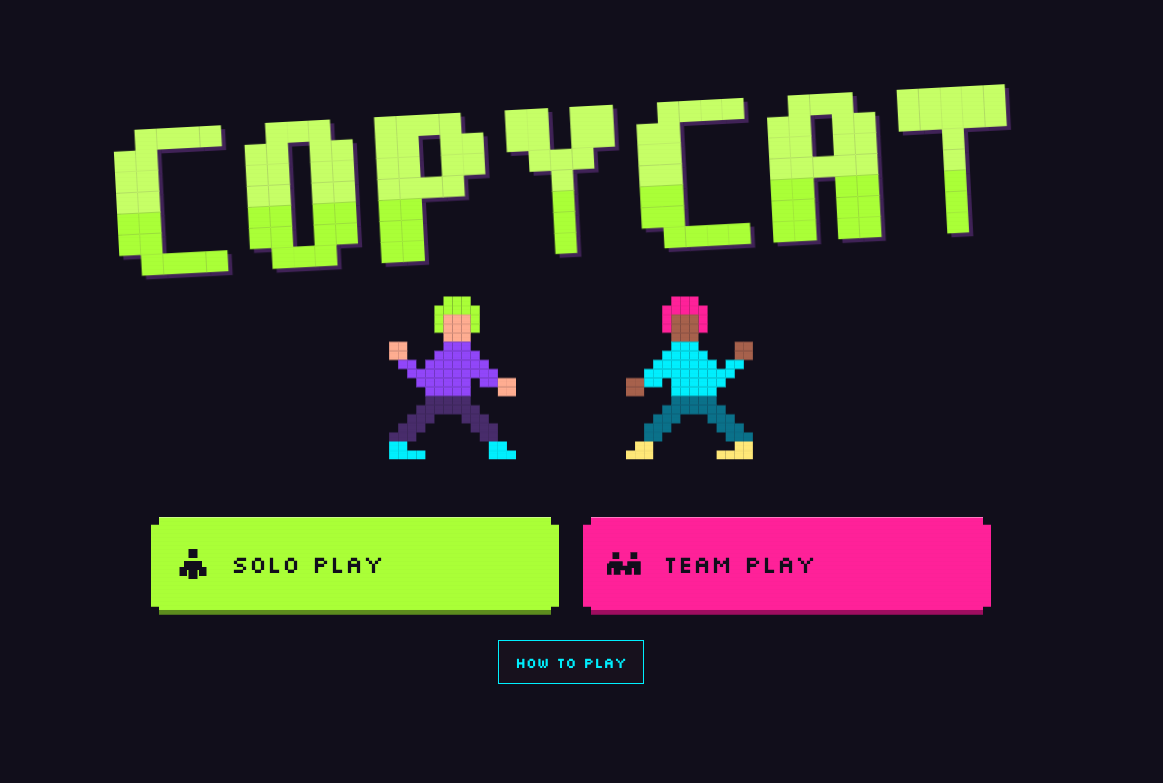
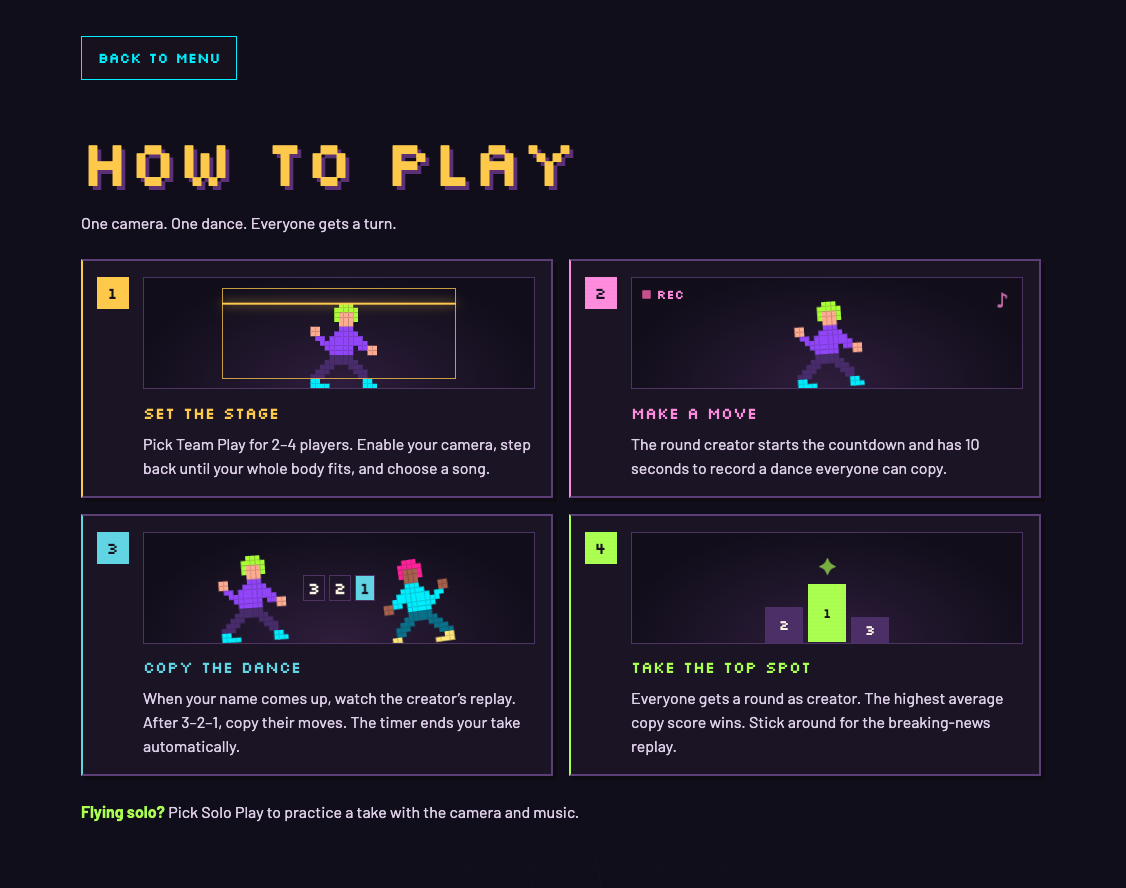
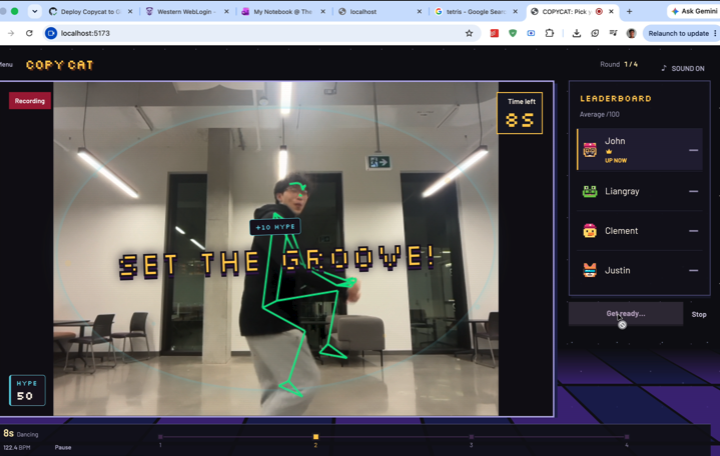
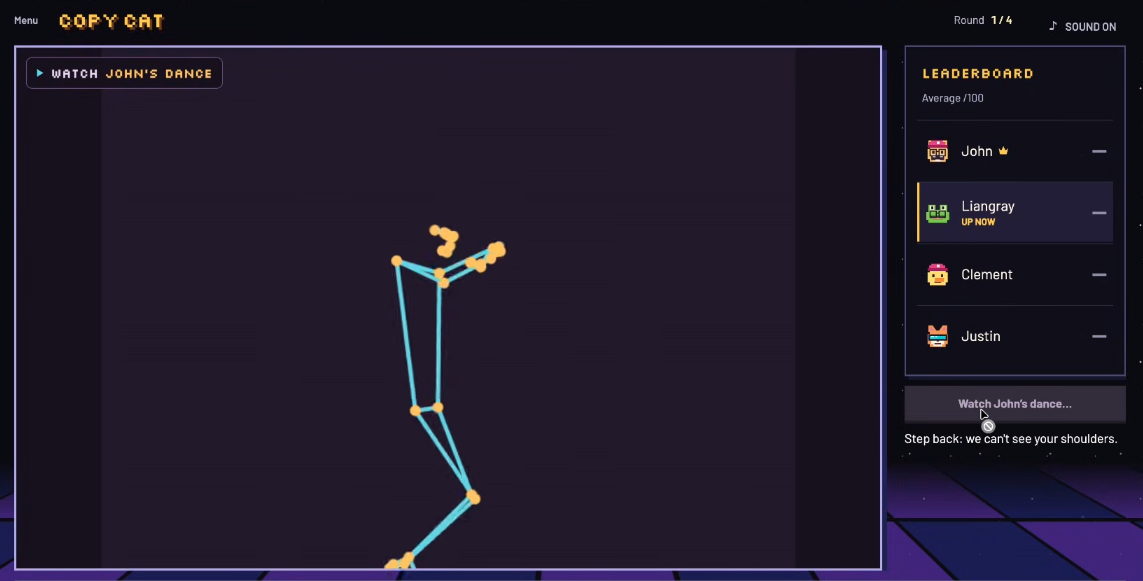
CopyCat: Steal the Moves. Own the Headlines.
Ever watched a dance on YouTube and thought, "I could totally do that"? Or challenged your friends to copy a ridiculous dance move?
CopyCat is a webcam-powered dance game that lets you compete against friends in dance battles or learn virtually any dance from YouTube and YouTube Shorts with real-time feedback.
No controllers, expensive equipment, or complicated setup required.
One laptop. One webcam. Endless dance challenges.
Inspiration
We've all seen viral dances on YouTube or YouTube Shorts and wanted to try them ourselves. But learning choreography from a video usually means constantly pausing, rewinding, and guessing whether we're actually doing the moves correctly.
At the same time, dancing with friends is naturally competitive. Someone shows off a move, everyone tries to copy it, and suddenly there's a debate about who performed it best.
We wanted to combine these two experiences into one application.
Our goal was to make dancing more accessible, interactive, and entertaining by using computer vision to transform any webcam into a dance controller.
Whether you're learning your favourite choreography or challenging friends to recreate your moves, CopyCat makes dancing something anyone can jump into.
What It Does
CopyCat revolves around two main features: Compete with Friends and Learn Any Dance.
Compete with Friends: Who Can Copy It Best?
Turn any room into a dance battle arena with just one laptop and a webcam.
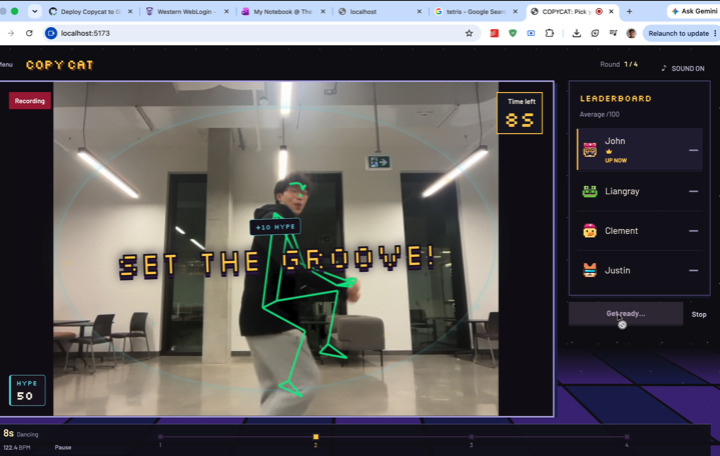
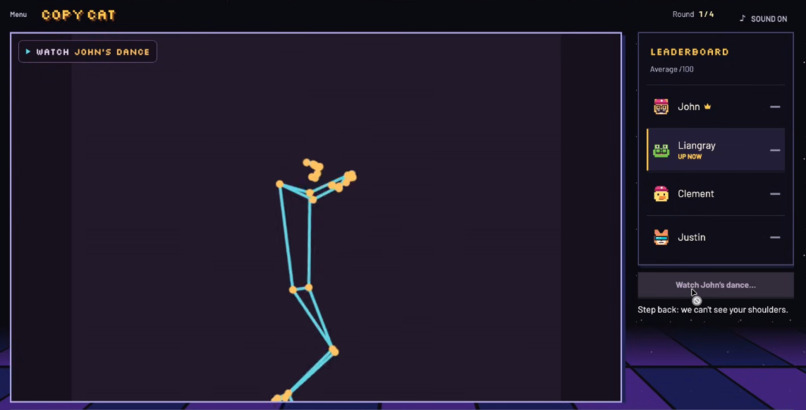
In Team Mode, 2 to 4 players take turns creating and copying dance moves.
- Create: One player records a dance, approximately 10 seconds long.
- Copy: The remaining players attempt to recreate the original dance one at a time.
- Score: Our pose-matching engine evaluates each performance based on movement accuracy, timing, and individual body parts.
- Compete: Choose between Quick or Full rotation, with players ranked by their average total scores. Creators are not scored on their own rounds.
- Results: See how everyone performed, compare scores, and find out who came out on top.
Our scoring system goes beyond simply determining whether someone copied a dance correctly. It analyzes individual body movements, identifies areas where players struggled, and highlights their best and worst moments.
The lowest-scoring player also receives a humorous, AI-generated recap of their performance.
The result? A competitive party game where anyone can create the next dance challenge.
Learn Any Dance: Turn YouTube Into Your Dance Instructor
Ever wanted to learn a viral dance but struggled to follow along with the video?
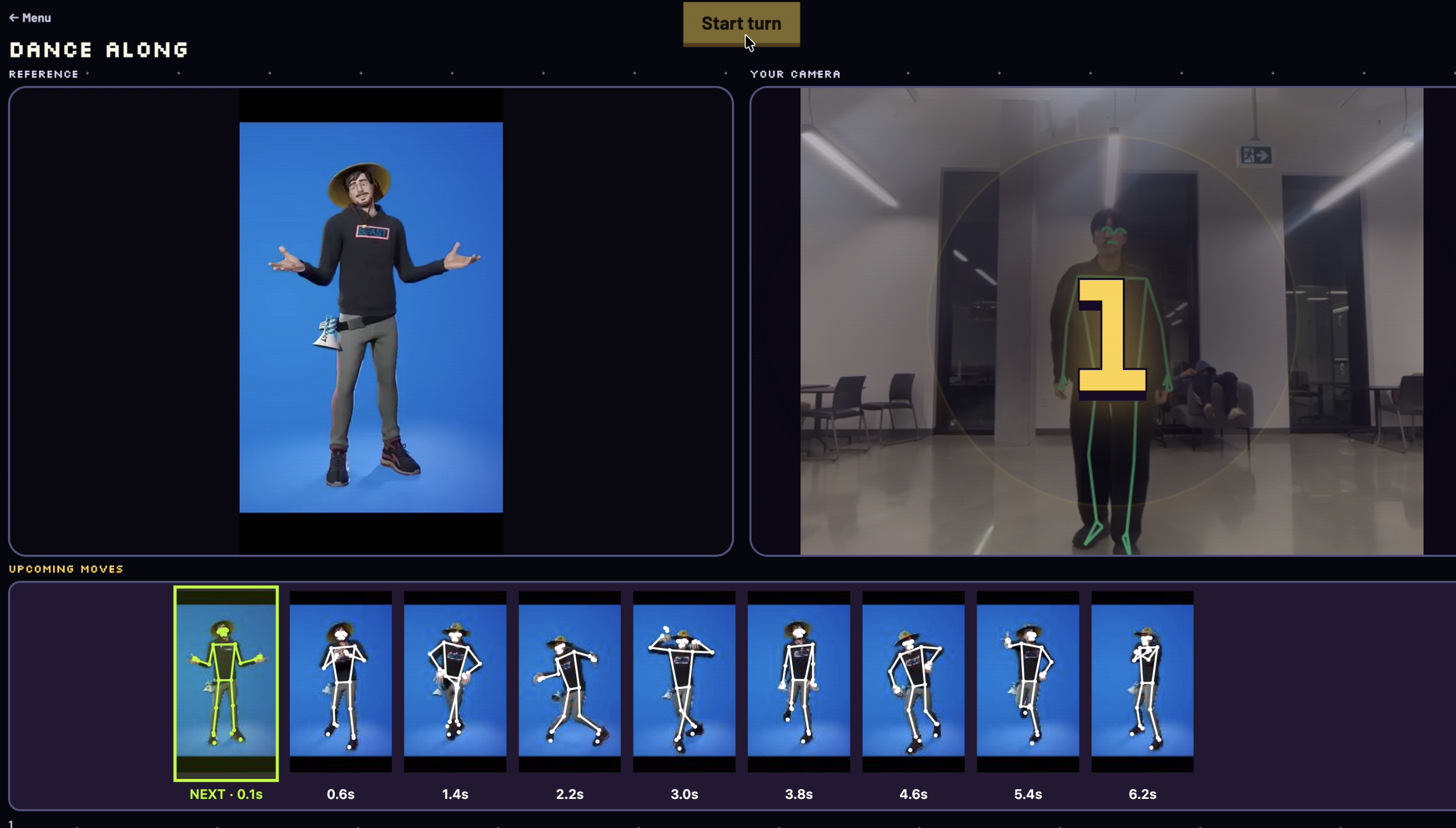
CopyCat lets you import a section of a YouTube video, YouTube Short, or local MP4 and turn it into an interactive dance challenge.
Using computer vision, CopyCat extracts the reference dancer's movements and compares them against your own performance through your webcam.
Features include:
- YouTube and YouTube Shorts integration: Import choreography from online videos.
- Real-time pose feedback: See how accurately you're recreating the reference movements.
- Scrolling pose cues: Follow upcoming movements as you dance.
- Performance scoring: Receive an official score based on movement similarity and timing.
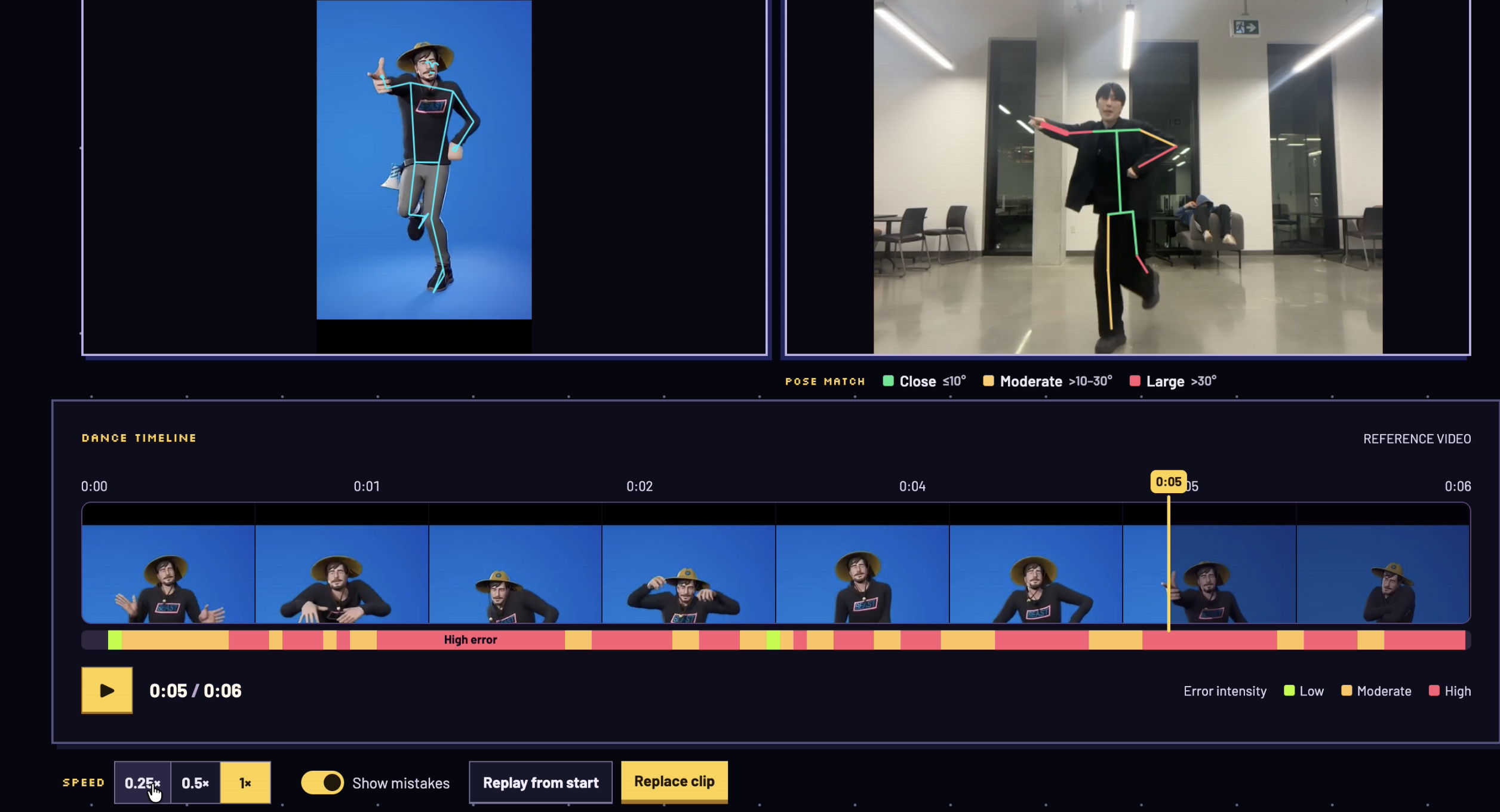
- Side-by-side correction replay: Compare your movements against the original choreography to identify mistakes.
- Partial-pose support: Practice dances even when certain body parts aren't fully visible.
Instead of simply watching and copying a video, you can receive measurable feedback on how well you're performing.
Our goal is to make learning choreography more interactive, approachable, and fun.
How We Built It
We developed CopyCat using a combination of computer vision, pose estimation, video processing, and generative AI.
Our tech stack:
| Layer | Technologies |
|---|---|
| Frontend | React, TypeScript, Vite |
| Pose Tracking | MediaPipe Tasks Vision |
| Backend | Python, FastAPI, NumPy |
| Generative AI | Google Gemini (google-genai) |
| Video Processing | yt-dlp, ffmpeg |
| Testing | pytest |
At the core of CopyCat is our custom pose-comparison and scoring engine.
Using MediaPipe, we extract 33 body landmarks and transform them into limb-direction angles to represent how different parts of the body are positioned.
We then resample the pose sequences to a consistent frame rate and apply Dynamic Time Warping (DTW) to align movements between the reference and the player, even when their timing differs slightly.
Our scoring system evaluates:
- Individual body parts: Such as the left forearm or right leg.
- Body regions: Arms, legs, and torso.
- Timing accuracy: How closely the player's movements align with the reference.
- Performance highlights: The best and worst moments of a dance.
- Areas for improvement: Identifying the weakest-performing body part.
This engine powers both our multiplayer dance battles and solo choreography practice.
For video importing, we use yt-dlp and ffmpeg to process YouTube content before extracting reference poses.
We also integrated Google Gemini to generate personalized, humorous commentary on multiplayer performances, with fallback responses when the API is unavailable.
Our frontend handles webcam capture and pose tracking, while our FastAPI backend processes landmark data and calculates scores.
Privacy was an important design consideration: Video stays in the browser, and our API receives pose landmarks rather than full recordings, with optional still images for AI-generated commentary.
Challenges We Faced
Handling incomplete body tracking: MediaPipe doesn't always detect every landmark accurately, especially when players turn sideways or move partially outside the camera frame. We had to refine visibility checks to avoid rejecting otherwise usable performances.
Comparing movements with different timing: Players rarely perform choreography at exactly the same speed. We used DTW to account for timing differences while still evaluating pose accuracy.
Managing mirrored webcam footage: The webcam preview is mirrored for a natural user experience, but scoring relies on consistent, unmirrored landmark coordinates. Keeping these representations separate was essential.
Optimizing video processing: Running pose tracking and video segmentation on a shared laptop introduced performance challenges, requiring careful handling of processing timeouts and fallback behaviour.
Coordinating parallel development: We divided development into Recorder, Game, Shame, and Backend components. Maintaining a shared CONTRACT.md helped us define consistent interfaces and integrate everything smoothly.
Accomplishments We're Proud Of
We're proud to have built two distinct dance experiences powered by the same computer vision engine.
For multiplayer, we created a complete gameplay loop where friends can record challenges, copy each other's moves, receive scores, and compete through multiple rounds.
For solo players, we built the ability to import real YouTube choreography, practice with live pose feedback, follow movement cues, and review performances through side-by-side replay.
One of our biggest technical accomplishments was building a scoring system that provides specific, explainable feedback rather than just a single number.
We're also proud of our arcade-inspired neon interface, which makes CopyCat feel like an actual dance game rather than a technical demonstration.
What We Learned
Building CopyCat taught us how challenging real-world pose estimation can be. Human movement is unpredictable, camera angles vary, and even small differences in timing can significantly affect comparisons.
We gained hands-on experience with computer vision, MediaPipe, temporal sequence alignment, real-time feedback, video processing, and generative AI integration.
We also learned the importance of designing clear API contracts when building multiple interconnected features in parallel.
Most importantly, we learned how the same underlying technology can support two different experiences: competitive multiplayer gameplay and interactive skill development.
What's Next
We want to continue improving both sides of CopyCat.
For Learn Any Dance, we're working toward richer correction replays with shared timelines, mistake markers, and limb heat visualizations. We also want to improve partial-pose scoring fairness and introduce real song and BPM synchronization beyond our current metronome.
For Compete with Friends, we plan to expand the variety of reactions and post-game content to make multiplayer sessions even more entertaining.
We're also exploring optional sharing and exporting of gameplay highlights while maintaining our local-first, opt-in approach.
Our long-term vision is simple: make it easy for anyone to learn the dances they love and challenge their friends, using nothing more than a webcam.
Find a dance. Copy the moves. Challenge your friends.

