-
-

logo
-
unblocker
-
expertise-scoring
-
expertise-scoring-2
-
slack-reachout

💡 Inspiration
Developers lose hours every week to friction: asking the wrong person for help, creating duplicated logic and endlessly re-explaining old architectural decisions. We realized that while engineering teams have great tools (GitHub, Linear, Slack), the connective tissue between them is broken. COPOD was built to be that connective tissue, acting as an invisible AI agent that removes coordination overhead.
⚙️ What It Does
COPOD plugs directly into your existing stack (GitHub, Linear, Slack) to deliver three core capabilities:
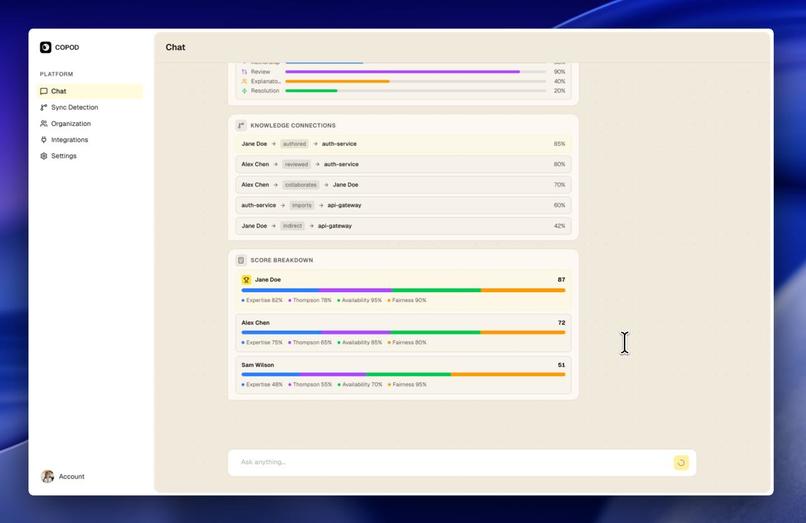
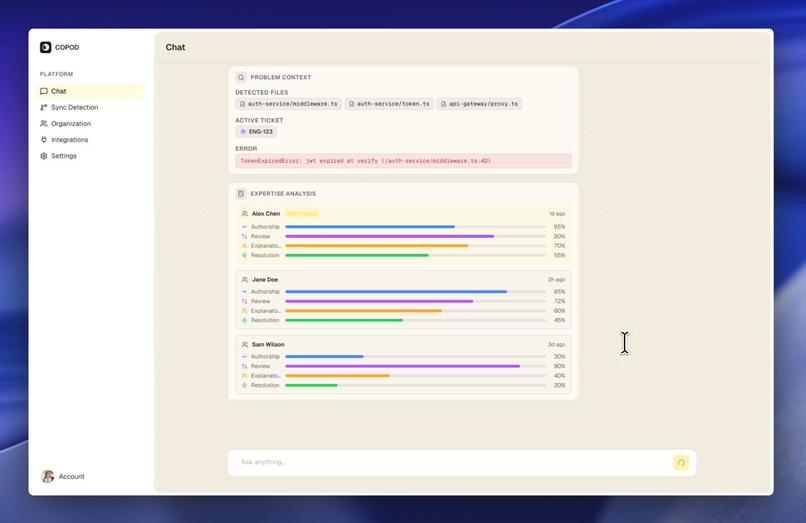
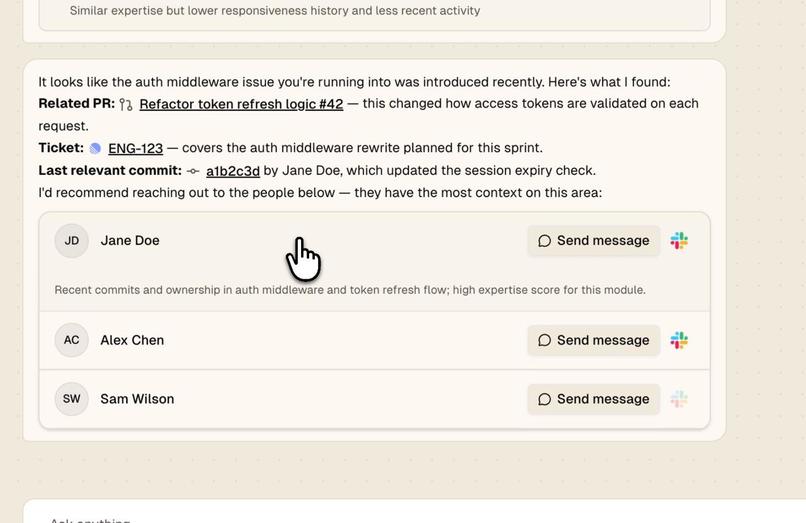
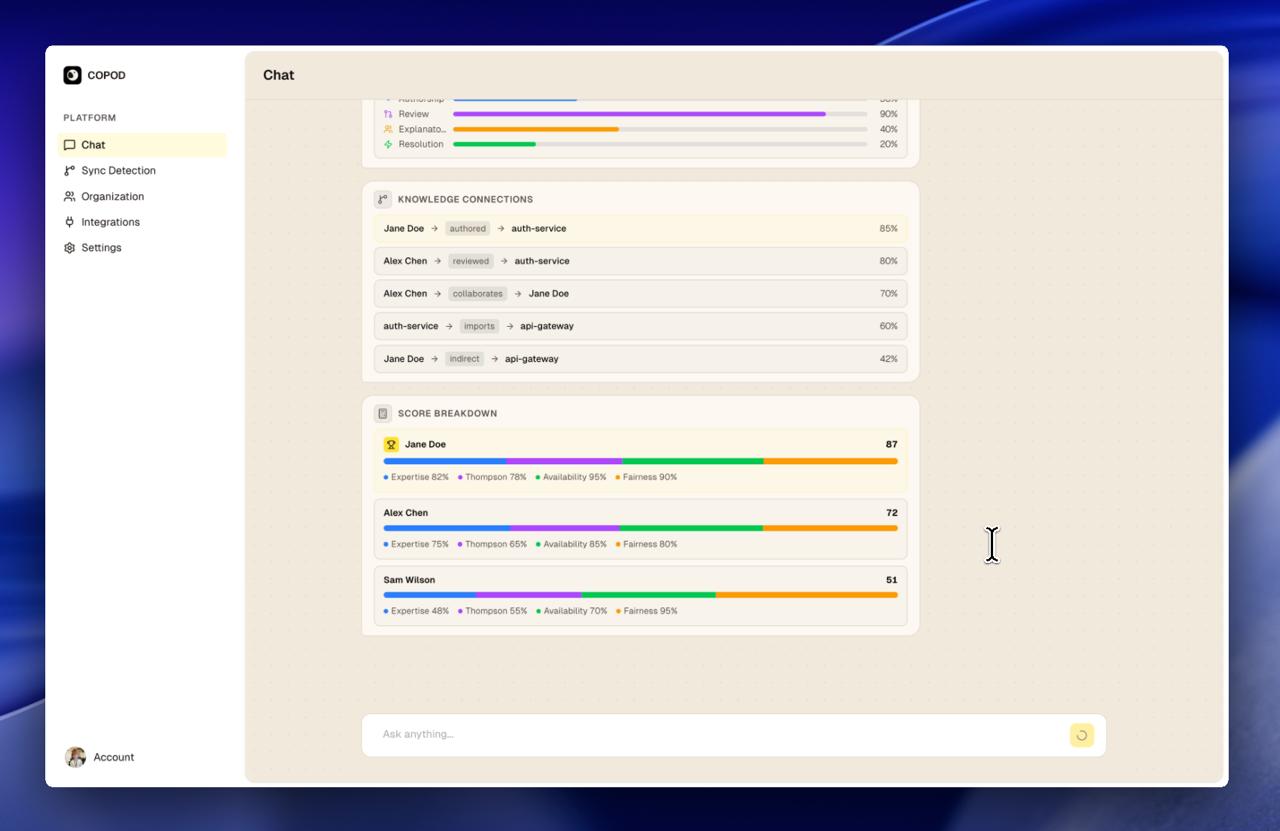
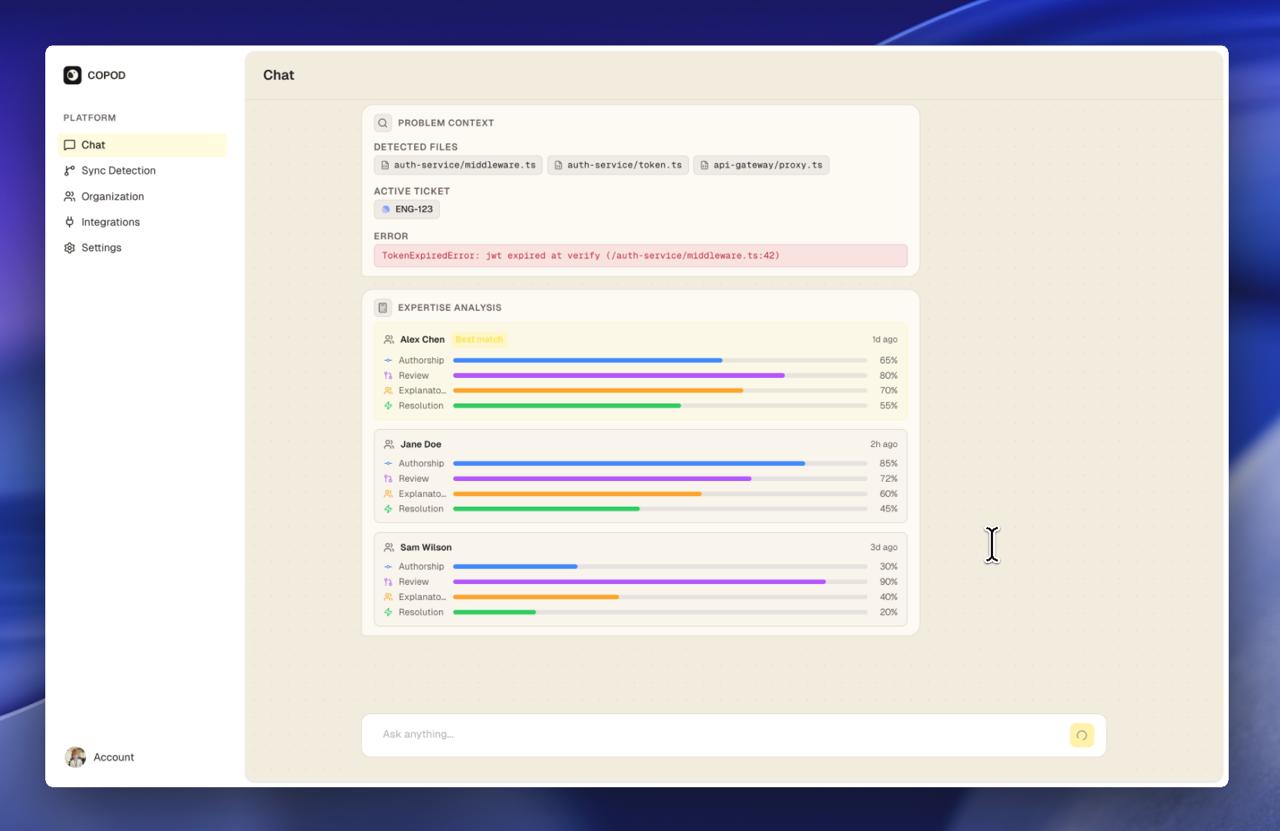
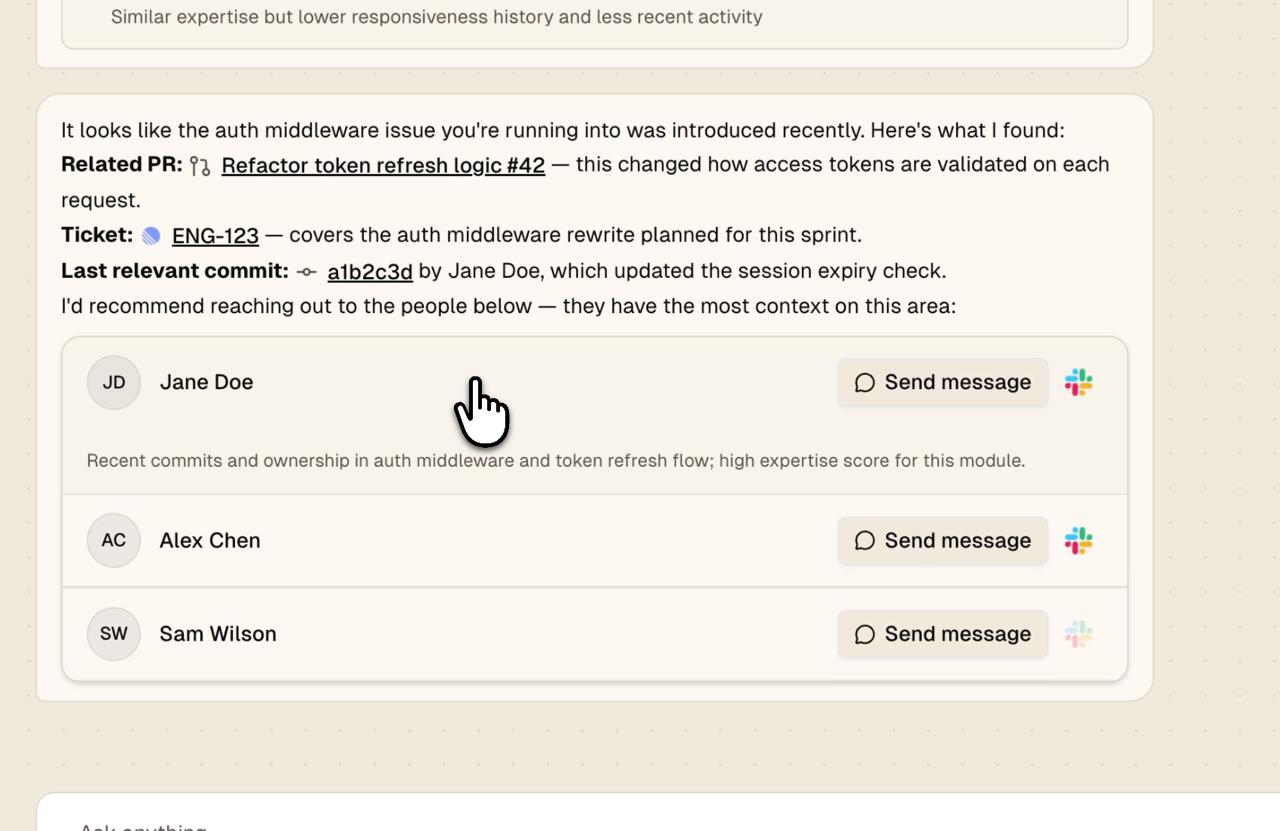
- Intelligent Unblocking: When a developer is stuck, it instantly routes them to the right person. It calculates an "expertise score" using commit history, open PRs, and ticket ownership, cross-referenced with real-time Slack availability.
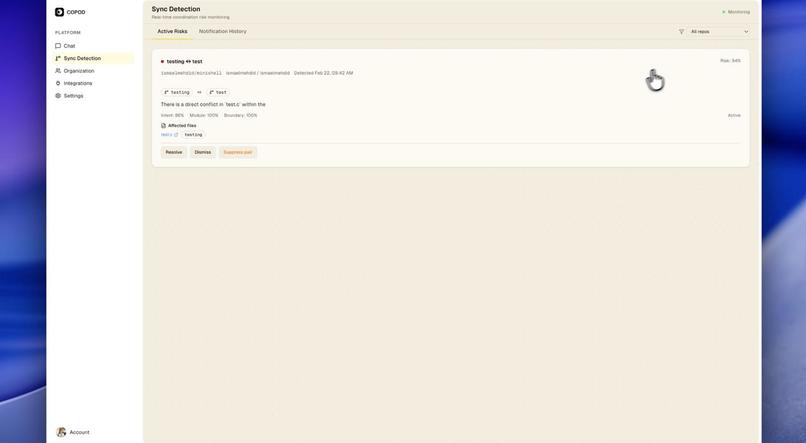
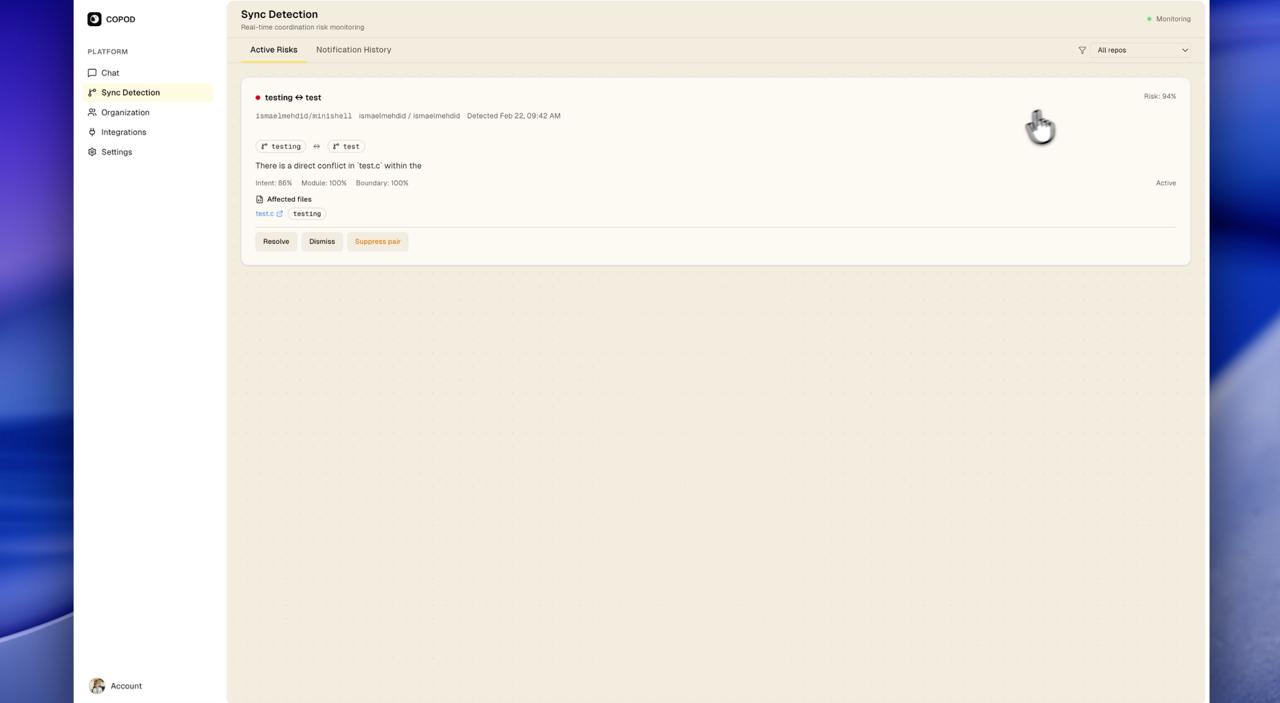
- Commit Intelligence: Acts as a pre-review safeguard. It analyzes every push, checks alignment against the linked Linear task, and flags architectural inconsistencies or cross-branch duplication before it hits review.
- Team Knowledge Graph: It creates a living, shared AI memory of the codebase. It understands not just what code was written, but why decisions were made and who made them, answering architectural questions with full historical context.
🛠️ How We Built It
- Next.js 16 / React 19 / TypeScript
- scikit-learn / numpy
- Google Gemini (2.5-pro, 2.5-flash) via Vercel AI SDK
- Mastra — agent orchestration
- PostgreSQL 16 + pgvector — primary DB with vector search
- Pinecone — vector store
- Turso (LibSQL) — edge DB for agent memory
- Drizzle ORM — database access
- Upstash Redis — caching
- Clerk — auth and organizations
- Inngest — background event system
- Pusher — real-time
- Voyage AI — embeddings
- Python FastAPI + tree-sitter — code intelligence service
- Tailwind CSS v4 + shadcn/ui + Framer Motion + Zustand — frontend
🚧 Challenges We Ran Into
The hardest problems were definitional and trust-related:
- Defining "Expertise": Creating a measurable, defensible algorithm for "who knows what" was our first major hurdle. We had to balance recent commits vs. historical knowledge.
- Signal over Noise: The north star throughout development was signal quality. Noise kills adoption. Avoiding false positives in our commit analysis and handling cross-branch duplication detection efficiently took multiple iterations of our prompting and retrieval logic.
🏆 Accomplishments We're Proud Of
- Building a real-time expertise scoring system that actually routes to the right person.
- Successfully mapping automated commit analysis directly to ticket alignment.
- Developing cross-branch duplication detection that works reliably.
- Creating an invisible tool: COPOD reduces coordination overhead without forcing developers to look at yet another dashboard.
🧠 What We Learned
Engineers don't want another tool - they want fewer interruptions. The best AI is invisible until exactly the moment it is needed. We also learned that developer trust depends entirely on precision, and that capturing "institutional memory" is a genuine, measurable competitive advantage for a team.
🚀 What's Next for Copod
- [Feature 1]: * Deep integration with Notion/Confluence/Calendars to map code decisions directly to company documentation and increase context.*
- [Feature 2]: * An analytics dashboard for engineering managers to identify knowledge silos within the team.*
- [Feature 3]: IDE extensions (VS Code/JetBrains) to flag duplication while the developer is actively typing.
Built With
- anthropic
- clerk
- docker
- gemini
- inngest
- lovable
- mastra
- next.js
- numpy
- pinecone
- postgresql
- python
- redis
- scikit-learn
- typescript


Log in or sign up for Devpost to join the conversation.