-
-
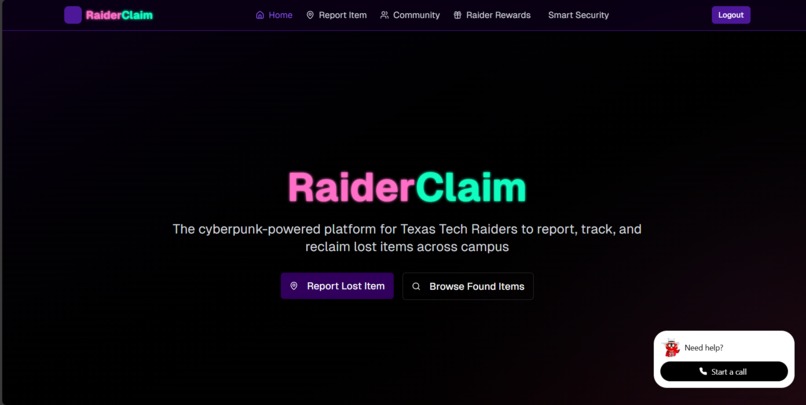
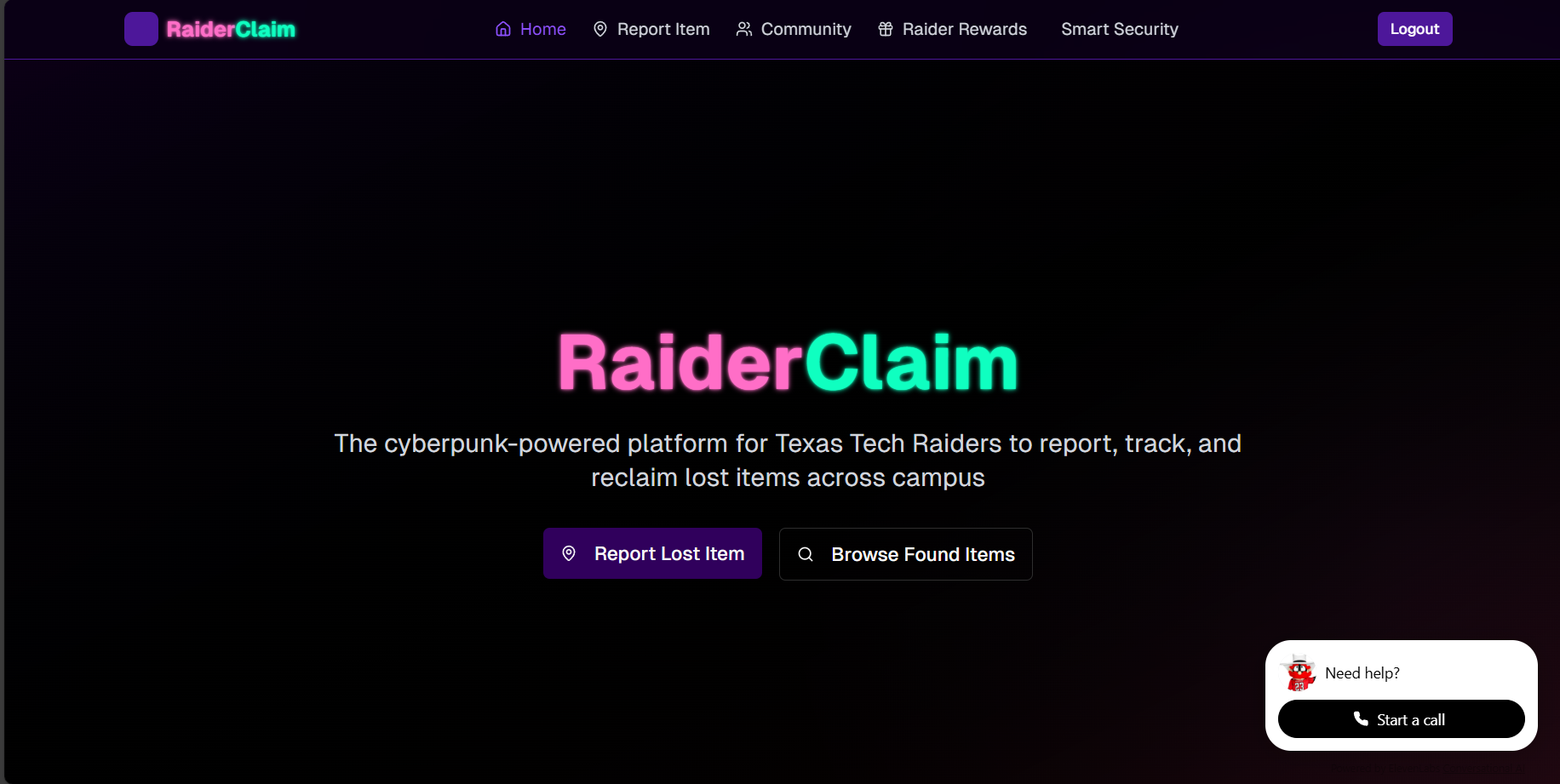
landing page - Cyber Punk Texan Theme
-
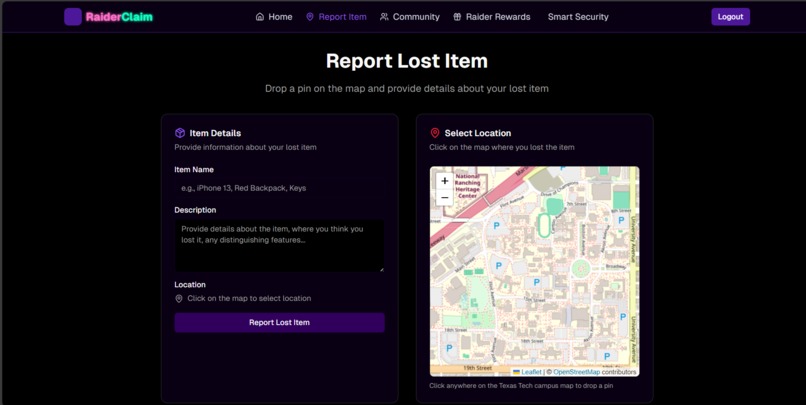
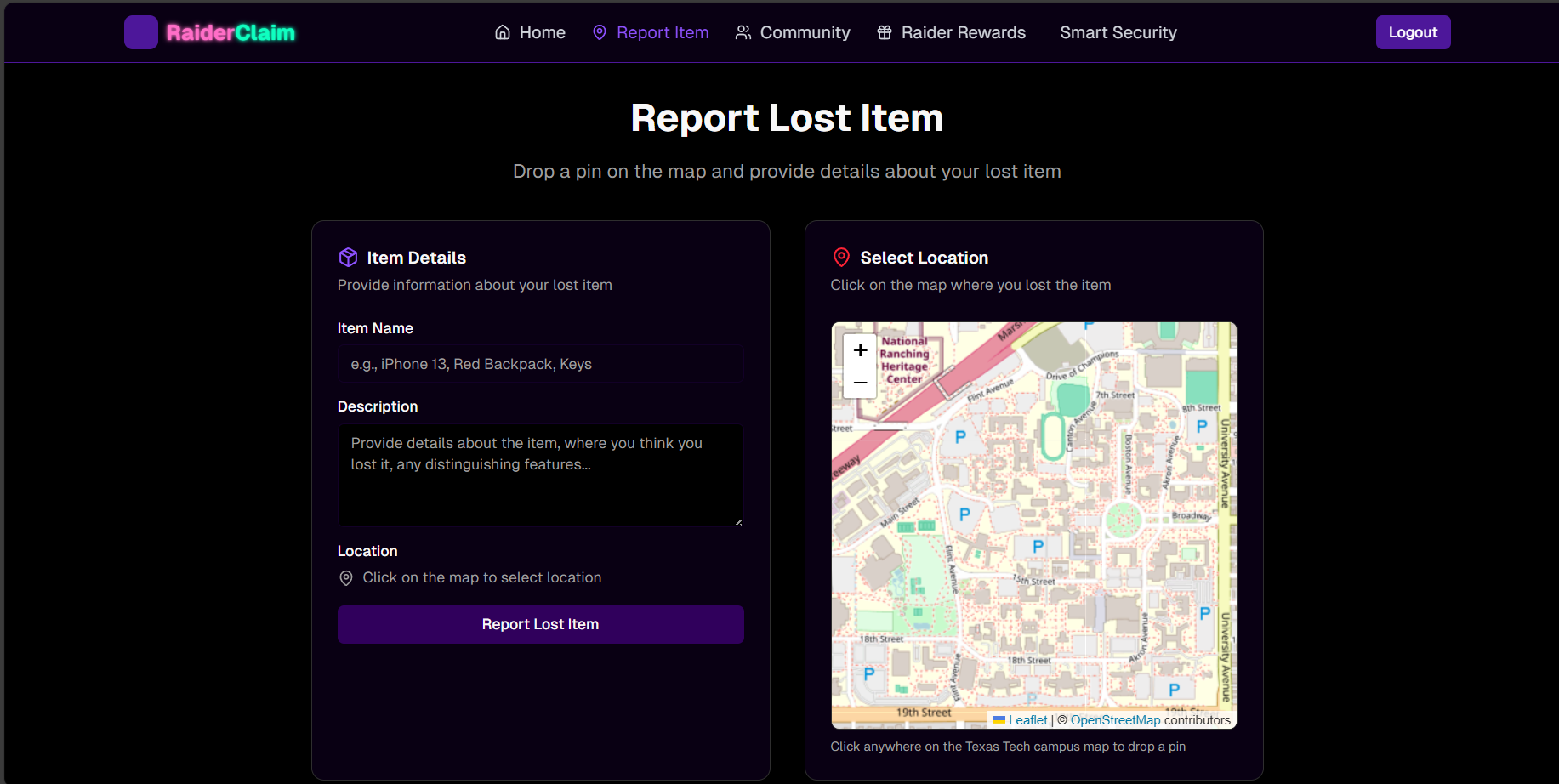
reporting tab webview
-
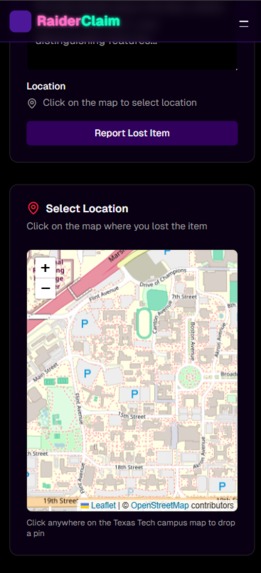
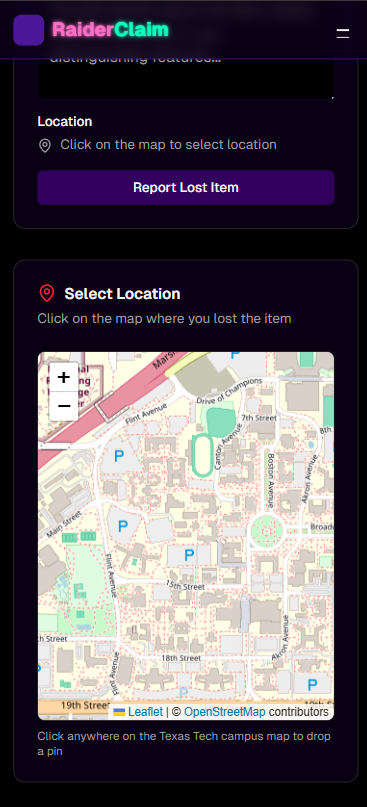
reporting tab mobileview
-
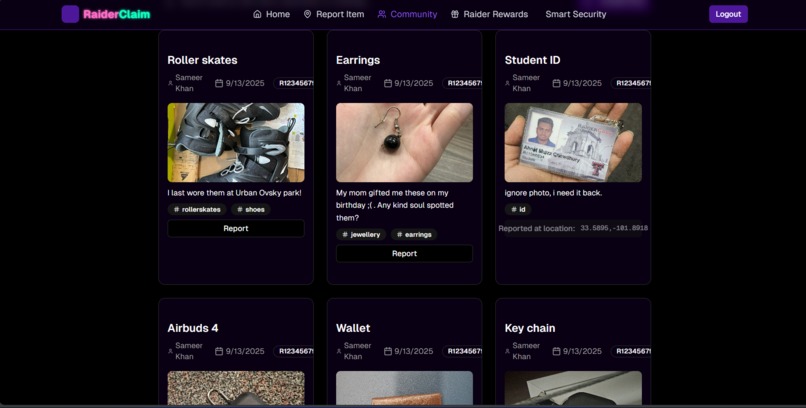
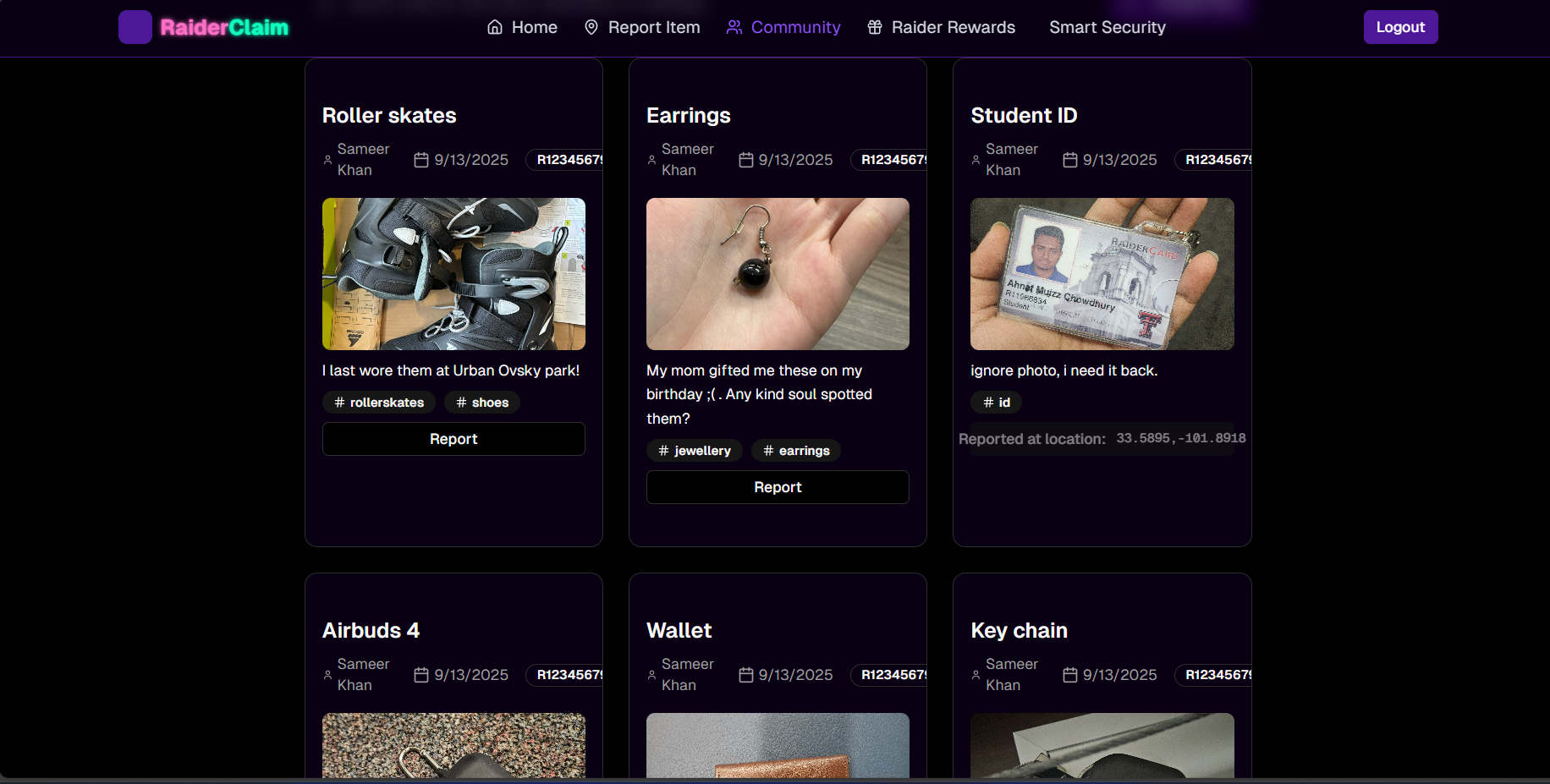
community tab with posts of items
-
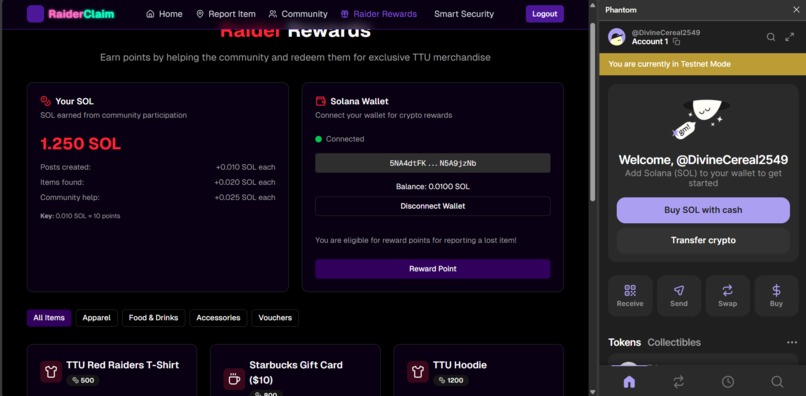
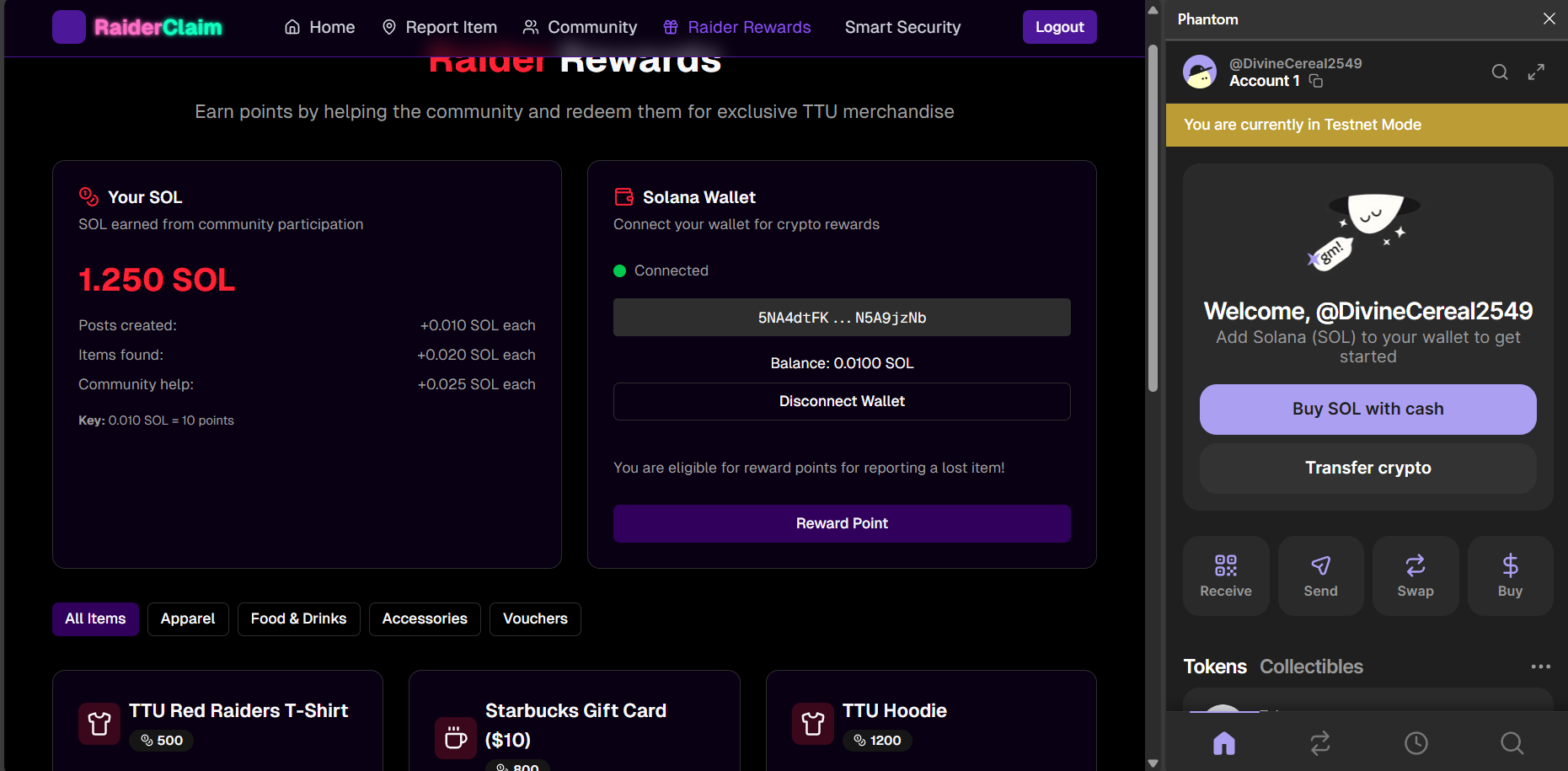
reward based gamification element
-
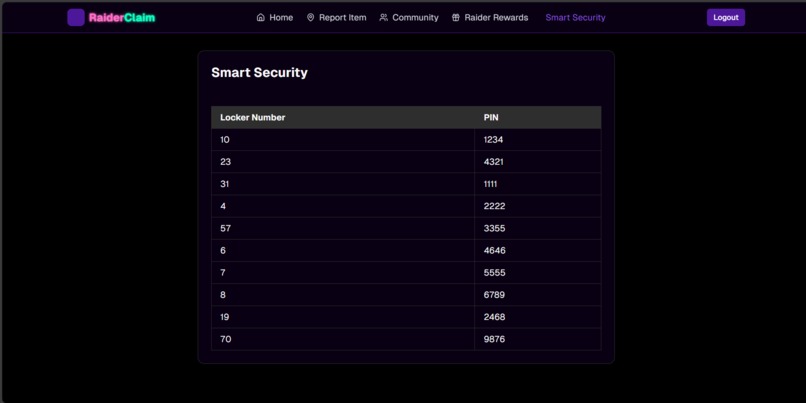
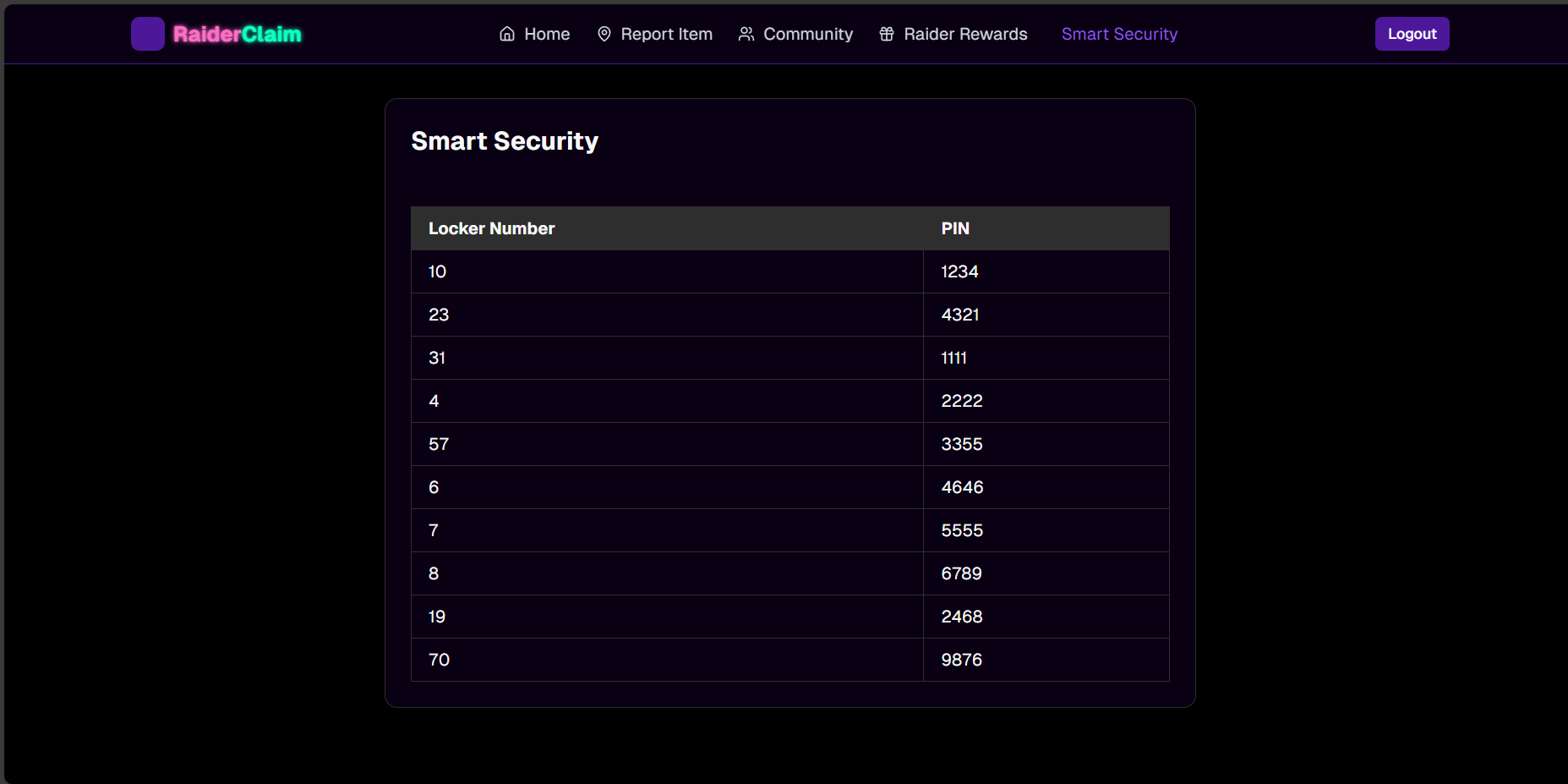
security locker tab info
-
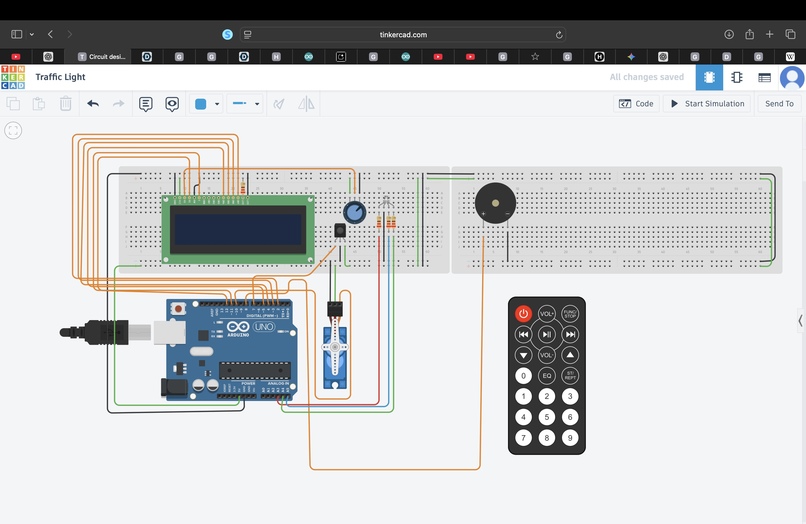
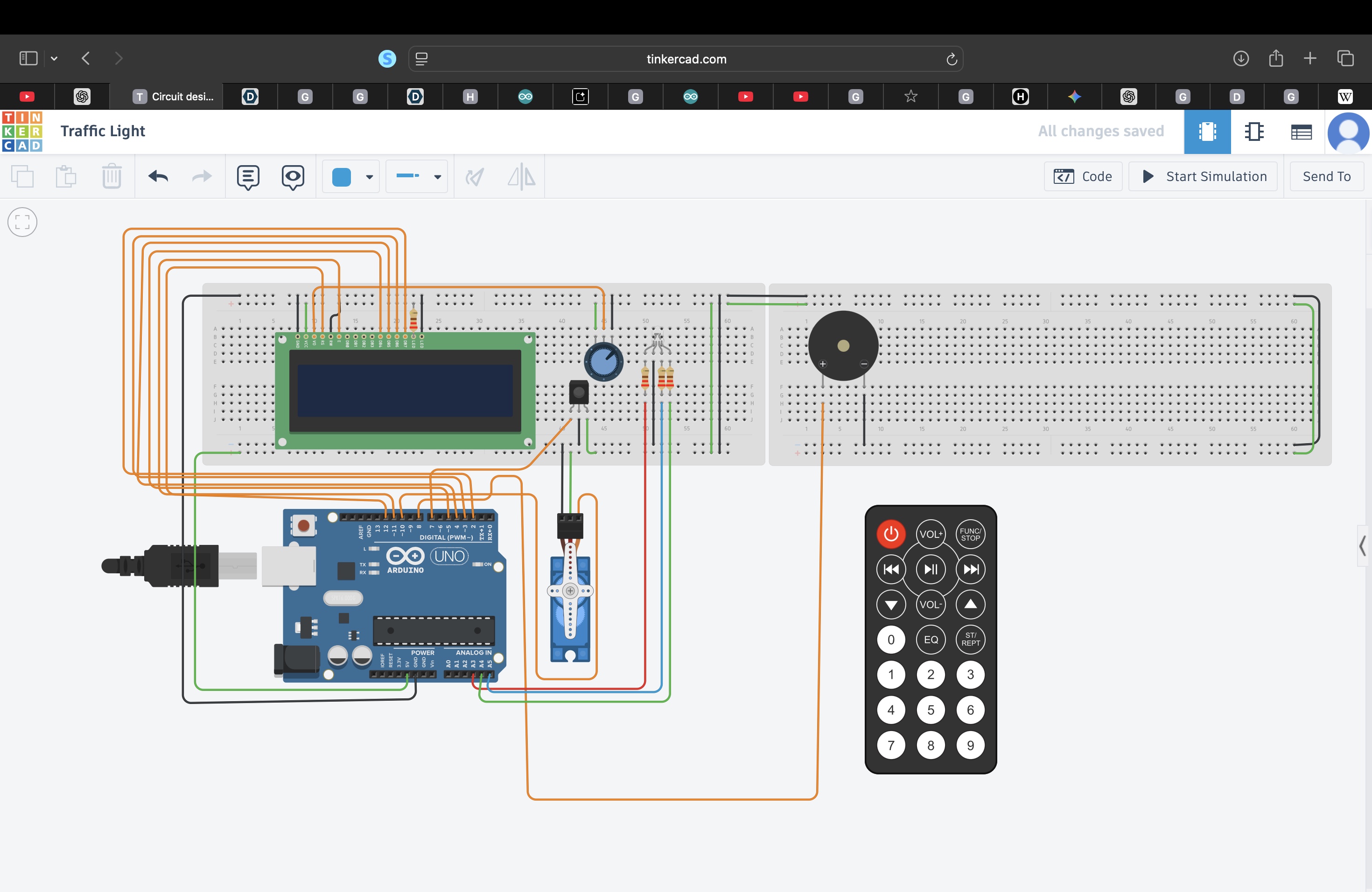
Tinkercad simulation for arduino hardware smart lock system
Inspiration
Ever lost your precious AirPod or misplaced something important on campus? You’re not alone. Every year, thousands of students lose personal items — from keys and wallets to AirPods and laptops. At Texas Tech alone, we estimate that around 1,300 items go missing each year, many of which are never recovered. Students often end up searching group chats, asking around community groups, or even going to the TTPD, but most of the time, they come up empty-handed.
We noticed a gap in the lost-and-found process and wanted to bridge it. That’s how RaiderClaim was born — using AI-powered voice agents to answer lost item queries in real time. But we didn’t stop there. We also wanted a way to reward students’ efforts, so we introduced Solana, a points-based reward system that makes helping others fun and gains “mana” for your good deeds — redeemable for merchandise or perks. Finally, we built our own Arduino-powered “mini Amazon Locker” — a smart hardware system that securely stores lost items and only unlocks when the correct PIN is entered. Think of it like an Amazon Locker, but 10x cheaper and tailor-made for students. RaiderClaim creates a platform where students can quickly recover lost belongings while actively participating in their campus community.
What it does
RaiderClaim is a cross-platform lost & found & security service that empowers students to:
- Post lost or found items with photos in the app's community.
- Drop a pin on a real-time map to show where items were last seen.
- Interact through a community feed (likes, comments, and direct interactions).
- Call an AI-powered voice agent that queries a live MongoDB database to answer questions about items.
- Earn Solana rewards for contributing (posting/reporting) → redeemable for NFTs and campus merch.
- Recover items securely through an Arduino smart locker system that unlocks only with unique PIN authentication.
How we built it
- Frontend: Next.js, TypeScript, Tailwind CSS, and ShadCN for a fully-responsive (works on both mobile and desktop) and dynamic UI.
- Backend: Designed and implemented RESTful APIs, setup a MongoDB Atlas database and utilized axios to connect frontend and backend. We specially used MongoDB for our project because it doesn't have a fixed schema which was perfect for our database, as it allowed us to handle large volumes of unstructured data efficiently.
- AI Voice Agent: Orchestrated using ElevenLabs + Twilio for call-based queries.
- Chat Widget: For the chat feature, we used Gemini Flash-2.0 model as the LLM.
- Solana/Web3/Gamification: Solana Web3.js SDK, Phantom to manage token rewards and NFT interactions
- Hardware: Arduino-based smart lock system with pin verification.
- Deployment: Hosted APIs on Render, frontend on Vercel.
Challenges we ran into
- Faced challenges designing and implementing RESTful APIs for nested database schema. As our database schema had clusters for pins, posts and user credentials, whereby post was a nested with comments and likes for each unique user id
- Two of the four teammates were first time hackers, so there was a really steep learning curve
- Faced challenges getting the voice-agent to retrieve and query real-time data through mongodb database
- As the code in Tinkercad and Arduino IDE had discrepancies, we had to debug the code for several hours.
- Faced challenges integrating Solana wallet Phantom in a nextjs app, especially while making it sync with user's post metrics and making a point-based reward system. Had to use Solana Devnet mode for simulating real-time transactions across the platform.
Accomplishments that we're proud of
Two of our four teammates were first-time hackathon participants, which meant we faced a really steep learning curve. Two of us had never worked with Arduino or hardware, while the other two had no prior software development experience. This created a technical communication gap, but we are proud to have been able to successfully collaborate effectively and complement each other’s strengths.
We spent countless hours understanding the nested database schema of MongoDB in such a complex project, ensuring all the API routes could communicate in real time while supporting full CRUD operations — something we’re truly proud to have pulled off. On top of that, working with Solana was a different level ball game. After hours of debugging, we successfully built a functional real-time, points-based reward system. Overall, being able to successfully integrate so many different technologies, voice-AI, software, hardware and web3 in such a short time and despite so many drawbacks just make this project a special accomplishment for us.
What we learned
- How to integrate hardware and software effectively — building an Arduino-powered smart locker system and making it work seamlessly with a web app.
- Hands-on experience with MongoDB’s complex database schemas and setting up real-time CRUD operations through API routes.
- The challenges and rewards of working with Solana, including debugging and finally creating a real-time, points-based reward system.
- How to bridge technical communication gaps between teammates with different backgrounds (hardware vs. software).
- The importance of collaboration, persistence, and adaptability when building something completely new in a short timeframe.
What's next for RaiderClaim
- Integration with the university system so RaiderClaim can be adopted campus-wide and serve as the official lost-and-found solution.
- Evolving into a startup with the vision of expanding beyond Texas Tech and scaling to other universities.
- Building smarter, cheaper lockers than Amazon’s, specifically designed for students, equipped with biometric verification and facial recognition technologies for added security and convenience.


Log in or sign up for Devpost to join the conversation.