About the project
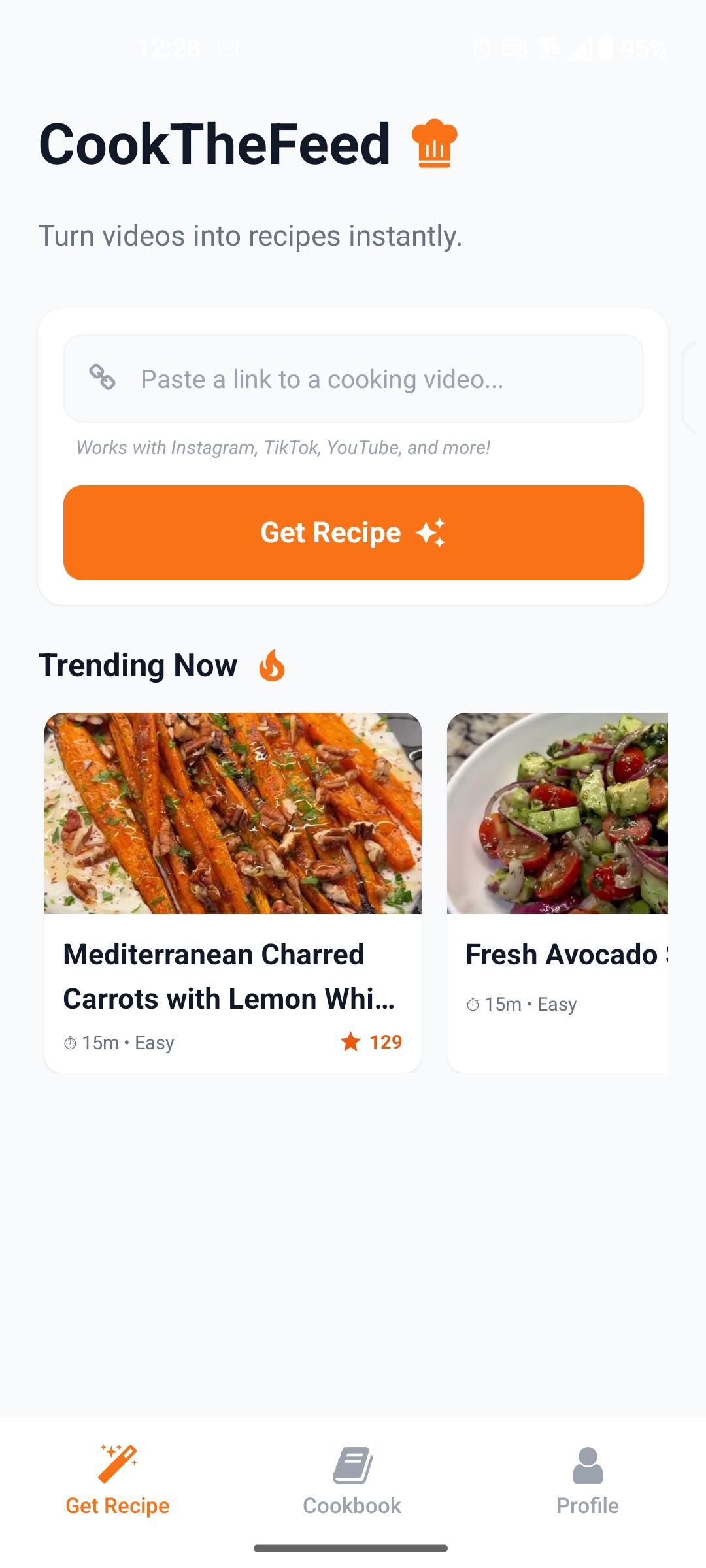
CookTheFeed turns short-form cooking videos into structured recipes you can actually cook.
Inspiration
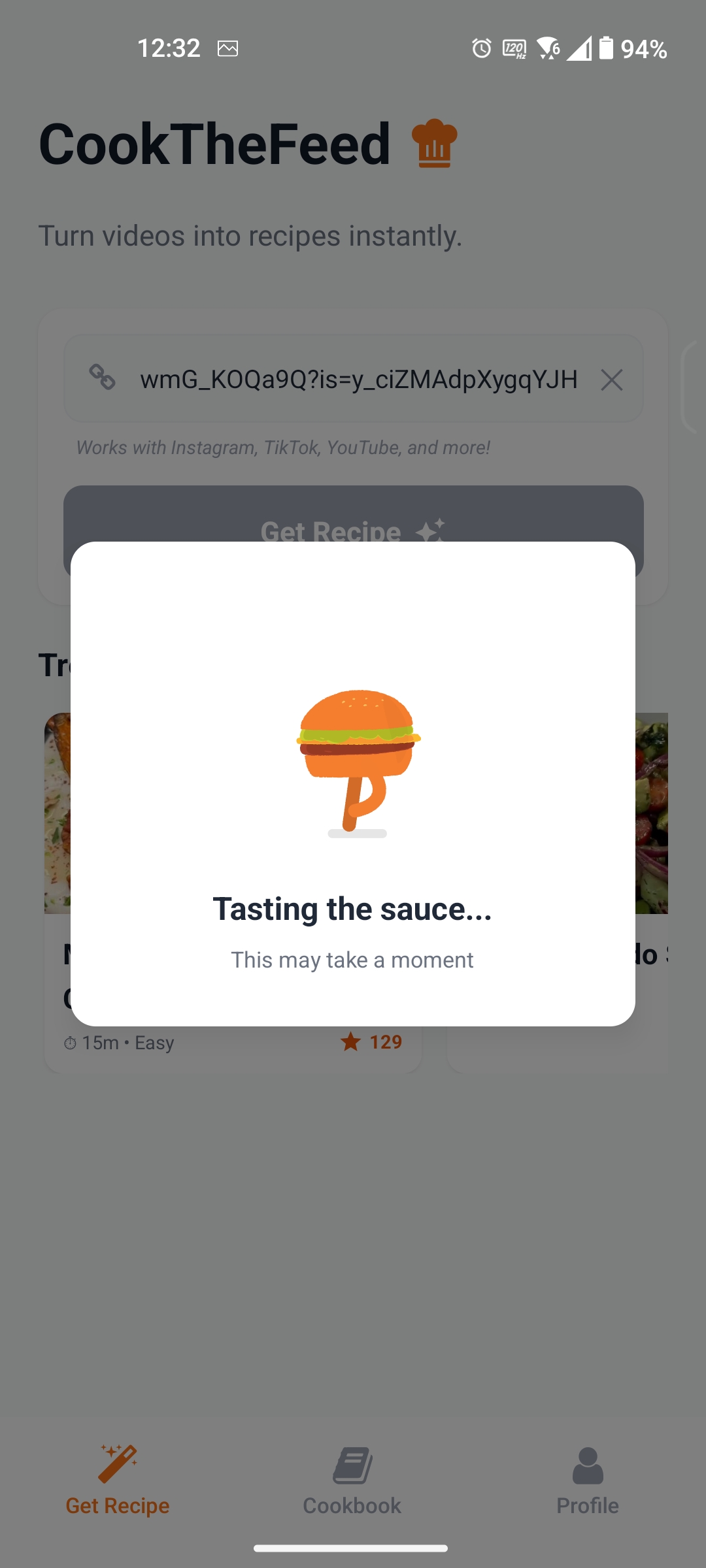
I was inspired by Eitan Bernath's energy and by a clear gap in modern food content: people discover amazing recipes on TikTok, YouTube Shorts, and Instagram Reels, but rarely cook them because the instructions are buried in fast, chaotic videos. I wanted to close that gap by turning video inspiration into clear, practical cooking steps with AI.
What it does
- Accepts a video URL (or Android Share Intent) from TikTok, YouTube Shorts, and Instagram Reels.
- Core UX is optimized for these three platforms; additional providers supported by
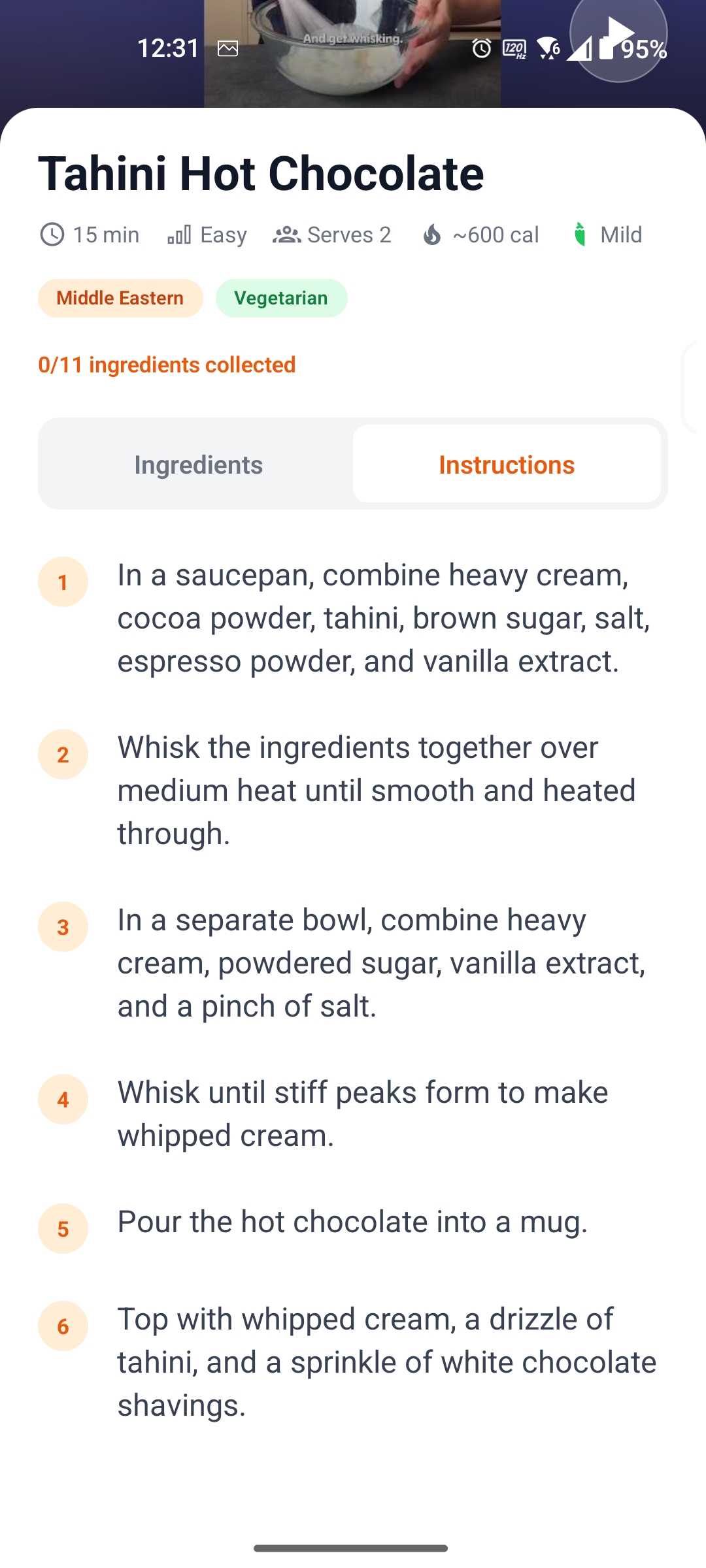
yt-dlp(for example, Facebook video links) are available on a best-effort basis. - Uses AI to extract dish name, ingredients, instructions, prep time, difficulty, servings, calories, cuisine, dietary tags, and spice level.
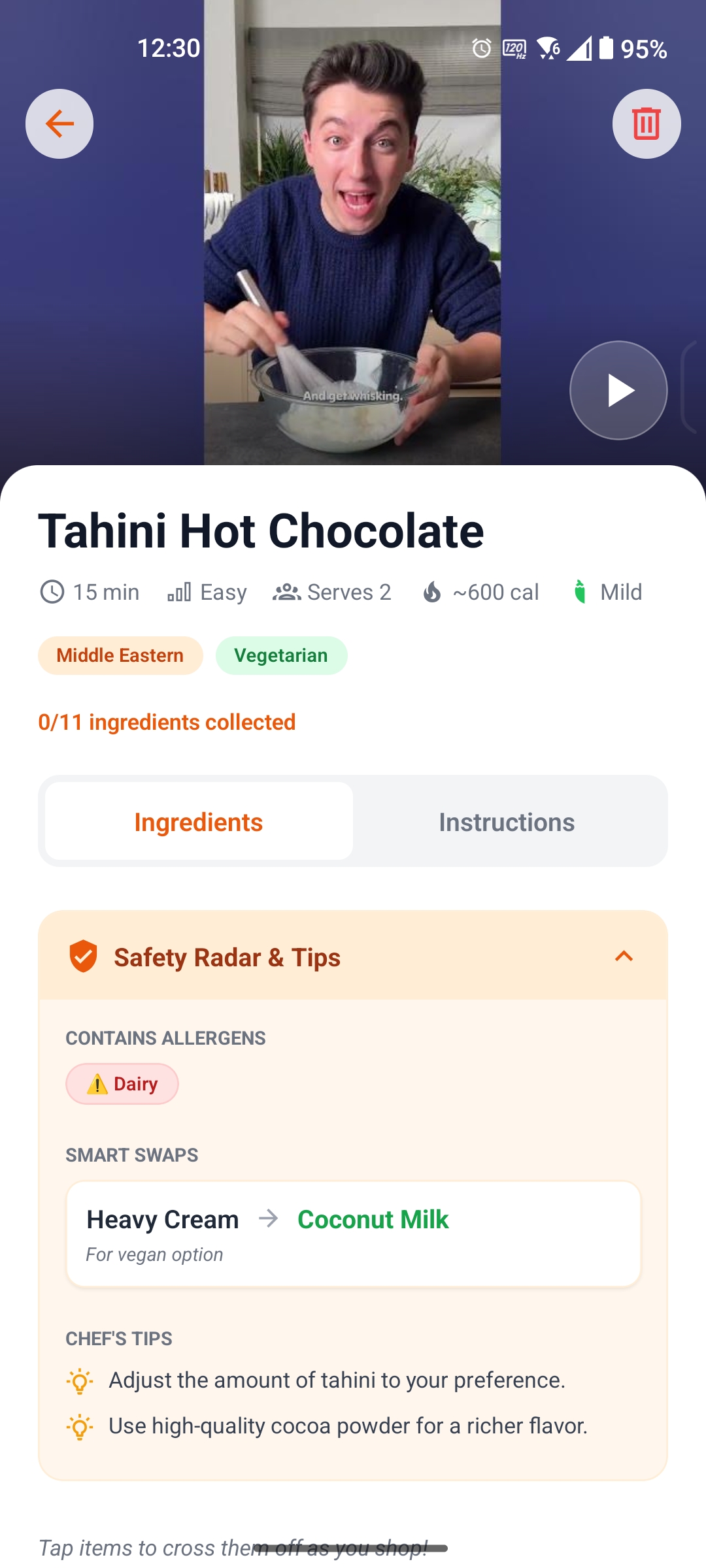
- Detects allergens and suggests smart substitutions (Pro).
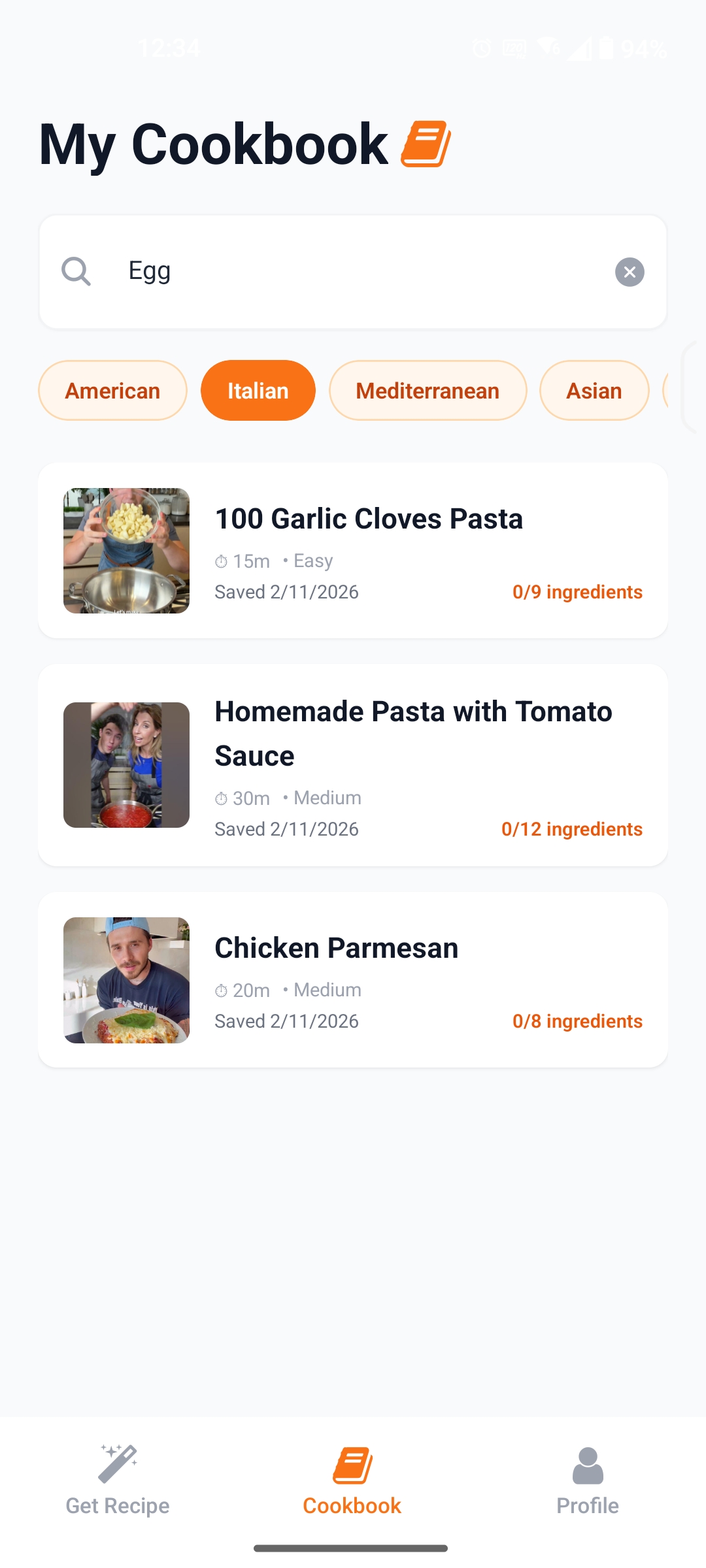
- Lets users save recipes into a personal cookbook with search, filters, and shopping checklist mode.
- Keeps attribution by linking users back to the original creator video.
- Includes a trending feed so users can experience value immediately.
How I built it
I built CookTheFeed as a solo project end-to-end:
- Mobile app: React Native + Expo (Android-first in this phase), Expo Router, NativeWind.
- Backend API: FastAPI (Python) with extraction, caching, and credit/refund logic.
- AI extraction: Google Gemini 2.0 Flash for multimodal video analysis.
- Data/auth/storage: Supabase (Postgres, Auth, Storage).
- Monetization: RevenueCat subscriptions.
- Reliability and observability: yt-dlp with Cobalt fallback, Sentry monitoring.
Challenges we faced
As a solo developer, the biggest challenge was balancing product quality, reliability, and speed at the same time.
- Social video extraction reliability changes often, so I implemented a dual download strategy (yt-dlp primary, Cobalt fallback).
- I implemented thundering-herd protection so the same video is not extracted multiple times in parallel during concurrent requests.
- Abuse prevention required multiple fraud-protection layers so users could not game AI extractions through retries, account switching, or edge-case request patterns.
- Building fair usage controls required strict credit accounting, refund paths, and rate limiting.
- Anonymous-to-Google account merge and subscription restore flows required careful handling for real mobile behavior.
- AI latency required polished loading UX, cancellation support, and cache-first retrieval.
What we learned
- Reliability and trust are as important as AI output quality.
- In AI products, model accuracy is only half the job; robust guardrails and anti-abuse controls are equally important.
- A focused Android-first rollout helps validate core behavior faster.
- Building production-minded architecture as a solo founder requires aggressive prioritization and clear technical boundaries.
Current status
The app is currently in Android closed testing and is fully sufficient for competition participation, with a clear roadmap after the event.
What's next for CookTheFeed
- Multilingual extraction and localization, so users can process videos in one language and receive recipes in their preferred language.
- Smarter personalization with stronger dietary intelligence and preference-aware recommendations.
- Expanded Pro capabilities focused on safety, including richer allergen insights and more actionable substitutions.
- iOS release after Android closed testing, with a shared backend and polished cross-platform experience.
- Continued platform hardening with stronger abuse resistance, extraction integrity checks, and reliability improvements as usage scales.
Built With
- cobalt
- expo.io
- fastapi
- googlegemini-2.0-flash
- nativewind
- python
- railway
- react-native
- revenuecat
- sentry
- supabase
- yt-dlp

Log in or sign up for Devpost to join the conversation.