-
-
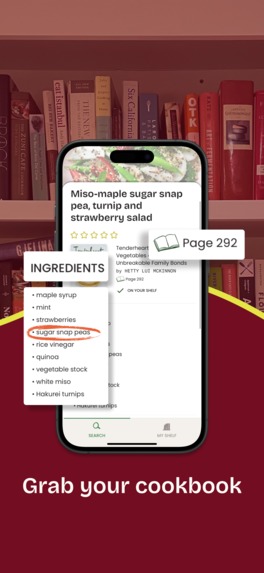
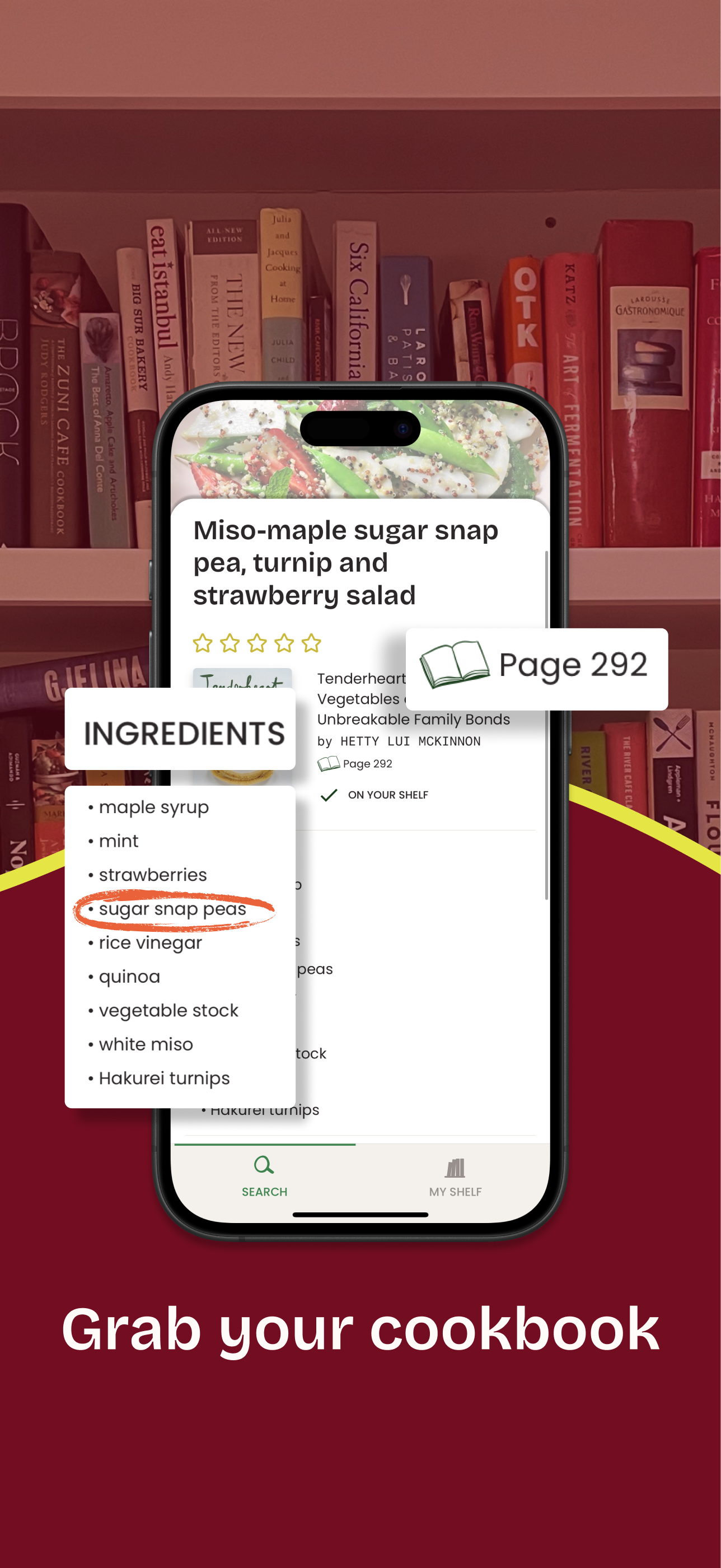
Check out the ingredients list from the recipe, read the comments, bookmark it, and find the page number so you can cook from the book.
-
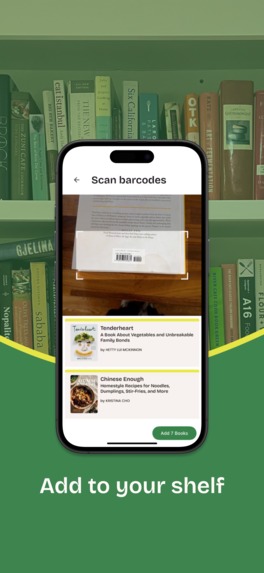
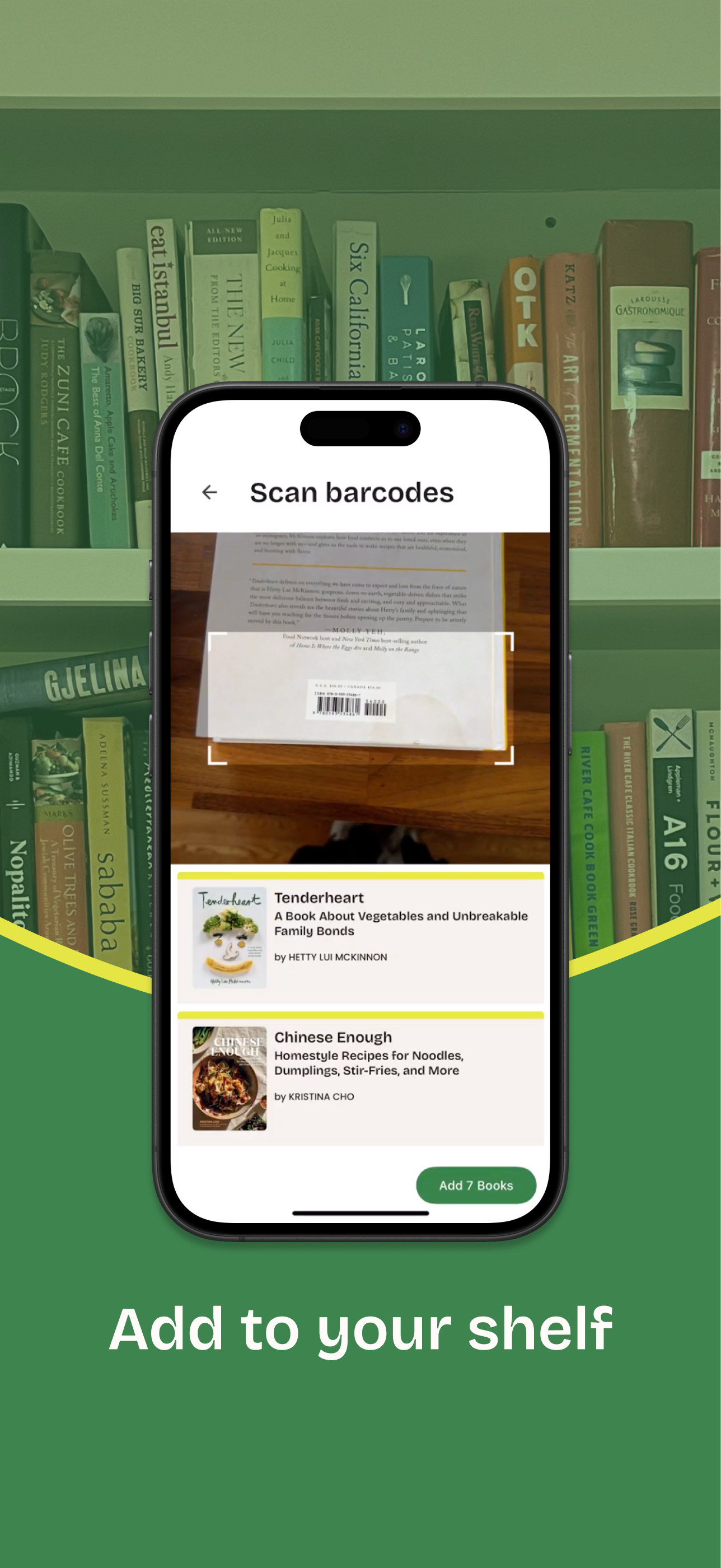
Scan the barcodes on your book to bring your cookbook collection into CookShelf.
-
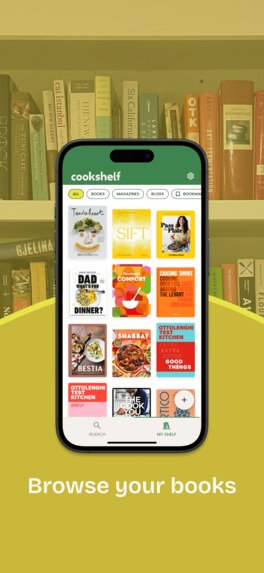
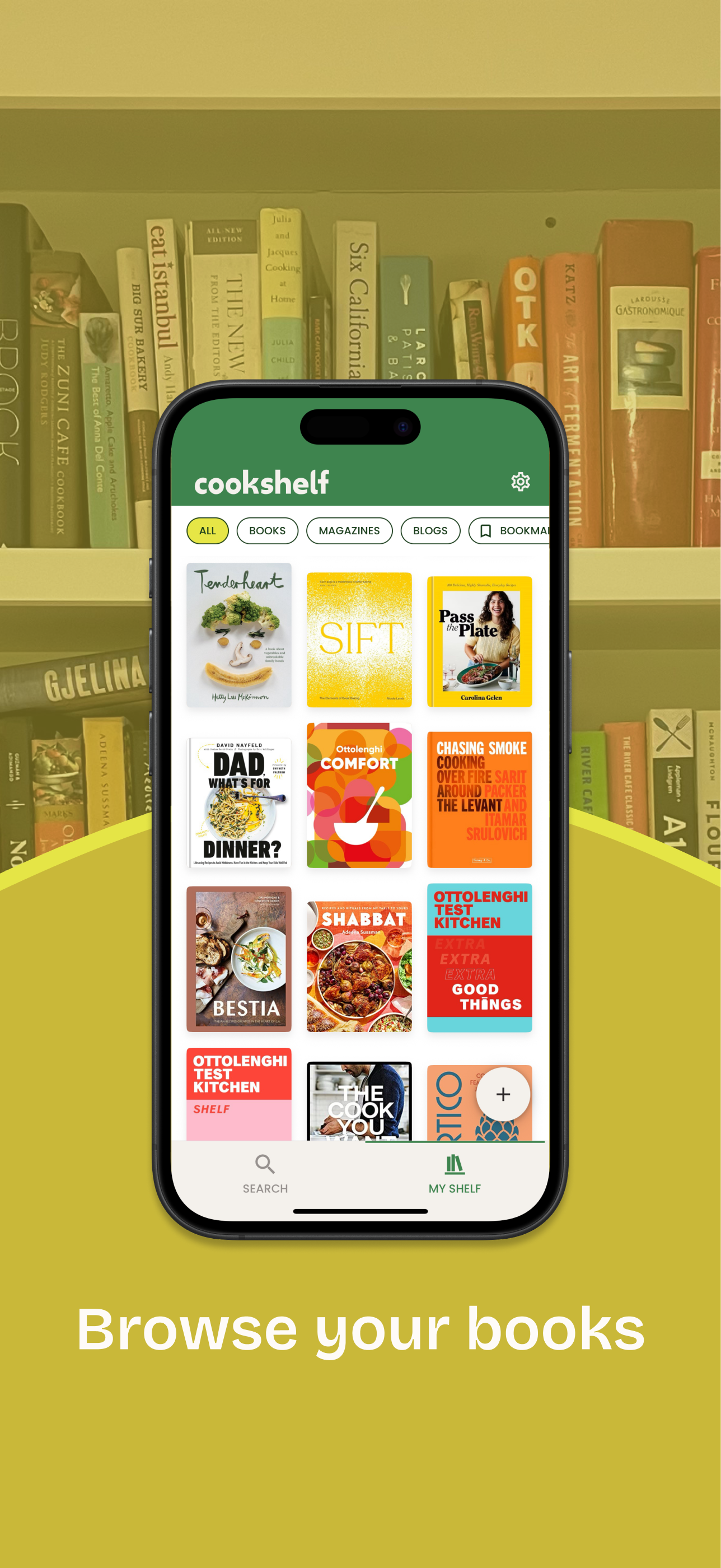
See your all your cookbooks in one place, browse the table of contents for each book, and read what other members say about the book.
-
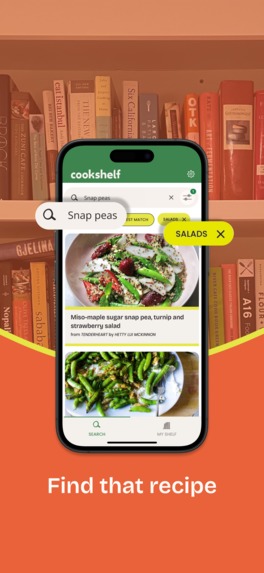
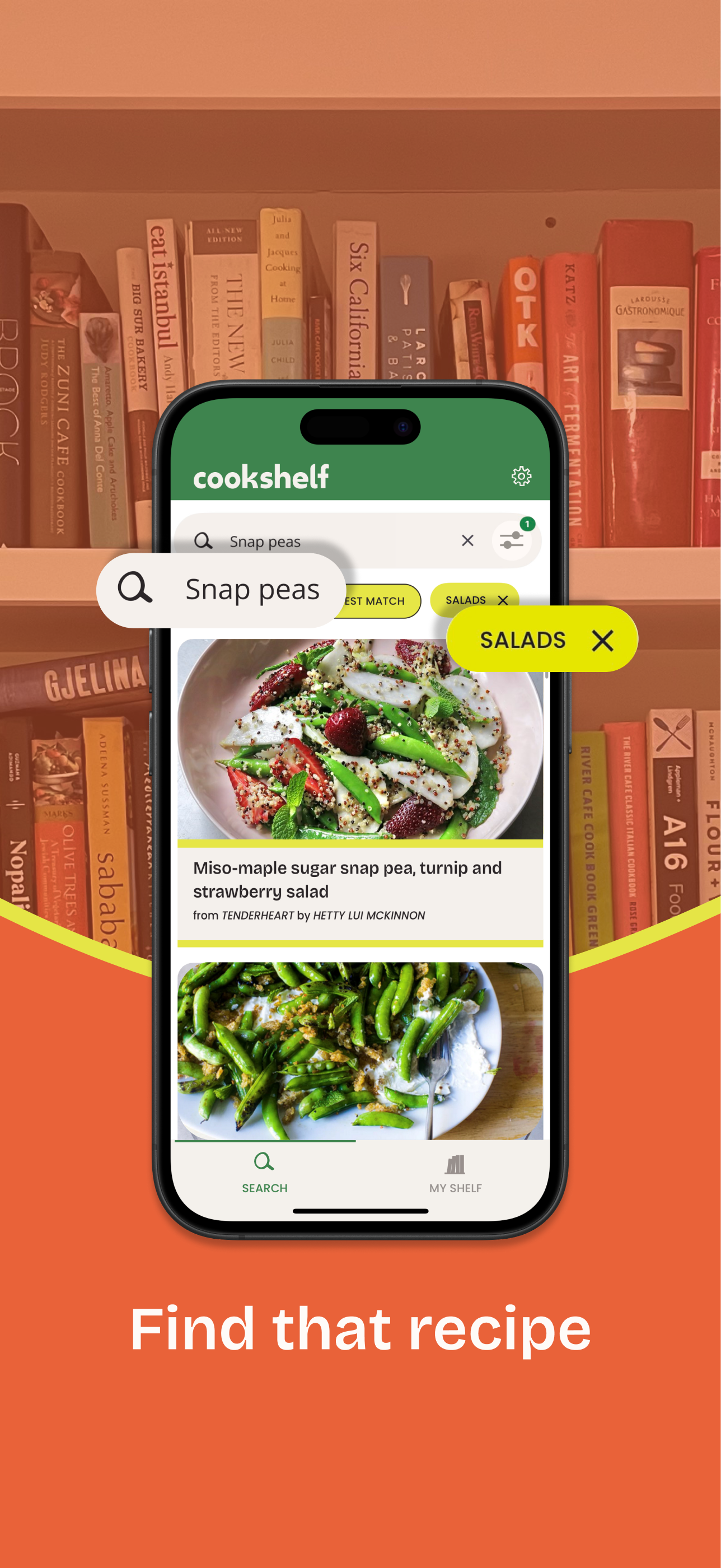
Search by ingredient, dish name, author, and more to find the recipe you were looking for -- or the recipe you didn't know you had.
Inspiration
I've been obsessed with cookbooks since I was four years old, cooking my way through every recipe in the books that shaped who I became as a cook. For years, I used a website called Eat Your Books to search my cookbooks, but I kept wishing for a mobile app that would let me find recipes while standing in the produce aisle or staring into my fridge. Eventually, I decided to stop wishing, reach out to Eat Your Books to figure out how we could work together, and build the app I wanted to use – that's how CookShelf was born.
What it does
CookShelf lets home cooks search across their entire physical cookbook collection in seconds. Got too much zucchini? Search "zucchini" and instantly see every recipe across all your books that uses it, complete with ingredients lists and page numbers. Trying to remember which book has that Bolognese you make every year? CookShelf finds it.
We show you the page number and ingredients, then send you to cook from the actual book – because cookbooks are meant to get splattered with olive oil in a way phones really aren't. This keeps the focus where it belongs: on the book, the recipe, and the cooking, not on a screen.
But it's more than search – CookShelf brings the social elements of online recipes to physical cookbooks. You can bookmark recipes, track what you've cooked, add photos and notes, and see what other cookbook lovers think of recipes. Print recipes don't usually allow for comments and conversation the way online recipes do, but CookShelf changes that. We're creating a community around the books people already own, helping them rediscover forgotten favorites and finally cook from those beautiful cookbooks collecting dust on their shelves.
How we built it
We built CookShelf using the Eat Your Books cookbook and recipe database (which has over 14,000 cookbooks indexed, and which we migrated to RDS), and then built the app from scratch using Expo/React Native, AWS Lambda backend, Firebase for authentication, RevenueCat for payment processing.
The biggest challenge was syncing accounts and membership status across the web and mobile apps. Building a greenfield app from scratch would have been simpler, but we wanted to bring legacy Eat Your Books users along on the journey and give them access to this new mobile experience. That meant their membership status, library, and account data had to sync perfectly across platforms.
Implementing RevenueCat was particularly interesting because we needed payments to work across both the new mobile app and the legacy Eat Your Books website, which initially used PayPal to process payments. This meant implementing RevenueCat Web Payments with Stripe Billing for the first time on Eat Your Books, to ensure membership status synced properly across all platforms.
We also migrated authentication to Firebase to enable this, which required careful coordination. The app development itself was more straightforward, but managing these cross-platform dependencies and ensuring a seamless experience for existing users added significant complexity.
Accomplishments that we're proud of
We launched in August 2025 and have hit 5,000 downloads with a 4.9-star rating (29 reviews) on iOS. The response from the cookbook community has been incredible. Part of how we’ve grown is finding influencers in the cookbook space who reach the audiences that would love CookShelf. Book Larder, a beloved cookbook store in Seattle, hosted our launch party, and we've gotten enthusiastic support from cookbook authors and stores. We’ve started to build an Instagram presence through posting reels of cooking from books, and we’ve started a Substack for cookbook content that has reached over 1000 subscribers. (As a bonus, the content generation process also generates great team lunches!)
Even better, people who start a free trial are converting well (~70% conversion to paid from free trial), and our users are getting value from the app. They're searching their collections, tracking recipes, and rediscovering books they haven't opened in years. That's exactly what we built this for.
What we learned
As a small team, we need to build leverage wherever we can. One way we did this was using third-party tools like RevenueCat – where documentation is excellent and we could email with a real person when we needed help – which let us abstract away problems we'd otherwise spend weeks solving ourselves. Other tools where we could use another company's expertise so we don't have to customer build everything were Customer.io, Posthog, and Firebase.
We also found that using React Native with Expo was a great choice. The incremental effort to ship Android was minimal: had we needed to build native apps we would have abandoned Android, and 20% of our customers are on Android so that would have been a big miss. And, with Expo, we could quickly iterate between store submissions. We also used the Radon IDE to test locally and make debugging faster and easier.
Finally, we lean heavily on AI to build faster (Claude Code, Cursor) and fill knowledge gaps. Our CEO and PM give detailed specs to Claude Code via GitHub Issues integration, and Claude Code creates a PR, which then the issue creator can test on Expo build to verify functionality before assigning to a developer for review. This means everyone can be an engineer, and it lets us ship UI improvements and smaller features much faster than we could otherwise.
What's next for CookShelf
We're building features to help people track their cooking – marking which recipes they’ve cooked, setting goals around books they want to cook from, visualizing their cooking patterns, and celebrating milestones. We also have partnerships in the works with cookbook authors that will help us reach the right audiences and continue growing the community of home cooks who love physical cookbooks as much as we do.
Built With
- amazon-rds-relational-database-service
- claude-code
- cursor
- customer.io
- expo.io
- firebase
- github
- lambda
- posthog
- radon
- react-native
- revenuecat
- stripe


Log in or sign up for Devpost to join the conversation.