-
-
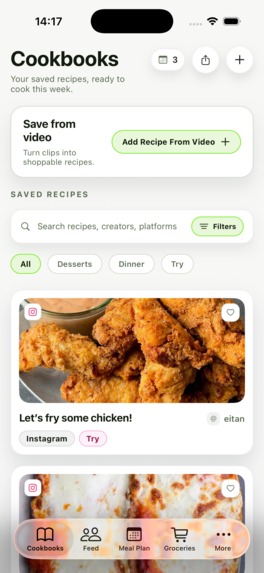
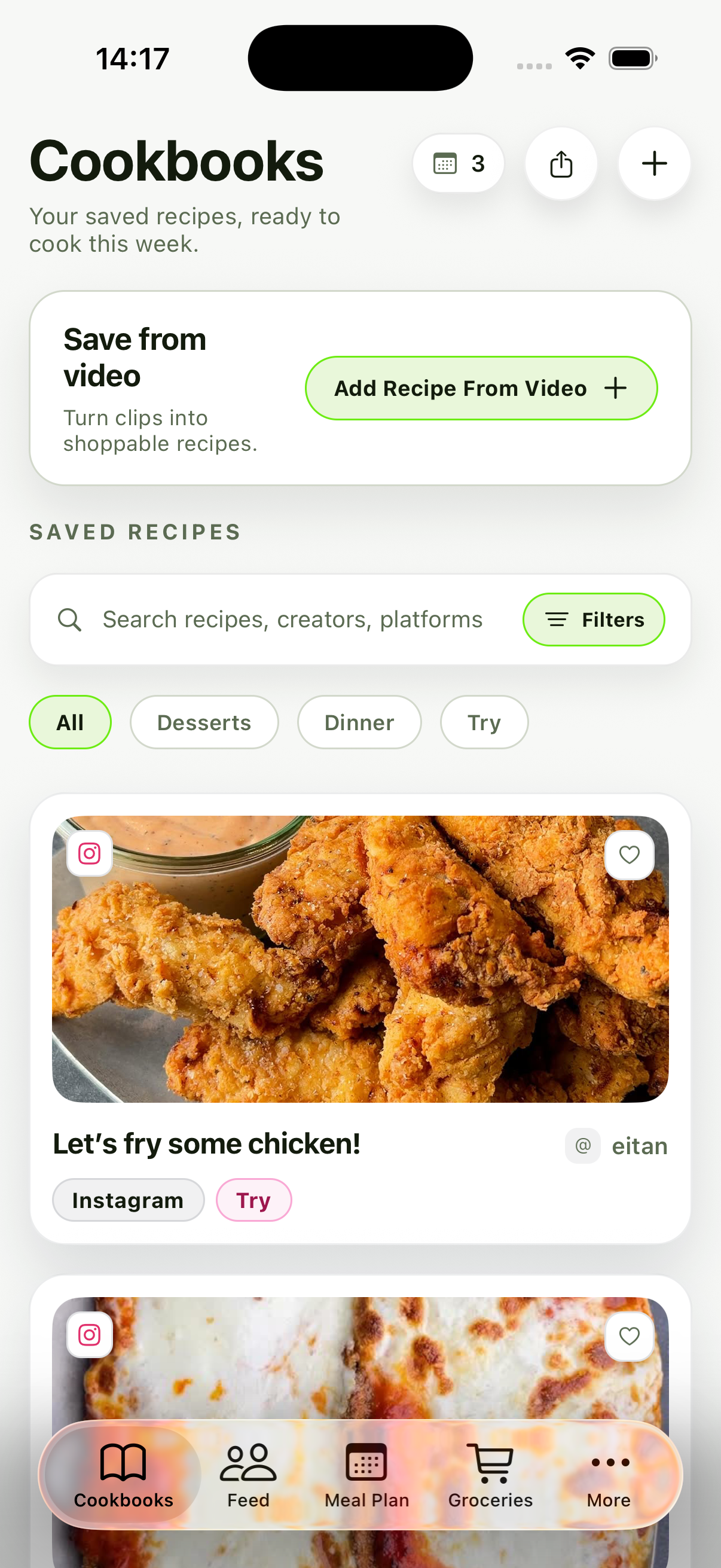
All your saved recipes and collections in one organized place.
-
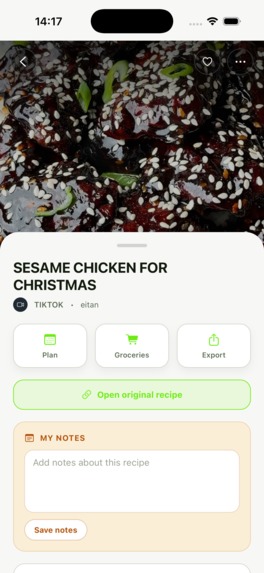
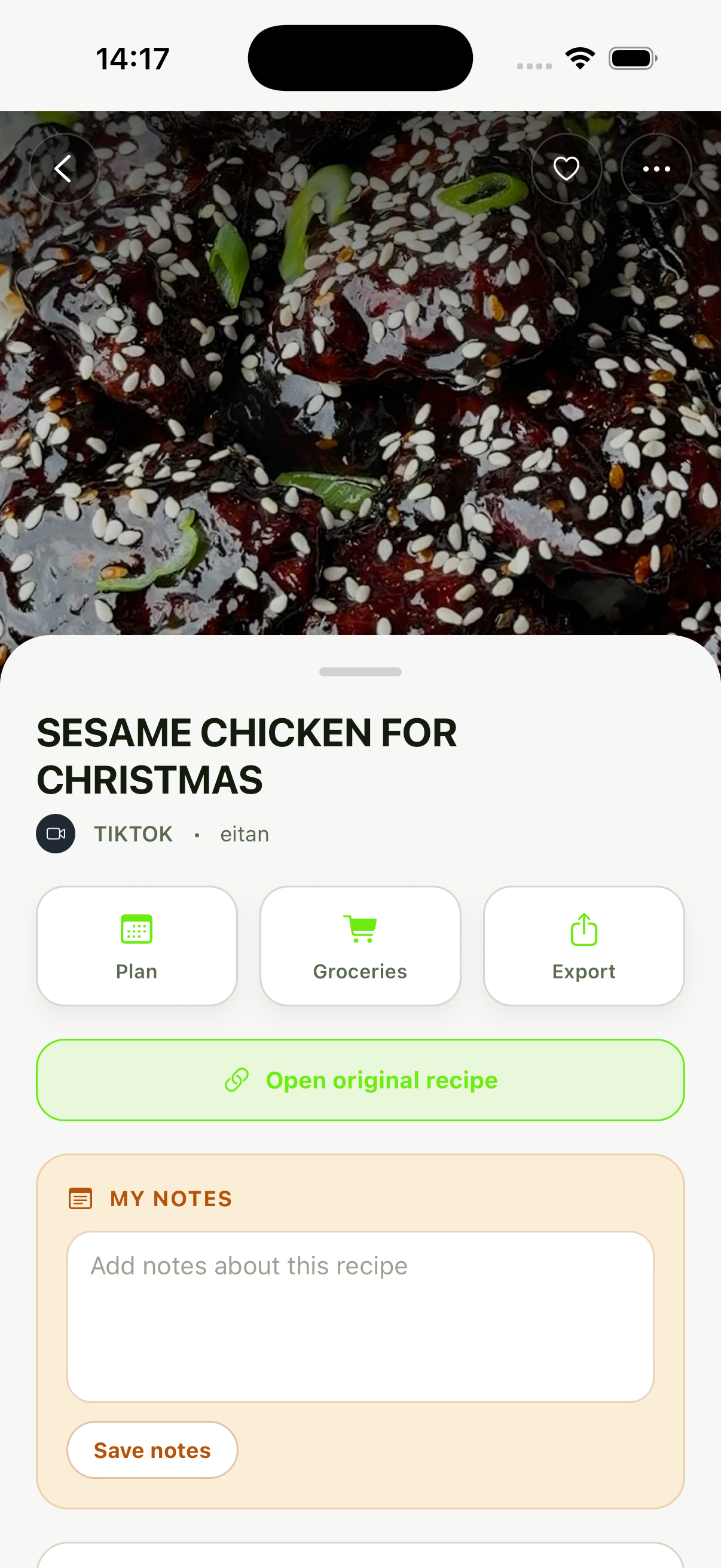
A clean, structured recipe view designed for real cooking.
-
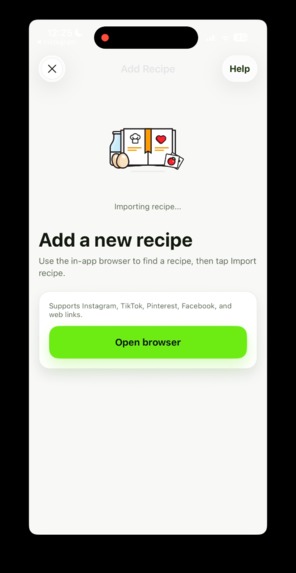
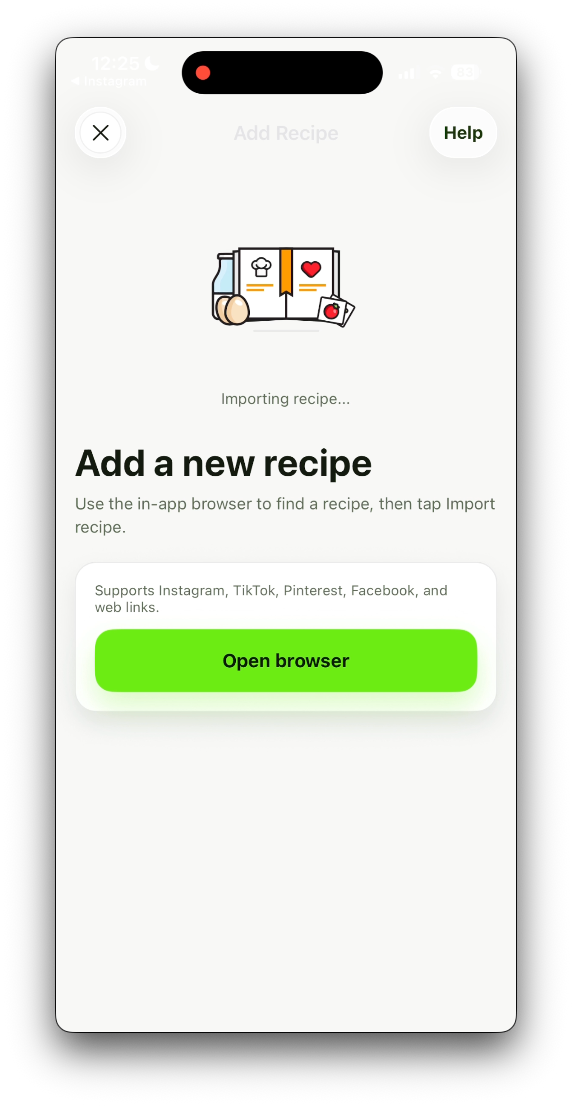
Import recipes directly from social media links in seconds.
-
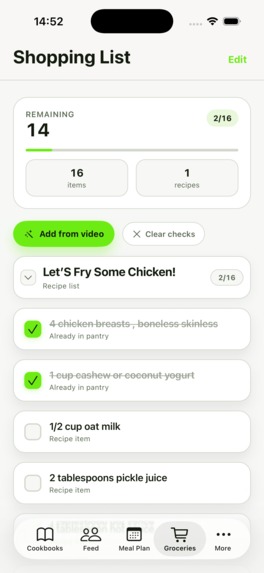
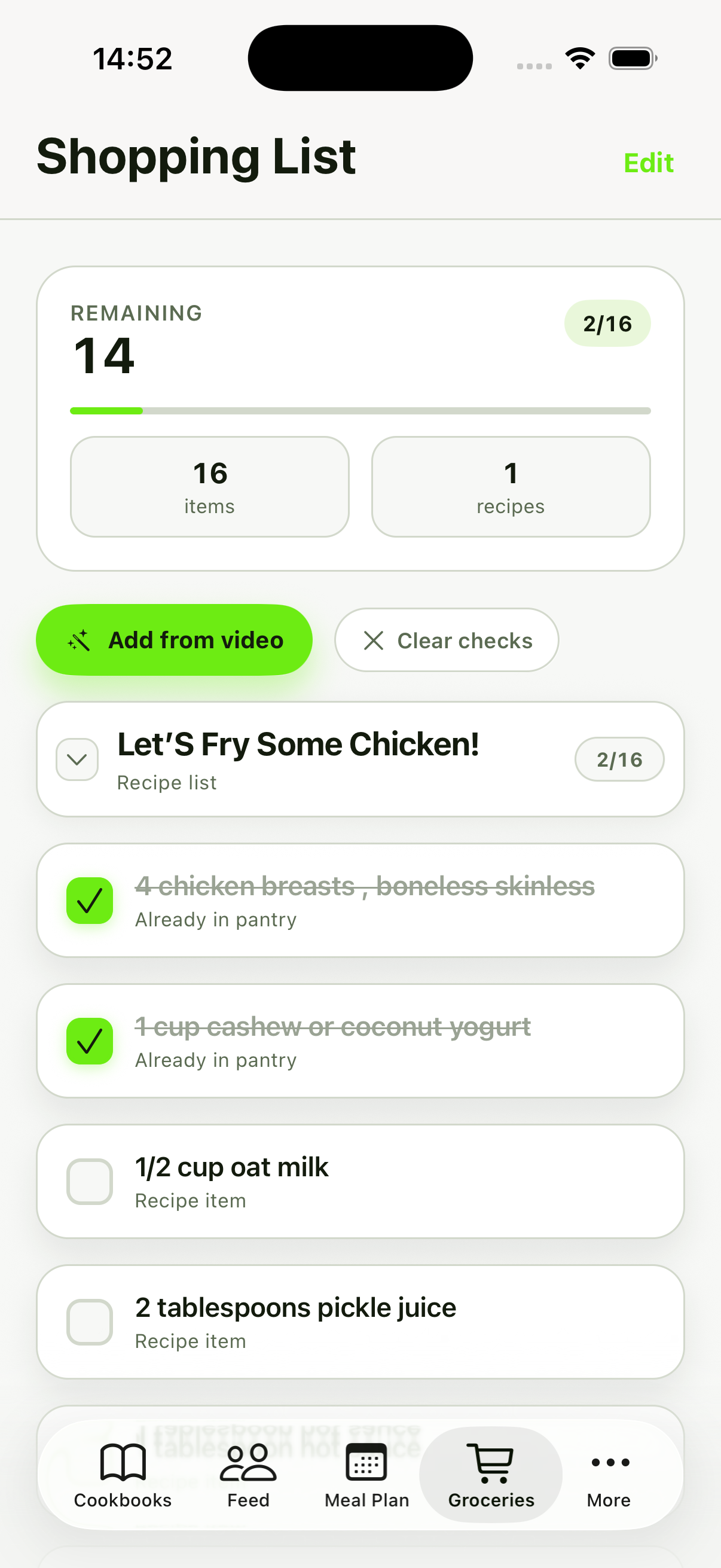
An automatic grocery list that merges ingredients and removes what you already have.
-
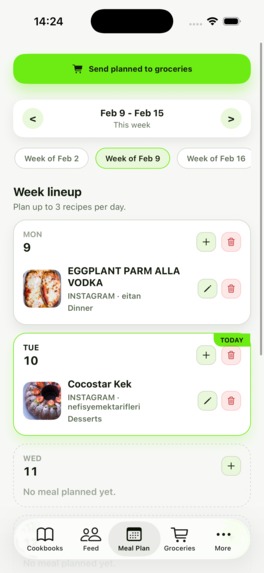
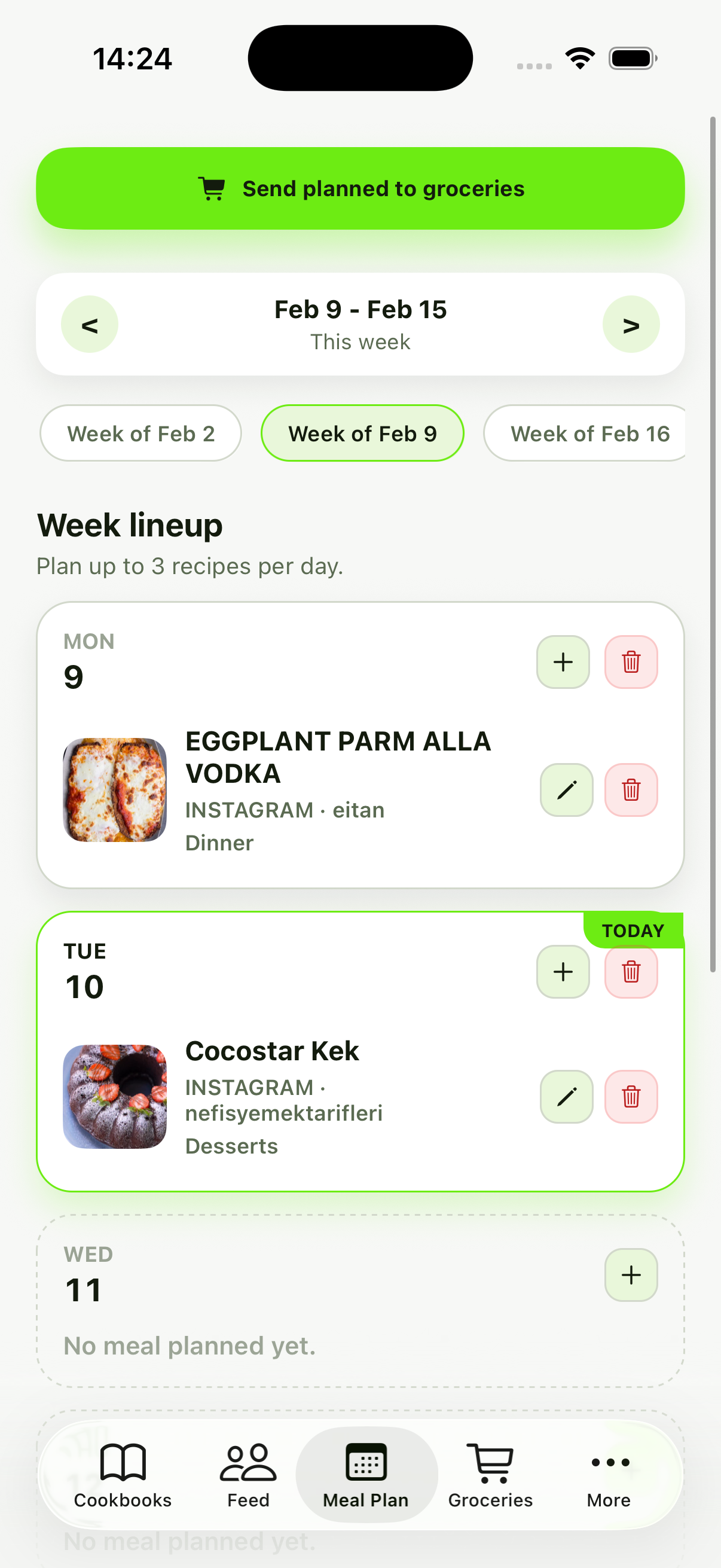
Plan your meals and automatically prepare your grocery list for the week.
-
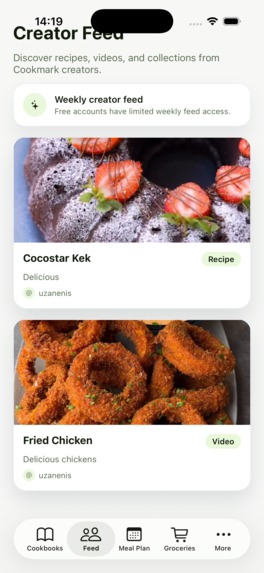
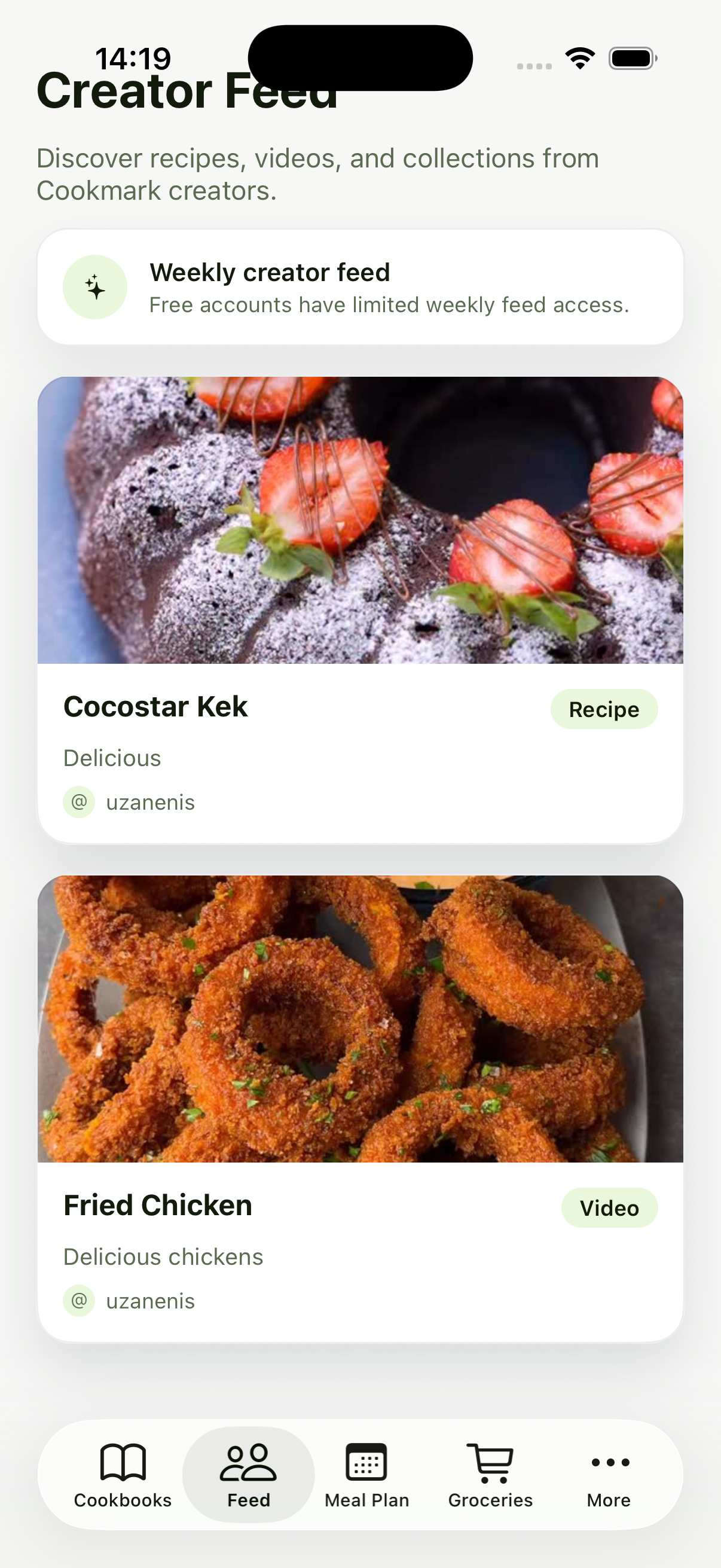
A social-style feed where every recipe can turn into a grocery list.
-
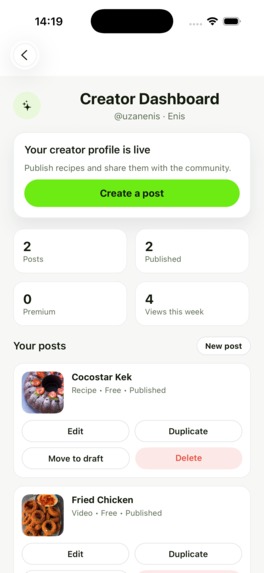
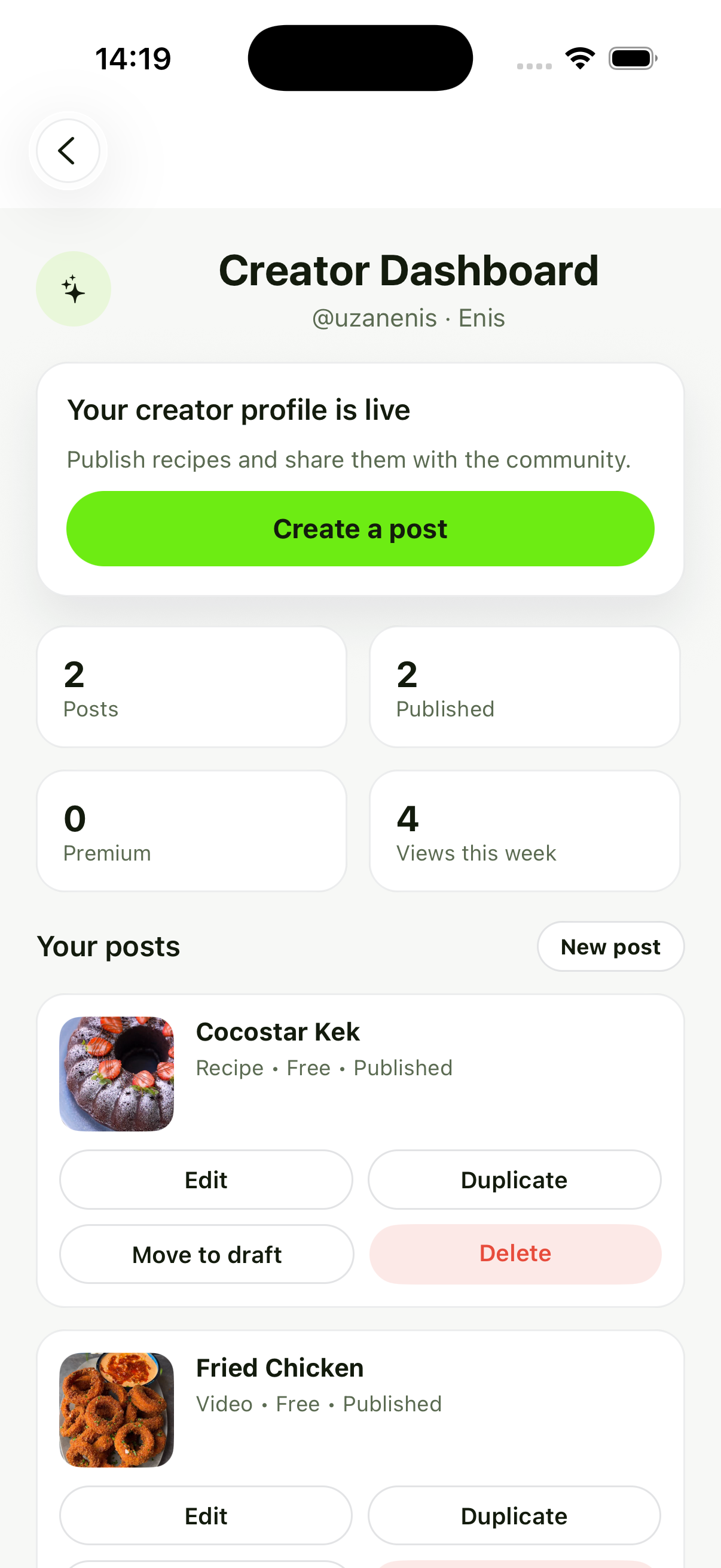
Pro users can become creators and publish recipes, videos, and collections.
Inspiration
Cookmark was inspired by a simple but frustrating reality: people save hundreds of recipes from social media, yet very few of them ever get cooked. Platforms like TikTok, Instagram, and YouTube are full of great food ideas — but they stop at inspiration.
Turning those ideas into a grocery plan and an actual meal requires effort, organization, and memory. That’s where most people drop off.
Cookmark was built to close that gap — transforming passive saves into real-world cooking habits.
What it does
Cookmark turns recipe inspiration into real-world execution.
Users can import recipes directly from social media links, and Cookmark automatically generates a structured recipe and a smart grocery list. When multiple recipes are added, ingredients are merged and duplicates are removed automatically.
A simplified pantry system allows users to mark what they already have at home, so grocery lists only include what truly needs to be purchased.
Cookmark also includes a creator-powered social feed. Unlike traditional social platforms, every post is actionable — recipes can be saved, structured, turned into grocery lists, and cooked.
Pro users can become creators themselves, publish recipes and collections, and distribute content directly into the feed. Smart cook reminders notify users when everything is ready to cook, completing the loop from saving to shopping to cooking.
How I Built It
Cookmark was built as a fully functional, production-ready MVP with scalability and automation at its core.
When a user pastes a social media link, Cookmark detects the platform (TikTok, Instagram, YouTube, etc.) and routes the request through the appropriate ingestion pipeline. The system retrieves the post’s metadata and caption content through a scraping layer, transforming unstructured social content into raw recipe text.
This raw content is processed through an LLM-powered parsing layer that:
- Extracts ingredients
- Identifies quantities and units
- Separates step-by-step instructions
- Normalizes formatting
- Resolves duplicates and inconsistencies
The result is converted into a structured recipe schema and stored in the database, making it instantly usable for grocery merging, pantry filtering, and future meal planning features.
The frontend is built with React Native (Expo) for rapid iteration and cross-platform support.
The backend uses Supabase for authentication, database, and storage, while Supabase Edge Functions handle transformation logic and business workflows.
Monetization is powered by RevenueCat for subscription management and entitlement validation. Push notifications close the loop with cook reminders and engagement triggers.
Throughout development, I prioritized shipping real, working infrastructure — not mockups — ensuring every feature runs end-to-end in a live production environment.
Challenges I Ran Into
One of the biggest technical challenges was handling the inconsistency of recipe data across different countries, languages, and creator styles.
Units vary globally — cups vs grams, ounces vs milliliters — and many creators use informal measurements like “a handful,” “a splash,” or “as needed.” Some posts include full ingredient lists, while others only show steps in fast-moving videos with partial captions. In many cases, critical details such as quantities or serving sizes are missing entirely.
Transforming this multilingual, unstructured social content into a reliable, structured recipe schema required intelligent normalization and careful parsing. The system needed to:
- Detect and standardize different measurement systems
- Interpret ambiguous or informal quantities
- Handle incomplete ingredient information
- Infer structure from messy captions and fragmented text
Ensuring consistency without distorting creator intent was a delicate balance.
Another challenge was avoiding over-engineering. Early pantry versions required precise quantities and expiration dates, which created unnecessary cognitive load. Simplifying this into a lightweight, presence-based system significantly improved usability.
Designing the social layer was also complex. Cookmark needed to feel dynamic and creator-powered — without becoming another passive scrolling platform. The feed had to remain execution-focused.
Balancing free and Pro users required thoughtful product design. Instead of blocking core functionality, Cookmark uses weekly feed limits to encourage upgrades while preserving essential value for free users.
Accomplishments I'm Proud Of
Building a fully functional, end-to-end AI-powered product as a solo developer — from link ingestion and LLM-based recipe structuring to grocery merging, subscriptions, and push notifications.
Designing a resilient recipe processing pipeline capable of handling multilingual, inconsistent, and incomplete social media content.
Turning complex cooking data into a simplified, behavior-driven UX that prioritizes real-life usability over perfect data precision.
Creating a creator-powered subscription model that aligns habit formation, content distribution, and recurring revenue.
Delivering a concise demo that clearly demonstrates the full execution loop: Saved → Shop → Cook.
What I Learned
The most impactful features are often the simplest ones. Removing friction creates more value than adding advanced options.
Discovery is only meaningful when it leads to action. And monetization works best when it enhances behavior rather than restricting it.
Most importantly, building around a problem experienced weekly leads to sharper decisions and stronger execution.
What’s Next for Cookmark
Next, I plan to expand creator monetization through paid collections and revenue sharing. I also aim to introduce deeper meal planning tools and grocery delivery integrations to further reduce friction.
Over time, Cookmark will evolve into a creator-powered cooking platform — turning social food content into structured habits and sustainable subscription revenue.
Built With
- expo.io
- postgresql
- react-native
- supabase
- tanstack-query
- typescript

Log in or sign up for Devpost to join the conversation.