-
-
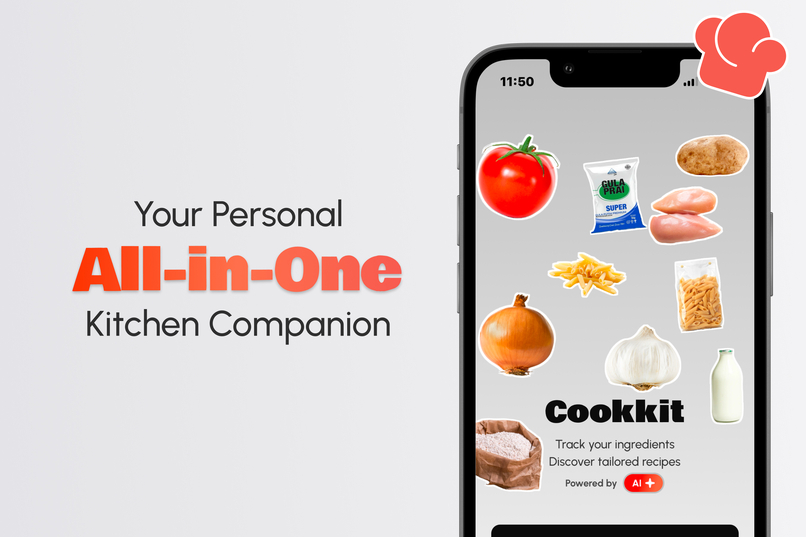
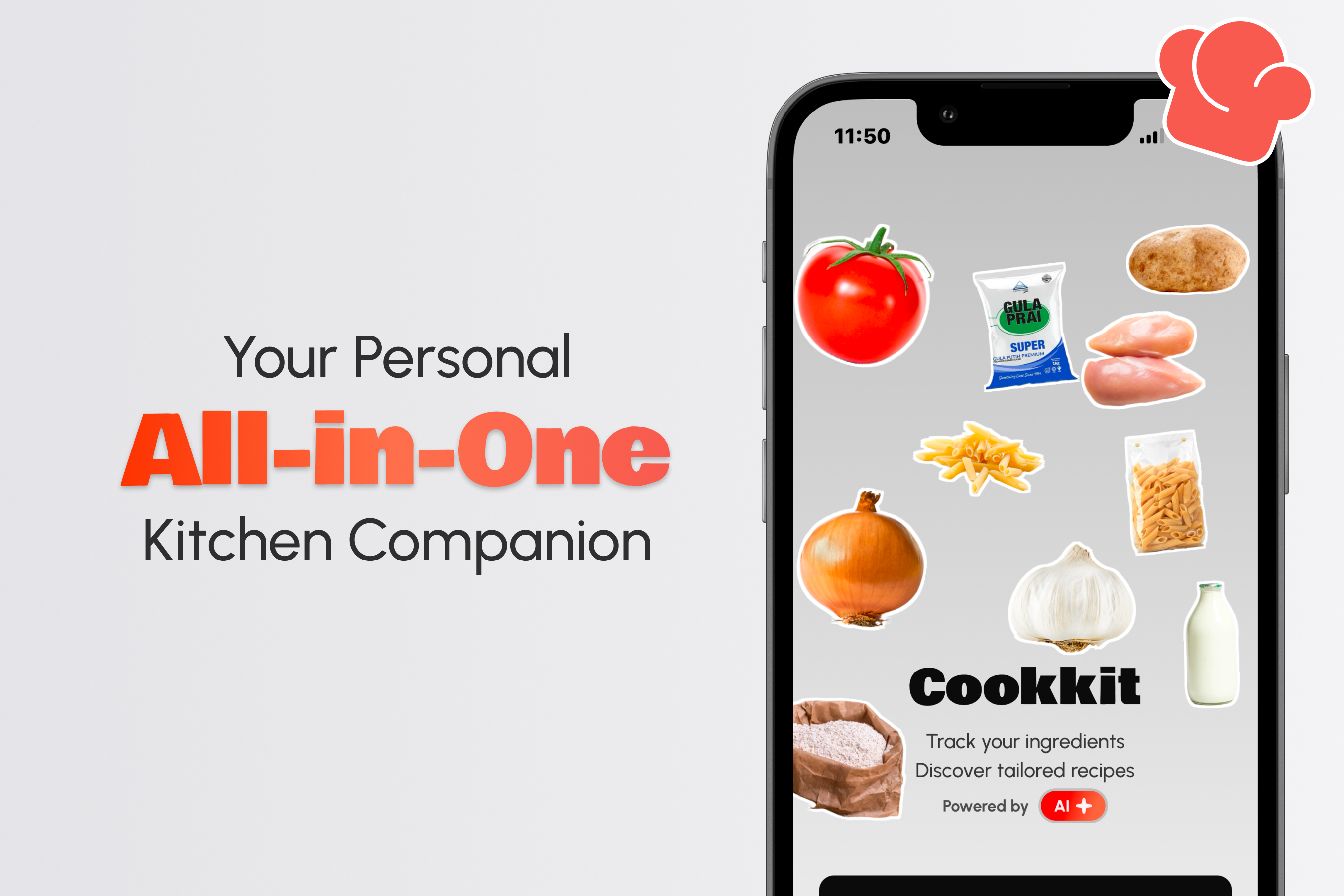
All in One Kitchen Companion
-
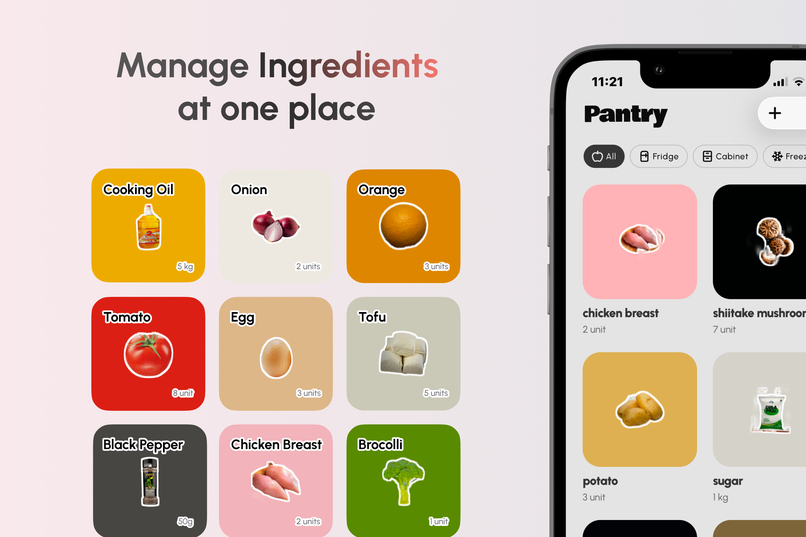
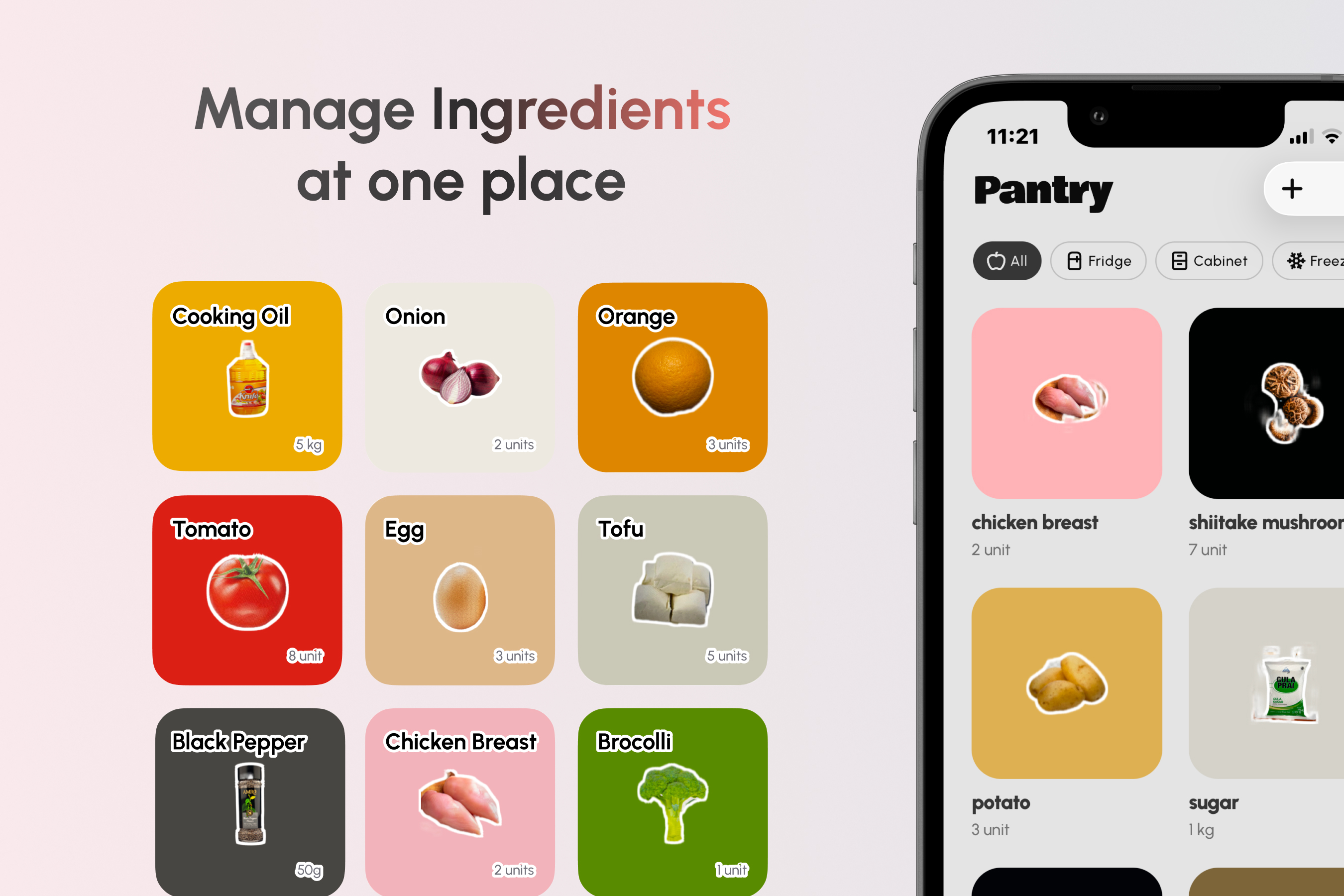
Manage Ingredients at One Place
-
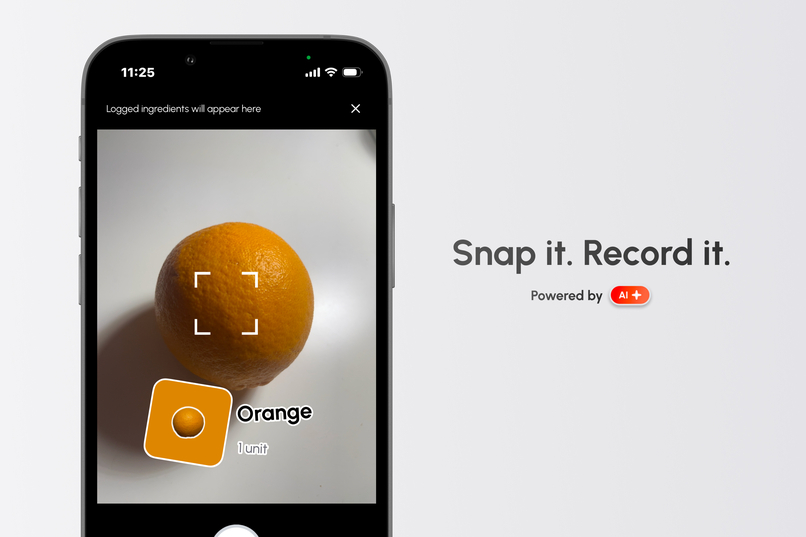
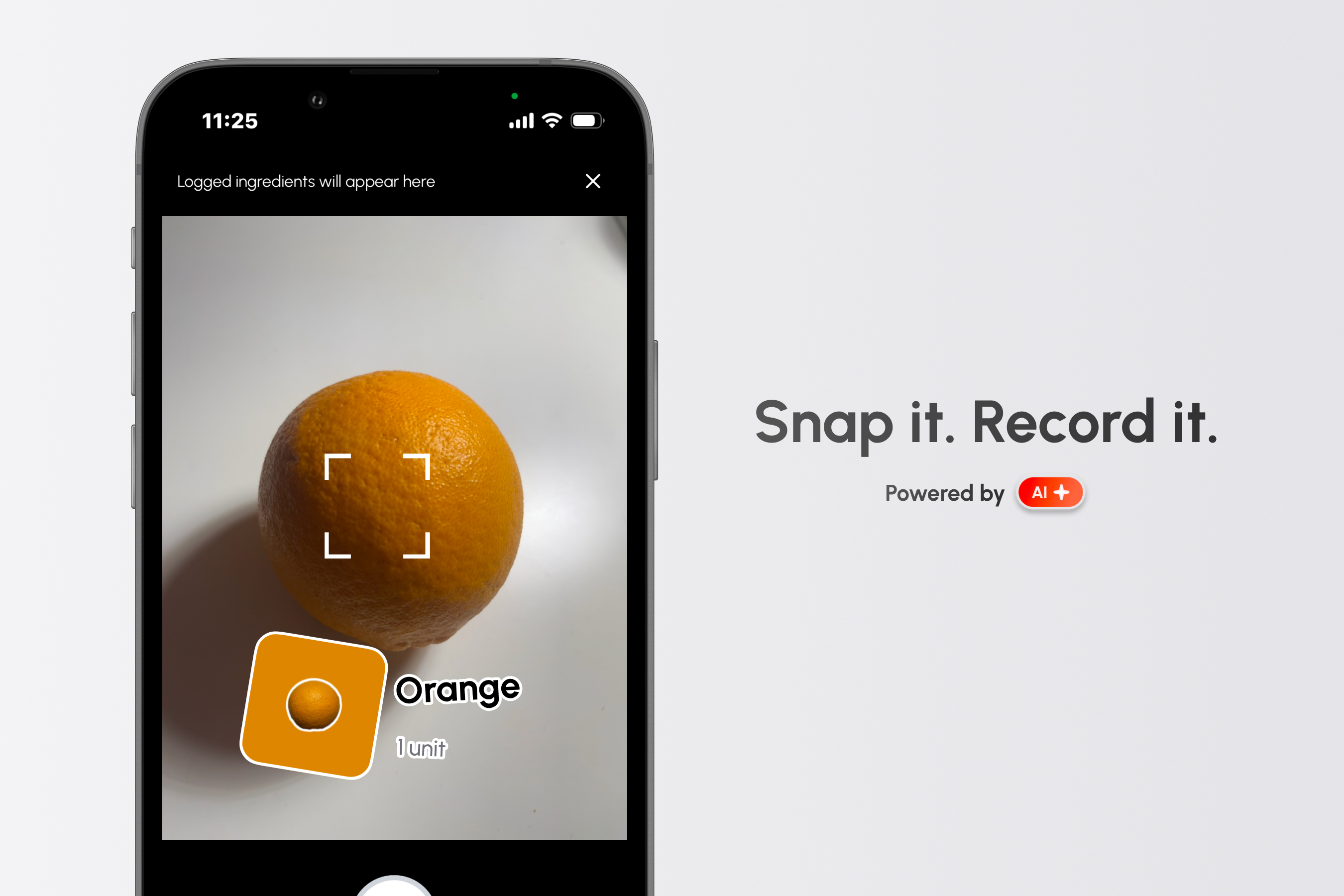
Snap it. Record it.
-
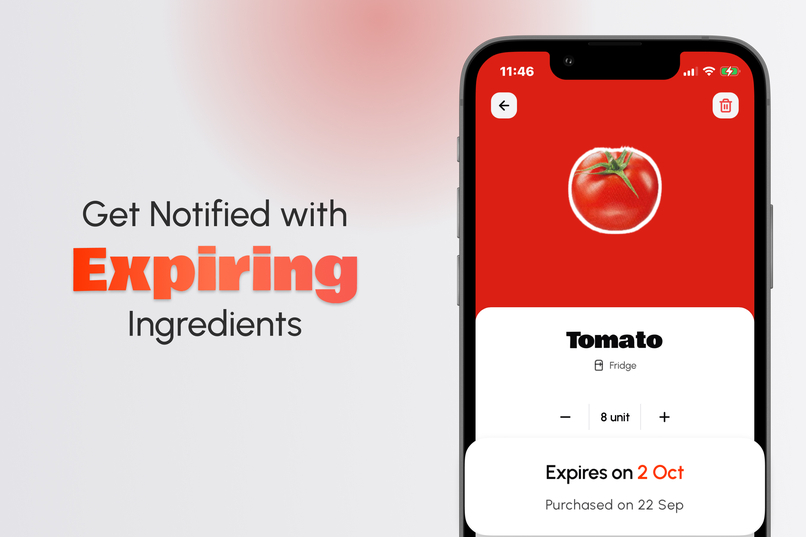
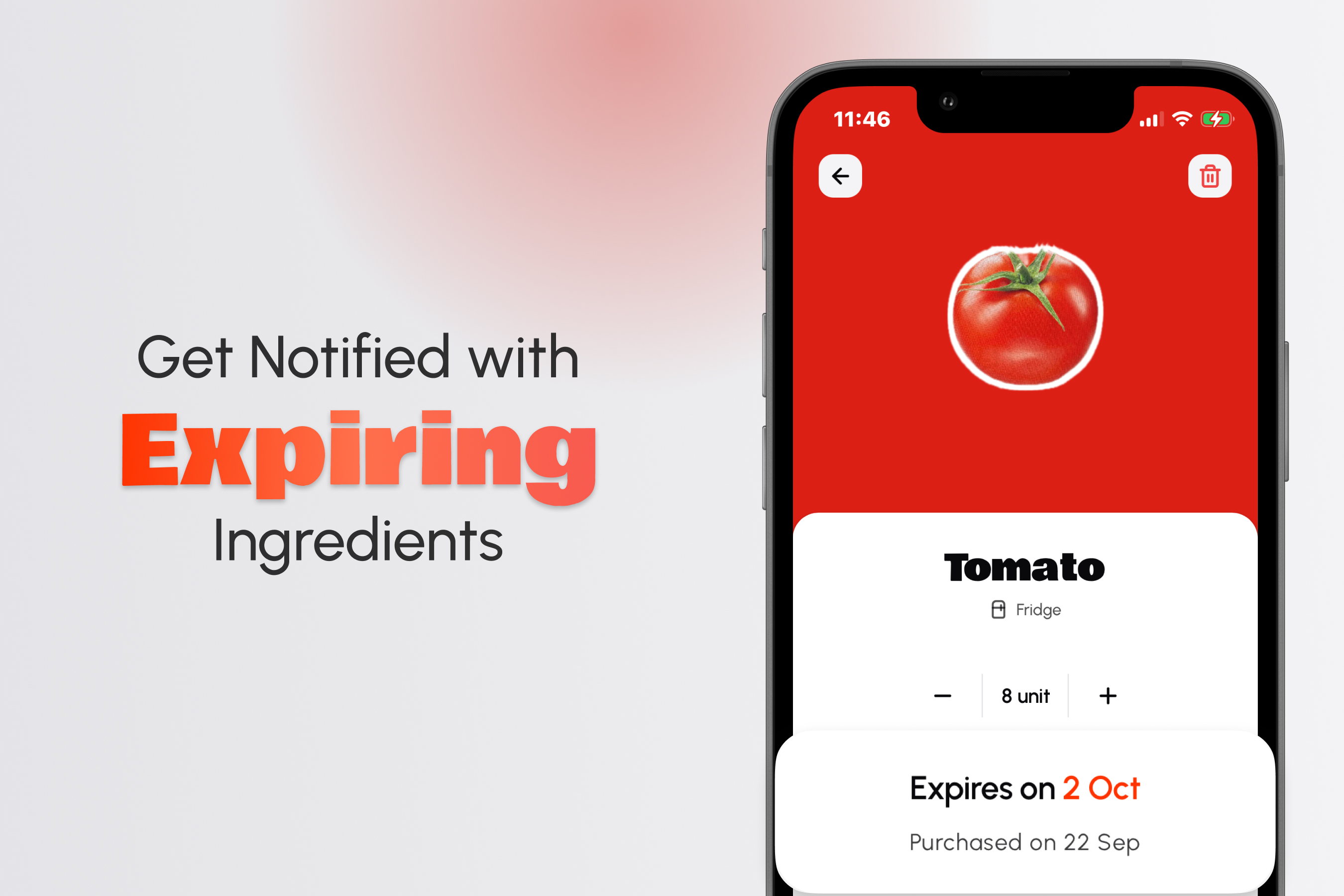
Get Notified with Expiring Ingredients
-
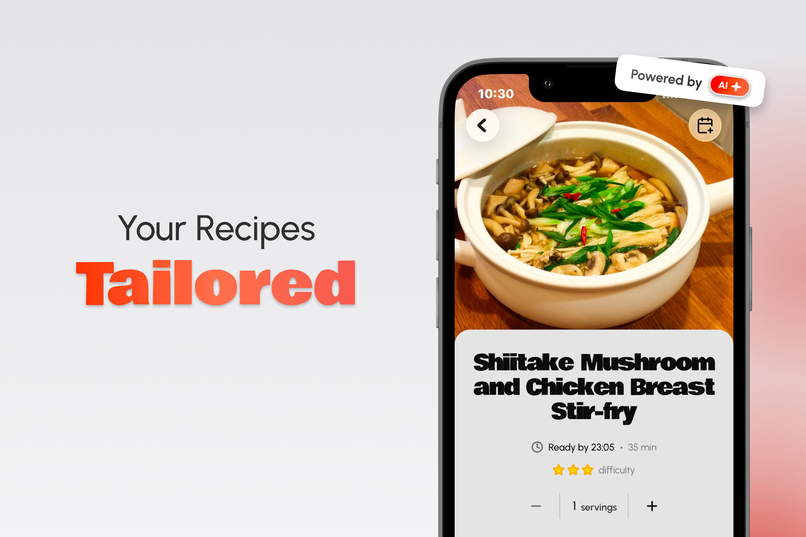
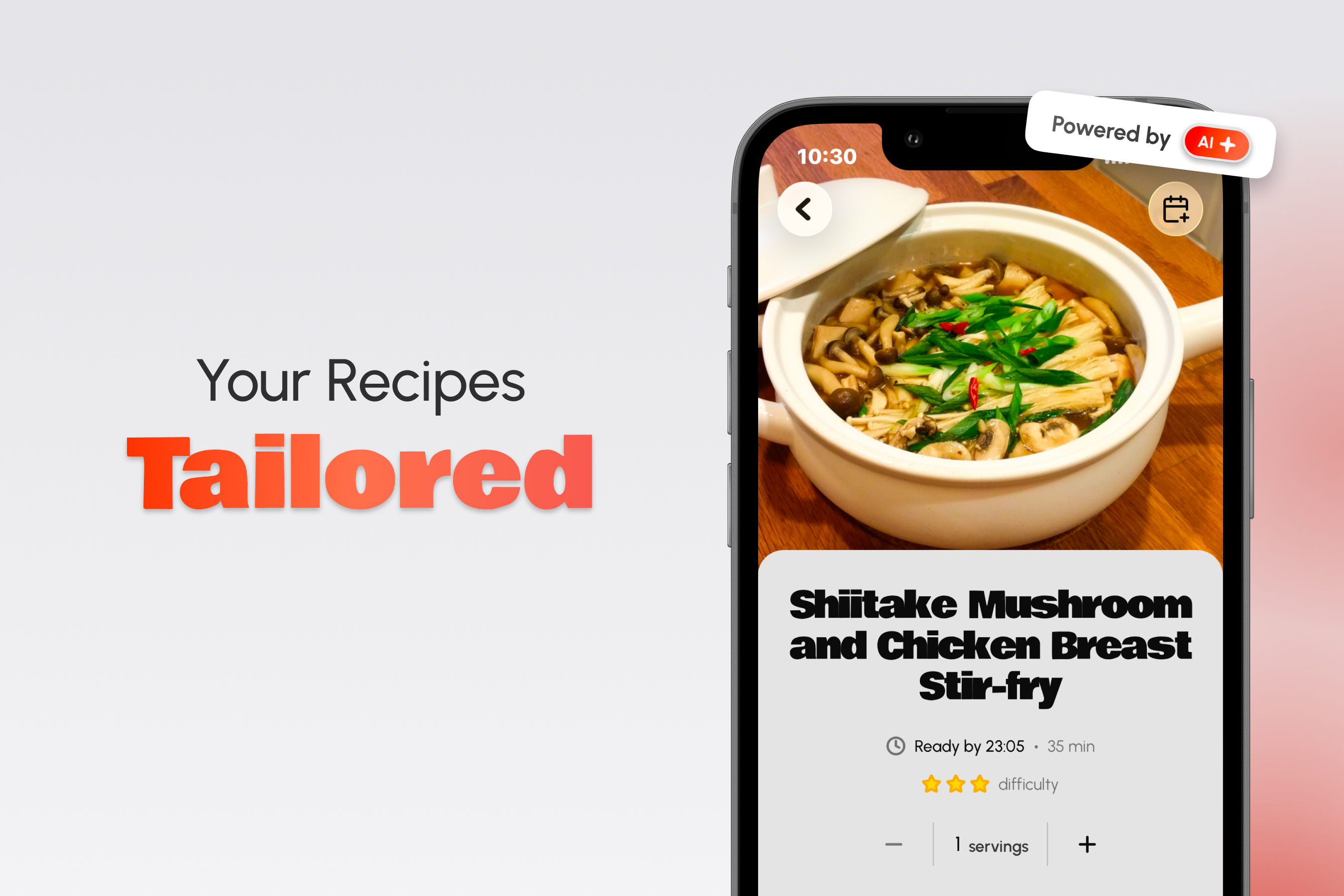
Your Recipes Tailored
-
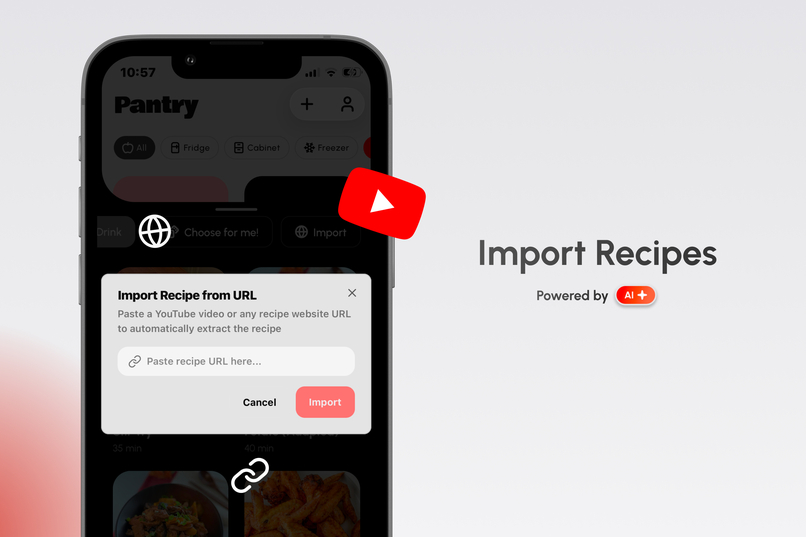
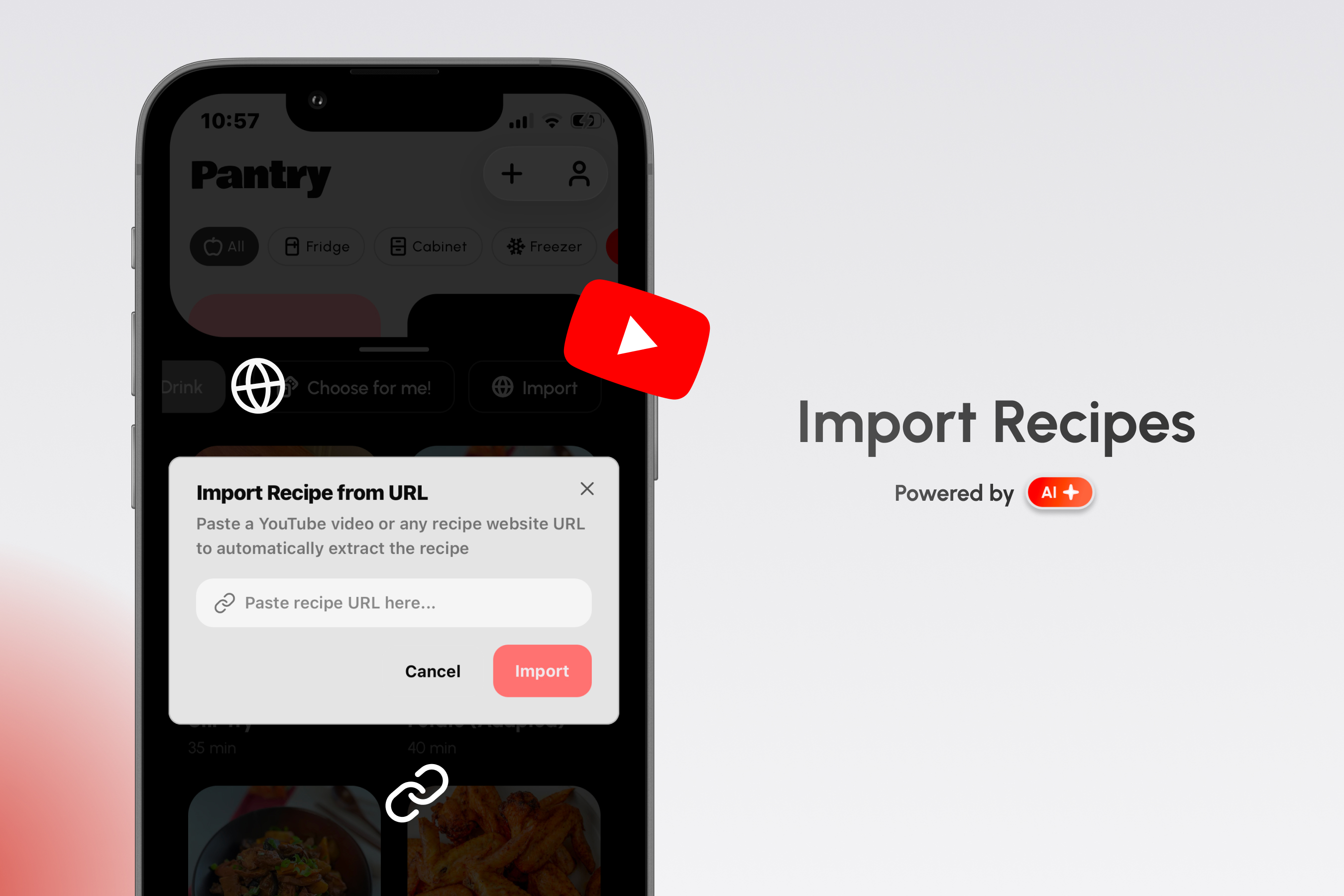
Import Recipes from Anywhere
-
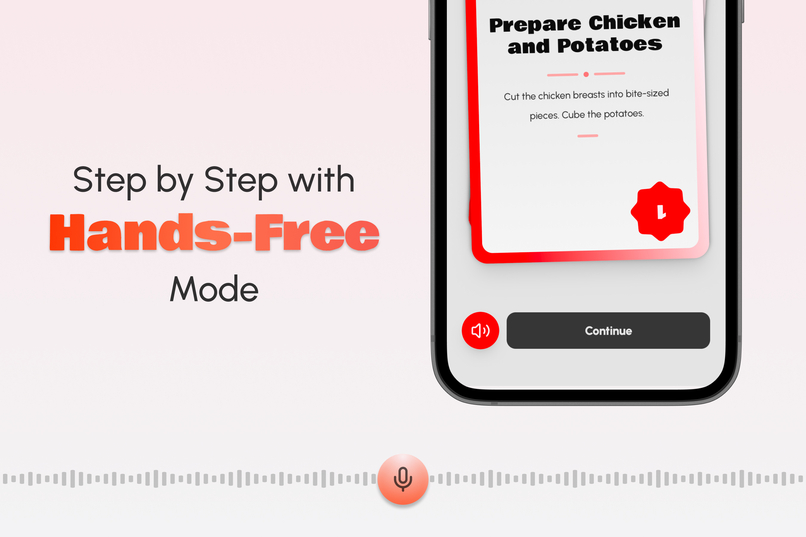
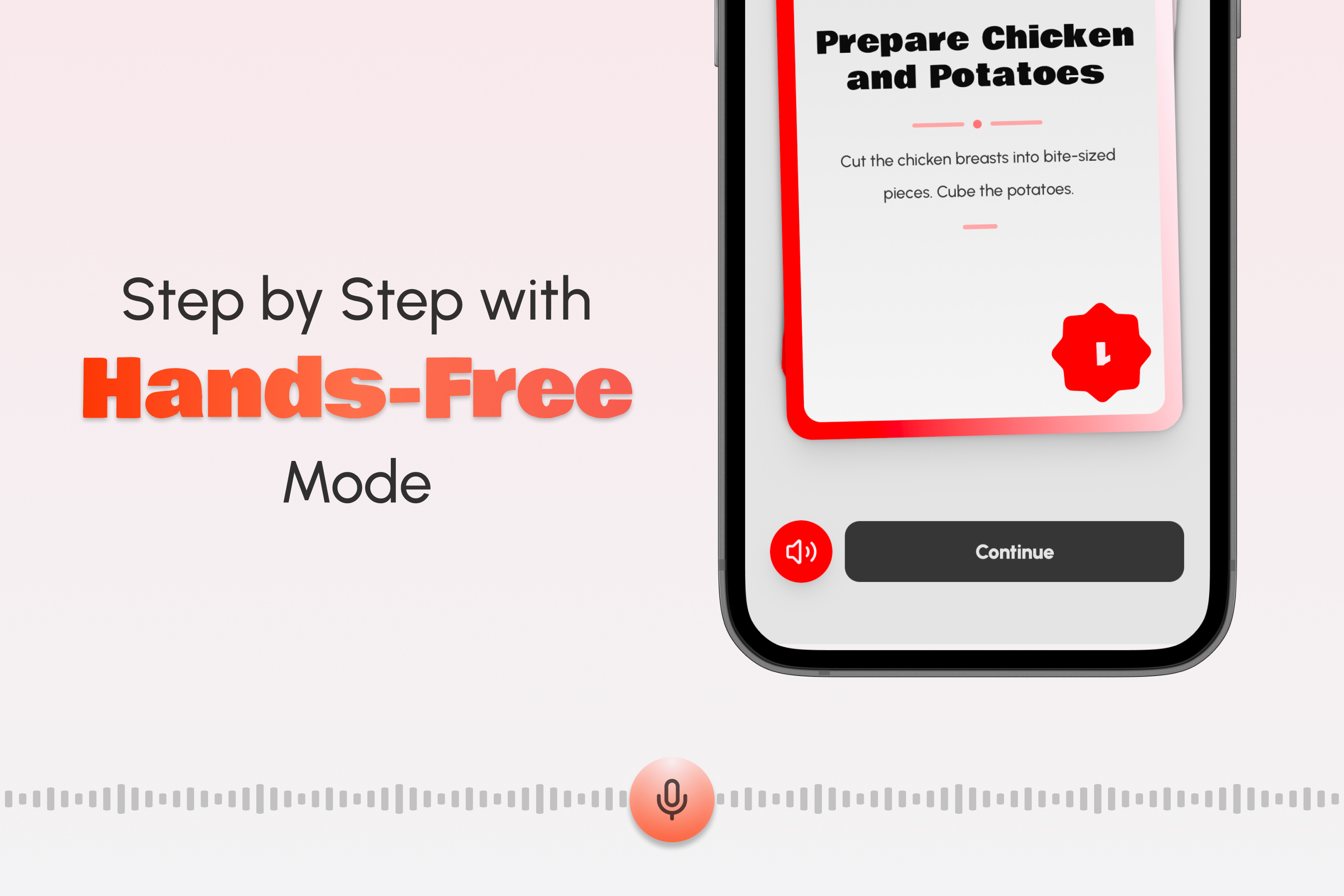
Step by Step with Handsfree Mode
-
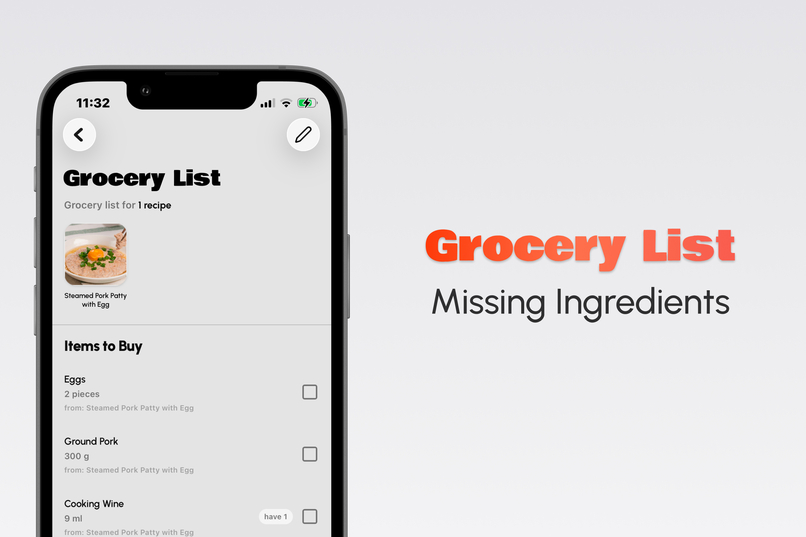
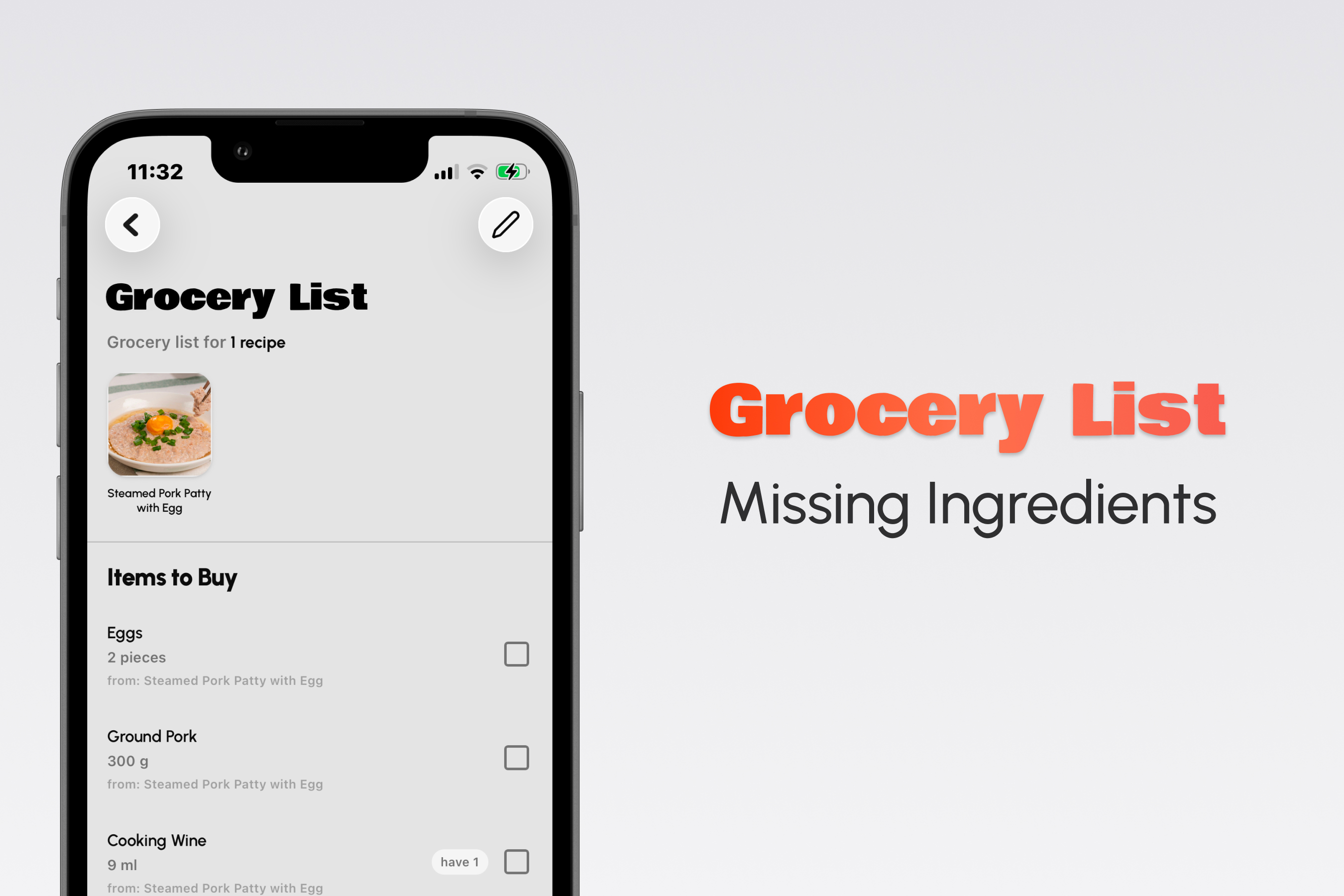
Grocery List
-
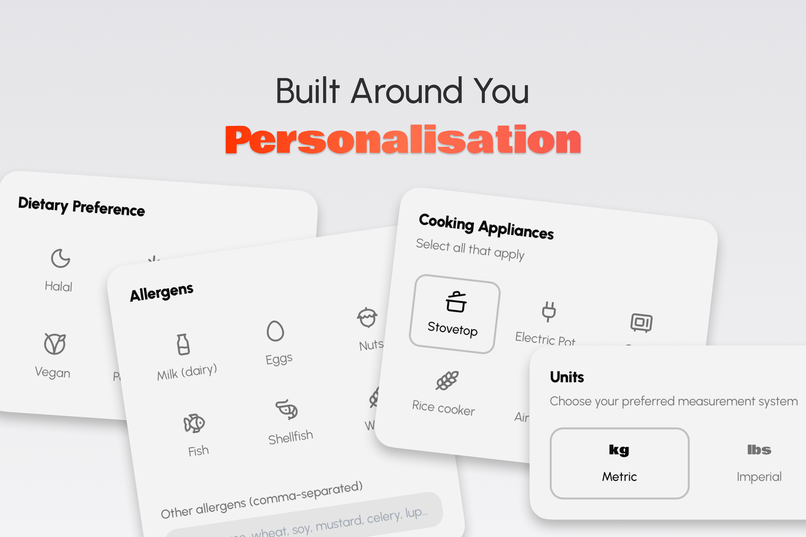
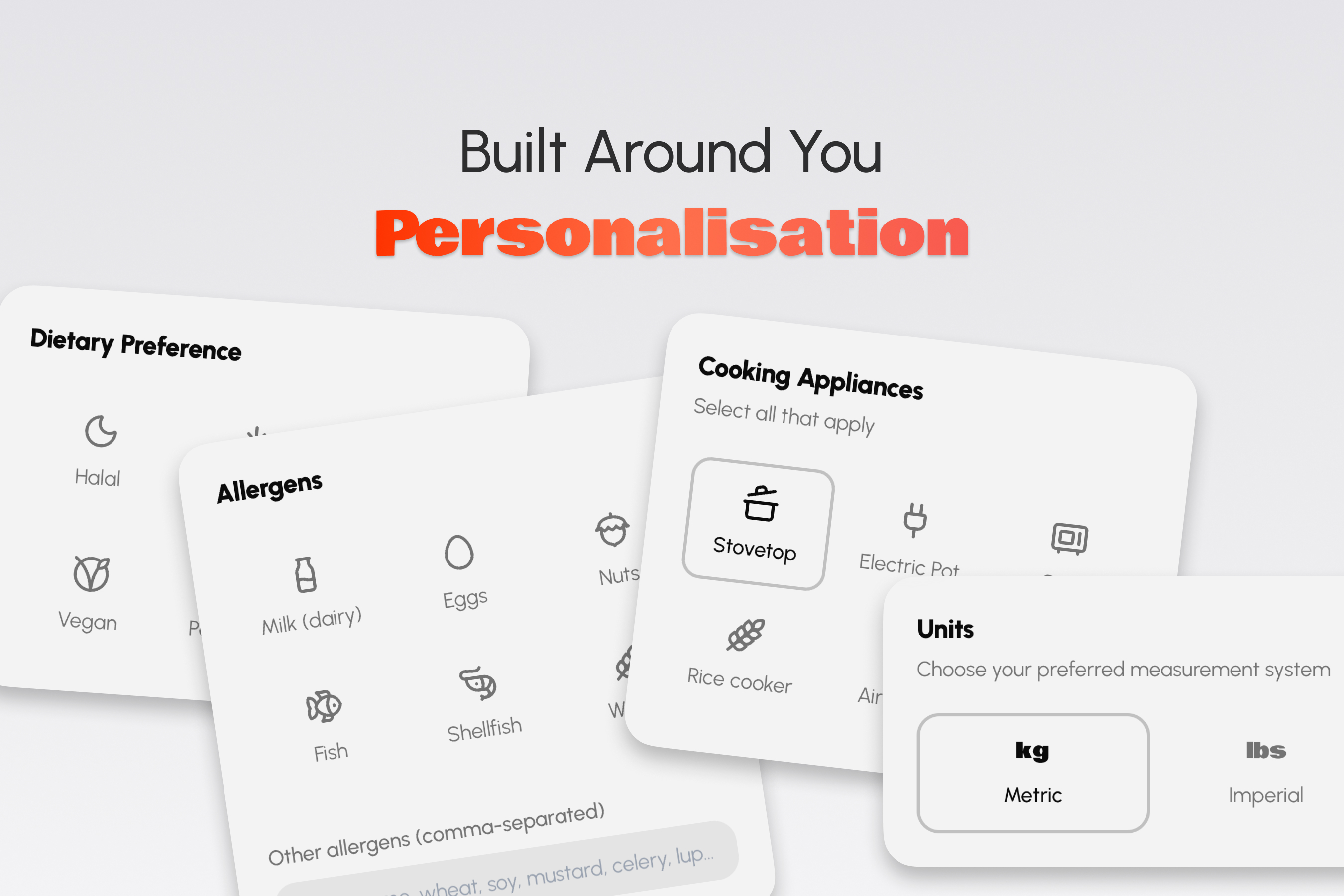
Personalisation
Inspiration
Cookkit was inspired by our personal experience of sharing a fridge with housemates.
We realised that managing a kitchen isn’t always as simple as it seems. It gets even more challenging when multiple people shares the same space.
First, keeping track of groceries is time-consuming. Manually checking what ingredients are available, what needs restocking, and what’s about to expire takes time and effort, especially in a shared kitchen.
Second, food often goes to waste. We forget what we already have, buy duplicate ingredients, or leave groceries unused until they expire.
And third, these challenges discourage people from cooking. When planning meals, checking ingredients, and deciding what to cook become more of a hassle than the cooking itself, ordering takeaway often feels like the easier option.
This got us thinking: What if managing a kitchen could be as simple as having a conversation, anytime, anywhere?
That’s how Cookkit came about, AI-powered kitchen companion designed to take the hassle out of kitchen management, reduce food waste, and make home cooking easier, more convenient, and enjoyable. Cookkit helps housemates easily coordinate shared groceries and reduce food waste, while helping busy parents save time on meal planning, grocery shopping, and preparing meals for their families.
What It Does
Cookkit supports the entire cooking journey—from ingredient awareness to final execution.
1. Add What You Have (AI-Powered Kitchen Inventory)
- The Process: Users snap a photo of their groceries to automatically add ingredients to a shared inventory across their fridge, freezer, and pantry.
- The Tech: Uses on-device image segmentation model, Magic-touch.tflite from Google and the Nemotron-3.5-super-vl model for classification to identify ingredients and record them in the inventory.
- The Benefit: Eliminates manual data entry, simplifies shared kitchen management, and helps reduce food waste through expiry notifications.
2. Manage Your Kitchen Through Conversation (AI Kitchen Assistant)
- The Process: Users can also interact with an AI chatbot to add, remove, or update ingredients, request dietary insights, and receive personalized recipe and meal-planning suggestions. The ingredients will also automatically be updated once the user completes cooking the meal.
- The Tech: Nemotron-3.5-Lightning model interprets natural-language commands and performs inventory management and recommendation tasks.
- The Benefit: Makes managing a shared kitchen as simple as having a conversation, anytime, anywhere.
3. Discover and Save What You Love (Recipe Discovery & Collection)
- The Process: Users browse recommended recipes, add their own recipes, or save recipes discovered on platforms like TikTok and YouTube.
- The Tech: Tavily is used to allow users to search for recipes online. Nemotron 3.5 Super VL reads sampled video frames and selects the finished-food cover image and Nemotron-3.5-Lightning turns captions, transcripts, and extracted evidence into the structured recipe.
- The Benefit: Brings recipe discovery and personal collections into one place, making it easier to decide what to cook.
4. Make Every Recipe Work for You (AI Recipe Adaptation)
- The Process: Users select a recipe, and Cookkit adapts it according to available ingredients, appliances, and dietary preferences.
- The Tech: Nemotron-3.5-super-vl tailors the recipes and suggests ingredient substitutions, adjusts quantities, and dynamically rewrites cooking instructions while maintaining coherent preparation steps.
- The Benefit: Makes cooking more flexible, reduces unnecessary grocery trips, and helps users make the most of what they already have.
5. Cook Without Hassle (Hands-Free Cooking Assistant)
- The Process: Users activate hands-free mode to have recipe instructions read aloud while cooking.
- The Tech: Text-to-Speech delivers step-by-step cooking instructions, with voice recognition planned for hands-free navigation.
- The Benefit: Allows users to focus on cooking without constantly touching their devices, improving convenience and kitchen hygiene.
6. Make the Most of Every Ingredient (Freshness & Leftover Tracking)
- The Process: Users monitor ingredient freshness, receive expiry reminders, and keep track of leftover food.
- The Tech: Inventory records, expiry-date tracking, and notification logic help identify ingredients approaching their recorded expiry dates.
- The Benefit: Encourages timely ingredient usage, reduces forgotten food, and helps minimize food waste.
7. Plan Your Meals, Anytime, Anywhere (Smart Meal Calendar)
- The Process: Users organize their meals using a built-in calendar and receive personalized meal suggestions based on their inventory and preferences.
- The Tech: AI-assisted meal planning connects recipe recommendations with inventory information and calendar scheduling.
- The Benefit: Reduces daily meal-planning stress and allows users to plan ahead without physically checking their kitchen.
8. From Meal Plan to Doorstep (Integrated Grocery Shopping)
- The Process: After planning meals, users identify missing ingredients and proceed to GrabMart to purchase and schedule grocery delivery.
- The Tech: Ingredient matching compares recipe requirements against current inventory, with grocery-shopping integration connecting users to GrabMart.
- The Benefit: Streamlines grocery shopping, reduces duplicate purchases, and connects meal planning with ingredient replenishment.
How We Built It
We utilized a Local-First Architecture to ensure reliability in kitchens with spotty Wi-Fi.
| Component | Technology |
|---|---|
| Framework | React Native (Expo SDK 54) |
| Database | WatermelonDB (SQLite) for offline-first speed |
| Sync/Auth | Supabase |
| AI Brain | Magic-touch.tflite from google for Image Segmentation, Nemotron-3.5-super-vl, Nemotron-3.5-Lightning |
Key Feature Implementations
- AI inventory capture: Adds groceries from photos using on-device image segmentation and Nemotron-3.5 Super-VL ingredient classification.
- Conversational kitchen assistant: Uses Nemotron-3.5-Lightning to manage inventory, provide dietary insights, recommend recipes, and plan meals. Inventory updates after cooking.
- Recipe discovery and saving: Supports online recipe search with Tavily, manual recipe additions, and recipe extraction from TikTok and YouTube using video frames, captions, and transcripts.
- AI recipe adaptation: Uses Nemotron-3.5 Super-VL to adjust ingredients, quantities, and instructions based on what users have, their appliances, and dietary preferences.
- Hands-free cooking: Reads instructions aloud with text-to-speech; voice navigation is planned.
- Freshness and leftovers: Tracks expiry dates and leftovers, with reminders for ingredients approaching their recorded expiry.
- Meal calendar: Connects meal planning with inventory and preferences to suggest and schedule meals.
- Grocery ordering: Matches planned recipes against inventory and links missing ingredients to GrabMart for delivery.
Challenges We Ran Into
- Cost Management: AI infrastructure and API usage can be prohibitively expensive. We mitigated this by moving toward edge models and implementing the Nemotron models provided by Nebius.
- Performance Trade-offs: Balancing the speed of image recognition with accuracy while running on-device.
- Market Differentiation: Designing a unique, intuitive UX to stand out from generic recipe apps.
Accomplishments We're Proud Of
- End-to-End Coverage: We support the entire workflow, not just one piece of it.
- Offline AI: Recipes and tailored substitutions are cached locally; you can cook in a basement without a signal.
- High Performance: Achieved 60fps scrolling and sub-16ms search times using FlashList and WatermelonDB.
What We Learned
- Beyond Giant Models: One-size-fits-all LLMs are over. Task-specific, smaller models are often more effective.
- Orchestration Over Size: How you connect models matters more than the raw parameter count.
- Prompt Engineering: Thoughtful tuning and domain-specific knowledge bases (RAG) can make small models punch way above their weight class.
What's Next for Cookkit
- Global Scaling: Targeted marketing and strategic partnerships.
- Cultural Personalization: Adapting recommendations based on geography and cultural preferences.
- Grocery Integration: Having more seamless API connections with Grab, Uber Groceries, and more.
- Shared Inventories: Syncing the fridge across all household members.
- Health Intelligence: Surfacing nutrition scores and advocating for healthier dietary habits.
Built With
- expo.io
- nebius
- nemotron
- react-native
- supabase
- tflite
- watermelondb
