Elevator Pitch
Turning intimidating worksheets into AI-guided learning experiences for K-12 students through adaptive speed reading, contextual visuals, and accessibility-first design.
Alternative shorter tagline:
An AI-powered reading engine that helps students read faster, understand deeper, and learn with confidence.
Or:
The cheat code for reading comprehension.
Built With
Frontend
- HTML5
- CSS3
- Vanilla JavaScript
OCR / Text Extraction
Using:
Tesseract.js
For:
- worksheet scanning,
- image-to-text extraction,
- browser-based OCR.
Accessibility / Reading Features
- Rapid Serial Visual Presentation (RSVP)
- Bionic Reading typography
- Dual Coding Theory
- Adaptive phrase chunking
Future AI Integrations
Potential integrations:
- contextual phrase analysis,
- semantic chunking,
- educational analogy generation,
- adaptive reading support.
Project Story
About the Project
Inspiration
We were inspired by many students - especially those in under-resourced schools - struggle with:
- reading speed,
- comprehension,
- vocabulary retention,
- and attention sustainability.
Traditional speed-reading tools focus only on increasing reading speed by flashing isolated words rapidly on the screen. However, speed alone does not guarantee understanding.
We wanted to rethink reading as a cognitive accessibility problem.
Our idea was inspired by Dual Coding Theory, which suggests that people learn and retain information more effectively when verbal and visual information are processed together.
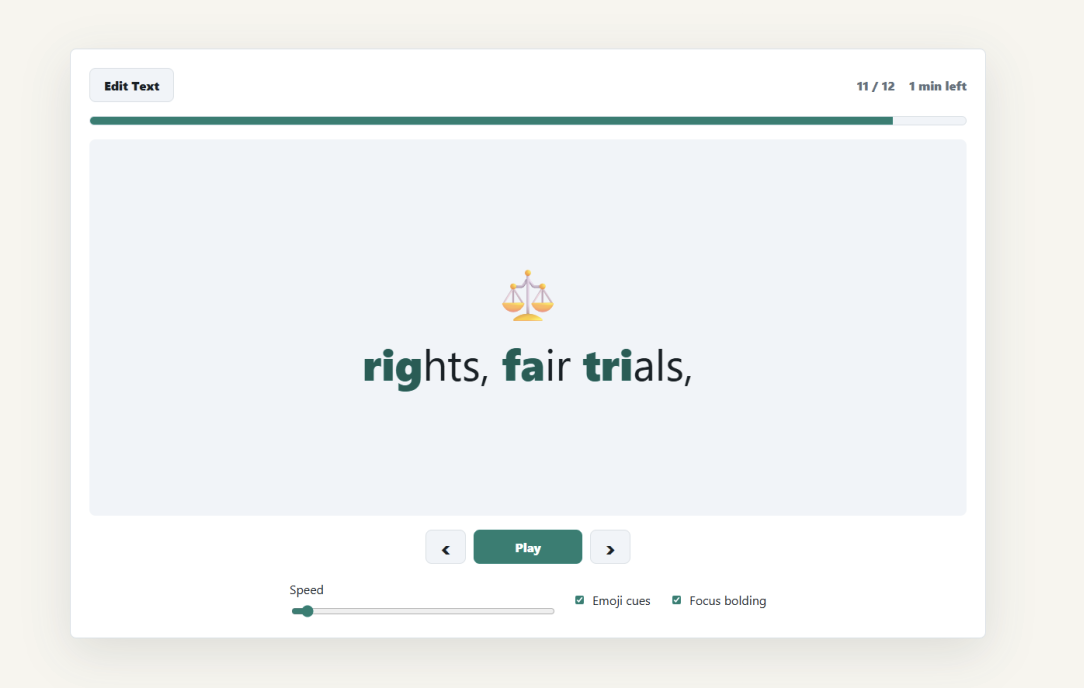
Instead of flashing single disconnected words, we built a system that:
- breaks text into meaningful phrase chunks,
- displays contextual visual reinforcement,
- and guides students through reading in an adaptive, less cognitively overwhelming way.
We specifically focused on K-12 students because foundational literacy shapes long-term educational outcomes across nearly every subject area.
What Our Project Does
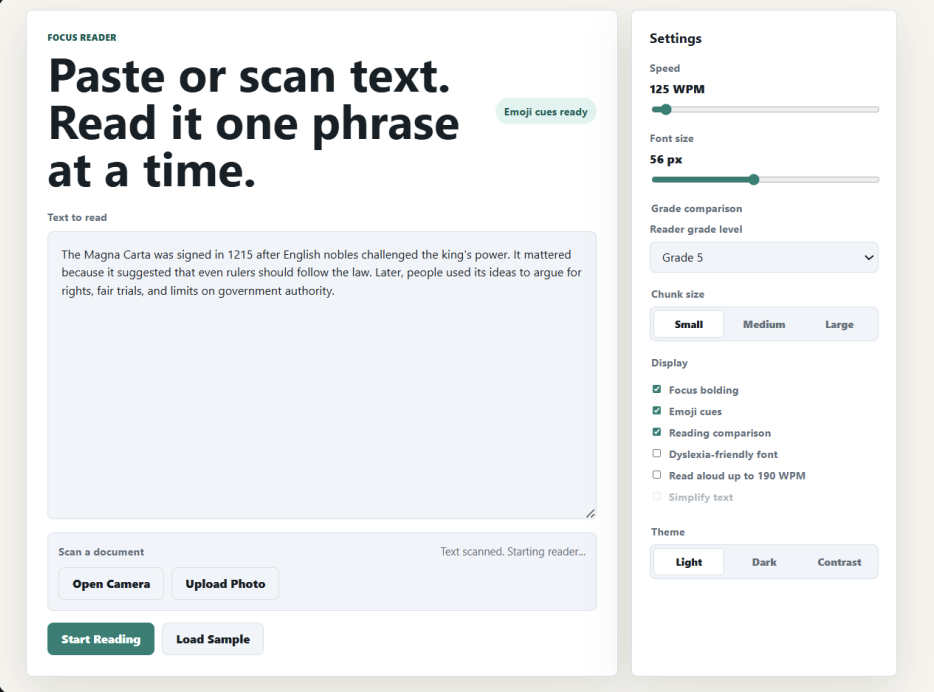
Our platform transforms static educational material into an interactive guided-learning experience.
Students can:
- scan worksheets or textbook pages using their webcam,
- extract text instantly using OCR,
- and convert difficult reading material into phrase-based guided reading sessions.
The reading engine:
- presents short chunks of text sequentially,
- reinforces meaning with contextual visuals or emojis,
- and supports accessibility-focused reading techniques such as Bionic Reading.
This helps reduce:
- cognitive overload,
- subvocalization,
- visual fatigue,
- and comprehension barriers.
The Core Idea
We are not just building a “speed reader.”
We are building:
an AI-assisted accessibility layer for reading comprehension.
The goal is to give students:
- better focus,
- faster comprehension,
- improved literacy confidence,
- and scalable academic support.
Especially for:
- ADHD learners,
- dyslexic students,
- ESL learners,
- and students without access to individualized tutoring.
How We Built It
We intentionally kept the MVP lightweight and browser-based so it could be built rapidly during a hackathon.
Our architecture includes:
OCR Pipeline
Using:
Tesseract.js
We capture worksheet images from the webcam and process them directly in the browser without requiring backend infrastructure.
Reading Engine
The app:
- extracts text,
- splits it into short phrase chunks,
- maps contextual visual cues,
- and displays phrases sequentially using RSVP-inspired pacing.
We used:
- JavaScript timing functions,
- DOM rendering,
- and accessibility-focused typography techniques.
Contextual Reinforcement
Instead of generating heavy AI images in real time, we optimized for speed and reliability by using:
- contextual emojis,
- lightweight symbols,
- and semantic keyword mapping.
This allowed us to preserve the “instant learning” experience necessary for fast-paced reading.
Challenges We Faced
Scope Creep
One of the biggest challenges was balancing ambition with feasibility.
Our long-term vision included:
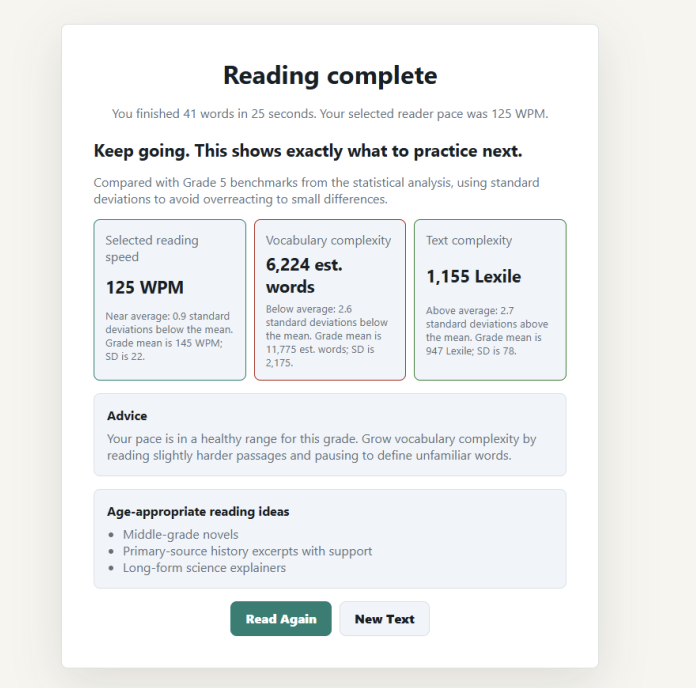
- adaptive learning analytics,
- embedded dictionaries,
- multimodal uploads,
- personalized study plans,
- and AI tutoring systems.
However, we quickly realized that trying to build every feature during a hackathon would compromise stability and demo quality.
We learned to separate:
- the MVP, from:
- the long-term product vision.
Latency vs. Speed
Another challenge was the contradiction between:
- real-time reading speed, and:
- AI-generated visual processing.
Generating images dynamically would introduce delays that break the reading flow.
To solve this, we used lightweight contextual reinforcement instead of slow image generation.
Accessibility Design
We also had to think carefully about:
- neurodivergent accessibility,
- cognitive load,
- typography,
- pacing,
- and visual clarity.
Building for younger learners required simplicity without making the product feel childish for older students.
What We Learned
We learned that:
- accessibility technology succeeds when it reduces cognitive friction,
- educational tools must prioritize comprehension over novelty,
- and even simple interaction design choices can dramatically impact learning experiences.
We also learned how important it is to:
- simplify technical scope,
- prioritize demo stability,
- and design around real human educational challenges rather than purely technical complexity.
Future Vision
Future versions of the platform could include:
- AI-generated analogies,
- adaptive pacing based on comprehension,
- vocabulary tutoring,
- teacher dashboards,
- reading progress analytics,
- PDF/audio/image uploads,
- personalized study plans,
- and classroom deployment tools.
Our long-term goal is to create an accessibility-first literacy platform that helps close educational gaps for students who need support the most.
Why This Matters
Literacy affects nearly every part of life:
- education,
- employment,
- communication,
- and long-term opportunity.
Students who fall behind in foundational reading skills often struggle throughout their academic careers.
We believe educational technology should:
- reduce inequality,
- support neurodivergent learners,
- and make high-quality literacy assistance scalable and accessible to everyone.

Log in or sign up for Devpost to join the conversation.