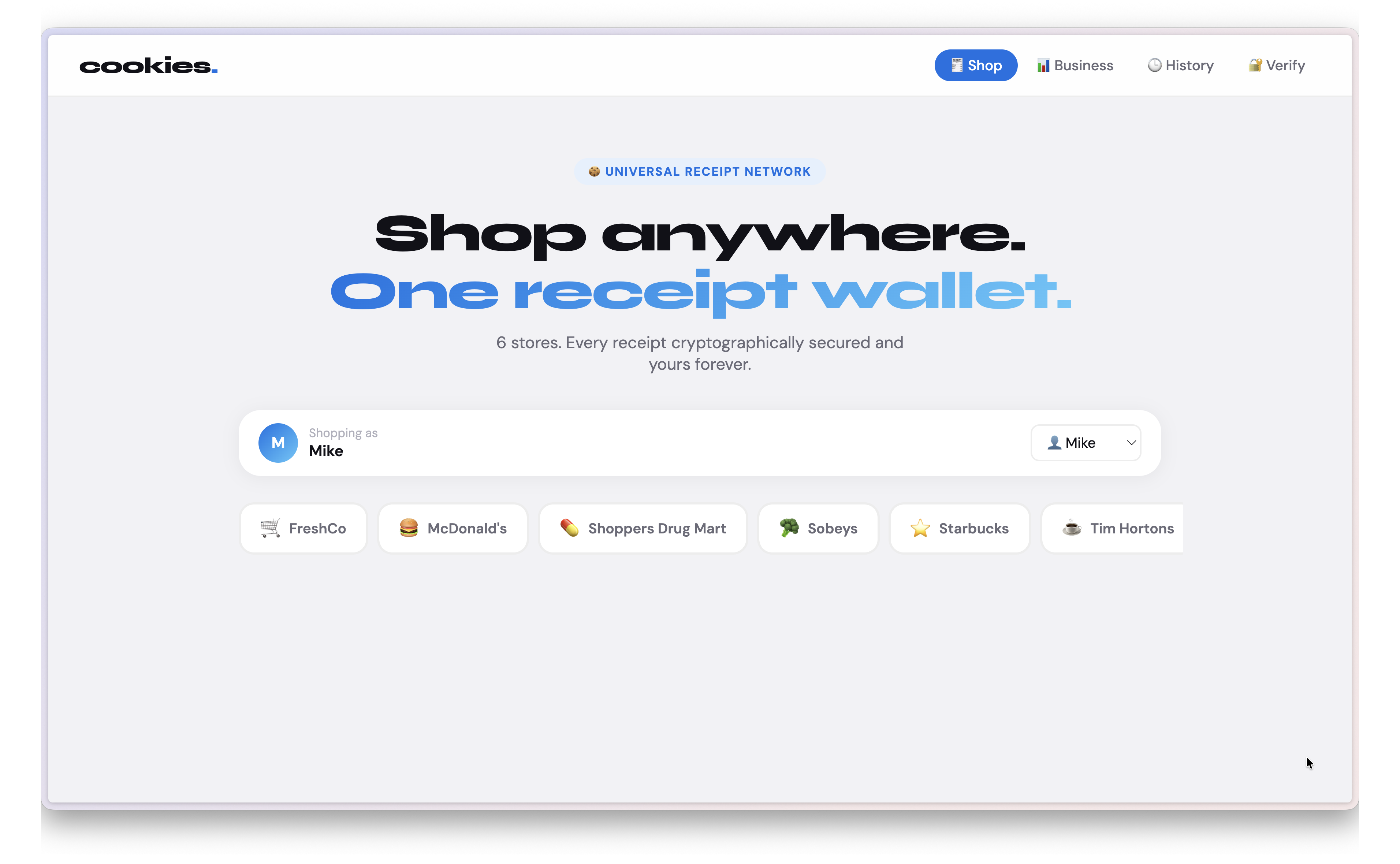
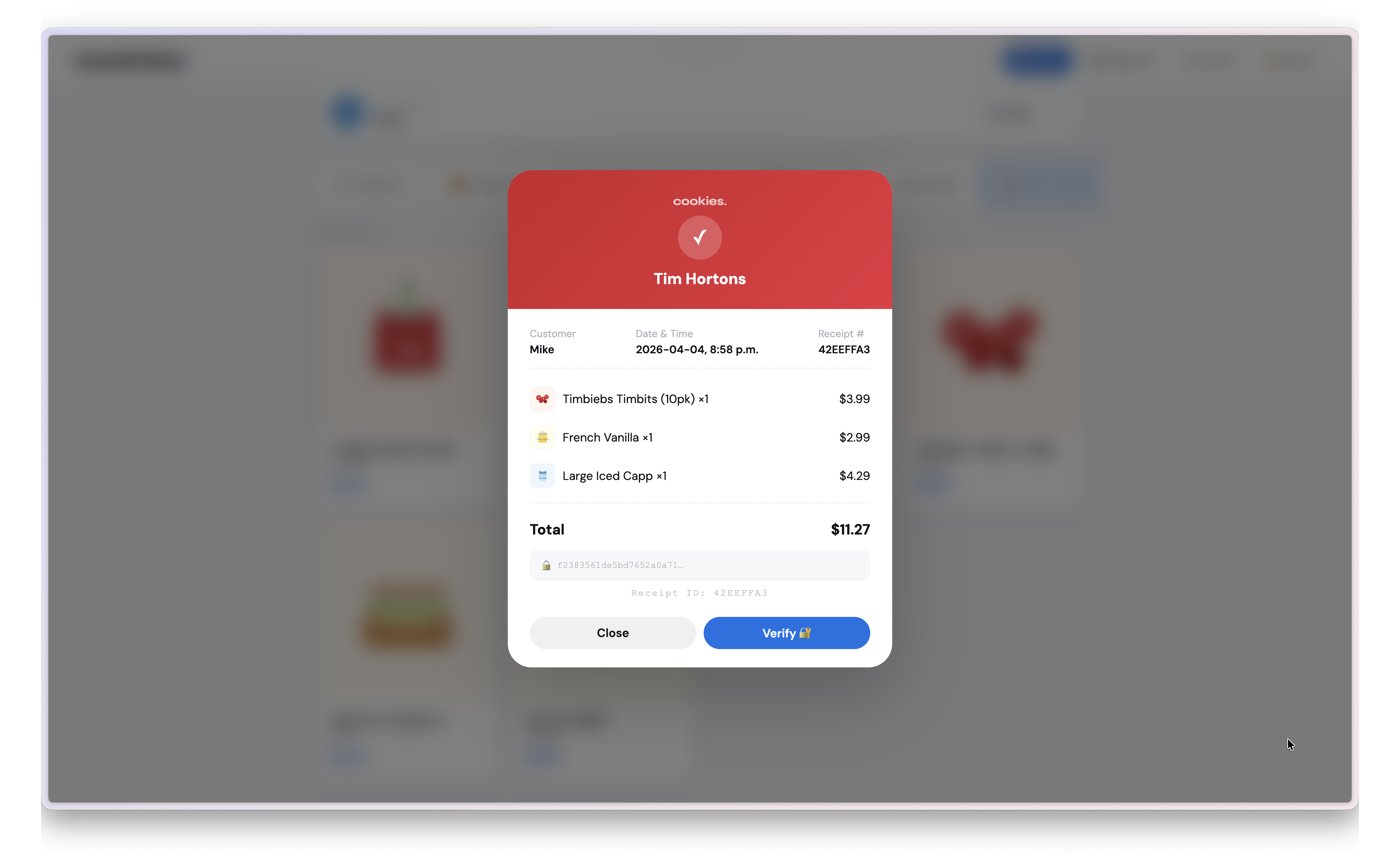
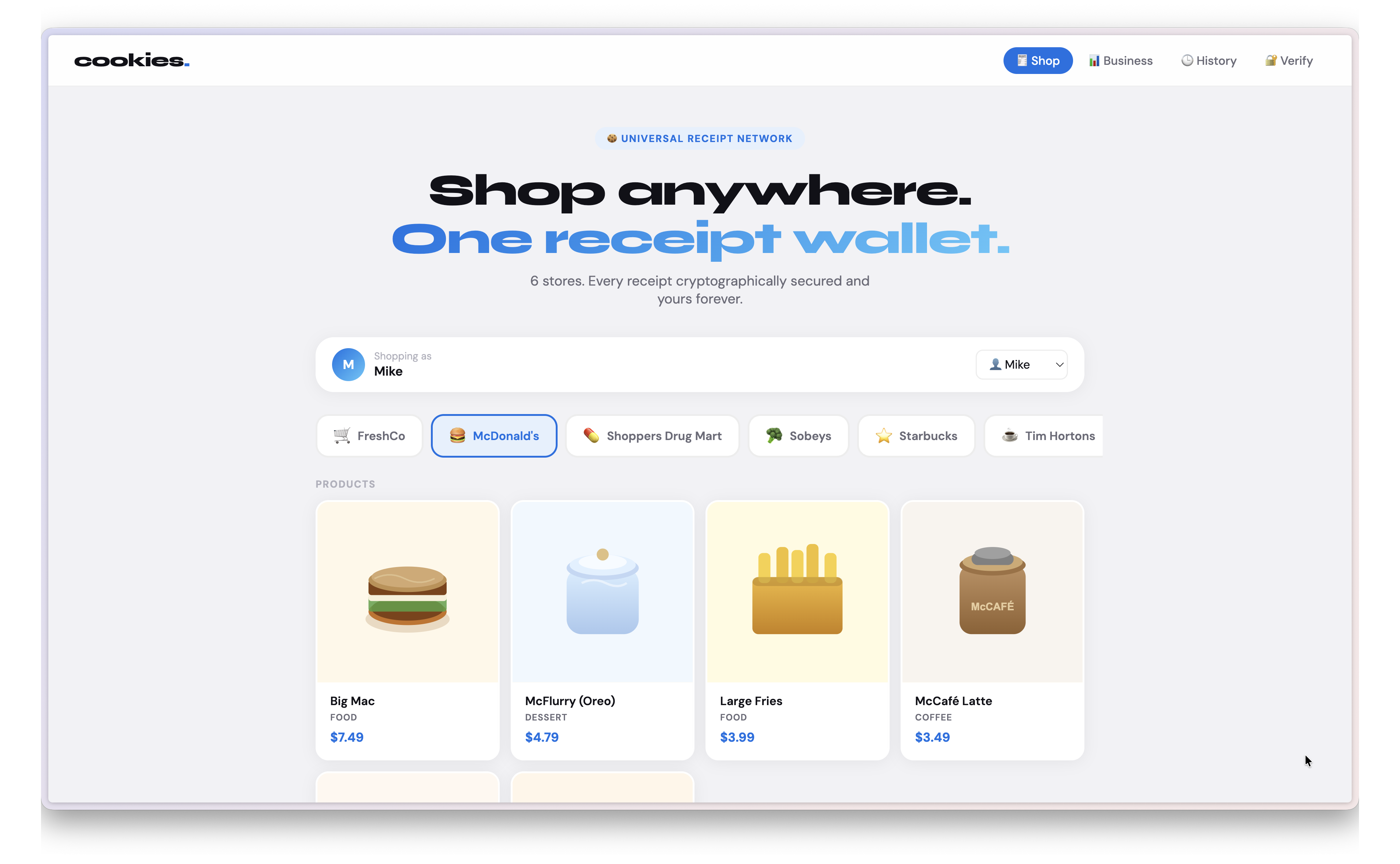
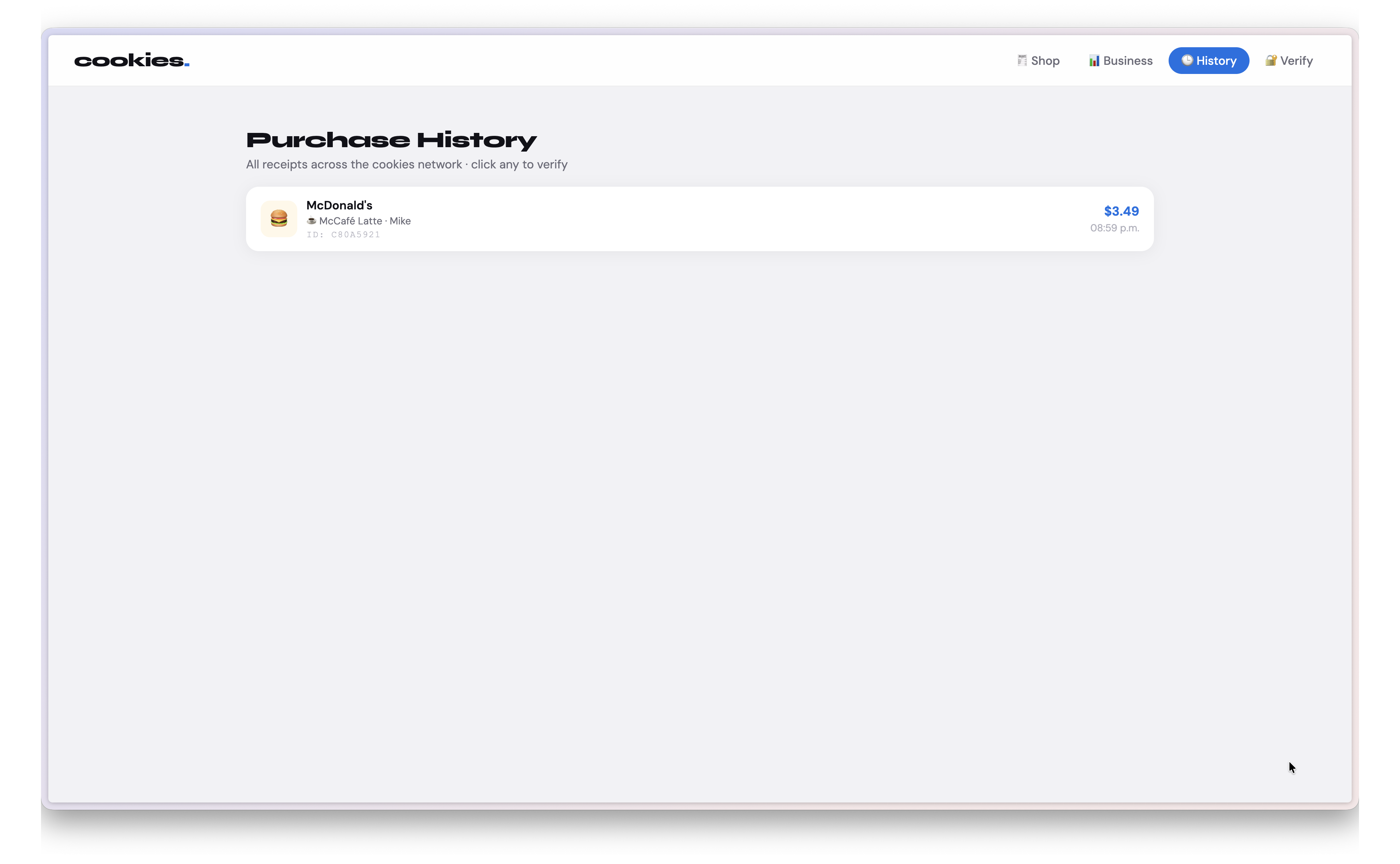
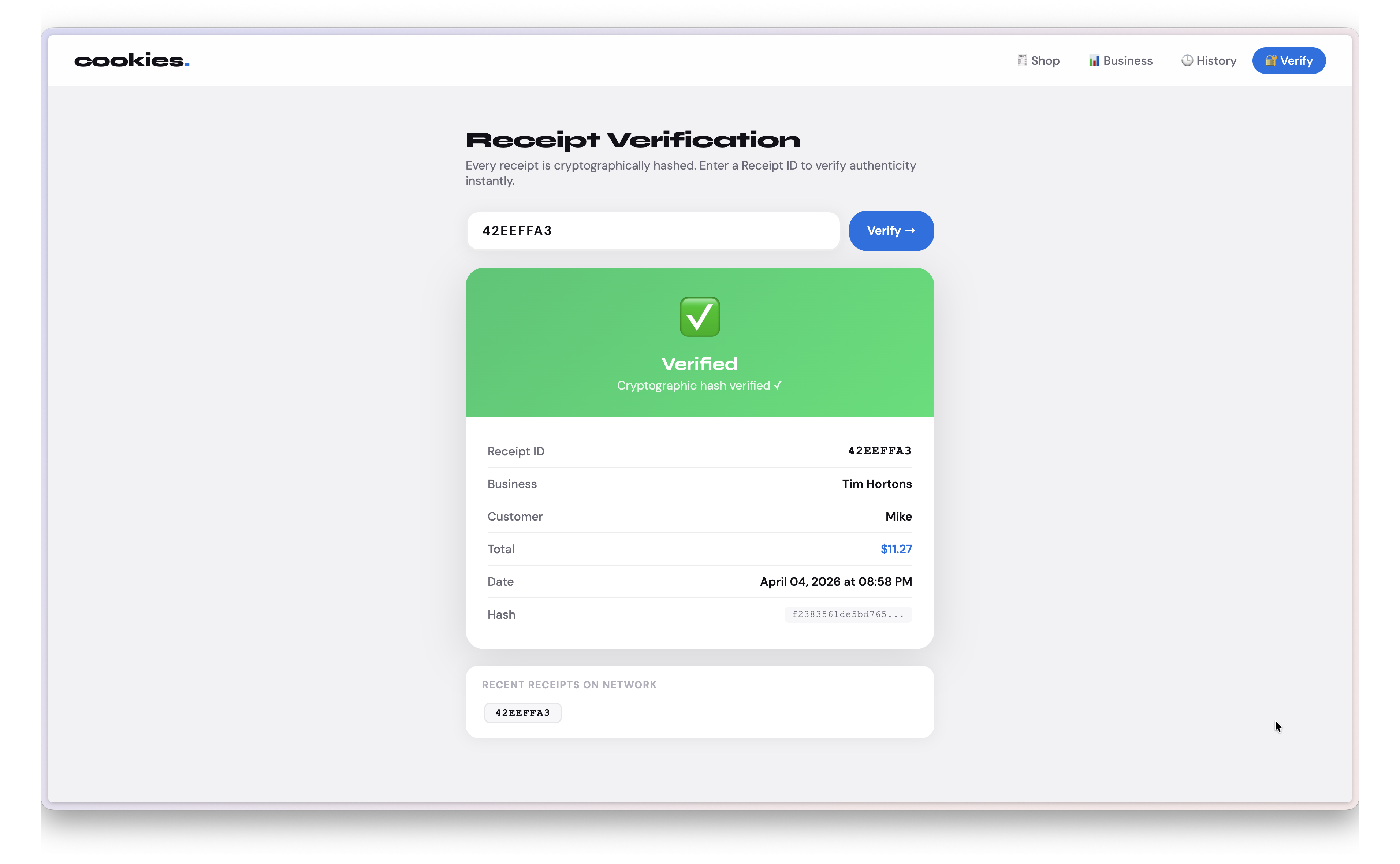
A few weeks before the hackathon, we were just talking about random things people lose all the time, and receipts came up. It sounds small, but the more we thought about it, the more it made sense. Receipts are everywhere, but they’re still messy, easy to lose, and hard to use when you actually need them.
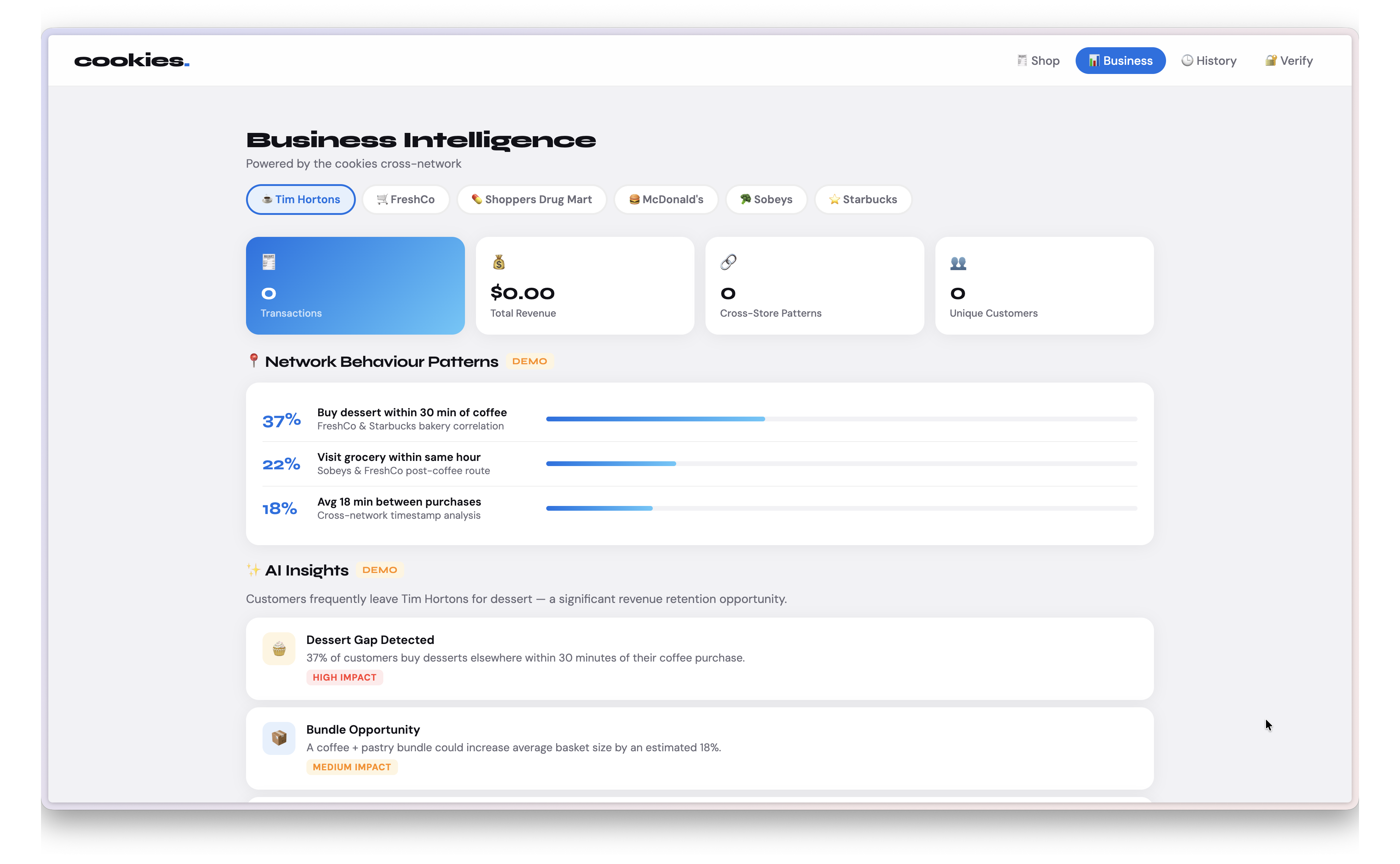
That led us to a bigger idea. Every business only sees one small part of what a customer does. But in reality, purchases happen in patterns. If someone buys a coffee and then goes somewhere else for dessert, that tells you something important. Right now, that insight is completely lost.
So we thought, what if receipts weren’t just proof of purchase, but part of a shared system? A place where every purchase is stored in one wallet, controlled by the user, and can be used to generate useful insights across businesses.
That’s where “cookies” came from. It’s like internet cookies, but for real life purchases. The difference is that users own their data, and businesses only see patterns, not personal identities.
At the hackathon, we focused on showing one simple loop: a purchase creates a digital receipt, it shows up instantly in a wallet, and that data can be used to generate meaningful insights.
Once we saw that working, it felt obvious. Receipts were never meant to be disposable. They were just missing a system.

Log in or sign up for Devpost to join the conversation.