-
-
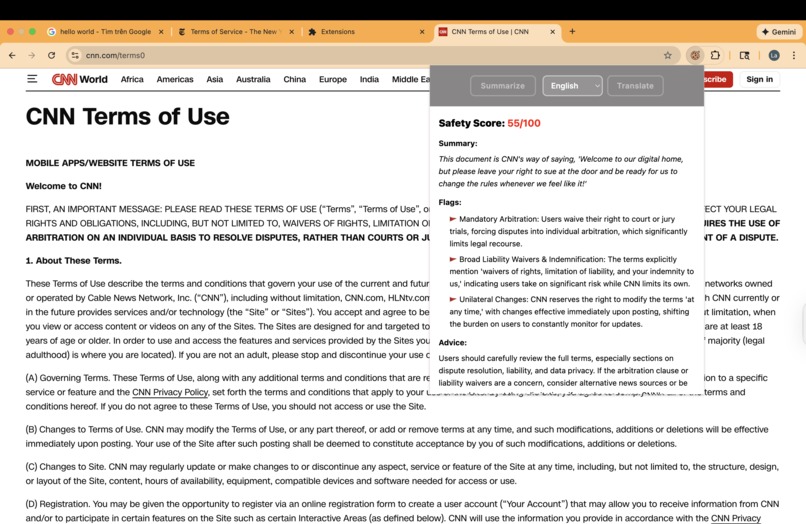
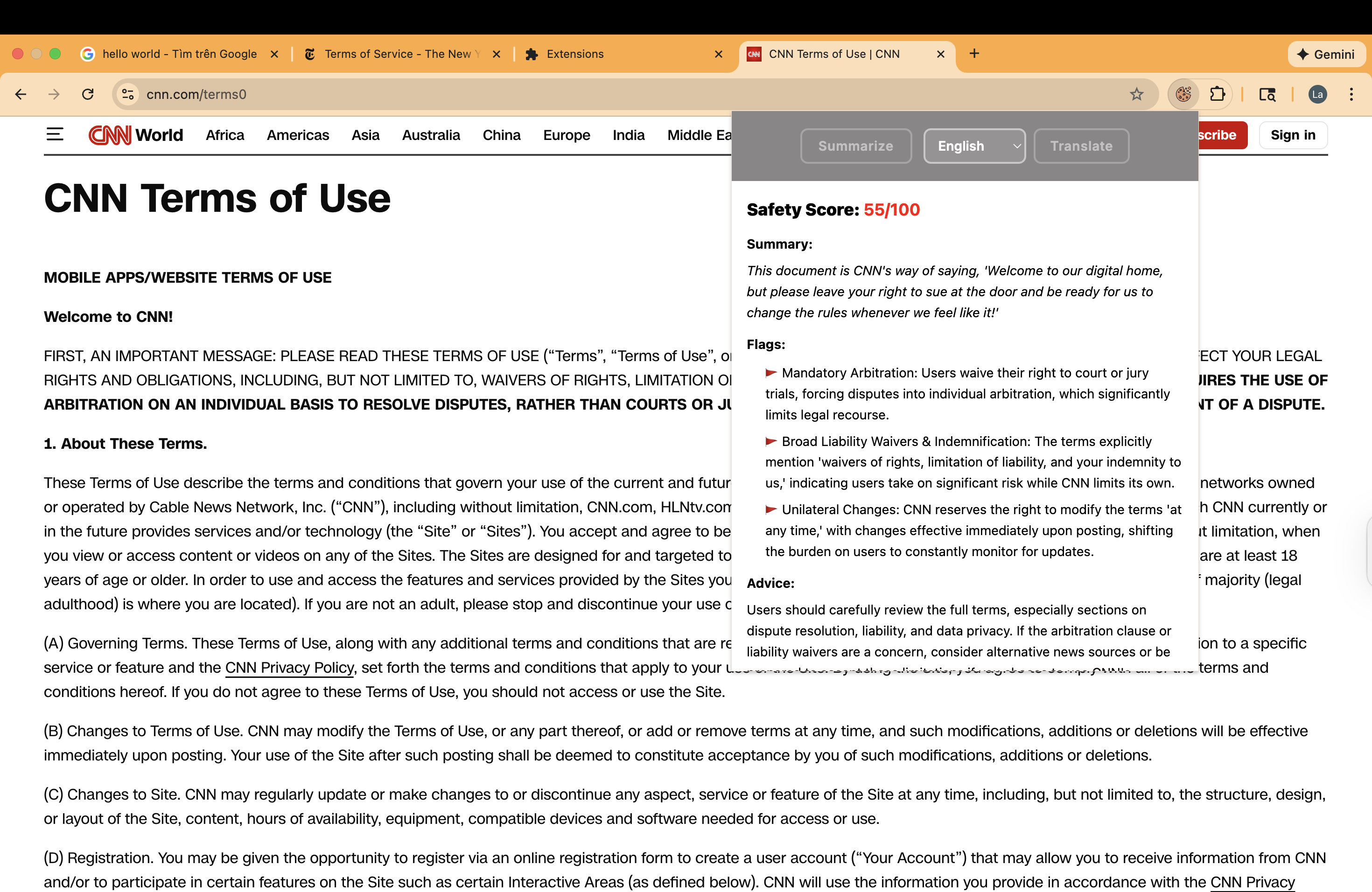
snippets of working extension
Inspiration
Most users click “I agree” on cookies, privacy policies, and terms of service without truly understanding what they’re consenting to. These documents are often long, legalistic, and inaccessible to non-experts. CookieEater was inspired by the idea that informed consent online should be easy, fast, and readable, so that everyone can understand what they are committing to.
What it does
CookieEater is a Chrome extension that helps users quickly understand Terms of Service, Privacy Policies, and Cookie Policies before agreeing to them.
With a single click, CookieEater:
- Scans a policy page chosen by the user
- Generates a clear, AI-powered summary
- Assigns a safety score (0–100) with a risk category:
- 0–20: Very Unsafe
- 20–40: Unsafe
- 40–60: Moderately Unsafe
- 60–80: Safe
- 80–100: Very Safe
- 0–20: Very Unsafe
- Highlights potential red flags
- Provides actionable advice
- Allows translation into multiple languages
If no policy is found, or if CookieEater cannot fetch it, the extension informs the user instead of guessing or auto-running.
How we built it
Frontend
- React + TypeScript
- Chrome Extension (Manifest V3)
- Custom UI focused on readability
- Chrome Storage API for caching results
Backend
- FastAPI (Python)
- Google Gemini API for analysis and translation
- JSON-based API endpoints (
/analyze,/translate)
Challenges we ran into
- Many websites block or limit automated content access
- Legal documents are long and slow for AI models to process
- Chrome Extension service workers require careful lifecycle handling
- Handling AI timeouts and partial failures gracefully
We addressed these challenges with user-initiated actions, smart text limits, caching, and robust error handling.
Accomplishments that we’re proud of
- Built a fully working Chrome Extension with a real backend
- Designed a clear UX for complex legal content
- Implemented multilingual translation support
- Ensured privacy-respecting, non-automatic behavior
- Created a tool that could realistically be used daily
What we learned
- Chrome Extension development (MV3) has unique architectural constraints
- Legal text is a worst-case scenario for AI latency
- Clear UX matters more than raw AI output
- Error handling and transparency are critical for user trust
What’s next for CookieEater
- Manual text and file uploads for blocked sites
- PDF policy support
- Background or streaming AI analysis
- User-defined risk preferences
- Shareable and exportable summaries

Log in or sign up for Devpost to join the conversation.