CookFlic: Project Story
The Inspiration
The inspiration for CookFlic came from my wife. She loves cooking, and when I read Eitan's brief, it clicked immediately — she has the exact same problem. Recipes scattered across screenshots she'll never find, bookmarks she'll never open, Instagram saves she'll never scroll back to, and YouTube videos she can't search. She collects recipes from everywhere but can never find them when she's standing in the kitchen wondering what to make for dinner.
I decided to solve it. Not as an abstract exercise, but because I watch this frustration play out in my own home every week. That personal connection drove every design decision — if it wouldn't help my wife cook dinner tonight, it didn't make the cut.
What I Built
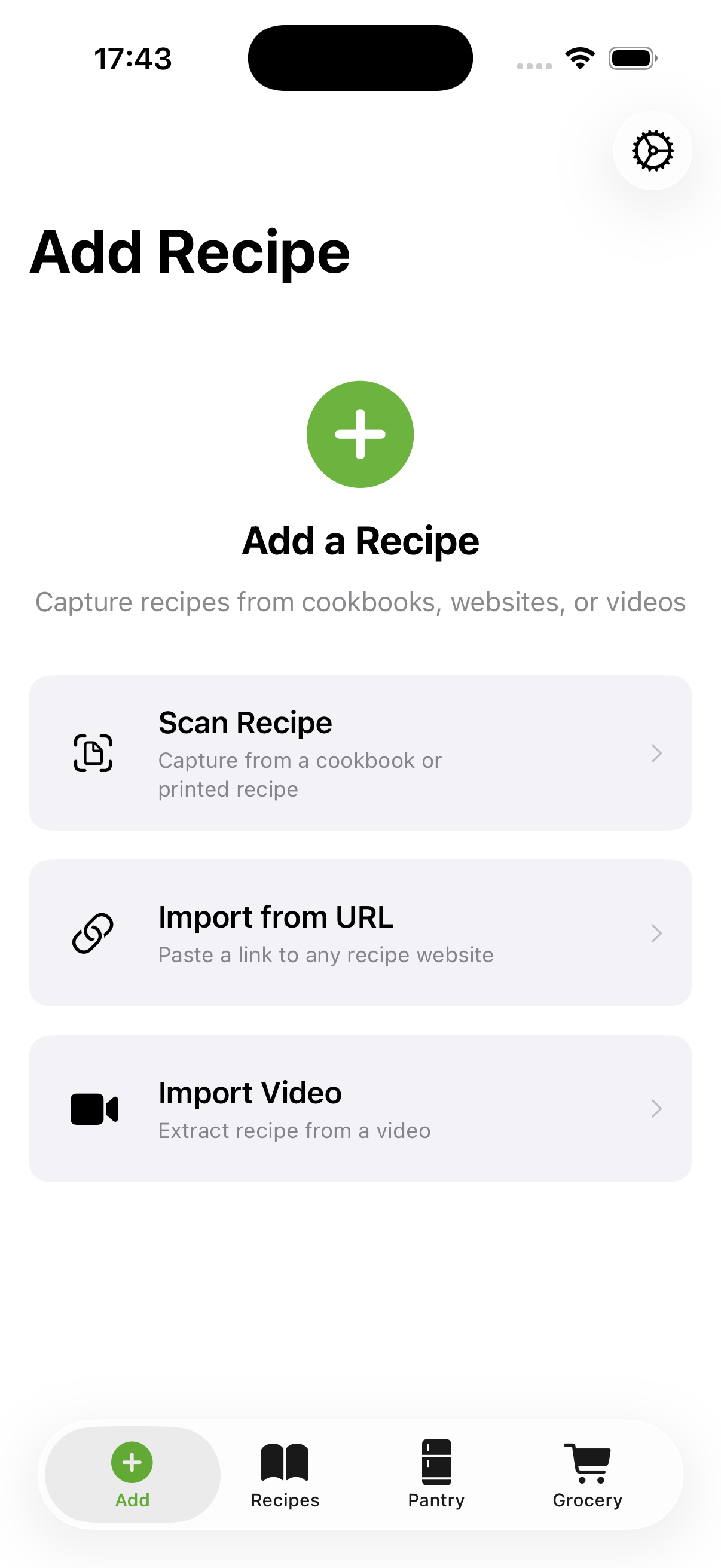
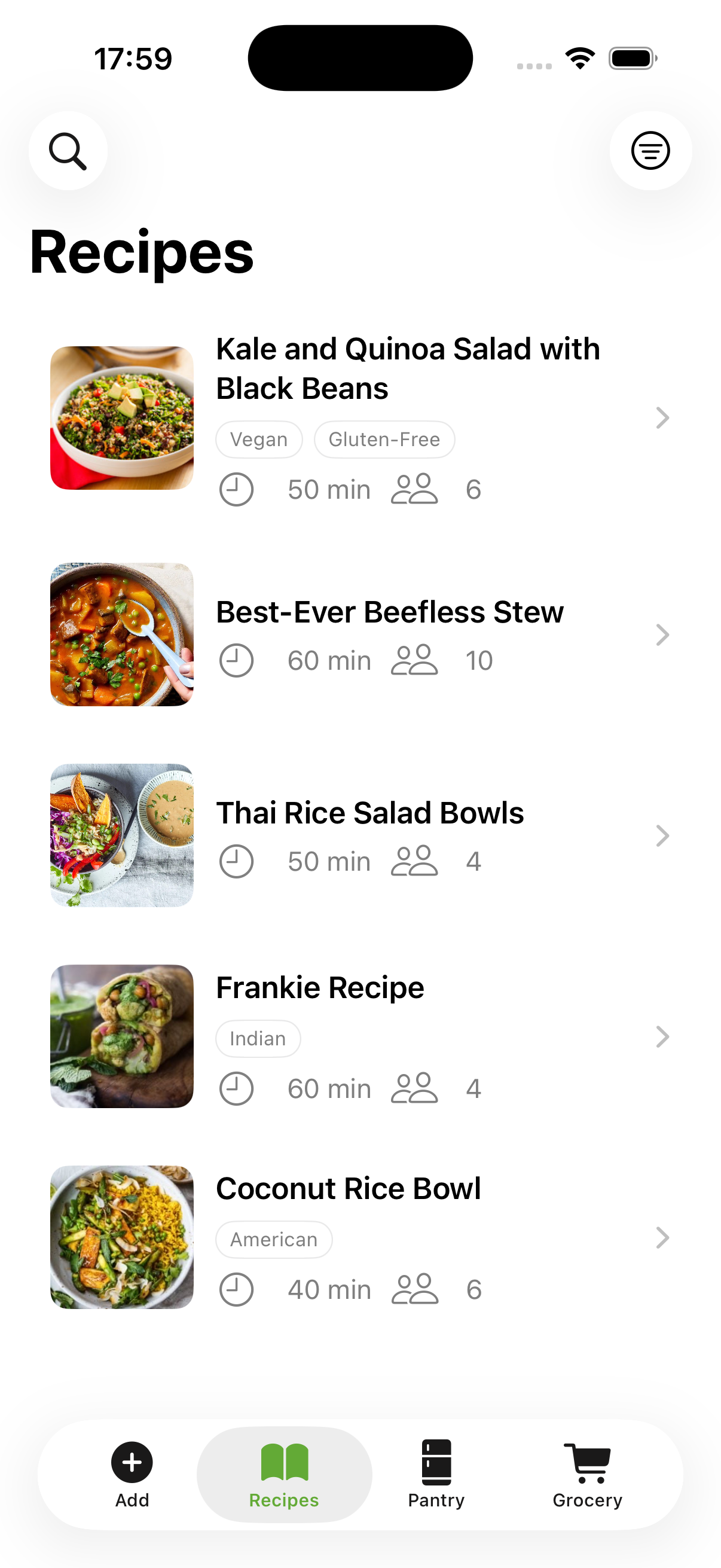
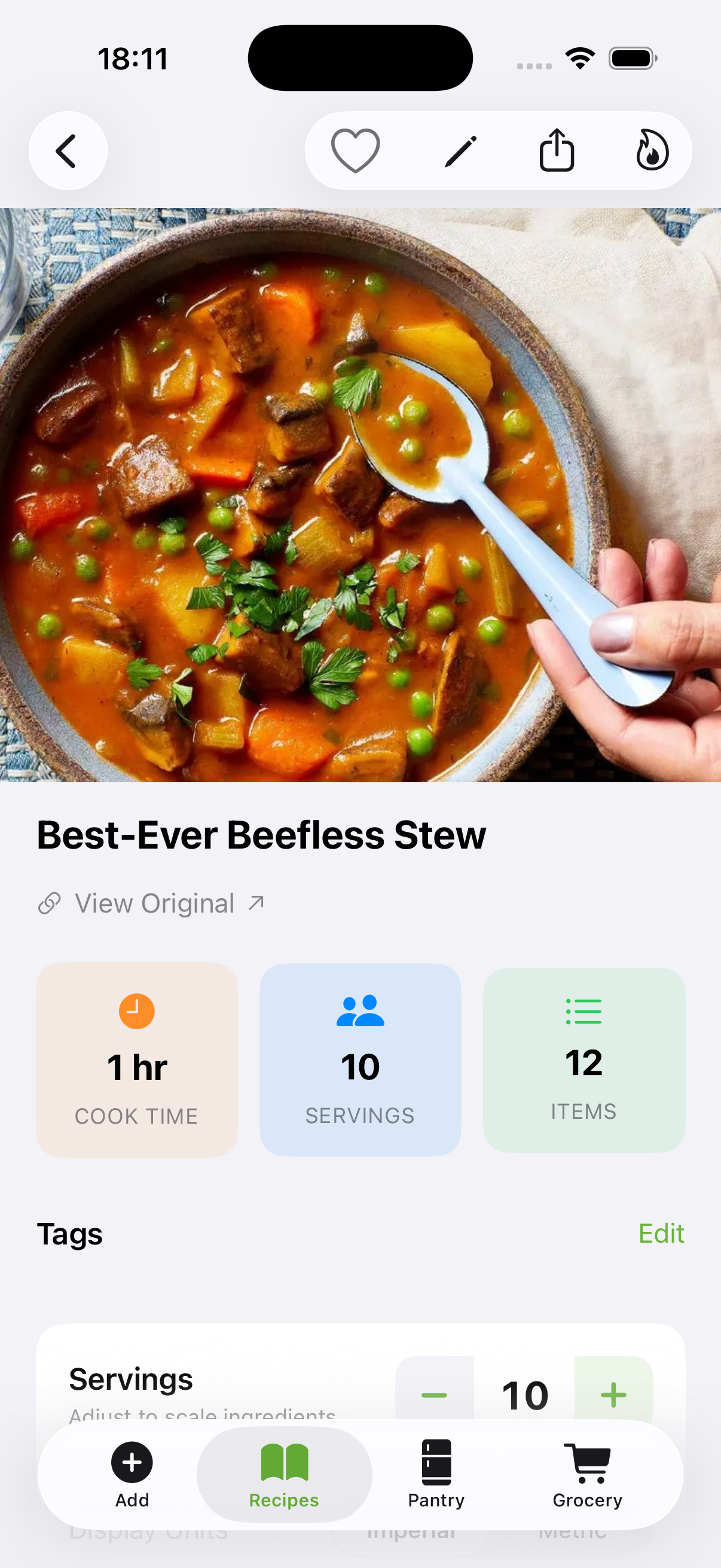
CookFlic is an iOS app that turns recipe chaos into tonight's dinner. It captures recipes from anywhere — scan a cookbook with your camera, paste a URL from a food blog, import a video from YouTube, TikTok, or Instagram, dictate ingredients by voice — and organizes them into a personal, searchable collection with AI-powered tagging.
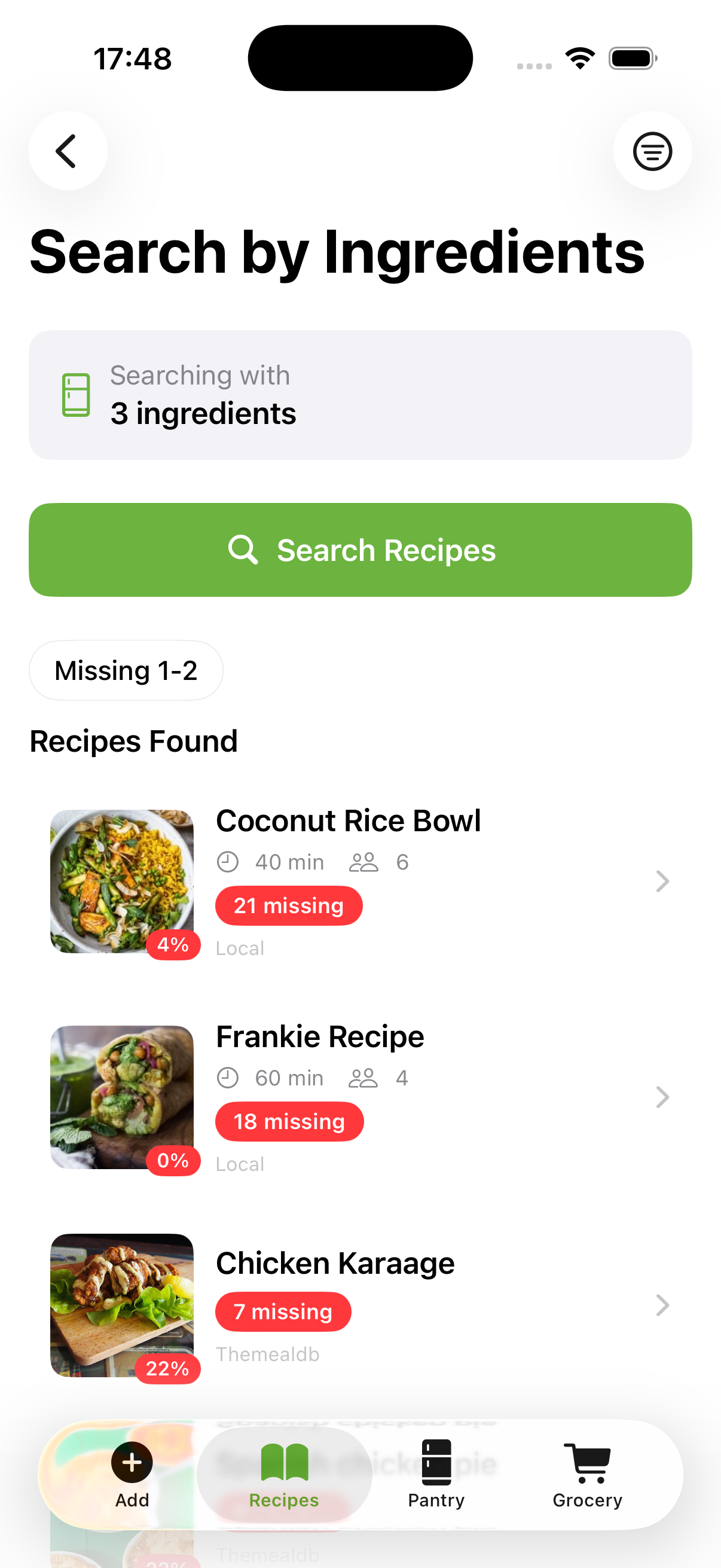
But collecting recipes is only half the problem. The other half is: what can I actually cook right now? CookFlic lets users photograph their fridge or speak what's on hand, then matches their pantry against their saved recipes with match scores. Missing two ingredients? One tap adds them to a grocery list.
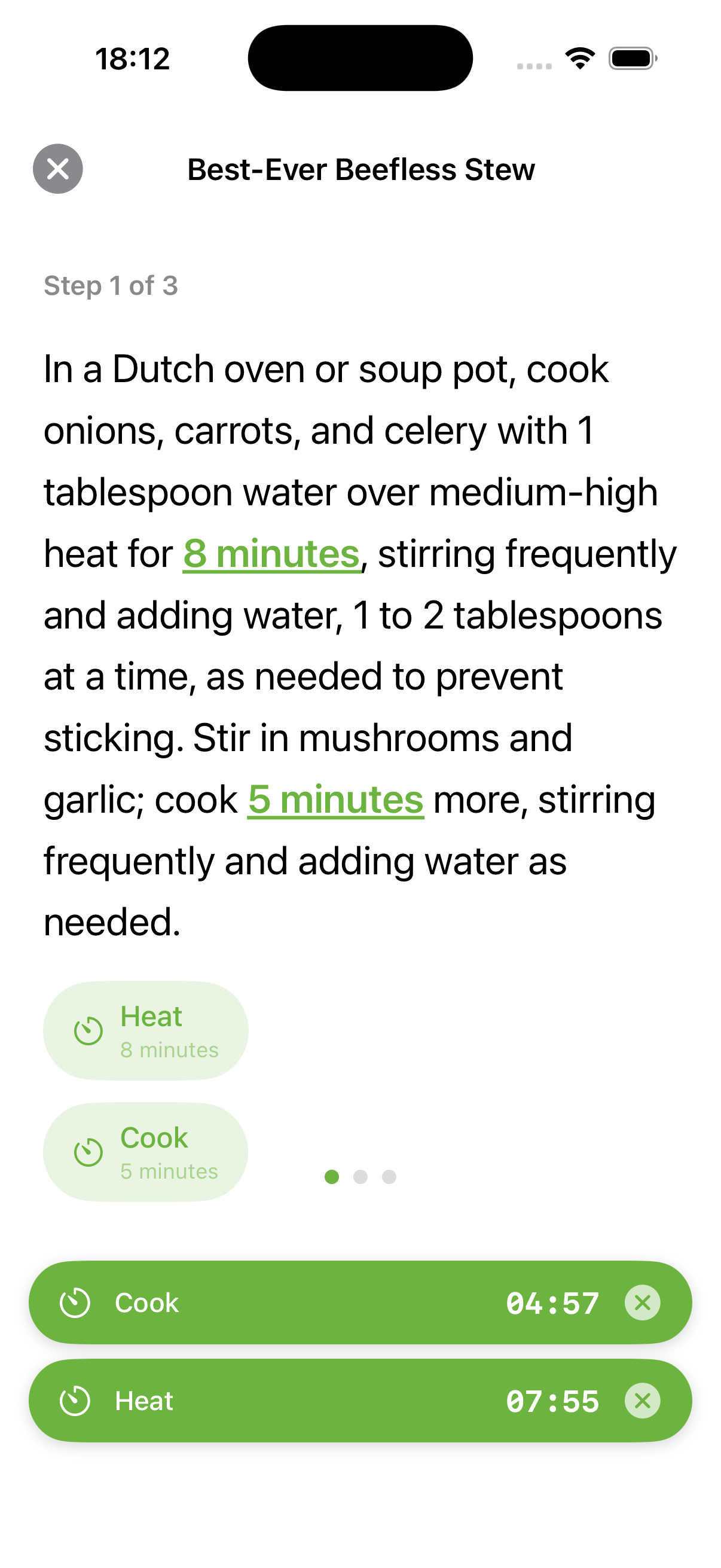
When it's time to cook, step-by-step mode shows large-text instructions with auto-detected timers — no more burnt garlic because you forgot to set a timer for "simmer for 12 minutes."
Key Features
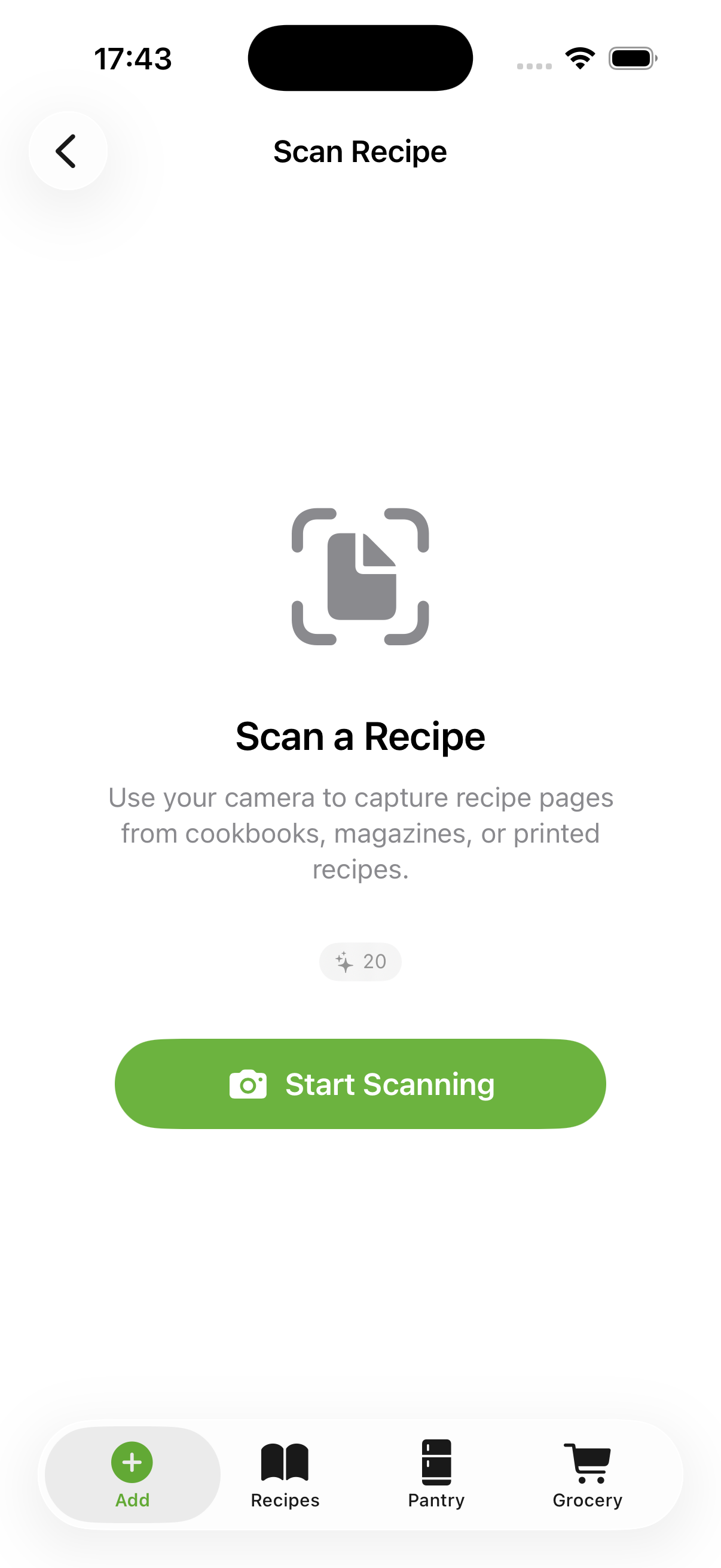
- Multi-source recipe capture: Camera scan (OCR), web URL import, YouTube/TikTok/Instagram video extraction, voice input, manual entry
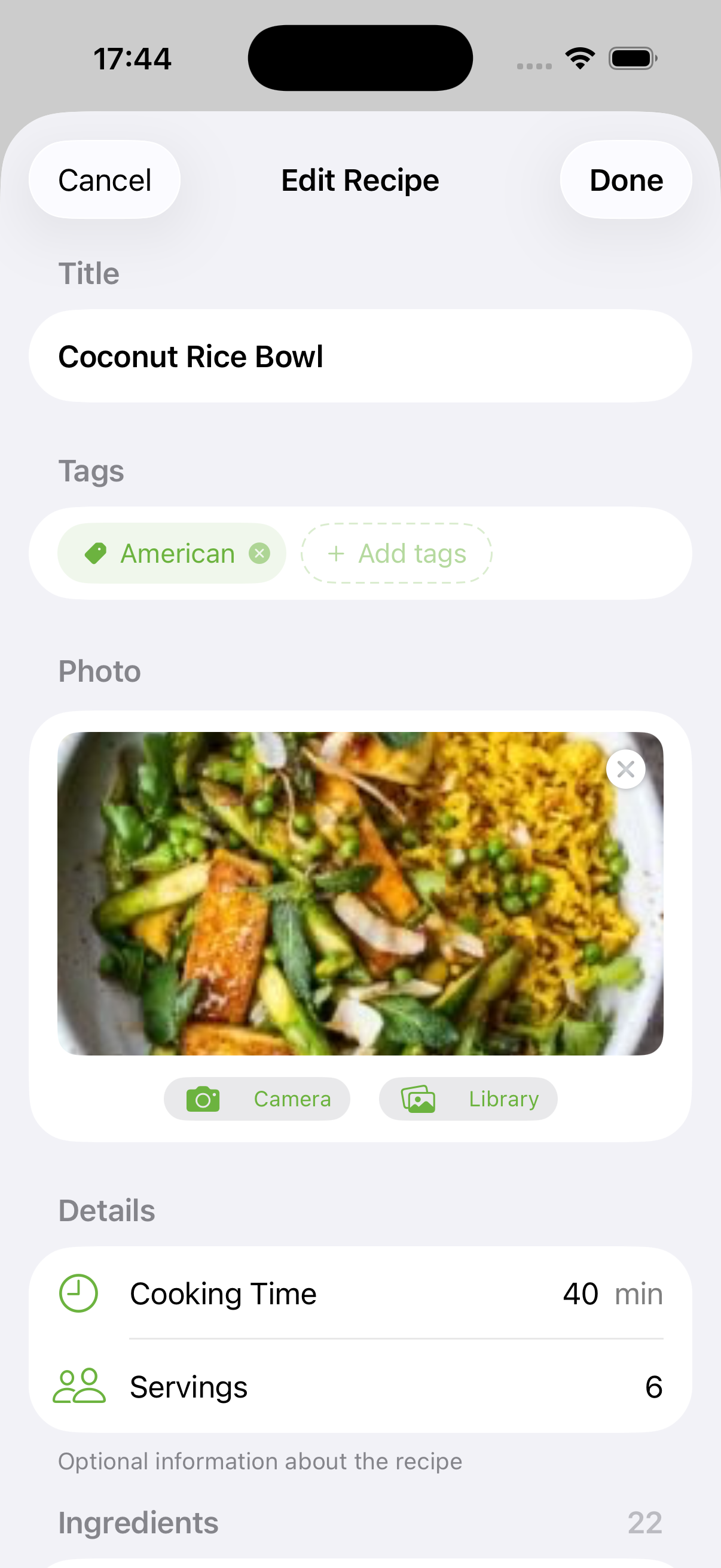
- AI-powered organization: 60+ auto-assigned tags across cuisine, dietary, occasion, and method categories
- Pantry tracking: Photograph fridge contents or speak ingredients to track inventory
- Smart recipe matching: Find cookable recipes based on available ingredients with match scoring
- Step-by-step cook mode: Hands-free cooking with auto-detected timers and screen stay-on
- Grocery list: One-tap missing ingredient addition with category organization
- Hybrid AI: On-device Apple Intelligence (free) + cloud AI for all devices (pay-per-use)
How I Built It
Tech Stack
- SwiftUI + SwiftData on iOS 26+ with Swift 6
- Foundation Models (Apple Intelligence) for on-device recipe parsing and tagging — zero server cost on iPhone 15 Pro+
- Gemini 2.5 Flash (via AIProxy) for video recipe extraction from YouTube, TikTok, and Instagram
- GPT-4o-mini (via AIProxy) for cloud AI fallback on devices without Apple Intelligence
- RevenueCat SDK for subscription management and consumable in-app purchases
- SwiftSoup for HTML recipe extraction from web URLs
Architecture
The app follows MVVM with clean domain separation — SwiftUI views observe @Observable ViewModels, which delegate to protocol-based services and SwiftData repositories. A hybrid AI architecture routes between on-device (Foundation Models) and cloud (GPT-4o-mini / Gemini) based on device capability and user preference, keeping server costs minimal while supporting every iOS 26 device.
RevenueCat Integration
CookFlic uses RevenueCat for both revenue streams:
Subscription (App Access)
- Monthly: $0.99/month
- Yearly: $9.99/year (~16% savings)
- 30-day free trial with a hard paywall after expiry
- Trial countdown banner during the last 7 days
- Dynamic CTA: "Start Your Free Trial" vs "Subscribe Now" based on eligibility
Flics (Consumable AI Credits)
Cloud AI has real per-request costs, so CookFlic uses "flics" — a simple credit currency:
- 20 free lifetime flics for every user (enough for ~20 recipe scans or a few video imports)
- Purchasable packs: 100, 200, 500, 1,000 flics with volume discounts up to 30%
- Cost per operation: 1 flic for scans/imports, 15 flics for video extraction
This dual model means users on iPhone 15 Pro+ who use on-device AI pay only the subscription. Heavy cloud users or those on older devices pay proportionally to their usage. The business isn't subsidizing unlimited API calls at $0.99/month.
Challenges
Video Recipe Extraction
Extracting structured recipes from social media videos turned out to be one of the most interesting technical challenges. Each platform has its own quirks:
- YouTube: Gemini 2.5 Flash can process the video file directly — the most straightforward path
- TikTok: Server-side HTML fetching works for caption extraction, but content blocking is unpredictable
- Instagram: Server-side requests are completely blocked.
Language detection adds another layer — recipe videos in Spanish, Japanese, or any other language need to be recognized and preserved rather than mangled through English-assumed parsing.
Making the Video
I learned that I'm no Spielberg. Building the app was the comfortable part — sitting with code, solving problems, shipping features. Making the demo video was an entirely new challenge. Communicating what the app does in a clear, concise, and engaging way on camera turned out to be its own skill set.
What I Learned
- RevenueCat's real-time streaming (
customerInfoStream) makes subscription state management dramatically simpler than polling or relying on Apple's delayed reports - On-device AI is a game changer for economics — Foundation Models on iPhone 15 Pro+ mean most users cost nearly nothing to serve
- Instagram is hostile to automation
- SwiftData many-to-many relationships have a massive performance trap: loop-appending to a relationship is 30-700x slower than batch assignment
- Hackathon video production is a skill unto itself — respect to content creators who do this daily
What I'm Proud Of
I'm proud of making it happen and participating in the hackathon. Four weeks (two to me, joined late) to go from zero to a fully functional, monetized iOS app with AI-powered recipe extraction from five different sources, pantry management, cook mode with auto timers, and a dual monetization model — it was ambitious, and it shipped.
The app solves a real problem for a real person in my life. Every feature was validated against a simple question: would this help my wife cook dinner tonight? That kept the scope focused and the product honest.
CookFlic isn't a demo or a prototype — it's a complete product and a monetization system that works.
Links
- Website: www.cookflic.com
- Hackathon: RevenueCat Shipyard: Creator Contest

Log in or sign up for Devpost to join the conversation.