Inspiration
Food waste is a growing problem in the United States. With 43% of this waste occurring in households, which is more than restaurants and grocery stores combined, it's clear that finding ways to use up what we already have can make a big difference. As new chefs ourselves, we’ve experienced firsthand how easy it is for leftovers and spare ingredients to pile up. CookbookAI solves this, helping you reduce food waste and saving you time. Just snap a picture of your fridge, and CookbookAI instantly generates delicious recipes based on what you already have. No more searching online or wasting food — we make cooking easier, faster, and more sustainable!
What it does
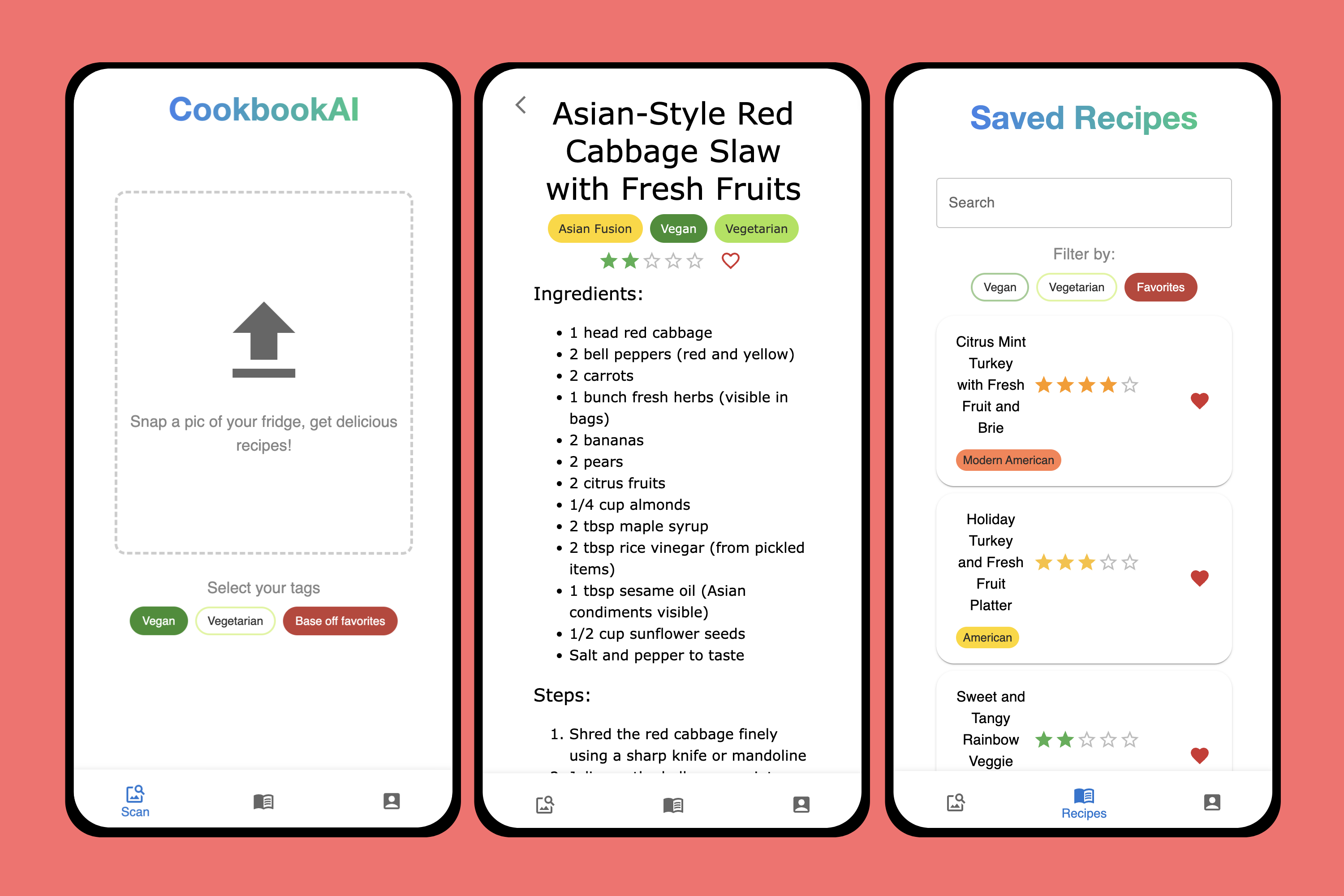
Making the most of your produce has never been easier! By leveraging the power of artificial intelligence, CookbookAI scans your refrigerator for ingredients and curates delicious recipes. Every unique recipe is tagged with dietary and cuisine information, as well as given a difficulty rating based on the recipe’s complexity. Save previously generated recipes for later and search for your favorites using CookbookAI’s tagging feature. CookbookAI learns from your favorite recipes to tailor recipes to your diet and needs, helping you find a personalized recipe faster.
How we built it
CookbookAI combines a Flask backend with a React frontend for a responsive and seamless user experience. For generating text based on images, we leverage Anthropic’s Claude, while embeddings are handled through the Voyager API. These embeddings are stored in MongoDB Atlas, which powers our retrieval-augmented generation (RAG) system. This allows users to generate recipe suggestions based on specific tags, such as vegetarian, vegan, and favorites.
Challenges we ran into
Creating CookbookAI came with challenges, especially narrowing the project’s scope. Our mission was clear: reduce food waste. However, it took some trial and error to translate that into a practical solution. We explored several features but ultimately chose CookbookAI because of its clear purpose and niche. We also faced technical challenges, particularly with linking the frontend to the backend API and managing the runtime of our LLM. Initially, our queries took too long to process, so we had to shorten and optimize the query parameters to improve performance and ensure a smoother user experience.
Accomplishments that we're proud of
We’re proud to have integrated Claude’s embeddings and MongoDB’s vector search into the RAG component of our app. This accomplishment allows Cookbook AI to provide each user with personalized recipe recommendations, delivering a unique and engaging experience based on their individual preferences.
What we learned
The process of building CookbookAI taught us valuable lessons about both the technical side of building a project and the practical side of putting an idea into practice. Learning how to integrate new tools such as Anthropic’s Claude API and Retrieval-Augmented Generation into our work was critical in creating the best version of CookbookAI. From experimenting with features and researching different methods of optimization, we discovered more ways of improving LLM responses to better serve the customer. Overall, using all of the various technologies (Google Cloud, MongoDB, etc.) proved to be an eye-opening experience, showing us how to manage every aspect of a project and follow an idea all the way through to completion.
What's next for CookbookAI
Next for CookbookAI, we plan on providing more platform support by creating a mobile app to make it even more accessible and convenient for users. We also intend to enhance the tagging and filtering features to provide more nuance and customization to our recipe recommendations. Additionally, we aim to fully integrate the profile information, allowing for even more personalization and information for users, such as the ability to view and share photos and information about their favorite recipes.
Built With
- anthropic-api
- css3
- docker
- flask
- google-cloud
- javascript
- mongodb
- mongodb-atlas-vector-search
- next.js
- python
- react

Log in or sign up for Devpost to join the conversation.