Inspiration
Every home cook knows the moment: standing in front of an open fridge at 6pm, staring at a random mix of half-used vegetables and leftovers, with no idea what to make — so it's takeout again, and the food quietly goes to waste. Apps like Supercook solve ingredient-based search but skip planning and expiry. BigOven plans meals but doesn't know what's in your fridge. Nothing starts from what you own and follows it all the way through to a wasted-nothing week. That gap became Spud.
How I built it
Spud is built with React Native + Expo — chosen over Flutter because the React mental model (components, hooks, context) transferred directly, letting me move fast without relearning a framework. The core loop:
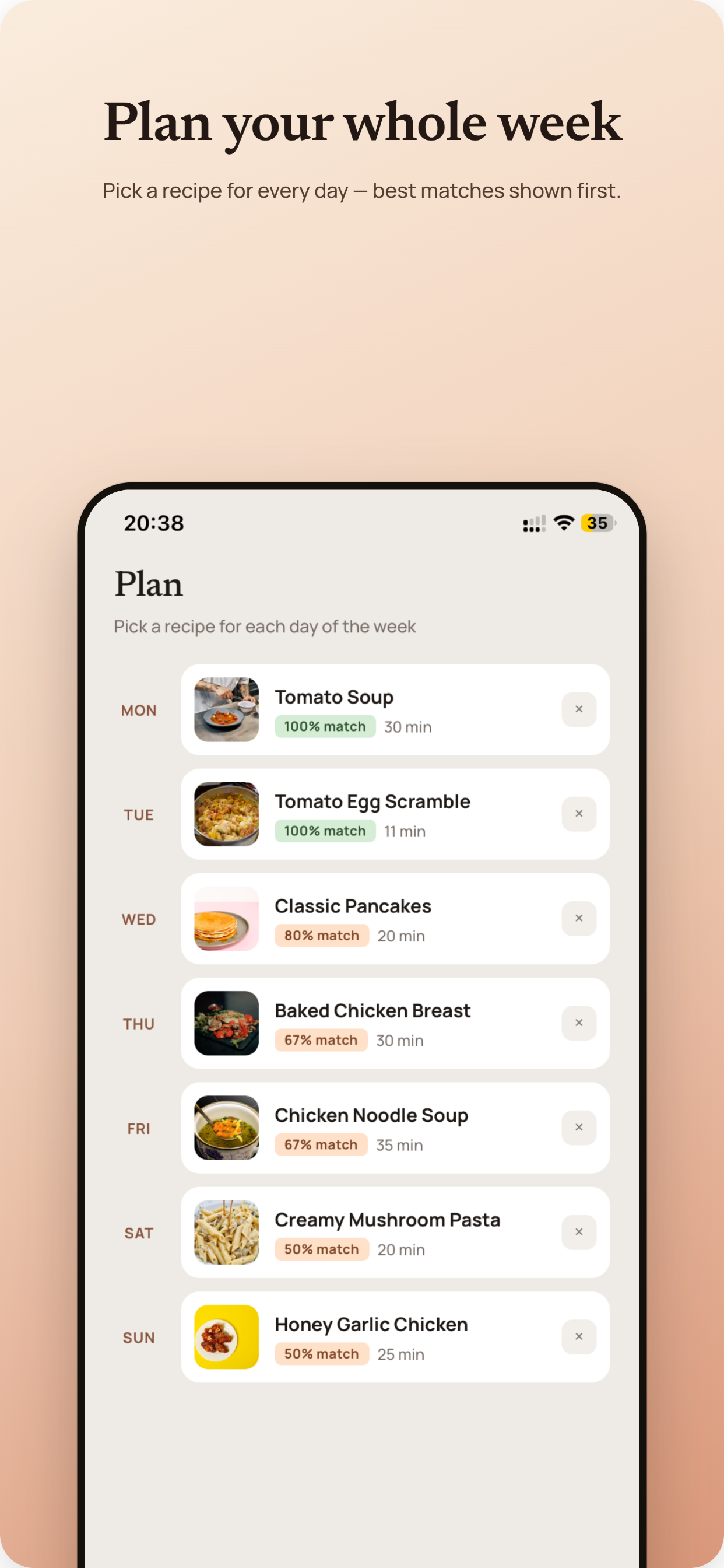
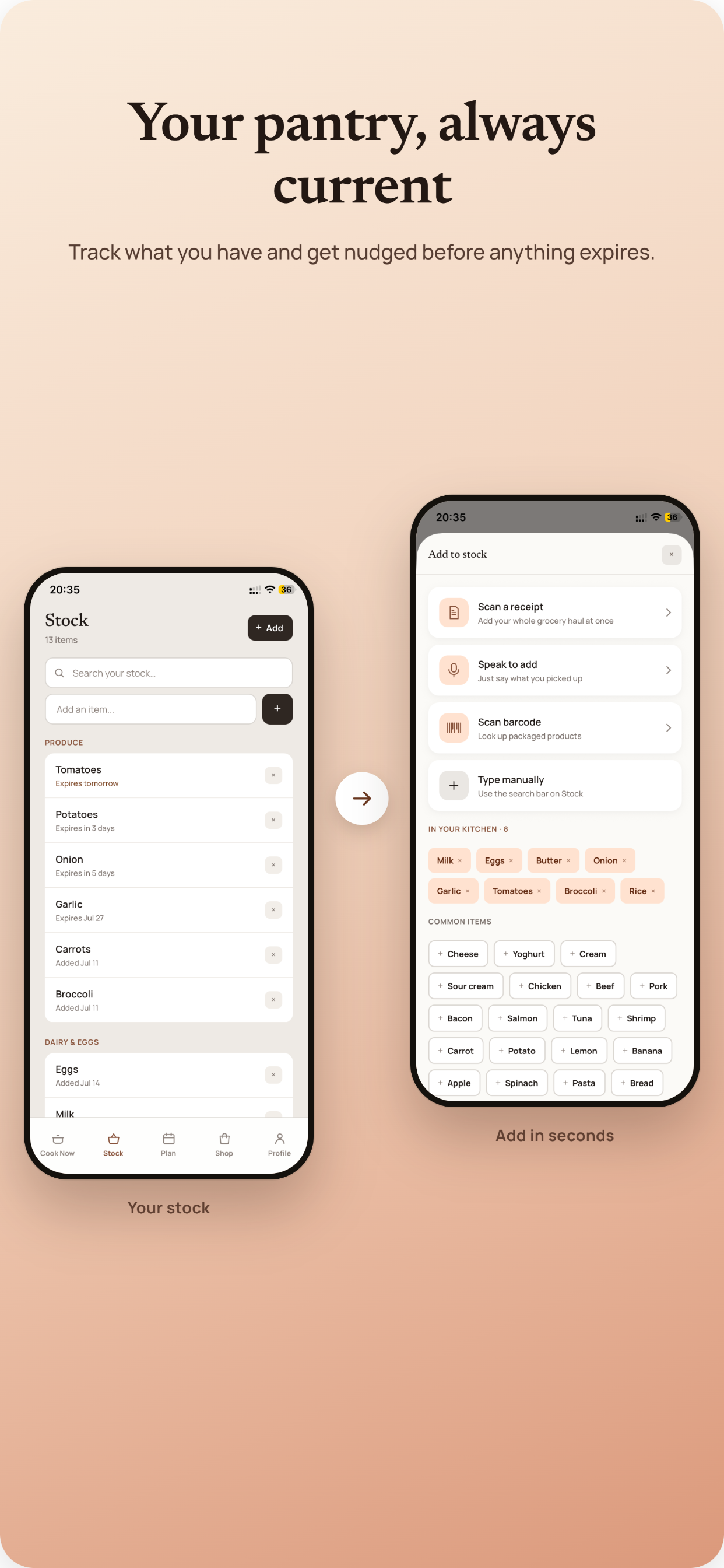
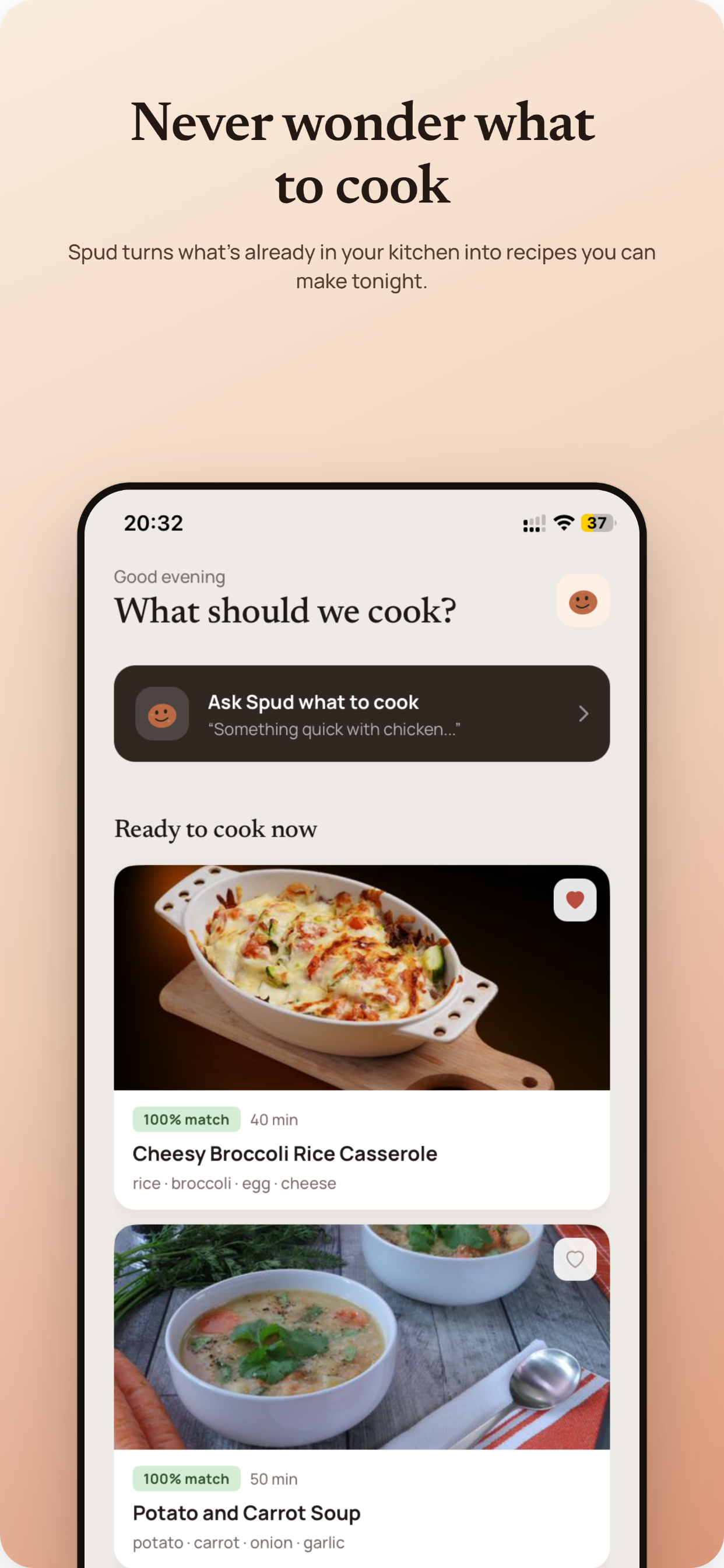
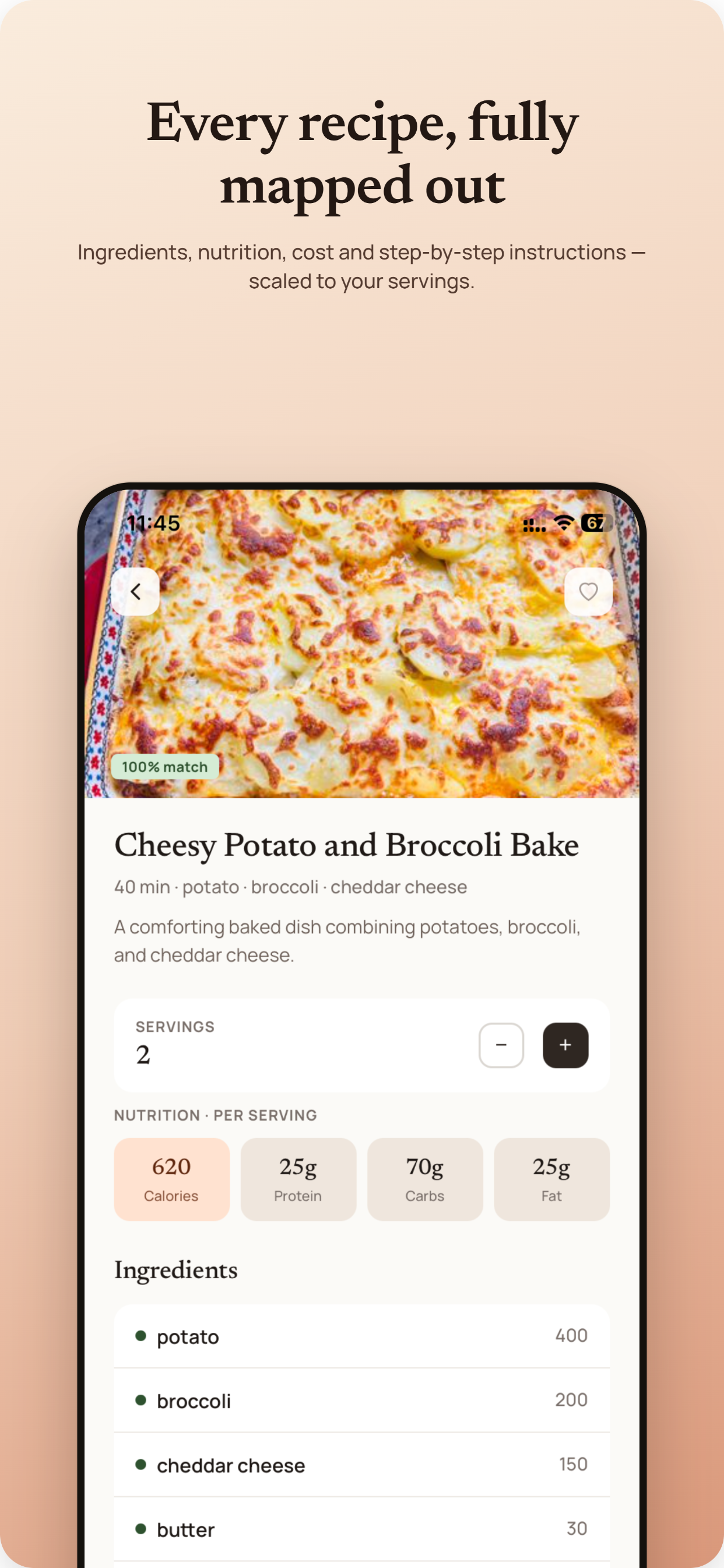
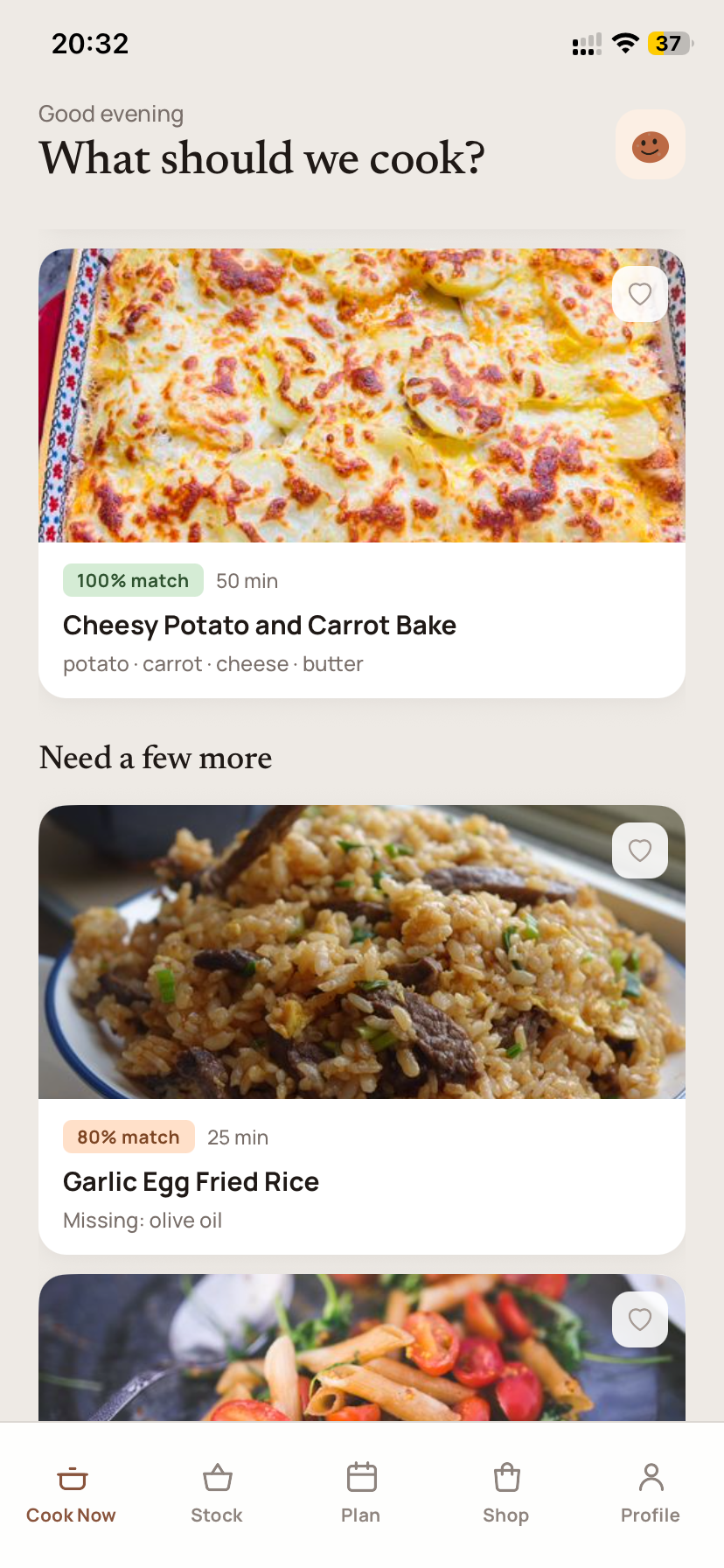
Ingredient input — manual entry plus barcode scanning via Expo Camera and the Open Food Facts API, with a persisted local inventory. Matching — recipes are ranked by how much of their ingredient list the pantry satisfies: 100% matches surface first; near-matches show exactly what's missing.
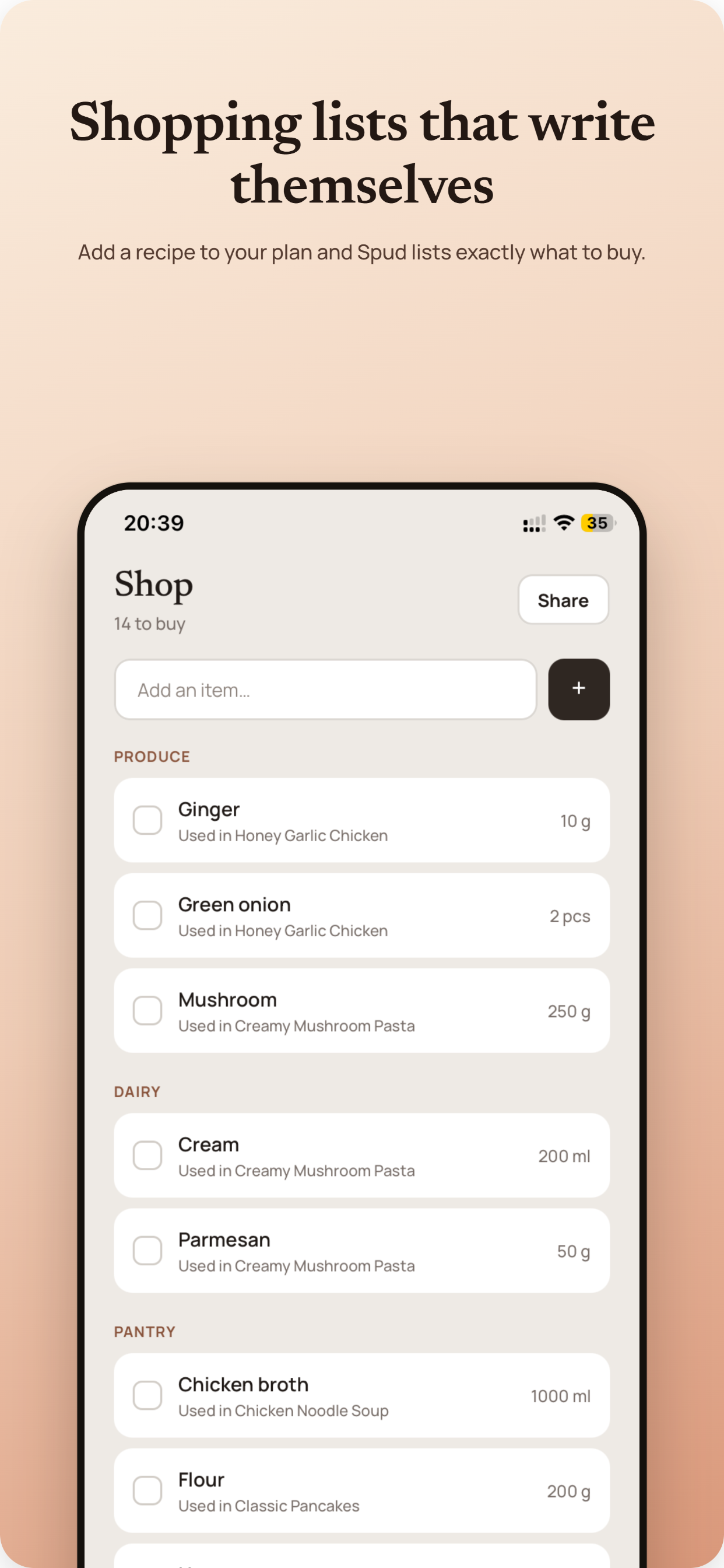
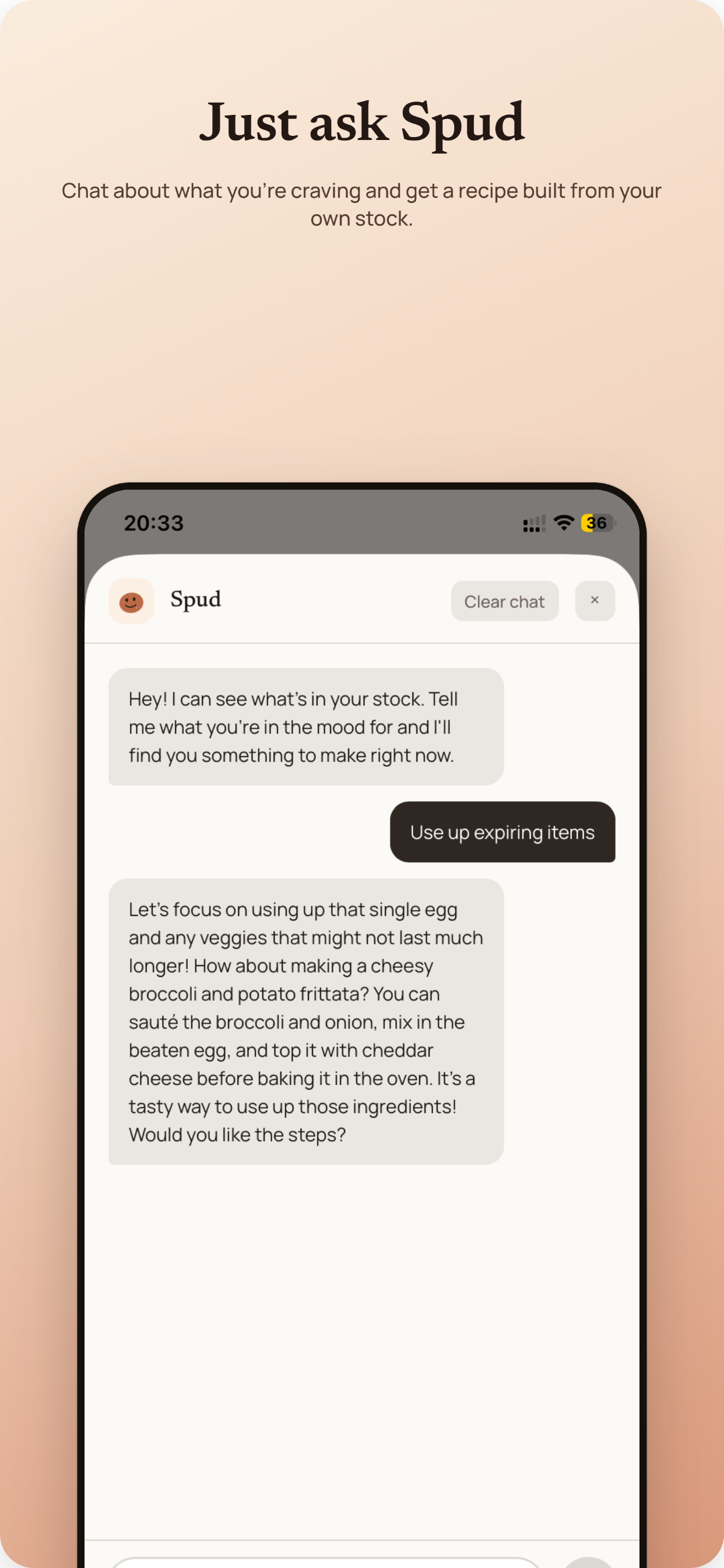
Waste alerts — ingredients expiring within 2 days get flagged and boost the ranking of recipes that use them. Weekly planner + shopping list — a Mon–Sun planner favors meals that reuse the same ingredients across the week, then generates a shopping list containing only the gap between what's planned and what's already owned. Supabase handles auth, database, and storage. i18next was wired in from day one, even shipping English-only, so expansion later doesn't mean retrofitting every string.
Challenges I faced
Platform quirks that only show up on real devices — Android's edge-to-edge display collided with modal header buttons, silently making primary actions unreachable; the fix was moving CTAs into the form body. Voice input for pantry entry worked in theory but silently failed until I realized it needed a full dev-client rebuild rather than the standard fast-iteration loop. Saying no to features — the hardest discipline wasn't building things, it was cutting them. AI-generated recipes, nutrition tracking, and a fridge photo scanner were all deliberately deferred so the core loop (input → match → plan → shop) could be validated first.
What I learned
The ingredient-matching logic turned out to be far trickier than the simple percentage formula suggests — real pantries are messy, with inconsistent naming, units, and substitutable ingredients, so getting the ranking to actually feel right took real tuning, not just a formula. I also learned how much of the effort in a mobile app lives outside the "core" feature — platform quirks, native rebuilds, and edge cases that never show up until you're on a real device.
Built With
- expo.io
- i18next
- react-native
- revenuecat
- sentry
- supabase
- typescript

