-
-
Thumbnail
-
Convrt Cover App
-
Covrt App
-
Settings
Inspiration
Those in high risk domestic environments often have to tread extremely carefully, including what apps are on their devices. And with women making up around 73% of domestic cases, we aimed to develop a solution where we addresses both of these issues while still allowing the user to communicate their emergency.
What it does
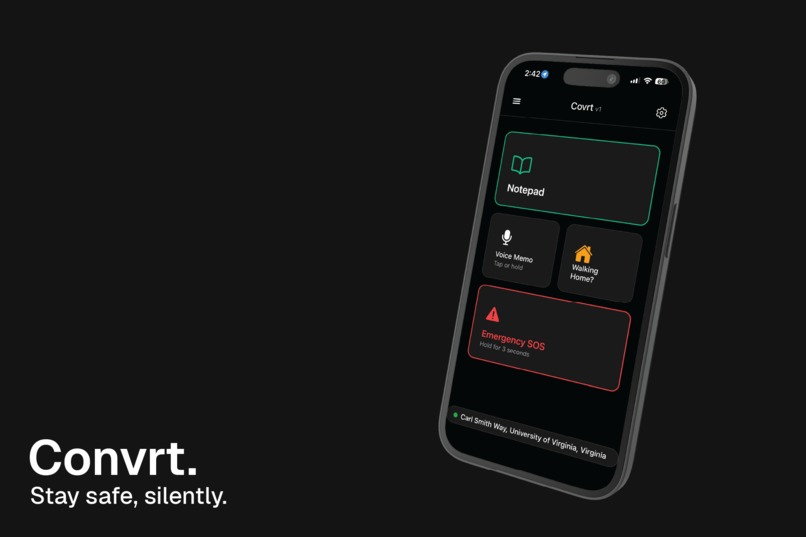
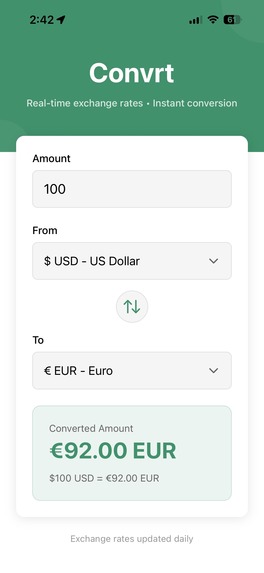
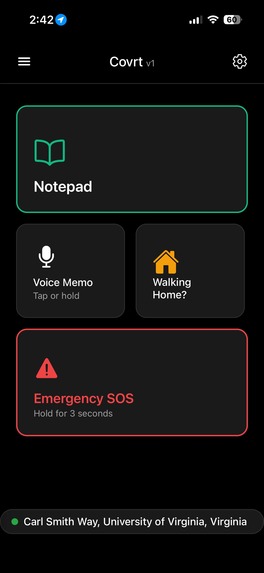
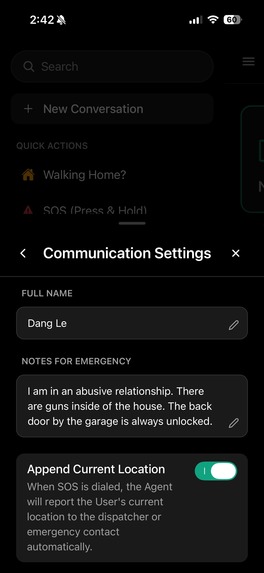
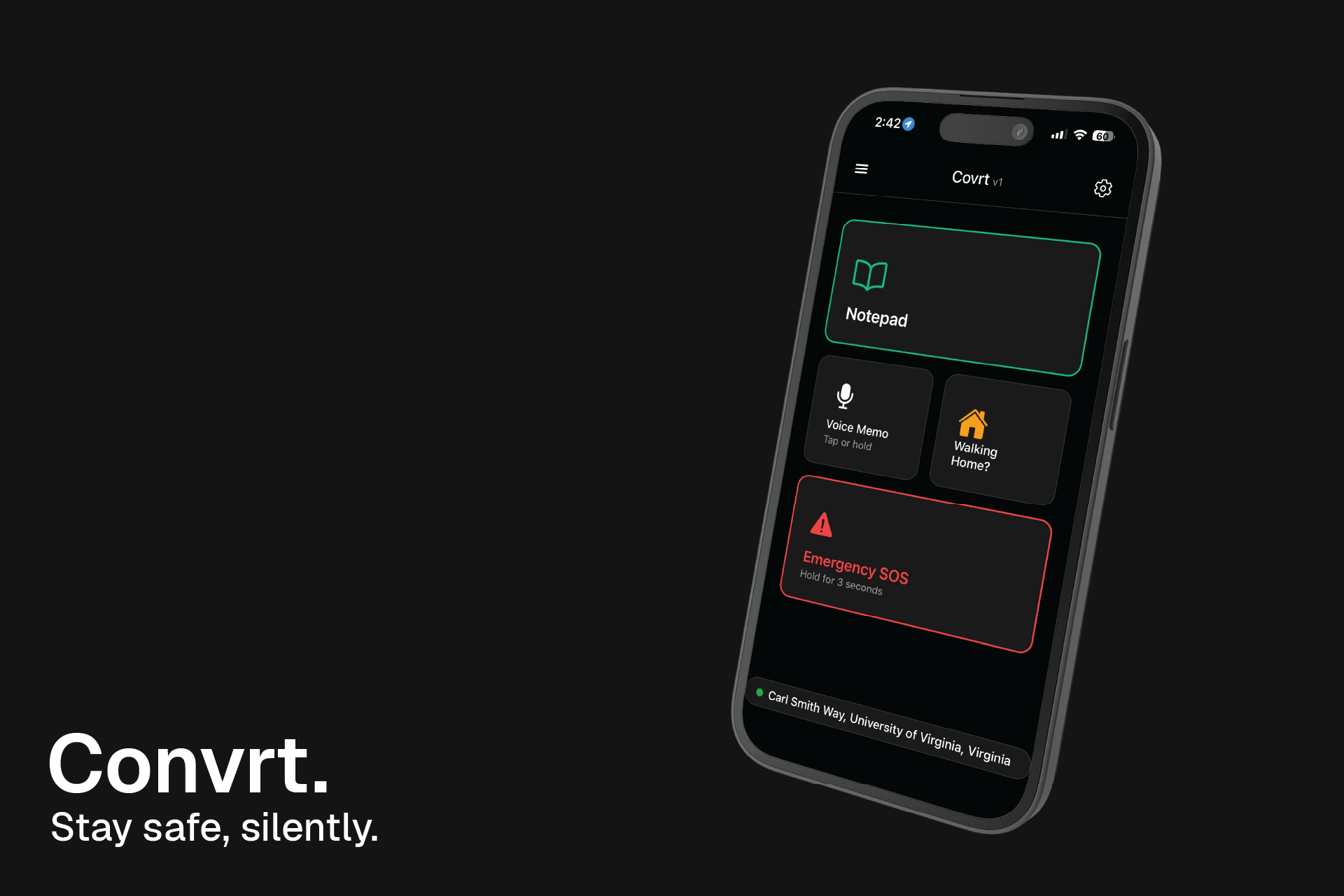
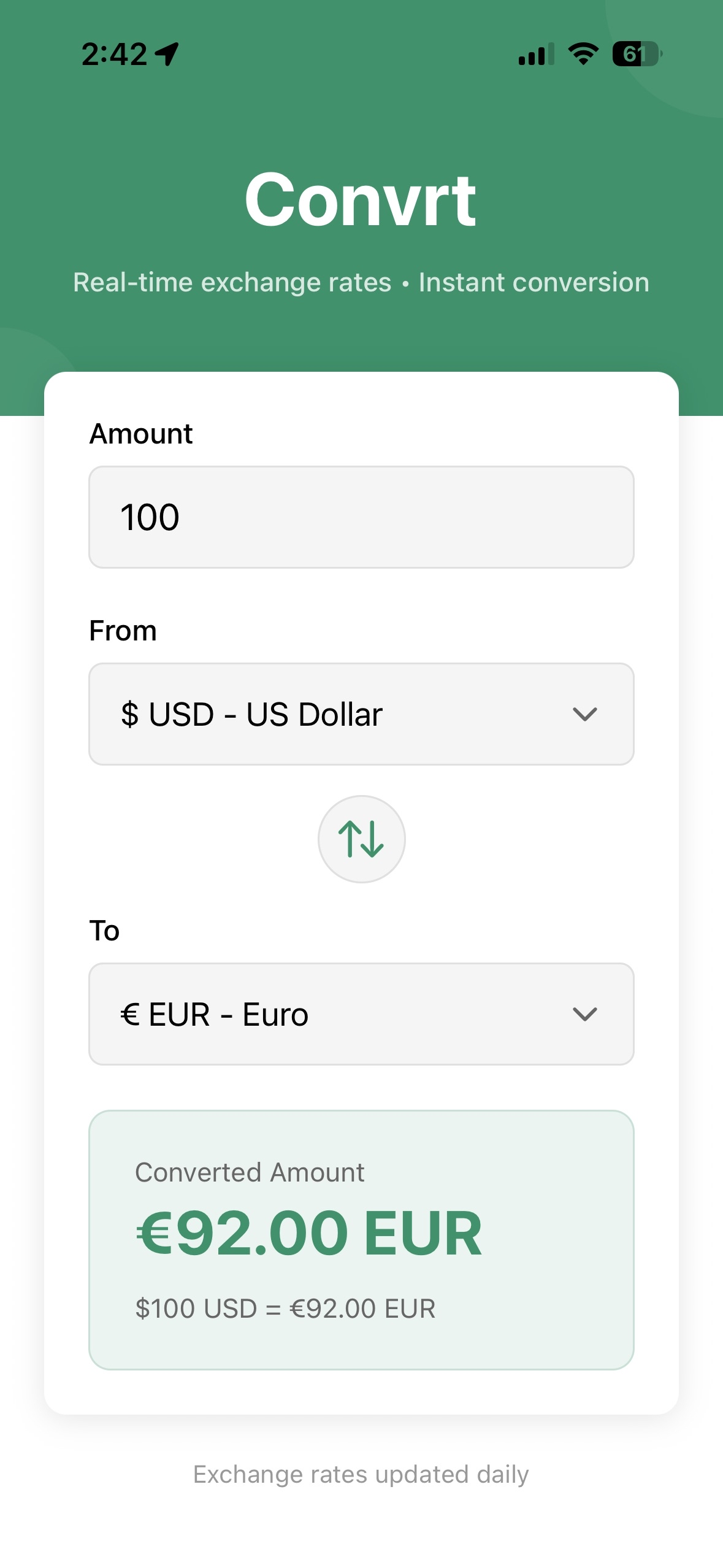
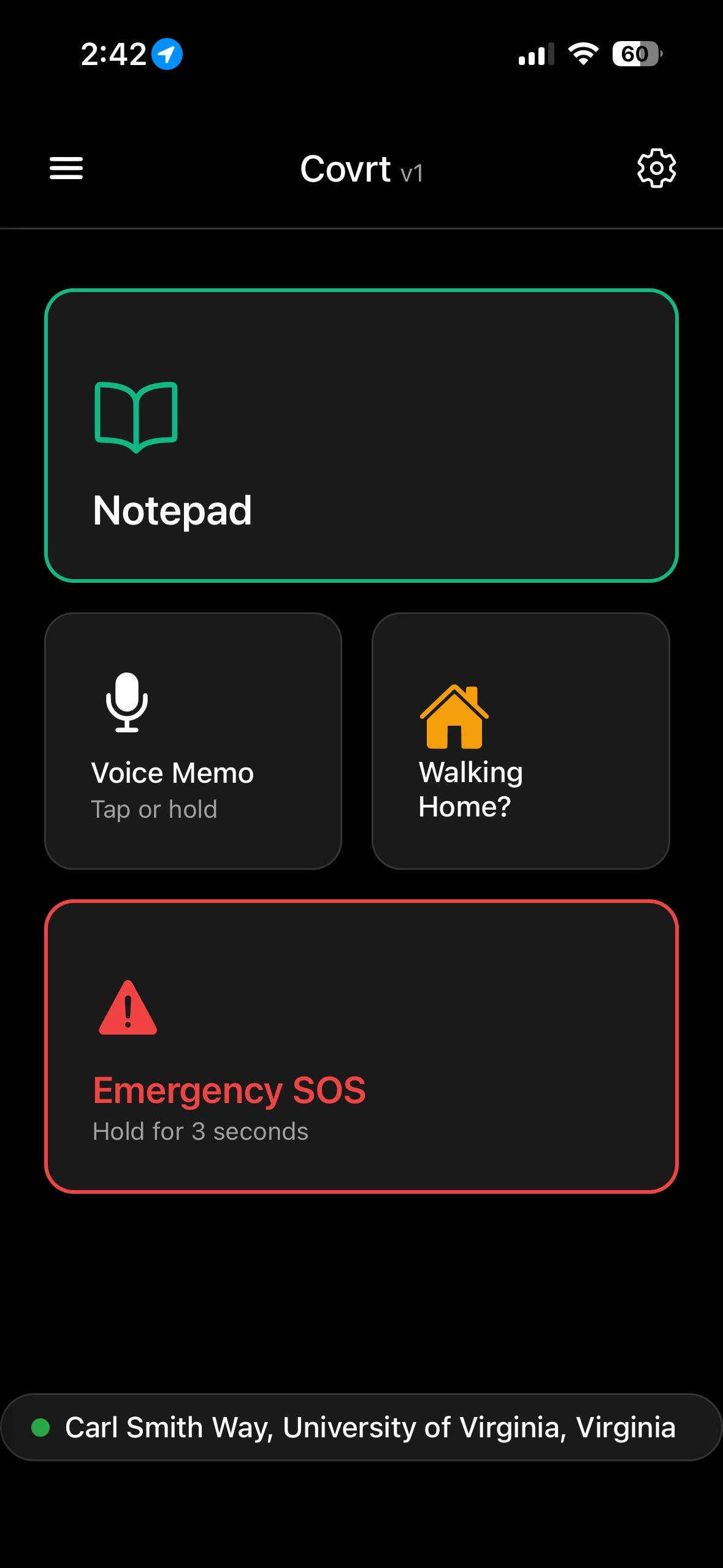
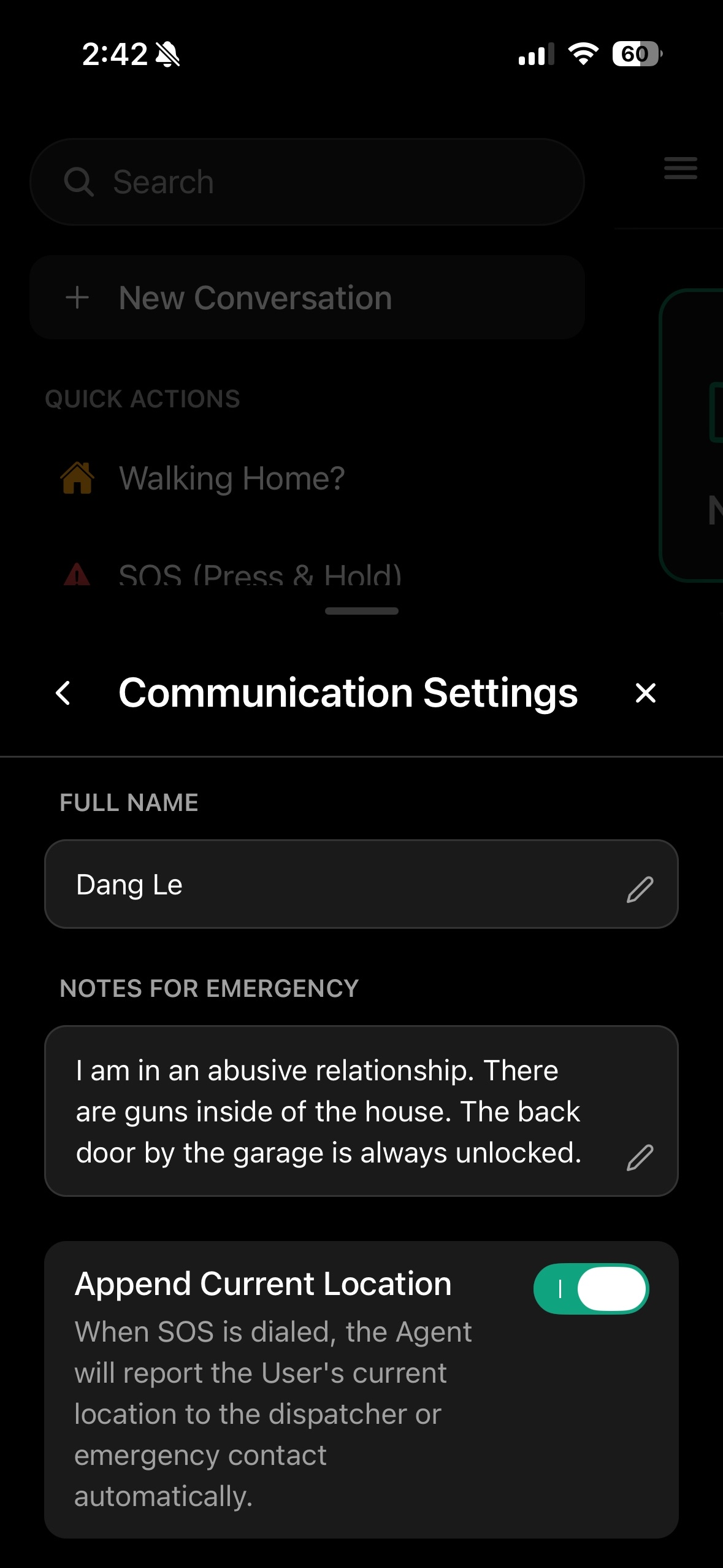
At first glance, the currency converter app (Convrt) acts as a cover for Covrt, the true purpose of this app. By entering a secret pin into the currency converter, users can access a hidden settings page to configure their emergency contact information, such as notes for the emergency contact and a phone number of the emergency contact. Once contact information has been set, users can quickly and discretely dial their emergency contact and let an automated AI agent handle the call, such as relaying live location data and emergency contact notes. This app is works on IOS and Android.
How we built it
For the core app, we used a combination of React Native and Google Firebase for front/backend. The project is wrapped in an expo go project to build APKs (Android) and IPAs (IOS). We then used ElevenLabs agents for the call speaker and Twilio for call invocation.
Challenges we ran into
Our biggest challenge was getting the ElevenLabs agent configured properly. For example, at one point, the call agent would infer the user's situation based off of their notes and provide inaccurate information to the emergency contact. The agent at one point was also confused with its task, asking the emergency contact if they were in trouble, asking for addresses, etc. Another challenge we ran into was properly integrating Apple's UI elements with React Native and Expo Go. For example, some React Native elements wouldn't react to Apple's keyboard.
Accomplishments that we're proud of
We successfully built a working prototype of Convrt, a covert emergency relay system that can automatically place calls through AI voice agents and communicate vital information on behalf of users in distress.
We integrated Twilio and ElevenLabs to enable real-time voice synthesis and dynamic variable injection, allowing the AI to convey personalized and context-aware information such as user location, medical or behavioral context, and emergency contacts.
Our team also achieved a seamless location fetching flow from the mobile app (Expo for iOS) to the backend call system, making it possible to forward a user’s exact position in seconds.
What we learned
Throughout this project, we learned how to get different tools working together: Expo for the app, Twilio for the calls, ElevenLabs for the voice, and Firestore in Firebase for storing user data securely.
One of our biggest challenges was getting ElevenLabs and Twilio to communicate properly, the audio stream over WebSocket kept breaking because of mismatched formats. After a lot of debugging, reconfiguring codecs, and testing different stream types, we finally got it working smoothly, allowing real-time AI voice responses to flow seamlessly through Twilio’s system.
What's next for Convrt
We plan to extend Convrt beyond voice calling:
Accelerometer detection: Integrate device sensors to detect falls, sudden impacts, or physical abuse, automatically triggering Emergency SOS or alerting emergency contacts.
SMS & silent alerts: Add text-message support to reach contacts if calls fail or the user cannot speak.
Customizable covert modes: Offer selectable mock interfaces (e.g., a calculator or news app) to discreetly mask the emergency system during high-risk situations.
AI-driven verification: Use behavioral context and past interaction data to reduce false alerts while maintaining rapid emergency response.
Built With
- elevenlabs
- expogo
- firebase
- javascript
- reactnative
- twiolio
- typescript


Log in or sign up for Devpost to join the conversation.