What problem are you trying to solve?
The people, skills, knowledge and opportunities we need often already exist around us, but the connections between them are missing.
University students may be looking for project teammates, exam-cram partners, hackathon collaborators, cofounders, mentors or organisations while suitable people are physically nearby but invisible to them.
Existing platforms usually organise people around profiles, feeds, groups or already-created events. They do not primarily capture what someone is trying to accomplish right now.
Converge addresses this coordination gap by making live human intent discoverable.
The problem isn’t missing blocks. It’s missing connections.
Who would use it?
Our initial target users are university communities, including:
- Students looking for project teammates
- Students forming exam-cram or study sessions
- Hackathon participants looking for complementary teammates
- Founders exploring potential cofounders
- Student societies and organisations looking for volunteers, mentors, speakers or project members
- People looking for spontaneous professional or social collaboration
The same model could later extend to startup ecosystems, workplaces and wider communities.
What is your prototype?
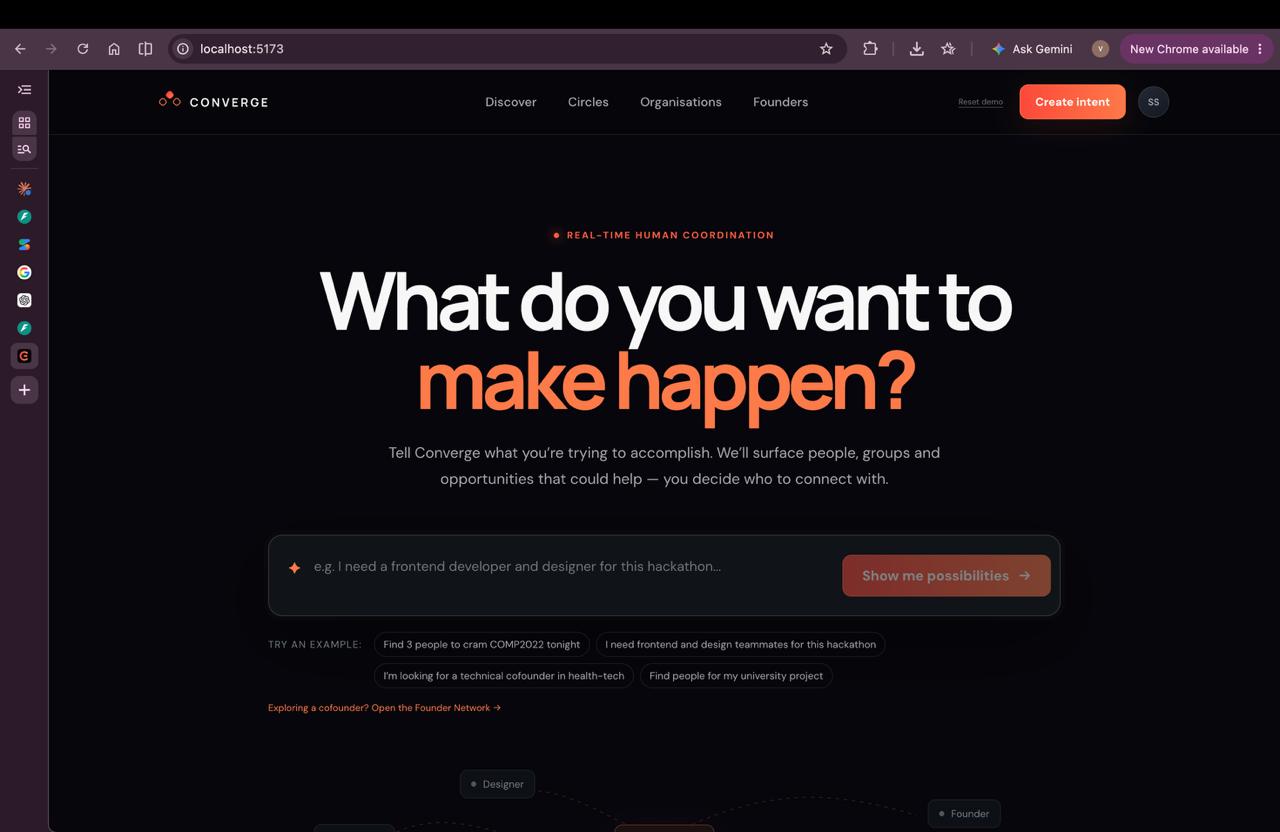
Converge is a real-time human coordination platform where users describe what they want to make happen, and the system surfaces relevant people, opportunities and potential group combinations.
For example, a user can enter:
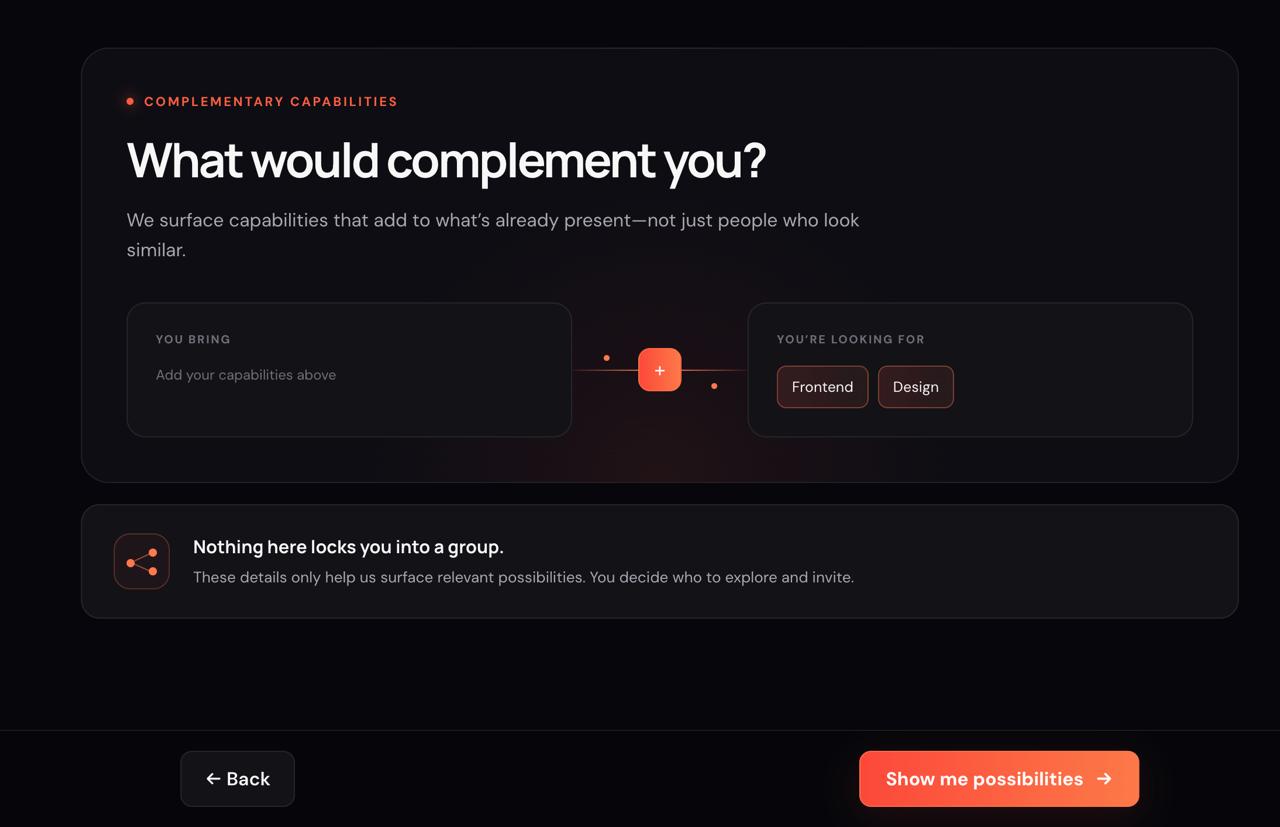
“I’m entering a hackathon. I can handle backend and machine learning, but I need frontend, UI/UX and pitching support tonight.”
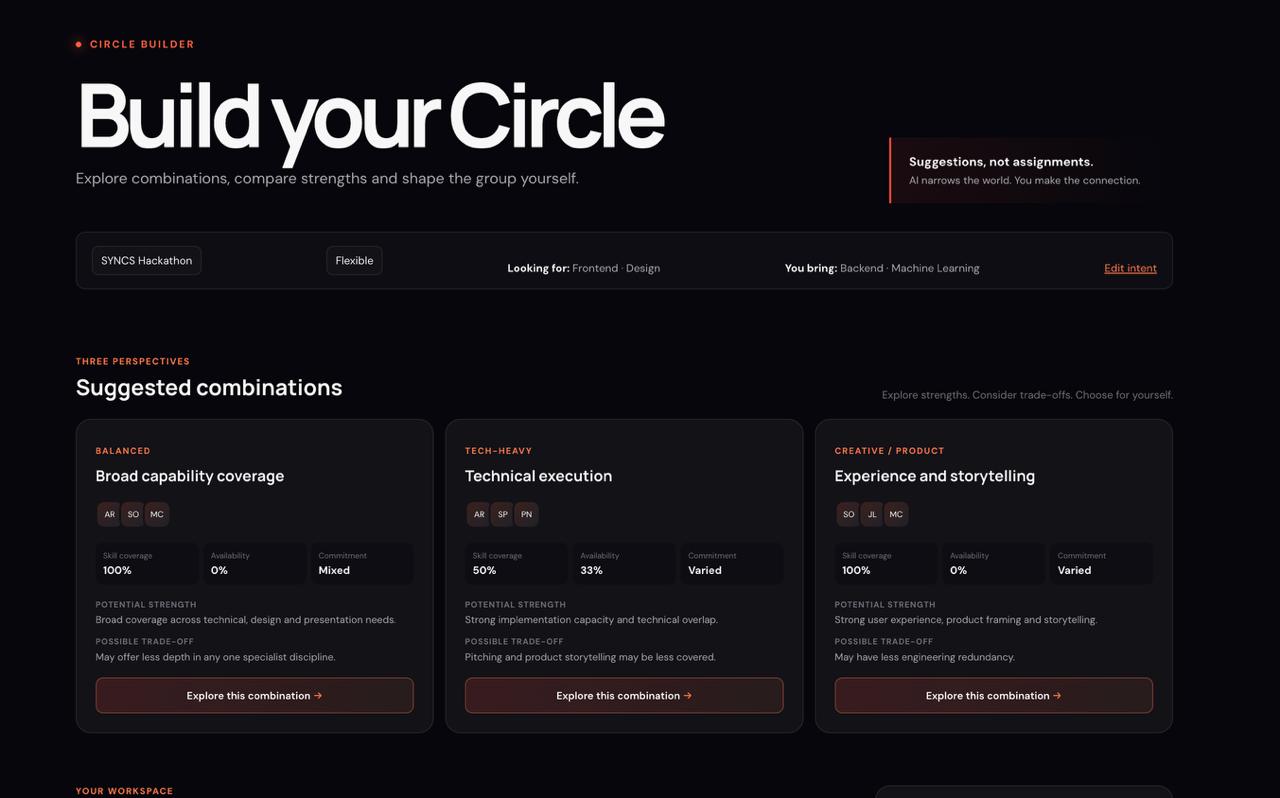
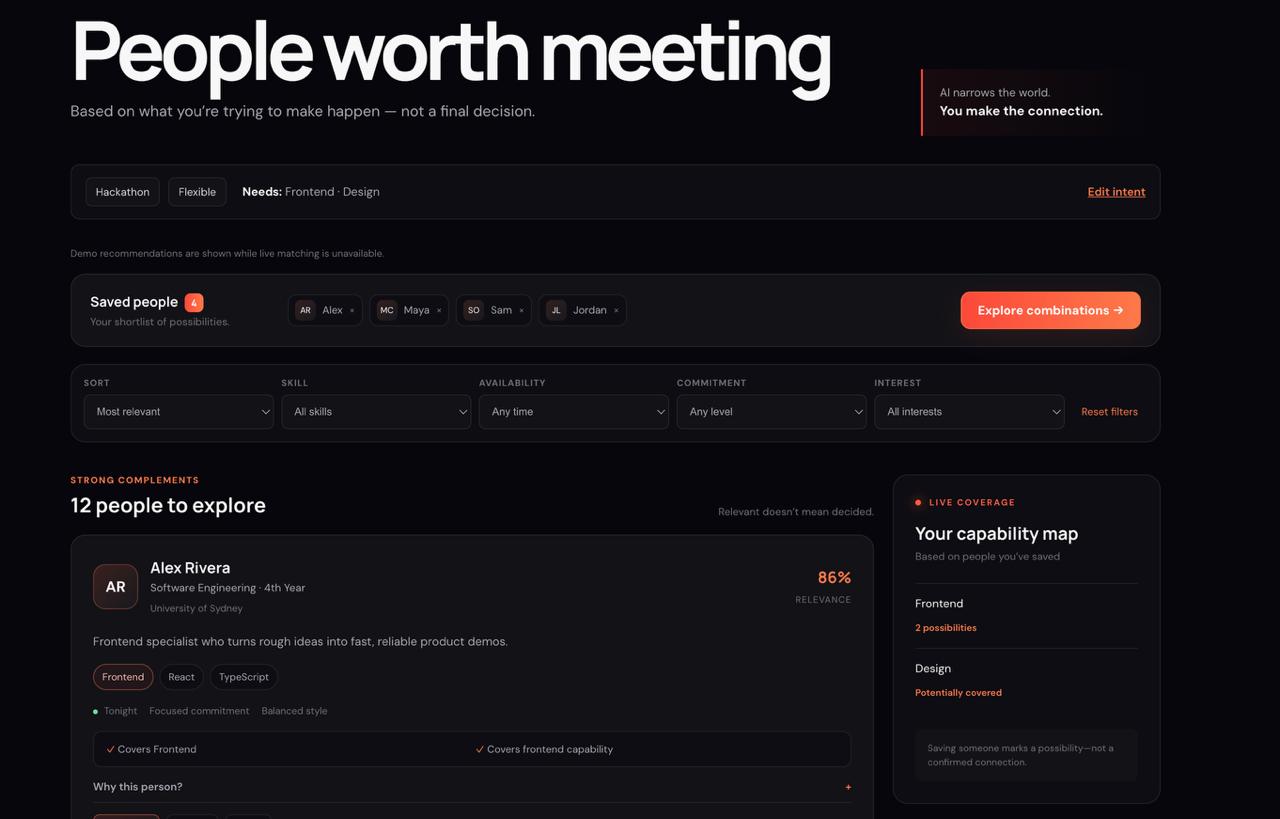
The prototype then identifies the intent, displays relevant people, explains why they surfaced, highlights missing capabilities and lets the user manually build a potential Circle.
Importantly:
Converge recommends. Humans choose.
The system never automatically assigns a final team.
How does your prototype work?
The prototype follows this flow:
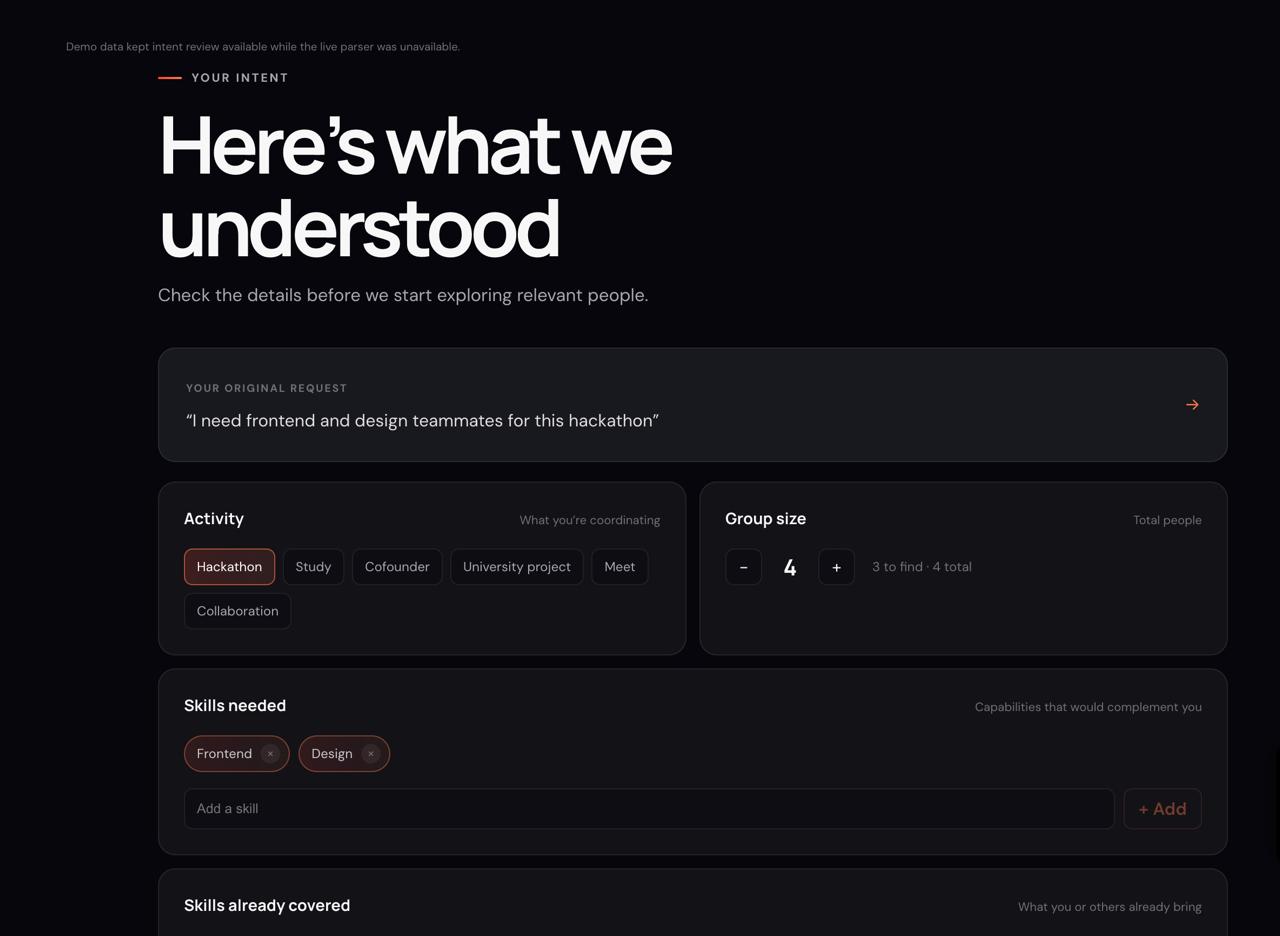
Express intent The user describes naturally what they want to accomplish.
Understand the request The system converts the request into structured information such as:
- activity type
- skills needed
- skills already covered
- availability
- group size
- commitment
- location
Discover relevant people People are surfaced based on complementary skills, shared intent, availability and other relevant signals.
Explore combinations The Circle Builder lets users add/remove people and see how capability coverage changes.
For example:
Backend + ML + Frontend + UI/UX + Pitching
If the pitching member is removed, Converge immediately shows:
Missing Block: Pitching
Mutual opt-in Users choose whom to invite. A Circle only forms when invited participants choose to join.
Coordinate Accepted members enter a lightweight Circle workspace containing their shared intent, people, capability coverage, meeting details and tasks.
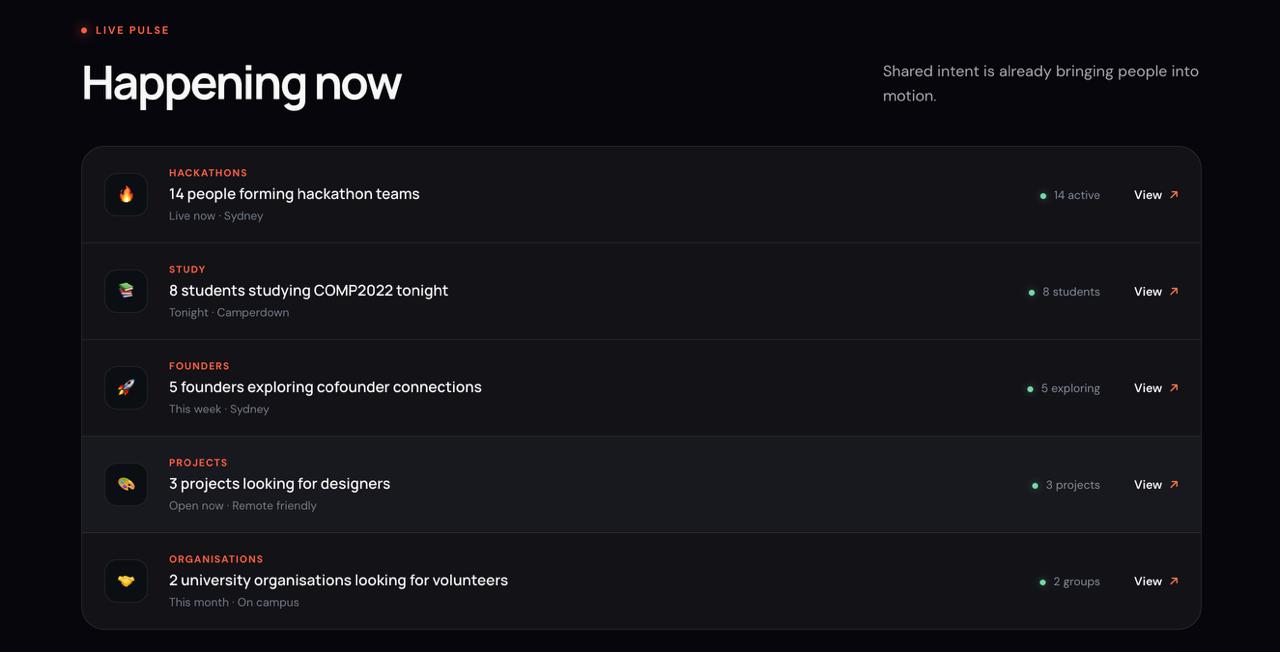
The prototype also includes emergent sessions. If multiple users independently express similar intent—for example students wanting to study COMP2022 at the same time—the system can detect that shared demand and surface a possible session.
Instead of creating an event and searching for demand, demand can create the event.
How did you implement your prototype?
The prototype was implemented using a modern web architecture.
Frontend
- React
- Vite
- JavaScript / JSX
- Custom responsive CSS
- React Router
- Local frontend state and localStorage for prototype persistence
Frontend features
- Intent creation and review
- People discovery
- Recommendation explanations
- Capability mapping
- Interactive Circle Builder
- Invitation and mutual opt-in flow
- Circle workspace
- Live intent discovery
- Emergent sessions
- Organisation opportunities
- Founder/cofounder discovery
Backend / APIs The project uses API endpoints for functionality including:
- intent parsing
- people matching
- cluster/emergent-session detection
- application health checks
The frontend was designed with isolated data/service layers so mock data could be used during development while allowing real API responses to replace them during integration.
Git and GitHub were used throughout development for version control and collaborative development.
Built With
- css
- docker
- google-gemini-api
- javascript
- llm
- natural-language-processing
- node.js
- npm
- python
- react
- rest-api
- typescript
- vercel
- vite
- websockets

Log in or sign up for Devpost to join the conversation.