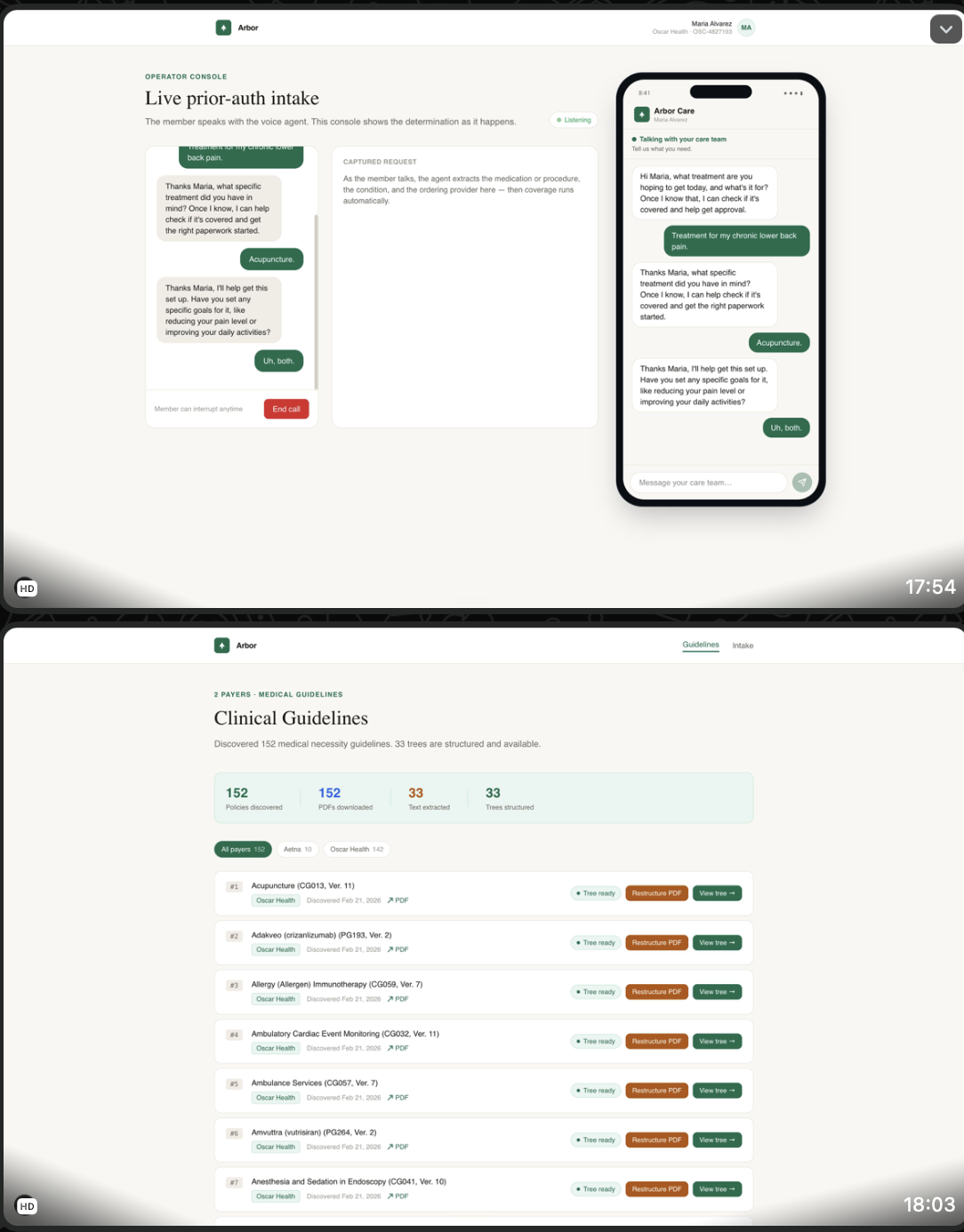
Here is the complete project description formatted in clean, professional Markdown, matching the exact headers required by the submission form.
You can copy and paste this straight into your hackathon submission page.
Inspiration
I have been personally hit with a surprise $4,000 medical bill. It is a terrifying, helpless feeling. In modern healthcare, insurance has become a necessary evil, creating a massive administrative block between patients, providers, and true transparency.
With the inevitable rise of "AI Doctors" automating the clinical core of healthcare, we realized that an incredibly critical piece of the puzzle was being ignored: the patient experience. If background clinical operations are automated but the patient is left completely in the dark, true patient agency is dead. We were inspired to build a system that covers all the operational bases—opening up absolute visibility, stopping surprise bills before they happen, and keeping patients in the loop every single step of the way.
What it does
Our project is a real-time tracking and financial visibility engine for healthcare operations. It maps the messy backend complexity of a clinical encounter—from conversational intake and medical policy parsing to direct insurance eligibility transactions—and translates it into a dead-simple, live-updating "Flight Tracker" dashboard for the patient.
Instead of waiting weeks for prior authorizations or insurance clearances with zero price clarity, patients can see exactly what their care will cost and precisely where their medical documentation stands in the processing pipeline before they leave the clinic.
How we built it
We built the entire application from first principles, leveraging premium infrastructure to achieve zero-latency performance:
Frontend & Hosting: Deployed on Vercel to power a crisp, hyper-modern, minimal user interface that acts as the single source of truth for the patient.
AI & Extraction Layer: Powered by xAI models to handle real-time audio transcription and instantly extract unstructured clinical consultation notes into structured ICD-10 medical codes.
Backend Orchestration: Managed using Inngest to coordinate a durable, high-throughput 10-step background operation loop. This loop pulls dynamic payor rules, hits live eligibility APIs (Change Healthcare), compiles the documentation, and routes data directly to the patient's tracker.
Challenges we ran into
The primary challenge was translating highly complex, shifting insurance policy documents into reliable, deterministic data tokens without introducing system latency. Pinging live APIs while orchestrating multiple asynchronous data extractions can easily create lag. We solved this by implementing a vector-intelligence policy scraper running on top of optimized edge routes, enabling the system to parse guidelines and render financial breakdowns to the patient portal almost instantaneously.
Accomplishments that we're proud of
We are incredibly proud of building a robust Safety Envelope that perfectly balances aggressive AI automation with absolute clinical safety. We successfully hard-engineered a strict Doctor-in-the-Loop validation gate right into the automated pipeline. If our models flag a policy edge-case, the system instantly halts automatic transmission and routes the case to an NPI-validated clinician for manual sign-off—all while updating the patient's dashboard in real-time so they know exactly who is handling their care.
What we learned
We learned that optimizing the backend of healthcare is only half the battle. Improving operational visibility fundamentally transforms the entire patient experience. True patient agency cannot exist in a vacuum; it requires unlocking the black box of insurance data and turning it into an interactive feedback loop where patients are active operators of their own care journey.
What's next for converge health
The next phase is expanding this visibility engine beyond standard clearances and prior authorizations into complex, ongoing clinical scenarios like Psychiatric Medication Renewals. By coupling continuous patient feedback data with direct insurance pipeline tracking, we can move closer toward a personalized, automated, preventative healthcare system that scales instantly while keeping human clinicians firmly in control.
Built With
- next
- python
- supabase
- typescript
- vercel
- xai

Log in or sign up for Devpost to join the conversation.