-
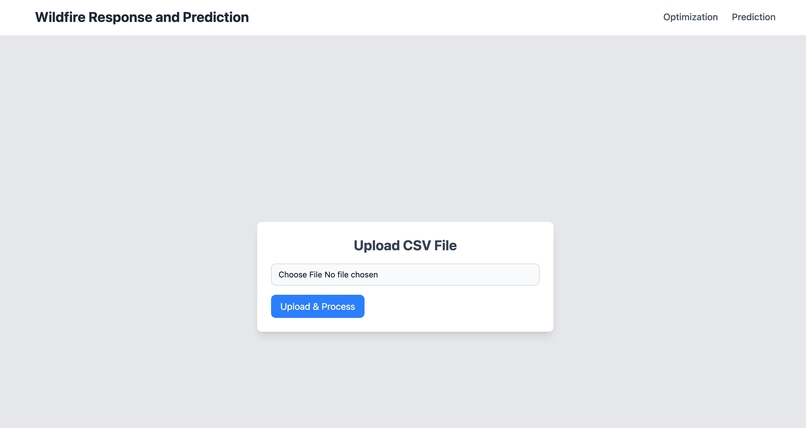
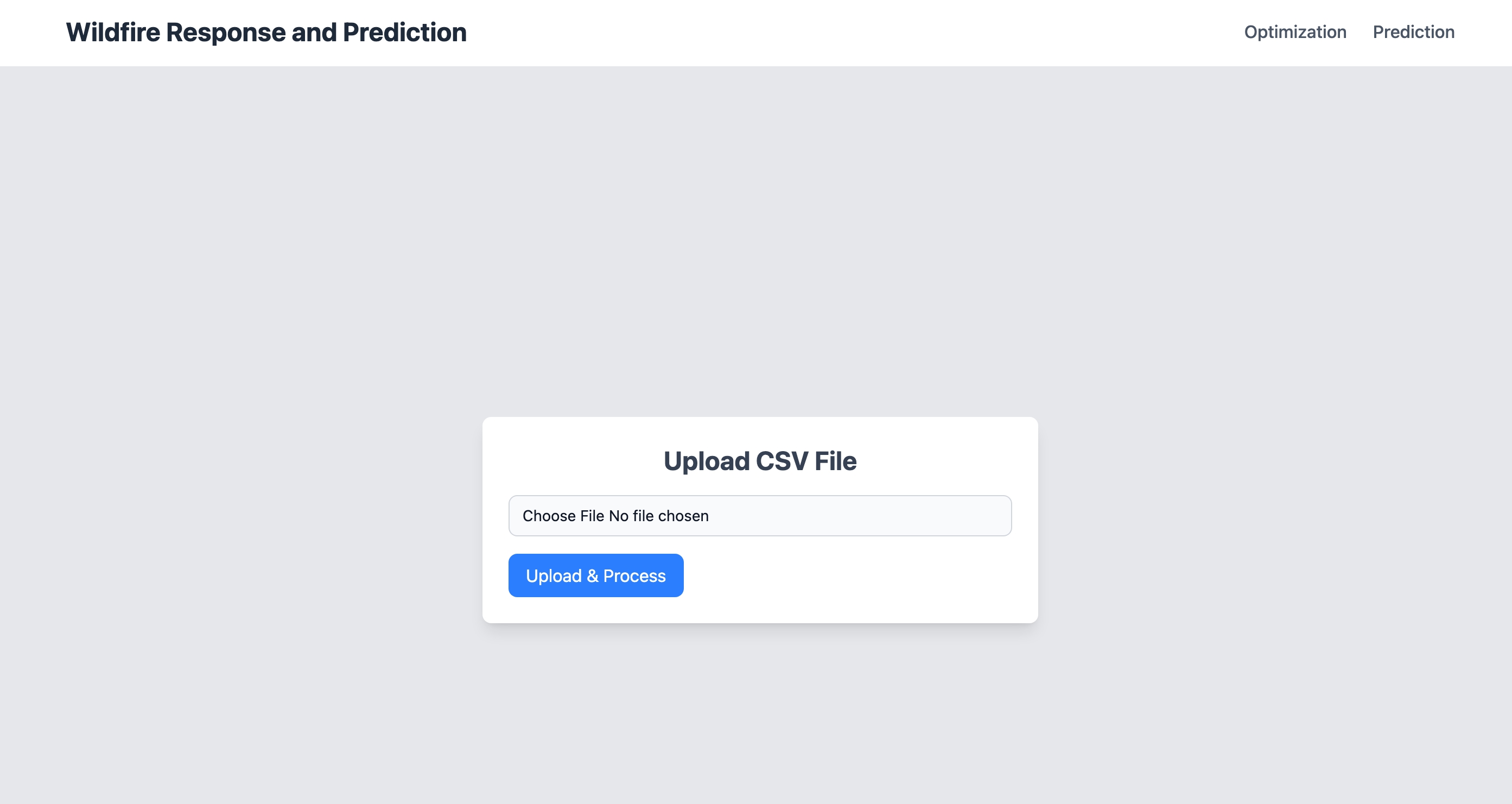
Landing Page
-
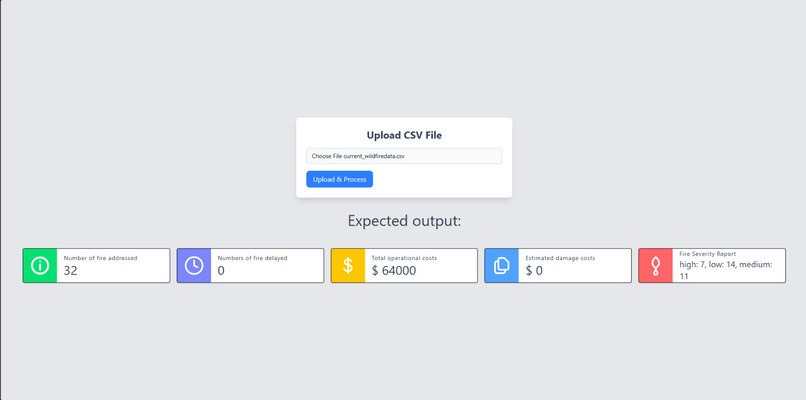
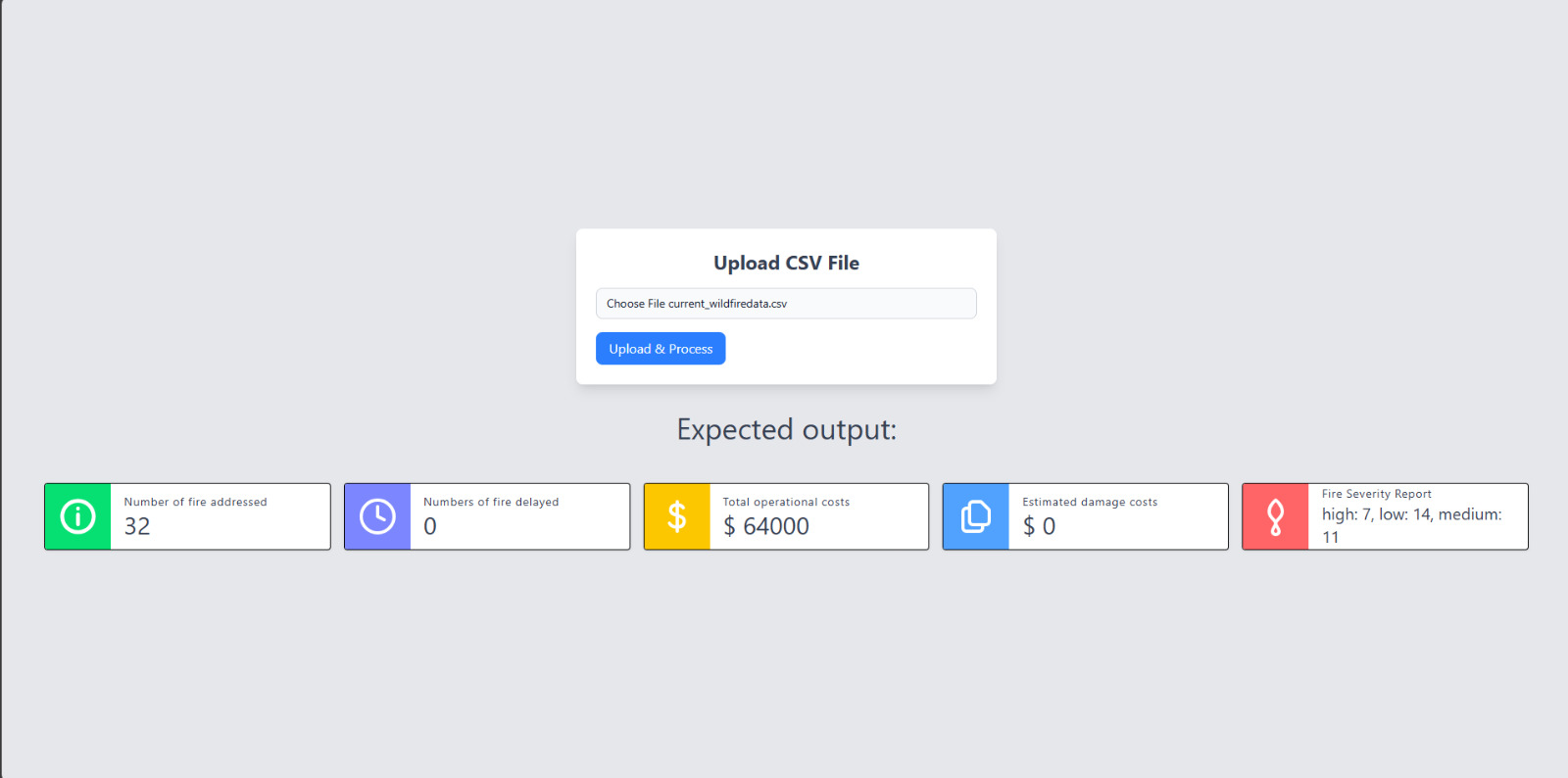
Data upload results
-
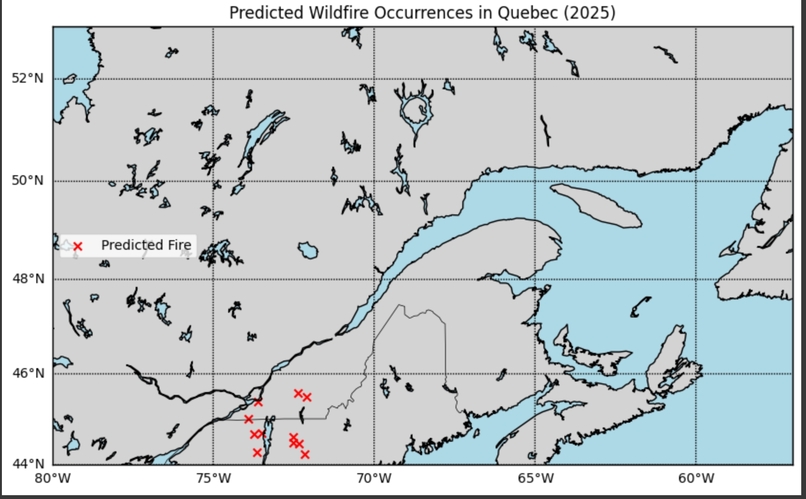
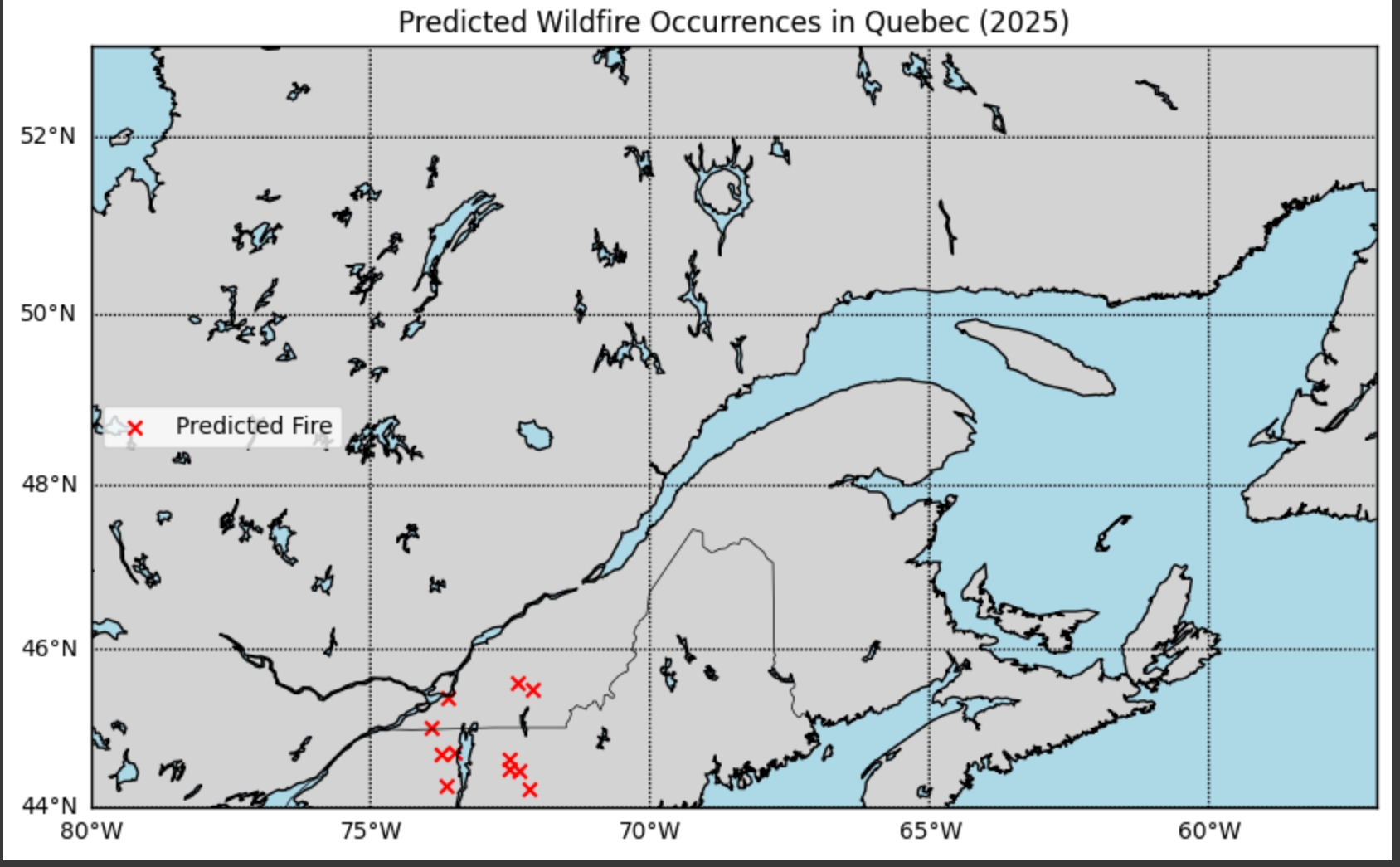
Predictor model outcome_1
-
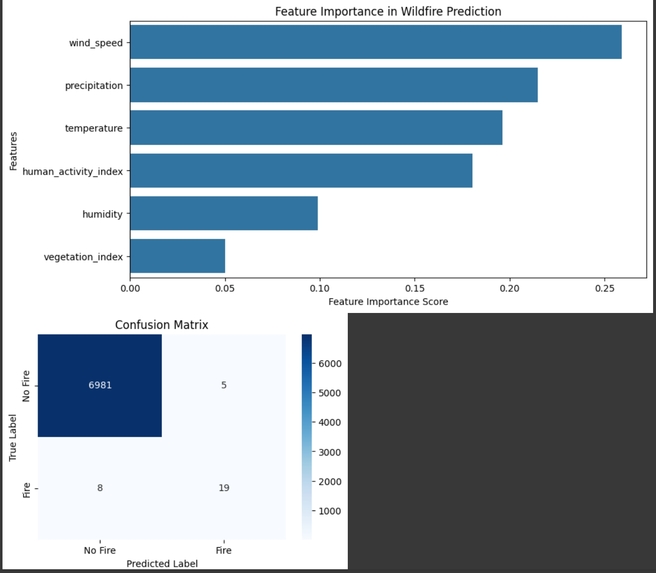
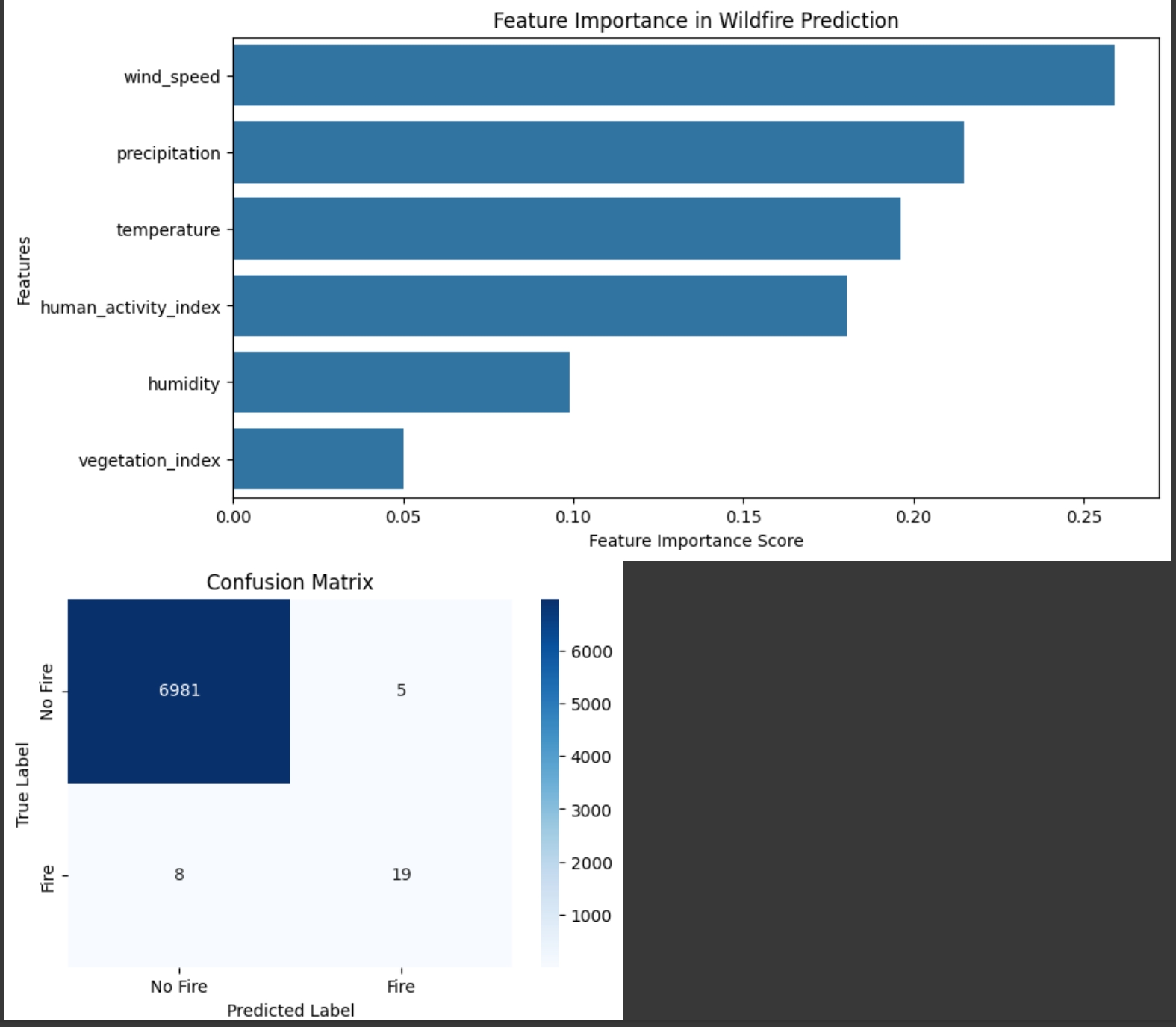
Predictor model outcome _2
Wildfire Response and Prediction Challenge
Inspiration
Wildfires pose a severe threat to the environment, infrastructure, and human lives, especially during peak wildfire seasons. Inspired by the Wildfire Response and Prediction Challenge at ConUHacks IX, we set out to develop a smart, data-driven solution that optimizes firefighting resource allocation while predicting future wildfire occurrences. Our goal was to create a realistic, effective, and scalable model that helps fire departments make better decisions in real-time.
What it does?
Our solution is a comprehensive software system designed to: \ 🔥 Optimize the deployment of firefighting resources across Quebec during wildfire season (June 1st – September 30th). \ 🔥 Predict future wildfire occurrences using historical data and trends. \ 🔥 Minimize environmental and financial damage by prioritizing high-risk fires. \ 🔥 Provide real-time insights to fire departments for better situational awareness.
The system operates 24/7, ensuring effective, data-driven decision-making for emergency responders.
How we built it?
We developed a full-stack application using: \
🚀 Backend: Flask (Python) with a REST API architecture for seamless data processing. \ 🌐 Frontend: Vue.js + TailwindCSS for a modern, responsive interface. \ 📊 Data Processing & Modeling: Python-based algorithms to allocate resources efficiently and forecast fire risks.
Challenges we ran into
Developing a realistic resource optimization model required multiple assumptions and trade-offs. Some key challenges: \
1️⃣ Real-world constraints – We had to simplify fire spread dynamics, weather impact, and terrain factors. \ 2️⃣ Resource allocation logic – Creating a priority-based model that balances fairness, efficiency, and operational feasibility. \ 3️⃣ Handling missed fires – Fires that couldn’t be addressed due to resource limitations had to be accounted for in damage estimations. \
To address these, we made key assumptions, such as:
- Resources reset daily to simplify deployment.
- High-severity fires receive up to 3 resources, while others get 1.
- Fires are prioritized by severity and then by reporting time.
- Fixed damage costs for missed fires:
- Low-severity: $50,000
- Medium-severity: $100,000
- High-severity: $200,000
Accomplishments that we’re proud of
✅ Successfully implemented a working model that dynamically assigns firefighting resources. \ ✅ Designed a scalable, data-driven solution that integrates real-world constraints. \ ✅ Developed an intuitive frontend to visualize resource allocation and fire prioritization. \ ✅ Tackled a critical real-world problem with an innovative software-driven approach.
What we learned?
💡 The importance of data-driven emergency response – Efficient resource allocation saves lives and reduces damage. \ 💡 Trade-offs in modeling real-world problems – Simplifications are necessary, but identifying the right assumptions is crucial. \ 💡 Collaboration & problem-solving under pressure – ConUHacks IX pushed us to ideate, build, and iterate quickly.
What’s next for CONUHACKS_SAP_CHALLENGE?
🚀 Enhancing real-world accuracy: Integrate weather data, terrain constraints, and real-time fire growth modeling. \ 🌍 Deploying in the field: Partner with fire departments to test our solution in real-world wildfire response planning. \ 📈 Machine learning for fire prediction: Improve forecasting with AI-driven insights for better long-term risk assessment. \ 🔄 Adaptive resource allocation: Develop a dynamic resource model where units return after use instead of resetting daily. \
Our vision is to create a fully operational wildfire response platform that firefighters and emergency responders can rely on to save lives, minimize damage, and optimize resources. \
🔥 Let’s make firefighting smarter, faster, and more effective! 🚒💨

Log in or sign up for Devpost to join the conversation.