-
-
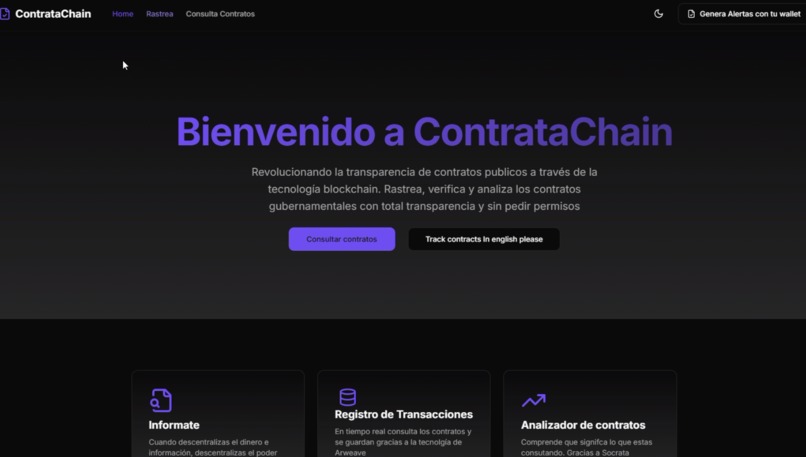
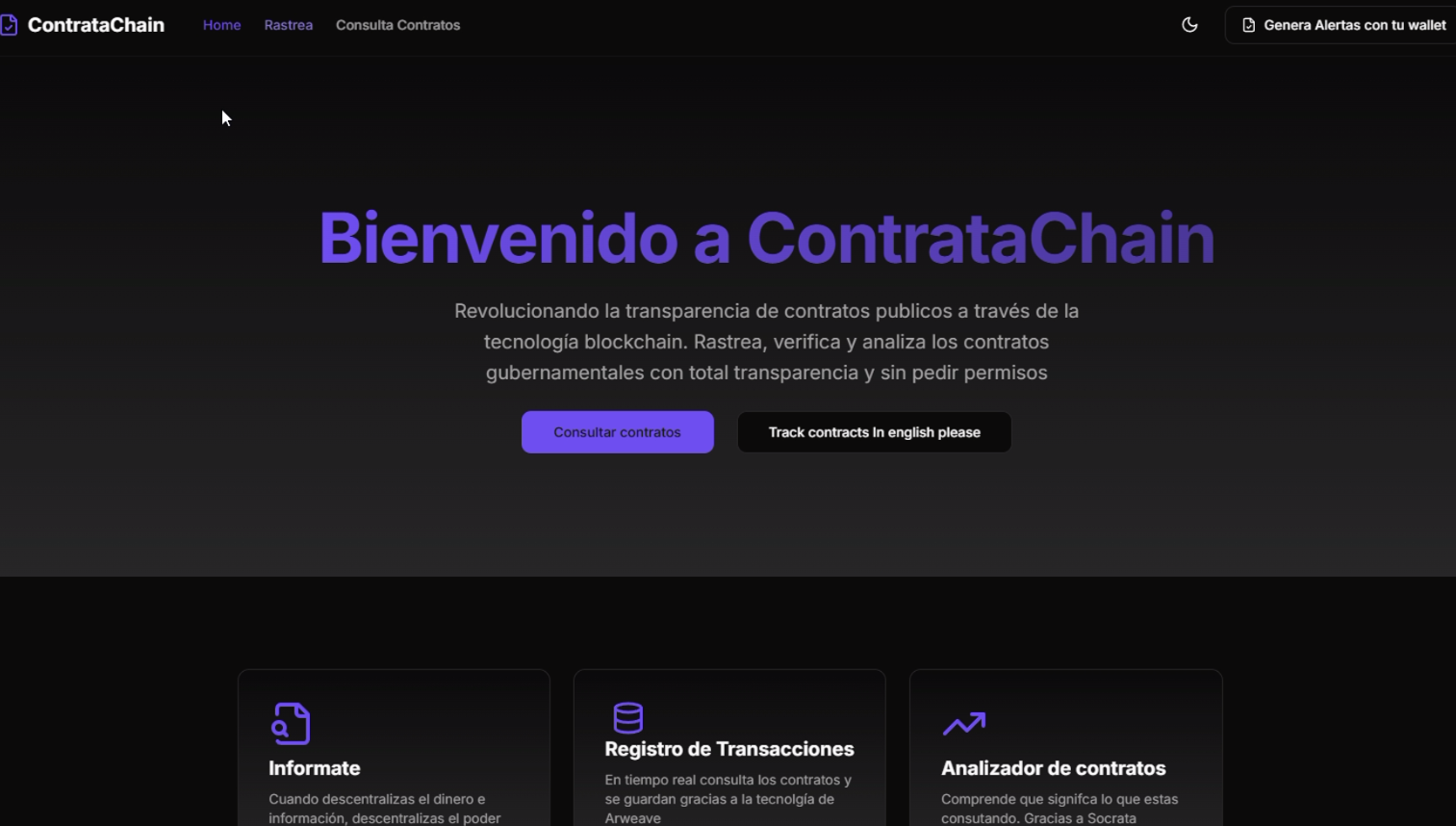
Frontend Español
-
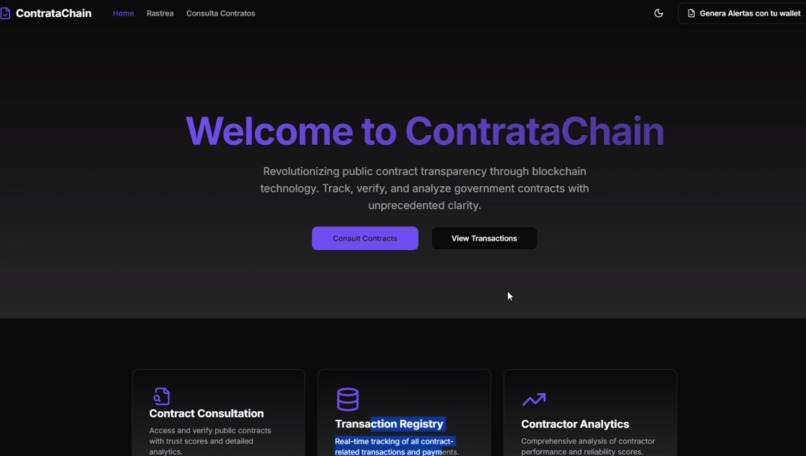
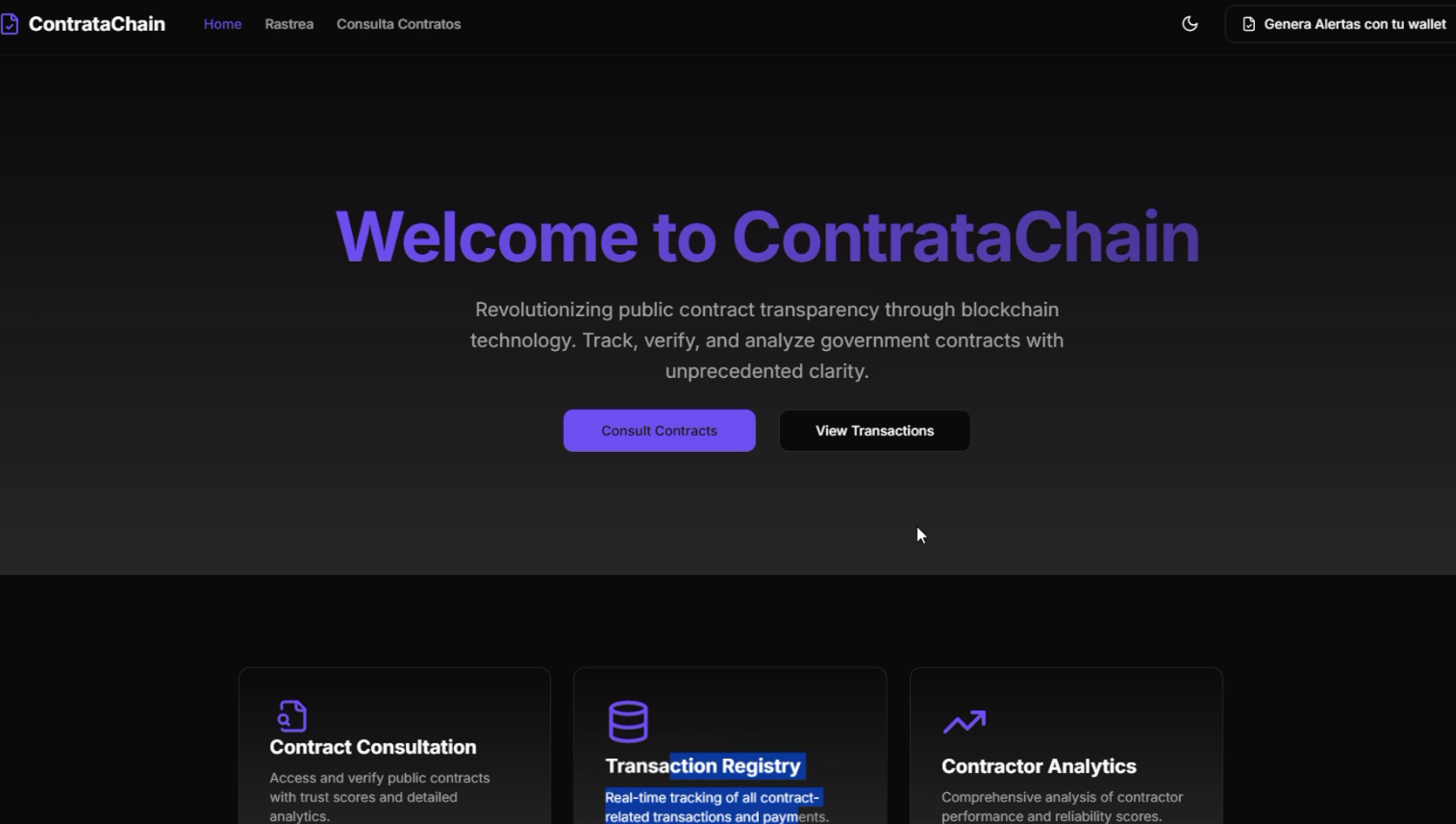
Frontend English
-
Logo
-
-
-
Inspiration
We were inspired by the need for a more transparent public procurement system, similar to Colombia’s Secop platform, but with the added benefit of blockchain technology. The goal is to give governments and companies an easy way to evaluate and track suppliers, reducing fraud and improving the overall quality of the contracting process.
This project has been studied by 13 universities(mainly the National and District University of Bogota), the Ministry of Technology of Colombia (MinTic) and there are many academic references talking about this topic.
In many of the studies and feasibility of the project, the conclusion is always reached that it is not viable due to scalability and the gas issue. But we believe that with Arbitrum Stylus/rust this issue could be solved and a step could be taken towards a great revolution in the public sector, generating an impact of transparency and trust towards the institutions.
What it does
ContrataChain allows users to:
- Register suppliers and contractors.
- Automatically evaluate and assign ratings to suppliers based on predefined criteria (experience, quality, punctuality, etc.).
- Store all supplier data and ratings on the blockchain, ensuring transparency and immutability.
- Provide access to users (governments and private companies) to check supplier ratings before entering into contracts.
This process reduces human error, enhances trust, and mitigates the risk of corruption. The platform also makes it easier for suppliers to improve their reputation by addressing issues and improving their services.
How we built it
The platform is built using a combination of technologies to ensure a seamless and secure user experience.
Frontend: The user interface is built with Next.js, allowing for a fast and responsive application. We used components like React for dynamic interaction and smooth user experience.
Backend & Blockchain: The backend is powered by Arbitrum Sepolia (as a substitute for Ethereum mainnet due to time constraints), and it uses Hardhat for deploying smart contracts. Initially, we aimed to use Arbitrum Nitro with Stylus, but due to technical limitations and my lack of experience with Rust, we migrated to a more familiar environment with Arbitrum Sepolia.
Smart Contracts: We developed smart contracts using Solidity to automate the evaluation and rating of suppliers. These contracts are deployed on the blockchain to ensure immutability and security.
Storage: In the future, we plan to use Arweave for permanent data storage to ensure that contract data is never lost or tampered with.
Challenges we ran into
Rust and Arbitrum Stylus Compatibility: My original plan was to build the system on Arbitrum Stylus, which is optimized for Rust. However, I ran into technical challenges since Hardhat does not support Stylus yet. While the Hardhat team is working on making this compatible, I had to pivot to using Arbitrum Nitro node.
Arbitrum Nitro with Docker: The integration with Arbitrum Nitro via Docker provided some hurdles, particularly in setting up and deploying the node.
Time Constraints: Due to the project’s time constraints, I couldn’t fully implement everything I had planned, especially in terms of blockchain integration. Instead, I focused on the UI/UX to ensure the project was usable and functional in its current form.
Adapting to New Tools: Working with Rust, Stylus, and Arbitrum Nitro required a steep learning curve. Ultimately, I had to focus on areas that I’m more familiar with, which delayed progress.
Accomplishments that we're proud of
- Successfully implemented the basic functionalities of the platform, including supplier registration, rating calculation, and blockchain deployment.
- Migrated from Arbitrum Stylus to Arbitrum Sepolia while maintaining the overall vision of the project.
- Created a functional UI/UX in a short period, allowing users to interact with the system and view supplier ratings.
What we learned
- Arbitrum Nitro and Arbitrum Stylus offer great potential, but integrating them with Hardhat and Rust posed challenges.
- Learned a lot about Rust, Stylus, and blockchain development in general. Even though the project didn’t fully implement this, it provided valuable experience.
- Arweave is a promising option for permanent, tamper-proof data storage, and it’s something we plan to implement in the future.
- Gained deep insights into how blockchain can be used in public procurement systems and how it can fight corruption and inefficiency.
What’s next for ContrataChain
- Blockchain Migration: In the near future, we plan to migrate the backend to Arbitrum Stylus (once it’s fully compatible with Hardhat), to get more knowledge with Arbitrum nitro node for getting a good deployment in Arbitrum stylus and implement permanent storage on Arweave.
- Platform Expansion: We aim to extend the platform’s functionality by integrating with more government procurement systems and expanding the smart contract evaluation criteria.
- Improving the User Interface: There will be improvements to the UI/UX, as well as the addition of more interactive features for end-users, such as the ability to leave feedback and comments on supplier evaluations.
Built With
- arbitrum
- ether.js
- ethereum
- hardhat
- javascript
- next.js
- react
- scaffold-eth2
- solidity
- typescript


Log in or sign up for Devpost to join the conversation.