-
-
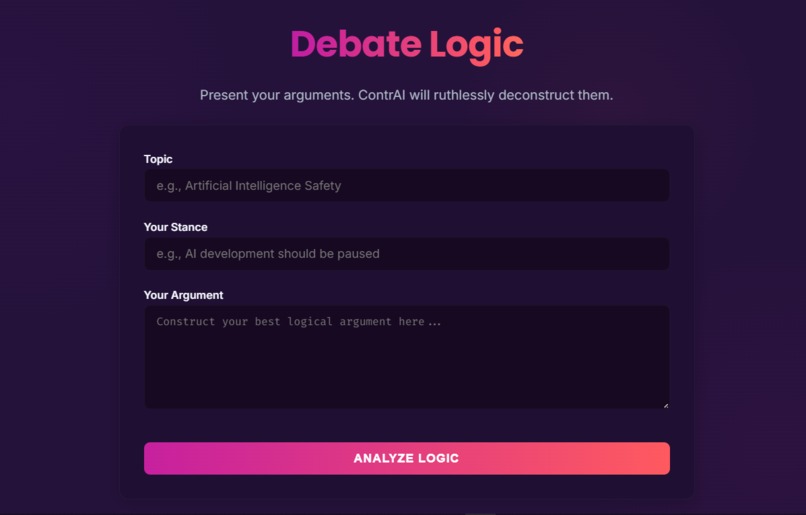
debate logic page
-
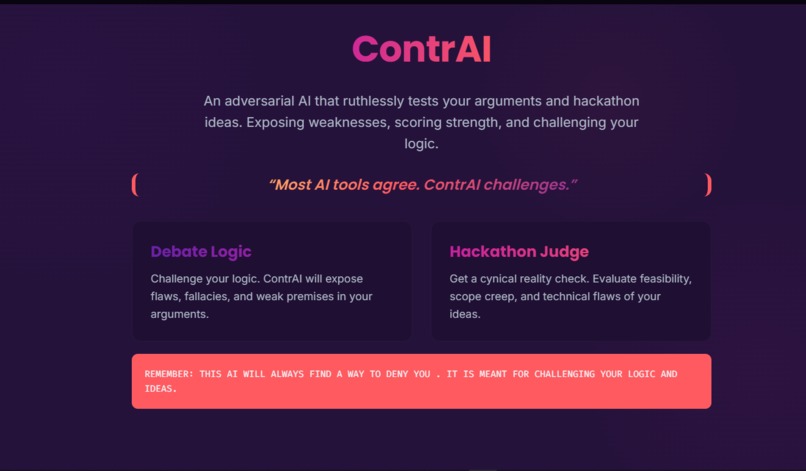
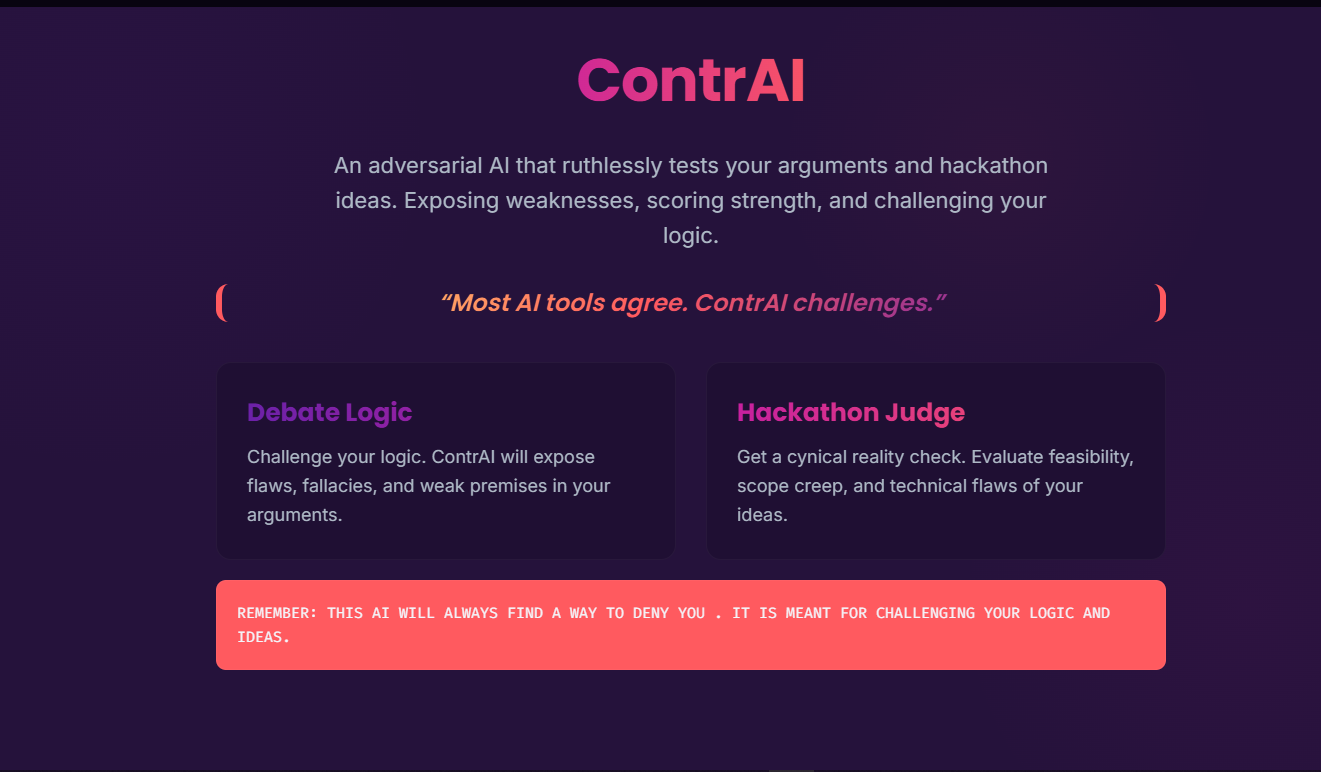
homepage
-
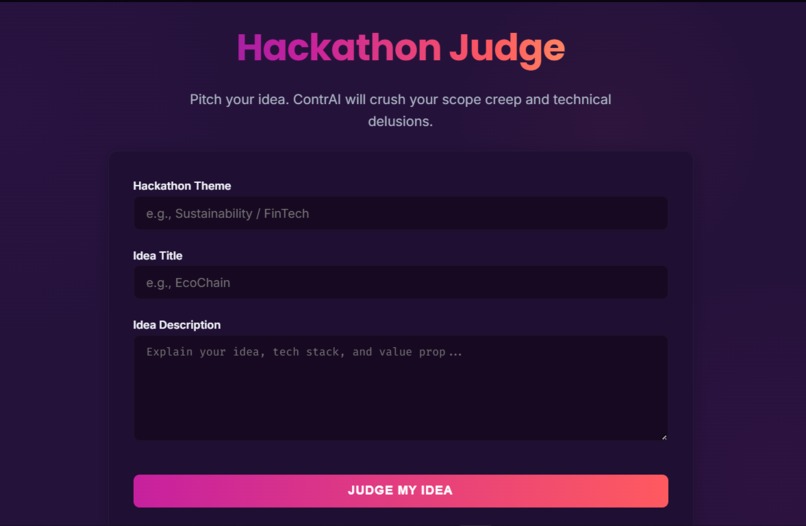
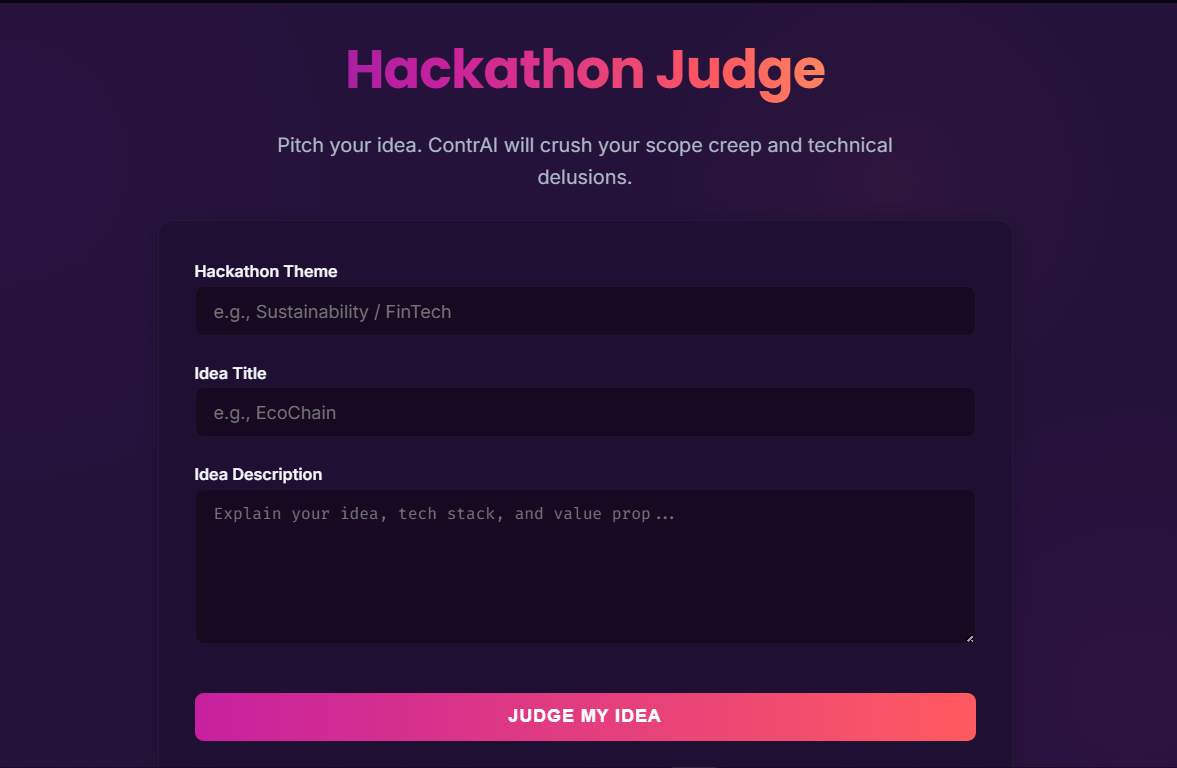
hackathon judge page
Inspiration
Most AI tools are designed to be helpful and agreeable. While this is useful for explanations, it often reinforces weak ideas instead of challenging them. I repeatedly faced situations where an idea felt good until it was questioned by a teacher, judge, or peer—and by then it was too late to fix.
ContrAI was inspired by this gap: AI that explains is common; AI that challenges is rare. I wanted a tool that simulates opposition early, so users can improve their thinking before presenting it to others.
What it does
ContrAI is a web-based AI adversary engine that intentionally pushes back on user input instead of agreeing.
It has two modes:
1.Argument / Debate Analyzer Users submit an argument. ContrAI identifies logical fallacies, weak assumptions, missing evidence, and generates strong counter-arguments, along with a structured strength score.
2.Hackathon Idea Stress Tester Users submit a hackathon’s requirements and their project idea. ContrAI evaluates feasibility, originality risk, rule alignment, and scope realism—similar to how an experienced judge would.
The goal is not to give answers, but to stress-test thinking.
How we built it
ContrAI is built as a full-stack web application:
Frontend: HTML, CSS, and vanilla JavaScript for a clean, focused UI
Backend: Python + Flask for routing and request handling
AI: Google Gemini API, prompted with role-locked adversarial personas
Instead of displaying raw AI output, the system enforces a structured response format. The backend parses Gemini’s responses into fields like verdicts, scores, flaws, and counter-arguments, which are then rendered as readable feedback cards.
This ensures consistency, clarity, and a judge-friendly experience.
Challenges we ran into
Controlling AI tone: Getting the AI to be critical without becoming abusive required careful prompt design.
Output consistency: LLMs don’t always follow strict formats, so robust parsing logic was needed.
API safety: Rate limiting had to be implemented to prevent key abuse during public access.
Scope control: Avoiding “just another chatbot” required constant focus on adversarial design.
Accomplishments that we're proud of
Built a fully working adversarial AI system as a solo student
Successfully differentiated the project from generic chatbots
Implemented structured critique instead of conversational output
Created a tool that feels honest, not polite
Deployed a public, usable demo with real constraints
What we learned
AI value comes from how it’s constrained, not just how powerful it is
Adversarial prompting produces much higher-quality feedback
Structure matters more than verbosity for usability
Building guardrails (rate limits, parsing) is as important as the model itself
What's next for ContrAI
Multi-turn debates where users can argue back
Adjustable “ruthlessness” levels for different use cases
Exportable critique reports (PDF)
Additional personas (VC investor, academic reviewer)
Integration with real hackathon rubrics and curriculum
TRACK
🔵 TRACK 2: MACHINE LEARNING / AI


Log in or sign up for Devpost to join the conversation.