-
-
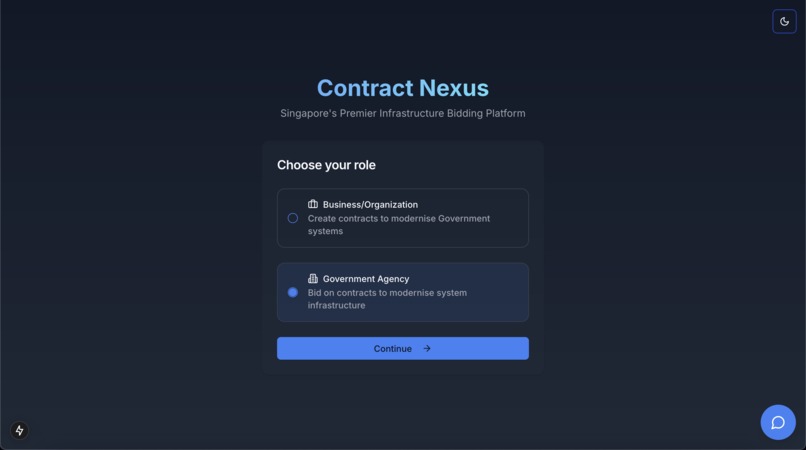
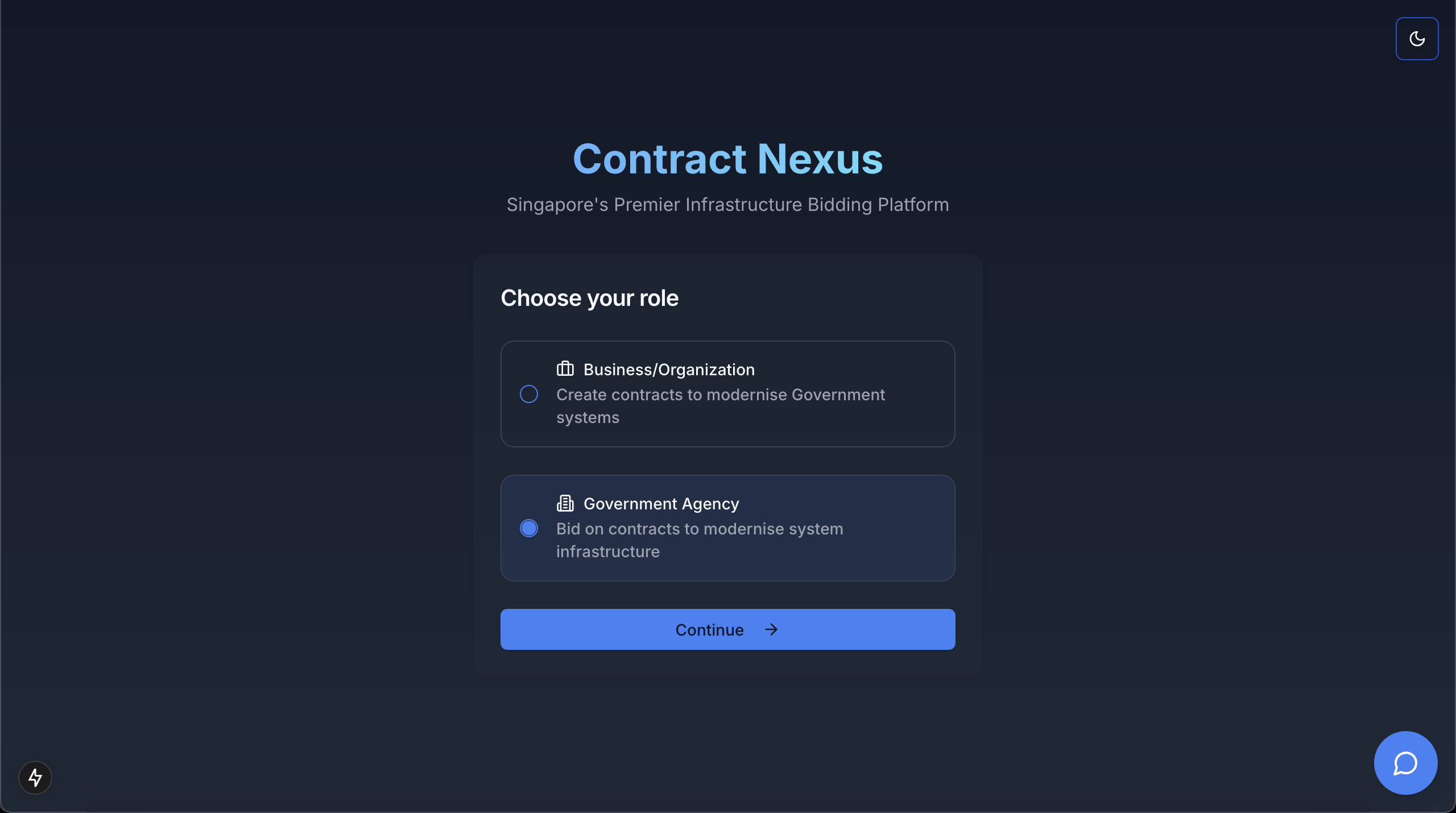
Start page
-
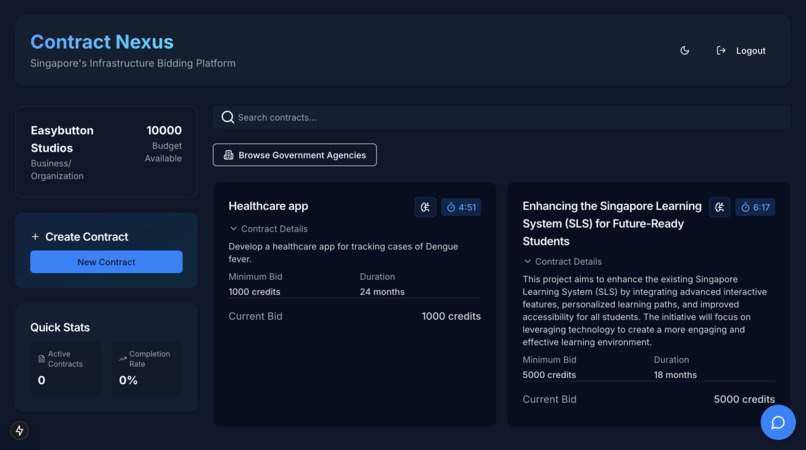
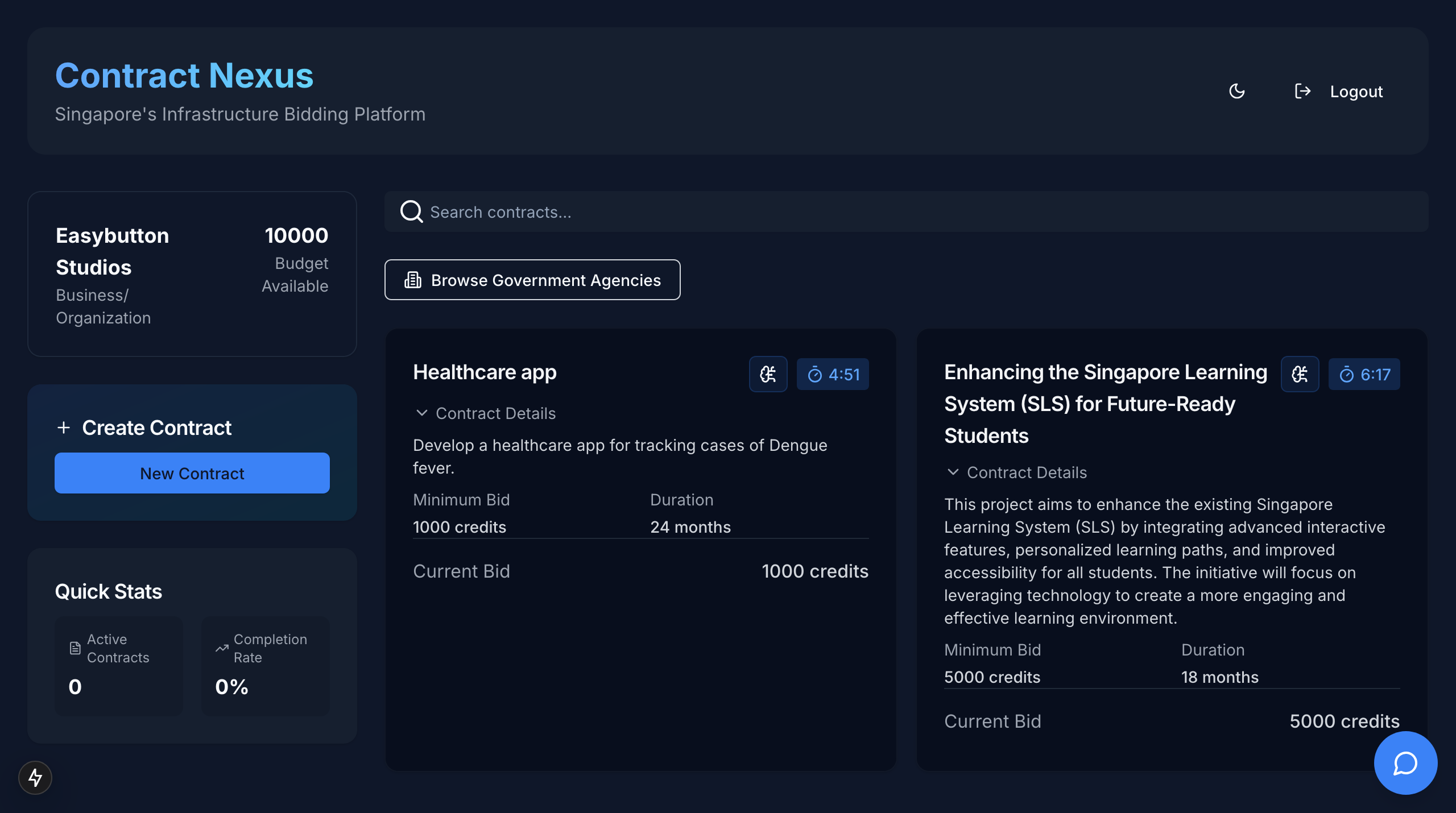
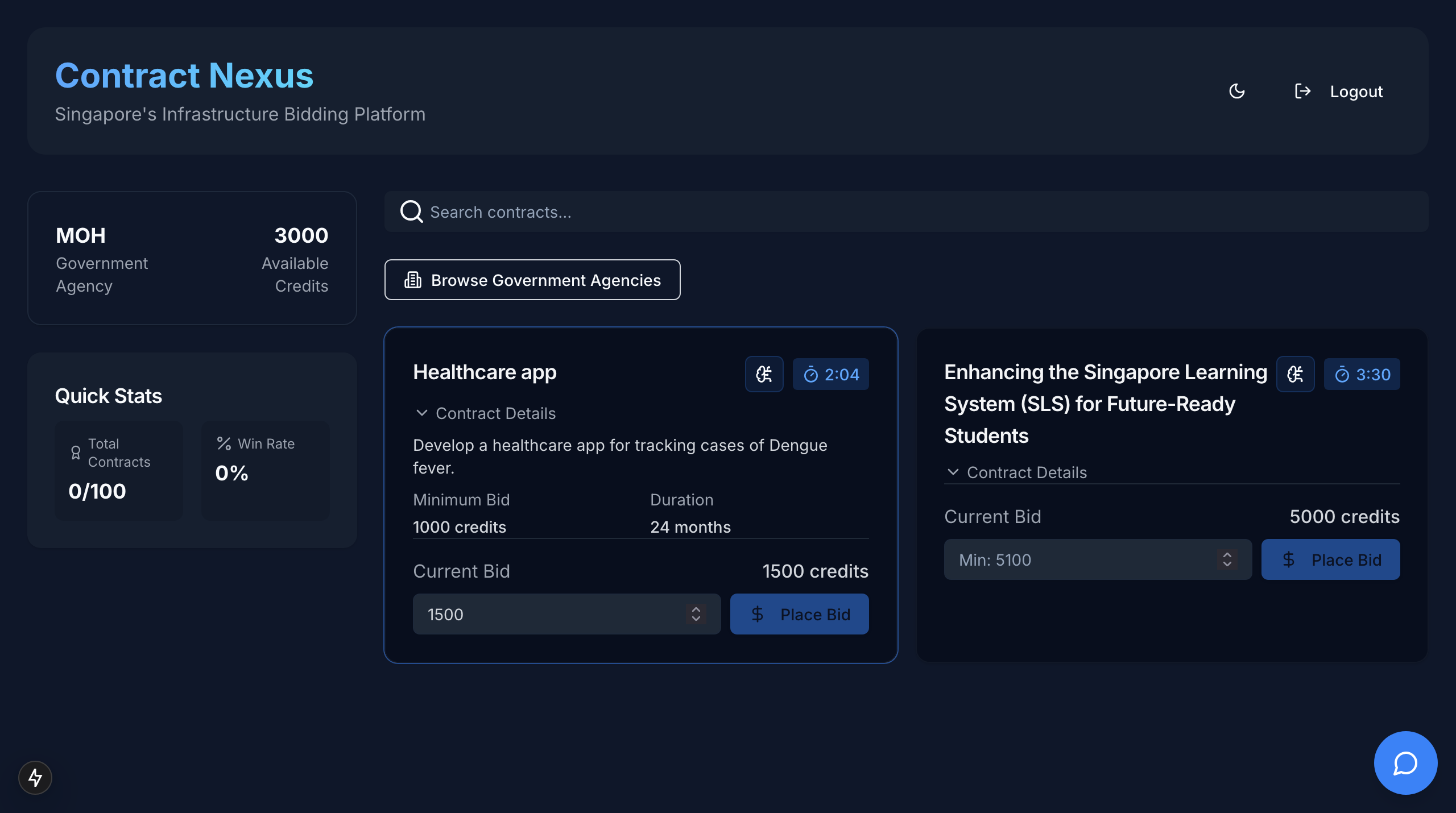
An elegant UI for viewing contracts
-
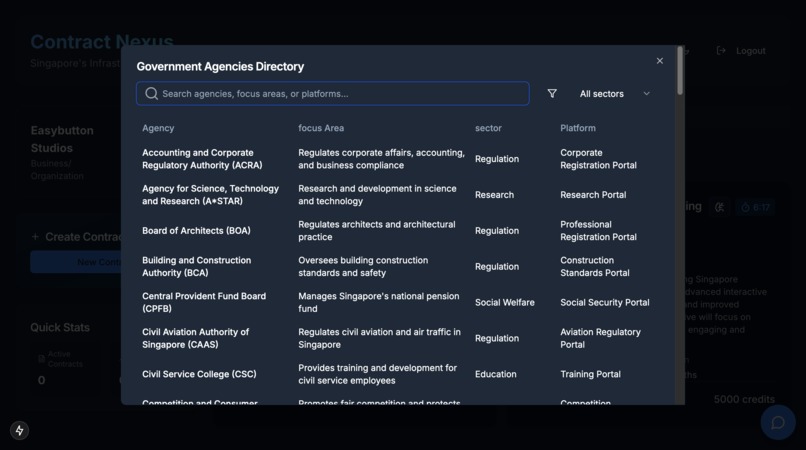
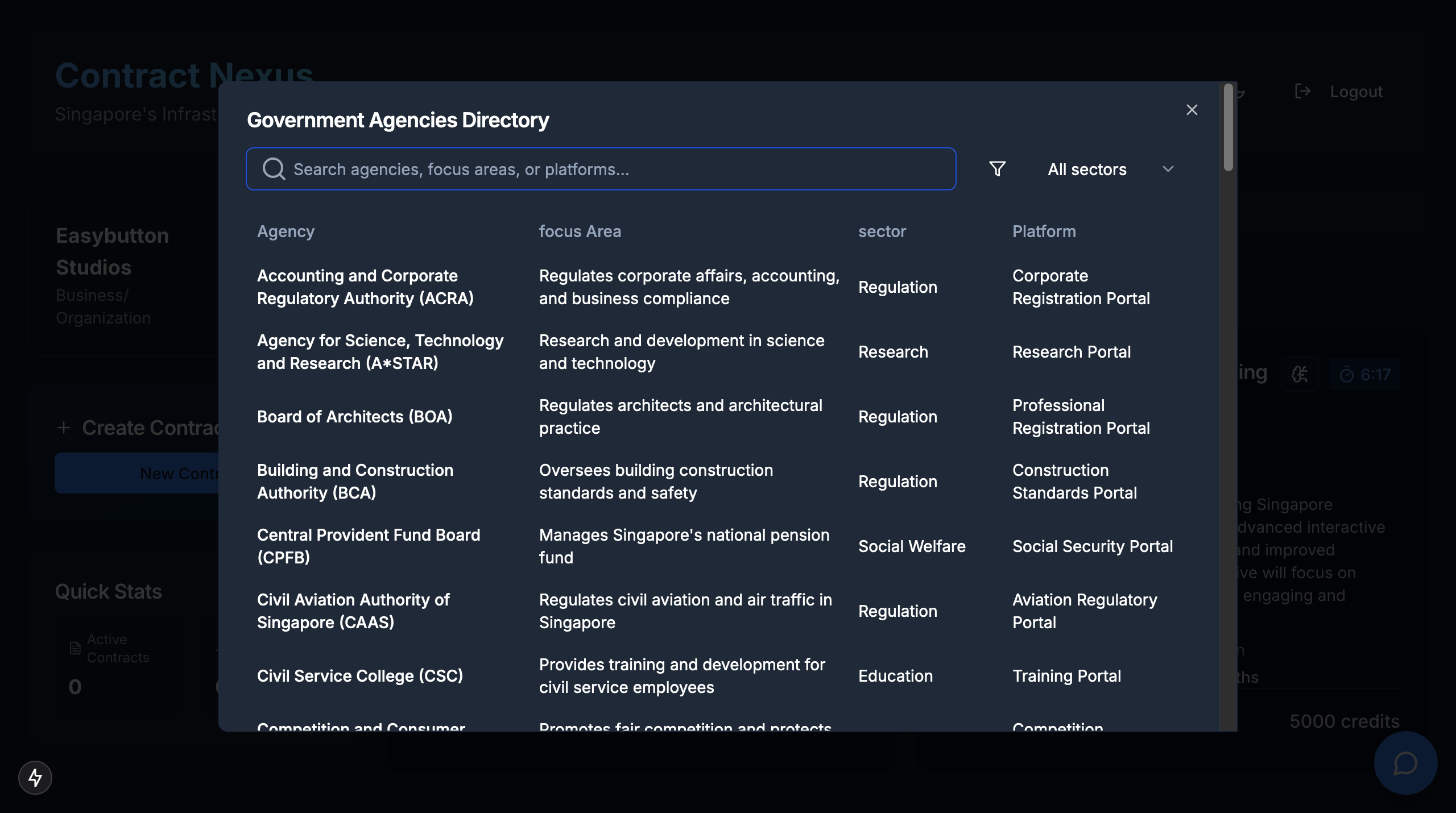
A useful directory of Singapore government agencies for your reference
-
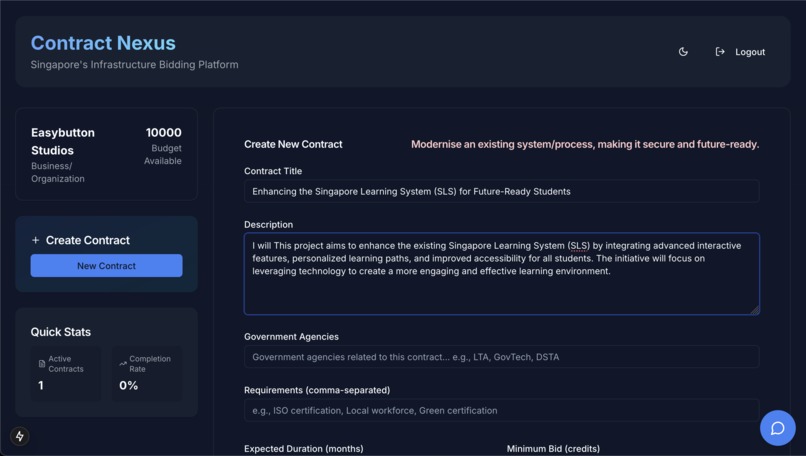
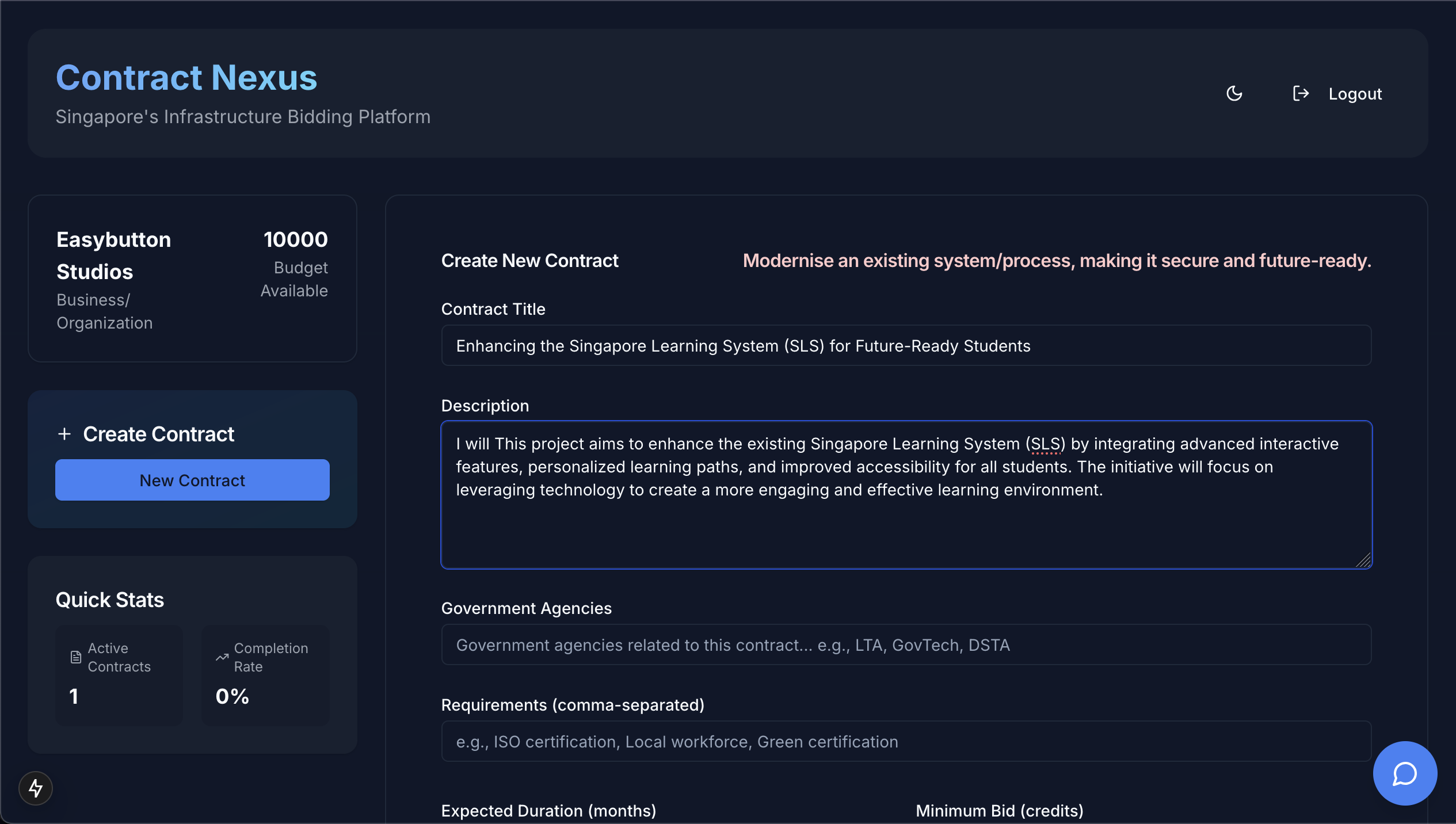
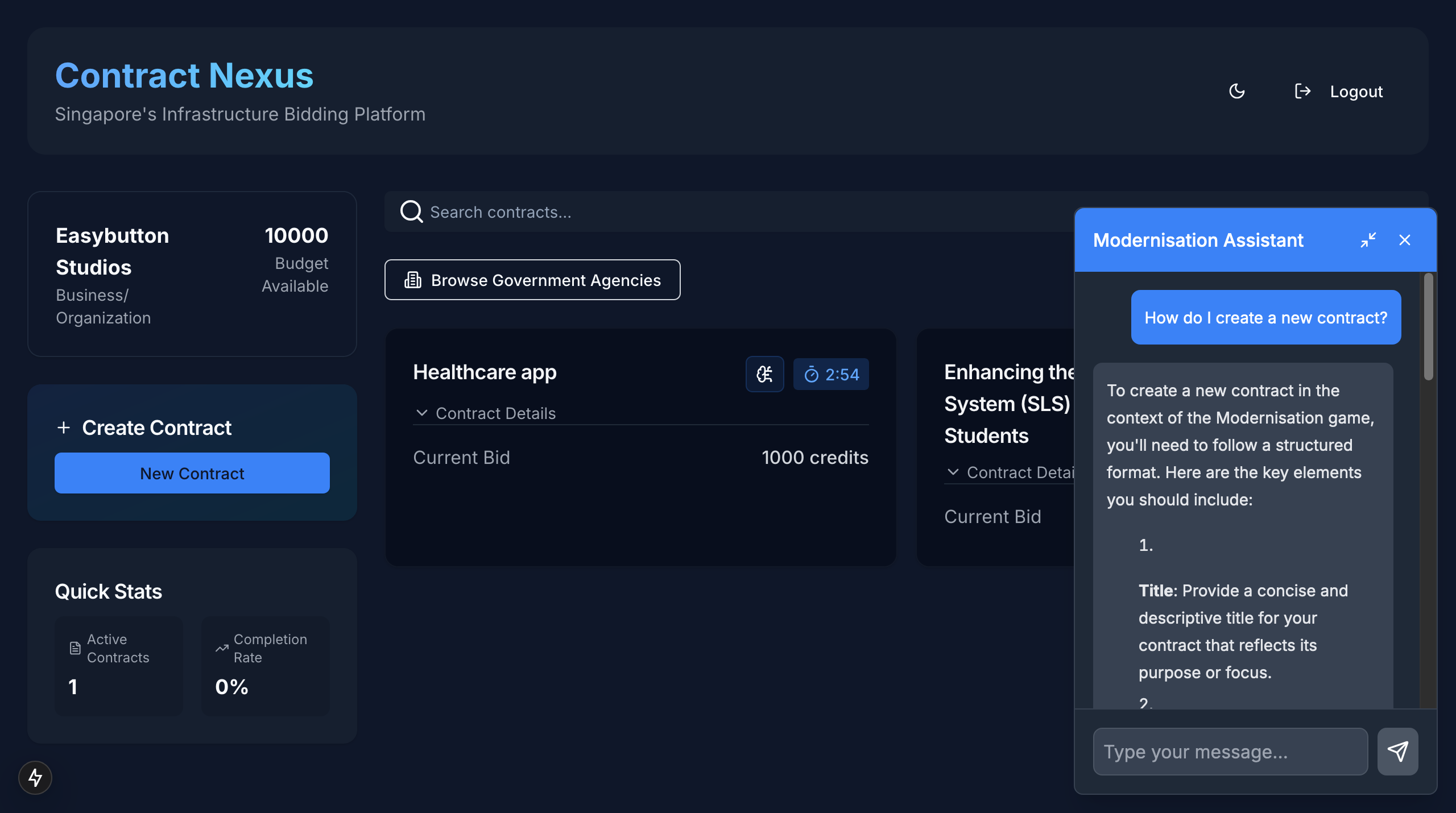
Draft your own contract!
-
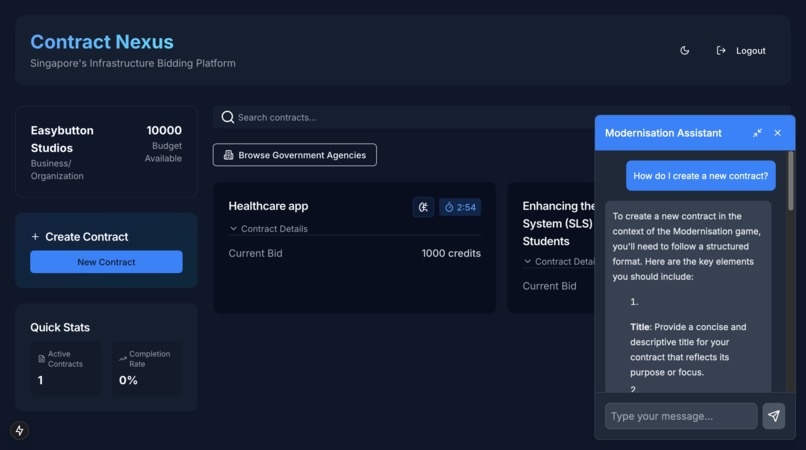
Chat with our integrated AI assistant!
-
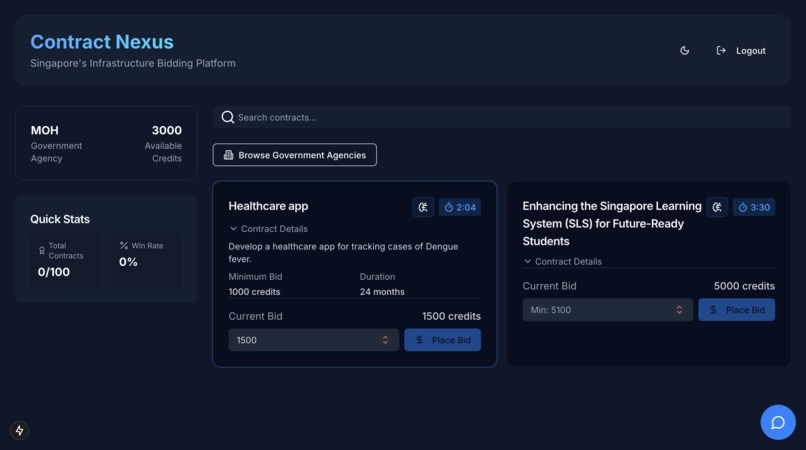
Bid on contracts as a government agency!
-
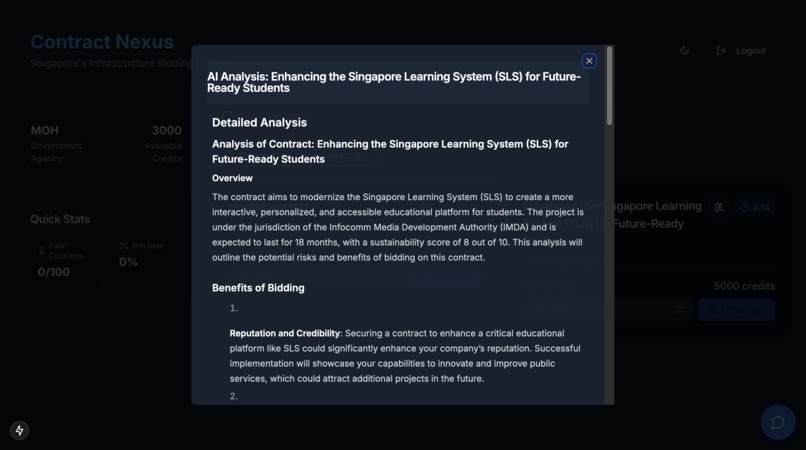
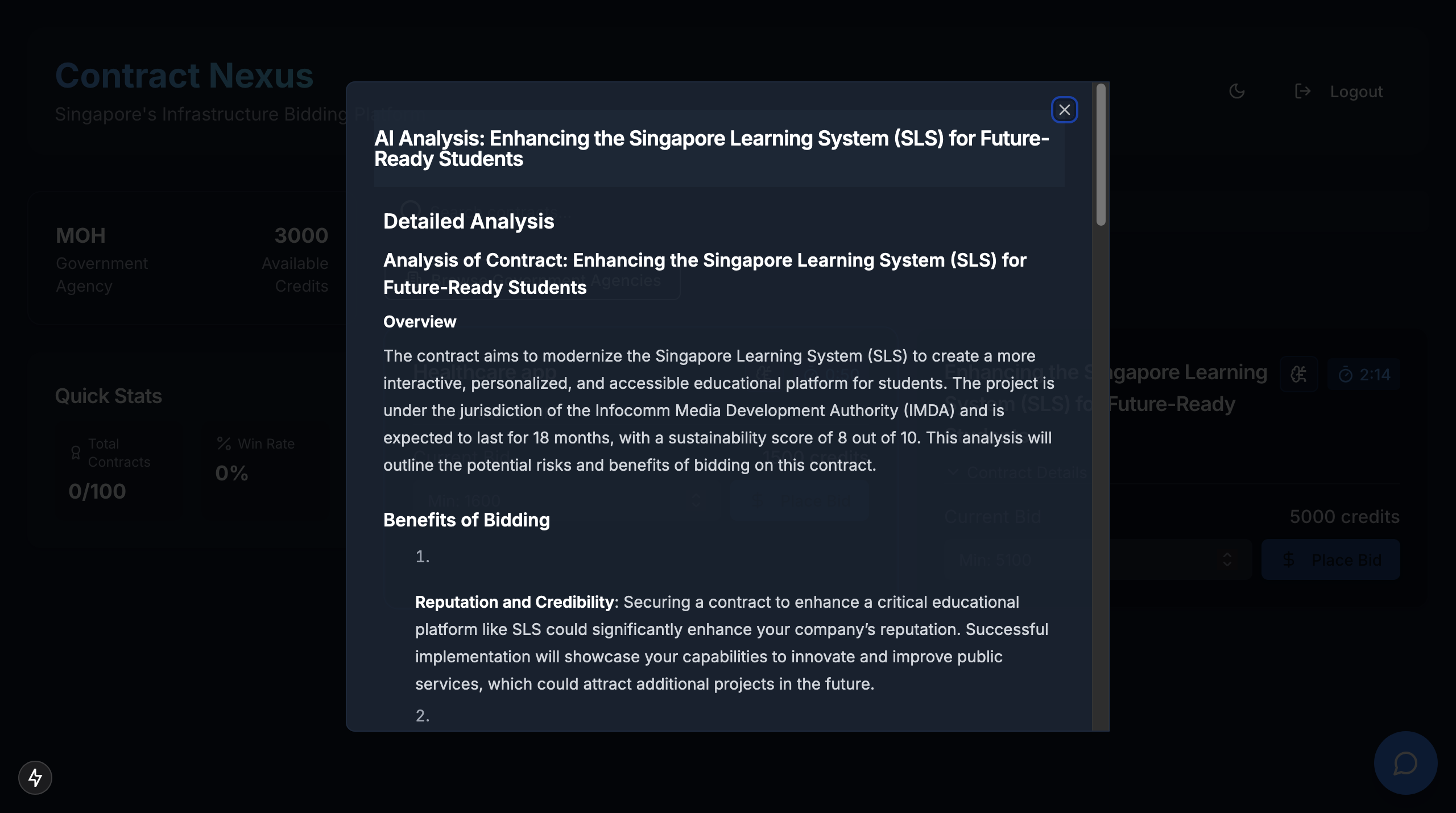
View smart AI summaries to help you decide
-
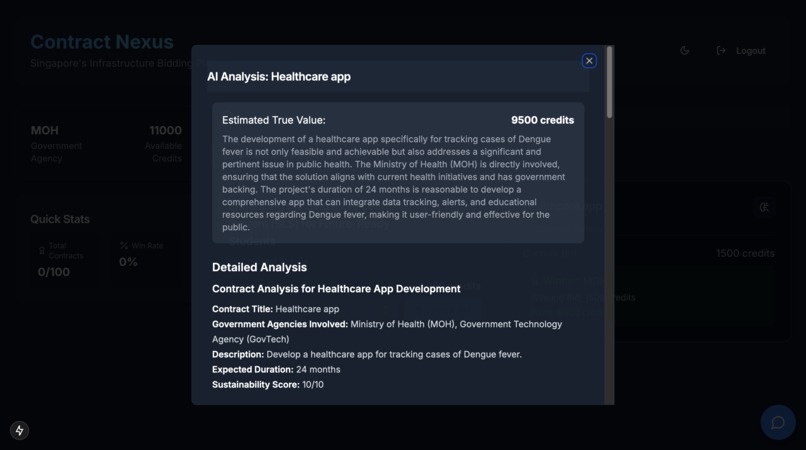
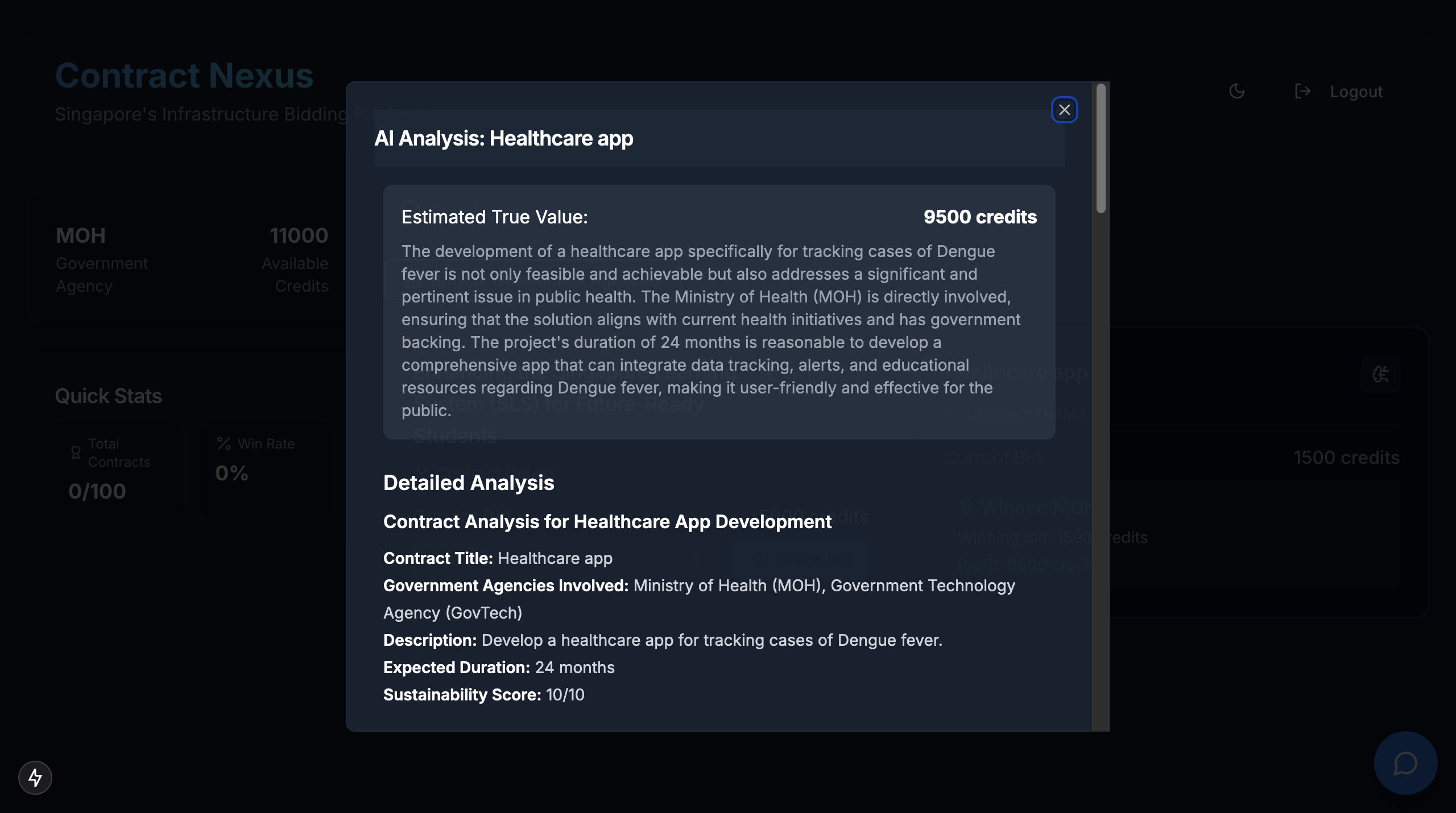
After the bid ends, view the true value of the contract (determined by AI), alongside an extensive review!
Inspiration
This project was our original idea! It was inspired by and in response to the unintuitive and outdated government operation portals we have. The public sector often faces difficulties in modernizing their systems; the UI becomes cluttered, the system turns outdated, and some components just turn obsolete. We envision a platform where different companies can contribute their diverse skills to streamline this process. By gamifying the experience, we aim to engage a broad spectrum of talent and foster creativity in addressing modernization.
What it does
Contract Nexus is a gamified platform where you can create and bid for contracts regarding system modernization.
To start as a Business, simply browse our directory of government agencies to learn about the different systems you can attempt to modernize. Then, create a contract - simply fill in the form and let your creativity flow!
To start as a Government Agency, browse the contracts sent your way by these businesses - and bid for one! You can also view detailed AI analysis on the contract to help you choose. Once the bid is complete, the true value of the contract is revealed!
How we built it
Tech stack:
- Next.js 14 with App Router
- TypeScript
- TailwindCSS
- ESLint
- Shadcn/UI Components
Above is the tech stack for the main website design; simple, elegant and powerful. Additionally, we integrated AI using the OpenAI API.
Challenges we ran into
It was 2 hours into the hackathon - and we abruptly realised that we were running late. After a few long sessions of brainstorming, we had already agreed on a general direction for the project, coming up with an elaborate concept based around auctions. We wanted to create a multiplayer bidding game that ran in a round robin fashion, where every player both drafted and approved contracts, making for complicated yet rewarding gameplay. We had drafted all sorts of interesting features for the roleplaying aspect of gameplay, taking from our own experiences with government portals. Yet, there was a huge problem: we hadn't actually considered the specific UI details, or started on the implementation. We had to make a choice - do we go ahead with the more complicated plan we had drafted, or do we simplify, and first aim for a minimum viable product before building from there?
Given the tight time constraints, eventually we conceded and chose the latter. While development was initially slow, the basic concept gradually took form, and with exponential speed we implemented more complex features as well as a polished UI.
Accomplishments that we're proud of
It's definitely integrating AI into our project! We didn't actually think it would be useful at first, but as we finished our first draft and played around with it, we suddenly realized that using AI as both an aid and challenge could be an invaluable aspect of the game. Every usage of AI was carefully planned and discussed by us; our minimalist approach meant that we never added features just for a cheap gimmick. We saw a whole lot of new use cases where AI would really help and value-add to the product, and so we went ahead and built it. We're very proud that we managed to implement AI so well that it genuinely feels like it belongs - as if it had always been a part of the experience.
What we learned
Design choices are really important in influencing how the end product will look like! While functionality remains a key tenet in our project, design was a game-changer. After discussion, we paid significant attention to the UI/UX of our project, making sure it stayed true to its origins but breathed new life into it. Overall, I think I'm very happy about how these choices turned out. Although we initially were forced to start with a barebones project due to time constraints, it is precisely because of this choice we made that our interface turned out to be intuitive and user-friendly. Looking back, we've learnt that greyboxing is an invaluable part of the development cycle that fleshes out ideas, separating the deceptively decent from the unassumingly underrated. This meant that we were incredibly focused when building every addition, because we knew exactly what we were doing, and our intentions were very clear in our mind. For that, we really are thankful to have adopted this method early on.
What's next for Contract Nexus
- With more time we can definitely make the project scalable, and bring it fully online. Right now it's mostly offline because the data is stored locally. However, we have looked into Firebase Firestore as a viable option for data storage, which also allows for seamless multiplayer. We have a prototype and we'll be excited to demonstrate it once we sort out the details like hosting, security, etc.
- 3D visualisations of the project would also go a long way. For instance, say you want to modernise an online platform, you would be shown a programmer working with code and see how they modernise the system. While this is more of an artistic direction, we will really love to do it, especially since we have team members proficient in 3D Modeling and Level Art!
Built With
- nextjs
- openai
- shadcn
- tailwind
- typescript


Log in or sign up for Devpost to join the conversation.