CONTRA — Don't Just Confirm the Diagnosis. Challenge It.
Inspiration
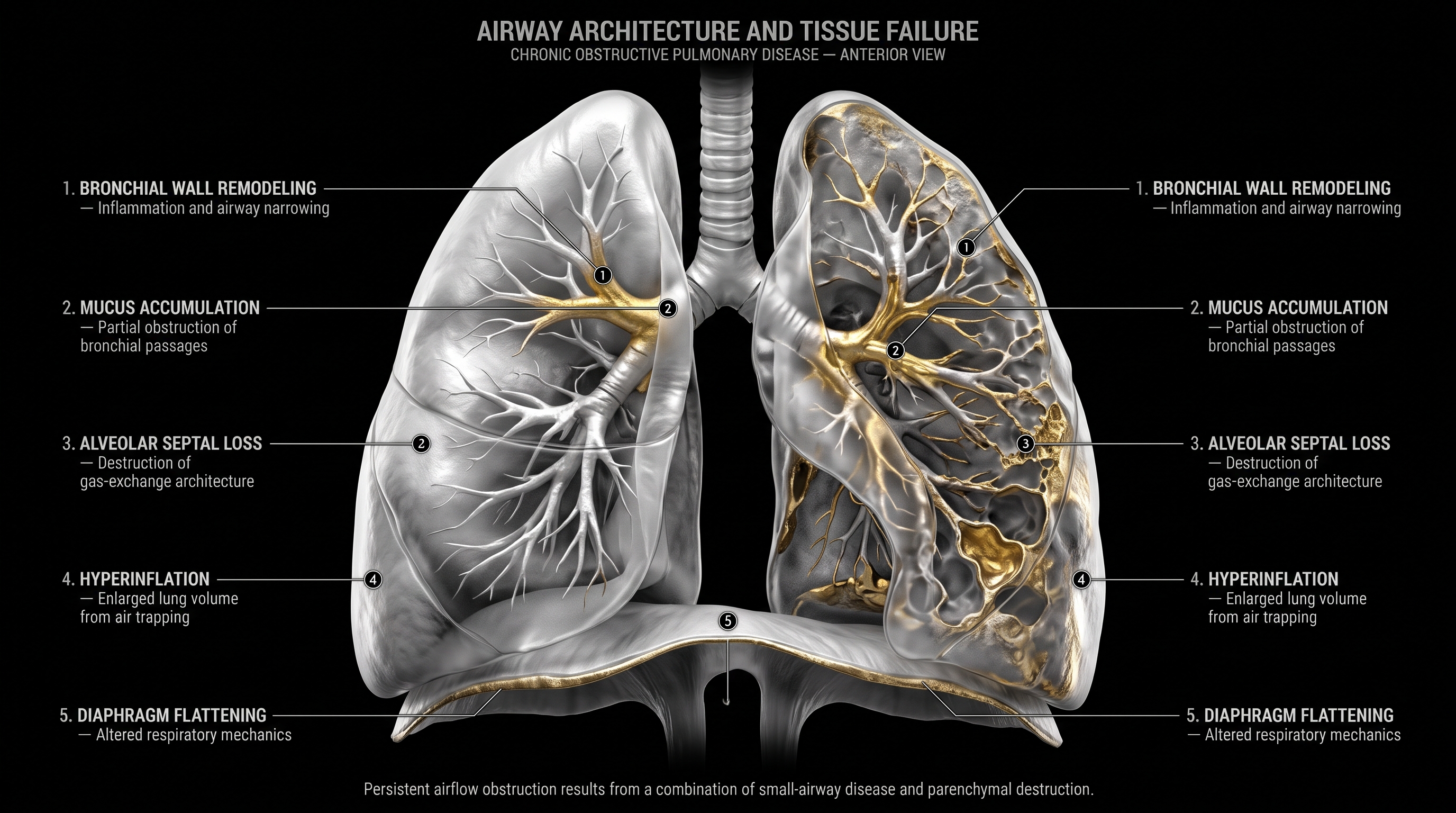
A wrong diagnosis can change someone's life. When two diseases share similar symptoms, a patient may spend years receiving treatment for the wrong condition while the underlying disease continues to progress.
This inspired a simple question: What if AI was designed to challenge a diagnosis instead of confirming it?
Hospitals and healthcare institutions possess enormous amounts of medical knowledge: patient histories, laboratory results, pathology reports, medical images, research papers, and decades of clinical documentation. Yet much of this information remains fragmented across thousands of files.
We wanted to build an AI system that could search this knowledge without requiring everything to be perfectly organized.
We call it CONTRA, a clinical contradiction intelligence system.
What It Does
CONTRA reverses the traditional medical search process.
Instead of asking, "What evidence supports this diagnosis?" CONTRA asks:
"What evidence contradicts this diagnosis, what alternative explanations exist, and what information are we missing?"
Using AI-powered search across network-attached storage (NAS), CONTRA is designed to:
- Search thousands of unstructured medical documents and research files.
- Compare a working diagnosis with alternative disease hypotheses.
- Identify findings that support or contradict each possibility.
- Retrieve relevant clinical research and historical case evidence.
- Highlight missing information that may warrant further investigation.
- Present findings in a concise, source-linked report for clinician review.
Our initial focus is kidney disease, where hundreds of disorders can affect renal function, blood vessels, glomeruli, and surrounding tissue.
CONTRA is not designed to replace doctors or autonomously diagnose patients. It is designed to make clinical reasoning more transparent and help clinicians recognize potentially overlooked evidence.
How We're Building It
CONTRA uses the UGREEN AI NAS ecosystem as a foundation for private, AI-assisted knowledge retrieval.
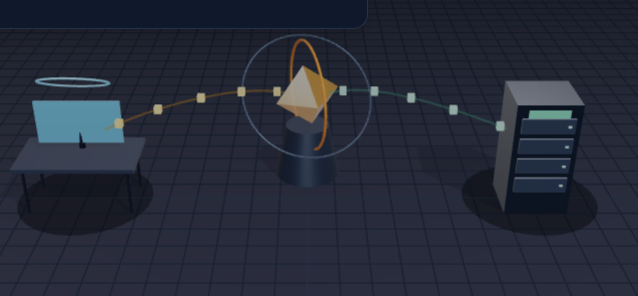
Our approach combines semantic file search, document analysis, evidence extraction, and structured comparison into a single workflow.
The prototype is designed around four stages:
- Retrieve: Locate relevant information across unstructured files.
- Challenge: Identify contradictions and competing clinical explanations.
- Compare: Organize supporting evidence, conflicting evidence, and missing information.
- Review: Generate a traceable report that helps clinicians determine what deserves further investigation.
The initial demonstration uses synthetic patient scenarios and curated medical knowledge rather than real patient records.
Challenges
Our biggest challenge is ensuring that AI does not mistake similarity for certainty.
Two diseases may share symptoms but have different underlying mechanisms and treatments. Finding a similar case does not necessarily mean finding the correct explanation.
We must also distinguish between contradictory evidence, missing evidence, and information that is simply inconclusive.
Other challenges include handling unstructured medical documents, preserving source traceability, reducing AI hallucinations, and protecting sensitive clinical information.
These requirements shaped our central design principle: Every important clinical claim should be traceable to evidence, and uncertainty must remain visible.
What We Learned
We learned that organizing information and understanding information are two different problems.
A hospital may have 50,000 documents without knowing which one contains the evidence that could challenge a clinical assumption.
With AI, the value is not simply in arranging files into folders. It is in identifying meaningful relationships across information that would otherwise remain disconnected.
We also learned that a useful AI system should not always agree with the person asking the question.
Sometimes the most valuable answer is the one that reveals a contradiction.
What's Next
Our goal is to develop CONTRA into a clinically validated decision-support platform that could eventually operate within secure hospital environments.
We envision expanding beyond kidney disease into other conditions where diagnostic overlap can contribute to delayed or incorrect treatment.
The future of medical AI should not be limited to helping clinicians find answers. It should also help them ask better questions.
That's the purpose of CONTRA.
Don't just confirm the diagnosis. Challenge it.
Built With
- ai
- language
- natural
- searchhuman-in-the-loop
- semantic
