-
-
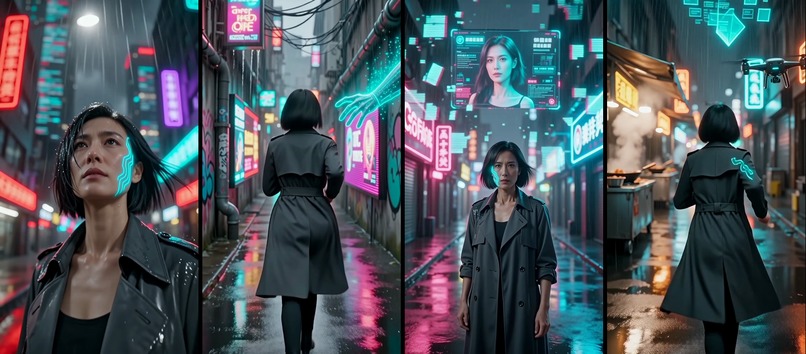
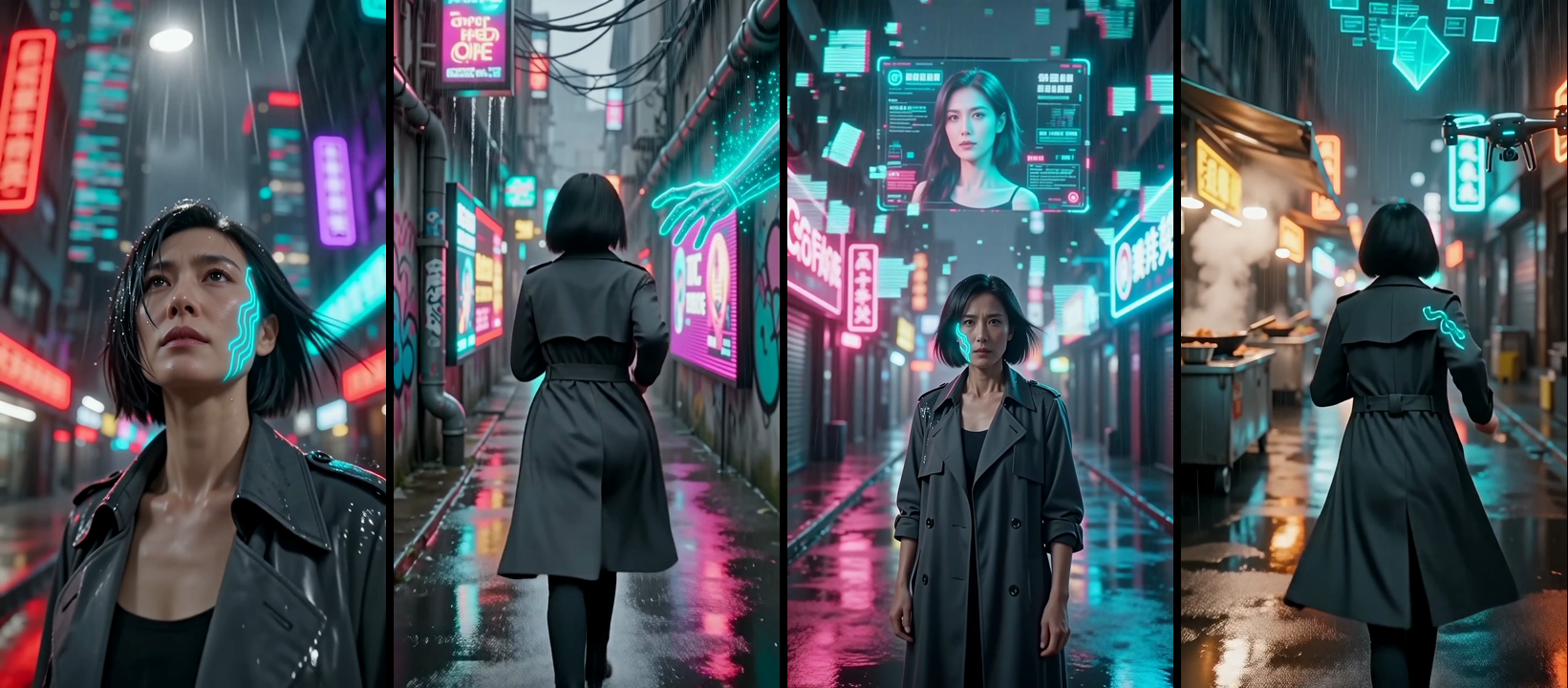
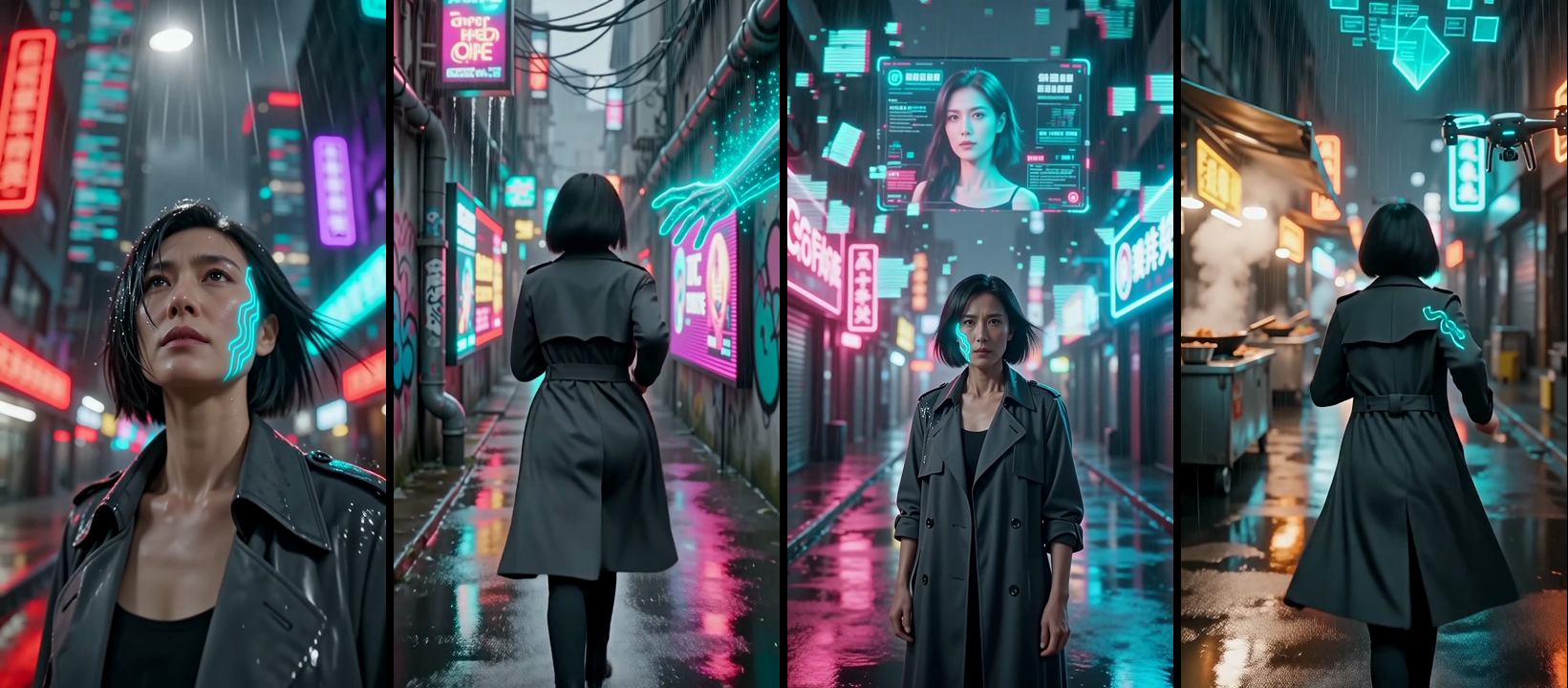
The same protagonist held across both episodes. Qwen-VL cross-episode identity match: 0.98.
What it is
Vertical micro-drama is an $11B market churning out tens of thousands of new titles a month, and it is going global. Every AI tool can make one good clip. None can keep a character looking like the same person across shots, let alone across episodes, so a human still sits in the loop re-rolling takes. Continuum is one agent crew that takes a premise and a recurring protagonist and produces episode after episode autonomously, holding the character's identity across episodes and measuring that it did.
What it does
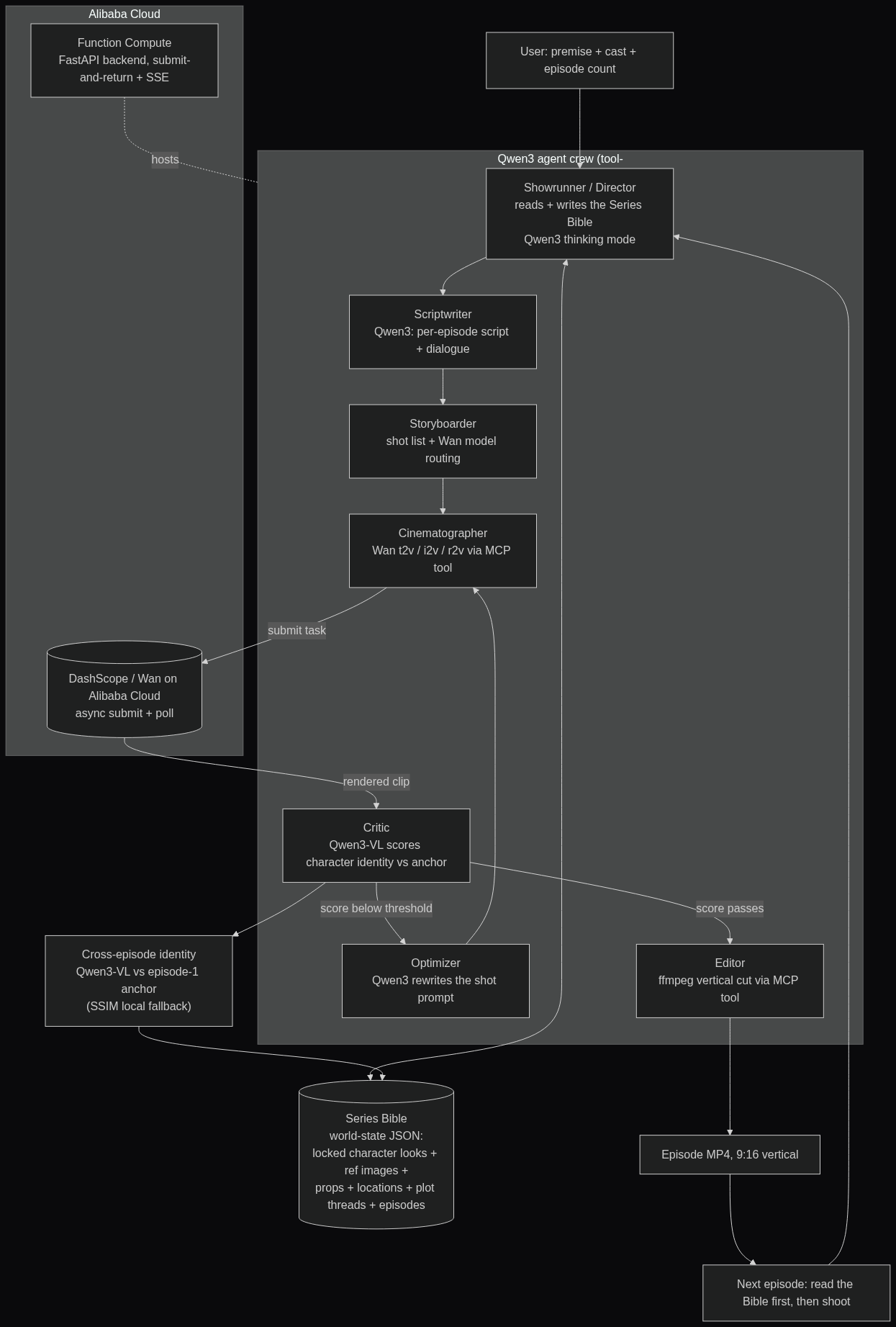
Give it a premise and a protagonist with a locked look. A crew of single-purpose agents, orchestrated by a Showrunner, writes each episode, breaks it into shots, generates the video on Wan, scores each shot's character identity with a Qwen-VL critic, re-renders anything that drifts, and cuts the episode together as a 9:16 vertical with burned-in subtitles. The Series Bible locks the protagonist's appearance once and injects it into every later episode, so the lead stays consistent instead of drifting. On the two-episode demo series the measured cross-episode identity match is 0.98.
How I built it
- Showrunner, Writer, Storyboard, Cinematographer, Critic, and Editor: single-responsibility agents in a pipeline.
- Qwen3-max for scripting and for the optimizer that rewrites a shot prompt when the critic rejects it.
- Qwen3-VL (qwen3-vl-plus) as the visual critic: it compares a rendered shot's character against episode 1's anchor frame and returns a 0 to 1 identity score with a reason. This is what makes the autonomy loop real, and what produces the measured consistency number.
- Wan (wan2.6-t2v) on Qwen Cloud for 9:16 vertical video; async submit-and-poll with transient-error tolerance so a multi-minute render is not aborted by one flaky network blip.
- A Series Bible, a JSON world-state the Showrunner reads before each episode and writes after, with lock-and-merge semantics so a character's established look can never be overwritten.
- ffmpeg for the vertical cut and subtitle burn-in.
- FastAPI and Server-Sent Events for the live control room that streams each agent's work, plus a single self-contained HTML frontend.
- MCP / Qwen-Agent tools: video generation, episode stitching, and frame scoring are exposed as JSON-schema tools so a director model can drive them by tool-calling.
Qwen Cloud features used
- Qwen3-max via the DashScope OpenAI-compatible endpoint for scripting and prompt optimization.
- Qwen3-VL multimodal (image input) as the identity critic, verified against live calls before building on it.
- Wan text-to-video on DashScope for the actual footage; Wan reference-to-video is wired in as the next step for even tighter identity.
- One DashScope key drives both text and video against the Singapore international endpoints.
Challenges I ran into
- Measuring consistency honestly. SSIM (pixel structure) scores two real shots of the same character in different framing as low, so it cannot tell "same person, new angle" from "different person." Switching the critic to a Qwen-VL identity judge gave a metric that means something (0.98), and I report that instead of a pixel score.
- Async cloud rendering. Wan polling intermittently hit proxy 503s. The fix was to treat transient transport errors as retryable with backoff rather than rewriting working logic, which took the pipeline from failing one shot in five to running a full episode unattended.
- Cost discipline. Video is the expensive part, so I rendered at 720p vertical and kept the demo inside the free Wan quota, then set a hard spending cap rather than drift into pay-as-you-go.
Accomplishments that I am proud of
A single command produces a multi-episode series whose lead is visibly and measurably the same person across episodes, with the whole pipeline, the self-correction loop, and the consistency measurement running with no human in the loop.
What I learned
Cross-episode identity is the real wall in serialized AI video, and the leverage is not a better single generation but enforced world-state plus a vision model that judges identity and can act on its own verdict.
What's next for Continuum
- Route character-bearing shots to Wan reference-to-video / image-to-video using the Bible's reference frame for even tighter identity.
- Lip-synced dialogue via speech-to-video.
- A character library so the agent retrieves an established protagonist instead of re-deriving one, and multilingual episodes from a single Bible since Qwen already covers the languages.
How to run (for judges)
python3 -m venv .venv && .venv/bin/pip install -r requirements.txt
cp .env.example .env   # paste a DASHSCOPE_API_KEY
PYTHONPATH=. .venv/bin/uvicorn backend.server:app --port 8000
# open http://127.0.0.1:8000, enter a premise and protagonist, Generate
ffmpeg must be on PATH. The repository is open source under MIT.


Log in or sign up for Devpost to join the conversation.