Inspiration
We've all experienced the same problem: we create the perfect schedule in the morning, and by afternoon, everything has fallen apart.
A class runs longer than expected. An assignment suddenly becomes urgent. An unexpected commitment takes away an hour. Our calendar still shows the original plan, and our to-do list still contains the same tasks. We're left to figure out what to do next.
We realized that most productivity applications are excellent at recording what we need to do, but not at helping us decide what to do when circumstances change.
That inspired us to build Continuum, an AI-powered personal operating system designed around one simple idea:
A good plan shouldn't break when life changes. It should evolve with you.
What it does
Continuum is an intelligent planning assistant that transforms tasks, deadlines, calendar commitments, and personal preferences into realistic, actionable schedules.
Instead of simply listing tasks, Continuum helps users understand their available time, prioritize commitments, and adjust their plans when unexpected events occur.
Its core capabilities include:
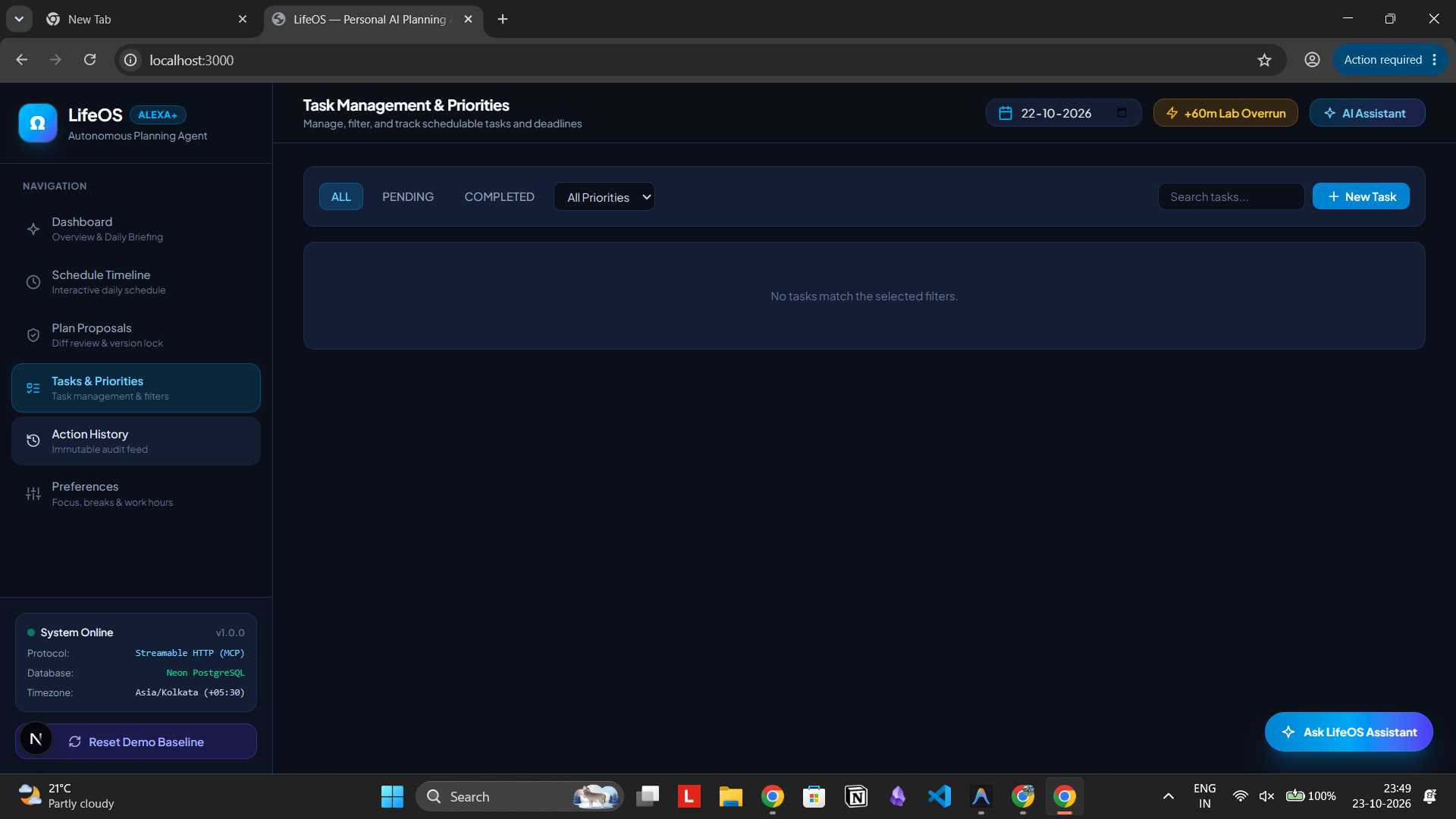
- AI-powered task management: Users can interact with an AI assistant to organize tasks, priorities, deadlines, and estimated durations.
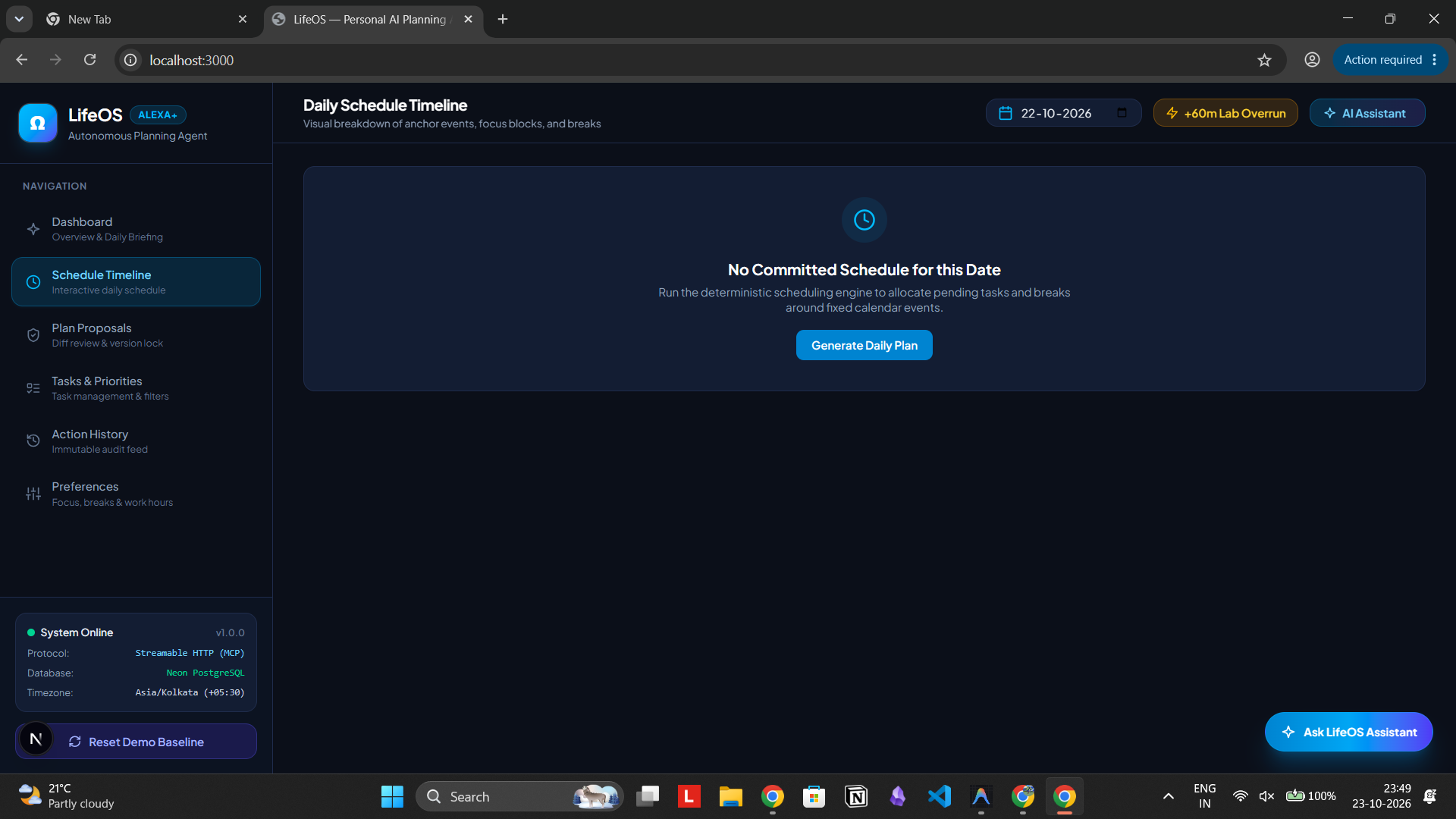
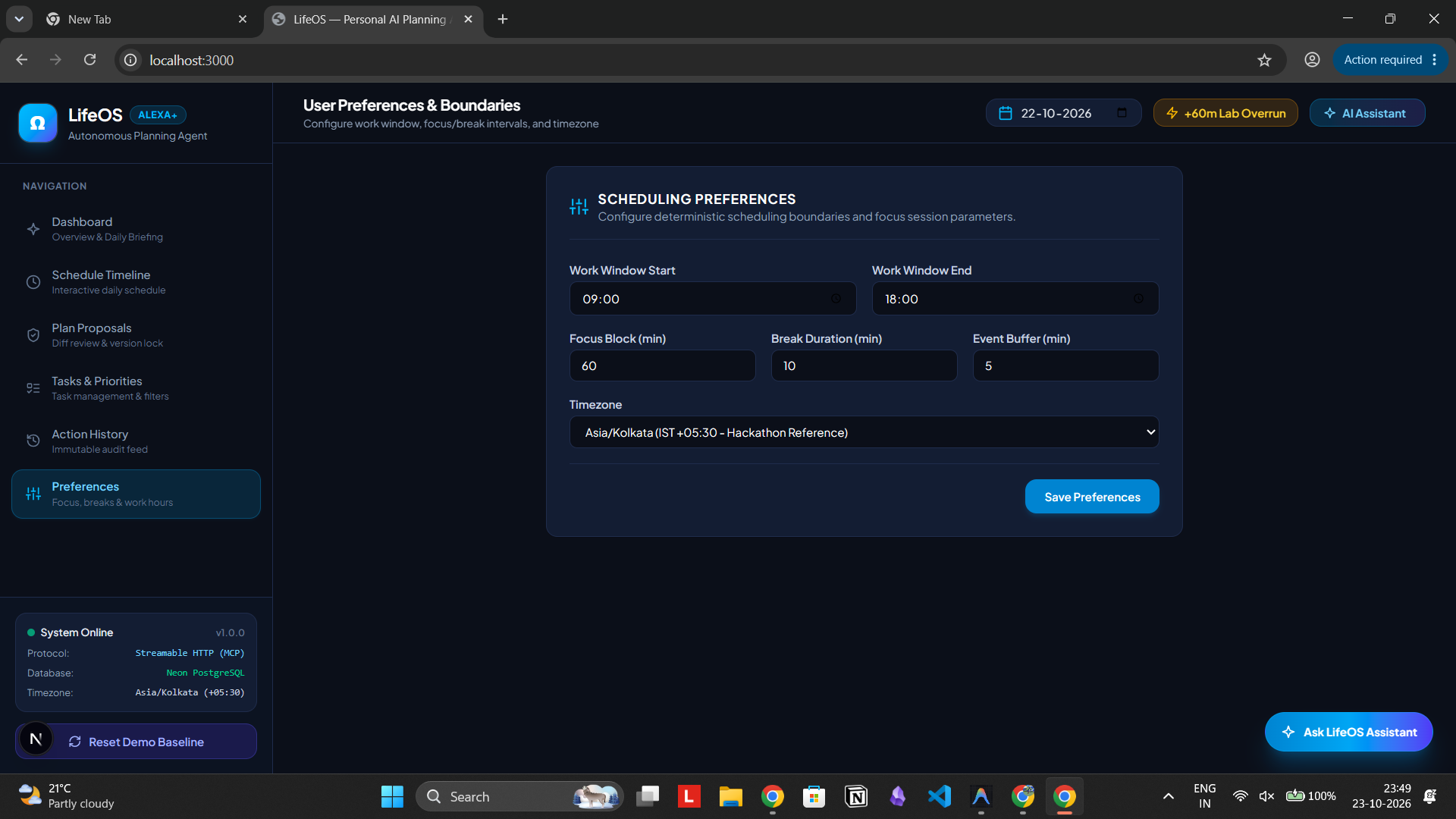
- Intelligent daily planning: A scheduling engine builds plans around fixed commitments, available time, and preferred focus and break intervals.
- Adaptive replanning: When something changes, Continuum can generate a revised schedule instead of forcing users to rebuild their day manually.
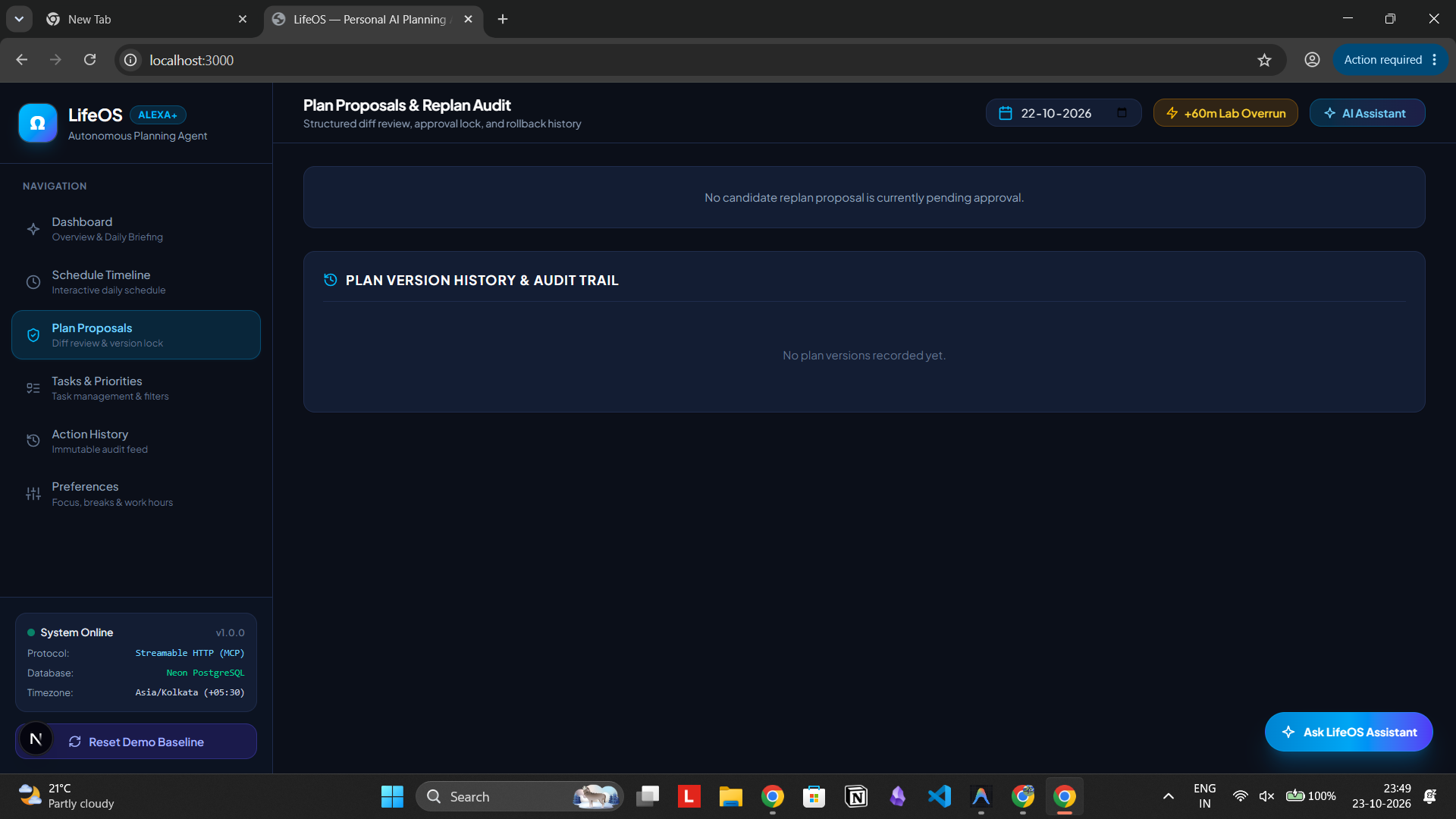
- Before-and-after comparisons: Users can review which activities moved, what changed, and why.
- Human-in-the-loop approval: Proposed schedule changes can be reviewed before being committed.
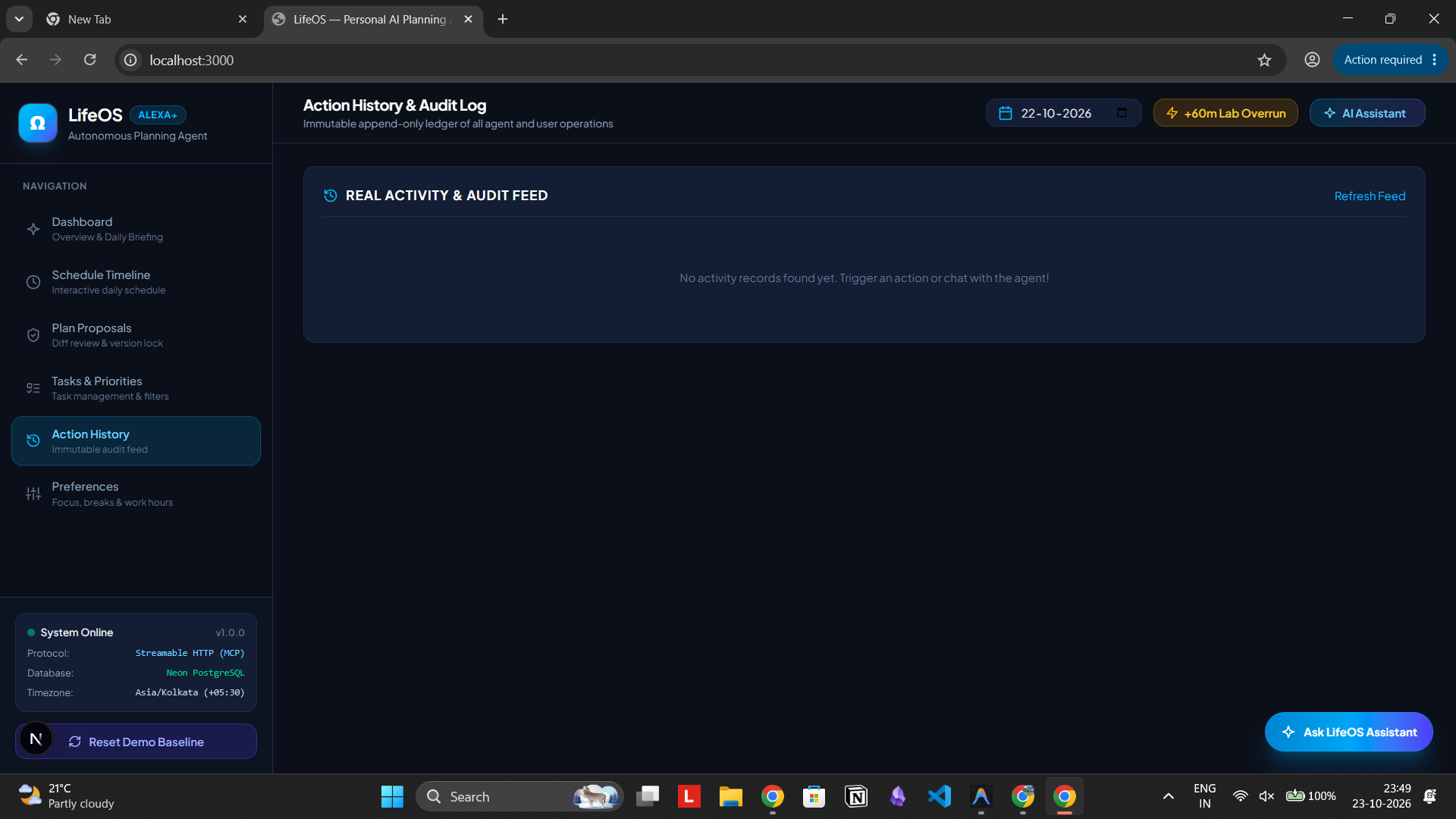
- Persistent context: Tasks, preferences, schedules, and planning history are stored so the experience can continue across sessions.
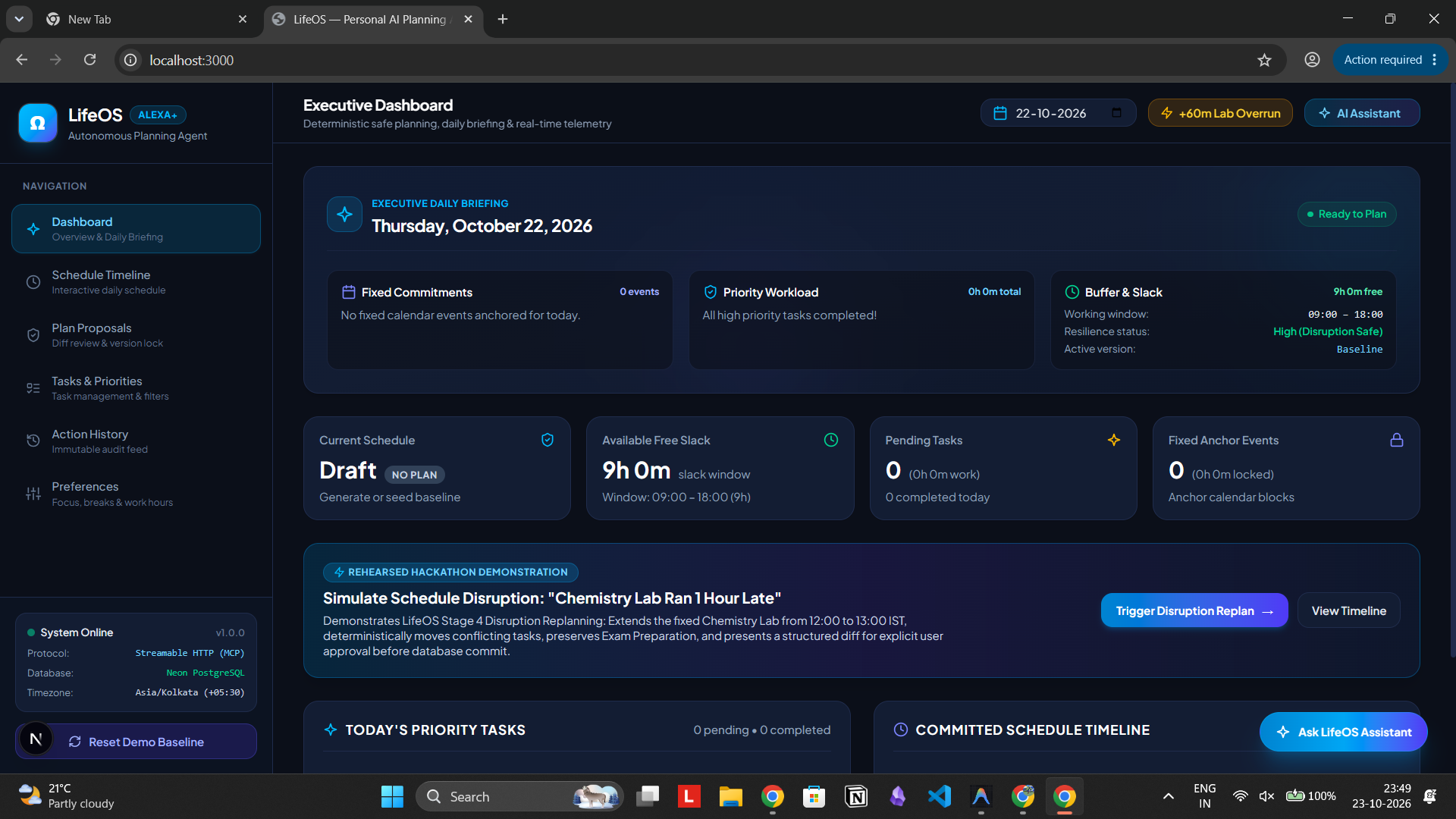
- Productivity dashboard: A unified interface brings together daily priorities, schedules, tasks, and AI interactions.
For example, imagine a student with an assignment deadline, an upcoming quiz, and a planned coding practice session.
Continuum creates a schedule that accommodates all three.
Now imagine their afternoon lab runs an hour late.
Instead of starting over, the student can tell Continuum:
"My lab ran an hour late. Can you adjust my evening?"
Continuum evaluates the remaining time, preserves important commitments where possible, and proposes an updated schedule. The student can inspect the changes and approve the new plan.
That's the experience we're building: not just an AI that suggests plans, but an assistant that helps users manage change.
How we built it
We designed Continuum as a modular application that separates natural-language reasoning from scheduling logic and persistent state.
Frontend: We used Next.js, React, TypeScript, and Tailwind CSS to create a unified productivity workspace featuring task management, a daily timeline, AI interactions, and schedule review.
Backend and persistent storage: An Express-based TypeScript backend manages application functionality, with PostgreSQL hosted on Neon and Prisma for database access.
Model Context Protocol (MCP): We built an MCP server using the MCP SDK and Streamable HTTP transport. It exposes structured operations for retrieving context, managing tasks and preferences, and interacting with planning workflows.
AI orchestration: The agent layer interprets natural-language requests and coordinates application tools. Rather than treating the language model as the source of truth for stored data, we use explicit operations to retrieve and update application state.
Deterministic scheduling: We separated schedule computation from conversational reasoning. The planner considers available time, fixed events, task estimates, priorities, and deadlines to produce schedules that can be checked for conflicts.
Adaptive replanning: We designed a preview-and-approval workflow so users can understand proposed changes before applying them. This makes the planning experience more transparent and keeps the user in control.
The central architectural principle is straightforward:
Let AI understand the user's intent, let tools interact with real data, and let the scheduling engine handle scheduling constraints.
Challenges we ran into
One of our biggest challenges was moving beyond a typical chatbot experience.
Generating a convincing schedule in natural language is relatively easy. Building a system that manages actual tasks, respects existing commitments, and updates persistent plans is much harder.
We faced several important engineering challenges:
1. Making AI actions reliable
We needed to distinguish between an AI response that merely describes an action and a system that actually performs it. Using structured tools and persistent storage helped us build toward verifiable execution.
2. Handling scheduling constraints
Tasks have different priorities, durations, and deadlines. Fixed commitments cannot simply be moved to make a generated plan look convenient. We addressed this by separating scheduling calculations from the language model.
3. Designing safe replanning
Automatically rewriting someone's schedule without their knowledge creates a trust problem. We introduced a workflow where users can inspect proposed changes before approving them.
4. Integrating multiple application layers
Connecting the frontend, AI orchestration, MCP server, database, and scheduling engine required clear interfaces and consistent data models.
5. Database and development environment issues
During development, we encountered challenges involving Prisma client generation, database configuration, and the transition from local PostgreSQL to a hosted Neon database. These issues reinforced the importance of reproducible setup instructions and reliable environment configuration.
Accomplishments that we're proud of
We're especially proud of approaching Continuum as an end-to-end planning system, rather than a standalone chatbot or task tracker.
Our key accomplishments include:
- Designing an MCP-based tool architecture for structured interaction with application data.
- Building a persistent foundation for tasks, preferences, and planning workflows.
- Separating conversational AI from deterministic scheduling logic.
- Designing adaptive replanning around transparency and user approval.
- Bringing planning, task management, and AI assistance together in one interface.
Most importantly, we established a foundation for a different kind of productivity assistant: one focused on helping people respond to reality rather than simply maintain an idealized schedule.
What we learned
Building Continuum taught us that useful AI applications need more than strong language generation.
Reliability matters as much as intelligence. A helpful assistant must work with actual state, respect constraints, and communicate when something cannot be scheduled.
We also learned the value of human-in-the-loop design. The goal of an intelligent assistant shouldn't be to take control away from the user, but to make decisions easier by presenting meaningful options and explanations.
Working with MCP helped us explore how structured tools can connect AI reasoning to application capabilities in a modular way.
And perhaps our biggest lesson was that good AI product design starts with a real user problem, not with the model itself.
What's next for Continuum
Our long-term vision is to make Continuum a proactive personal operating system that helps users manage not just individual tasks, but their broader goals and commitments.
Some directions we want to explore include:
- Deeper calendar integrations: Connecting external calendar providers to synchronize real-world commitments.
- More proactive assistance: Detecting scheduling conflicts and deadline risks before they become urgent.
- Voice-first experiences: Making planning and replanning more natural through conversational voice interfaces.
- Personalized scheduling: Learning from user preferences, task completion patterns, and realistic productivity habits.
- Collaborative planning: Helping small teams coordinate shared commitments and priorities.
- Cross-platform access: Extending Continuum beyond the web to more devices and everyday workflows.
Our vision is simple:
Continuum should be the assistant that keeps your plans moving, even when your day doesn't go according to plan.
Built With
- ai
- express.js
- llm
- mcp
- model-context-protocol
- neon
- next.js
- node.js
- postgresql
- prisma
- react
- tailwind-css
- typescript

Log in or sign up for Devpost to join the conversation.