Inspiration
Every day we generate valuable information about ourselves—tasks, plans, reflections, commitments, lessons learned, and decisions made. Yet most of this context gets scattered across calendars, note-taking apps, task managers, chats, and our own memory.
I realized that productivity isn't limited by access to information. We already have more information than ever before. The real challenge is maintaining continuity—remembering what we were working on, what we learned, what we promised, and what matters next.
That idea led to Continuity.
What it does
Continuity is an AI-powered personal memory and productivity system that combines task management, scheduling, journaling, voice capture, and memory retrieval into a single platform.
Users can:
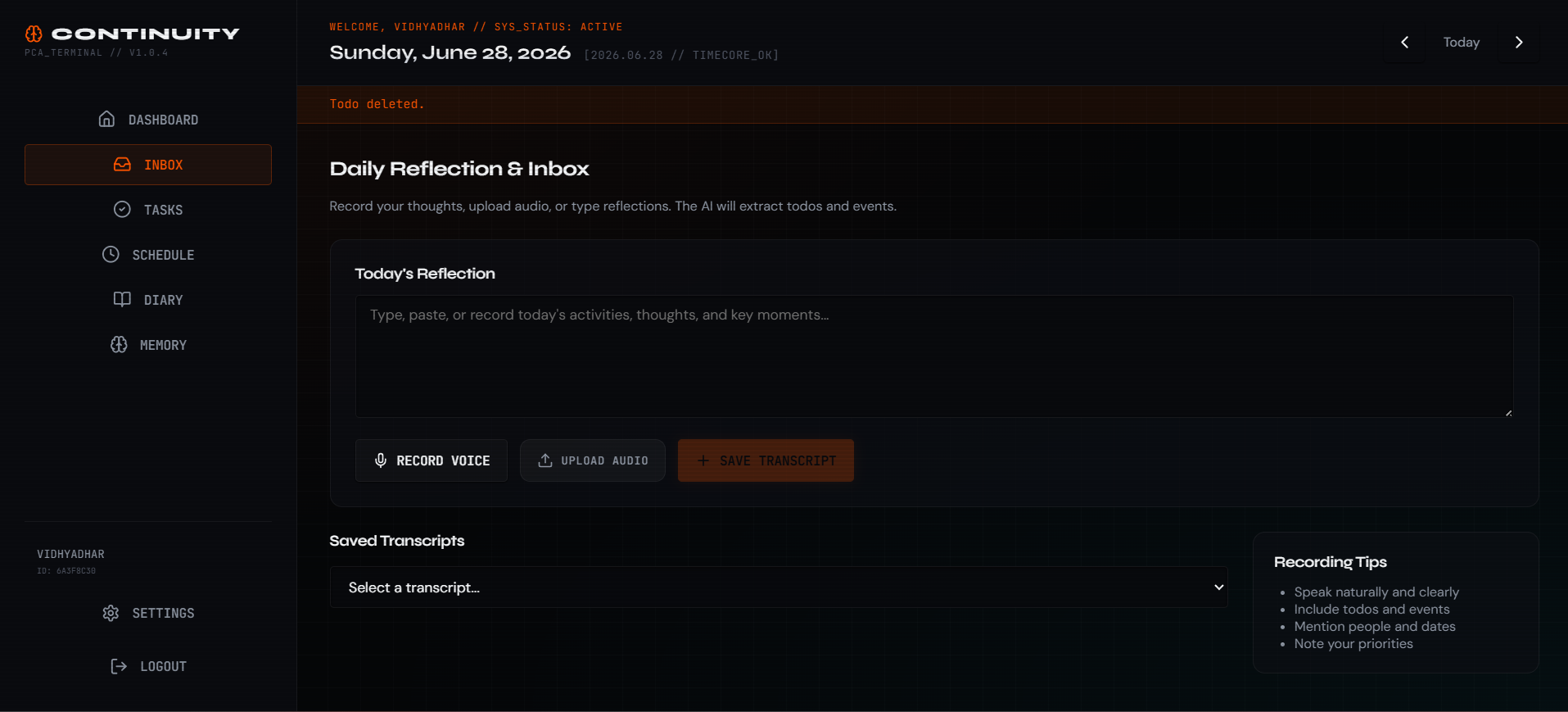
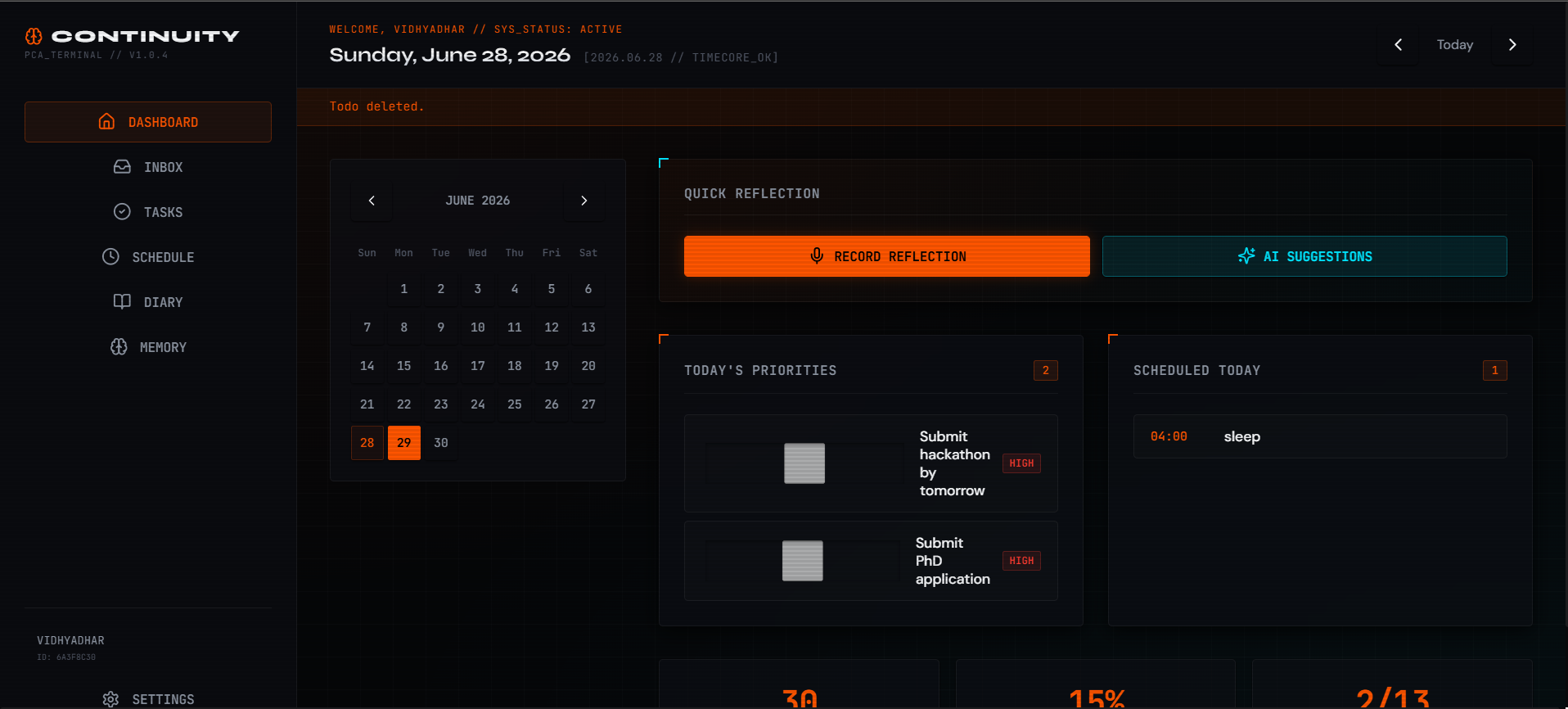
- Capture thoughts through voice or text
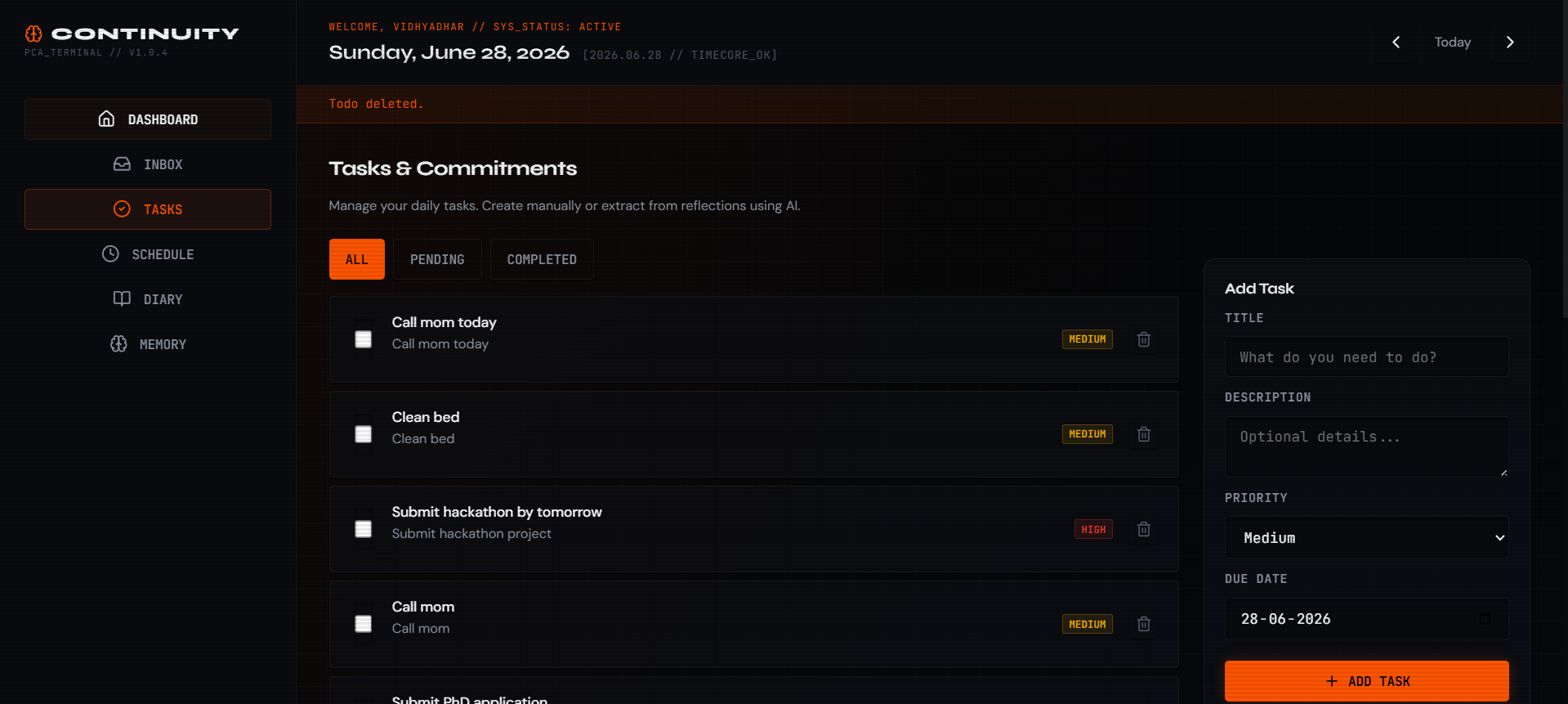
- Automatically extract tasks and commitments using AI
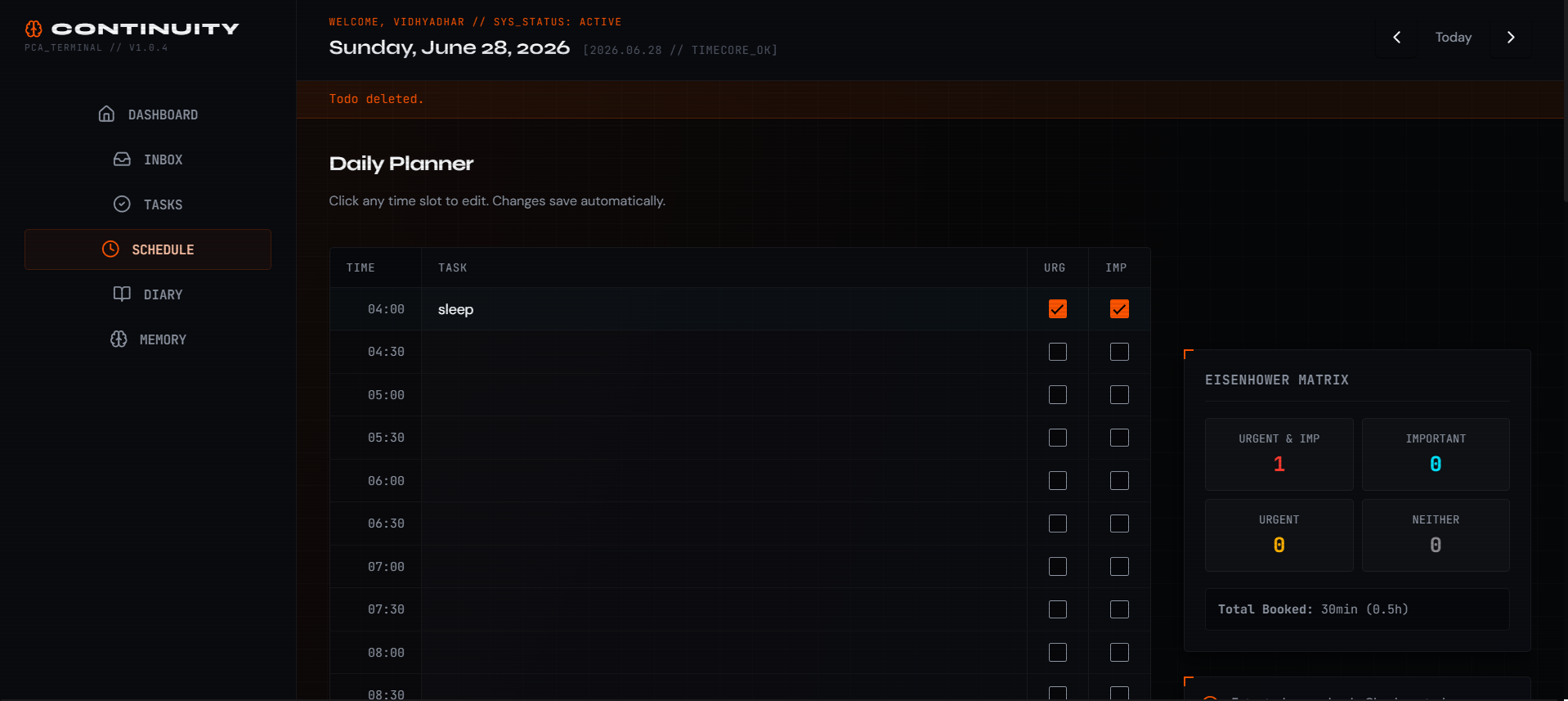
- Organize work through a planner and Eisenhower Matrix
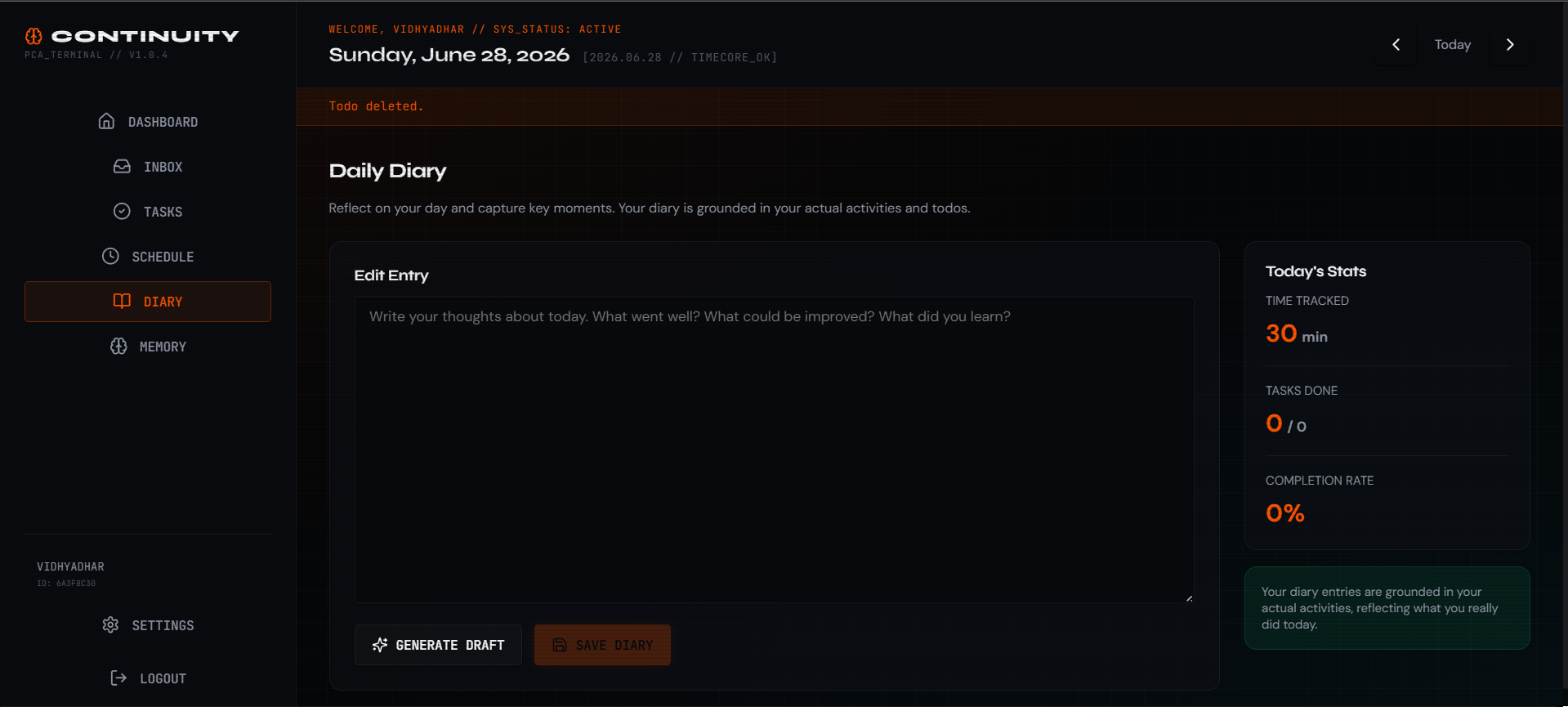
- Generate diary entries from daily activities
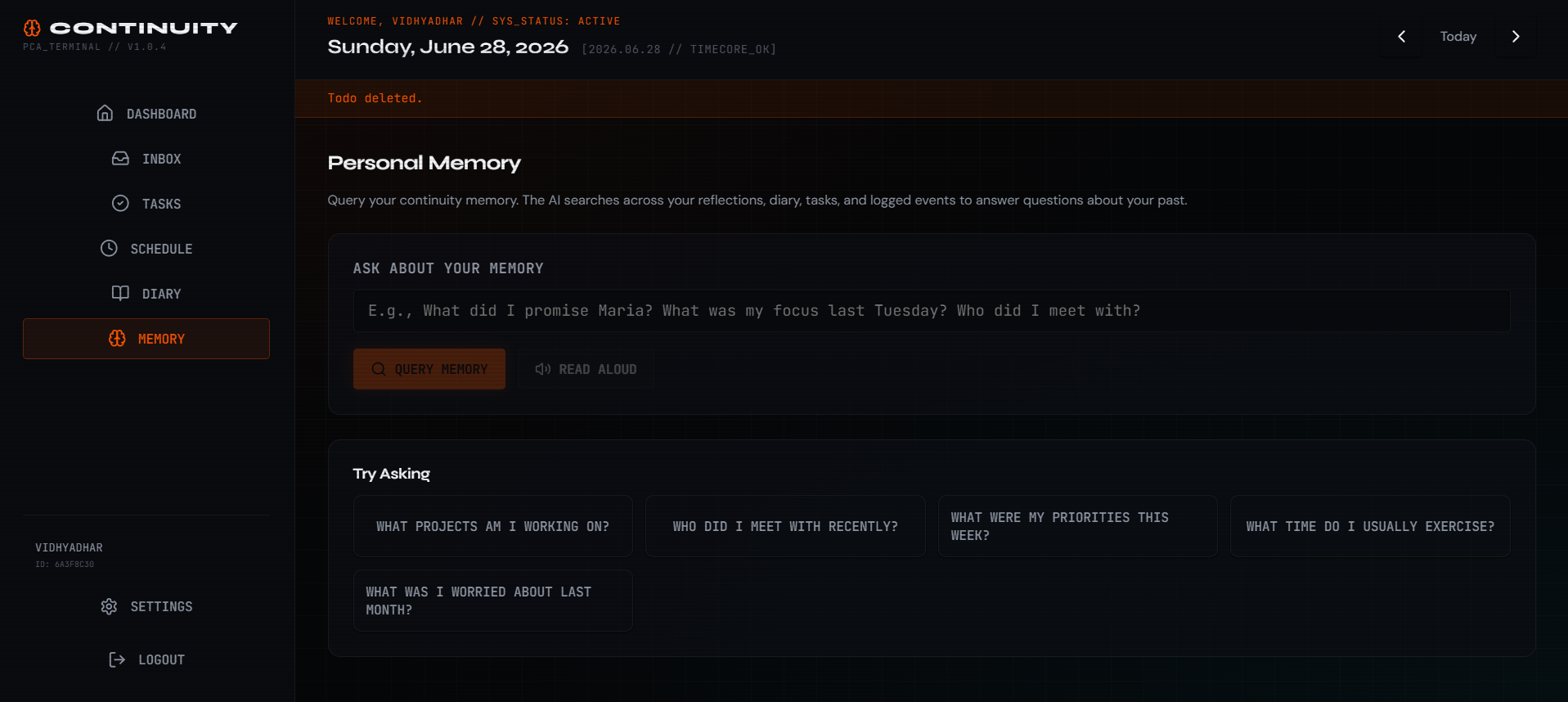
- Search their personal history using natural language
Instead of asking, "What was I doing last Wednesday?" users can simply ask Continuity and receive answers grounded in their own data.
How we built it
We built Continuity as a full-stack AI-powered personal memory system focused on preserving context across a user's daily life.
The platform consists of:
- A voice-first reflection inbox
- AI-powered task extraction workflows
- Daily planning and scheduling tools
- Automated diary generation
- A memory engine capable of searching across reflections, diary entries, schedules, and tasks
ASI:ONE serves as the intelligence layer of the system. We integrated ASI:ONE to analyze user reflections, understand intent, extract actionable tasks and commitments, generate structured diary drafts, and power natural-language memory retrieval across a user's historical data.
For example, when a user records a voice reflection such as:
"Tomorrow I need to review my LangChain notes, finish my assignment, and call my mother."
ASI:ONE understands the context, identifies actionable commitments, and converts them into structured tasks that can be scheduled and tracked.
Similarly, when users ask questions like:
"What was I focused on last week?"
ASI:ONE searches across stored reflections, diary entries, schedules, and completed tasks to generate a context-aware answer grounded in the user's own history.
The interface was designed around a futuristic terminal-inspired aesthetic to reinforce the concept of a personal operating system that continuously captures, organizes, and recalls personal context.
Challenges we ran into
One of the biggest challenges was designing a workflow that felt natural rather than overwhelming.
Most productivity tools force users to manually maintain their systems. We wanted Continuity to reduce friction by allowing users to simply speak their thoughts while AI handled organization and structuring in the background.
Another challenge was creating meaningful connections between different types of information—tasks, schedules, reflections, and memories—so that everything contributes to a single searchable history.
What we learned
Building Continuity taught us that productivity and memory are deeply connected.
People don't just need better task management. They need a way to preserve context over time.
By combining reflection, planning, journaling, and AI-powered memory retrieval into a unified experience, we discovered that users can build on previous progress instead of constantly starting over.
What's next for Continuity
Our vision is to create a true personal continuity system.
Future plans include:
- Calendar integrations
- Email and communication history
- Long-term memory graphs
- Personalized AI coaching
- Deeper context-aware recommendations
The goal is simple:
Never lose context again.
Built With
- express.js
- mongodb
- next.js
- node.js
- openai
- react
- tailwind-css
- typescript
- vercel
- whisper

Log in or sign up for Devpost to join the conversation.