-
-
-
-
-
-
-
Icon
Inspiration
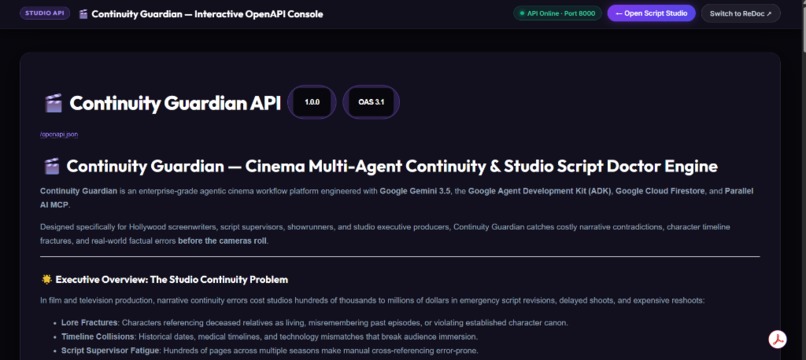
Every long-running TV show or film franchise eventually makes a continuity mistake — a character who died two seasons ago casually mentioned as alive, a city described with the wrong geography, a "fact" about the real world that's just wrong. Studios pay real people, called continuity supervisors, to catch these errors by hand, reading through scripts and cross-referencing notes. It's slow, it doesn't scale past a handful of episodes, and mistakes still slip through — plenty of shows have been mocked online for exactly this.
We wanted to build something that does what a continuity supervisor does, but instantly, and that also checks something a human supervisor usually can't check fast enough: whether the real-world facts a script leans on are actually true right now.
What it does
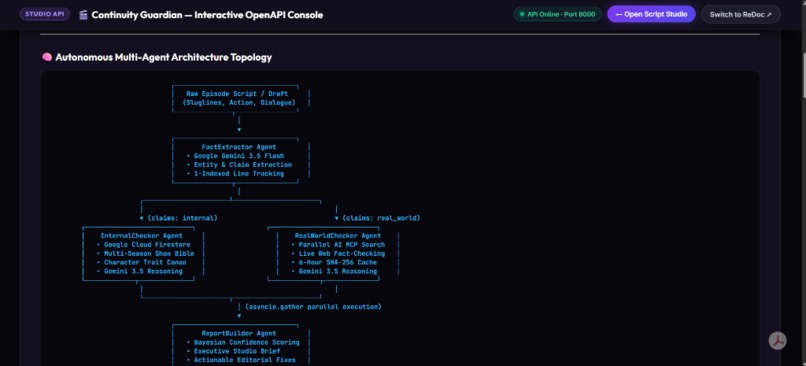
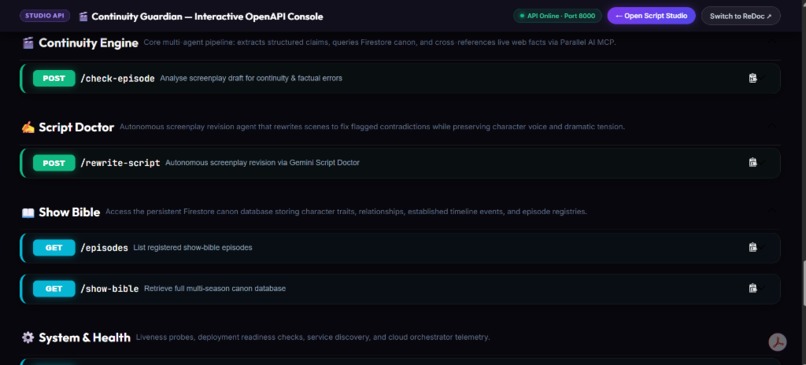
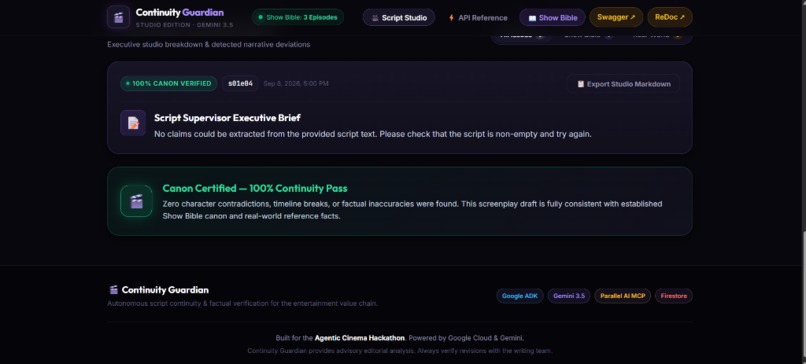
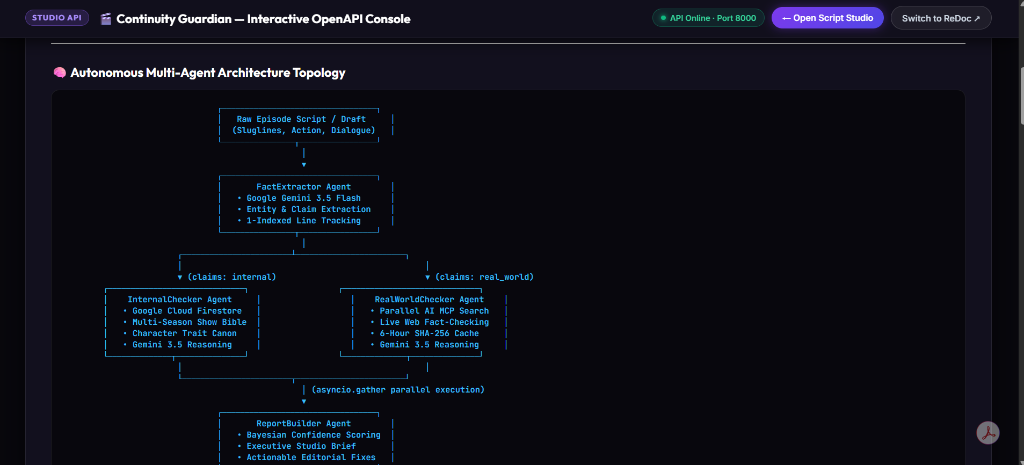
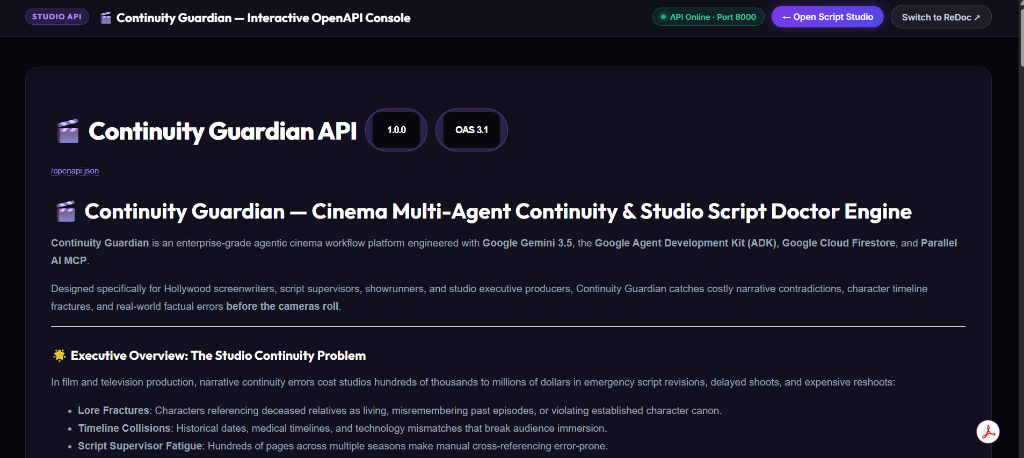
Continuity Guardian takes a new episode or scene script as input and runs it through two parallel checks before handing back a clear, actionable report:
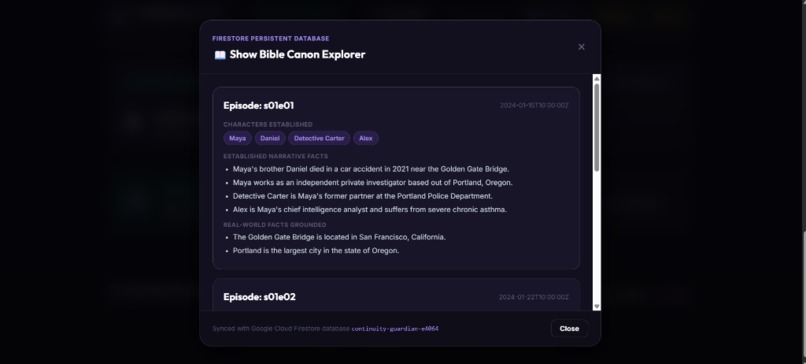
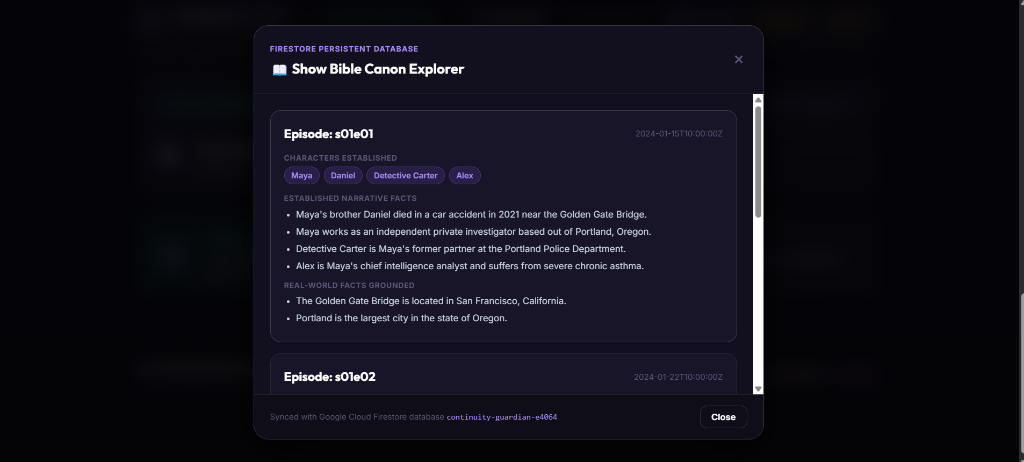
- Internal continuity check — compares the new script against a growing database of facts extracted from every previous episode ("show bible"), flagging contradictions like a character being alive after a previous episode confirmed their death, or a location's details changing without explanation.
- Real-world fact check — for any claim the script makes about the real world (a historical event, a real place, a real medical or scientific fact), the agent searches the live web via the Parallel Search API and flags anything that's inaccurate or has changed.
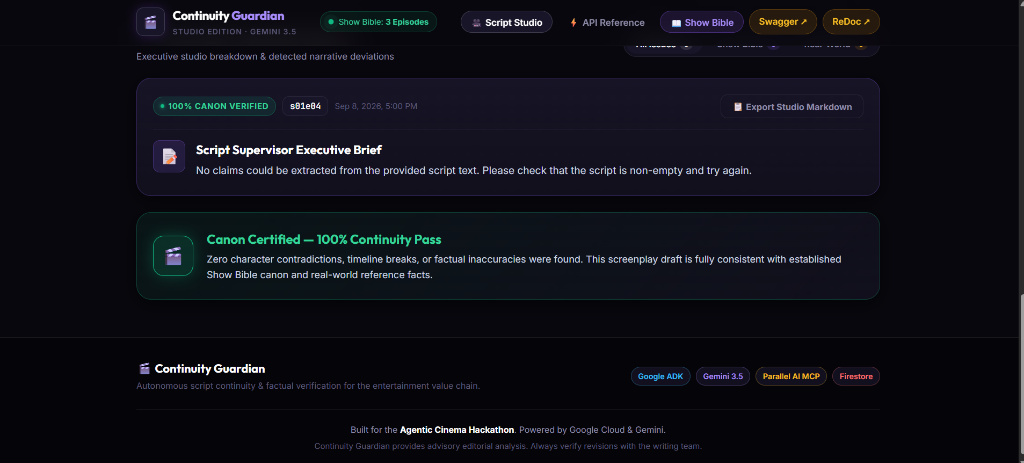
Both checks feed into a synthesis step powered by Gemini, which writes a single, readable report: what's wrong, why it's wrong, and a suggested fix — not just a wall of raw search results.
After a script passes through the system, its facts are automatically extracted and saved back into the show bible database, so the system's internal memory grows with every episode you feed it.
How we built it
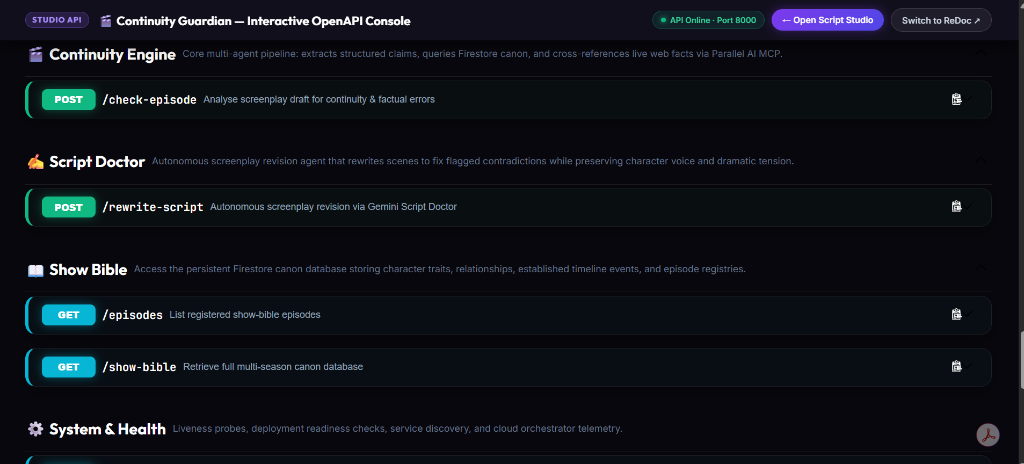
- Agent orchestration: Google's Agent Development Kit (ADK), the framework behind the Gemini Enterprise Agent Platform / Google Cloud Agent Builder, coordinates the multi-step pipeline: extract facts → check internal continuity → check real-world facts → synthesize report → save new facts.
- Reasoning: Google Gemini handles fact extraction from raw script text and writes the final human-readable report.
- Web research: Parallel's hosted Search MCP server is called directly by the agent as a tool — this is the partner integration for our track, and it's called live during the demo, not just referenced.
- Memory: Google Firestore stores structured, per-episode "show bible" documents (characters, key facts, real-world claims mentioned), acting as the internal database the agent checks against.
- Frontend: a lightweight, responsive web interface (mobile and desktop) built with proper viewport meta tags, semantic HTML, and Open Graph tags so the project looks polished whether it's opened on a laptop or shared as a link.
- Design: a single set of CSS custom properties drives both light and dark themes automatically, based on the visitor's system preference, rather than hardcoding one look.
- Engineering approach: the codebase is organized around a small set of focused classes — a script parser, a shared checker interface with two implementations (internal vs. real-world), a repository class that's the only code allowed to talk to the database, and a caching layer that avoids repeating identical Gemini or Parallel calls. The internal and real-world checks run concurrently rather than one after another, cutting report generation time roughly in half.
- Built inside Google Antigravity, Google's agentic coding IDE, which planned and scaffolded much of the implementation from natural-language task descriptions.
Challenges we ran into
(fill in after building — e.g., getting structured, reliable JSON output from Gemini for fact extraction; tuning what counts as a "real-world claim" worth fact-checking vs. noise; balancing check speed against Parallel's rate limits; making the report readable rather than just a dump of flagged sentences)
Accomplishments that we're proud of
(fill in — e.g., a fully working end-to-end pipeline with zero hosting cost, a genuinely useful non-generic idea, sub-X-second report generation, a UI that works cleanly on both desktop and mobile)
What we learned
(fill in — e.g., what we learned about agent orchestration with ADK, about designing prompts for structured extraction, about the Parallel Search API, about building responsive AI-product UIs quickly)
What's next for Continuity Guardian
- Support for uploading full PDF/scripts in standard screenplay format, not just plain text
- A "confidence score" per flagged issue, so writers can triage quickly
- Multi-show support, so a studio could run several show bibles side by side
- Direct integration into existing screenwriting tools rather than a standalone uploader
Built With
- css3
- gemini-enterprise
- google-adk
- google-antigravity
- google-cloud-agent-builder
- google-firestore
- google-gemini
- html5
- javascript
- mcp
- parallel-search-api
- python
- streamlit

Log in or sign up for Devpost to join the conversation.