-
-
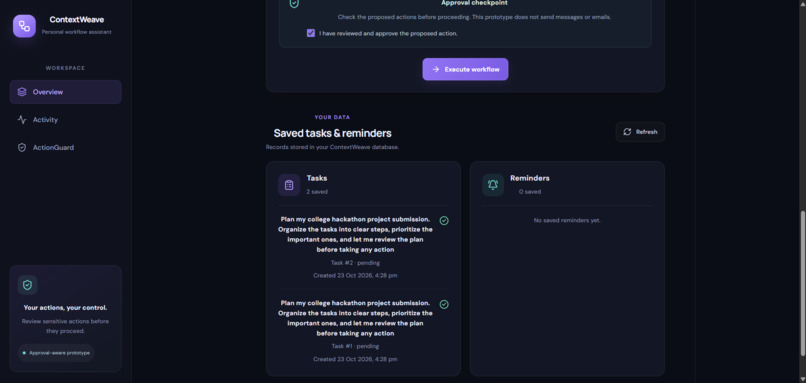
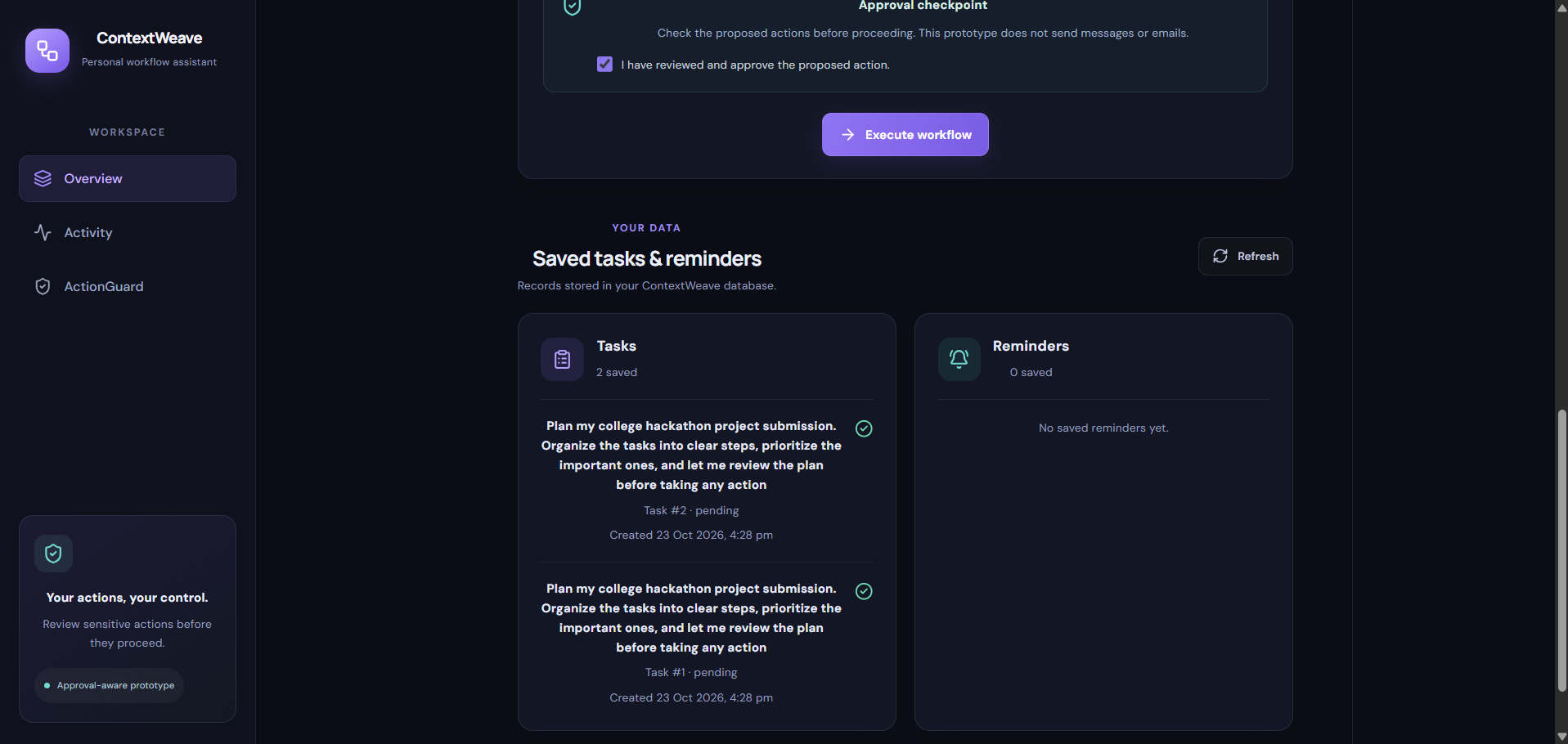
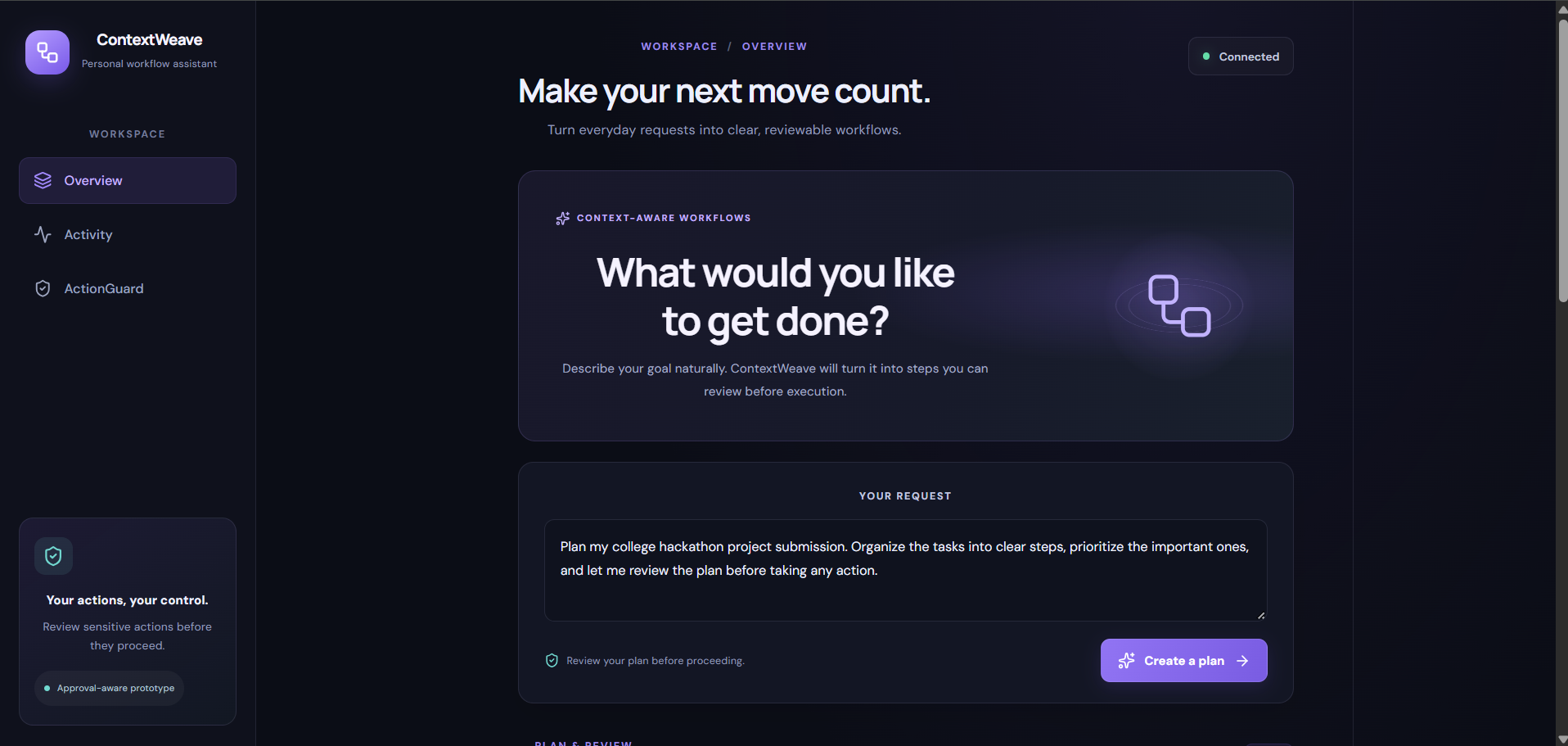
Task Management: Saving and organizing tasks and reminders.
-
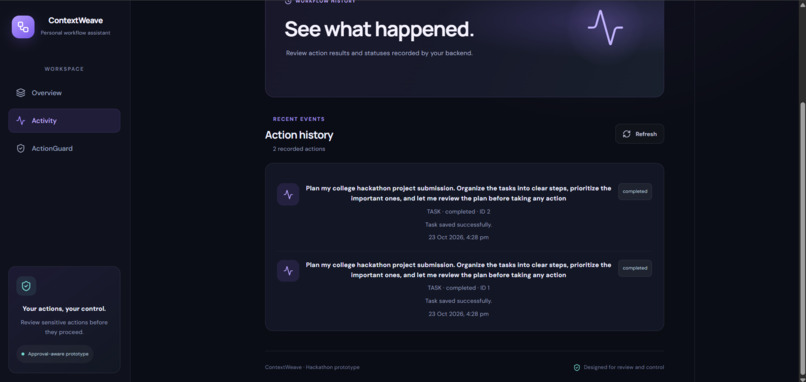
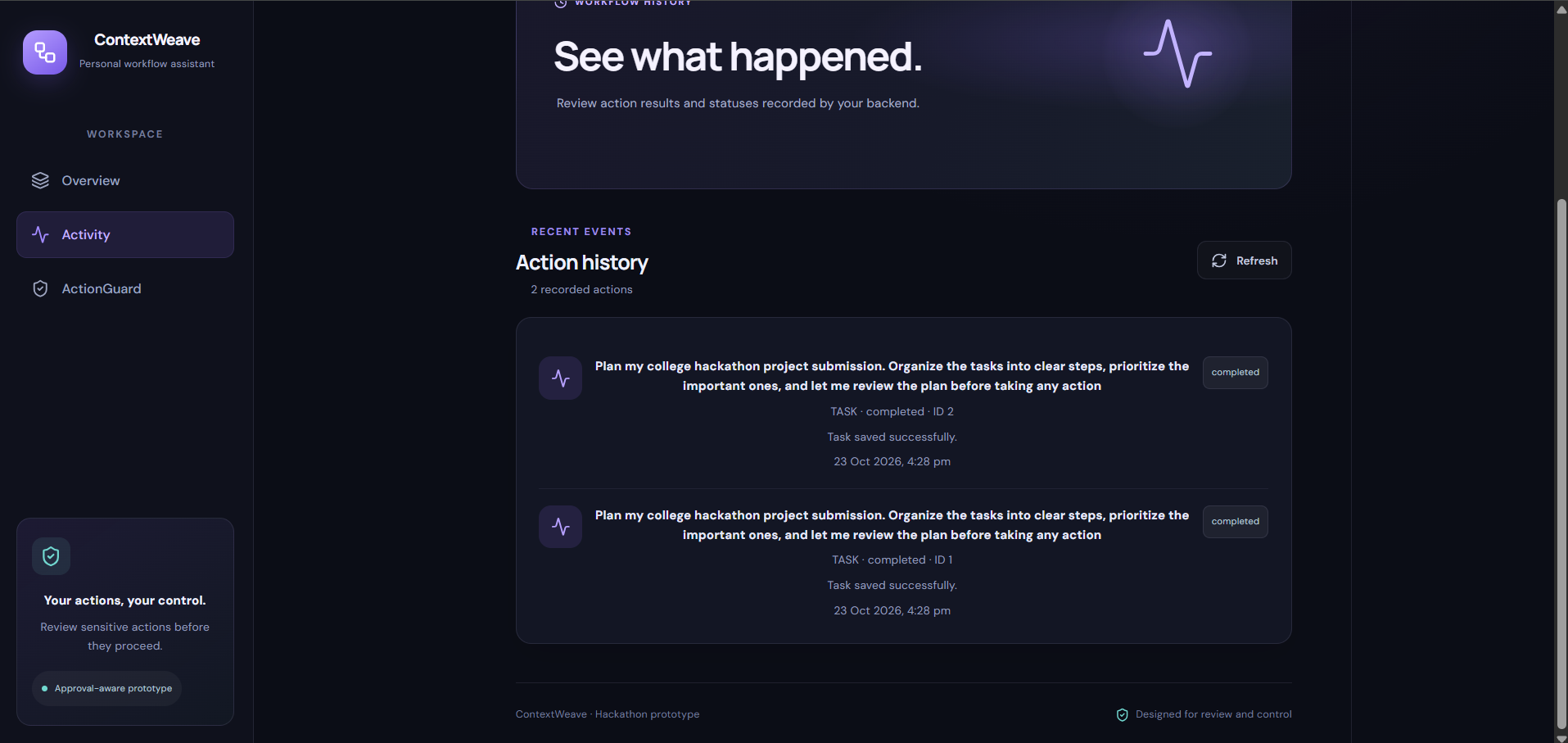
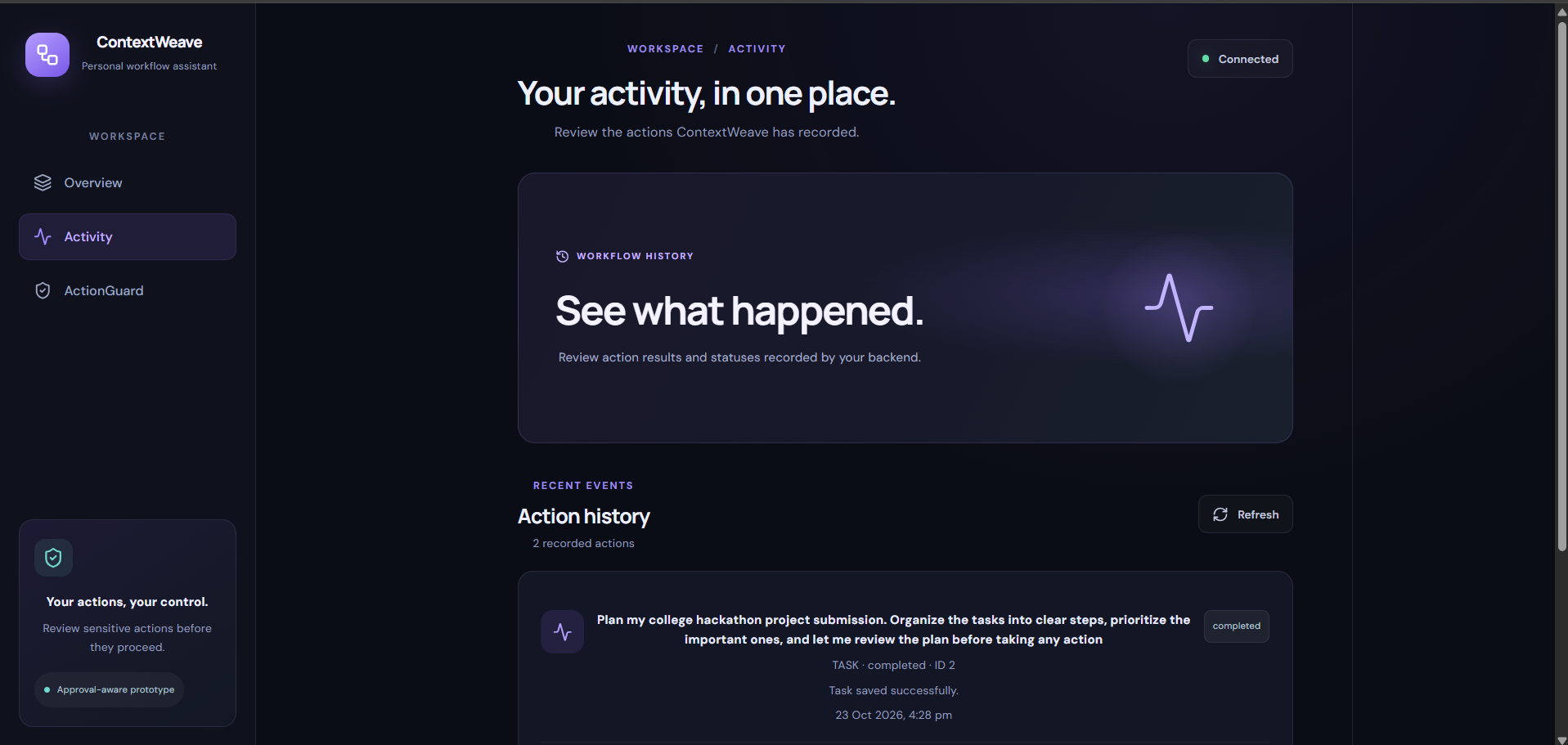
Action History: Reviewing completed actions and their execution status.
-
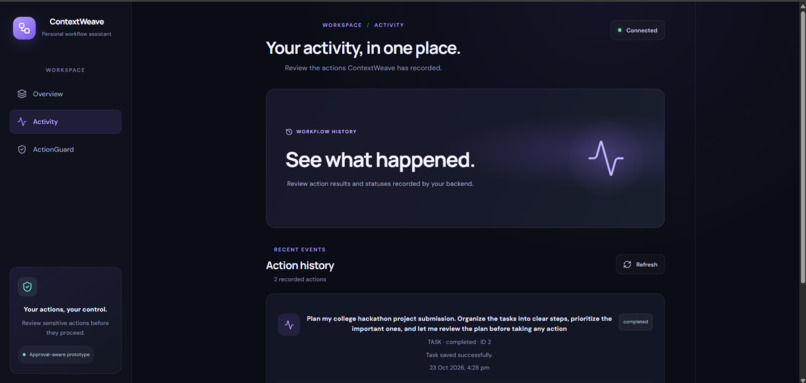
Activity Dashboard: Tracking workflow execution and recorded actions.
-
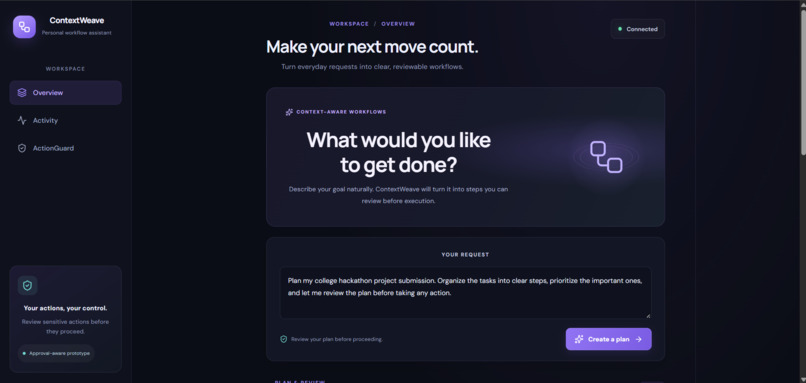
Overview Dashboard: Creating structured workflows from natural-language requests.
-
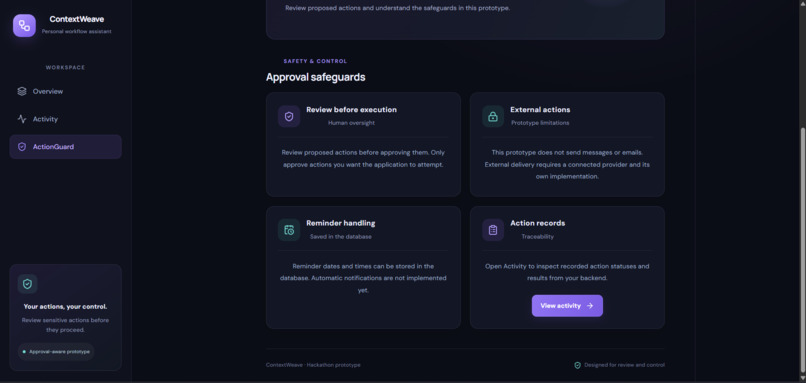
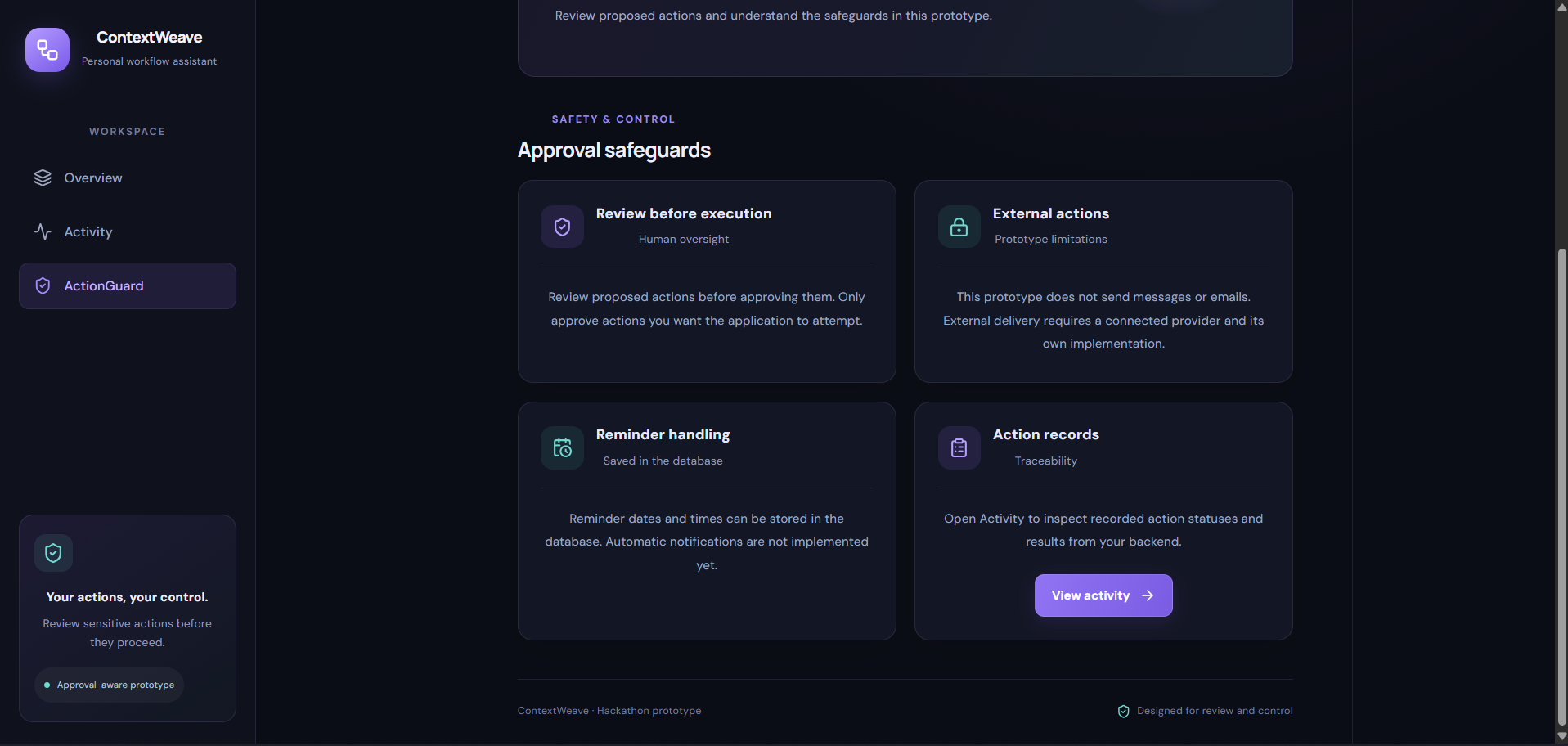
Safety and Control: Highlighting approval safeguards, reminder handling, and action traceability.
-
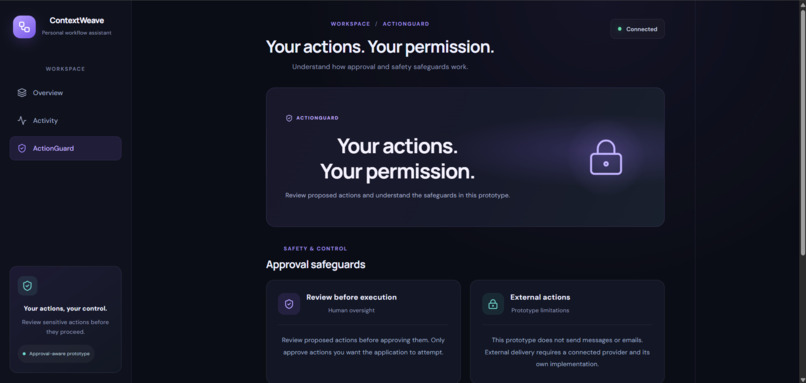
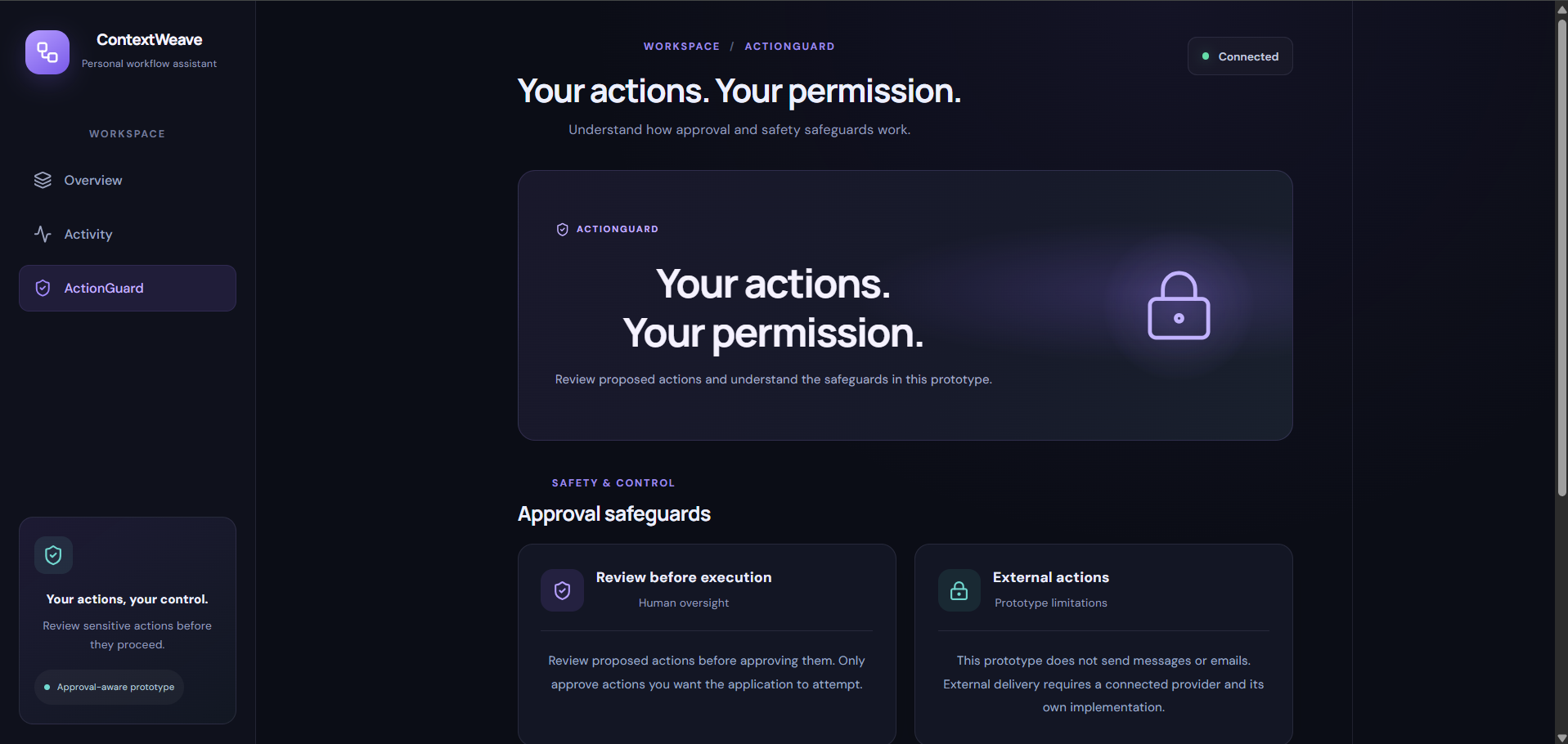
ActionGuard: Enforcing human approval before proposed actions proceed.
Inspiration
AI can make everyday work faster, but automation is most useful when it understands the context behind a request and keeps users in control. We were inspired to build ContextWeave to bring context-aware assistance, workflow management, and human approval safeguards together in one solution.
What it does
ContextWeave is a context-aware workflow assistant designed to help users manage workflows more intelligently and safely. It connects relevant context with user requests and incorporates approval safeguards for important actions, helping users benefit from automation while retaining control over decisions.
How we built it
We developed ContextWeave using a frontend and backend architecture. We built the user interface with React and Vite and used a FastAPI backend to handle API requests. We connected the frontend to the deployed backend and configured cross-origin access so the application could communicate correctly. We also deployed the frontend using GitHub Pages and the backend using Render.
Challenges we ran into
One of our biggest challenges was making the deployed frontend communicate reliably with the backend. We encountered CORS errors that prevented API requests from succeeding, even though the backend was running. We investigated the browser console, updated the backend's allowed origins, and redeployed the application. This helped us establish a working connection between the two parts of our project.
Accomplishments that we're proud of
We are proud to have turned our idea into a deployed, accessible application. We successfully connected our frontend and backend, resolved deployment and communication issues, and brought our core concept of context-aware workflows with approval safeguards to life. Most importantly, we learned to troubleshoot real deployment problems instead of relying only on local development.
What we learned
We learned how frontend and backend components communicate, how APIs connect different parts of an application, and why CORS configuration matters in production. We also learned that
Built With
- fastapi
- github
- javascript
- python
- react
- render
- rest-api
- typescript
- vite

Log in or sign up for Devpost to join the conversation.