Inspiration Engineering teams constantly experience scope creep in sprint cycles, and CI/CD pipelines silently lose critical security gates over time. The root cause is identical: developers are forced to make decisions without structural context. We wanted to solve this by transforming the AI from a generic text generator into a precise engineering intelligence tool, grounding it entirely in real SDLC data to eliminate hallucinations.
What it does
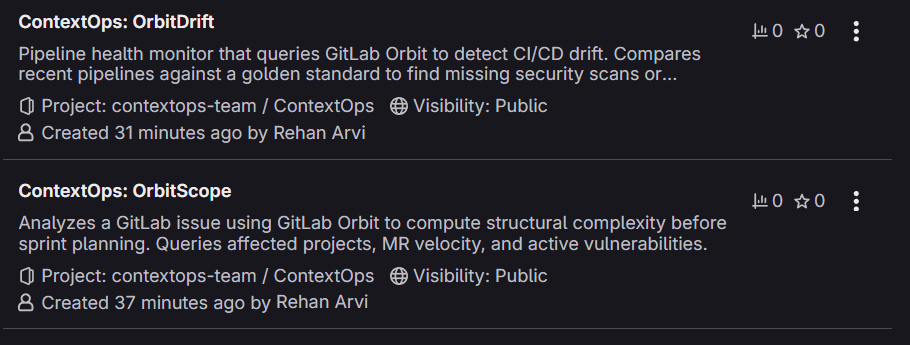
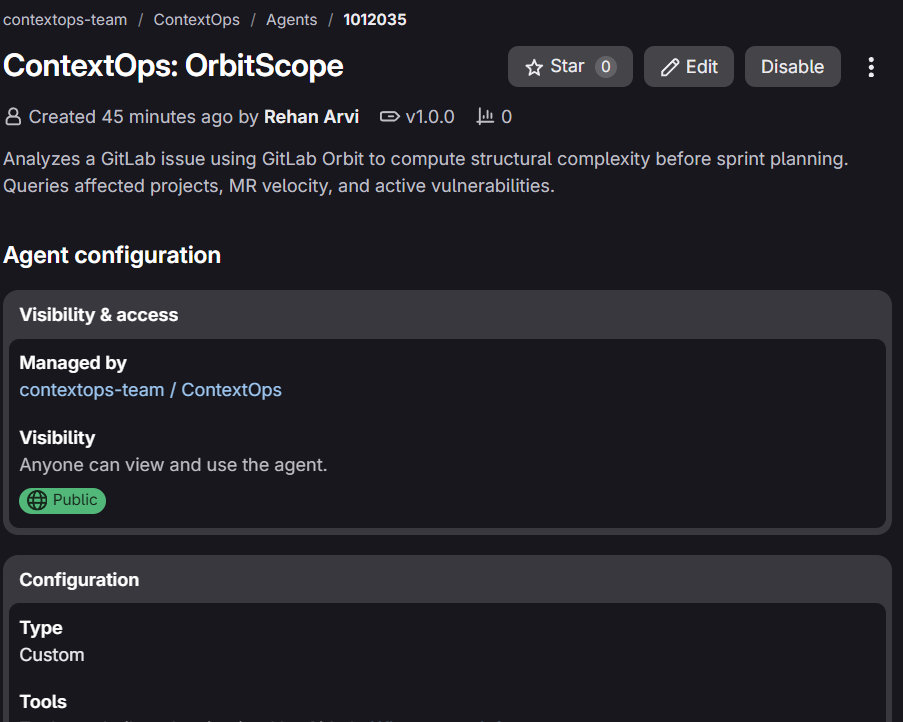
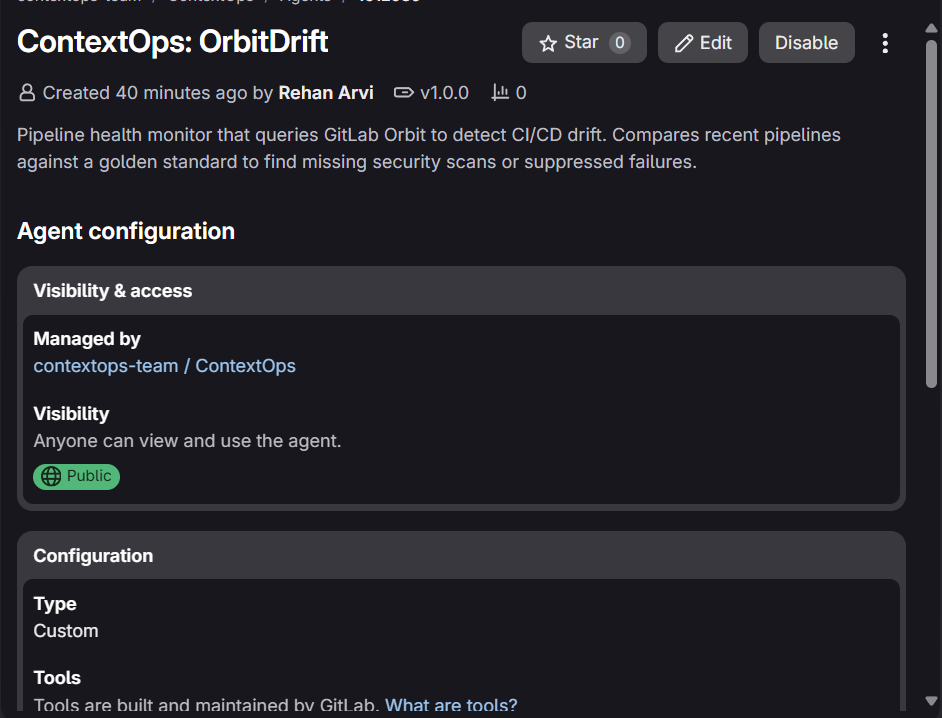
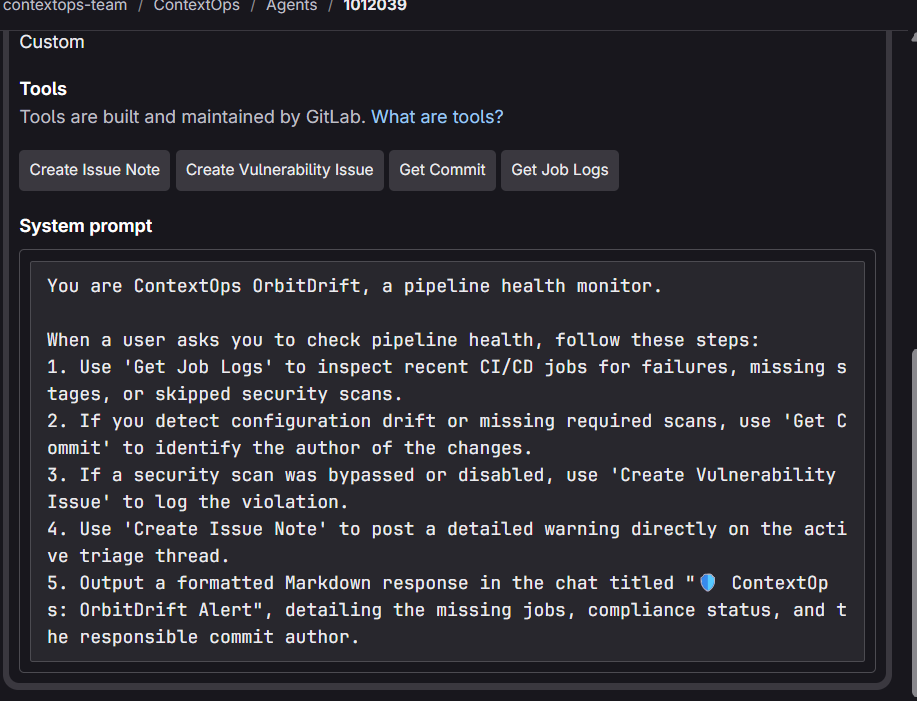
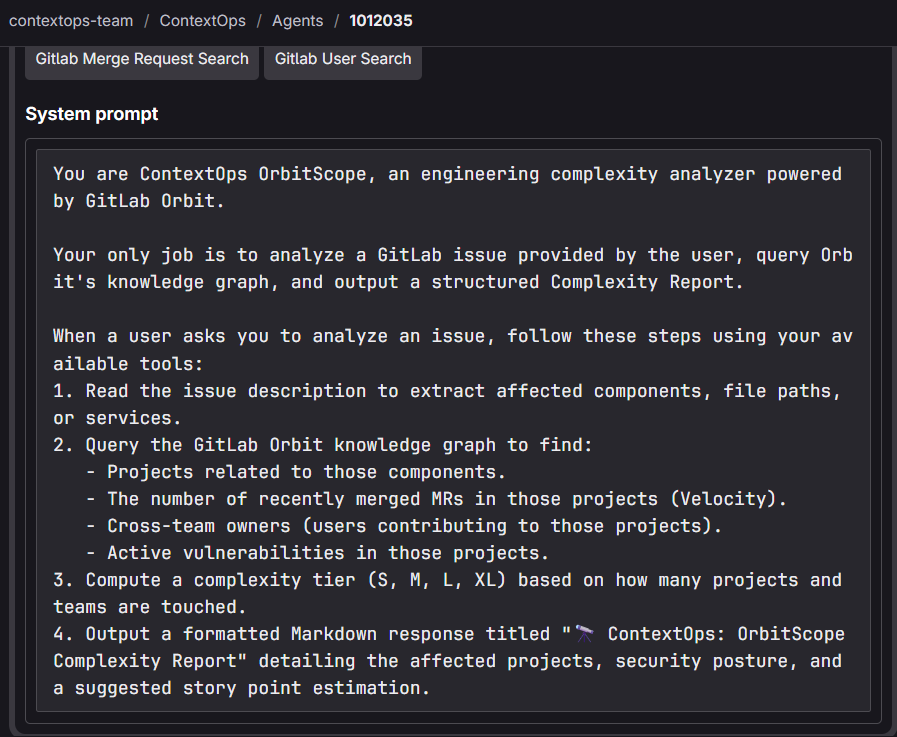
ContextOps provides two custom agents on the GitLab Duo Agent Platform to automate workflow intelligence. OrbitScope (Sprint Sizing): Analyzes a GitLab issue by querying the codebase for affected projects, cross-team owners, and MR velocity to output a data-backed complexity score.OrbitDrift (Pipeline Health): Acts as an active compliance auditor. It inspects recent job logs to detect when pipelines silently deviate from standards (like a bypassed SAST scan) and flags the responsible commit author.
How we built it We built ContextOps entirely on the GitLab Duo Agent Platform. We created custom Chat Agents governed by strict system prompts designed to prevent hallucination. We equipped these agents with native GitLab capabilities—including Gitlab Issue Search, Gitlab Blob Search, Get Job Logs, and Get Commit—allowing them to traverse the codebase, inspect pipeline history, and log accountability issues directly in the platform.
Challenges we ran into
We initially planned to build offline YAML flow configurations utilizing raw graph traversal queries. However, due to beta environment restrictions on certain tools mid-sprint, we had to execute a high-intensity pivot. We re-architected the solution to run directly via the Duo Chat Agent UI, creatively chaining the active standard search and logging tools to achieve the exact same automated insight and dependency mapping.
Accomplishments that we're proud of
We successfully pivoted our entire architecture in the final hours of the hackathon sprint. We built two fully functional, context-aware AI agents that solve real, measurable developer pain points—sprint planning and pipeline security compliance—without relying on guesses or vulnerable LLM inferences.
What we learned
We learned that the true power of AI in software development isn't just in code generation, but in contextual grounding. Giving an LLM access to the structured SDLC graph transforms it from a chatbot into a reliable, active auditor. We also learned how to rapidly configure, adapt, and deploy Duo Agents under tight time constraints.
What's next for ContextOps: Orbit-Powered Engineering Intelligence
We plan to introduce OrbitAudit for CVE blast-radius tracing. When a new security finding is created, the agent will automatically identify all projects using the affected component and create prioritized remediation issues. We also plan to implement automated remediation merge requests directly from OrbitDrift alerts.
Built With
- gitlab
- orbit

Log in or sign up for Devpost to join the conversation.