-
-
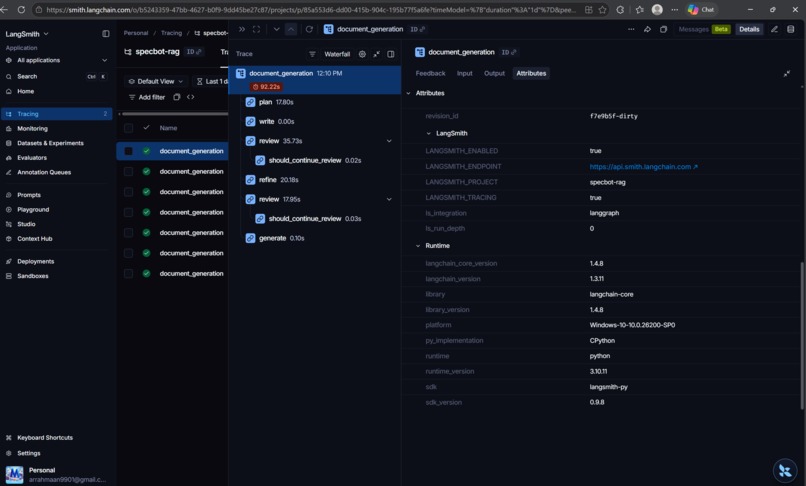
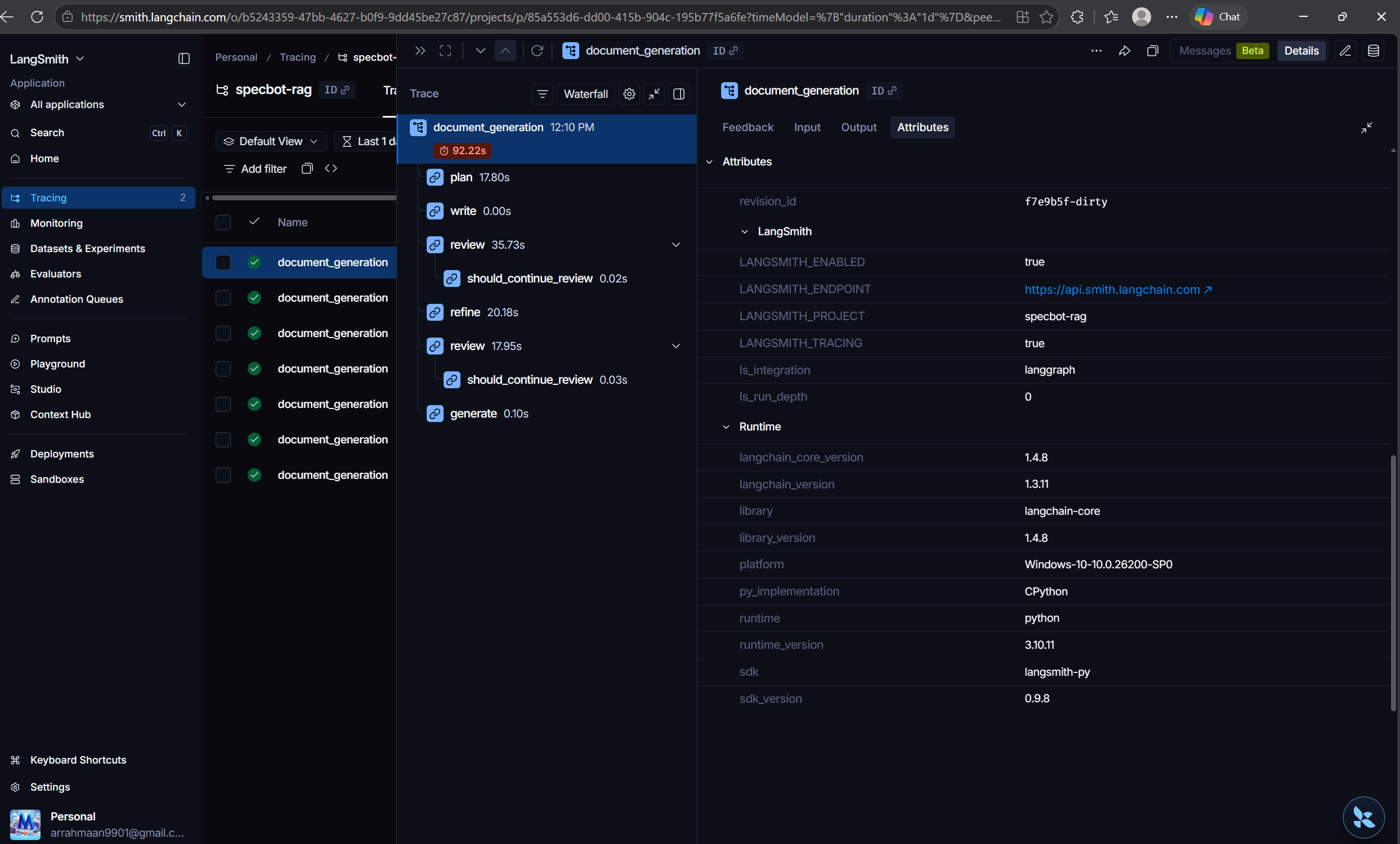
Multi Agent Trace in LangSmith (Implementation accelerated with the help of Codex)
-
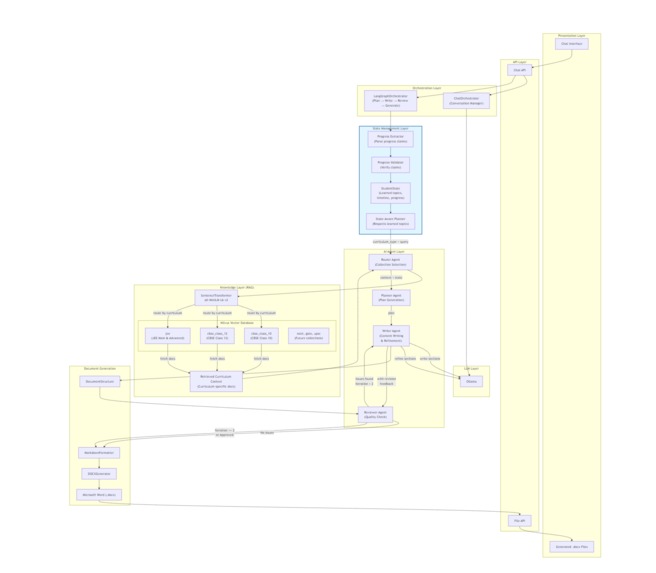
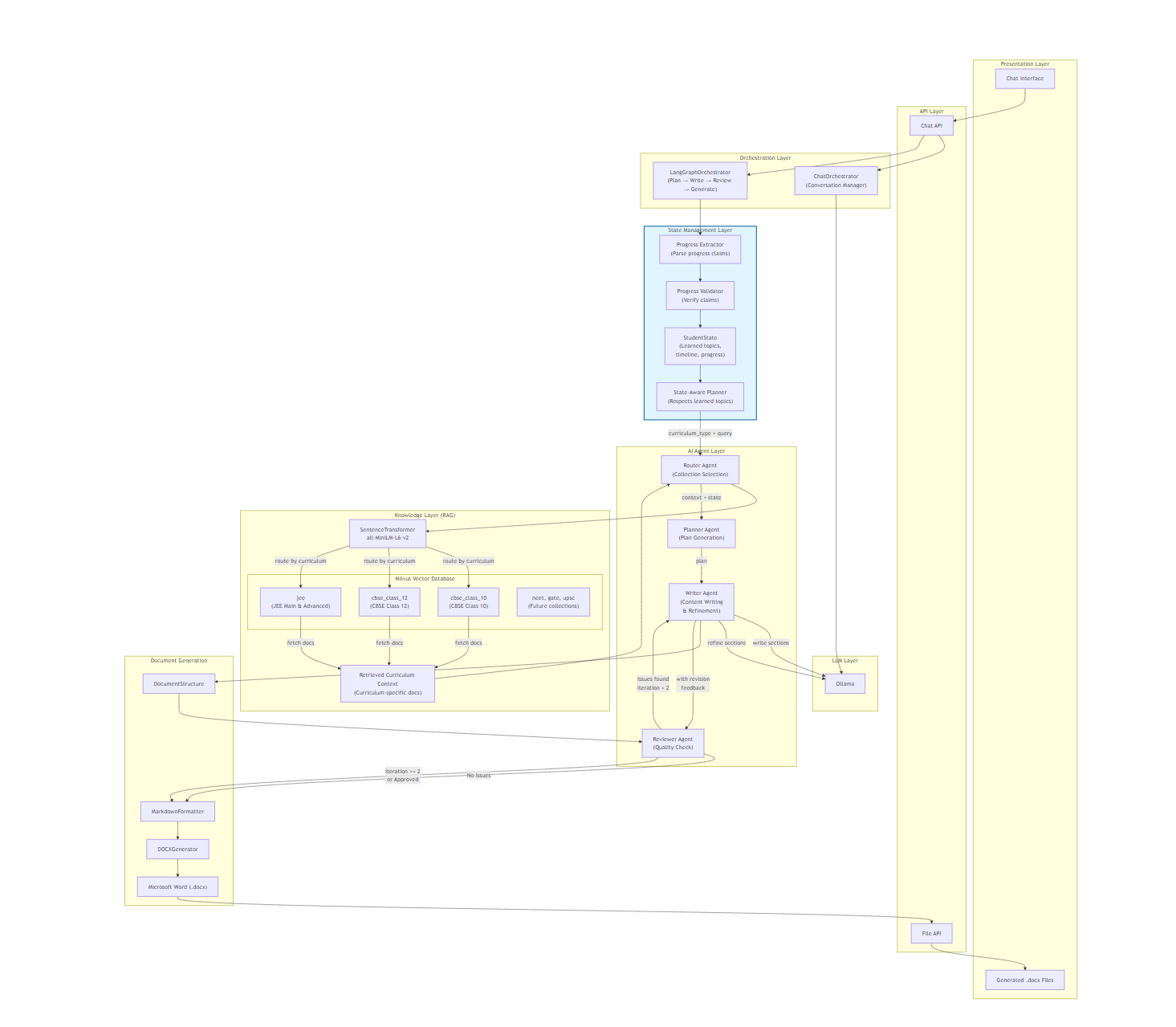
Architecture before Codex usage
-
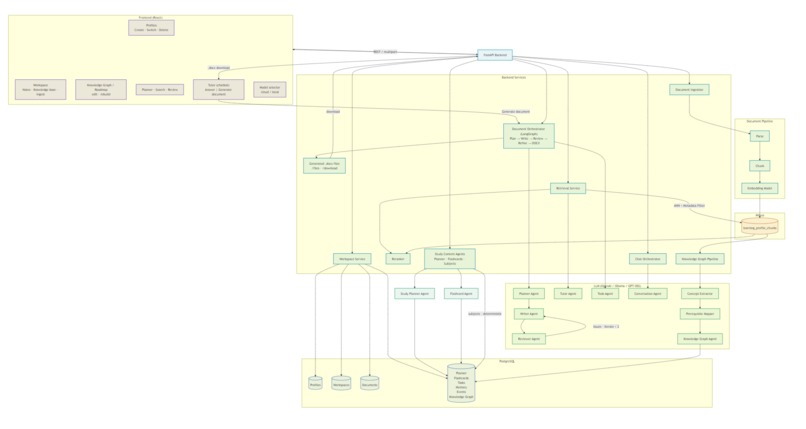
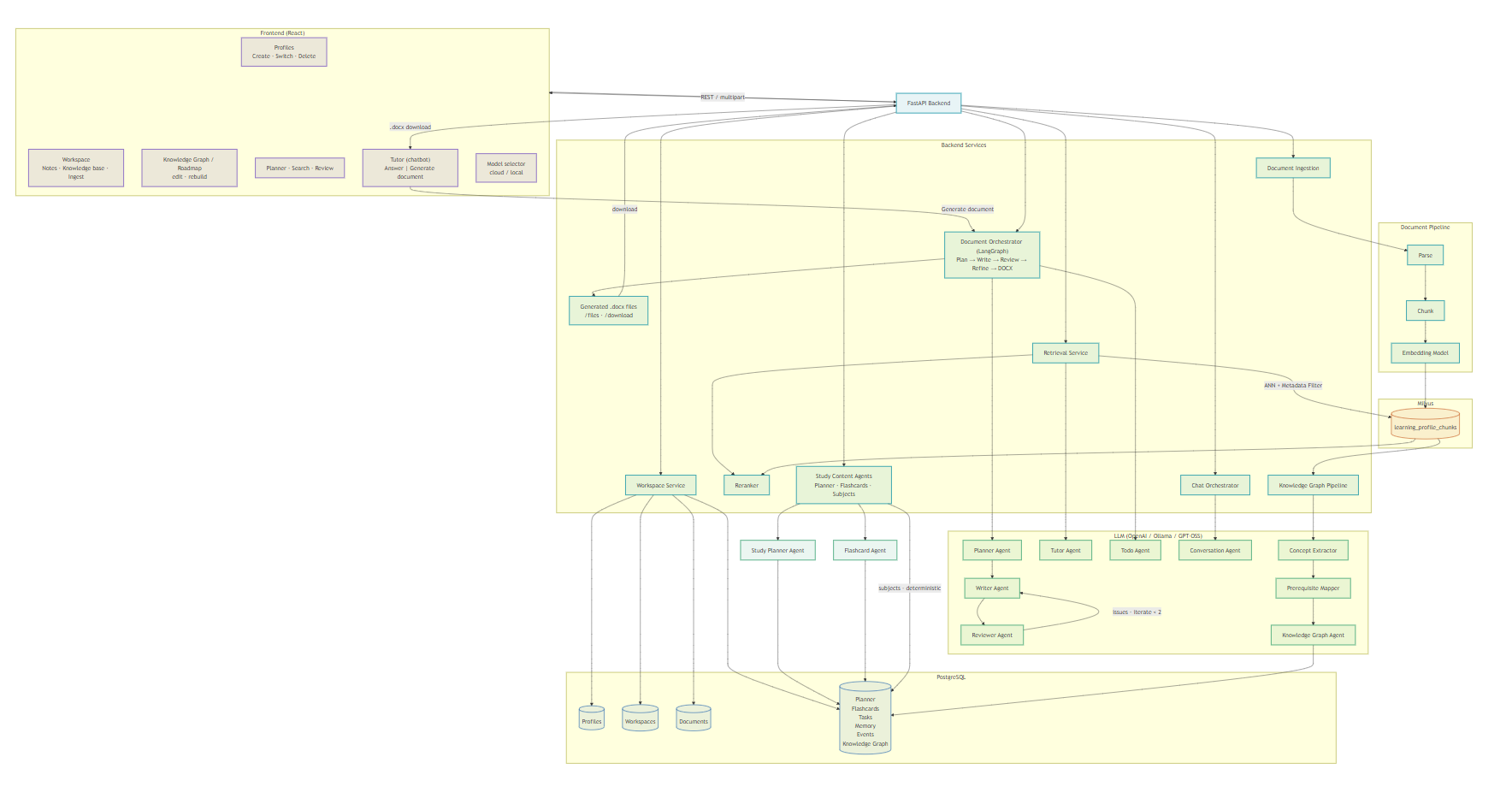
Architecture After GPT 5.6 companion
Inspiration
While building AI applications, I realized that most learning tools focus on a single feature, such as chat, flashcards, or note generation. I wanted to build a platform that combines these capabilities into one system where uploaded study material becomes the foundation for planning, tutoring, revision, and knowledge visualization. I also wanted to explore how OpenAI Codex could accelerate the development of a large, modular AI application.
What it does
Atlas Study is an AI-powered learning operating system. Users create separate study profiles, upload PDFs or notes, and build a profile-specific knowledge base. The system indexes the content in Milvus for semantic retrieval, answers questions using a RAG pipeline, generates structured study notes through a LangGraph multi-agent workflow, creates hierarchical study plans, generates flashcards from uploaded material, builds a prerequisite-based knowledge graph, and tracks study activity through analytics.
How we built it
The application uses React for the frontend and FastAPI for the backend. Structured data such as profiles, tasks, flashcards, and documents are stored in PostgreSQL, while document embeddings are stored in Milvus with profile_id indexing to ensure retrieval remains isolated between study profiles. Documents are chunked, embedded using sentence-transformers, retrieved using vector similarity search, reranked with a cross-encoder, and finally passed to an LLM served through Ollama.
Development followed an iterative workflow with OpenAI Codex 5.6. After defining the architecture and requirements, Codex was used to bootstrap new modules, expand MVP implementations, refactor existing components, generate documentation, assist with testing, and resolve integration issues. Every contribution was reviewed, adapted to the project's architecture, and validated before being merged.
Challenges we ran into
The biggest challenge was maintaining consistency as the platform expanded. Features such as profile isolation required coordinated changes across PostgreSQL, Milvus, backend APIs, and the React frontend. Another challenge was integrating multiple AI workflows—including RAG, LangGraph agents, planners, flashcards, and the knowledge graph—without tightly coupling the modules. Designing reusable service and repository layers helped keep the codebase maintainable as new features were added.
Accomplishments that we're proud of
- Built a modular AI learning platform instead of a single-purpose chatbot.
- Successfully integrated profile-scoped RAG, multi-agent document generation, planning, flashcards, and knowledge graphs into one application.
- Designed a backend architecture that cleanly separates API, service, repository, and AI agent responsibilities.
- Used OpenAI Codex to significantly accelerate implementation while maintaining ownership of the architecture, integration, debugging, and validation.
What we learned
We learned that building production-style AI applications is primarily a software engineering challenge rather than just a model selection problem. Retrieval quality, backend architecture, data flow, and modular system design have a major impact on the final user experience. We also learned that Codex is most effective as a collaborative engineering assistant that accelerates implementation while leaving architectural decisions and technical validation to the developer.
What's next for Atlas Study
Future work includes adding authentication and multi-user collaboration, supporting multimodal documents such as images and handwritten notes, improving retrieval with hybrid search and metadata-aware ranking, expanding the multi-agent workflow with additional specialized agents, and deploying the platform as a cloud-native application with monitoring and automated evaluation pipelines.
Built With
- codex5.6
- fastapi
- langgraph
- milvus
- ollama
- postgresql
- rag
- react
- sentencetransformers


Log in or sign up for Devpost to join the conversation.