-
-
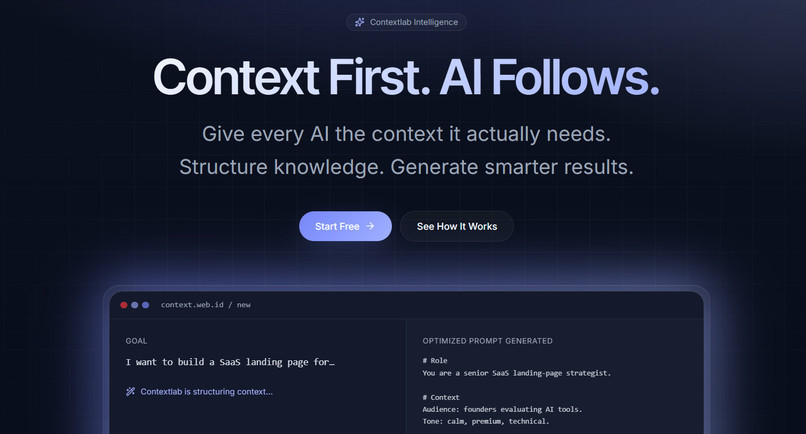
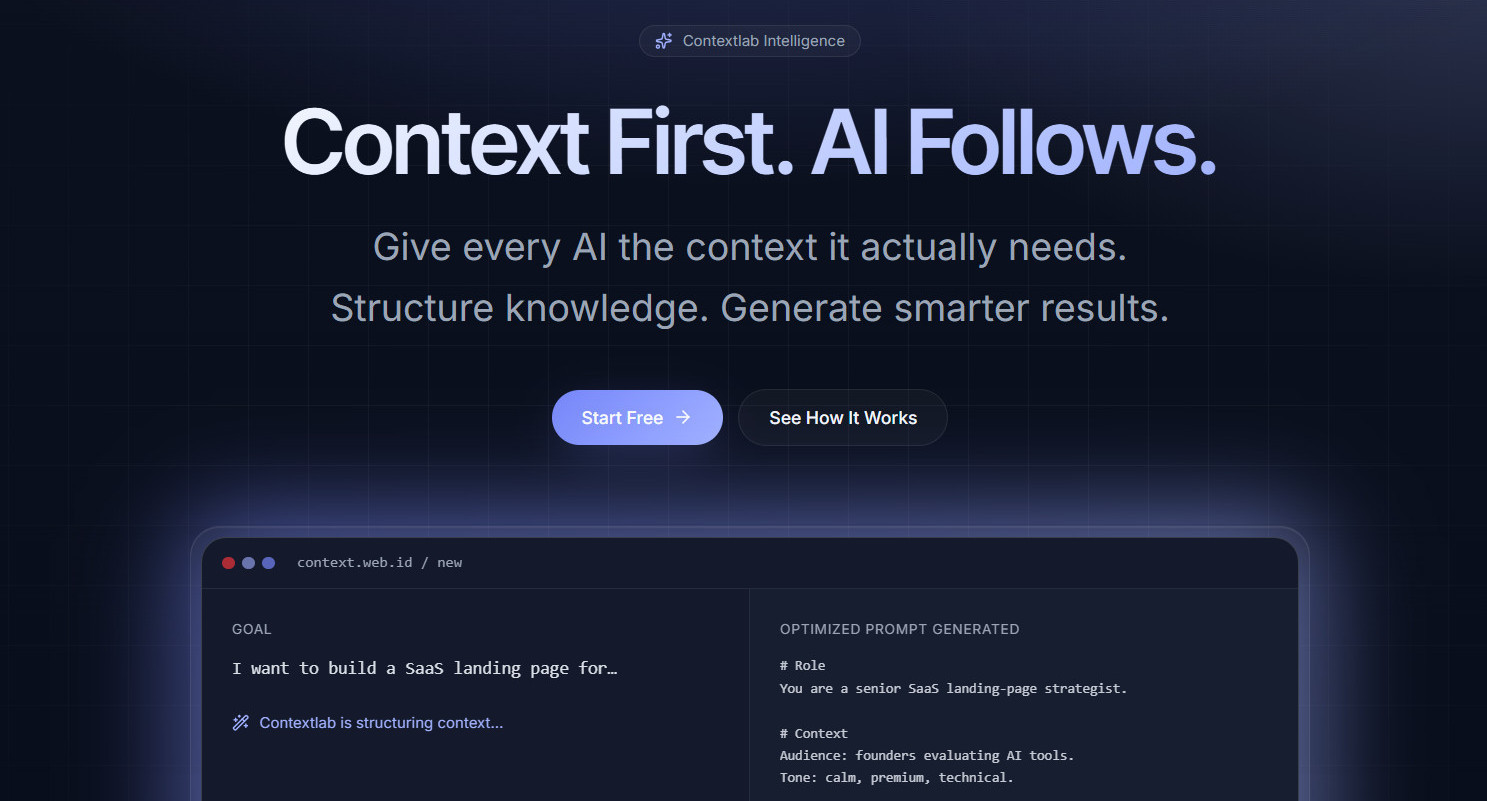
Contextlab - Homepage
-
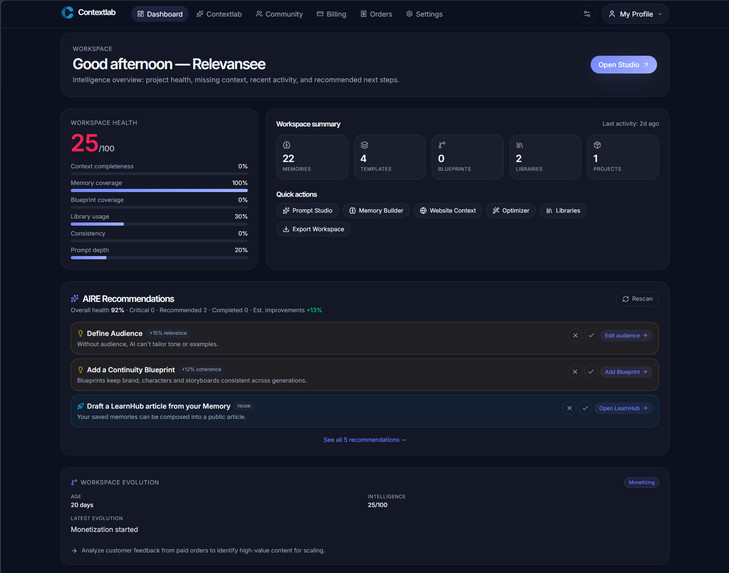
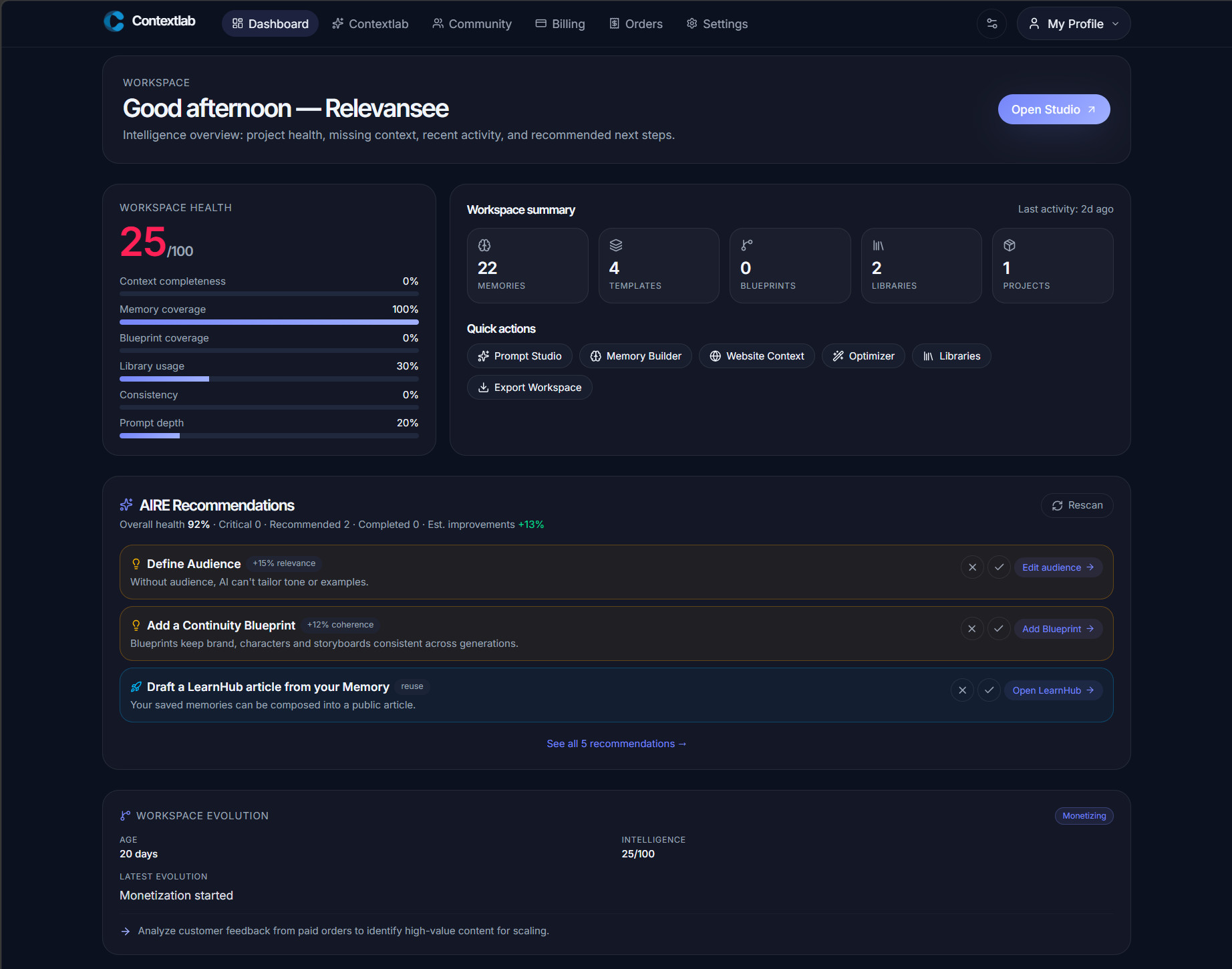
Contextlab - Dashboard (workspace performance)
-
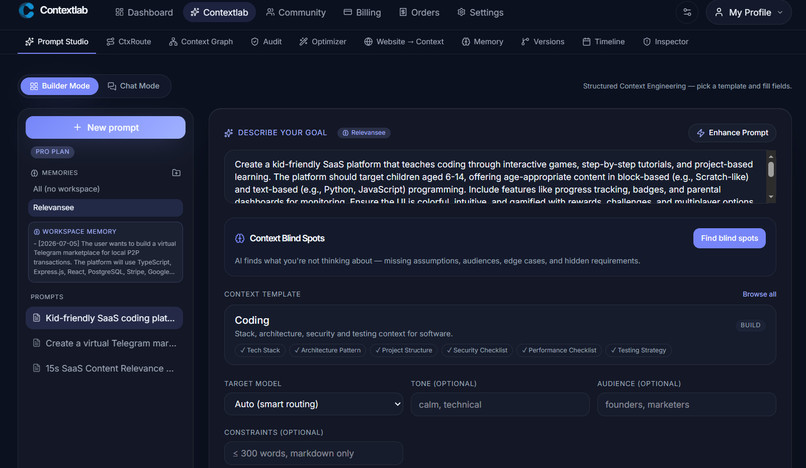
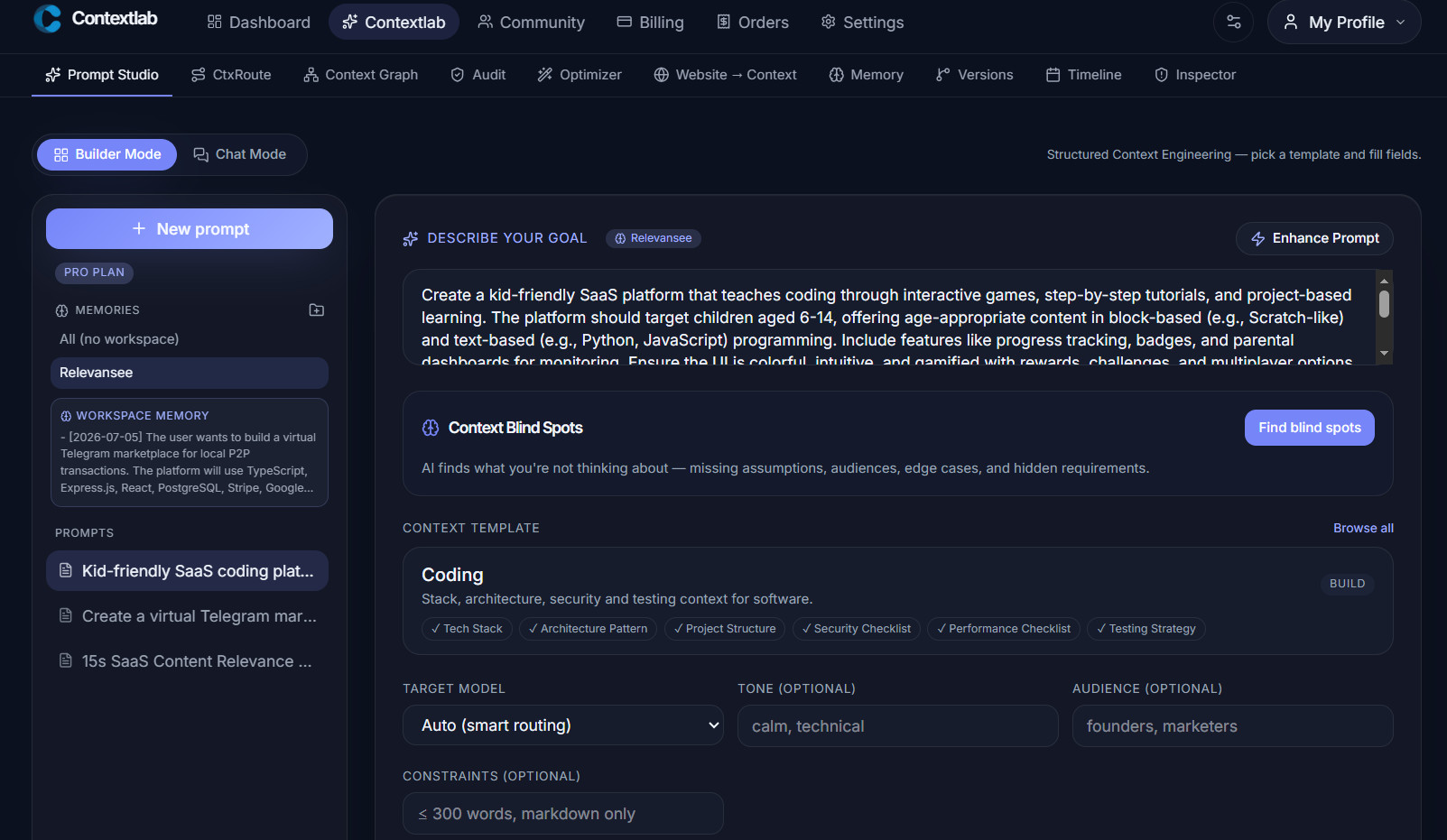
Contextlab - Prompt studio dual mode (Builder & Chat)
-
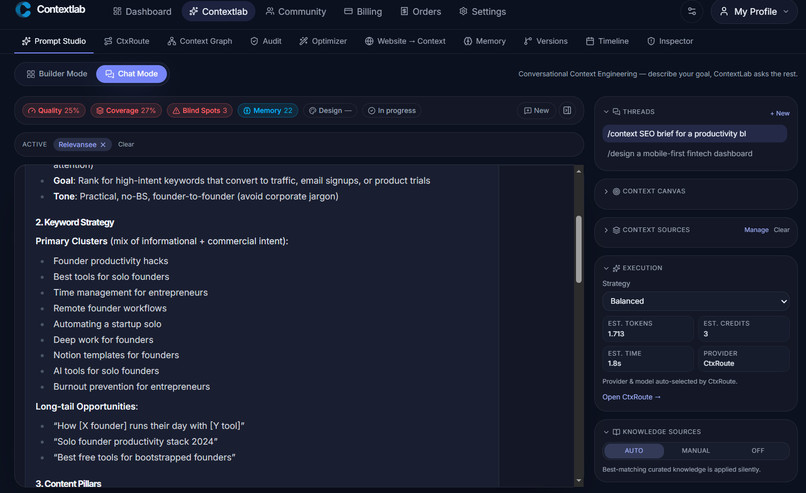
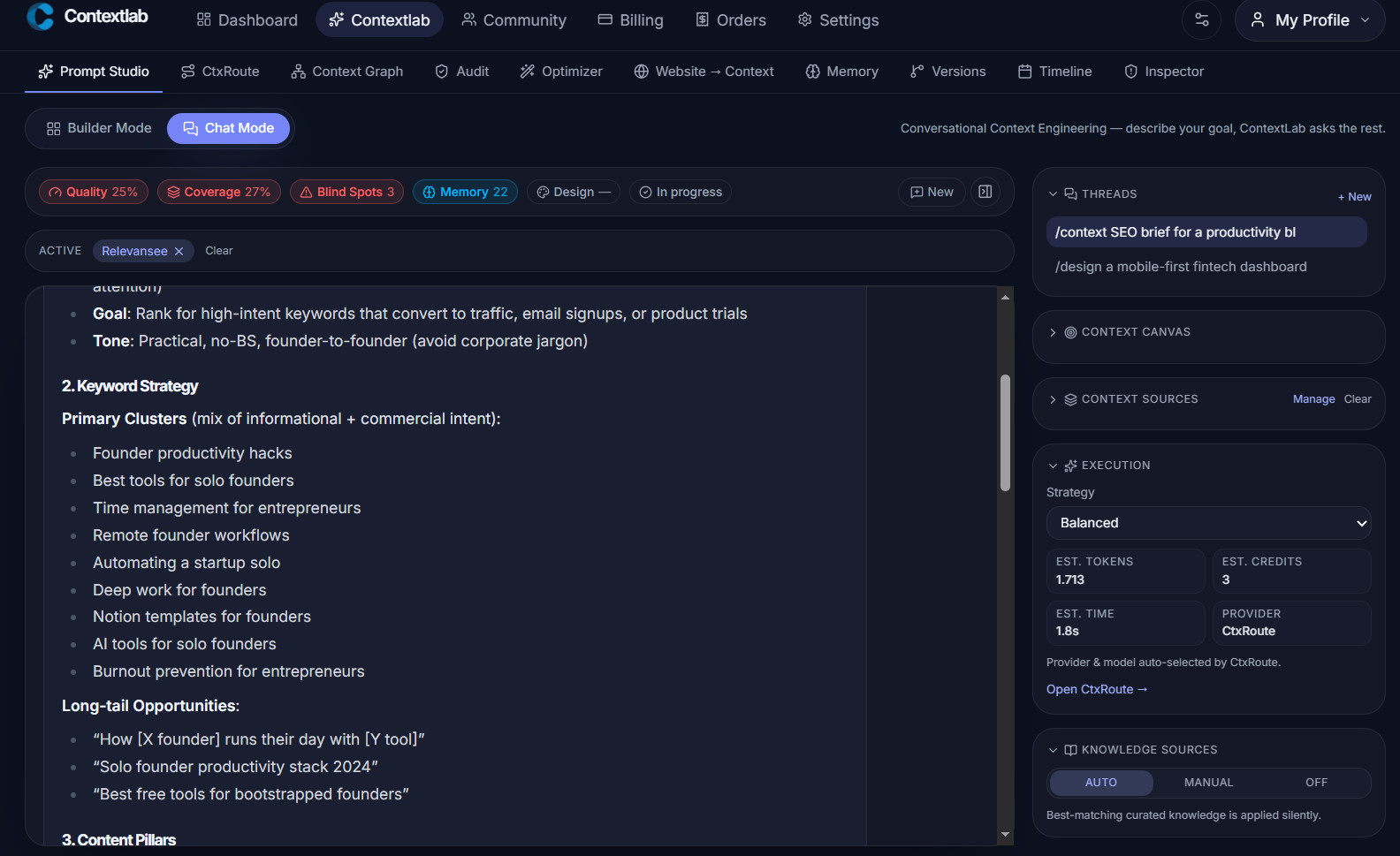
Contextlab - Chat mode with variant option & metrics
-
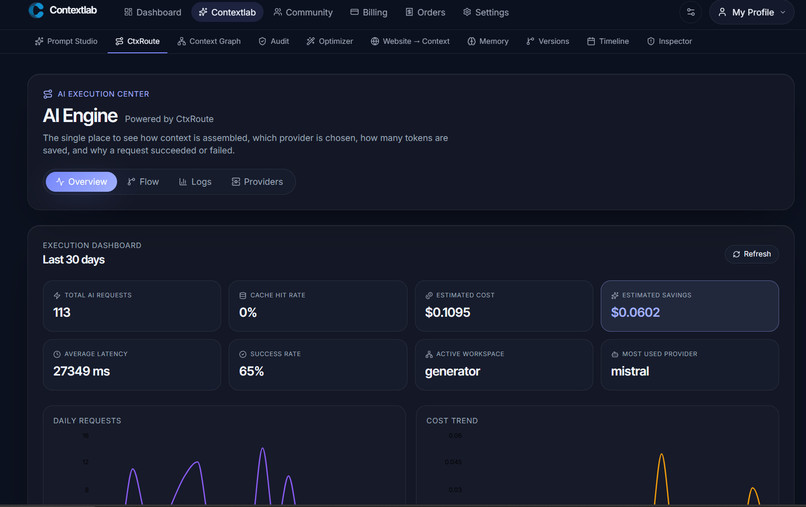
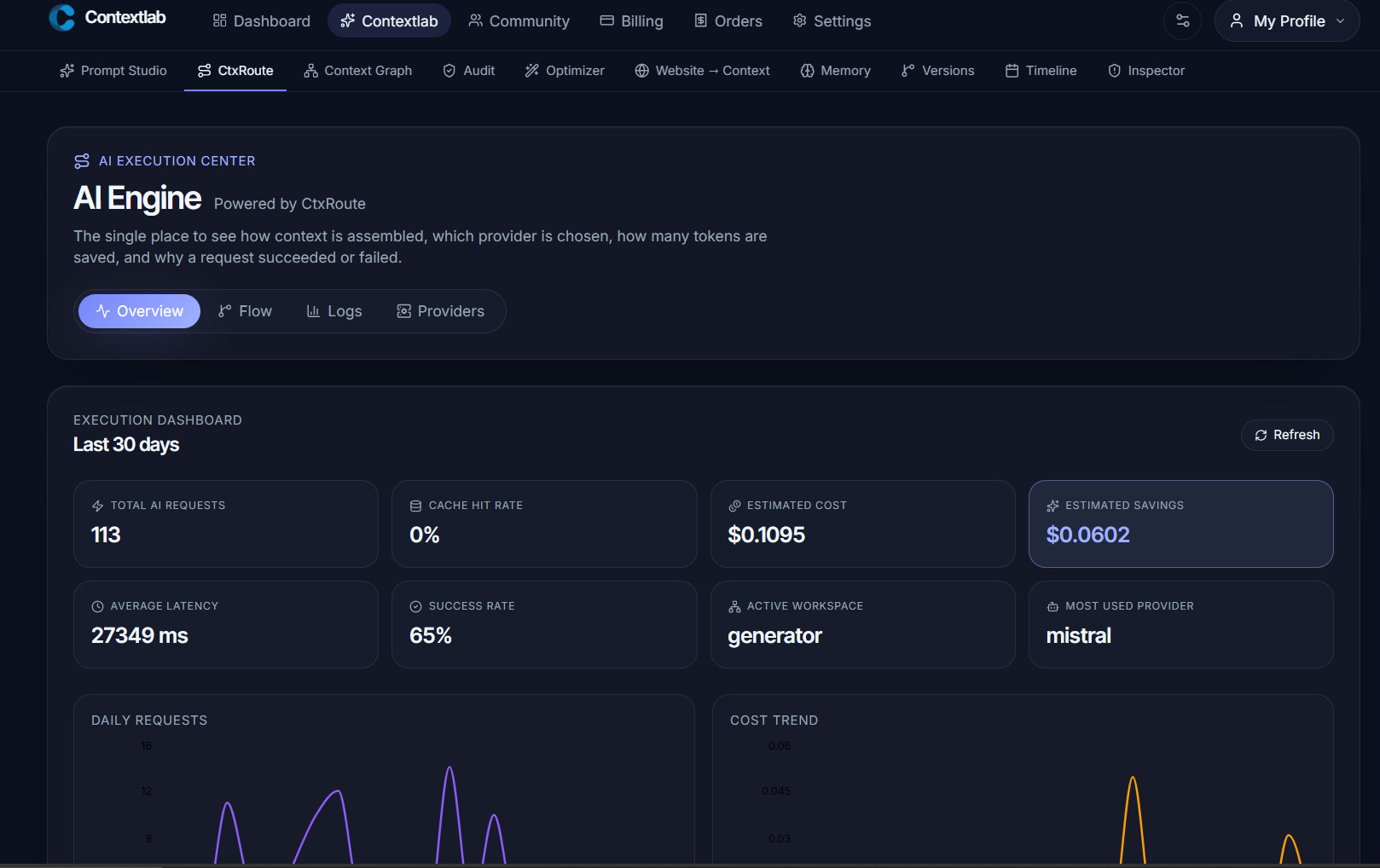
Contextlab - CtxRoute how context is assembled, which provider is chosen, how many tokens are saved, and why a request succeeded or failed.
-
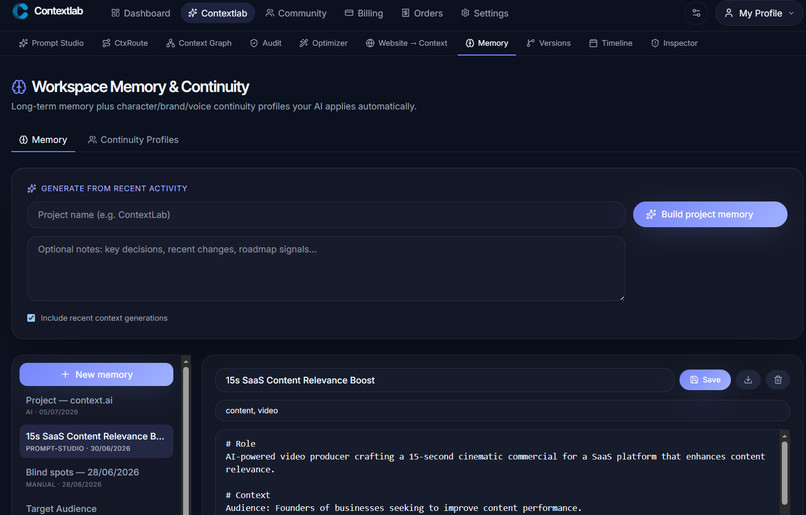
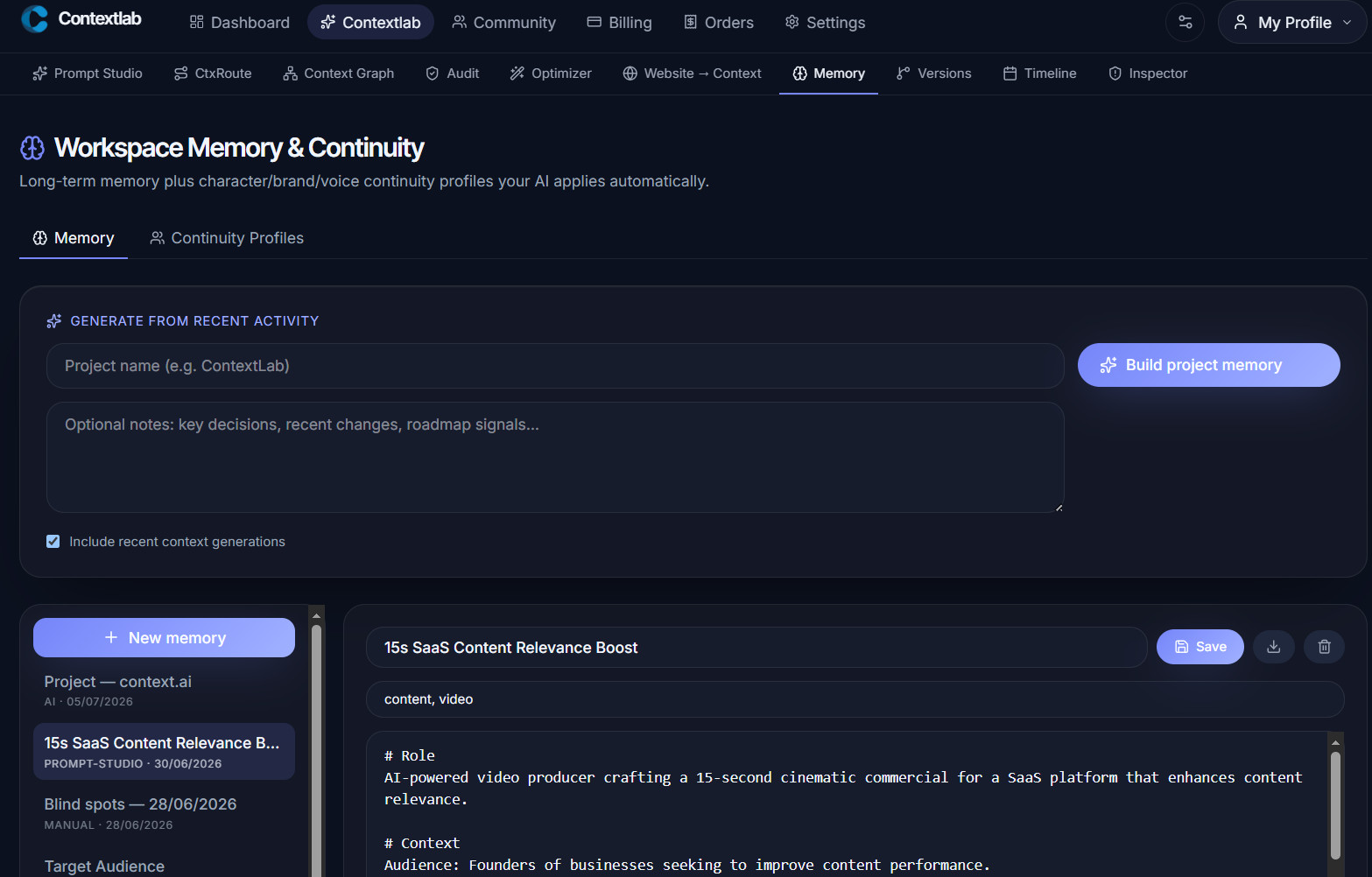
Contextlab - Memory builder
-
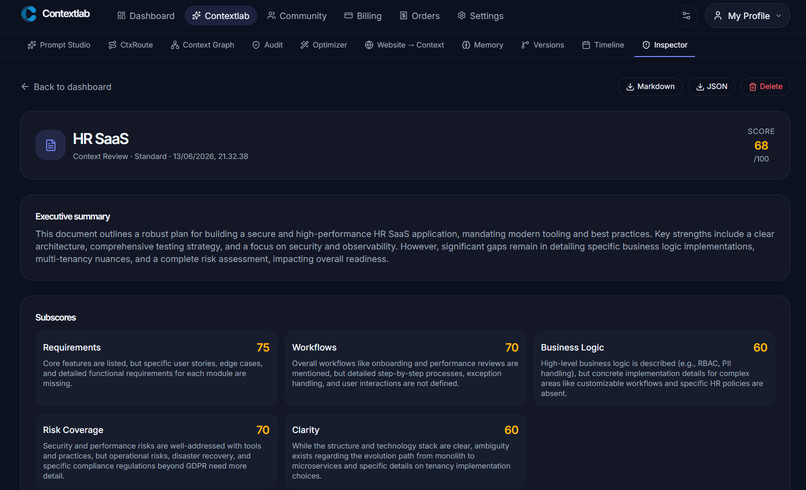
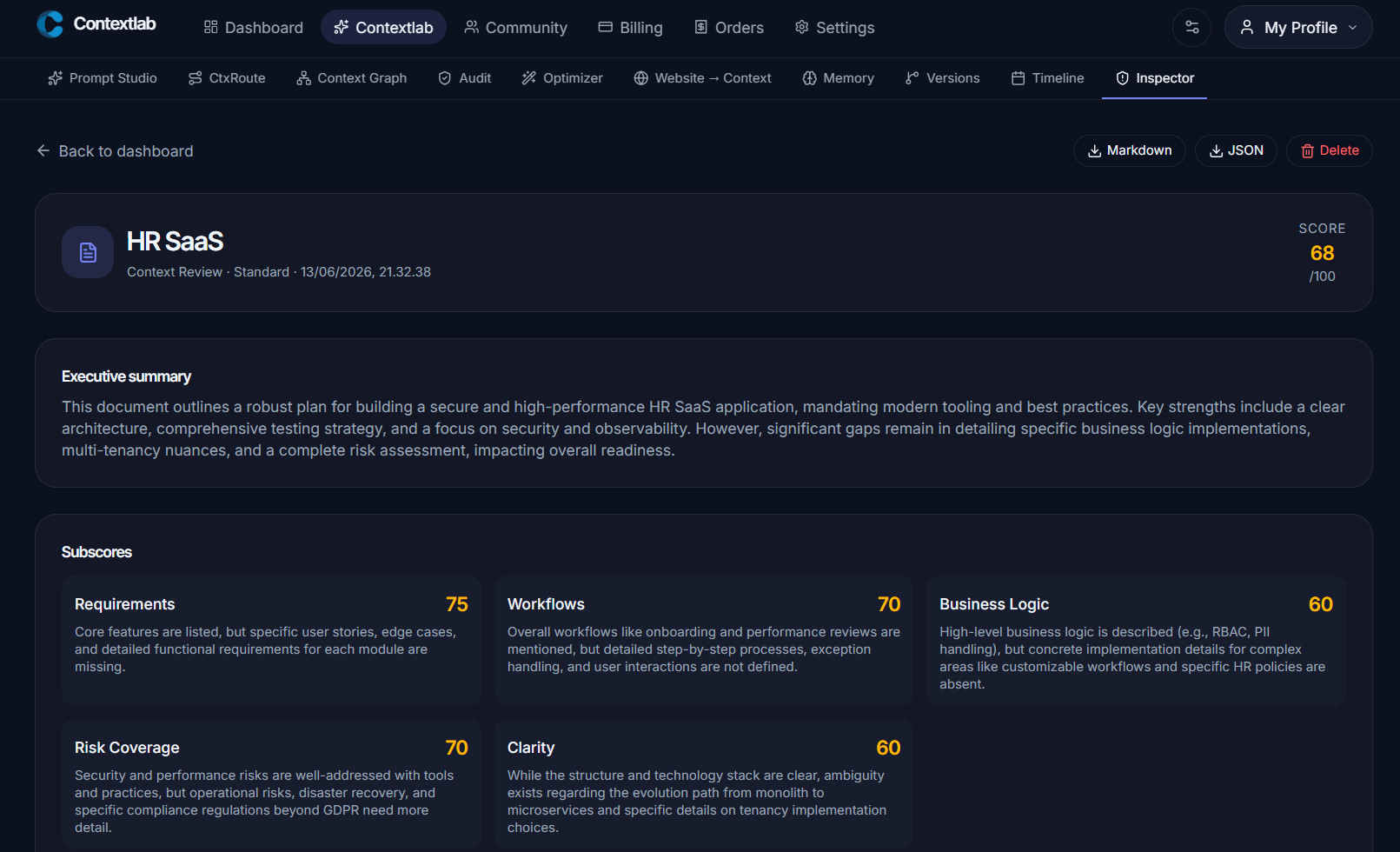
Contextlab - Inspector to analysis bug, security, blind spot, etc.
-
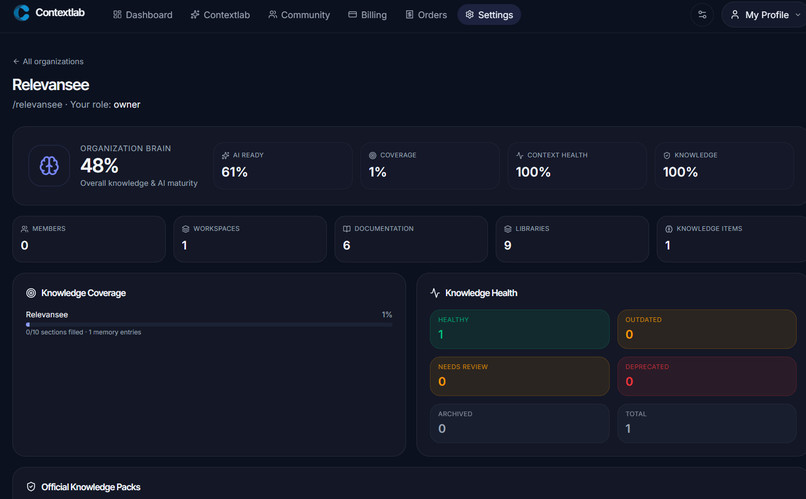
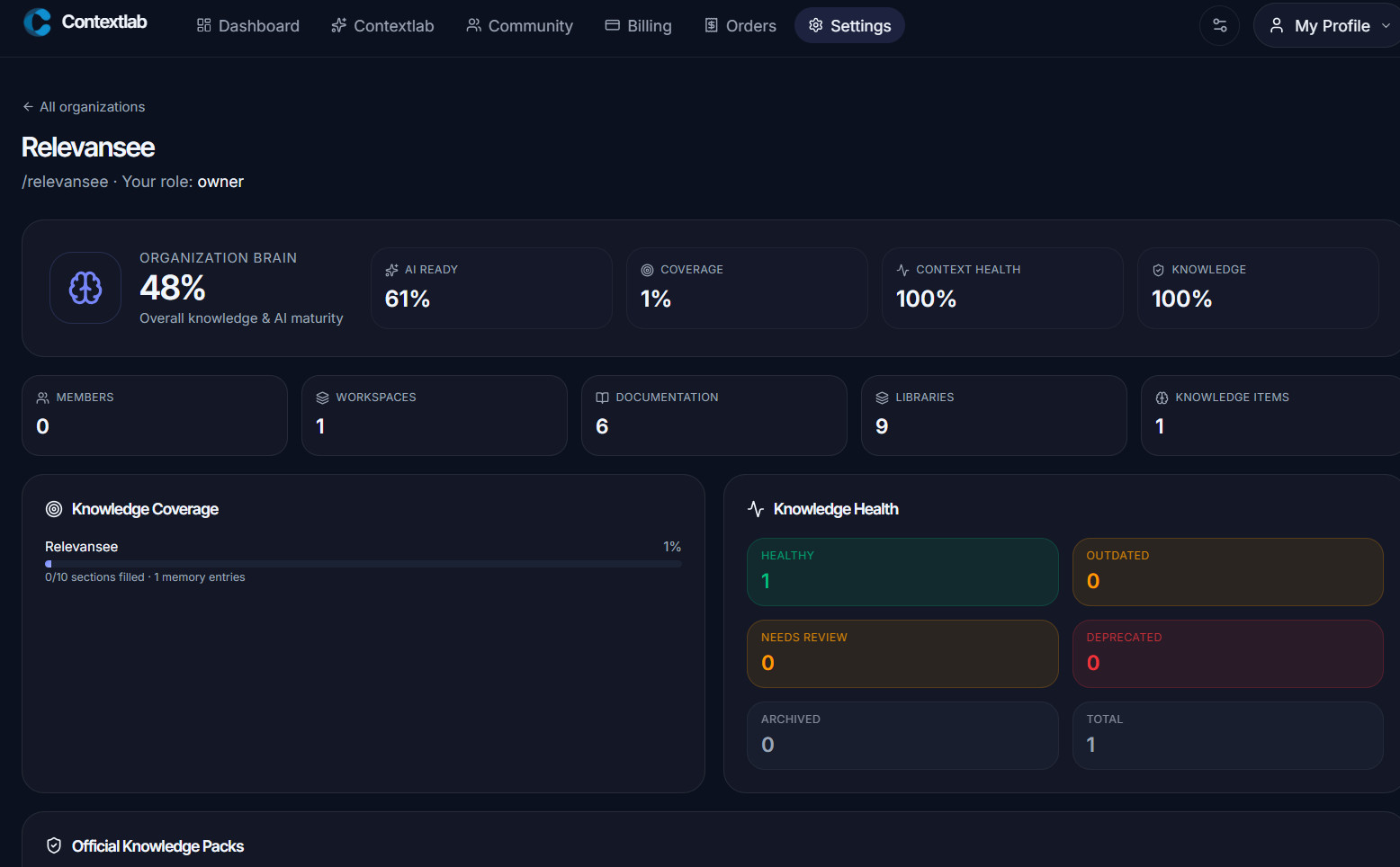
Contextlab - Enterprise dashboard metrics
ContextLab
Inspiration
As AI becomes increasingly powerful, we noticed that most users still spend too much time repeating the same context—explaining their projects, business, brand, coding style, documentation, and goals over and over again. Prompt engineering alone wasn't enough. We believed the missing piece wasn't a better prompt, but better context.
ContextLab was created to solve this problem through Context Engineering—a new approach that helps individuals and teams build reusable context instead of starting from scratch every time they interact with AI.
Our vision is simple: make AI understand your work, not just your prompts.
What it does
ContextLab is an AI-powered Context Engineering platform that helps users organize, optimize, and reuse knowledge across projects.
Instead of treating prompts as isolated inputs, ContextLab connects them with reusable assets such as:
- Context Corpus (internal RAG knowledge)
- Prompt Templates
- Libraries
- Blueprints
- Documentation
- LearnHub courses
- Showcase projects
- Website Snapshot
- Design DNA
- Context Graph
Everything is connected through relationships, allowing AI to receive richer, more relevant context while reducing duplicated work and token usage.
Users can build workflows, generate documentation, create reusable knowledge packs, and launch AI-ready projects from a single workspace.
How we built it
ContextLab is built using a modern TypeScript stack with a modular architecture designed for scalability.
Core technologies include:
- TypeScript
- Next.js
- React
- PostgreSQL
- AI Gateway (multi-provider & BYOK)
- Context Graph Engine
- Internal RAG (Context Corpus)
- Cloudflare-ready infrastructure
- Markdown-first content system
The platform is organized around reusable modules instead of isolated features. Components like Libraries, Showcase, LearnHub, Documentation, and Corpus all share the same relationship engine, making knowledge reusable across the entire ecosystem.
We also introduced features such as Website Snapshot, Context Optimizer, DNA Design, and Prompt Studio to simplify AI workflows while keeping context structured and portable.
Challenges we ran into
One of the biggest challenges was avoiding feature fragmentation.
As ContextLab grew, many modules began solving similar problems in different ways. We had to rethink the architecture and unify everything around reusable relationships instead of duplicated content.
Another challenge was balancing AI capability with cost. Large websites and complex contexts can consume significant tokens, so we redesigned our approach by introducing lightweight Website Snapshots, Context Optimization, strategy caching, and reusable context injection to minimize unnecessary AI calls.
Creating an interface that remains powerful without overwhelming users was also a major design challenge. We continuously simplified workflows while keeping advanced capabilities available for experienced users.
Accomplishments that we're proud of
We're proud of transforming ContextLab from a prompt management idea into a complete Context Engineering platform.
Some achievements include:
- Building a reusable Context Graph that connects knowledge across the platform.
- Creating Context Corpus for internal RAG without requiring users to rebuild context every session.
- Developing Website Snapshot to extract valuable business context efficiently.
- Designing Prompt Studio with reusable context injection instead of isolated prompting.
- Connecting Libraries, Showcase, LearnHub, Documentation, and Community into a unified knowledge ecosystem.
- Making every knowledge asset reusable instead of disposable.
Most importantly, we're building a platform where AI understands projects through structured context rather than repeated explanations.
What we learned
Throughout development, we learned that context is far more valuable than prompts.
Organizations don't struggle because AI lacks intelligence—they struggle because knowledge is scattered across documents, chats, websites, and people's memories.
We also learned that AI products should prioritize long-term knowledge management instead of generating one-off responses.
By focusing on reusable context, relationships, and structured knowledge, AI becomes more accurate, more consistent, and significantly more useful for real-world work.
What's next for ContextLab
Our roadmap focuses on making ContextLab the missing context layer for AI.
Upcoming developments include:
- Smarter Context Graph with dependency analysis and AI context preview.
- Community-driven Libraries, Showcase, and Events ecosystem.
- Dynamic AI workflows through Library Recipes and Clone Workflow.
- Enterprise knowledge management powered by Context Corpus.
- AI-assisted documentation, changelog generation, and project history.
- Advanced Context Routing (CtxRoute) for intelligent model selection.
- Improved integrations with IDEs, CLI tools, and external AI providers.
- Multi-workspace collaboration and enterprise governance.
Ultimately, our goal is to help developers, creators, teams, and businesses spend less time explaining context—and more time building with AI.
Built With
- bun
- next
- postgresql
- rag
- react
- typescript

Log in or sign up for Devpost to join the conversation.