-
-
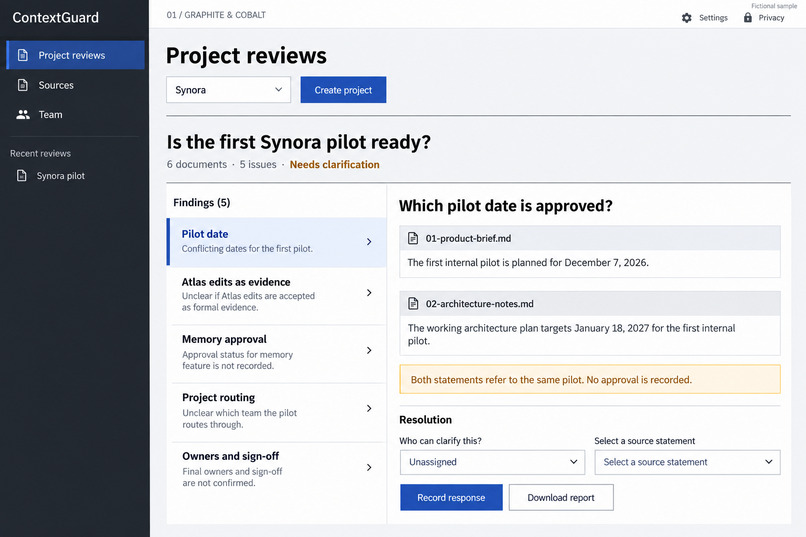
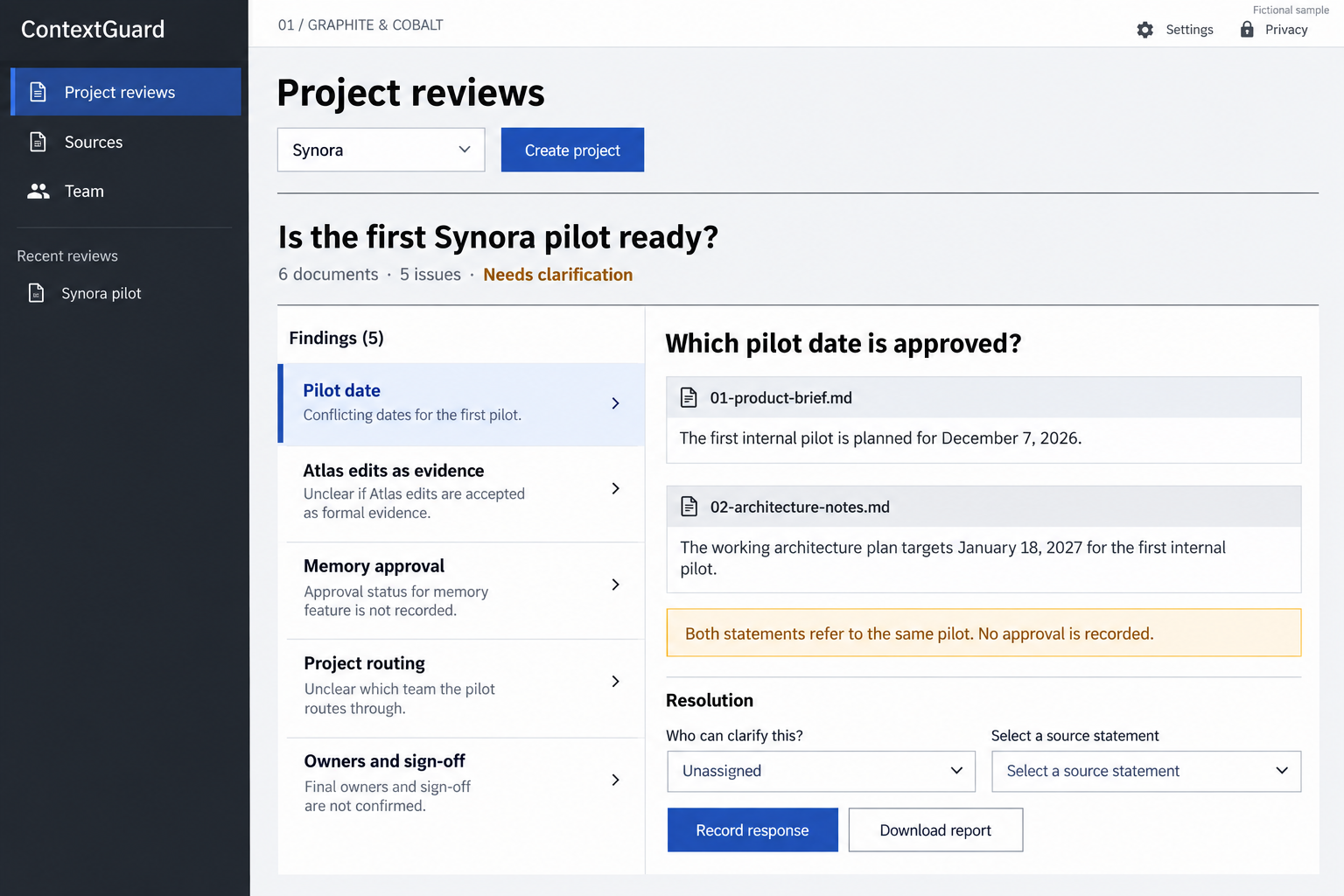
Fictional review example: compare conflicting pilot dates beside their source passages and record a clarification.
-
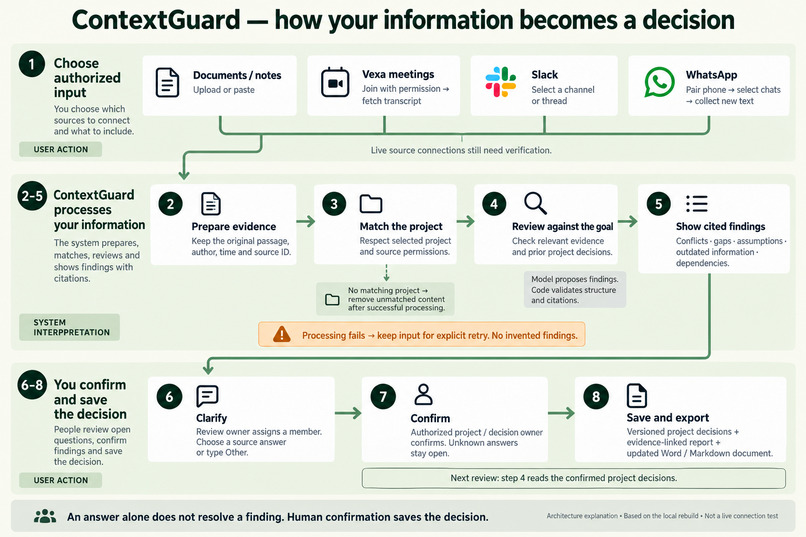
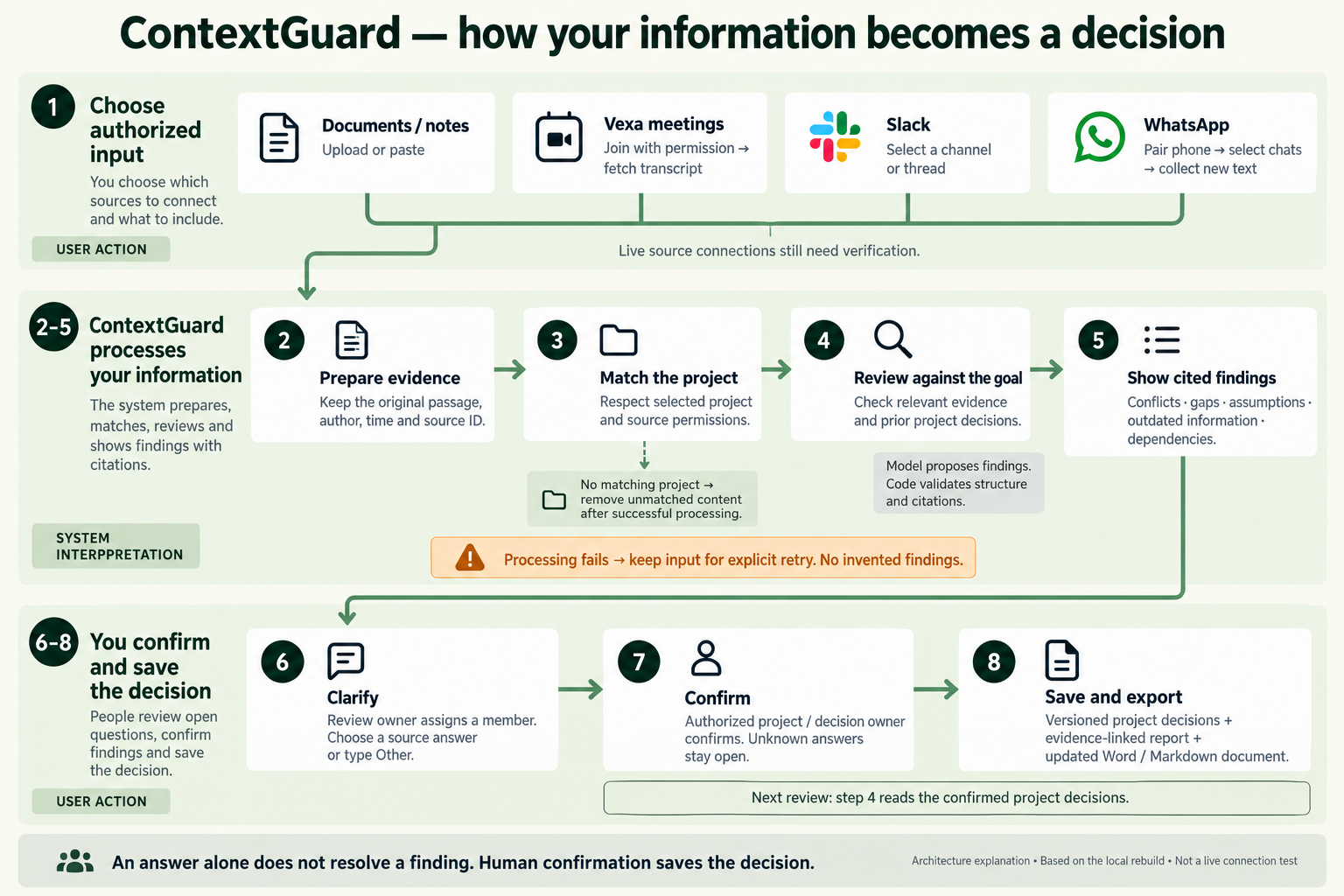
Architecture diagram: authorized input becomes cited findings, human-confirmed decisions, versioned memory and reports.
-
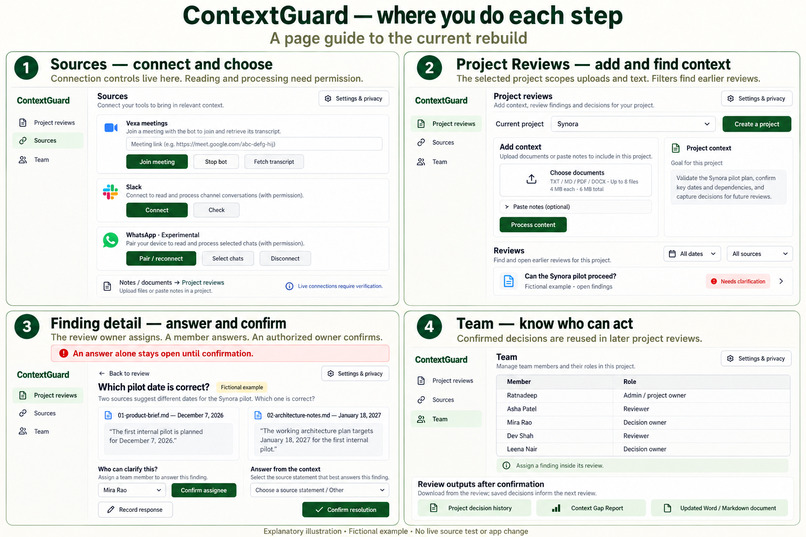
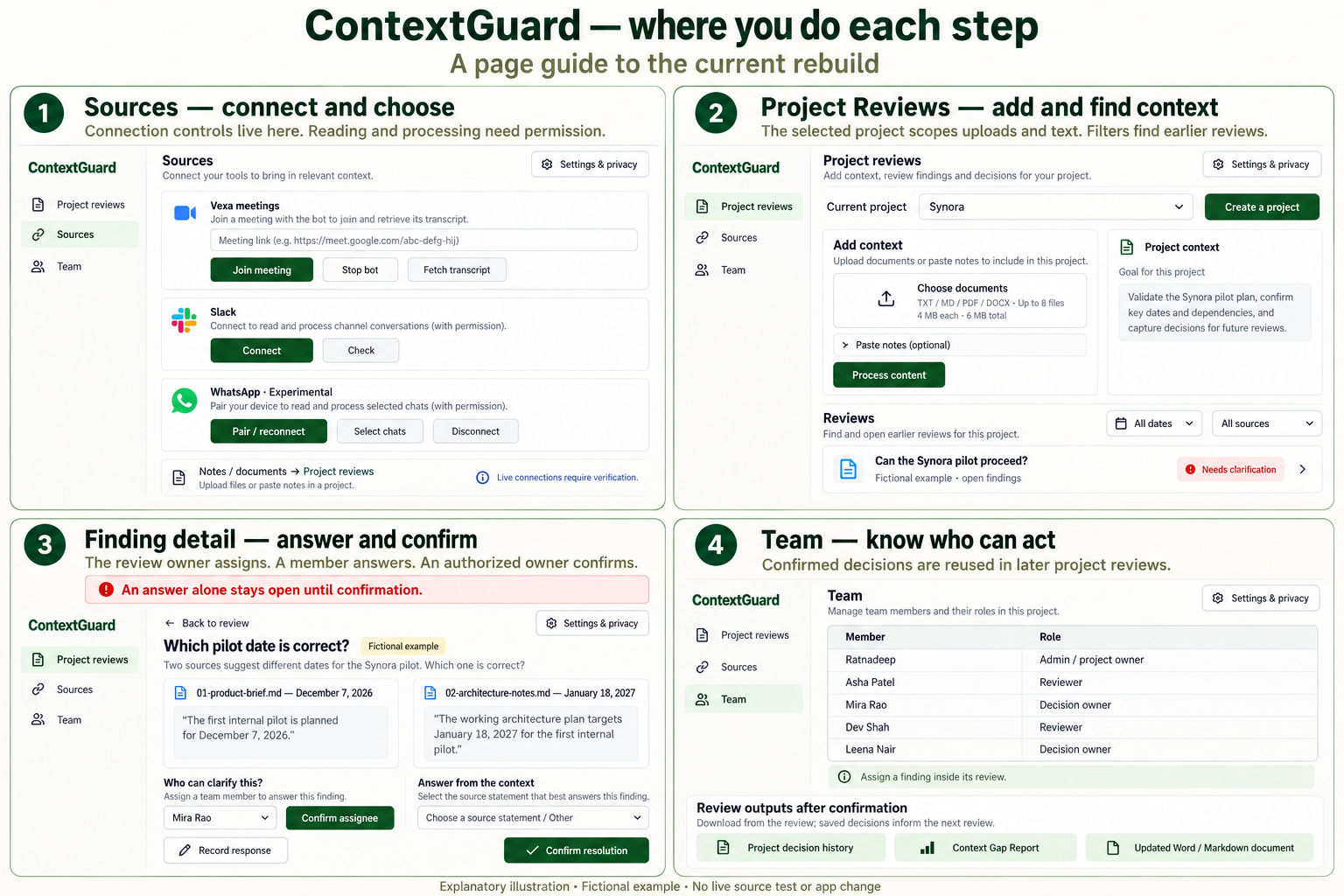
3. Illustrated UI guide: connect sources, review evidence, assign findings, confirm decisions and download reports.
Inspiration
Project discussions often look clear until someone checks the actual documents. A date might differ between two files, an approval may be missing, or a task may depend on something that hasn't been decided yet. These gaps can create confusion once development starts.
What it does
ContextGuard helps teams identify things that need clarification before starting a project. It reviews project information, highlights possible conflicts or missing details, and links findings to their original sources. Users can record clarifications, revisit previous decisions, and prepare a kickoff brief showing what has been decided and what still needs attention.
How we built it
We built ContextGuard as a web application using React, TypeScript, Python, and FastAPI. It supports documents such as PDFs, Word files, and text files. The workflow combines AI-assisted analysis with checks that verify source quotations and keep saved decisions connected to the review. It also supports local review history and exporting a kickoff brief.
Challenges we ran into
One challenge was making findings useful rather than simply listing possible problems. A finding needs supporting evidence, and users need a way to clarify it without losing track of the original information. We also had to consider cases where documents are incomplete, answers are uncertain, or a decision still needs to be made.
Accomplishments that we're proud of
We built a workflow that connects findings with source evidence and lets users record clarifications, revisit decisions, and prepare a structured kickoff brief. We are particularly proud of keeping unresolved questions visible instead of treating every issue as automatically resolved.
What we learned
We learned that identifying an issue is only one part of making a good project decision. Understanding where the information came from and recording how the team responds are equally important. We also learned to distinguish between sample-based testing and live AI behavior, and why it is important to be clear about what has actually been verified.
What's next for ContextGuard
We want to test ContextGuard with a wider range of real project documents, improve the reliability of its findings, and make the review process more useful for teams preparing to start development. Our longer-term goal is to help teams catch misunderstandings earlier and begin projects with clearer decisions.
Built With
- ai
- css
- fastapi
- html
- natural-language-processing
- python
- react
- rest-api
- sqlite
- typescript
- vite

Log in or sign up for Devpost to join the conversation.