-
-
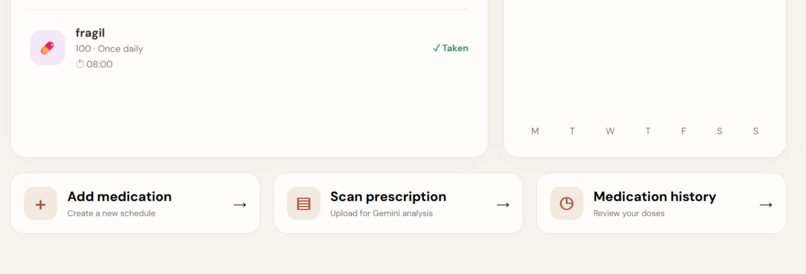
Dashboard
-
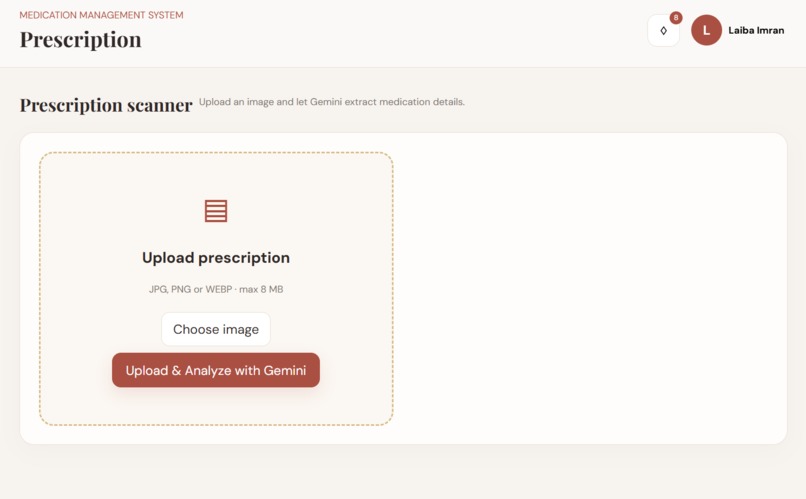
Prescription
-
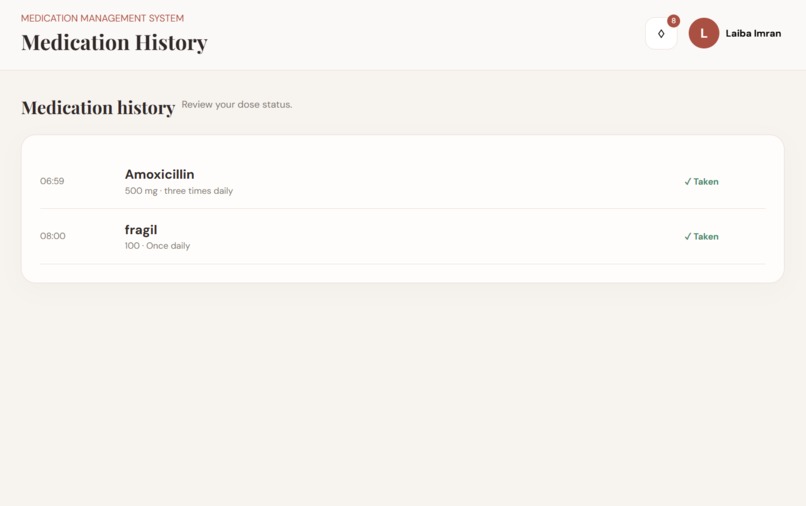
History
-
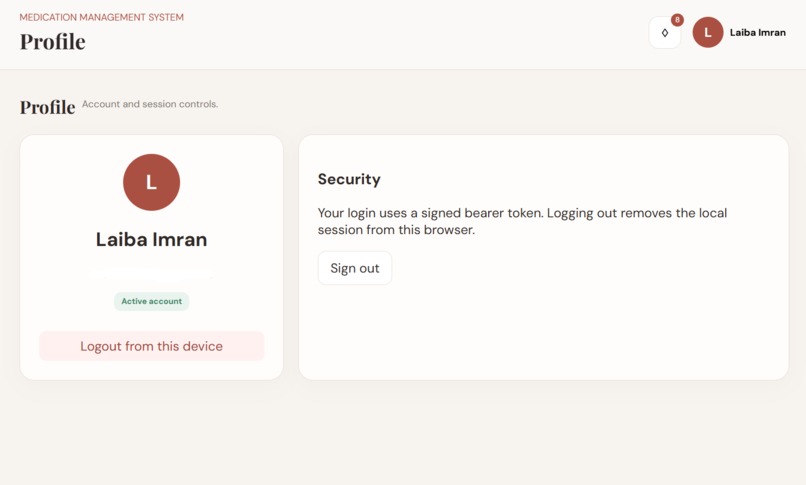
Profile
-
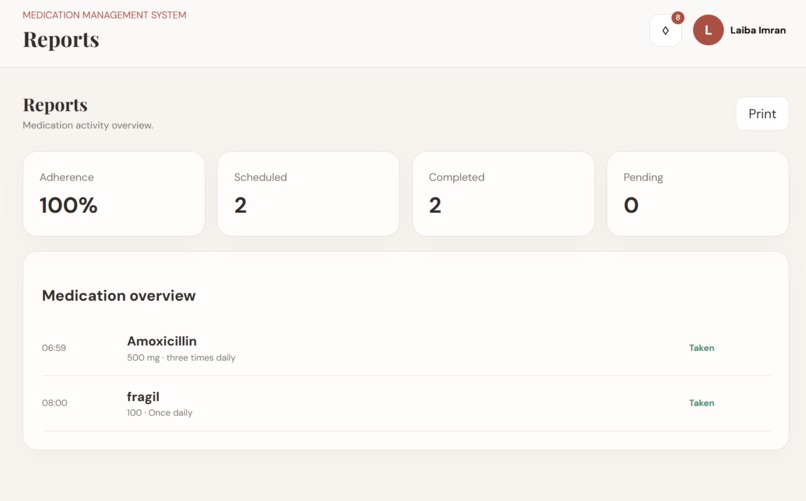
Reports
-
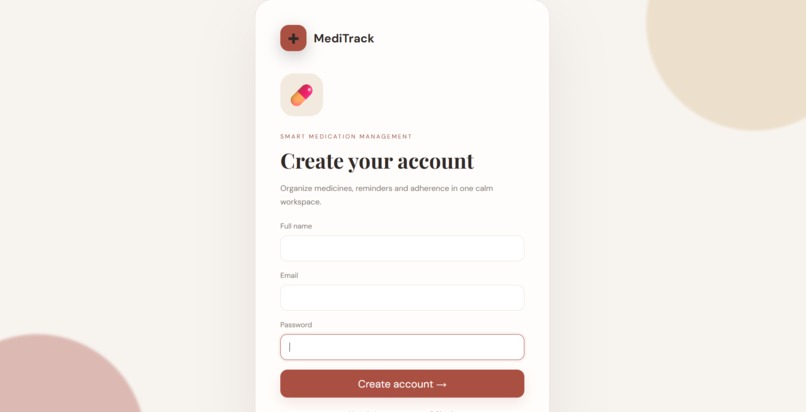
Signup
-
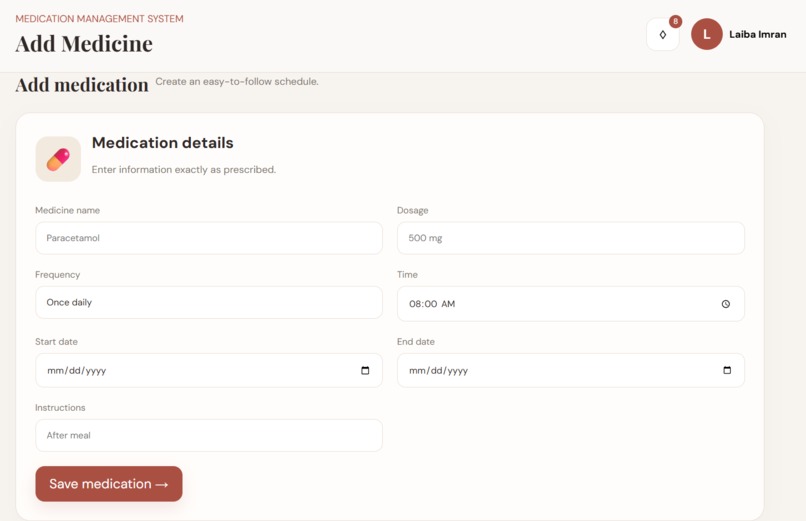
Add Medicine
-
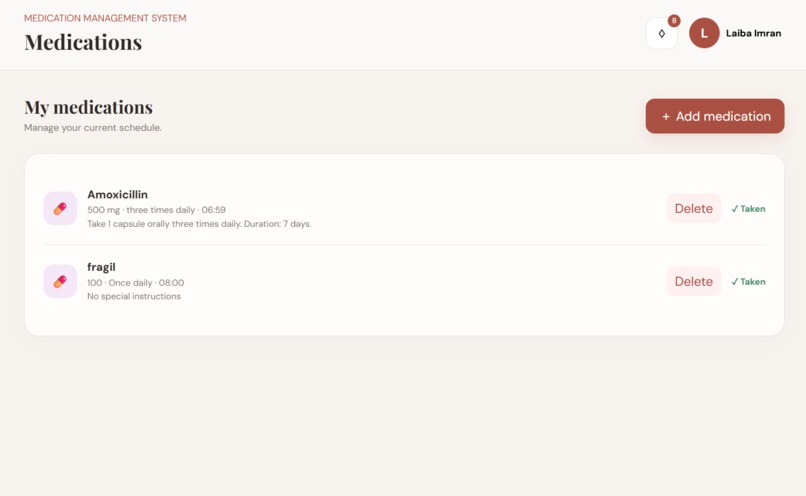
Medications
-
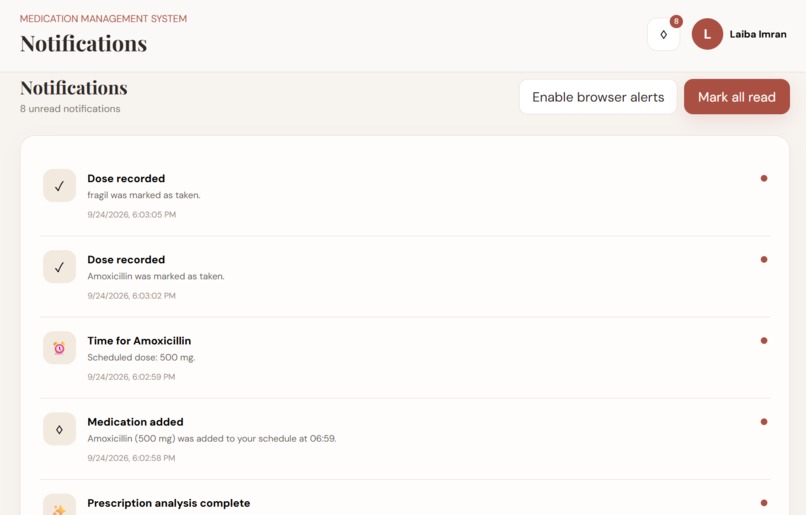
Notifications
-
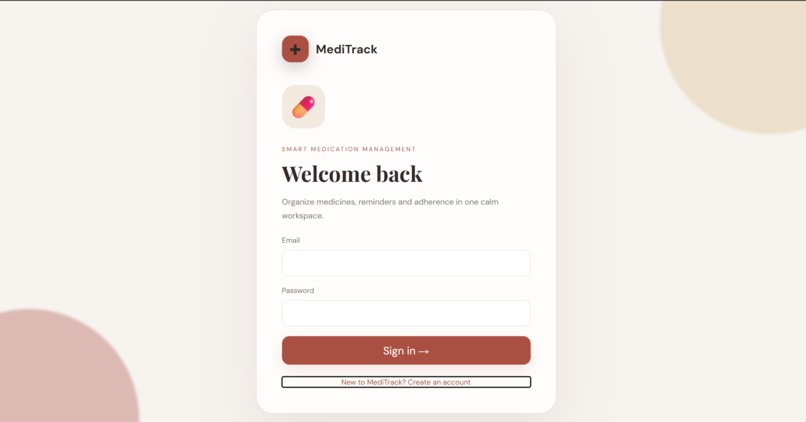
Login
-
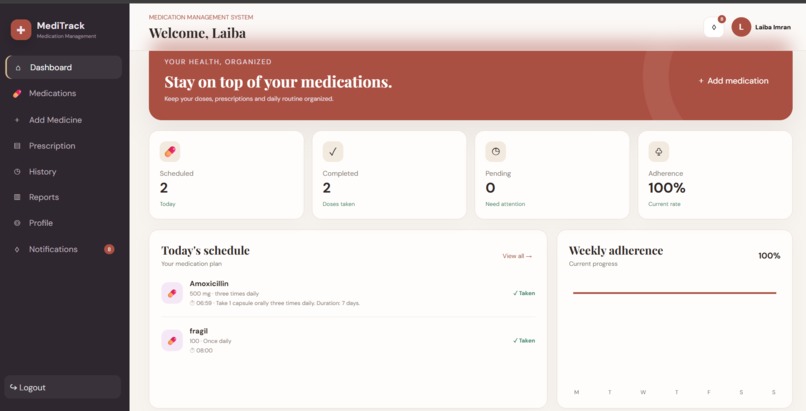
Dashboard
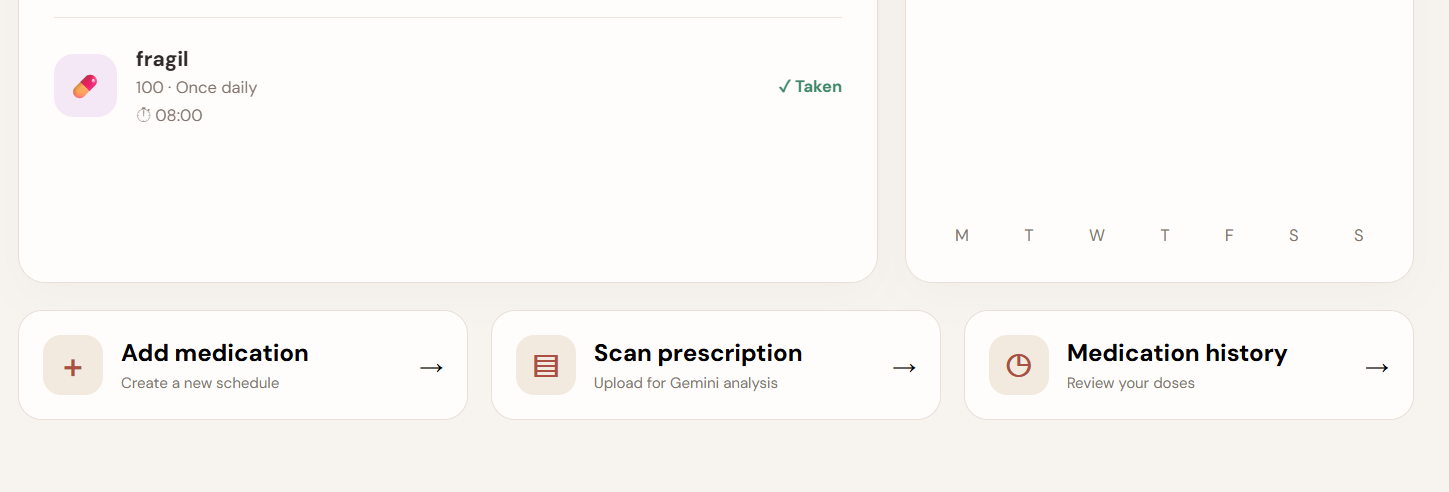
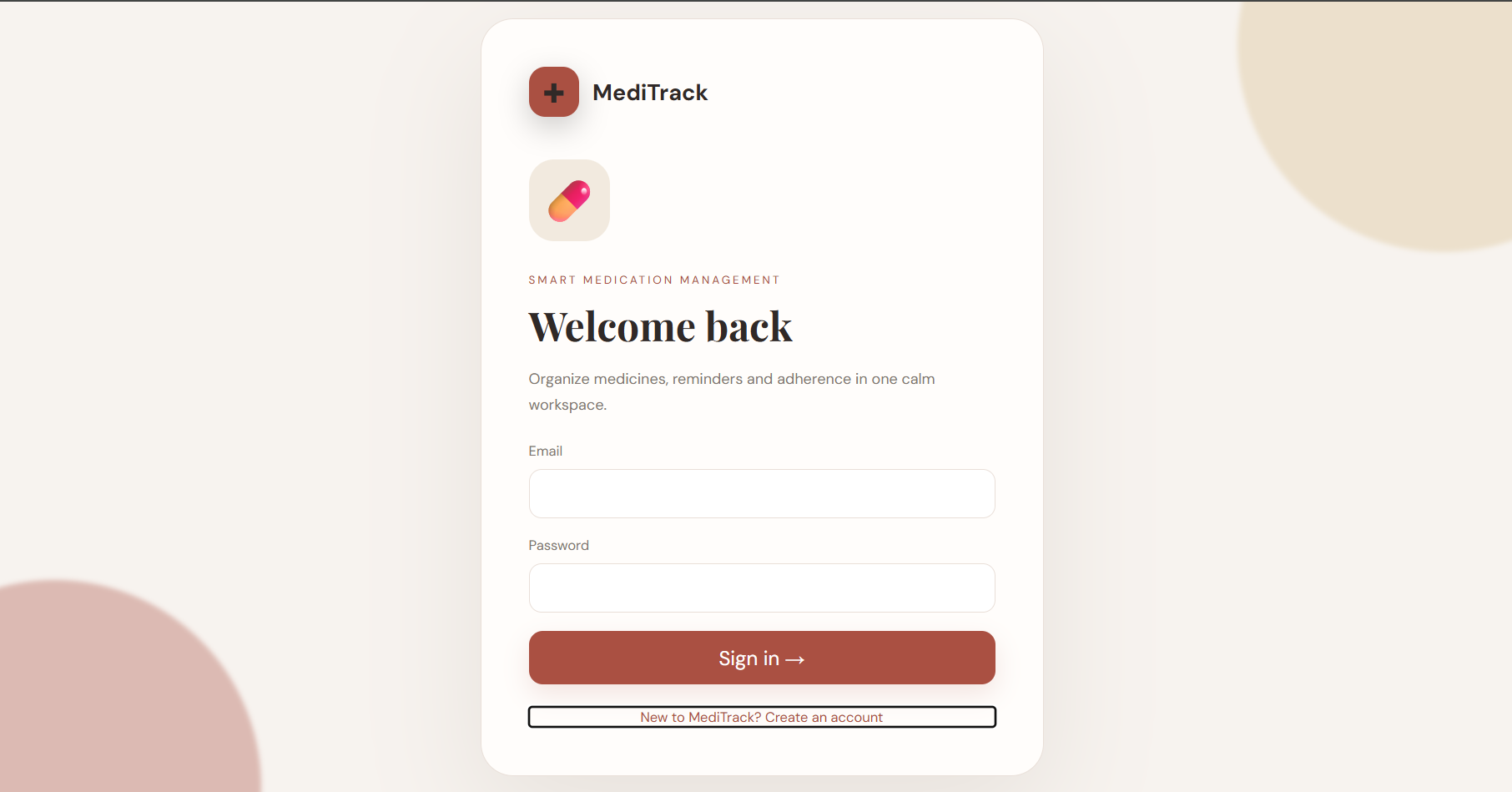
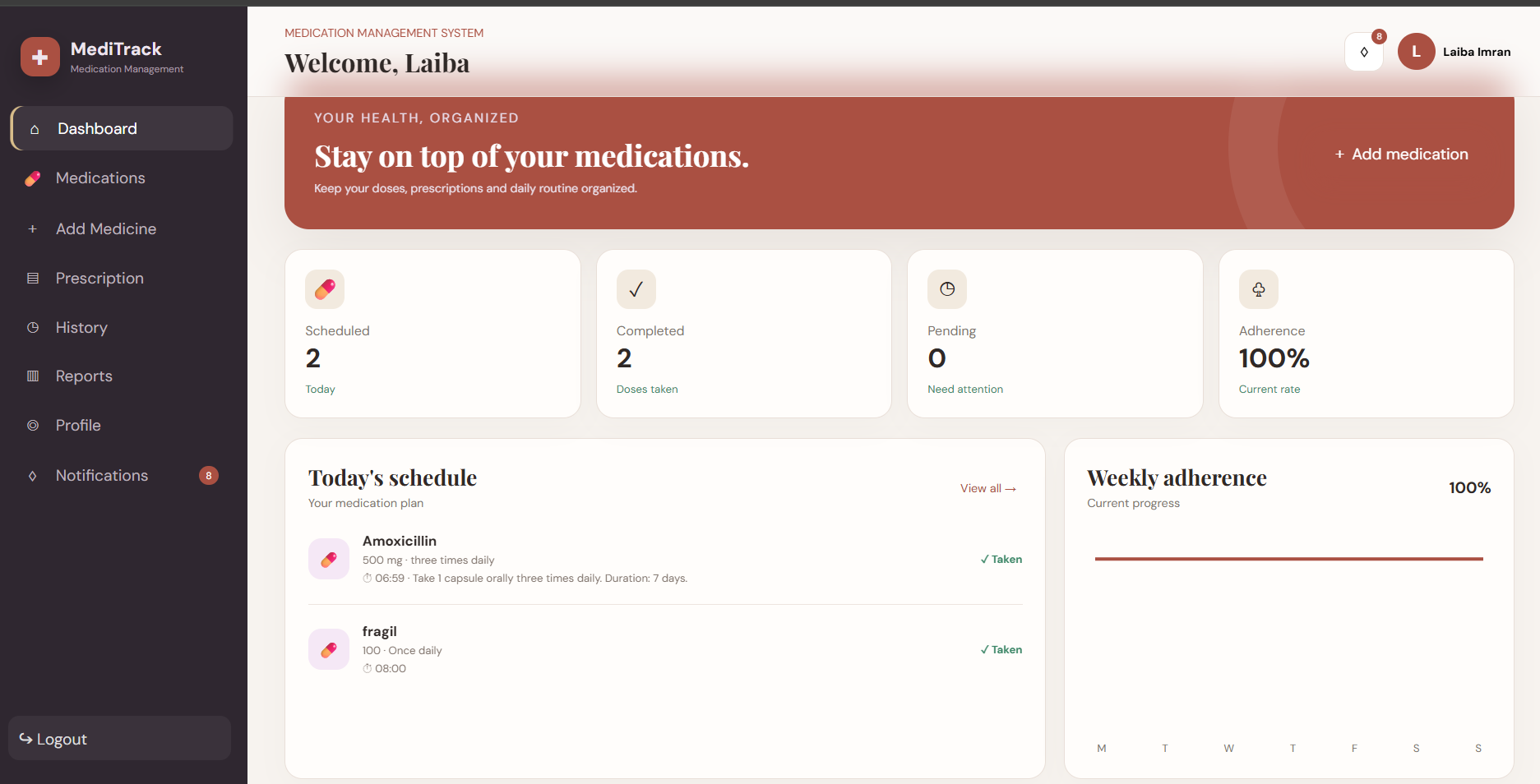
About MediTrack
Managing medications can be surprisingly difficult. People may forget doses, misunderstand prescriptions, lose track of medication schedules, or struggle to understand what has been prescribed to them.
We built MediTrack to make medication management simpler, more organized, and easier to understand.
Inspiration
The idea for MediTrack came from a simple problem: medication information is often scattered and difficult to manage.
A prescription may contain several medicines, different dosages, and specific instructions. Remembering all of this manually can become challenging, especially when medications need to be taken at different times.
We wanted to create a single platform where users could manage their medications, track adherence, and use AI to extract useful information from prescriptions.
What We Built
MediTrack is a medication management platform that combines traditional medication tracking with AI-powered prescription analysis.
Users can:
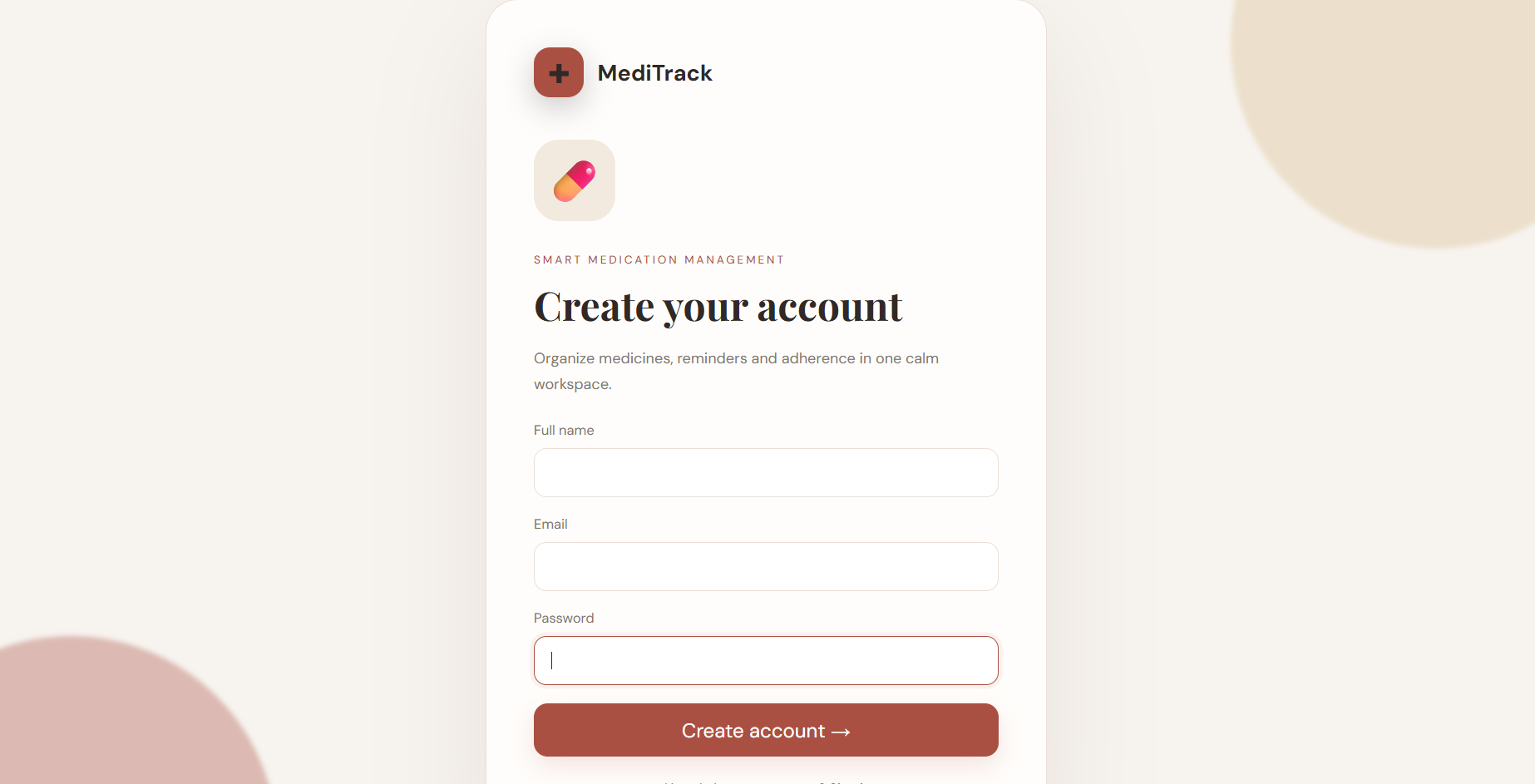
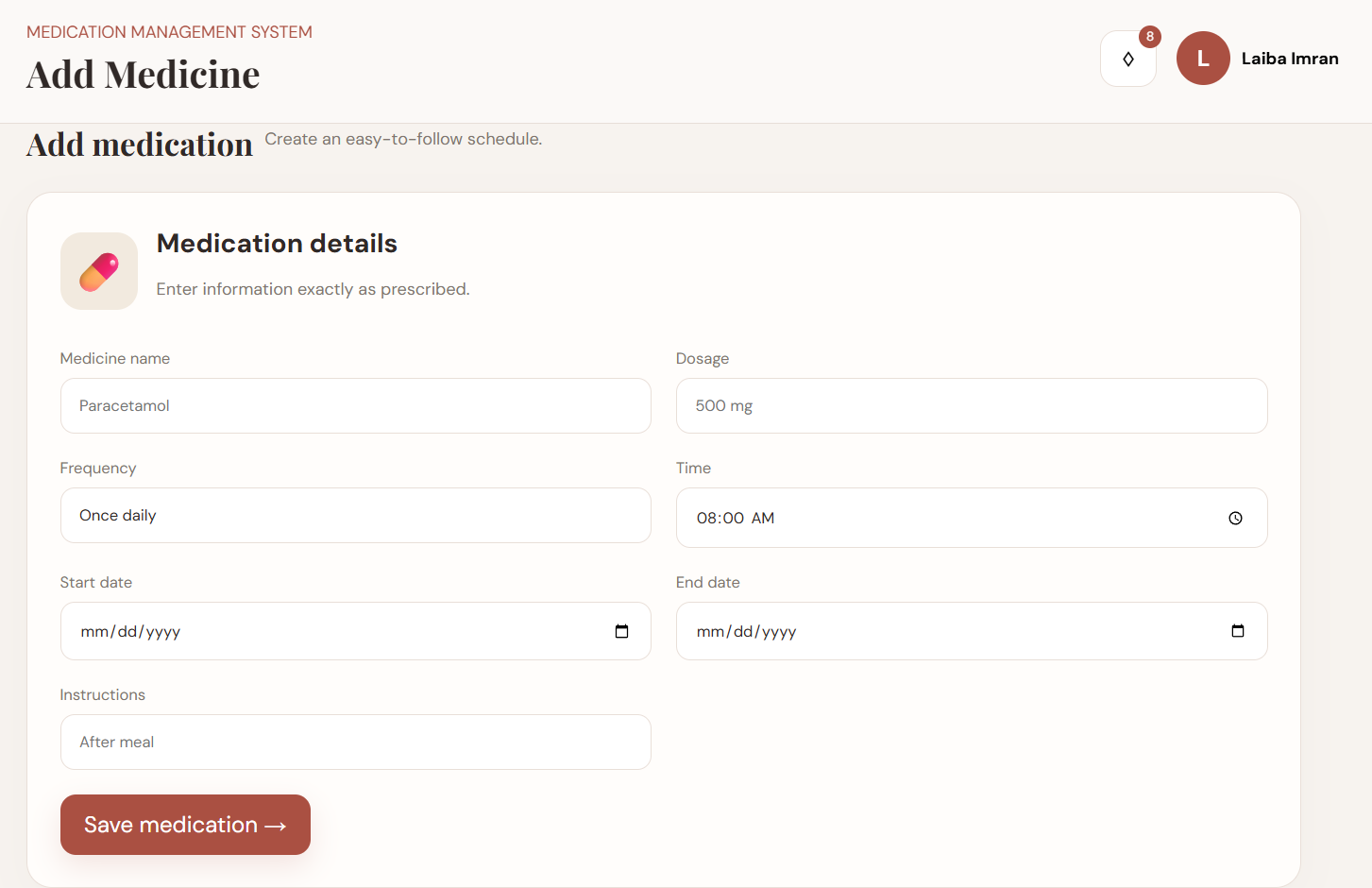
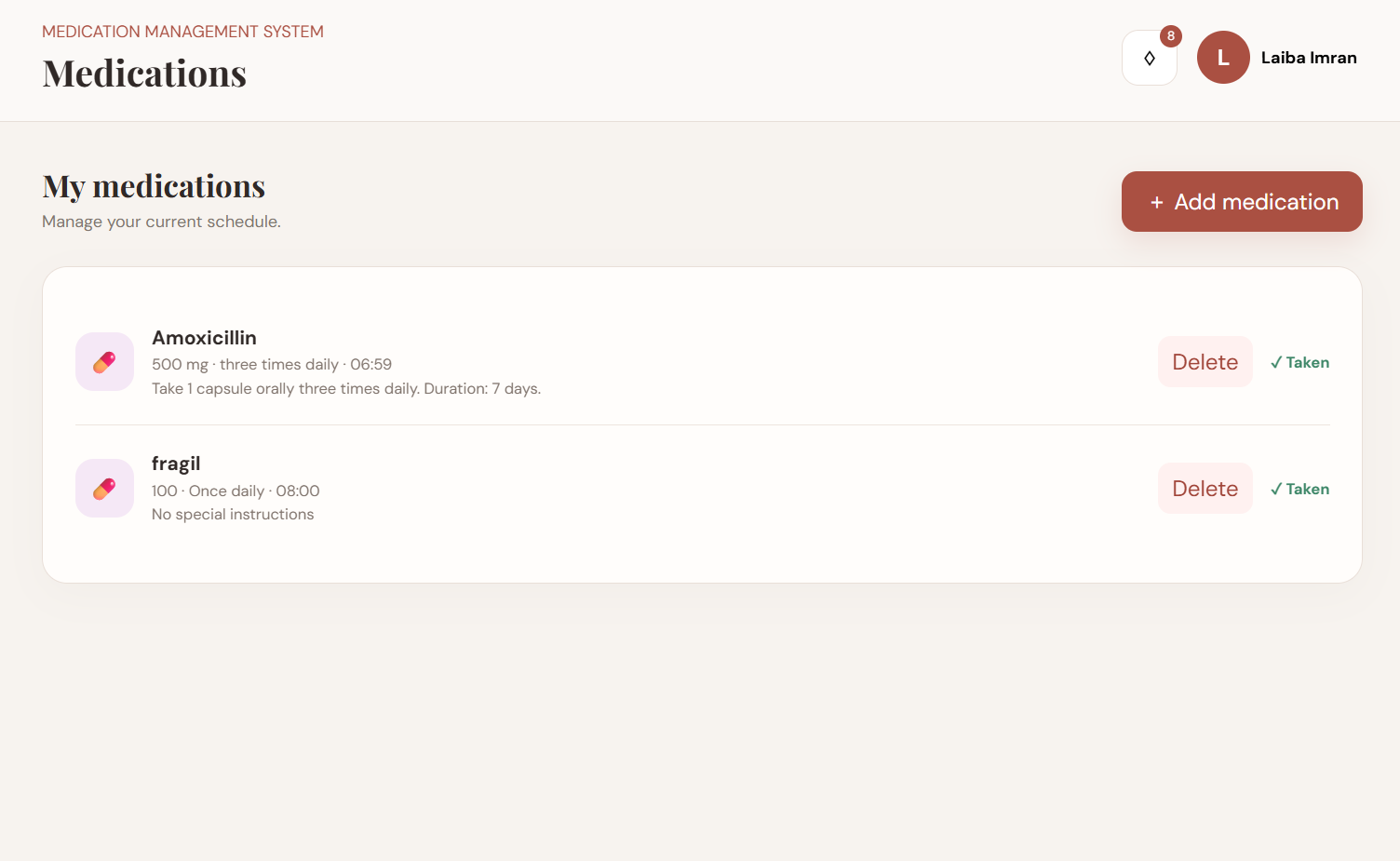
- Add and manage their medications
- Keep track of medication schedules
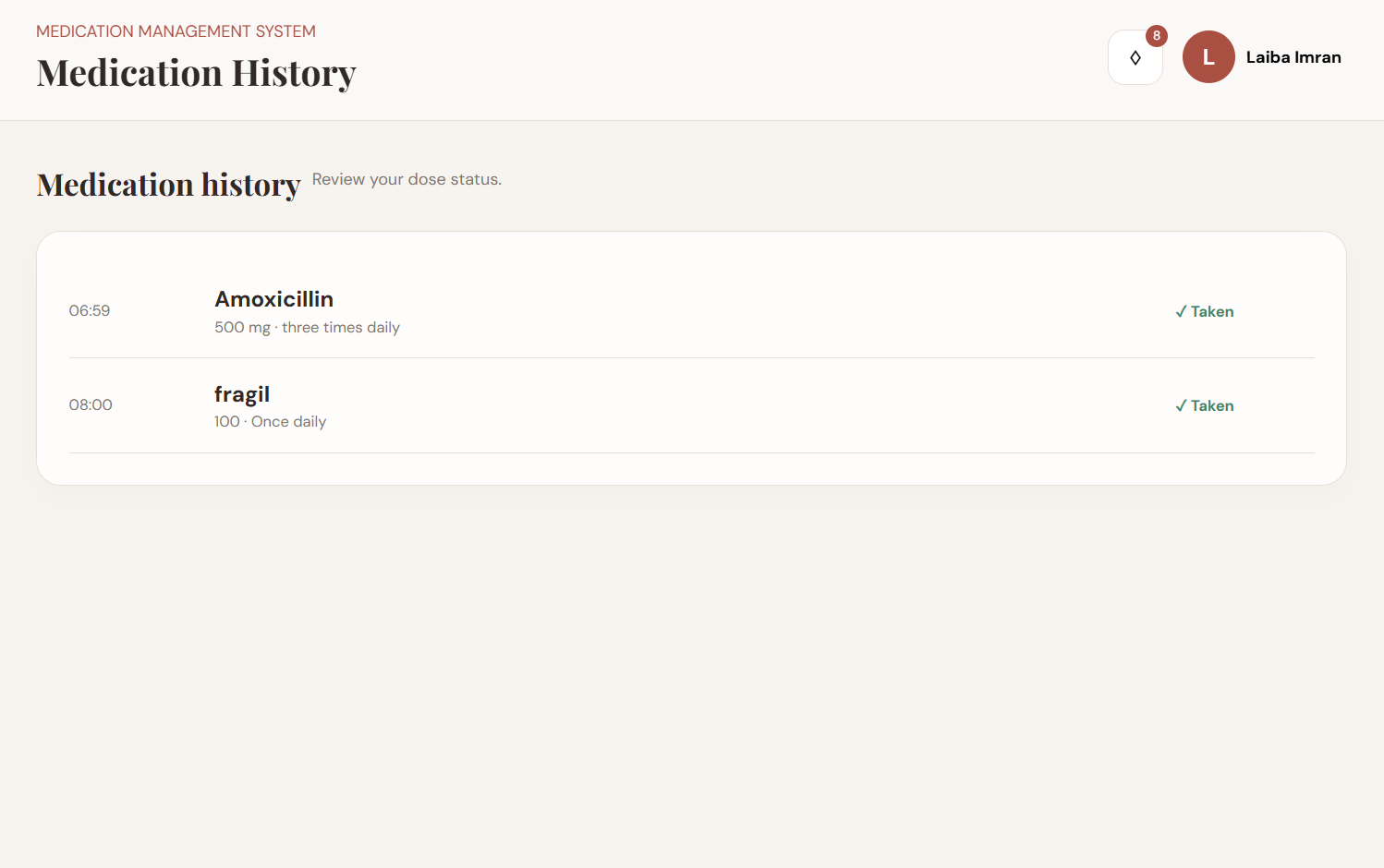
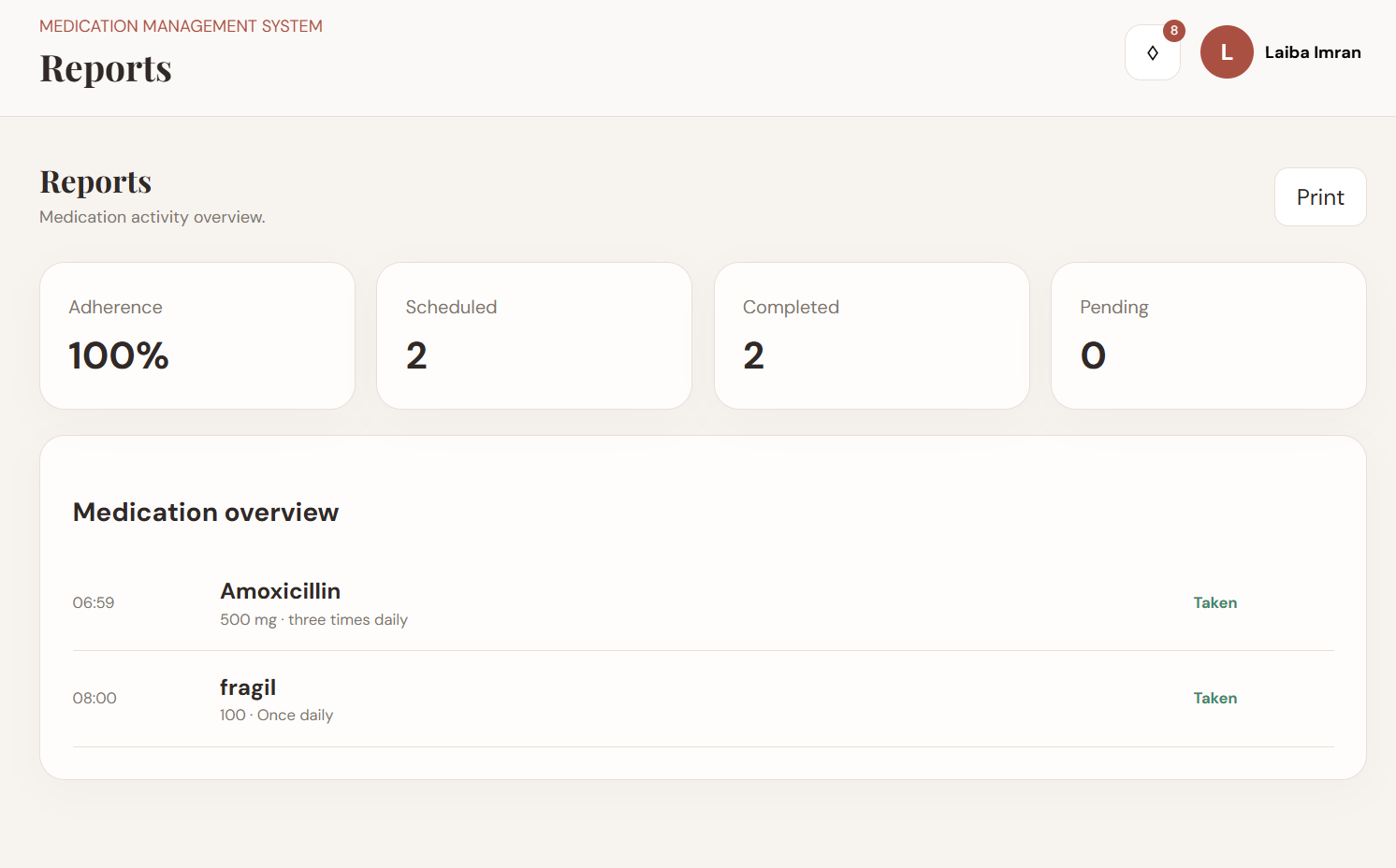
- Monitor medication adherence
- View their medication-related activity
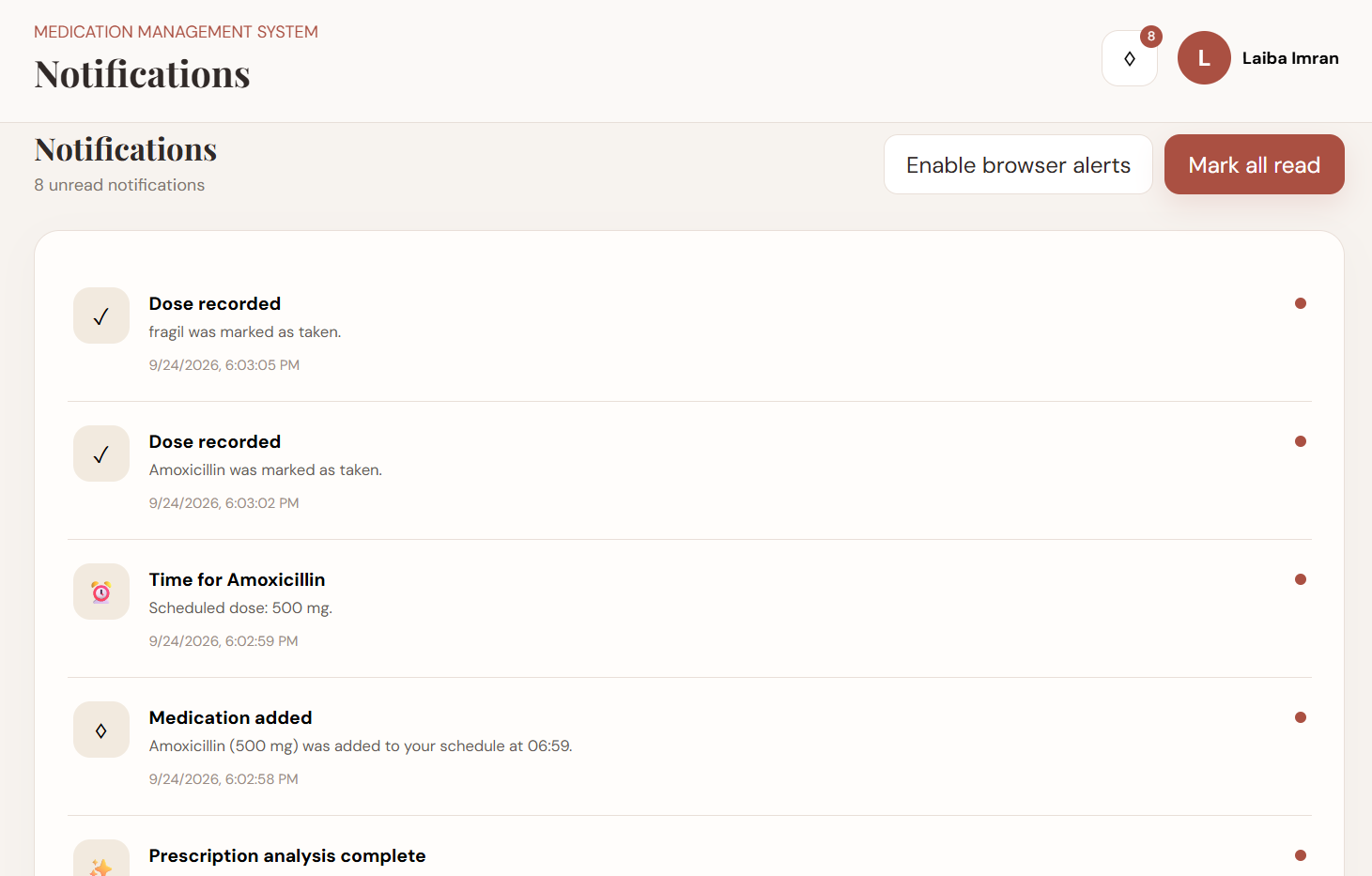
- Receive medication-related notifications
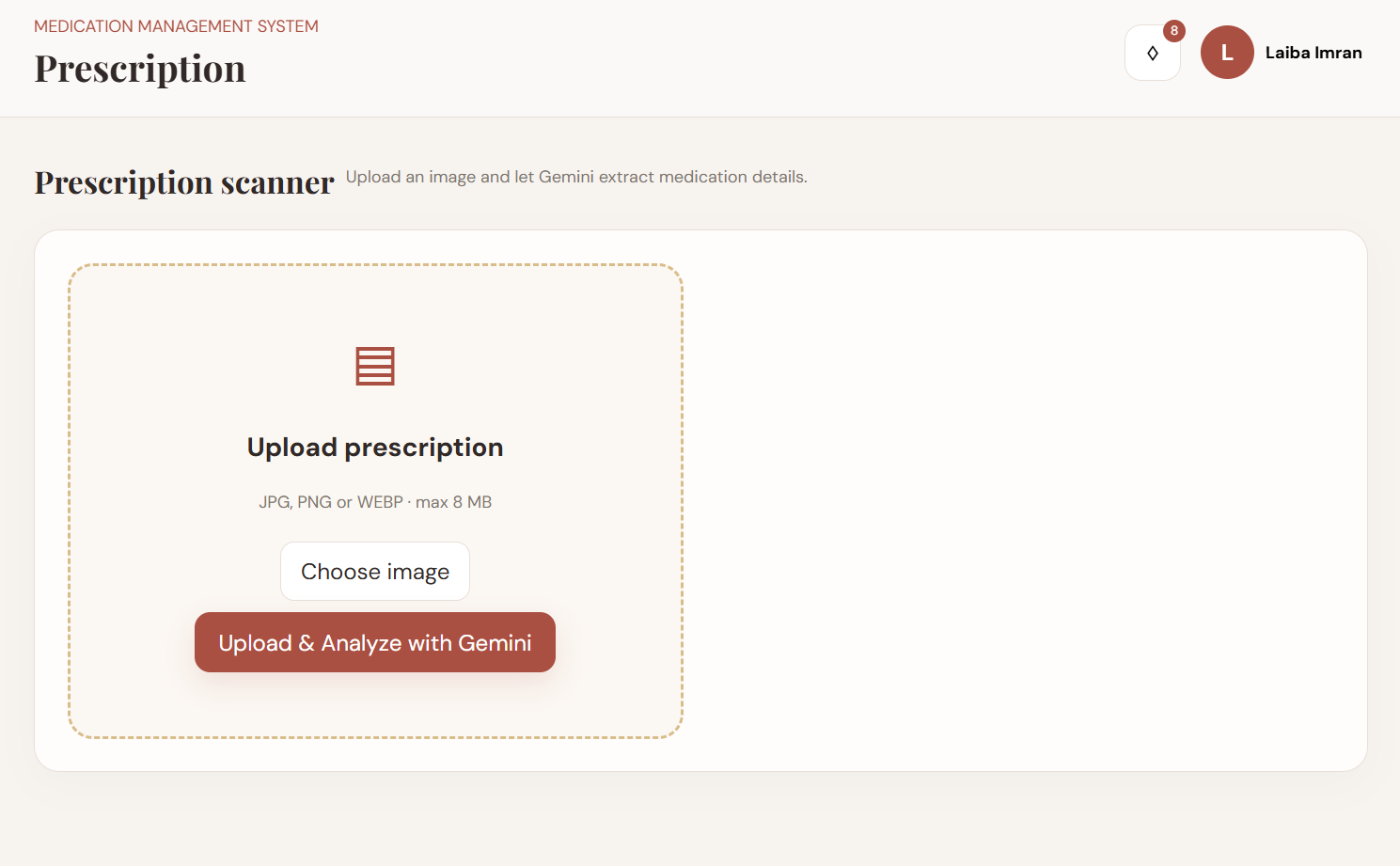
- Upload a prescription for AI-powered analysis
- Extract medication information from prescription images
- Turn unstructured prescription information into structured medication data
The goal is not to replace healthcare professionals, but to make medication information more organized, accessible, and easier to manage.
How We Built It
MediTrack uses a full-stack architecture.
Frontend
- React
- JavaScript
- HTML/CSS
- Responsive UI
Backend
- Python
- FastAPI
- REST APIs
- PostgreSQL
AI
- Google Gemini API
- AI-powered prescription image analysis
- Structured extraction of medication information
The frontend communicates with the FastAPI backend through REST APIs. User medication data and adherence information are stored in PostgreSQL, while Gemini is used to analyze uploaded prescription images and extract relevant information.
AI Workflow
The prescription analysis workflow was designed to turn an image of a prescription into useful structured information.
Prescription Image
       ↓
     Upload
       ↓
   Backend API
       ↓
   Gemini AI
       ↓
Prescription Analysis
       ↓
Structured Medication Information
       ↓
MediTrack Dashboard
This allows users to move from an unstructured prescription image to information that can be organized and managed inside the application.
What We Learned
Building MediTrack taught us much more than simply connecting a frontend to a backend.
We learned how to:
- Build and connect a full-stack application
- Design REST APIs using FastAPI
- Work with PostgreSQL databases
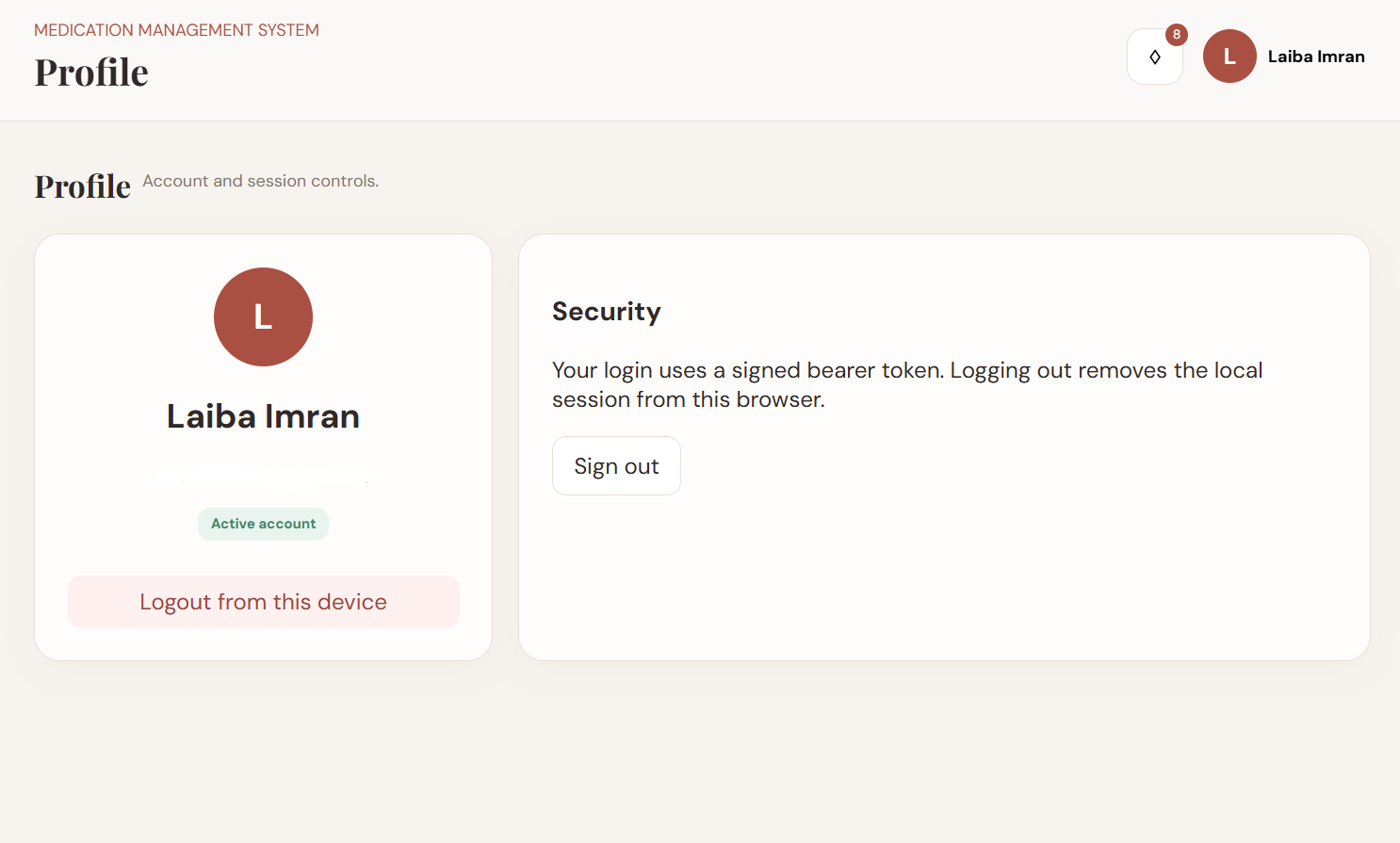
- Handle authentication and protected API endpoints
- Integrate an external generative AI API
- Process and send images for AI analysis
- Manage environment variables and API keys securely
- Deploy a full-stack application
- Debug frontend/backend communication issues
- Design an interface around a real-world problem
One of the biggest lessons was that AI integration is not just about calling an API. A reliable AI-powered feature also requires proper error handling, validation, structured prompts, and fallback behavior.
Challenges We Faced
One of our biggest challenges was integrating AI-powered prescription analysis.
During development, the Gemini API occasionally returned 503 Service Unavailable responses because of temporary model availability and high demand. We had to improve the application's error handling and make the AI integration more resilient.
We also faced challenges with:
- Connecting the frontend to the deployed backend
- Managing authentication and API authorization
- Configuring CORS correctly
- Connecting the application to PostgreSQL
- Handling environment variables across local development and deployment
- Processing prescription uploads
- Making the application responsive across different screen sizes
These challenges helped us understand the difference between building something that works locally and building something that is reliable enough to deploy and demonstrate.
What's Next?
We see MediTrack as a foundation that can be expanded into a more complete medication companion.
Future improvements could include:
- More robust prescription extraction
- Better medication reminders
- Medication interaction awareness
- Improved accessibility
- Support for multiple languages
- More detailed adherence insights
- Integration with healthcare providers and pharmacies
Why MediTrack?
Medication management should not feel complicated.
With MediTrack, our goal is to combine AI, automation, and thoughtful design to help users organize their medication information and stay more aware of their treatment routines.
MediTrack making medication management simpler, smarter, and more organized.
Built With
- api
- authentication
- css
- fastapi
- gemini
- generative
- git
- html
- javascript
- jwt
- postgresql
- python
- react
- vite

Log in or sign up for Devpost to join the conversation.