Video
https://drive.google.com/file/d/1EE8ER3LsahLxFMKAQGmMpPAO8IlLJrTl/view?usp=sharing
Inspiration
We noticed that people often make confident decisions without having full context or asking the right questions. Whether it’s markets, news, or everyday choices, most mistakes don’t come from bad math—they come from incomplete reasoning. We wanted to build a tool that teaches people how to gather context, evaluate evidence, and reason clearly before making a prediction.
What it does
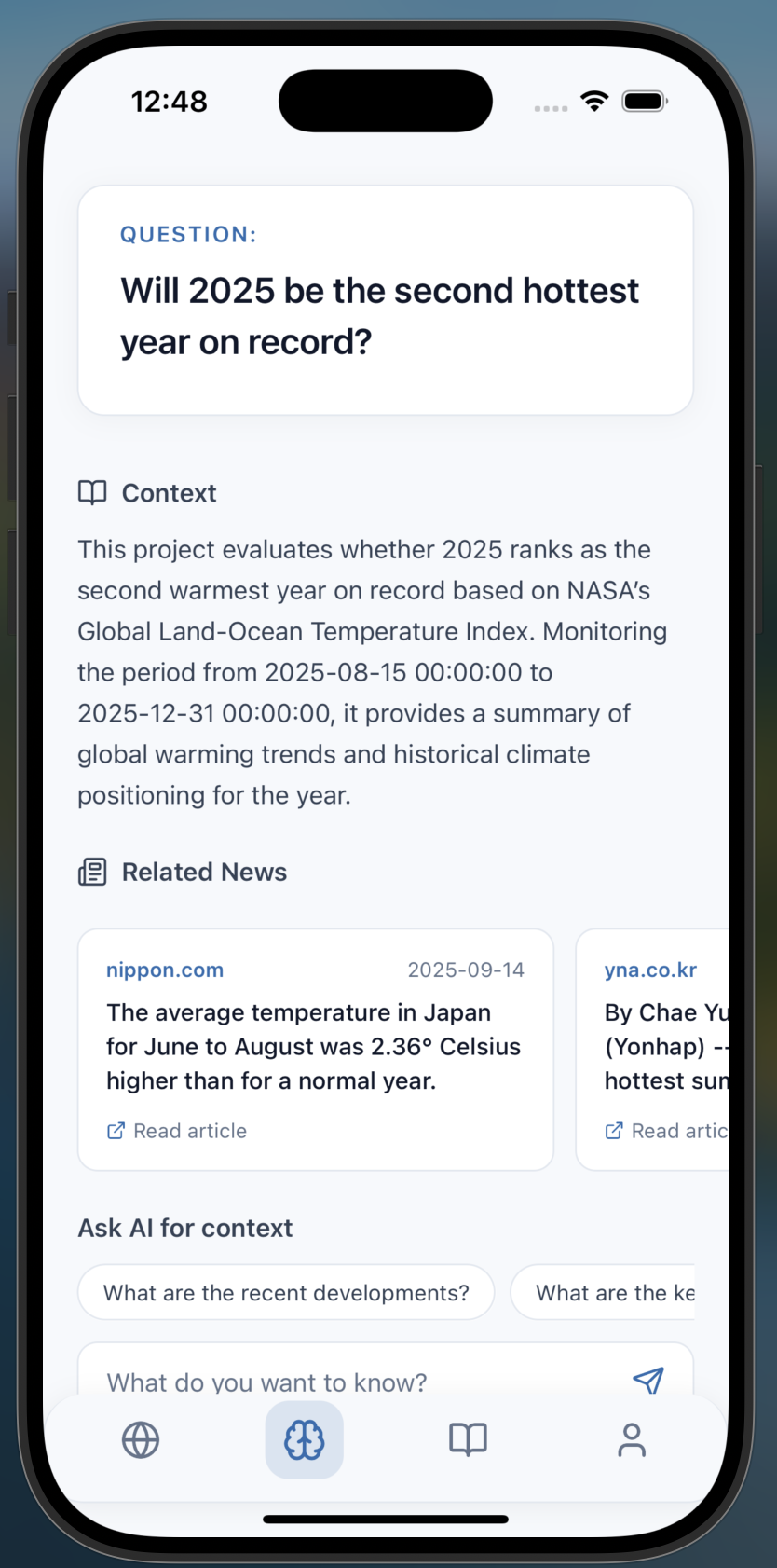
Context is a mobile-first learning app that helps users practice contextual reasoning and probabilistic thinking using real past events from Polymarket.
Users are presented with a historical prediction market and only the information that would have been available at that time: market prices, timelines, and curated news snippets. They research the situation, identify key factors, and make a prediction.
Users are evaluated not just on whether they predicted the correct outcome, but on how they reasoned:
Did they identify the most relevant signals?
Did they ask the right questions?
Did they over- or under-weight certain pieces of information?
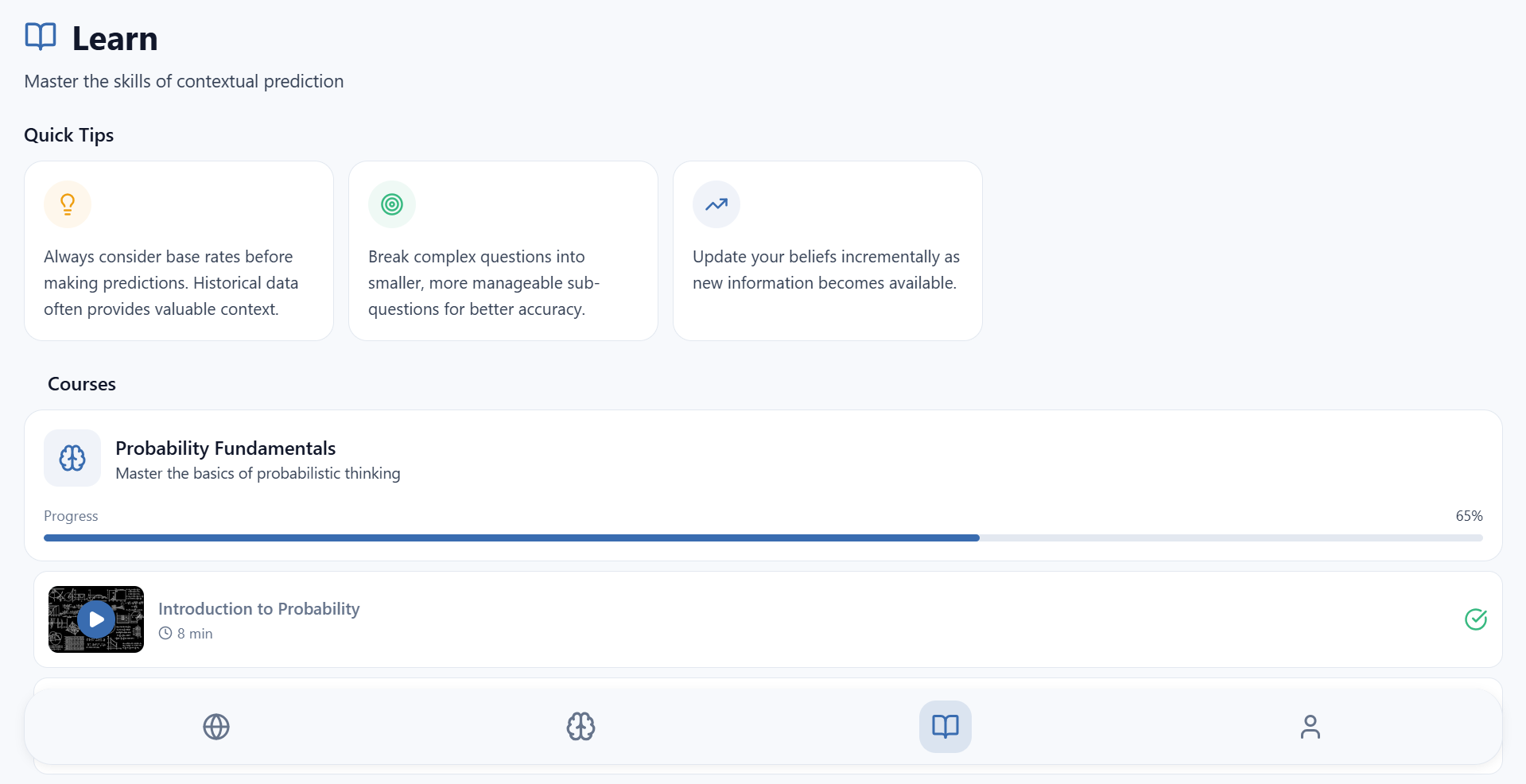
The app also includes a learning section with short lessons on probability, calibration, base rates, and common reasoning pitfalls, which reinforce what users experience during daily challenges.
How we built it
We used the Polymarket API to pull historical market data, prices, and timelines, and structured them into replayable prediction scenarios.
We built a mobile-friendly interface inspired by Duolingo, optimized for short daily sessions. A lightweight reasoning engine scores user predictions based on accuracy, confidence calibration, and information usage.
We also built an explanation agent that gives feedback after each round, helping users understand what mattered, what didn’t, and what they might have missed.
Challenges we ran into
One of the biggest challenges was balancing depth with simplicity. We wanted to teach real decision-making skills without overwhelming users with financial or statistical complexity.
Another challenge was reconstructing “historical context” accurately—deciding which information to show, which to hide, and how to avoid hindsight bias while still making the experience educational.
Accomplishments that we're proud of
We built a complete end-to-end experience that turns real-world prediction markets into an engaging learning tool
We designed a scoring system that rewards good reasoning, not just lucky guesses
We created a format that makes practicing complex thinking skills feel lightweight and fun
What we learned
We learned that teaching decision-making works best when it’s experiential. Letting users practice forming beliefs, updating them, and reflecting afterward is far more effective than passive instruction.
We also learned how hard it is to design systems that encourage humility and curiosity—skills that are essential for good forecasting.
What's next for Context
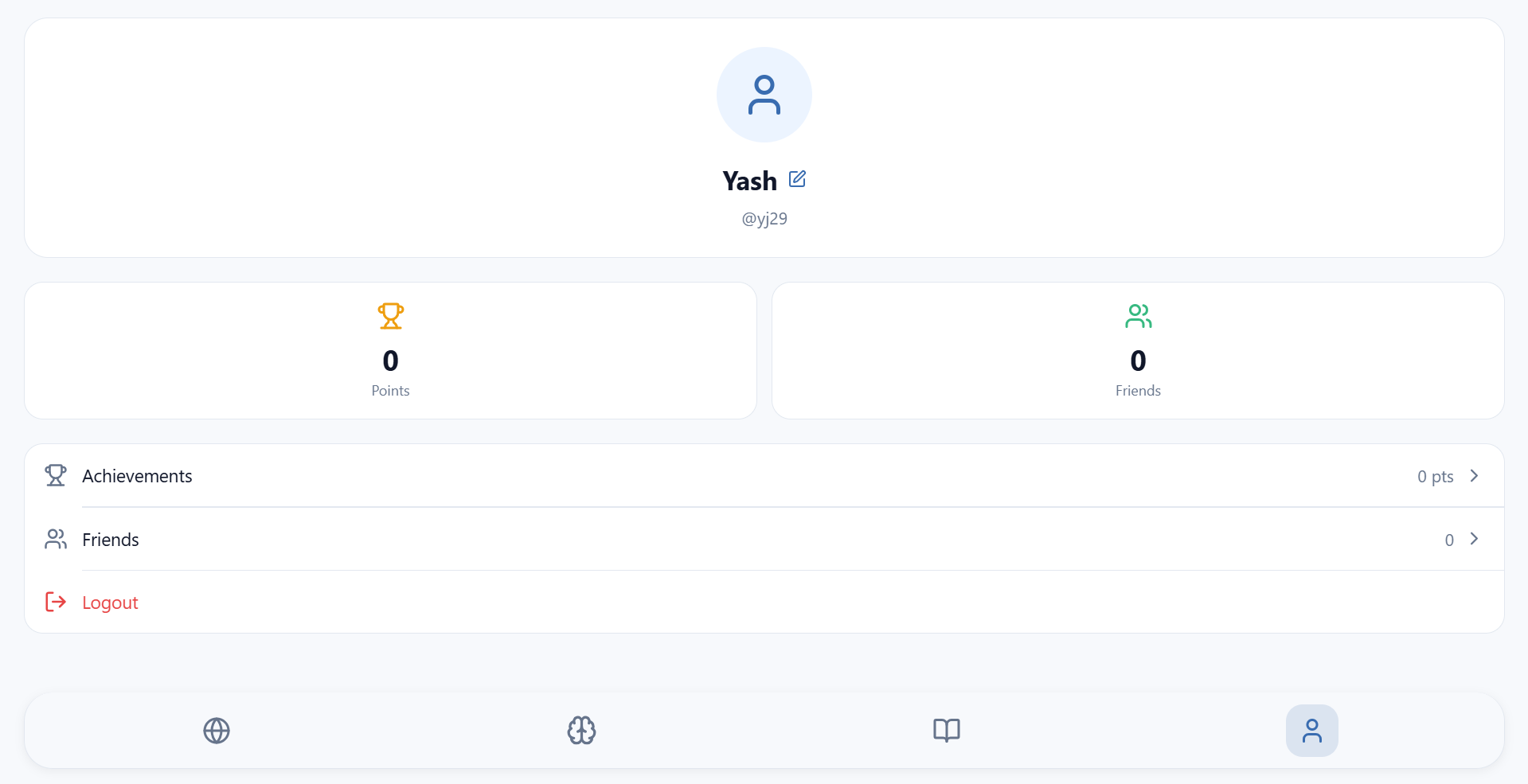
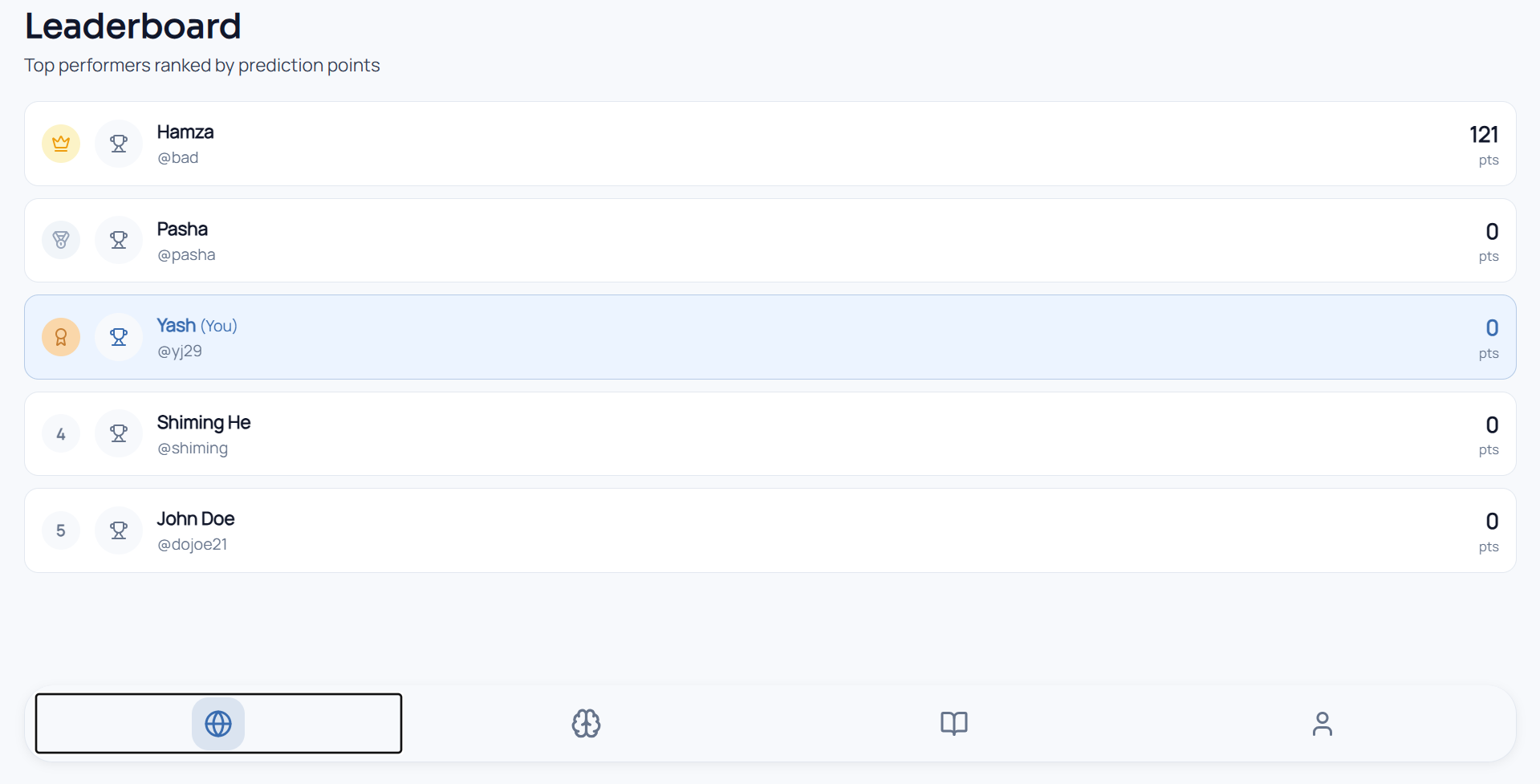
Next, we want to expand the range of scenarios, add personalized skill diagnostics (e.g. overconfidence, recency bias), and introduce lightweight social and progression mechanics to keep users engaged long-term.
Ultimately, we see Context as a training ground for better thinkers,people who know how to seek full context before making decisions.


Log in or sign up for Devpost to join the conversation.