-
-
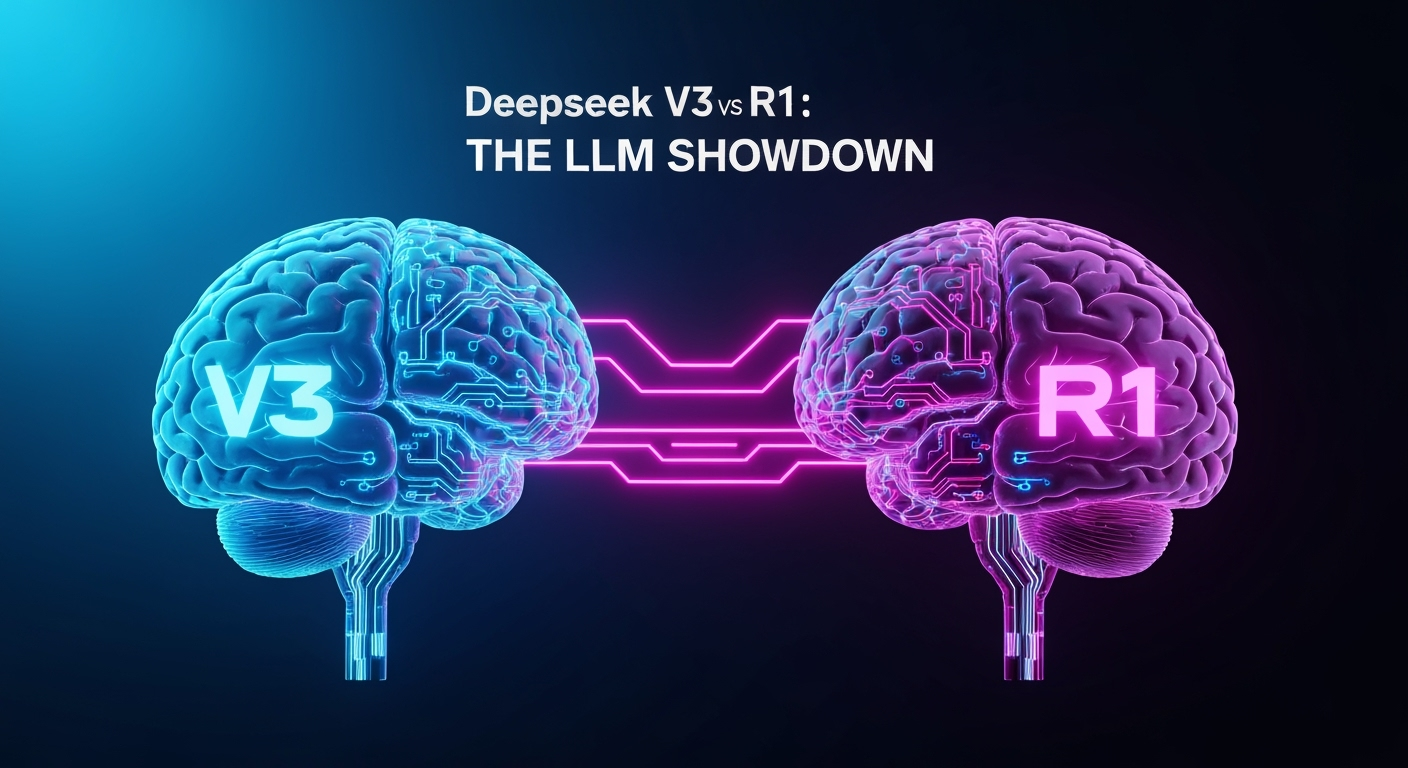
Image generated for Deepseek V3 vs Deepseek R1
-
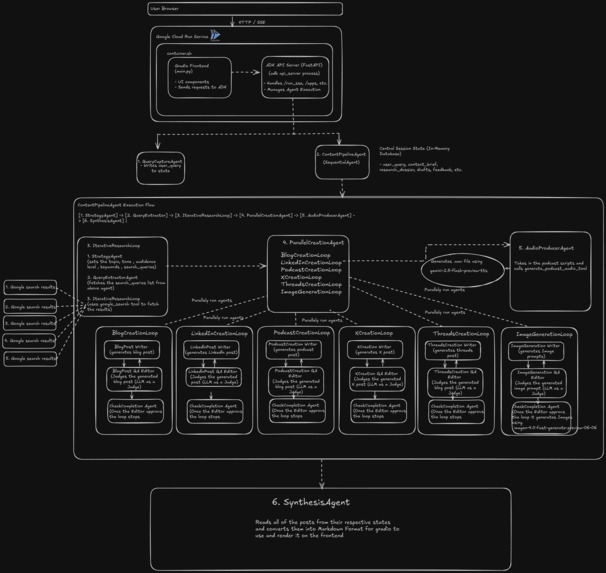
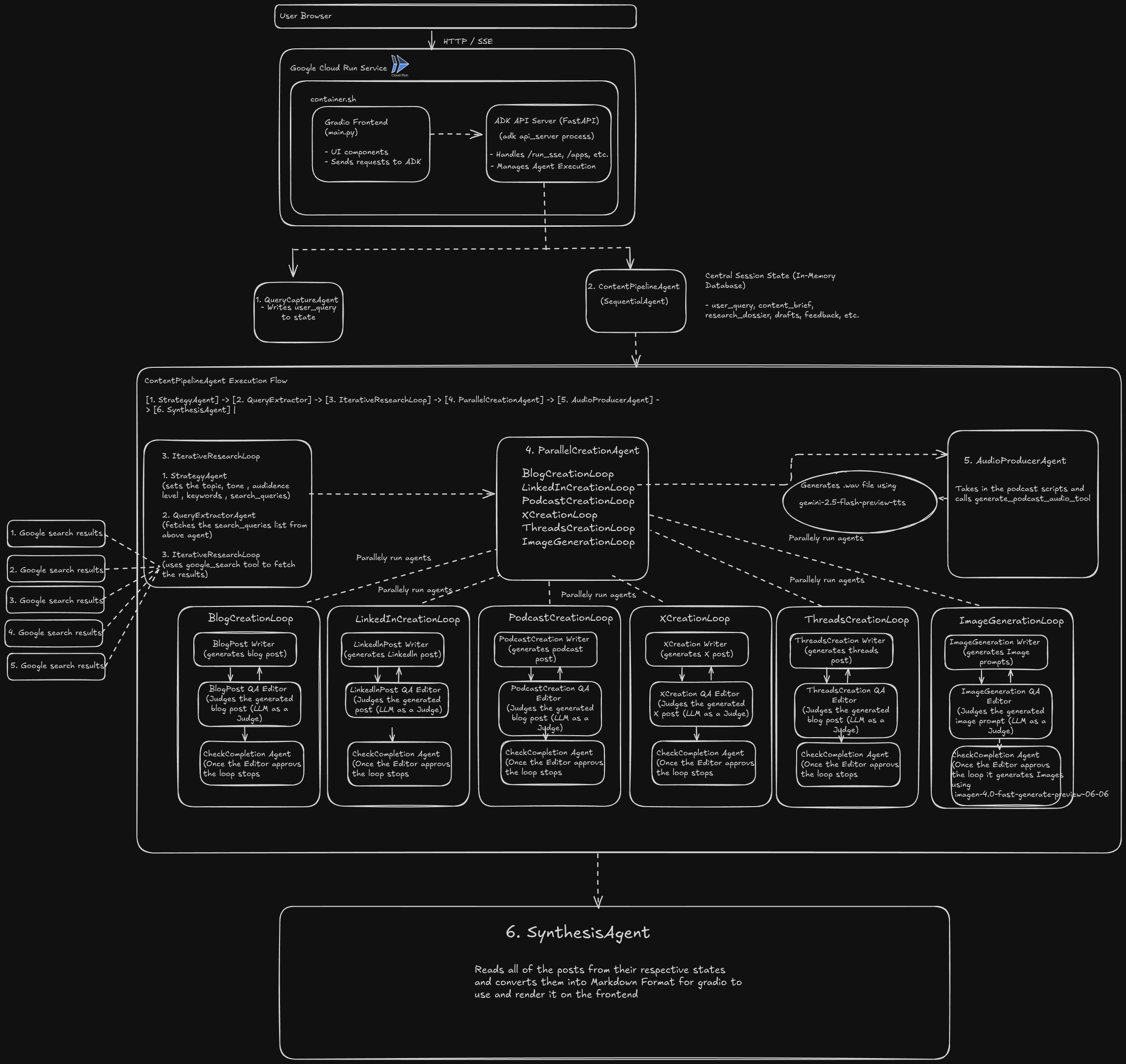
Architecture Diagram of the ContentGen AI
-
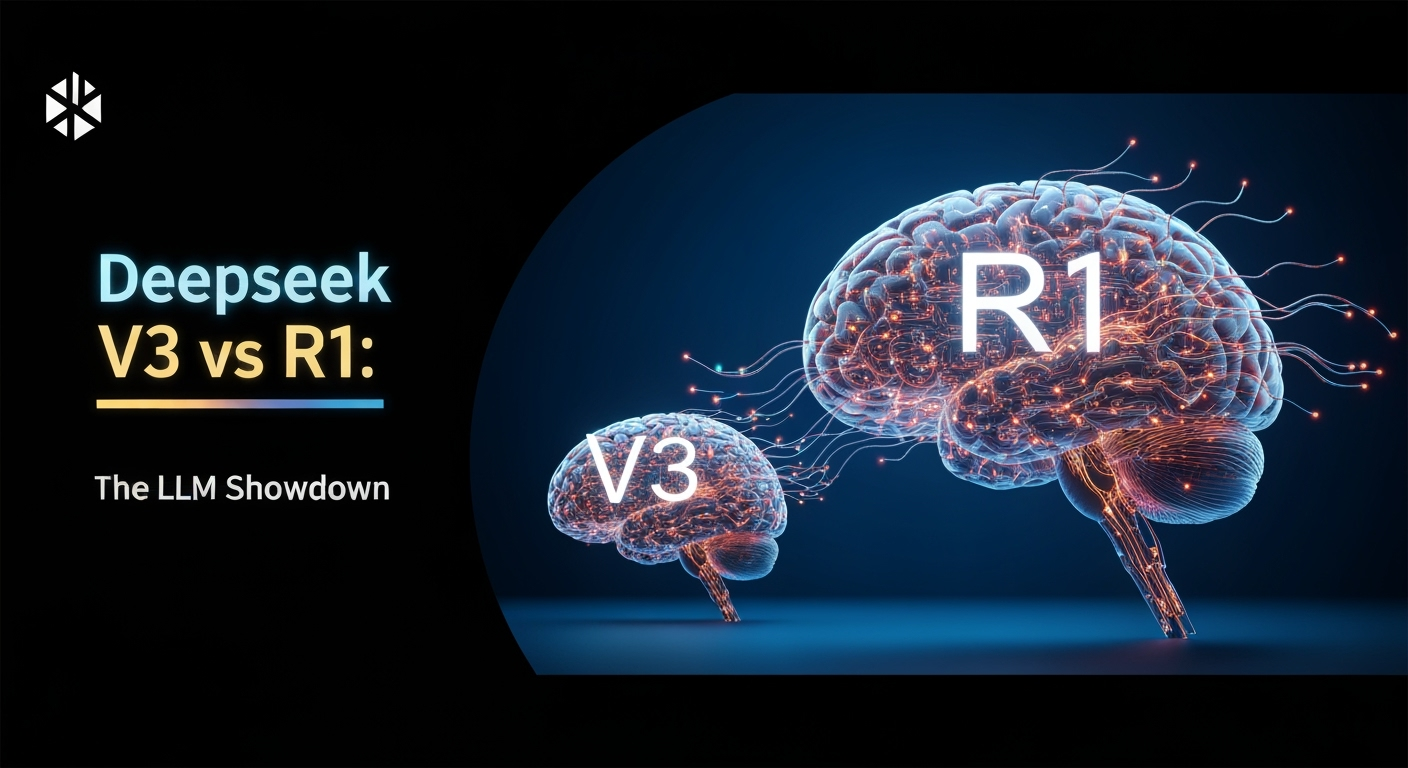
Image generated for topic Deepseek V3 and Deepseek R1
-
Image generated for Google Agent Development Kit
-
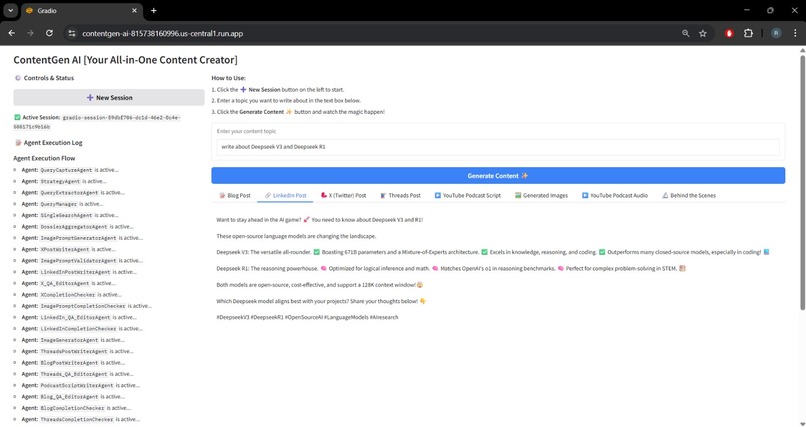
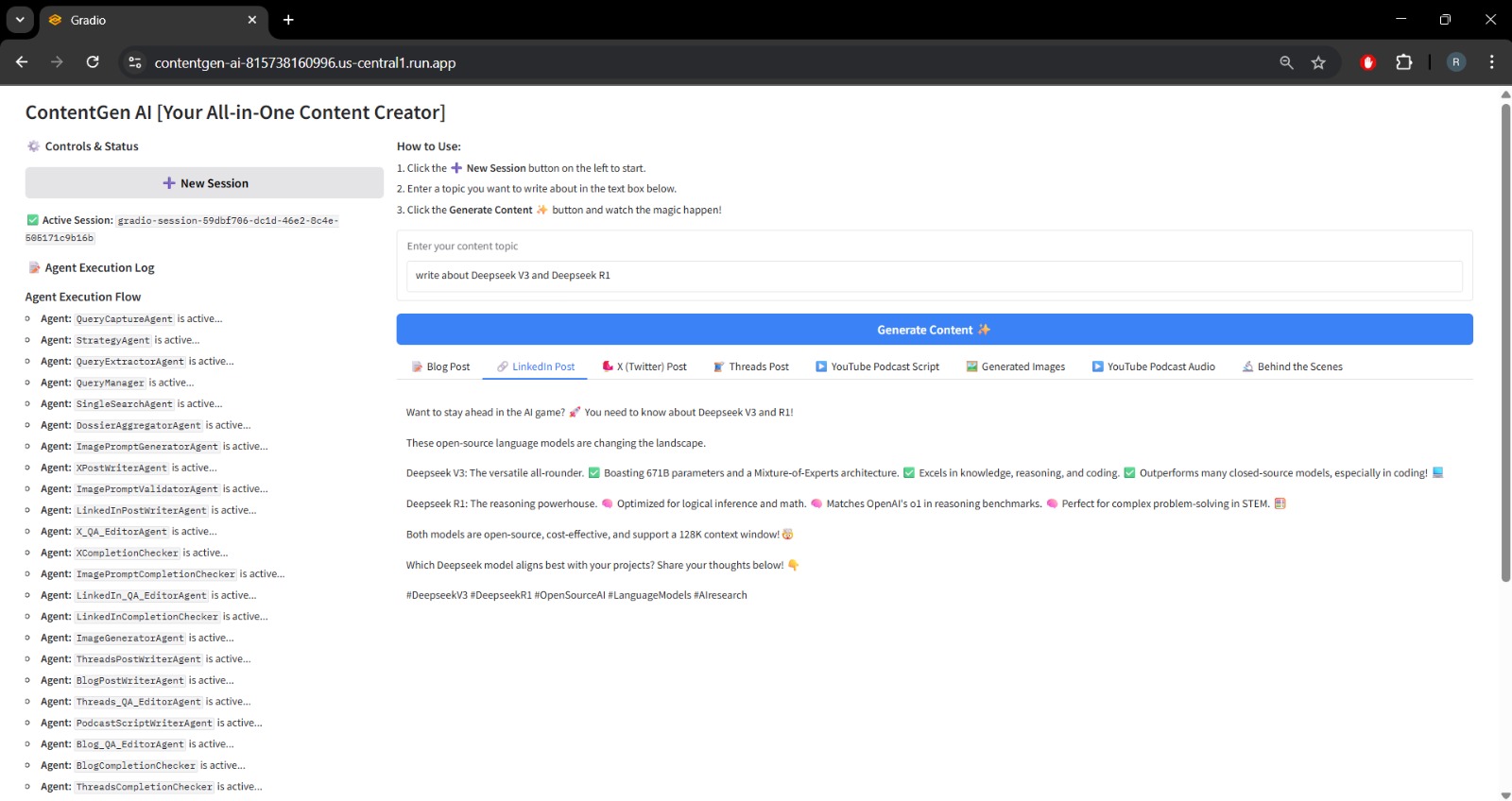
Linkedln Post generated by ContentGen AI
The Inspiration: Solving My Own Content Creation Grind
As a developer who is also passionate about sharing projects and ideas, I've always faced a significant bottleneck: the content creation grind. The process of taking a single, exciting topic and adapting it for different platforms is incredibly time-consuming. A blog post needs depth, a LinkedIn update requires a professional tone, an X post must be punchy and concise, and a podcast needs a conversational script. This fragmented workflow was a personal pain point I was determined to solve with automation.
When the Google ADK Hackathon was announced, I saw the perfect opportunity. My goal wasn't just to build a simple bot, but to create a fully autonomous "Content Factory"--- a multi-agent system that could take one idea and manage the entire campaign creation process from research to final media generation.
The Building Journey: What I Learned
This project was a deep dive into the Google Agent Development Kit, and my learning journey was immense.
Mastering the ADK Workflow: I learned that the ADK isn't just about single agents; it's a framework for orchestrating a team. I went from understanding the theory to practical application:
I used a SequentialAgent to define the master plan: Strategy -> Research -> Create -> Synthesize.
- The ParallelAgent was a game-changer, allowing me to unleash multiple content creation teams simultaneously, dramatically cutting down execution time.
- The LoopAgent became the core of my quality assurance, enabling iterative refinement.
- I even built custom agents by inheriting from BaseAgent to handle specific logic, like managing the queue of research queries.
The "LLM-as-a-Judge" Pattern: One of the most powerful concepts I implemented was using an LLM to critique another's work. In each content loop, a "writer" agent would produce a draft. A "QA editor" agent would then review it against a strict checklist and provide actionable feedback. This refinement loop would repeat until the content was perfect, ensuring a high-quality output far beyond a simple one-shot generation.
Real-Time Frontend Integration: I wanted to see my factory at work, not just get a final result. I learned how to run the ADK api_server as a dedicated backend and a Gradio app as the frontend. The key was using Server-Sent Events (SSE) to stream updates from the ADK server directly to the browser, creating a live execution log that visualizes the agents collaborating in real-time.
Harnessing Cutting-Edge Models: This project pushed me to explore the latest in generative AI. I learned how to integrate Imagen 4 for high-quality image generation and how to use the Gemini multi-speaker TTS model to create NotebookLM-style audio podcasts with distinct voices for different hosts. The entire system is powered by the speed and reasoning of gemini-2.0-flash-latest.
The Art of Multi-Agent Prompt Engineering: I quickly learned that prompting a system of agents is a different discipline than prompting a single chatbot. It's about designing a "system of prompts" where each agent's instructions are meticulously crafted to ensure they collaborate effectively, respect data formats, and perform their specialized roles without overstepping.
Challenges I Faced
No ambitious project is without its hurdles. These challenges were invaluable learning experiences:
The Precision of Prompts: The biggest challenge was getting agents to work together seamlessly. Prompting an agent to output only a valid JSON object or a raw Markdown block without any conversational filler ("Sure, here is the blog post...") required meticulous instruction design and iterative testing. This is crucial for machine-to-machine communication.
- Bridging the Frontend Gap: While the ADK's backend is incredibly powerful, there were few example tutorials focused on integrating it with a real-time web frontend. I had to architect the Gradio + SSE solution from scratch, which was a significant but rewarding challenge. A dedicated tutorial on this topic would be a fantastic addition to the ADK documentation.
- The Inevitable Cloud Permissions: And of course, no cloud deployment is complete without a battle against IAM permissions! Debugging service account roles and ensuring Cloud Run had the correct permissions to access Vertex AI services was a classic developer challenge that reinforced the importance of understanding the cloud environment.
Ultimately, building the Content Factory was an incredible journey. It took me from a simple idea to a fully-deployed, multi-agent application that solves a problem I'm genuinely passionate about.


Log in or sign up for Devpost to join the conversation.