-
-
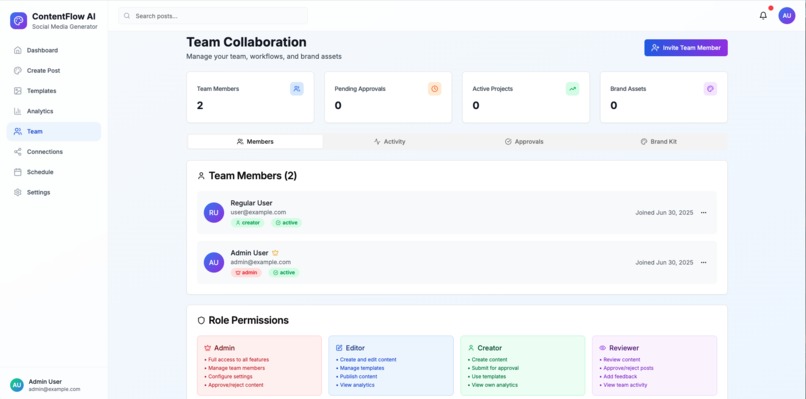
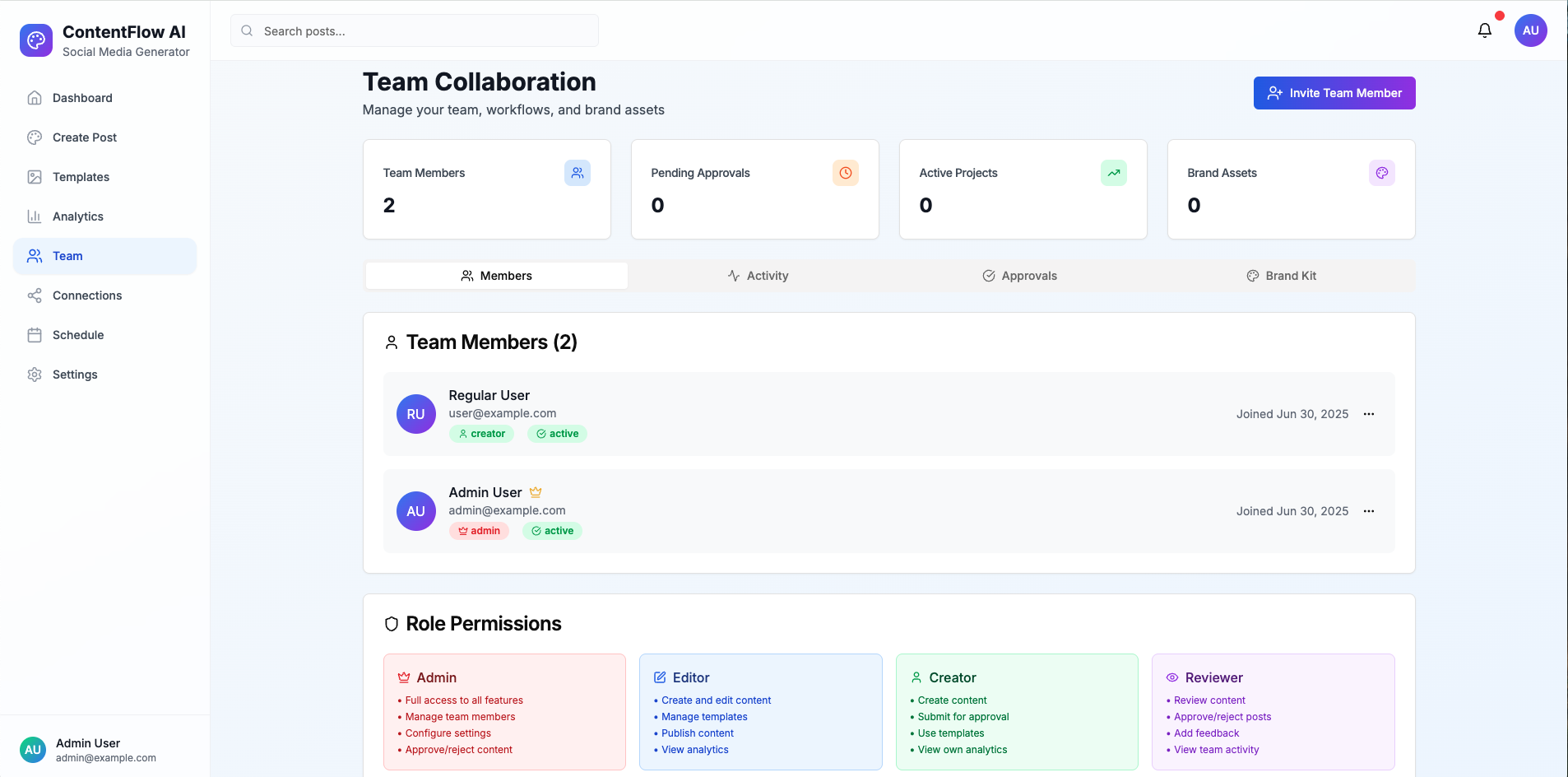
Team management
-
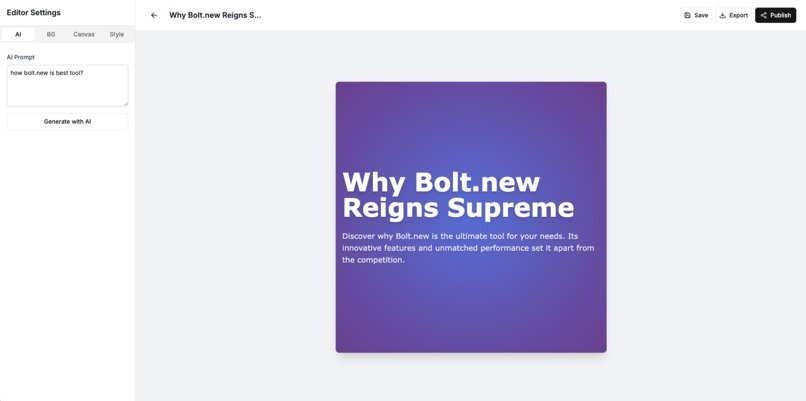
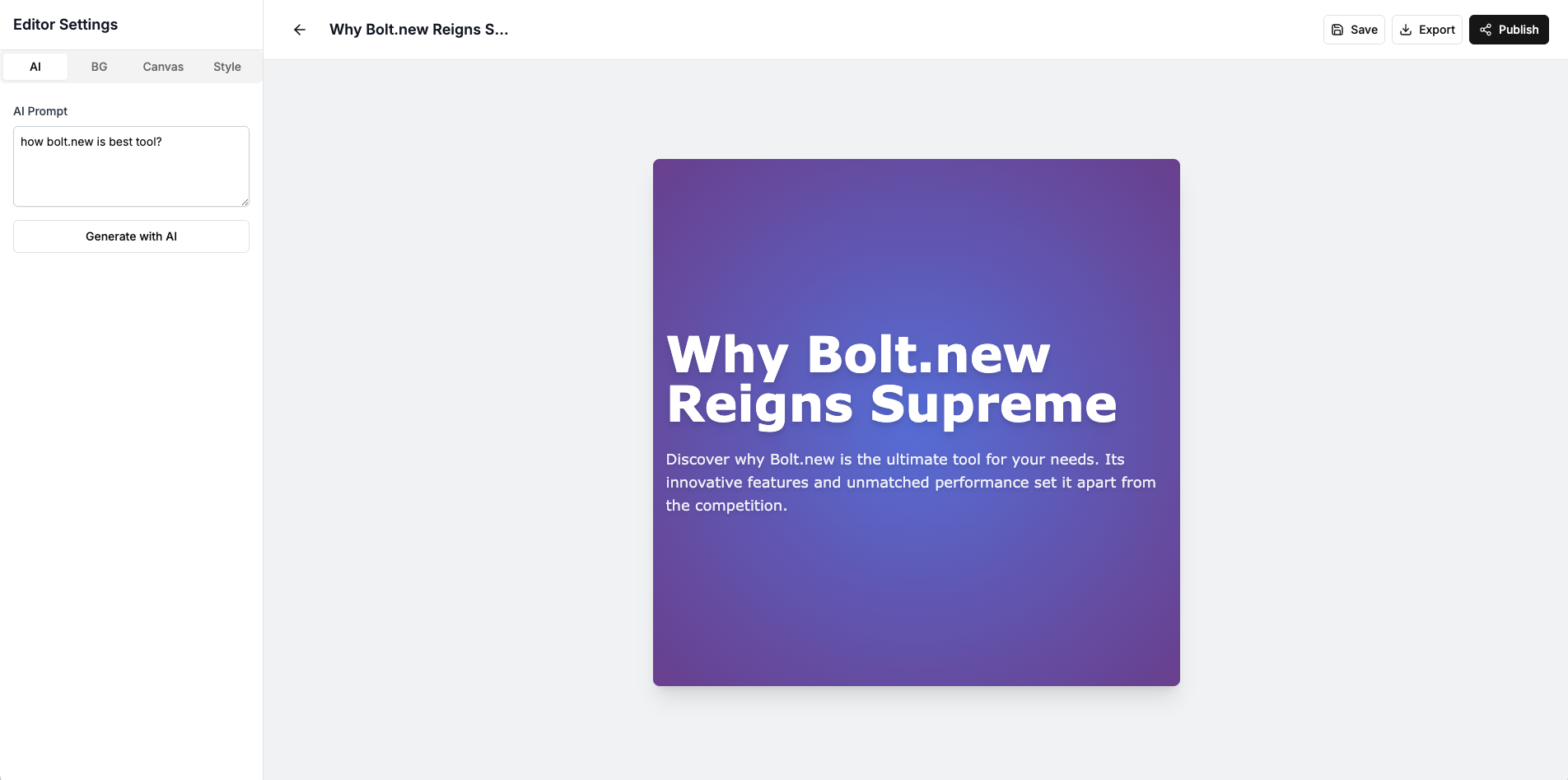
AI Post Editor
-
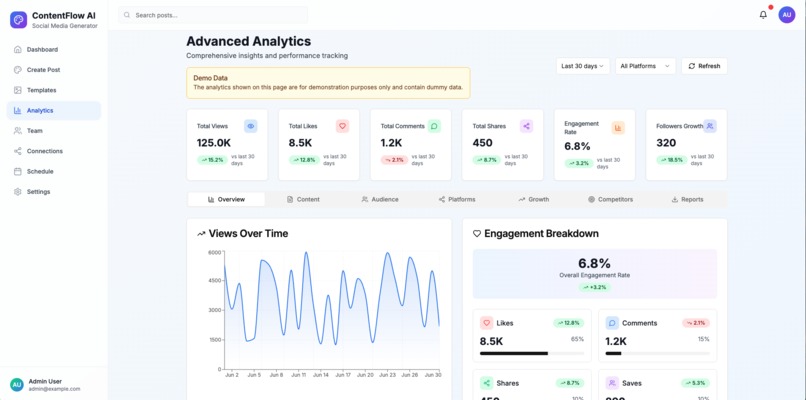
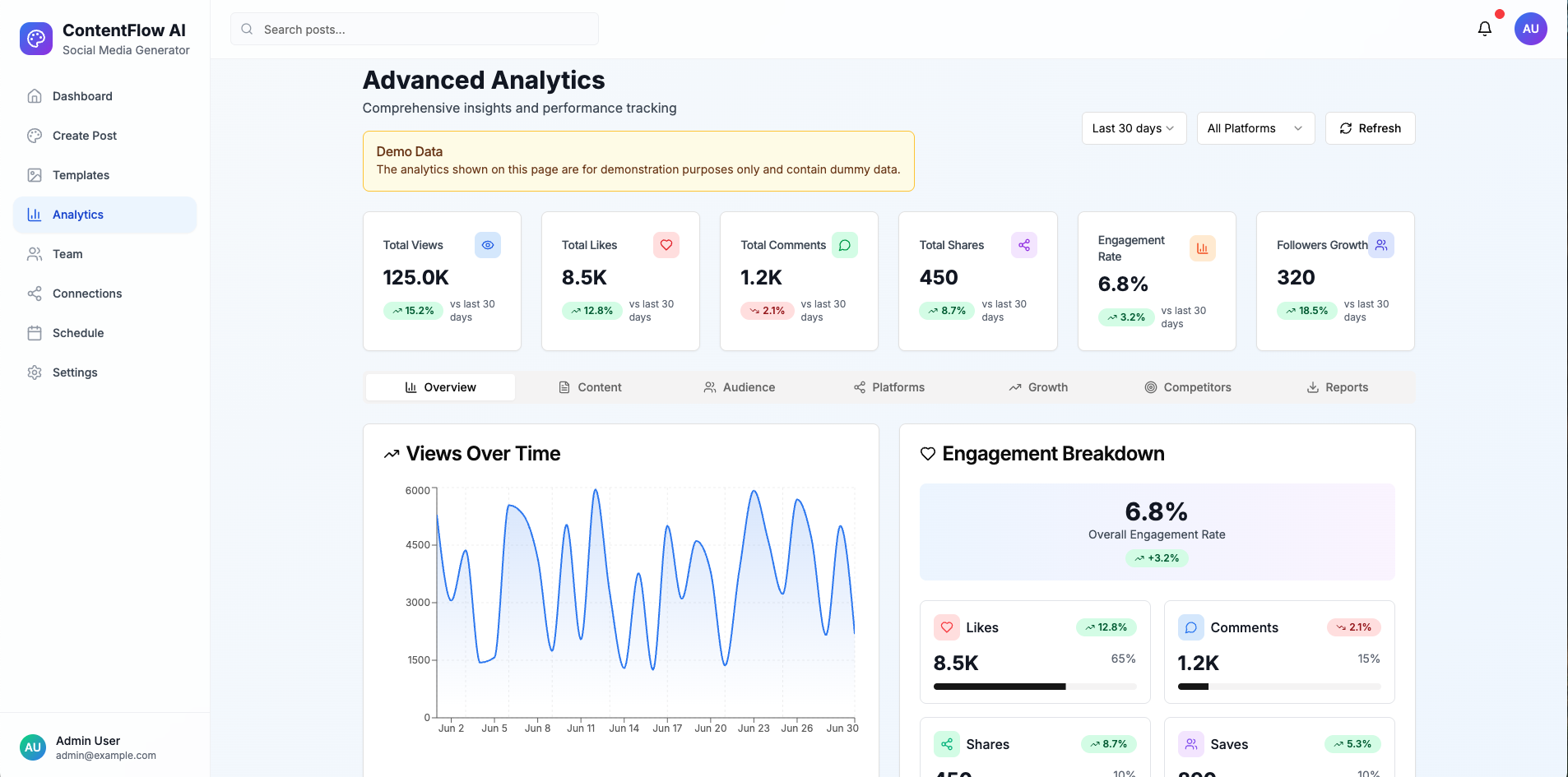
Analytics
-
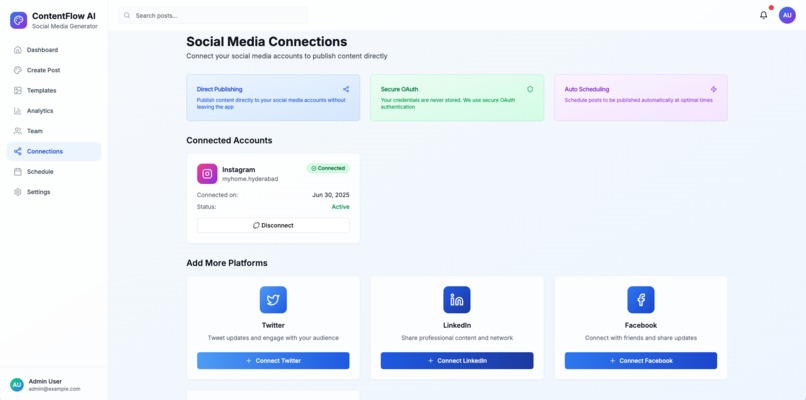
Social media connections
-

Templates
-
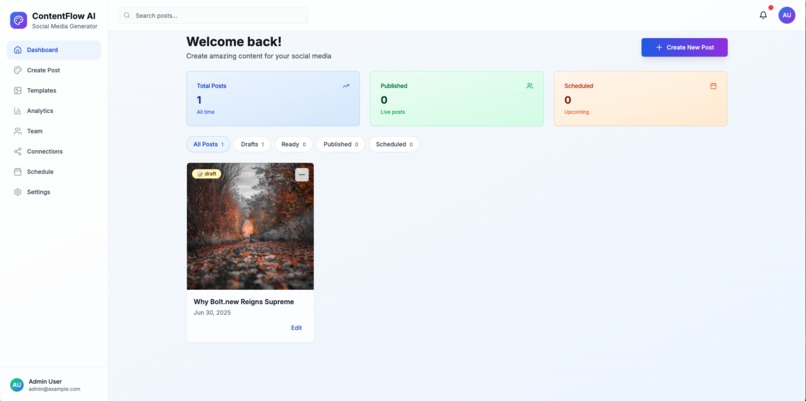
Dashboard
About ContentFlow AI
Inspiration
The inspiration behind ContentFlow AI stemmed from the growing demand for efficient and intelligent social media management. We recognized that content creators and marketing teams often struggle with the time-consuming process of generating engaging content, staying on top of trending topics, and managing multiple social media accounts. Our goal was to build a platform that leverages the power of AI to automate and enhance these workflows, allowing users to focus on strategy and creativity rather than manual tasks. We envisioned a tool that not only simplifies content creation but also provides smart suggestions and seamless scheduling, making social media management truly effortless.
What it does
ContentFlow AI is an intelligent, all-in-one platform designed to revolutionize social media content creation and scheduling. It empowers users to:
- Generate AI-Powered Content: Utilize advanced AI models to quickly draft compelling social media posts, captions, and ideas.
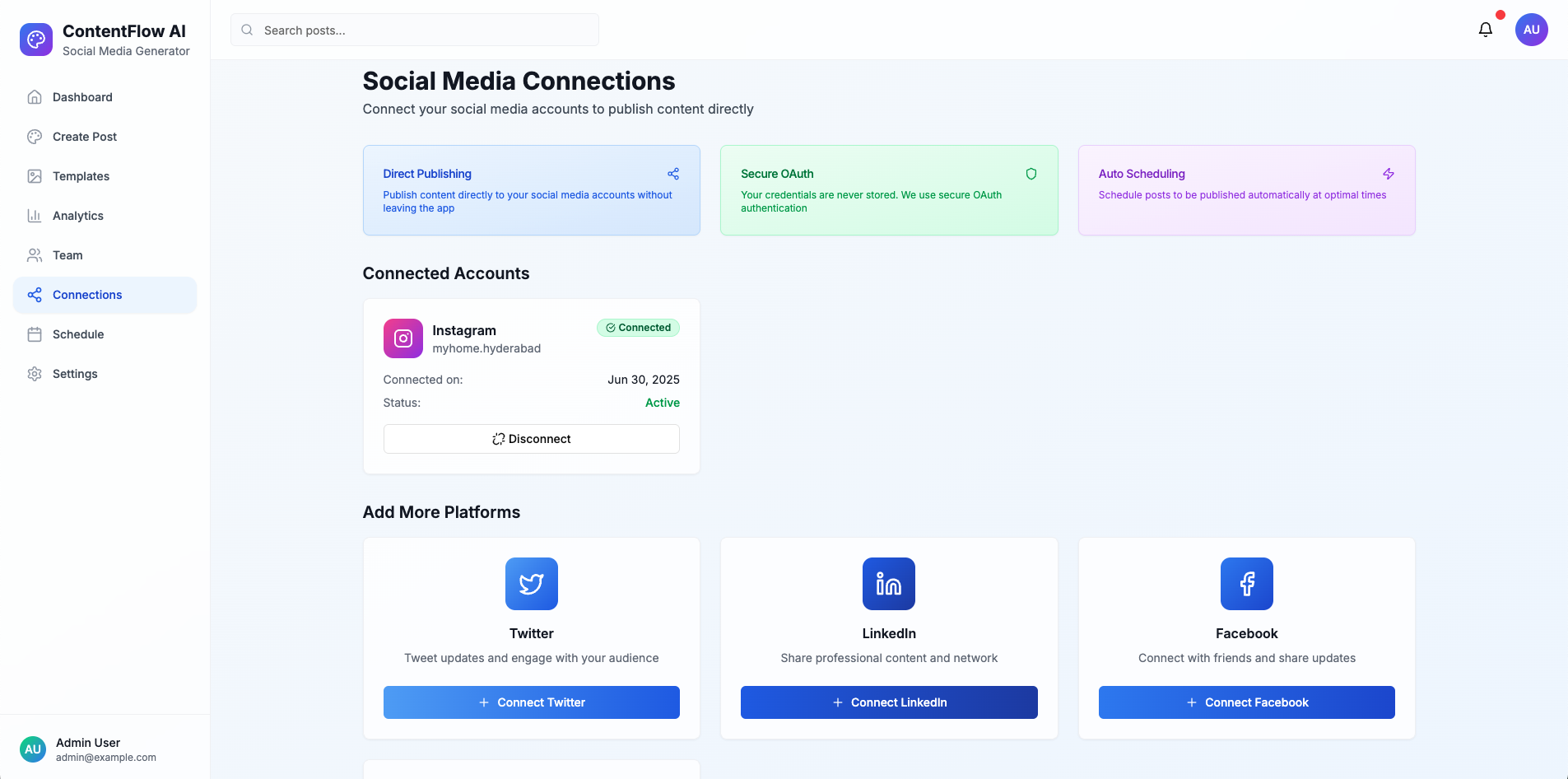
- Discover Trending Topics: Get real-time, AI-driven suggestions for trending topics relevant to their audience and industry, ensuring content remains timely and engaging.
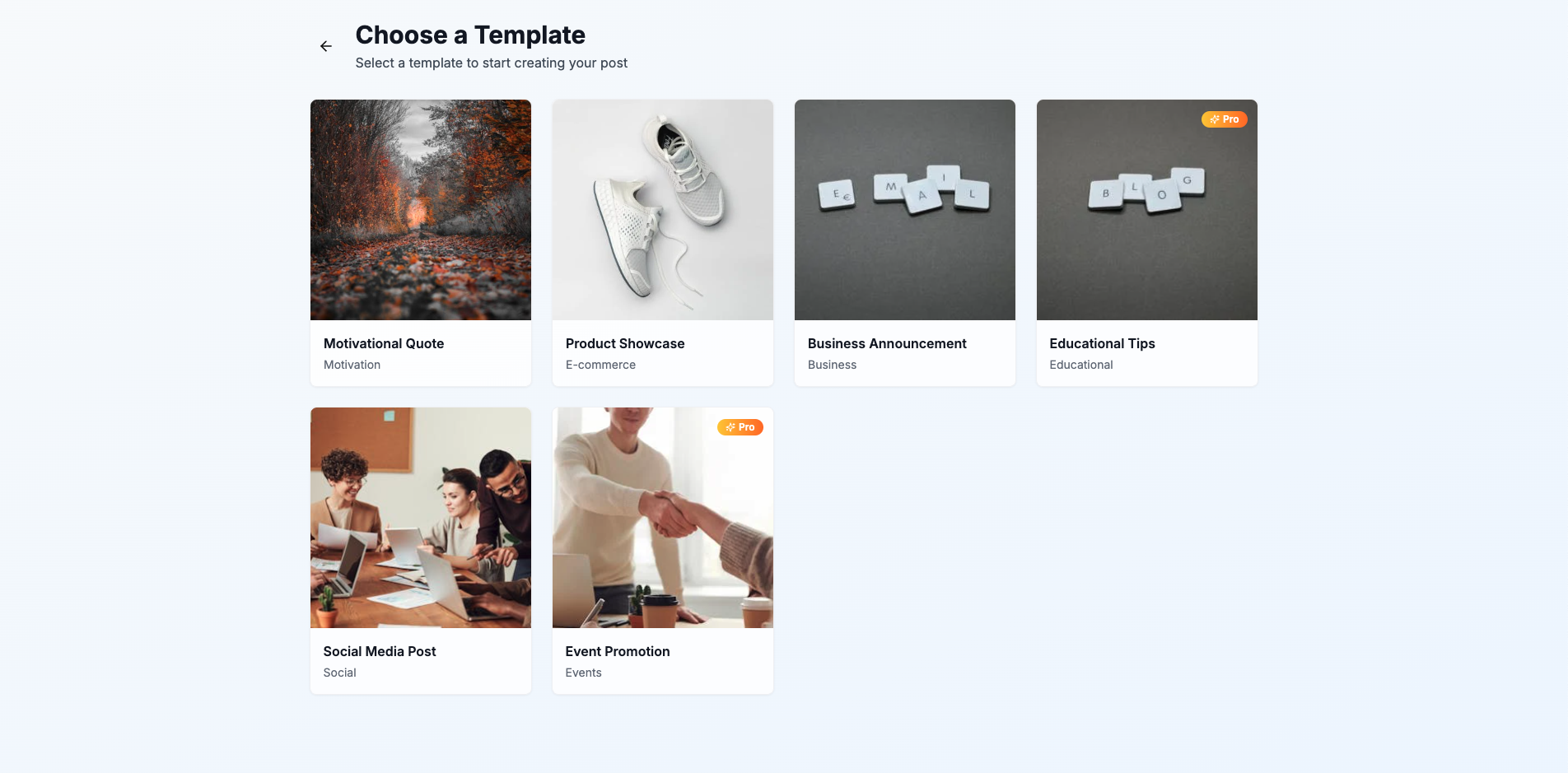
- Visually Edit Posts: Use a robust editor to customize and refine visual content for various platforms.
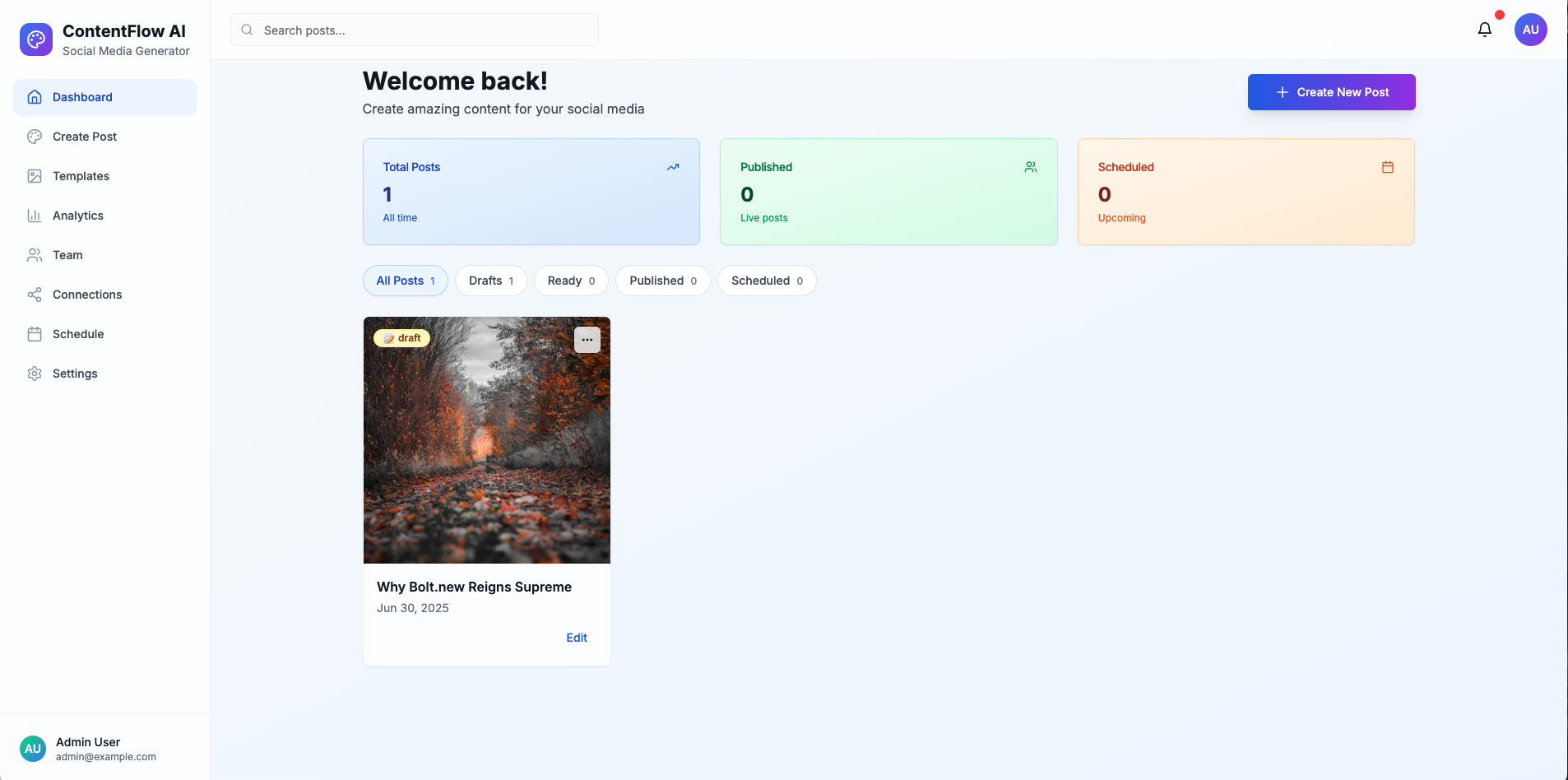
- Schedule and Publish: Seamlessly schedule posts across multiple social media channels with an intuitive calendar view.
- Collaborate with Teams: Facilitate team workflows with features like content approval, shared assets, and activity feeds.
- Analyze Performance: Track post performance and gain insights through integrated analytics dashboards.
In essence, ContentFlow AI acts as an intelligent co-pilot, streamlining the entire content lifecycle from ideation to publication and analysis.
How we built it
ContentFlow AI was built as a full-stack application, leveraging modern web technologies to deliver a responsive and powerful user experience.
- Frontend: Developed using Next.js and React, providing a fast, interactive, and component-based UI. We utilized a comprehensive component library for consistent design and rapid development.
- Backend: Implemented with Node.js and Express, providing a robust API layer for handling content generation requests, scheduling, user authentication, and data management.
- Database: A relational database (e.g., PostgreSQL or MySQL) was used to store user data, posts, schedules, team information, and other application data.
- AI Integration: Integrated with external AI services (e.g., OpenAI's GPT models) for content generation and potentially a separate API for trending topic analysis.
- Cloud Infrastructure: Deployed on a cloud platform (e.g., Netlify for frontend, a serverless function provider for backend APIs) to ensure scalability and reliability.
- Key Modules:
-
components/create/: Houses the core content editor and related panels. -
server/src/services/aiService.ts: Manages interactions with AI models. -
server/src/routes/: Defines API endpoints for posts, AI, team, and authentication. -
lib/api.ts: Frontend utility for API calls. -
components/team/: Implements team collaboration features. -
components/analytics/: Provides dashboards for content performance.
-
Challenges we ran into
Developing ContentFlow AI presented several interesting challenges:
- AI Model Integration and Prompt Engineering: Fine-tuning prompts to get relevant and creative content suggestions from AI models required iterative testing and refinement. Ensuring the AI output was consistently high quality and aligned with user intent was a significant hurdle.
- Real-time Trending Data: Sourcing and integrating reliable, real-time trending topic data from various social platforms proved complex due to API limitations, rate limits, and data parsing.
- Complex UI/UX for Editor: Building a flexible and intuitive visual content editor that could handle various elements (text, images, shapes) and provide a seamless user experience was challenging, especially ensuring responsiveness across devices.
- Scalability for AI and Scheduling: Designing the backend to handle a potentially large volume of AI requests and scheduled posts efficiently required careful consideration of asynchronous processing and queue management.
- Team Collaboration Features: Implementing robust team management, roles, and content approval workflows added complexity to the data models and API design.
Accomplishments that we're proud of
We are particularly proud of:
- Seamless AI Integration: Successfully integrating AI capabilities to genuinely assist in content creation, making the process faster and more innovative for users.
- Intuitive User Interface: Developing a clean, user-friendly interface that makes complex tasks like visual editing and scheduling feel simple and accessible.
- Comprehensive Feature Set: Delivering a broad range of features—from creation and scheduling to team collaboration and analytics—within a single, cohesive platform.
- Robust Backend Architecture: Building a scalable and maintainable backend that can support future growth and feature additions.
- Problem-Solving under Pressure: Effectively tackling technical challenges and making critical design decisions within a tight development timeline.
What we learned
This project provided invaluable learning experiences:
- Deepened AI Integration Knowledge: Gained practical experience in integrating and optimizing large language models for specific application needs, including prompt engineering and handling API responses.
- Full-Stack Development Best Practices: Reinforced best practices in building scalable and secure full-stack applications, from database design to API security and frontend performance optimization.
- Importance of User Feedback: Understood the iterative nature of product development and the importance of gathering and incorporating user feedback to refine features.
- Project Management and Collaboration: Improved skills in breaking down complex tasks, managing dependencies, and collaborating effectively within a team environment.
- Adaptability: Learned to quickly adapt to new technologies and unexpected challenges, finding creative solutions on the fly.
What's next for ContentFlow AI
For the future of ContentFlow AI, we envision several exciting enhancements:
- Advanced AI Capabilities:
- Integration of more sophisticated AI models for sentiment analysis, content optimization, and personalized content recommendations.
- AI-driven content repurposing across different social media formats (e.g., turning a blog post into a series of tweets or an Instagram carousel).
- Expanded Social Media Integrations: Support for a wider range of social media platforms and direct publishing capabilities.
- Enhanced Analytics: More in-depth analytics, including competitor analysis, audience demographics, and predictive insights.
- Community and Marketplace: A template marketplace where users can share and sell their custom content templates.
- Mobile Application: Development of a dedicated mobile application for on-the-go content management.
- Workflow Automation: More advanced automation rules for content scheduling and approval processes.

Log in or sign up for Devpost to join the conversation.