Inspiration
Every event creates hundreds of photos and videos, but turning those memories into social media content is often a bigger challenge than organizing the event itself. After hackathons, conferences, workshops, and community events, we repeatedly saw organizers spend hours sorting through media, selecting the best photos, creating platform-specific designs, editing videos, writing captions, and preparing sponsor content. By the time everything was ready, the excitement around the event had already started fading. The challenge becomes even more complicated when multiple brands are involved. Sponsors, organizers, and partners all need their own content, which means manually sorting hundreds of images into separate folders before any content can even be created. We believed there had to be a better way. So we asked ourselves: What if someone could simply upload an event folder and receive platform-ready content in minutes? That question became the foundation of Content & Design Engine.
What it does
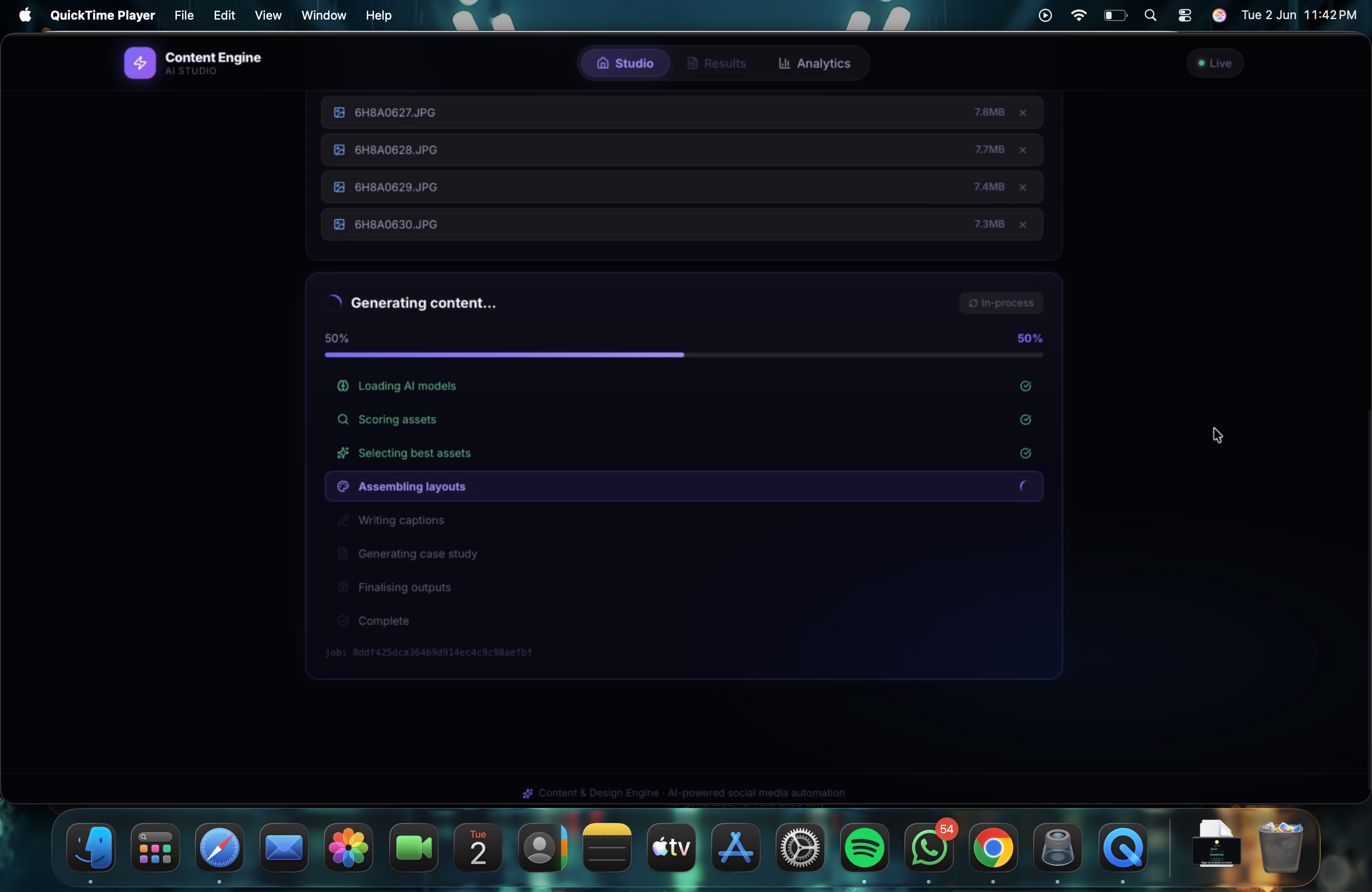
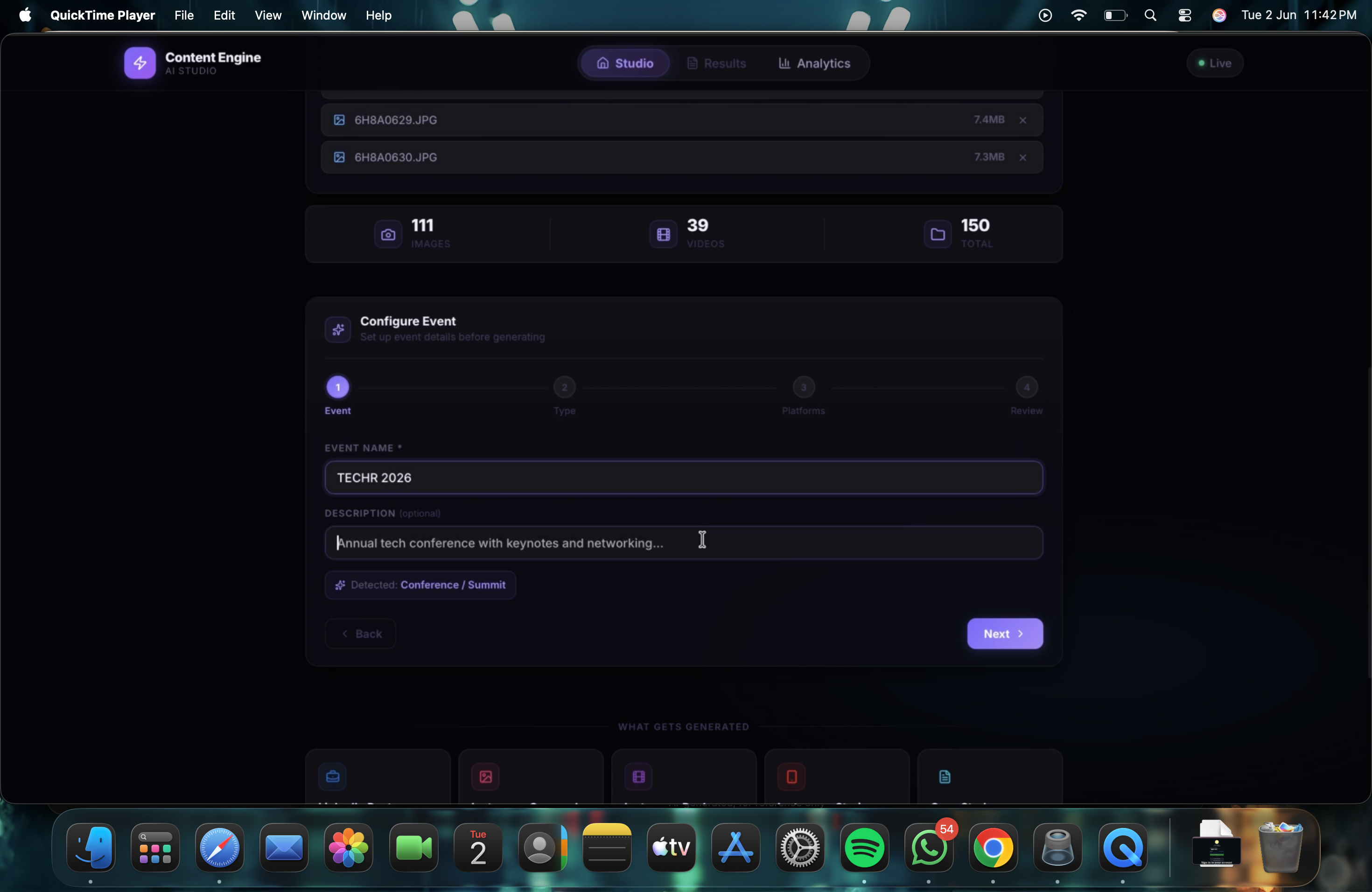
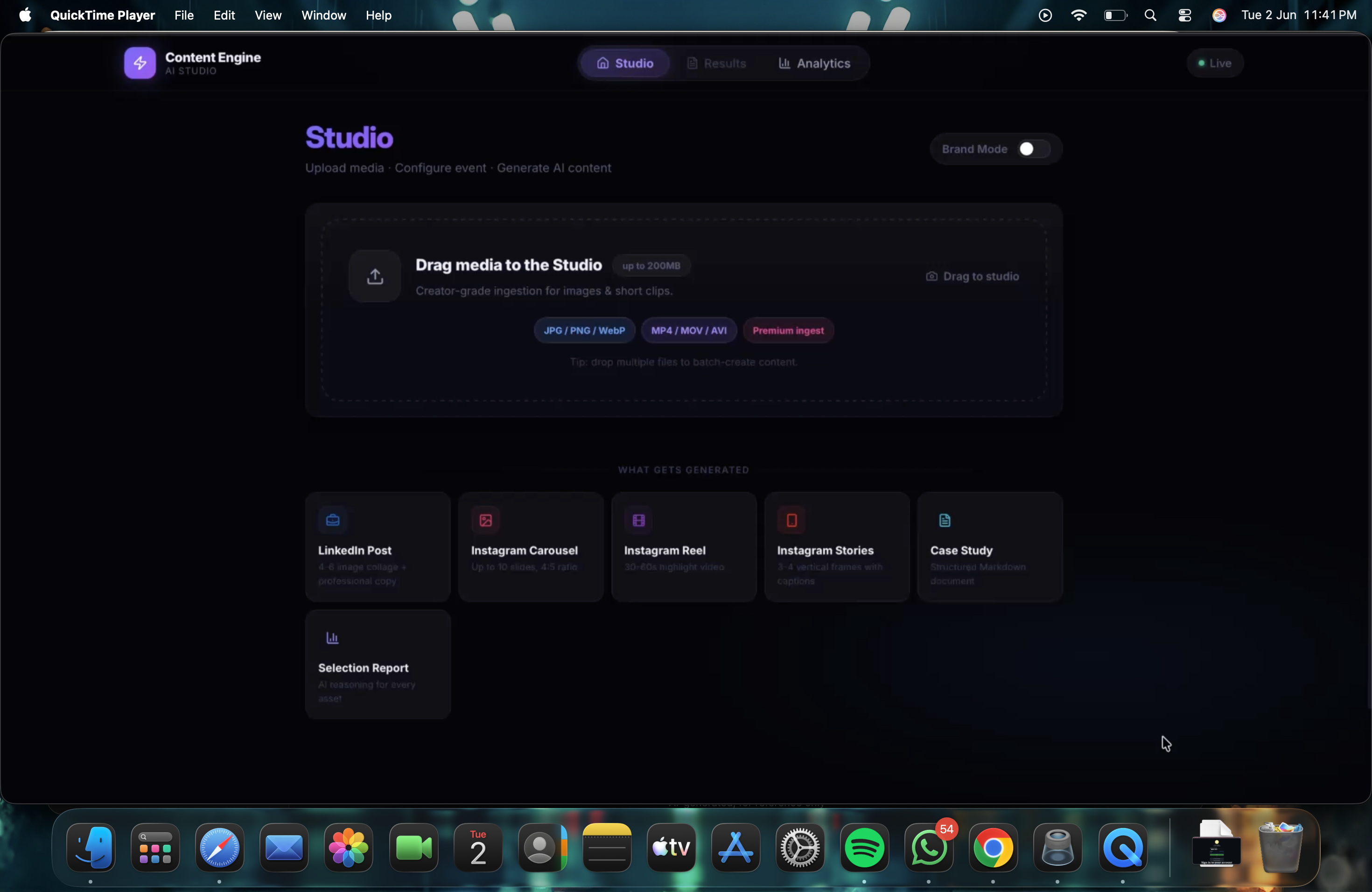
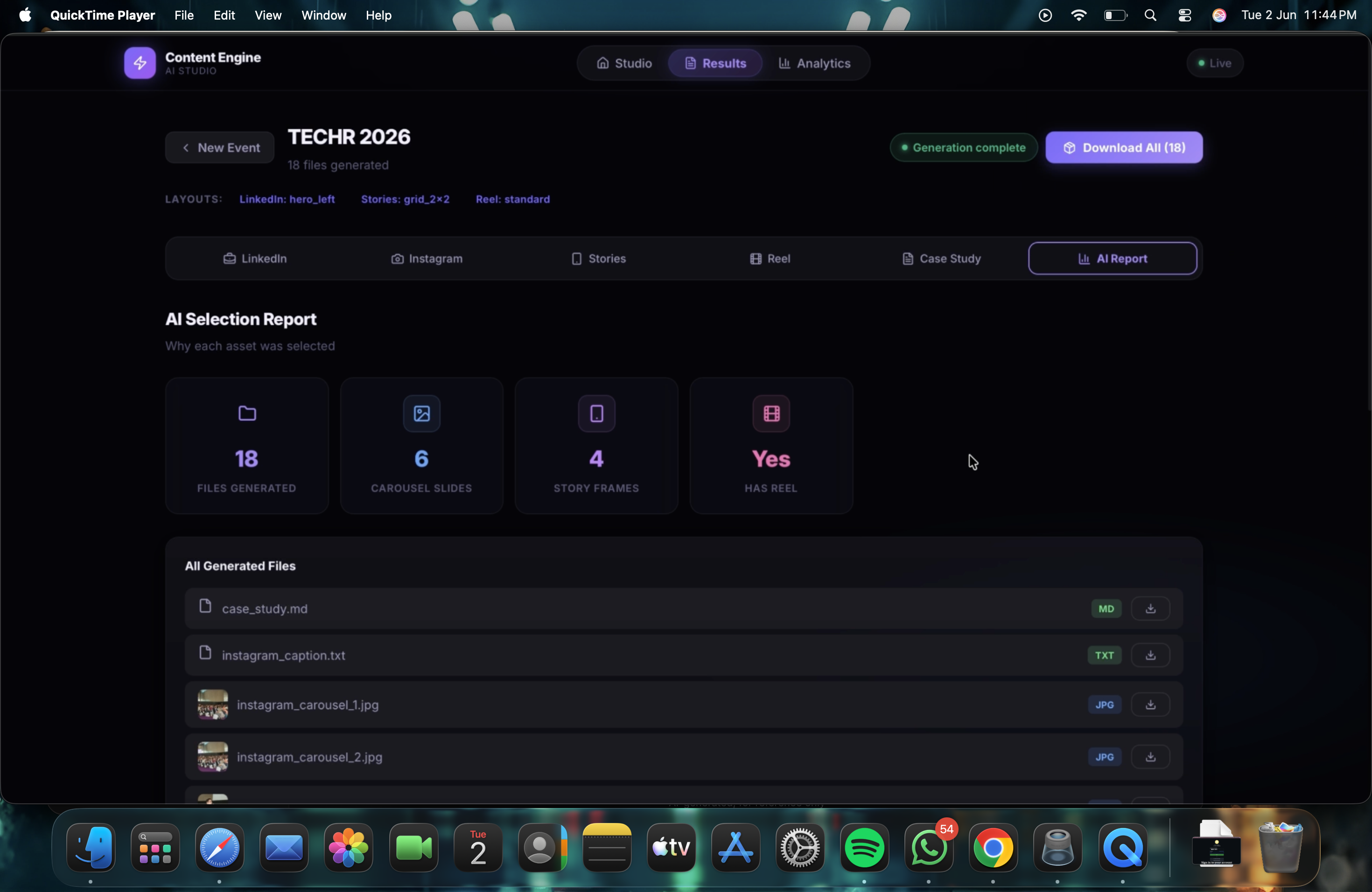
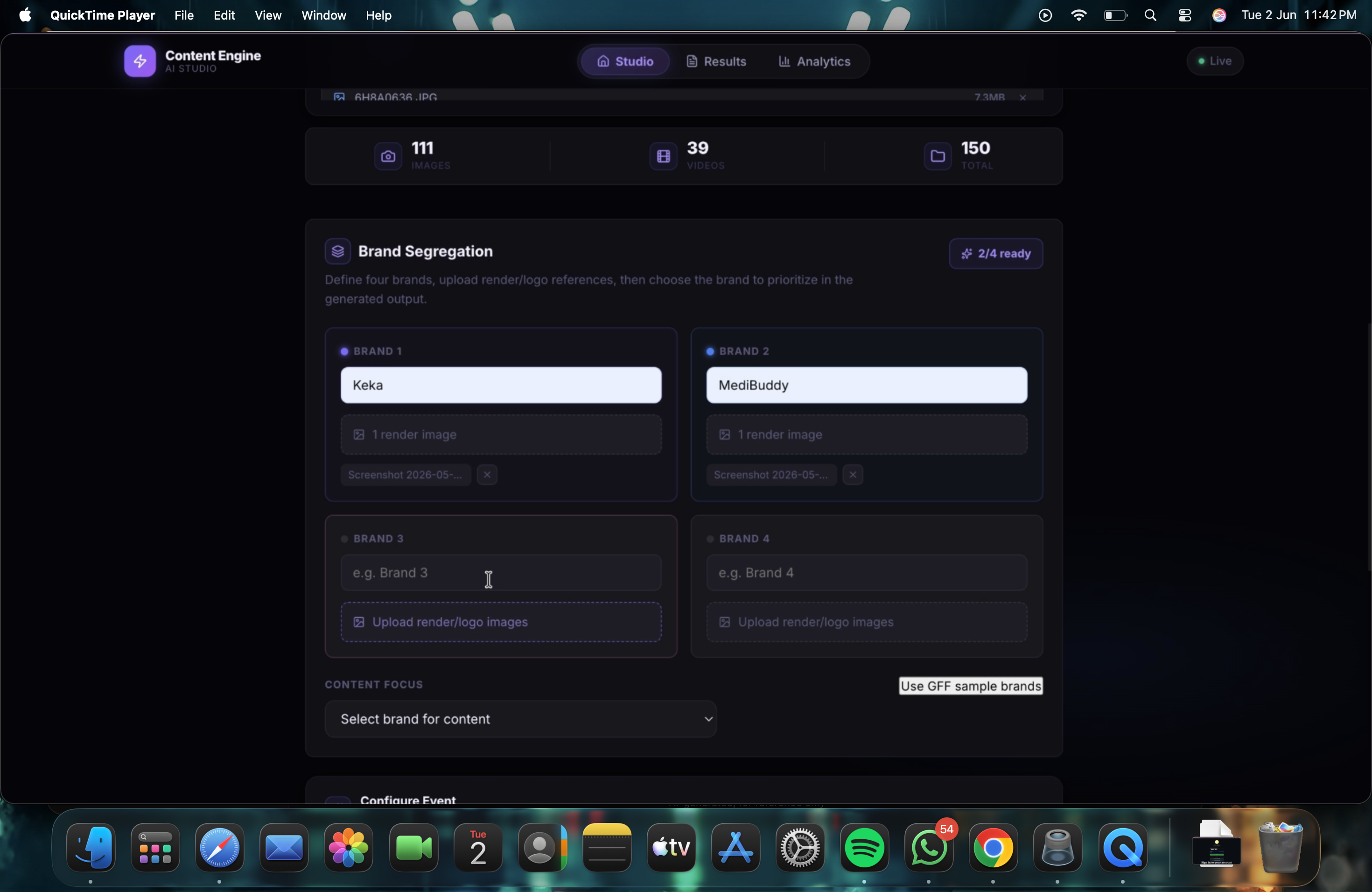
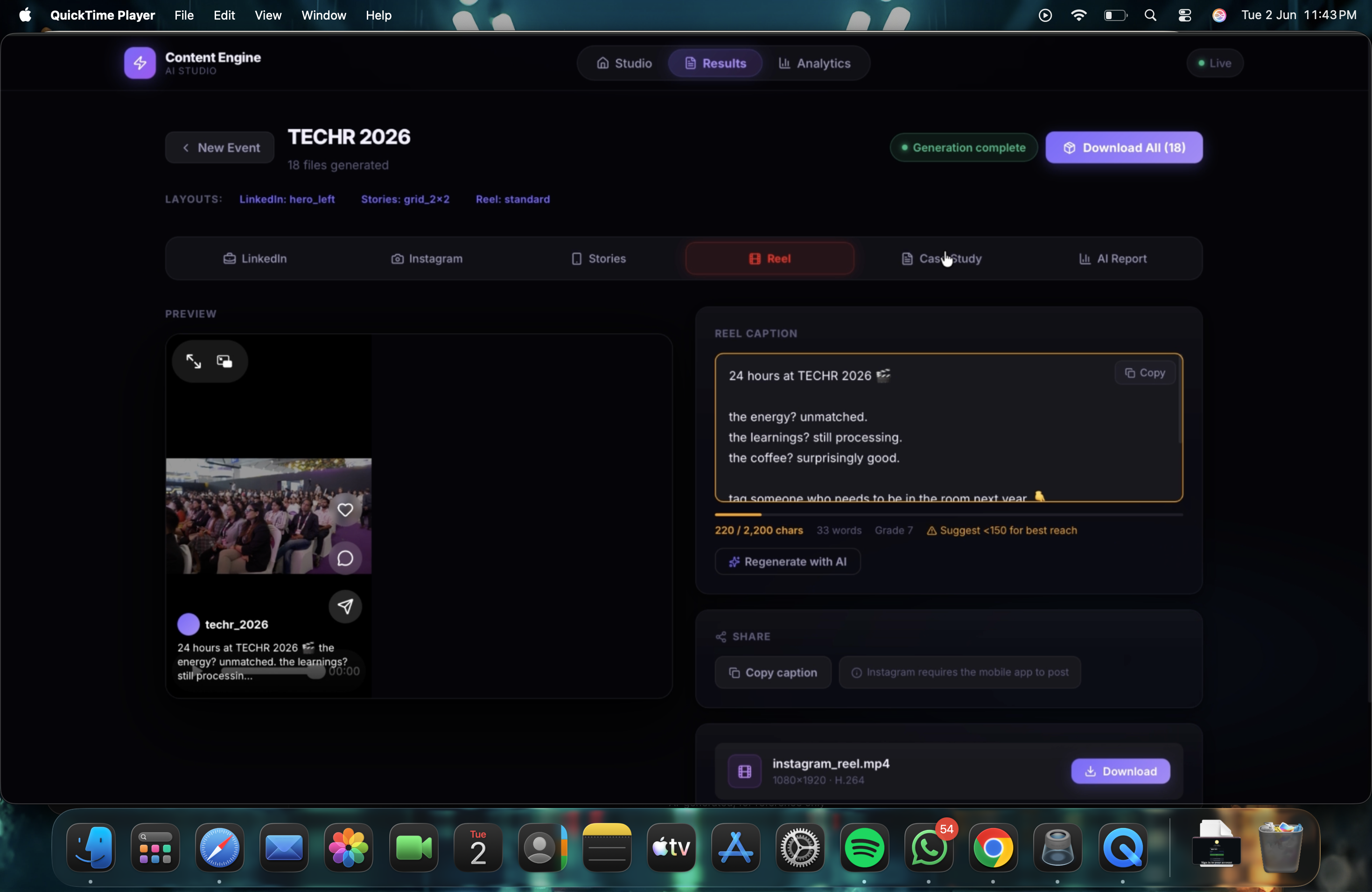
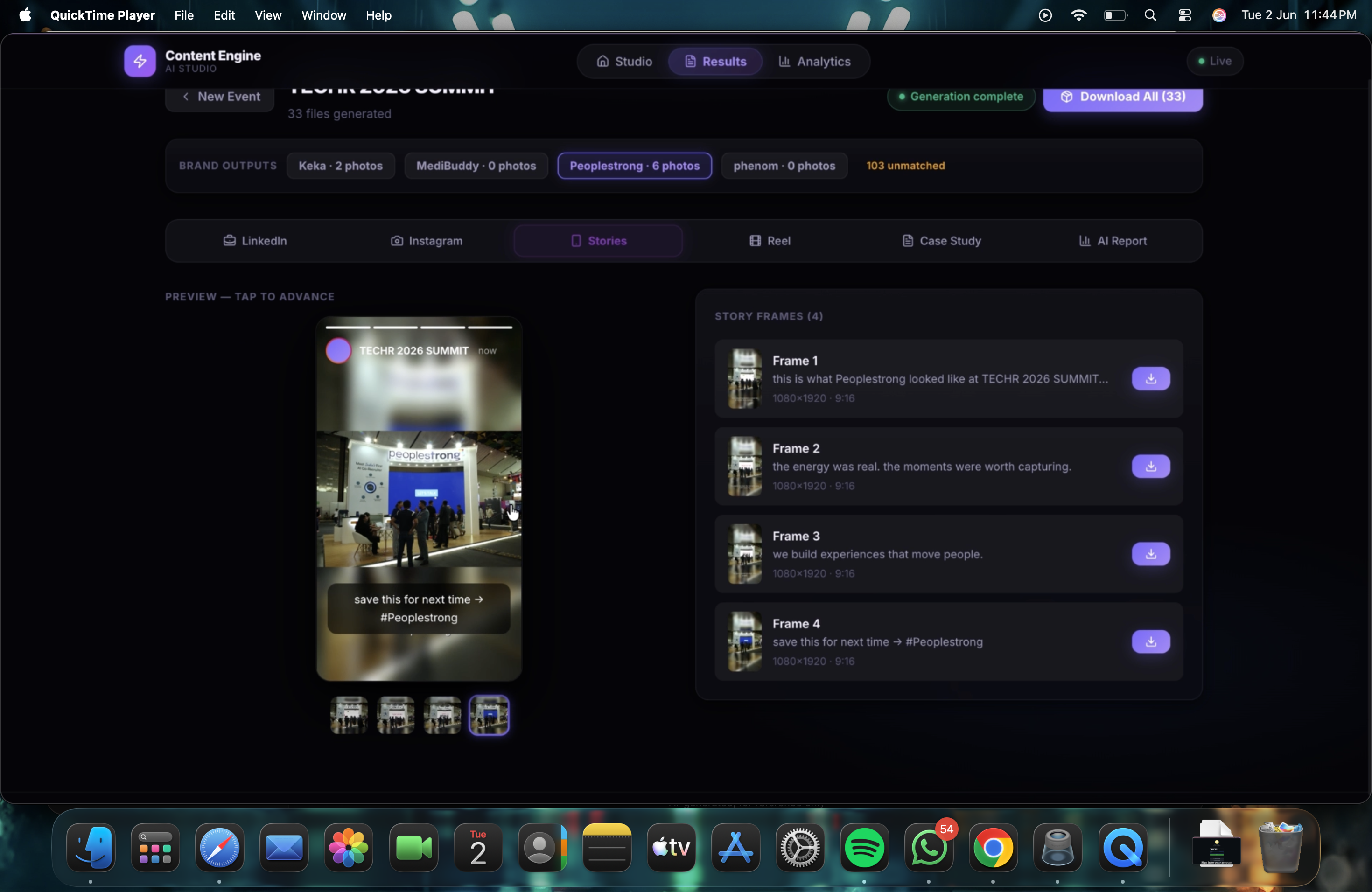
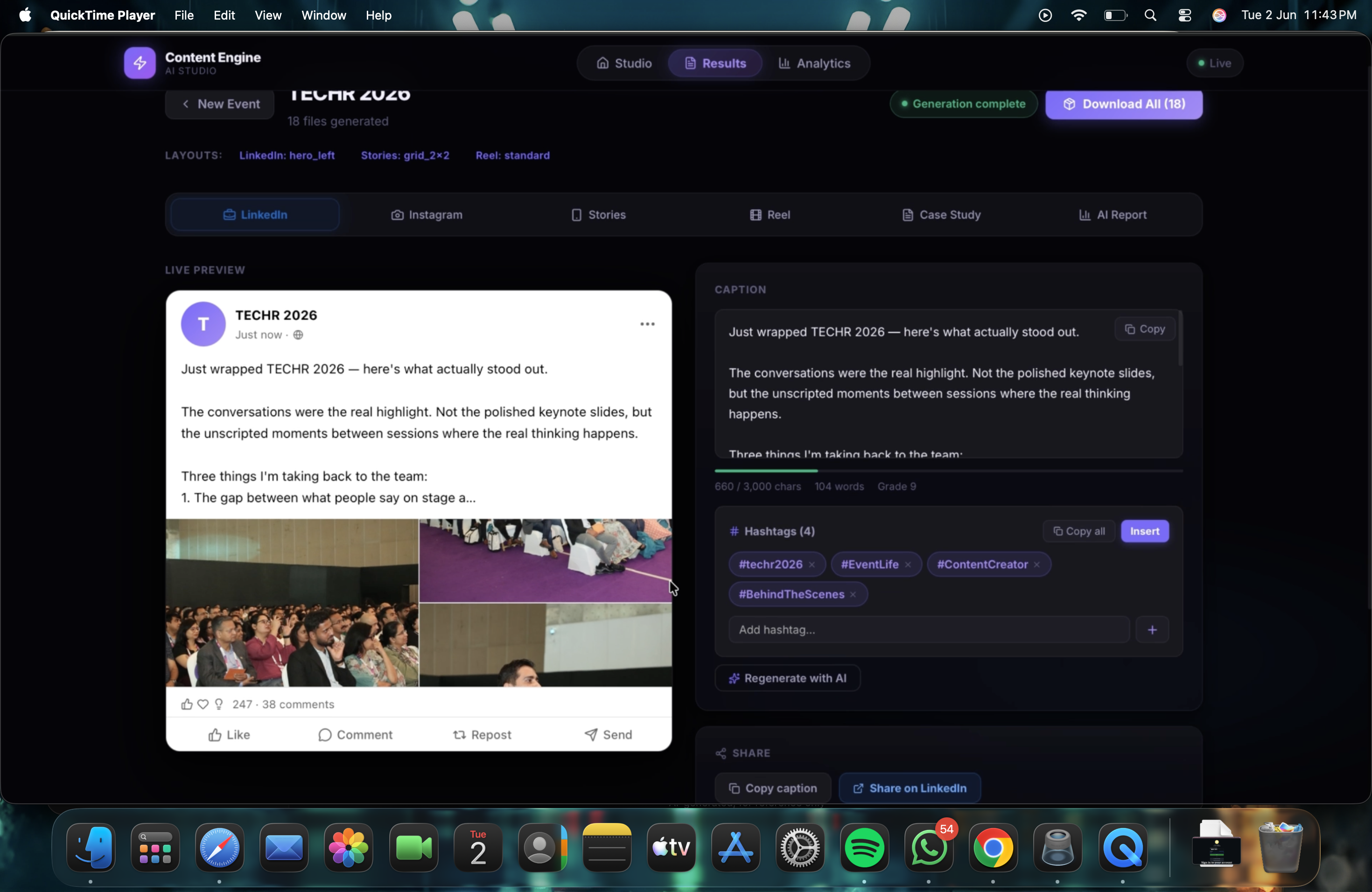
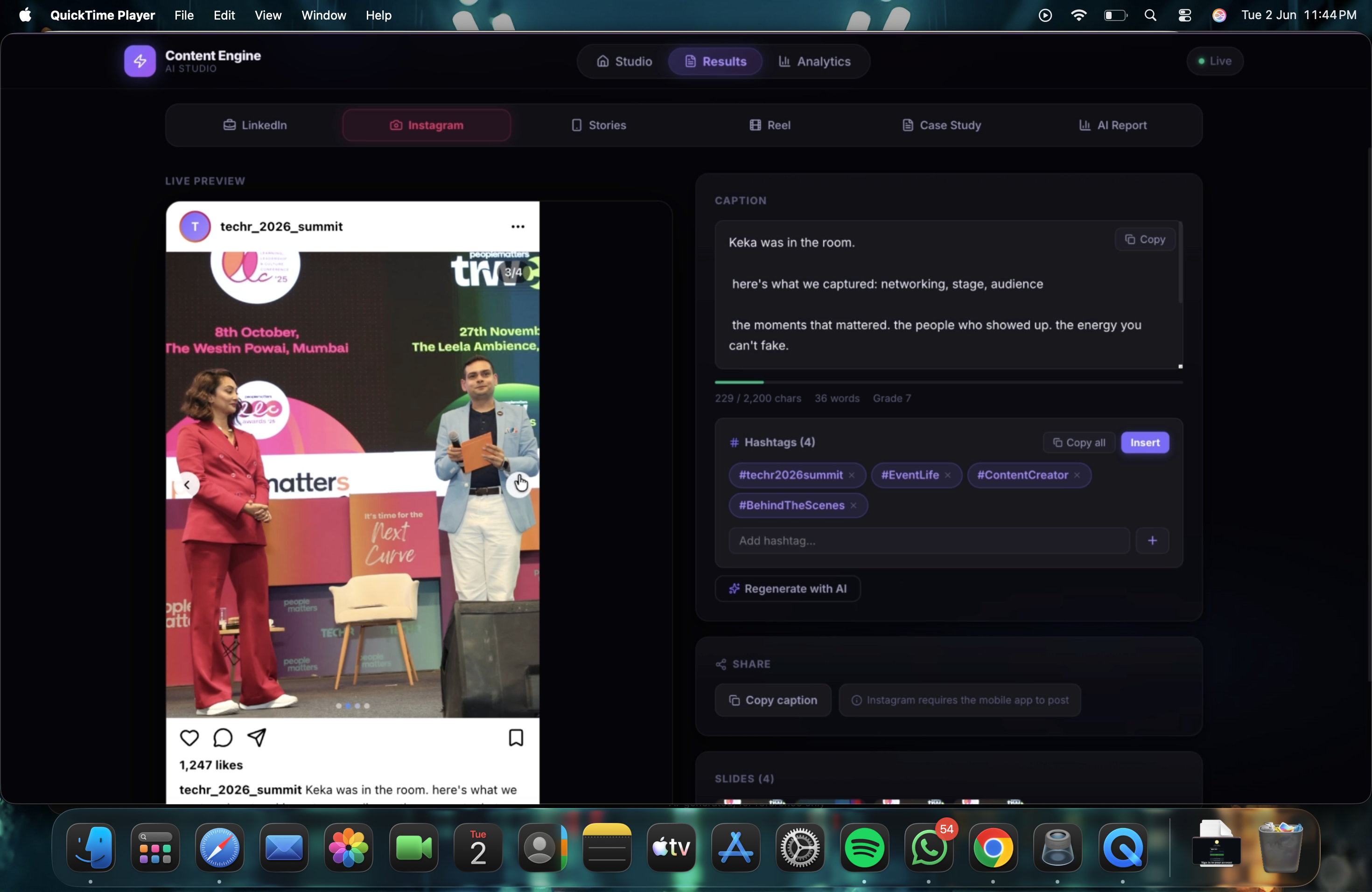
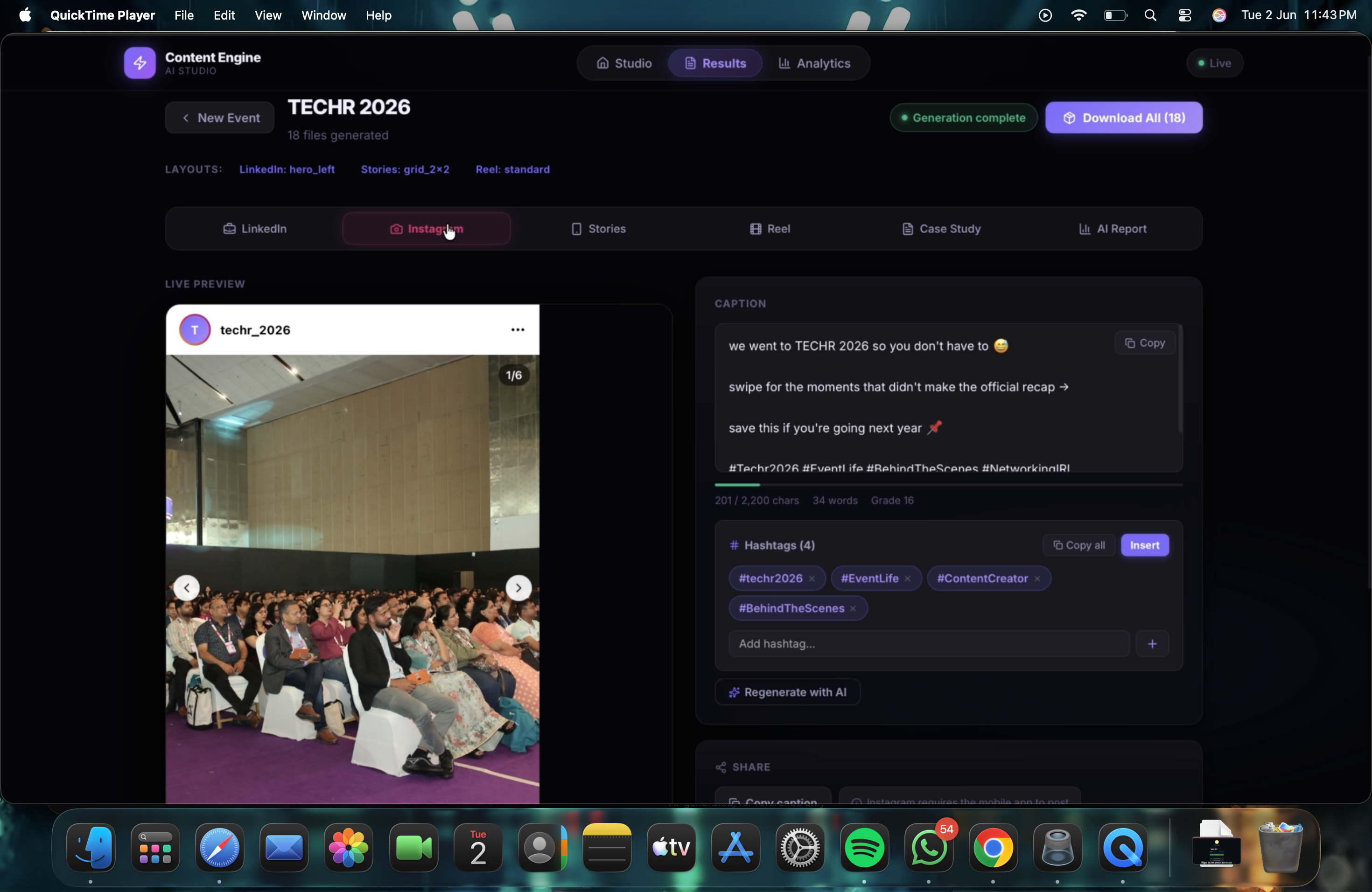
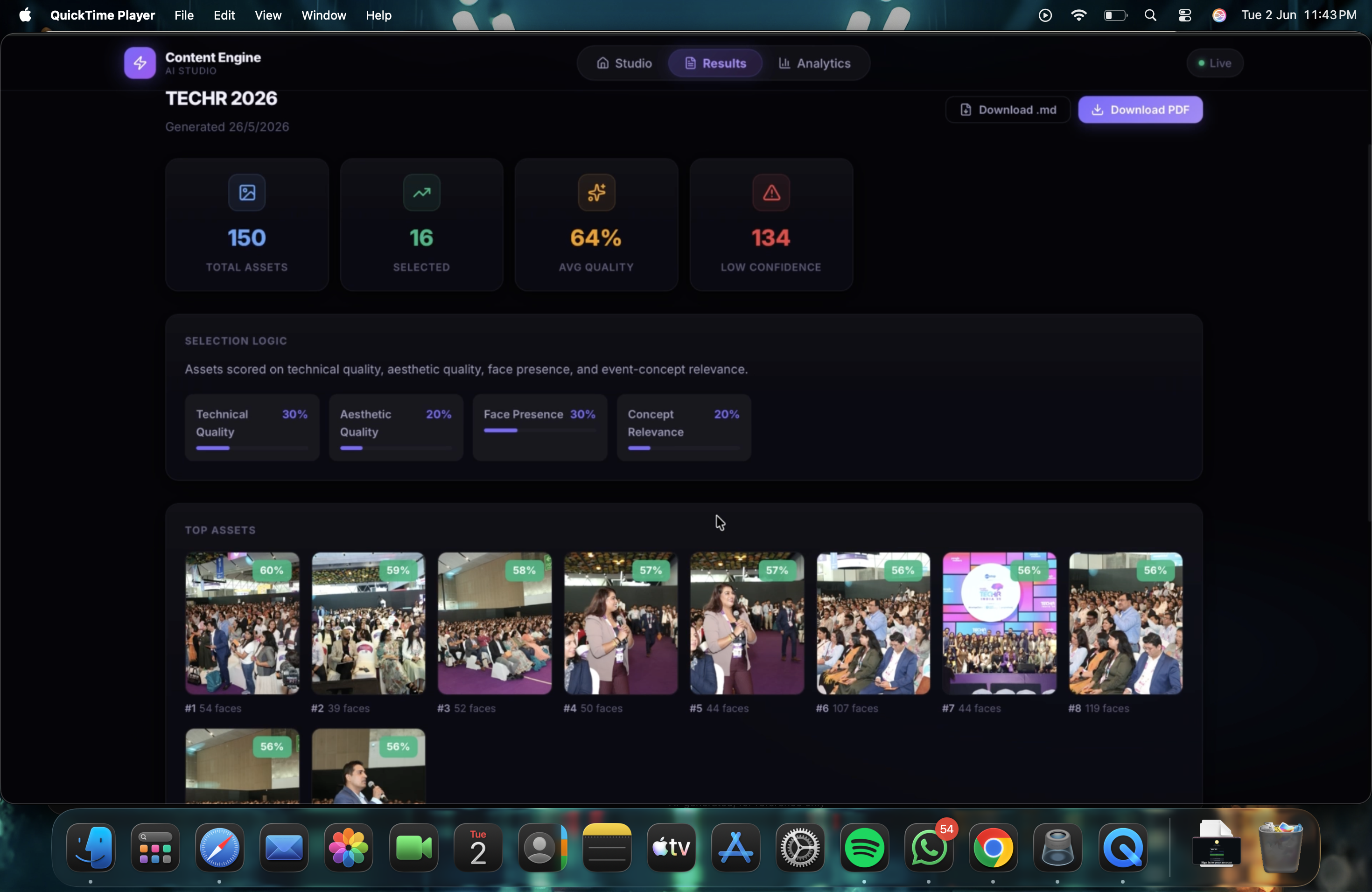
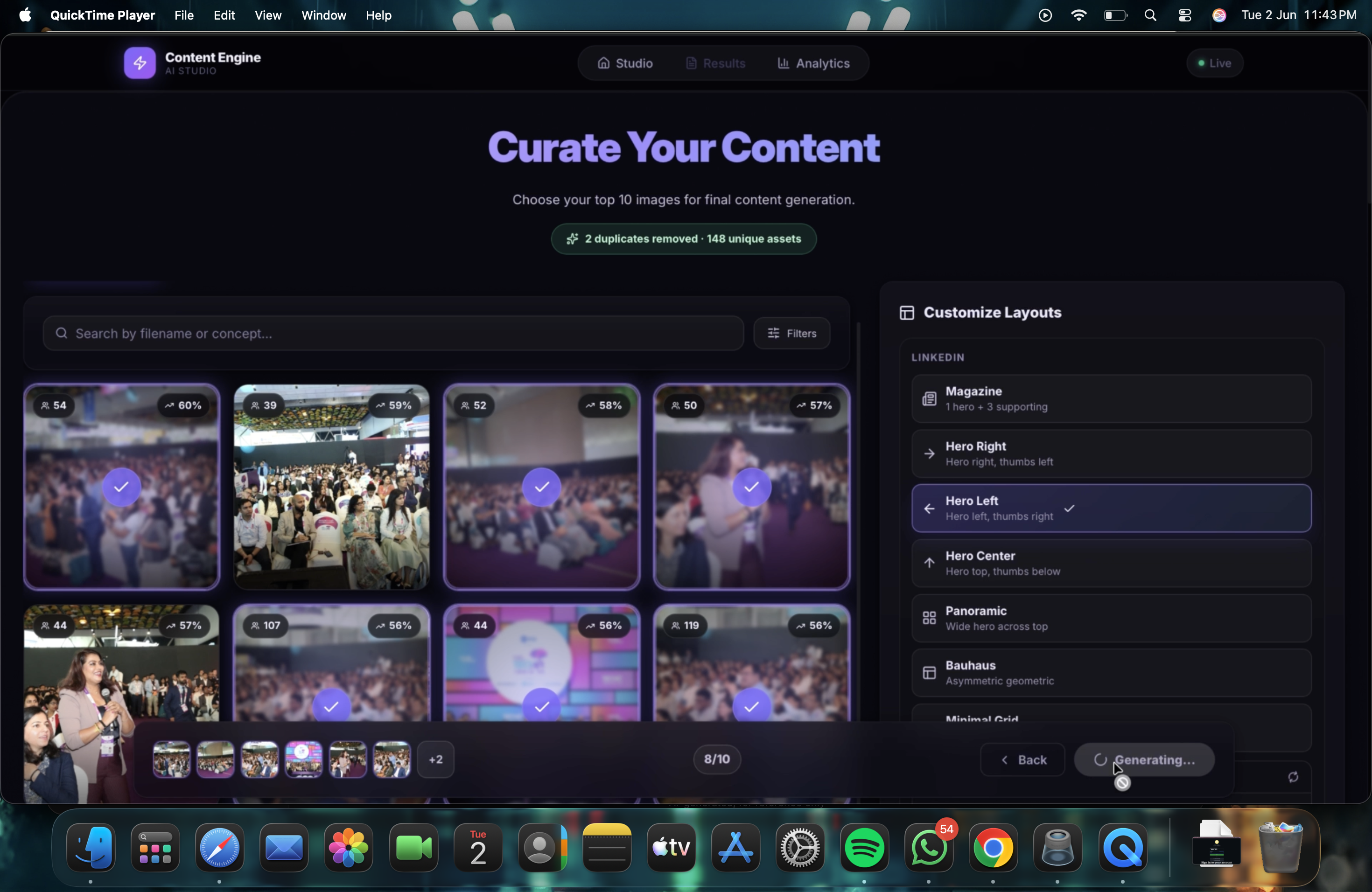
Content & Design Engine is an AI-powered platform that transforms raw event photos and videos into ready-to-publish social media content. Users upload a folder containing event media, and the platform automatically: Selects the best photos and videos Detects important moments, faces, and scenes Identifies brand presence within images Segregates assets into brand-specific collections Creates LinkedIn collages Generates Instagram carousels Produces Instagram Stories Builds short-form Reels Writes platform-specific captions Generates explainable reports showing why content was selected One of our most unique features is Brand Segregation Intelligence. By uploading brand logos as references, users can automatically organize event photos into brand-specific collections. This allows a single event to generate personalized content for multiple brands simultaneously. One Event. Multiple Brands. Infinite Content.
How we built it
We combined computer vision, generative AI, and modern web technologies into a single automated workflow. AI Media Intelligence We used: YOLOv11 for face and object detection Florence-2 for scene understanding CLIP for semantic similarity and concept matching OpenCV for image processing and smart cropping To rank assets, we developed a composite scoring model: $$ S = 0.3Q + 0.2A + 0.3F + 0.2C $$ Where: (Q) = Technical Quality Score (A) = Aesthetic Score (F) = Face Presence Score (C) = Content Relevance Score Brand Segregation Engine To identify brand presence, we combine: ORB feature matching Color histogram comparison CLIP semantic embeddings $$ S_{brand}=0.6S_{ORB}+0.2S_{hist}+0.2S_{CLIP} $$ The highest-scoring brand is automatically assigned to the image. Content Generation Once assets are selected, the platform automatically generates: LinkedIn Collages Instagram Carousels Instagram Stories Reels Brand-aware captions Tech Stack Frontend React TypeScript Vite Backend FastAPI Redis Celery Media Processing OpenCV Pillow FFmpeg Generative AI Llama 3.3 70B (via Groq)
Challenges we ran into
One of our biggest challenges was achieving accurate brand recognition. Initially, many images were incorrectly classified or marked as unmatched because logo similarity thresholds were too strict. We experimented with multiple matching approaches before combining feature matching, color analysis, and semantic embeddings into a more reliable hybrid system. We also faced challenges with: Processing hundreds of high-resolution assets efficiently Managing AI model loading times Memory optimization during large media workflows Creating content that feels native to different social platforms Converting horizontal event photos into vertical Story and Reel formats without losing important subjects Each challenge forced us to improve both our architecture and user experience.
Accomplishments that we're proud of
We are proud that we built much more than a content generator. Our platform automates the entire journey from event media to publish-ready content. Key accomplishments include: Built a complete end-to-end AI content pipeline Developed an automatic multi-brand segregation system Reduced content creation time from hours to minutes Generated platform-specific content automatically Combined computer vision and generative AI into a single workflow Created explainable AI recommendations instead of black-box outputs Delivered a working prototype capable of handling real-world event media Most importantly, we solved a problem that event organizers, marketing teams, and creators face every day.
What we learned
This project taught us that successful AI products require much more than powerful models. We learned the importance of: Explainable AI and user trust Scalable system architecture Asynchronous media processing Designing graceful fallbacks when AI services fail Building products around real-world workflows instead of isolated AI features Most importantly, we learned that AI is most impactful when it removes repetitive work and allows people to focus on creativity.
What's next for Content engine
This project started with event content creation, but we see much bigger possibilities ahead. Our future roadmap includes: One-click publishing to social media platforms AI-generated content calendars Sponsor-specific content packs Engagement prediction and analytics Team collaboration features Real-time content generation during live events Advanced video editing and highlight generation Enterprise support for large conferences, festivals, and marketing campaigns Our long-term vision is simple:
Built With
- celery
- face
- fastapi
- framer
- htmlcss
- hugging
- javascript
- opencv
- pyscenedetect
- python
- pytorch
- react
- transformers
- typescript
- vite

Log in or sign up for Devpost to join the conversation.