-
-
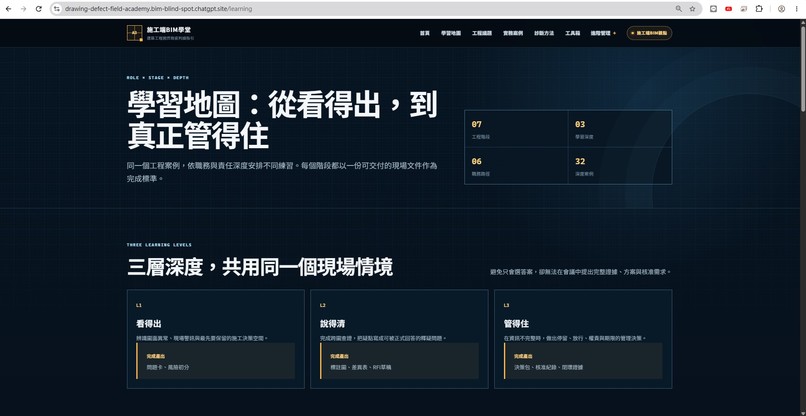
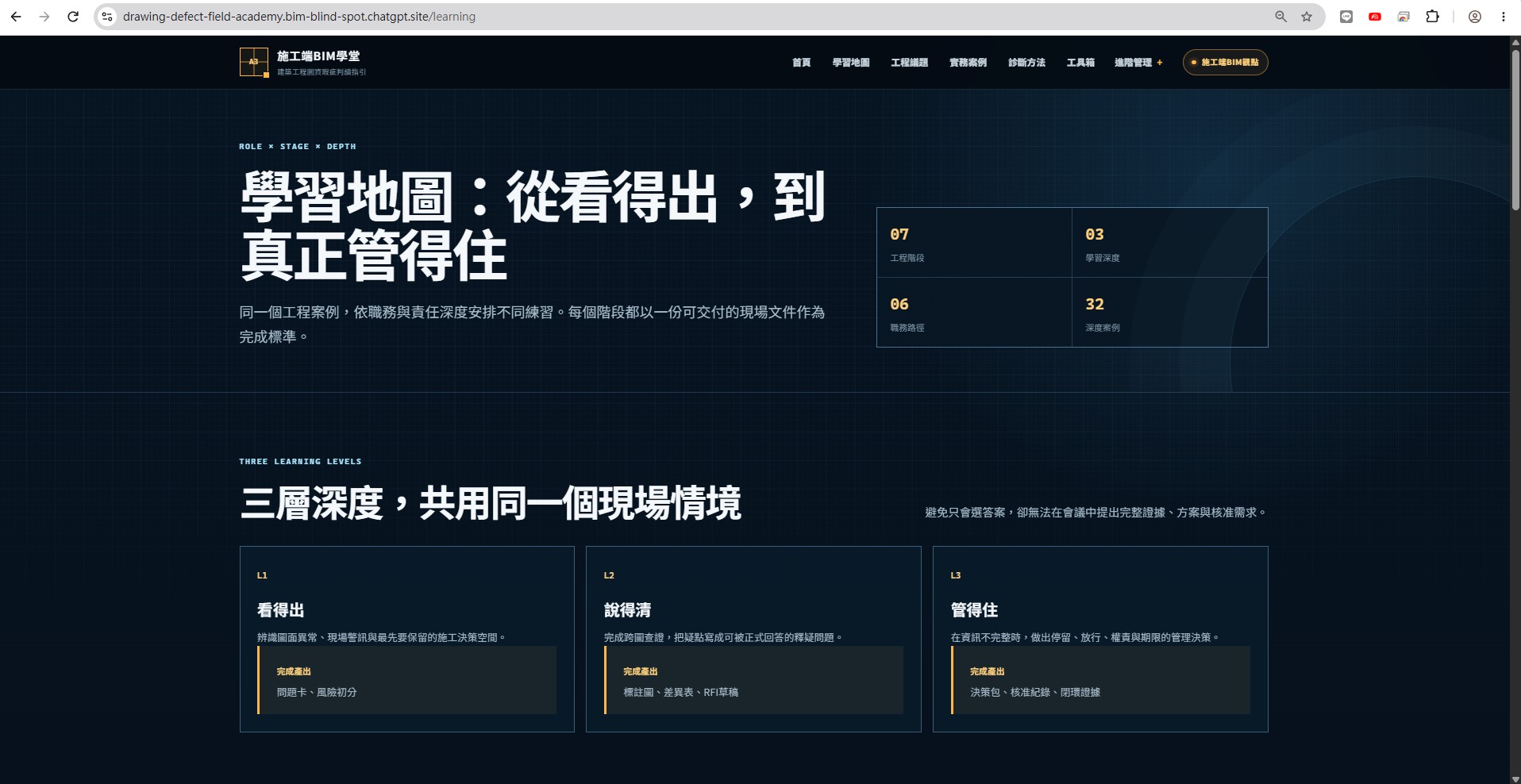
website screenshot
Inspiration
This project was inspired by a recurring problem in construction projects: design drawings often contain errors, omissions, missing information, inconsistencies, interface conflicts, and unclear construction conditions. These issues are frequently discovered only after modeling or during site execution, which leads to repeated revisions, delays, and digital rework.
The website was created to present design information review as a structured professional process rather than a simple drawing-checking task. It focuses on the construction-side BIM perspective, where the goal is to make engineering information accurate, consistent, traceable, and usable before it reaches the site.
What it does
Construction BIM Learning Hub is an educational platform that helps construction professionals systematically review architectural and engineering design information before construction begins. The platform focuses on engineering information governance rather than simply creating 3D models. It provides practical guidance for: Reviewing architectural, structural, and MEP drawings. Identifying design defects such as errors, omissions, inconsistencies, constructability issues, and regulatory conflicts. Managing design review workflows, Issue tracking, and version control. Applying BIM as a tool for information validation, multidisciplinary coordination, and construction support. Building standardized review procedures, checklists, and engineering knowledge for construction teams. Its goal is to improve information quality before construction, reduce digital rework, and deliver BIM models that are trustworthy and usable.
How we built it
I first organized common design information defects into practical categories, including architectural, structural, MEP, multidisciplinary interface, regulatory, constructability, and information management issues. I then developed a review workflow covering document receipt, version verification, cross-drawing review, discipline-based checking, issue creation, design clarification, correction, re-verification, closure, and controlled publication. The website content was structured as a learning resource with: defect definitions and typical examples; review methods and decision criteria; construction impacts and recommended actions; issue classification and tracking procedures; BIM-supported review workflows; checklists, process diagrams, and practical guidance. The overall structure was designed to help construction professionals move from experience-based checking toward a repeatable engineering information governance process.
Challenges we ran into
The main challenge was translating complex engineering knowledge into content that is clear enough for beginners while remaining useful for experienced professionals. Another challenge was separating model quality from information usability. A model may appear complete but still contain outdated, inconsistent, or unverified information. The project therefore had to emphasize that BIM is only one information carrier within a broader review and governance system. It was also difficult to create a classification system that was detailed enough for practical use without becoming overly complicated. The final approach focused on whether each issue could be clearly located, explained, assigned, corrected, verified, and closed.
Accomplishments that we're proud of
We are proud that this project shifts the focus of BIM from 3D modeling to engineering information quality. Key achievements include: Developed a structured framework for identifying and classifying design information defects. Created a practical design review workflow based on real construction practices. Introduced engineering information governance concepts into BIM education. Standardized Issue definition, tracking, verification, and closure processes. Connected BIM workflows with constructability review instead of treating BIM as only a visualization tool. Produced reusable training materials, checklists, process diagrams, and review templates for construction professionals. Established a learning platform that bridges engineering expertise with digital workflows.
What we learned
Through this project, I learned that BIM value does not come from creating a complete 3D model alone. The real value comes from understanding design intent, defining engineering problems clearly, managing versions and responsibilities, and verifying whether information can actually support procurement, coordination, construction, inspection, and maintenance.
I also learned that many drawing defects cannot be identified through clash detection alone. Errors, omissions, regulatory risks, constructability problems, and inconsistencies between drawings, models, schedules, specifications, and calculations still require professional engineering judgment.
What's next for construction bim academy
Our next goal is to transform the platform into an intelligent engineering knowledge system that actively assists project teams throughout the project lifecycle. Future development includes: Building an AI-powered assistant for engineering drawing interpretation and design review. Developing an engineering knowledge graph for construction decision-making. Creating automated rule-based checking for drawing quality and information consistency. Integrating BIM, CDE, Issue Management, and Information Governance into a unified workflow. Expanding the library of real-world defect cases and constructability lessons learned. Providing interactive training modules and scenario-based learning for BIM engineers and construction professionals. Supporting organizations in improving their Engineering Information Capability, enabling BIM to create measurable value through better information quality, collaboration, and project performance.
Built With
- website

Log in or sign up for Devpost to join the conversation.