-
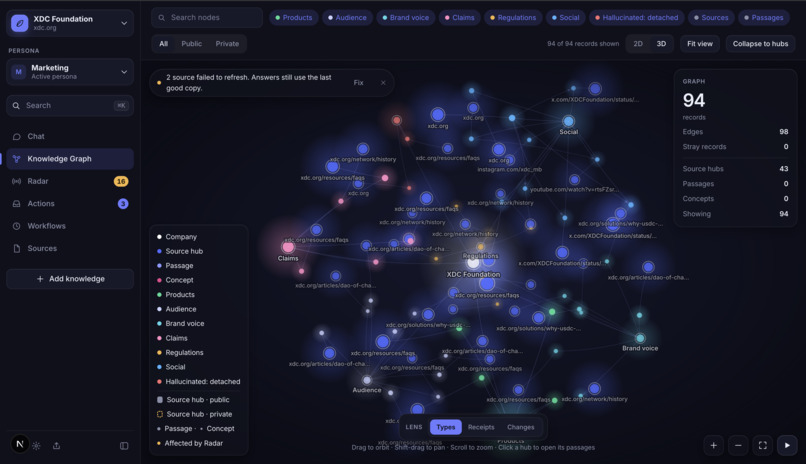
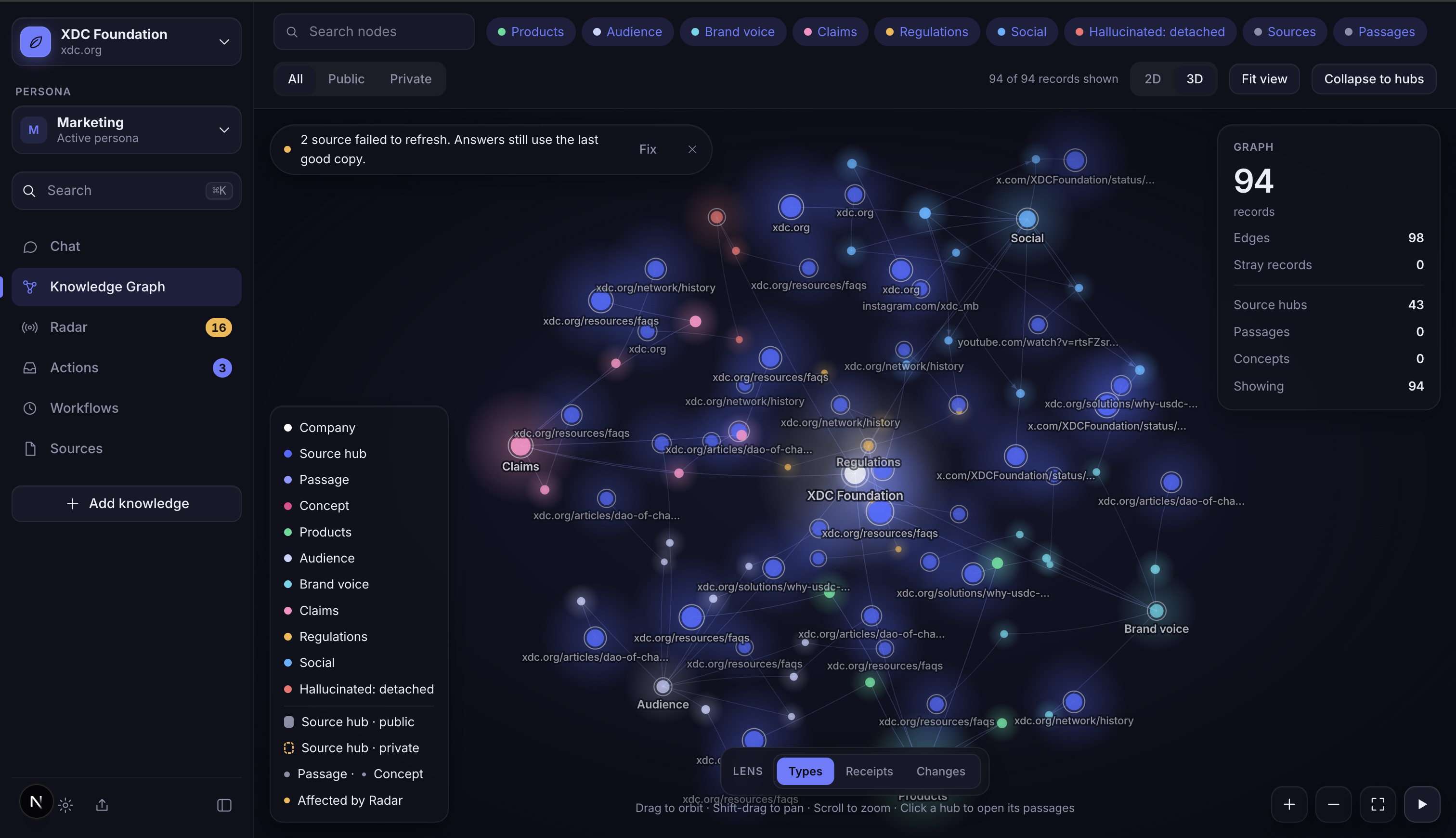
Knowledge Graph
-
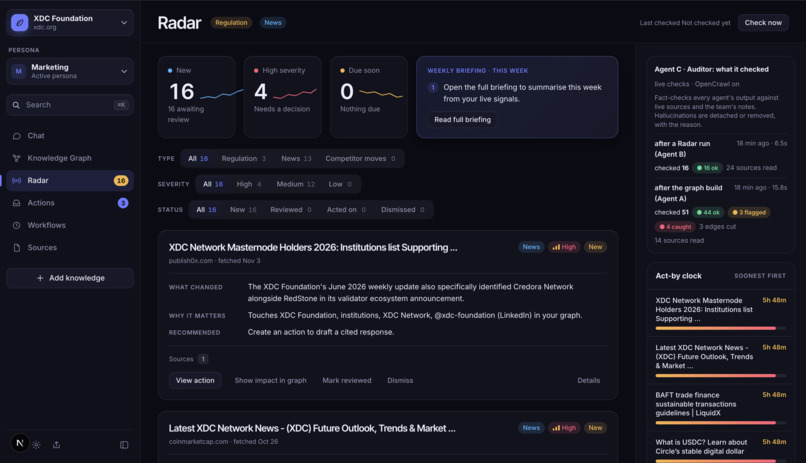
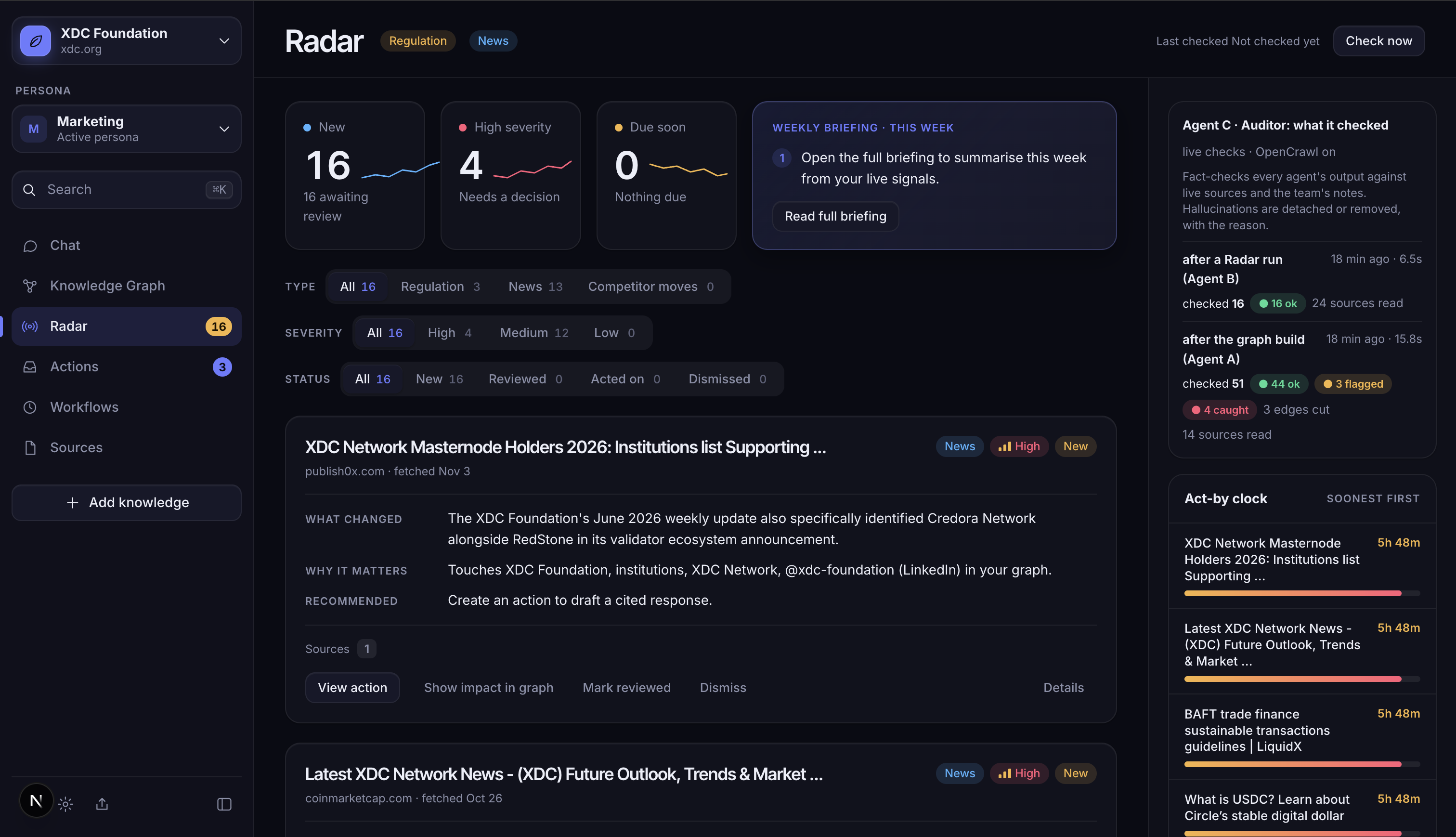
Radar
-
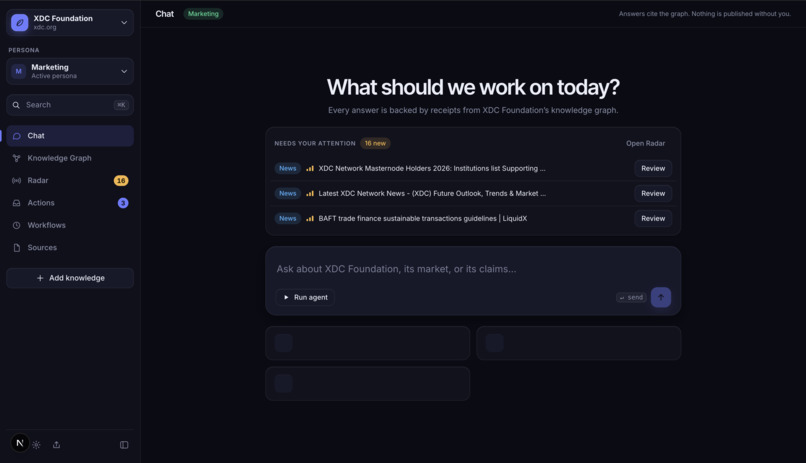
Main Dashboard
-
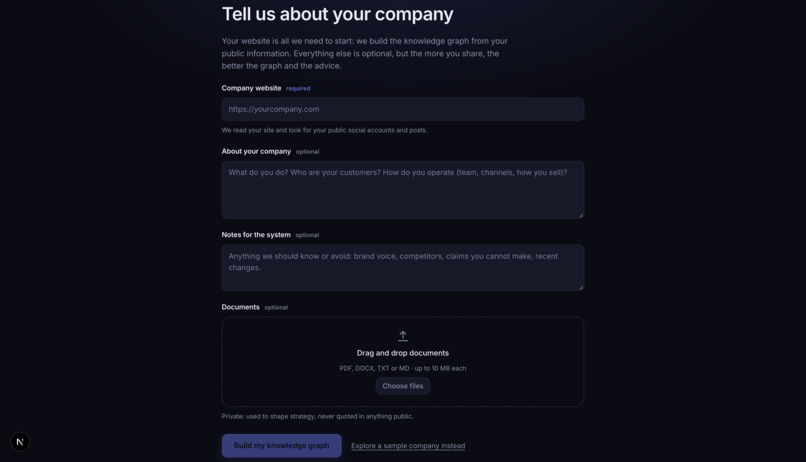
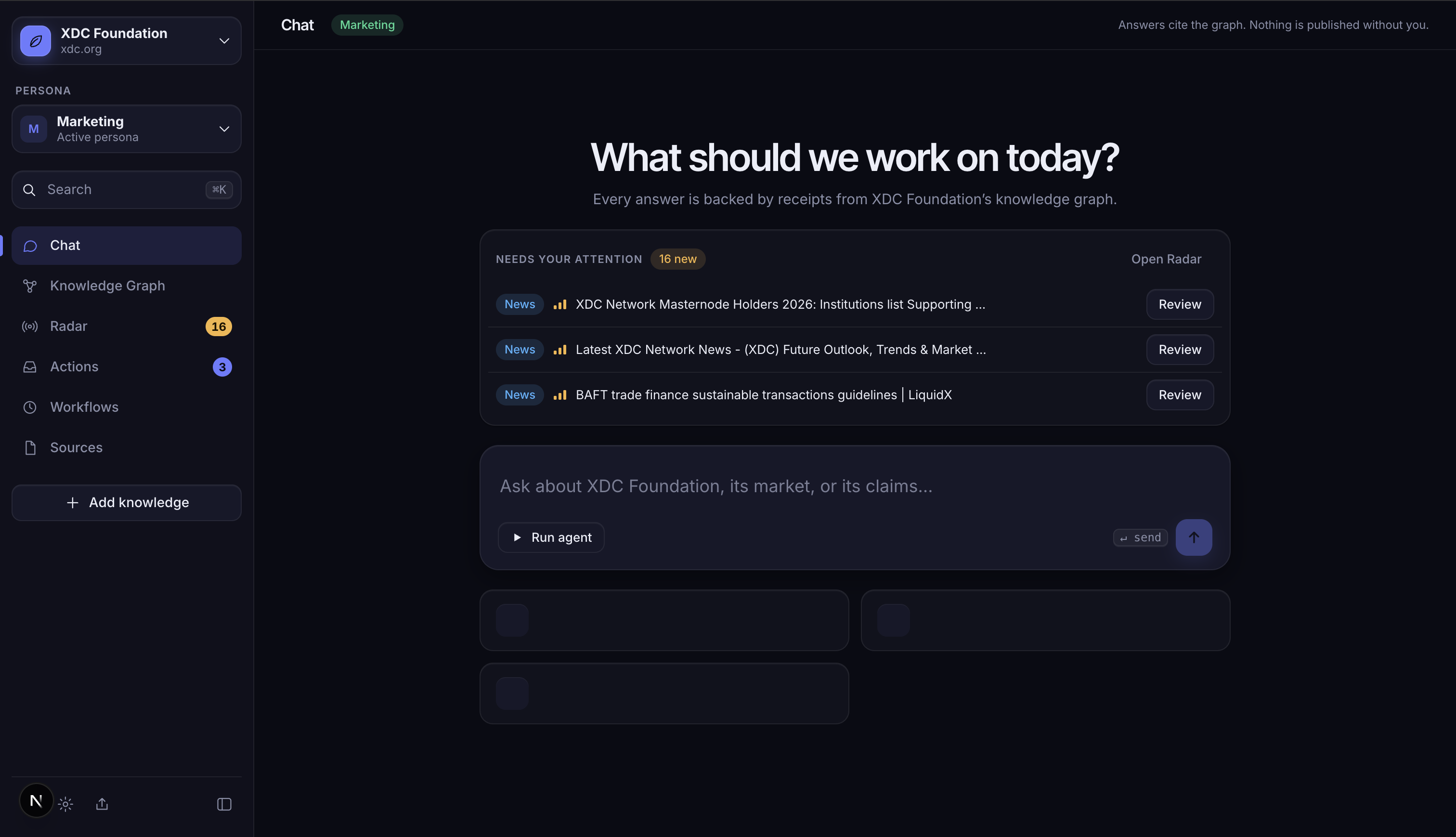
Home Page
-
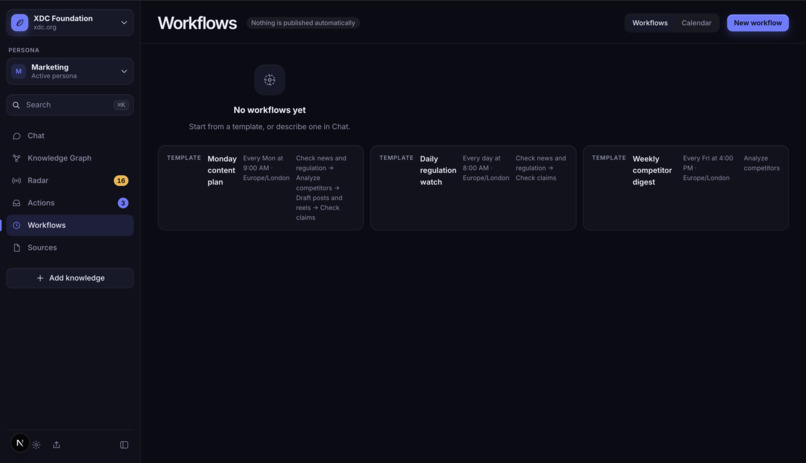
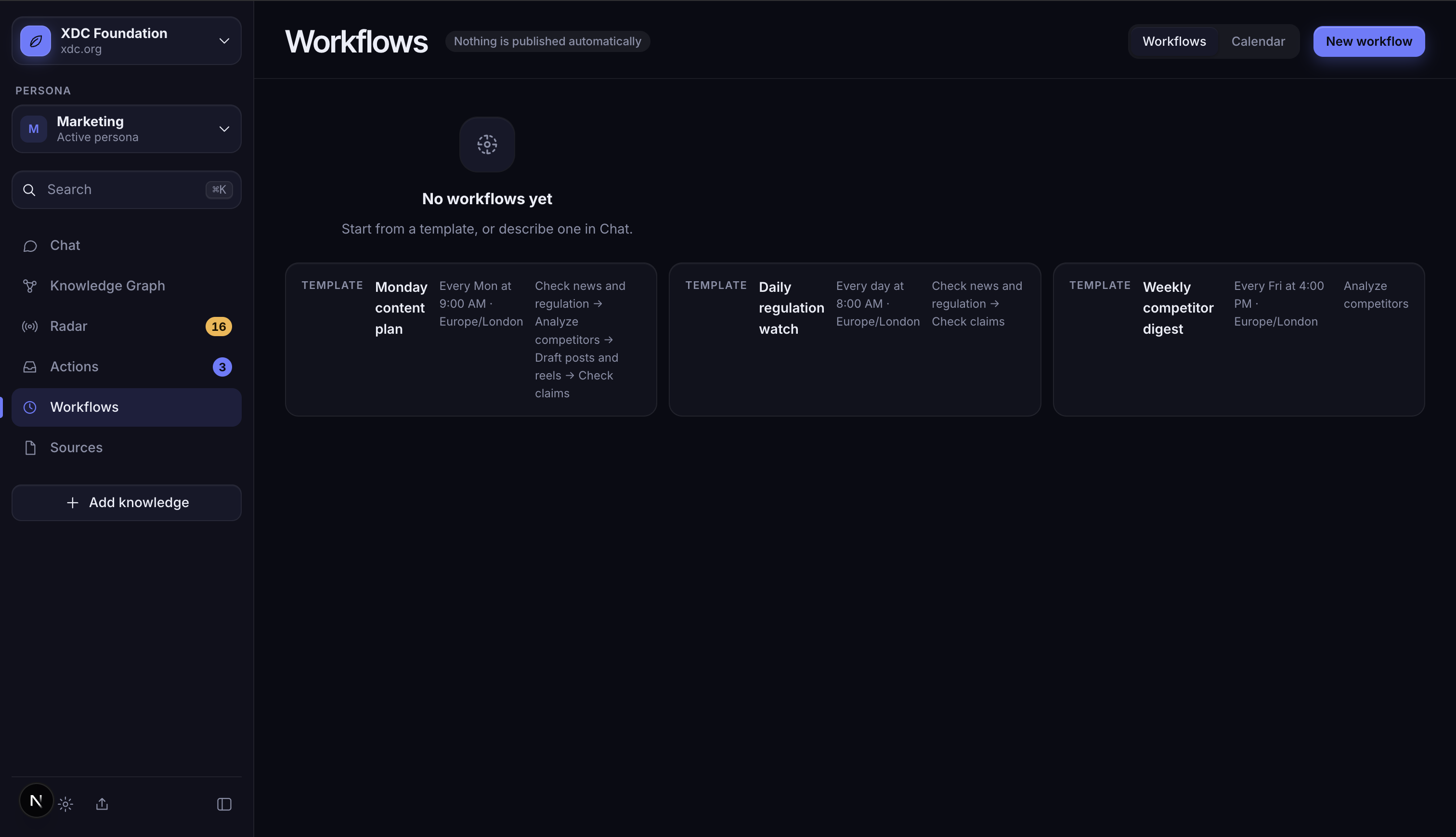
Custom Workflows
Inspiration
Ask an AI about your company and it answers with total confidence. Ask where it got that, and it goes quiet. Meanwhile, inside a real company, no one holds the whole picture. Marketing remembers one version of the story, legal another, sales a third. Everyone works from a half-memory. And the world keeps moving: a new rule lands, a competitor launches, a claim on your website quietly stops being true. We wanted to build one thing that does what no chatbot does: remembers the whole company, and can prove every answer.
What it does
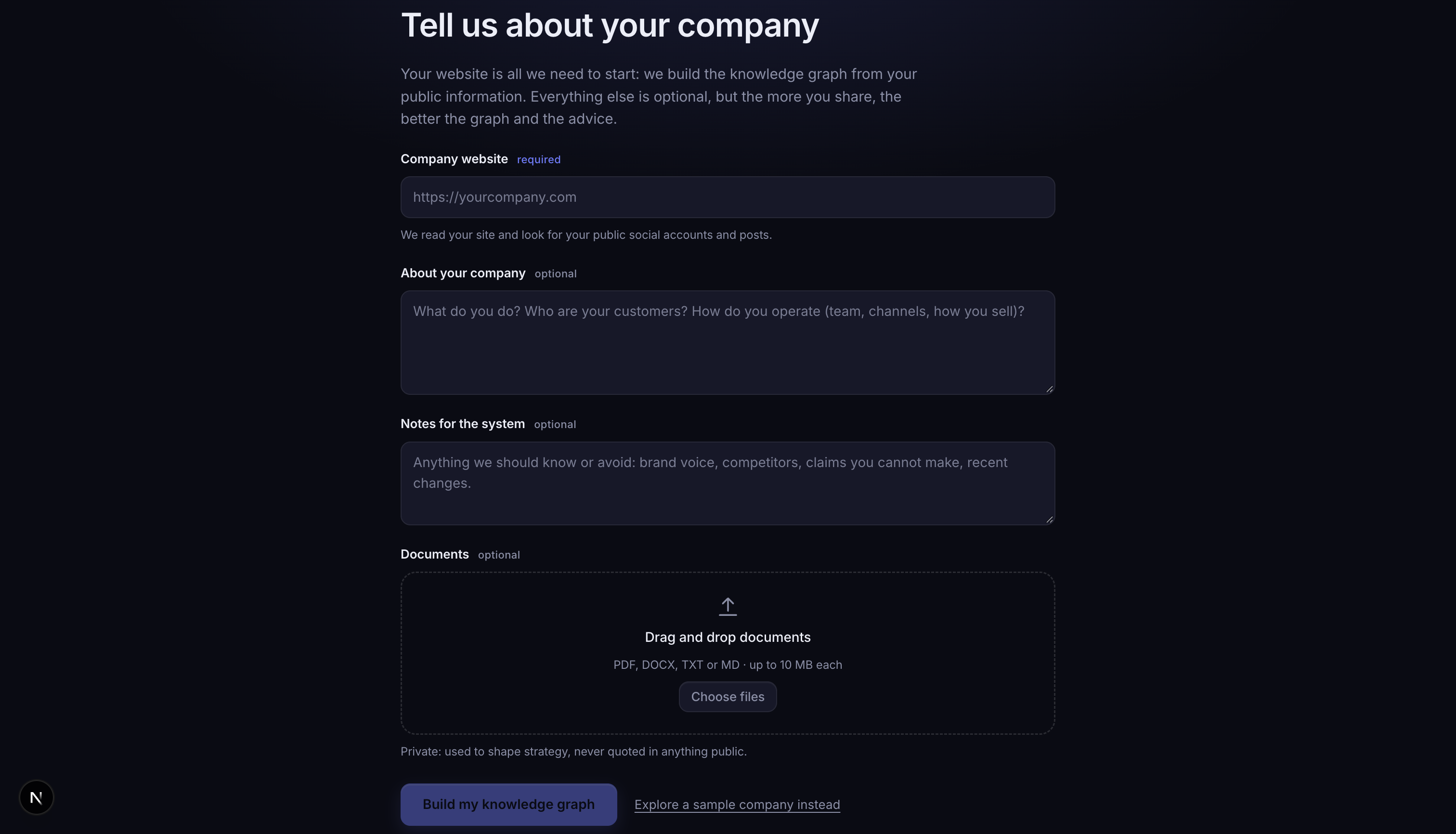
Paste a company's URL. Constellation builds its mind.
Within minutes it reads the website, finds the public social accounts and their recent posts, and works out what the business actually is from its About page. Then it goes looking: who its competitors are, and which regulations govern its industry. Every discovery lands in a living 3D knowledge graph, a night sky of facts, and every star carries the source it came from. Then you can use it:
- Ask it anything: Answers come with numbered citations that open the exact source. If the graph doesn't know, it says "not in the graph yet" instead of guessing.
- Let it watch the world: The Radar tracks live news and regulation that touch your company, and checks what your team's saved memory already says about each item.
- Let it catch lies: Our Auditor fact-checks the graph and flags invented facts, such as a lookalike social account. It keeps them as proof, cut off from everything else.
- Teach it privately: Upload a PDF and it joins the graph as private knowledge, used to answer you and never quoted in public.
- Stay in control: Right-click any node or line to detach it (it stays visible but the AI stops using it) or delete it. Every suggested action waits for a human to approve it, and nothing is ever published on its own.
Today the first role built on top is marketing. But the map belongs to the whole company, and legal, sales and ops each need the same truth. That's where this goes.
How we built it
The rule we built around: code decides what is true; the AI only reads and writes. A model can't talk its way past a rule written in Python.
- Provenance in code. The language model proposes entities from crawled pages, but a fact is kept only if its source URL exactly matches a page we showed the model. No source, no node.
- Chat as a small LangGraph. retrieve → draft → verify → answer or gap. Retrieval is deterministic code. The model drafts. Then code throws away any paragraph without a valid citation.
- Theme-first discovery. A model reads the About page and writes a structured Theme. Live You.com searches then find sourced competitors and regulations, with the same source check.
- Fresh, real data. You.com's Search and Contents APIs power the crawl, social discovery and live signals. The model is NVIDIA's Nemotron, called through a retrying LangGraph wrapper.
- An Auditor that runs by itself. After every build, every Radar run and every drafted action, it re-checks the data against live web evidence and removes or detaches what fails, before anything else builds on it.
- Team memory as a witness (OpenCrawl). Fact-checks also consult your team's saved notes: "that account is a fan page", "we discontinued that product", "never say clinically proven". The web knows what's public; the team knows what's true about itself. A note counts only if it names the exact thing, and it never overrules the company's live site. Only saved memories and documents are searched, never raw transcripts. We keep pointers, not note text, and a slow lookup is just "no opinion", so it can't block a check.
- Persistent memory. Supabase Postgres holds the graph, chats and approvals, and a private storage bucket holds uploaded documents.
- A graph you can feel. A custom 3D canvas graph in Next.js and React, with hover, right-click editing and cited chat beside it.
Challenges we ran into
- Free-tier limits. Our first model provider capped us at about 20 requests a minute. We switched to NVIDIA's hosted models. One model never answered at all, so we added timeouts, retries and a fallback.
- The web fights back. Instagram, TikTok and Facebook hide their profiles behind login walls. We found public posts through search instead, and the graph is honest about which text it could read in full.
- The AI sometimes gives up. With many sources, the model would quietly return nothing. We added a nudge, then a retry with fewer sources, and a real "not in the graph" only after that. ## Accomplishments that we're proud of
What we learned
- A real, cited graph of a company from a single URL, built live.
- Answers where every sentence traces to a source, or the system says it doesn't know.
- Hallucinations that are caught, kept as proof, and excluded from every agent.
- Hundreds of automated tests, plus a design where a human always has the last word. ## What's next for Constellation More roles on the same map (legal, sales, ops), whole-website passages for deeper answers, richer sources such as YouTube and Reddit, and real accounts for teams.
Built With
- fastapi
- langchain
- langgraph
- next.js
- nvidia-nemotron
- nvidia-nim
- opencrawl
- postgresql
- pydantic
- python
- react
- supabase
- typescript
- you.com-api
