-
-
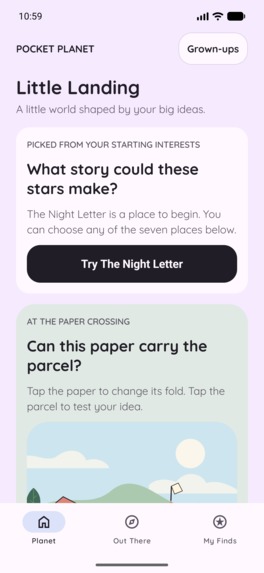
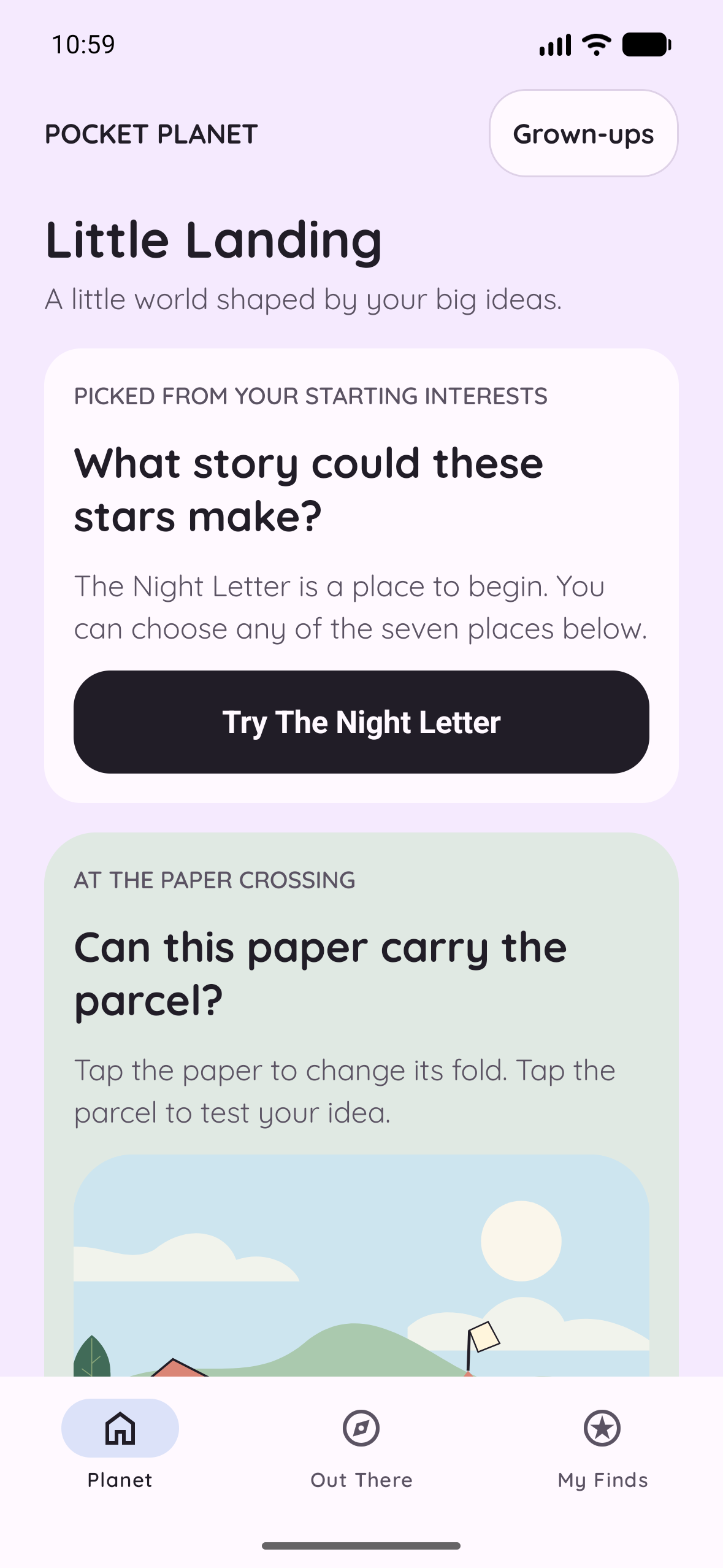
Home Screen
-
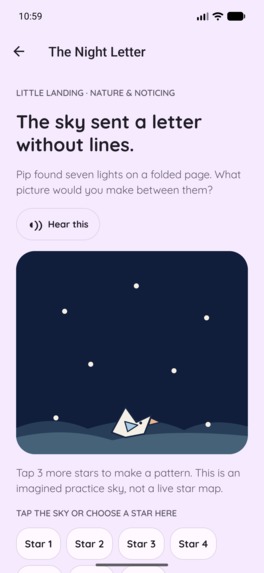
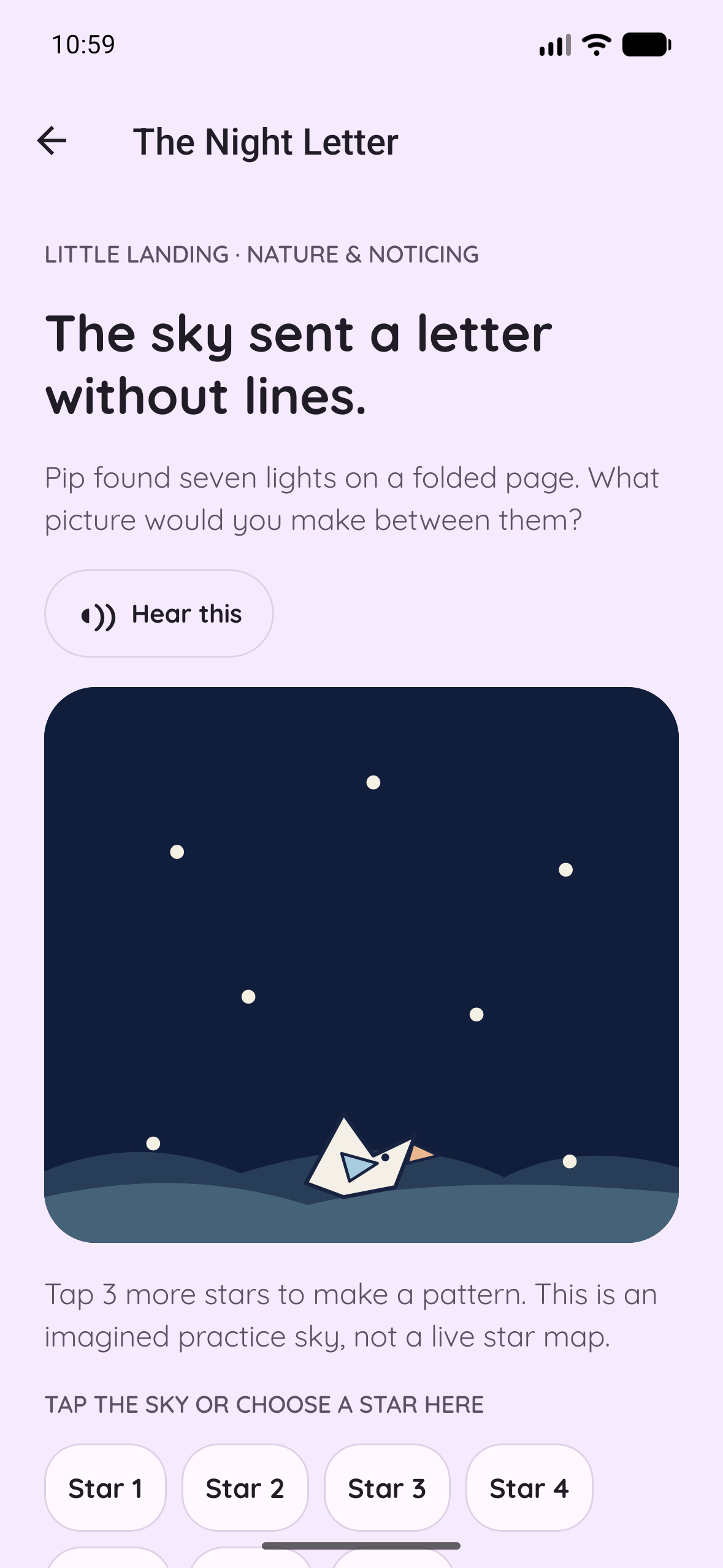
Night Sky Exercise -1
-
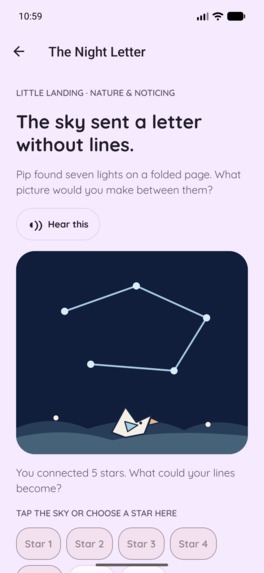
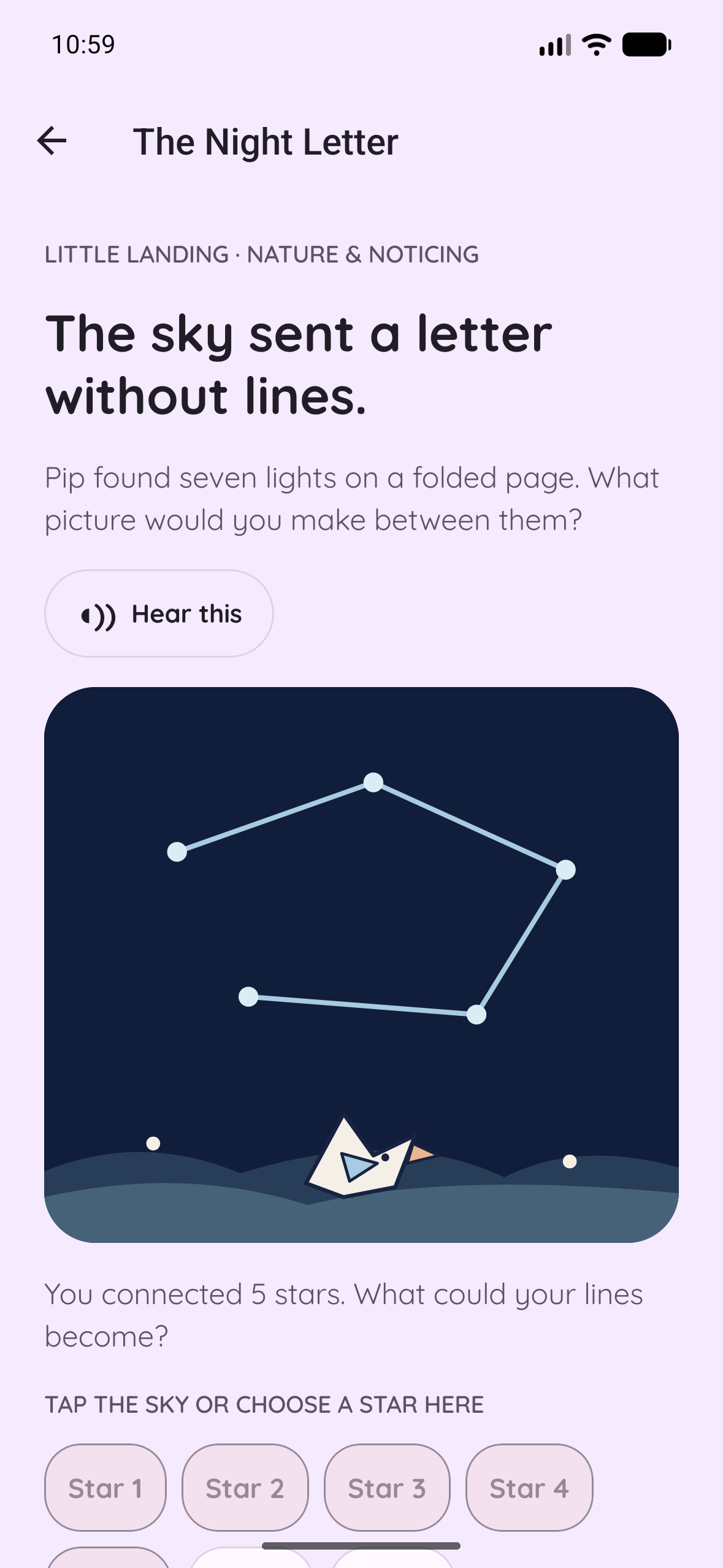
Night Sky Exercise -2
-
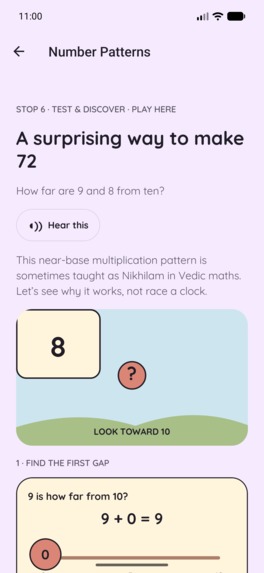
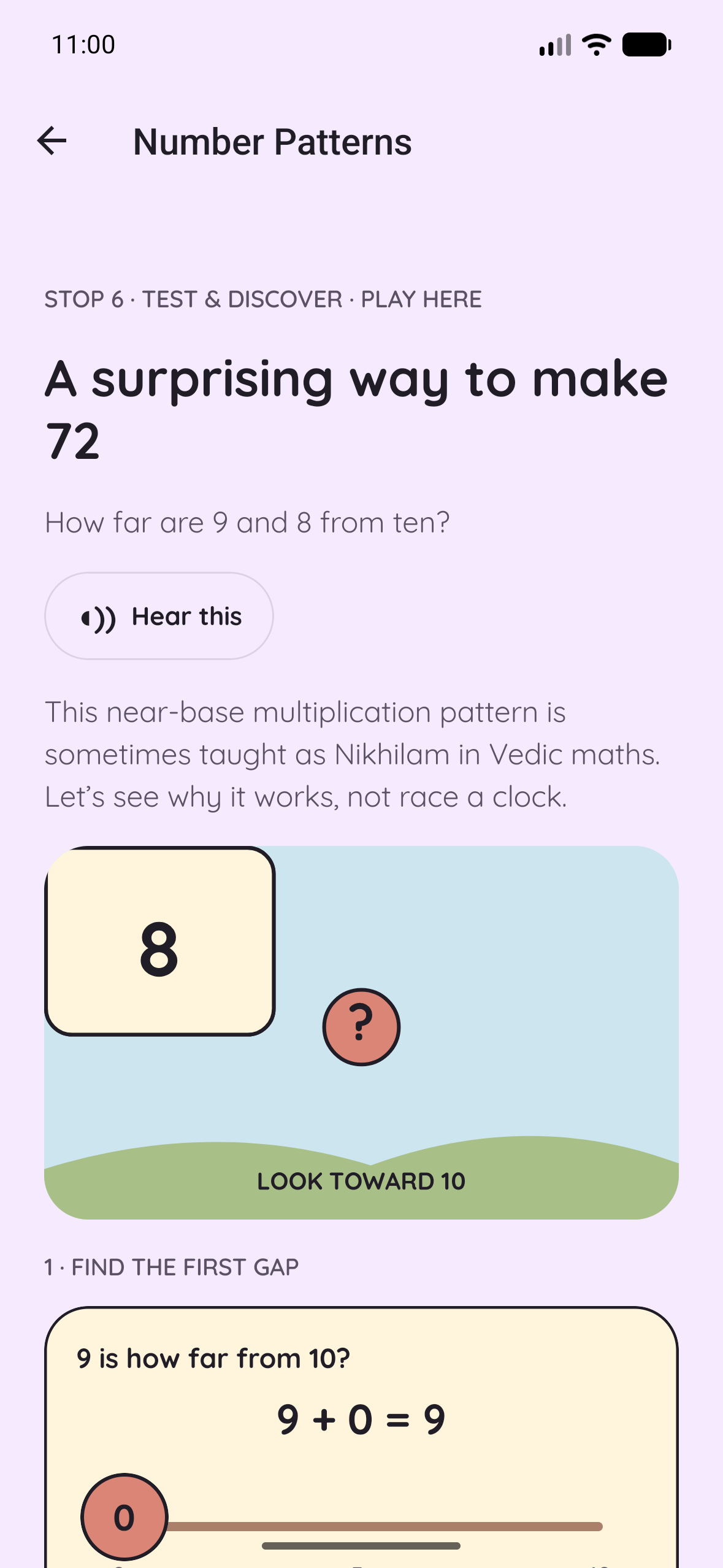
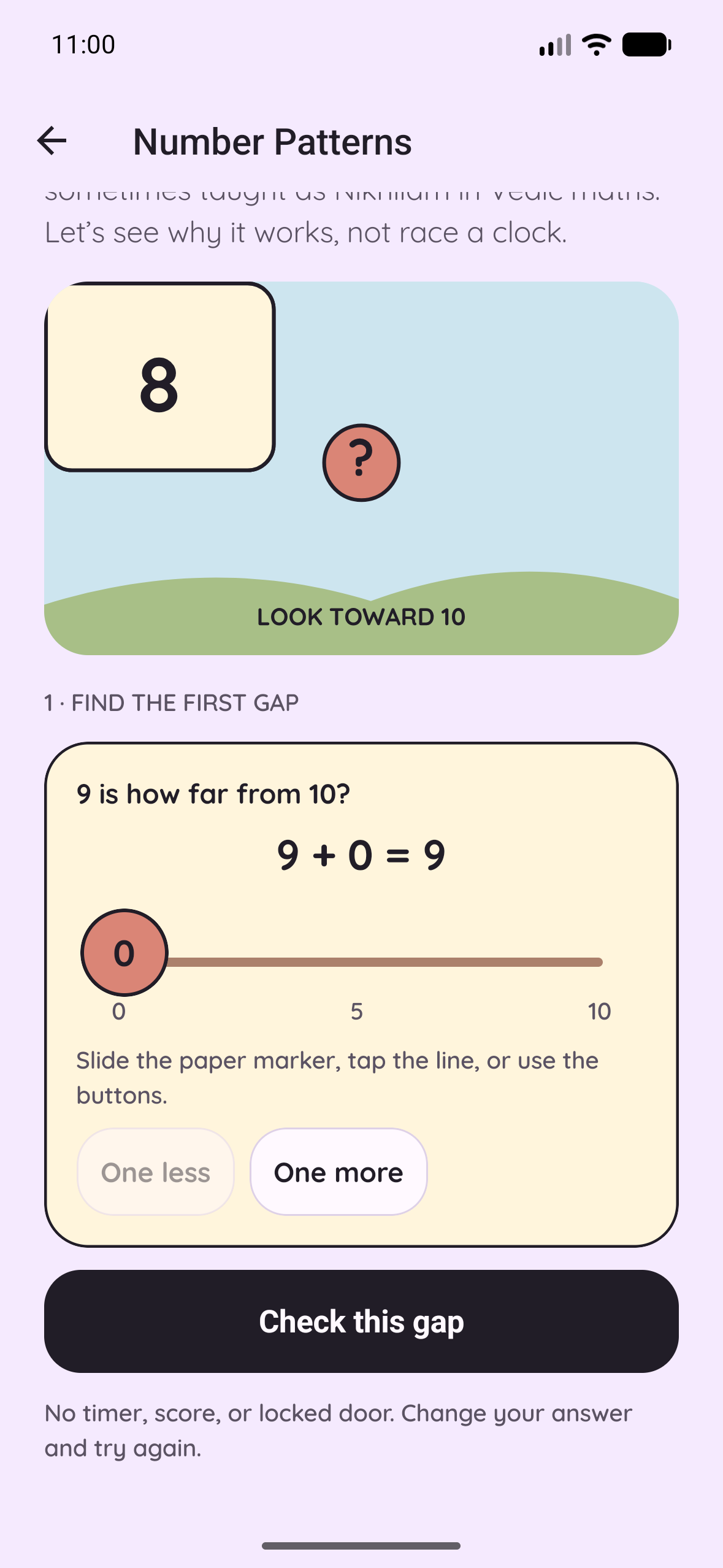
Vedic Maths -1
-
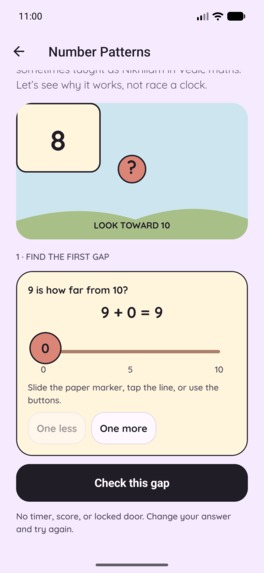
Vedic Maths -2
-
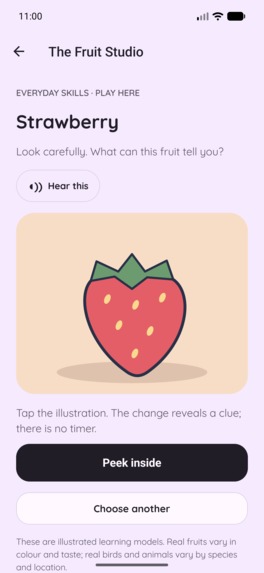
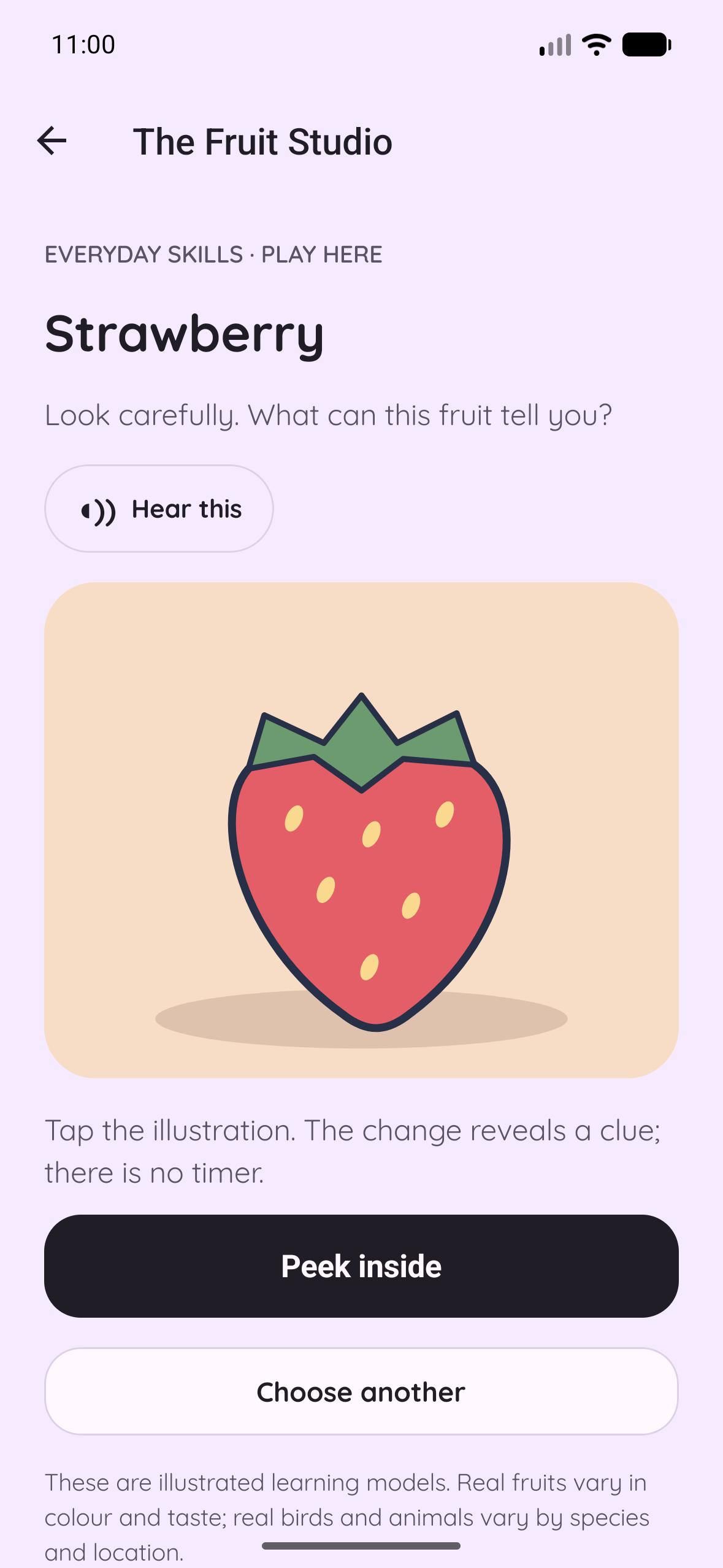
Fruits Exercise -1
-
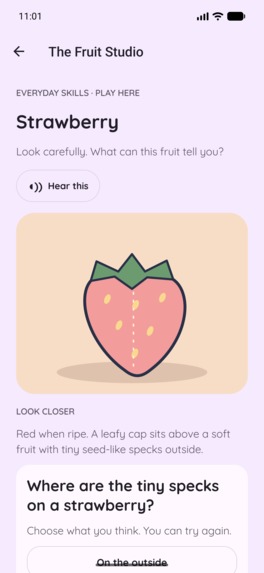
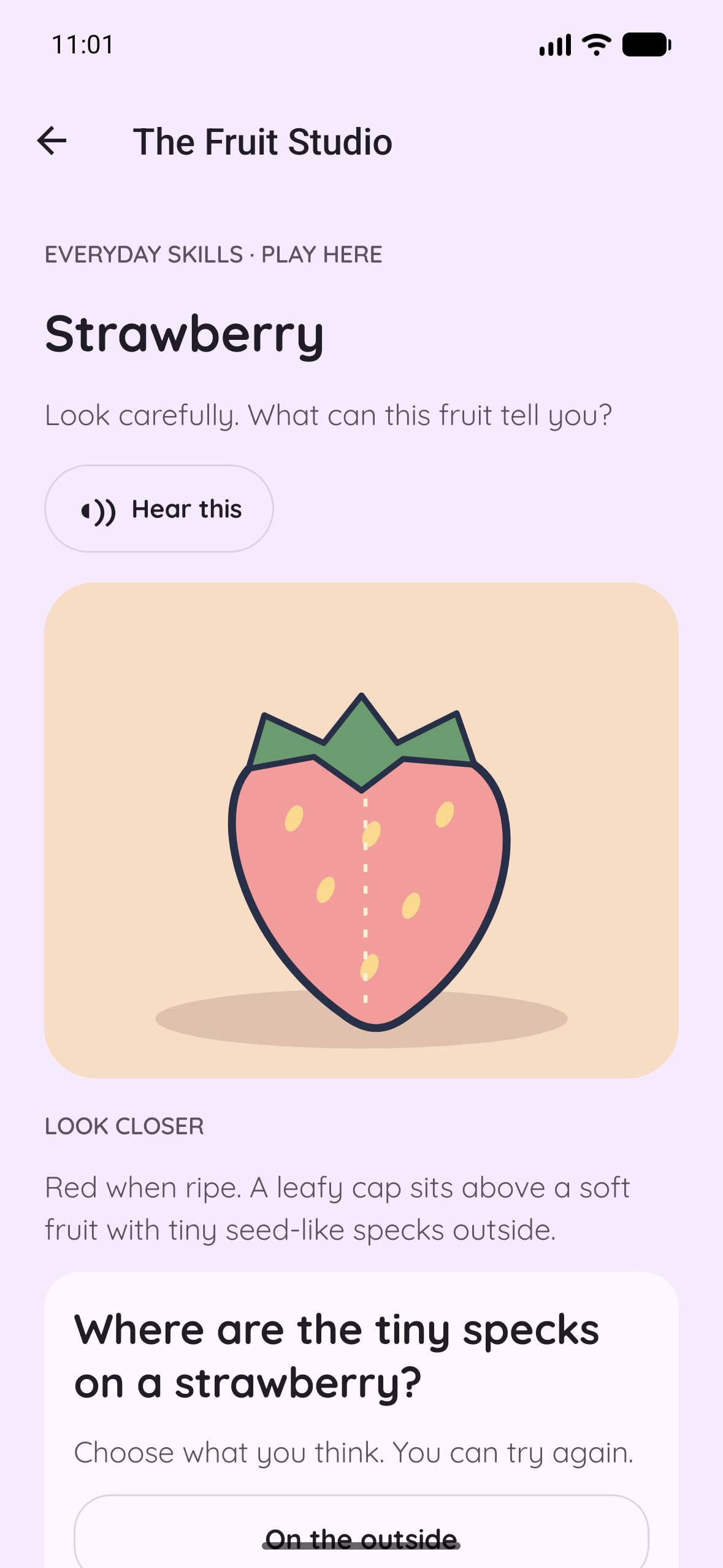
Fruits Exercise -2
-
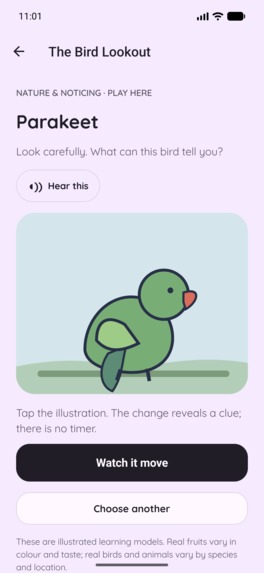
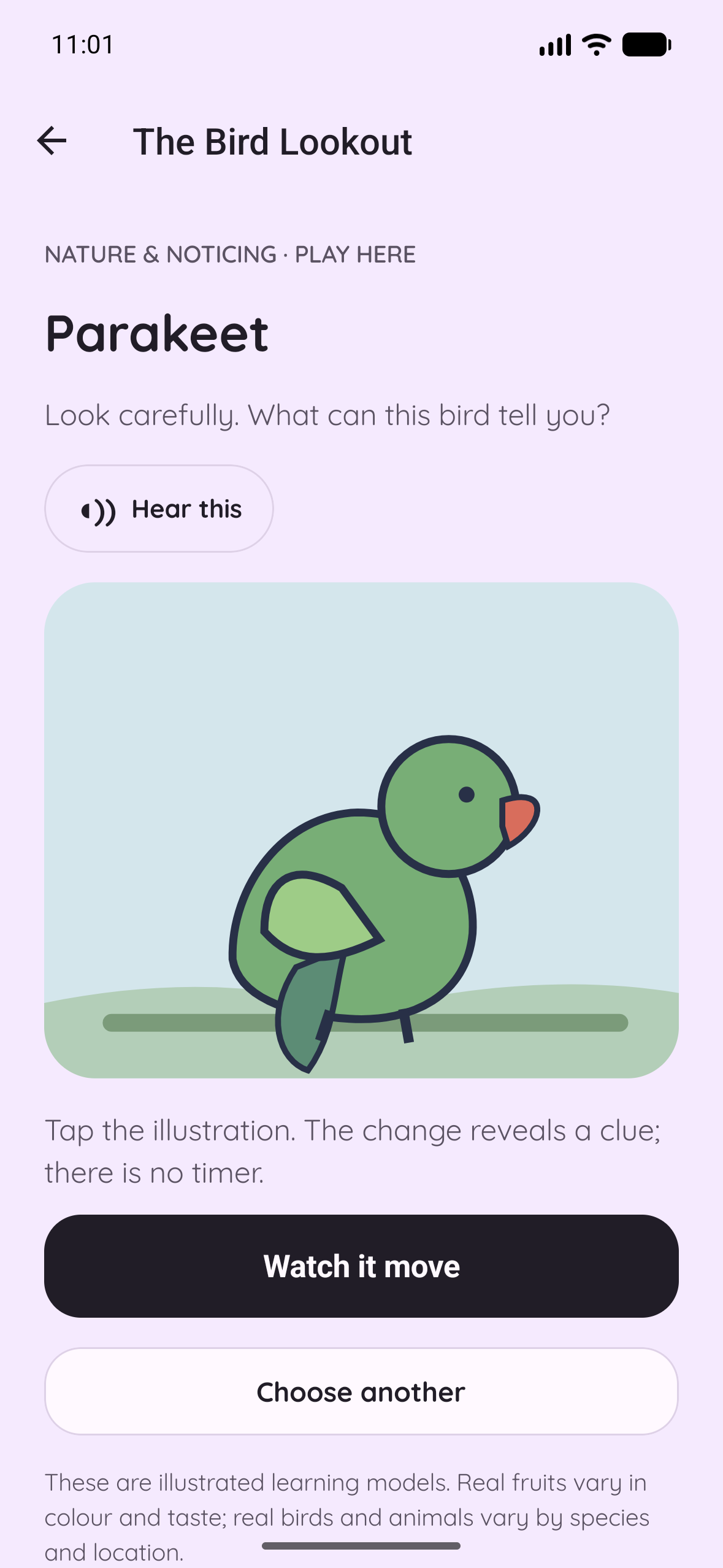
Birds Exercise -1
-
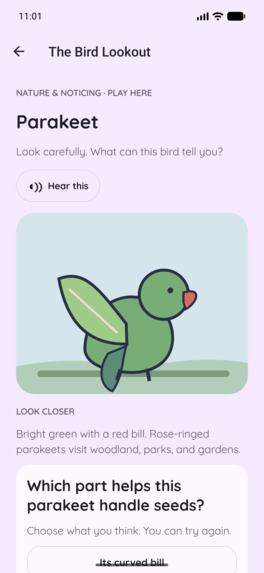
Birds Exercise -2
-
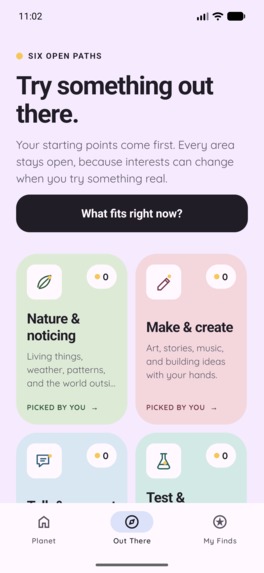
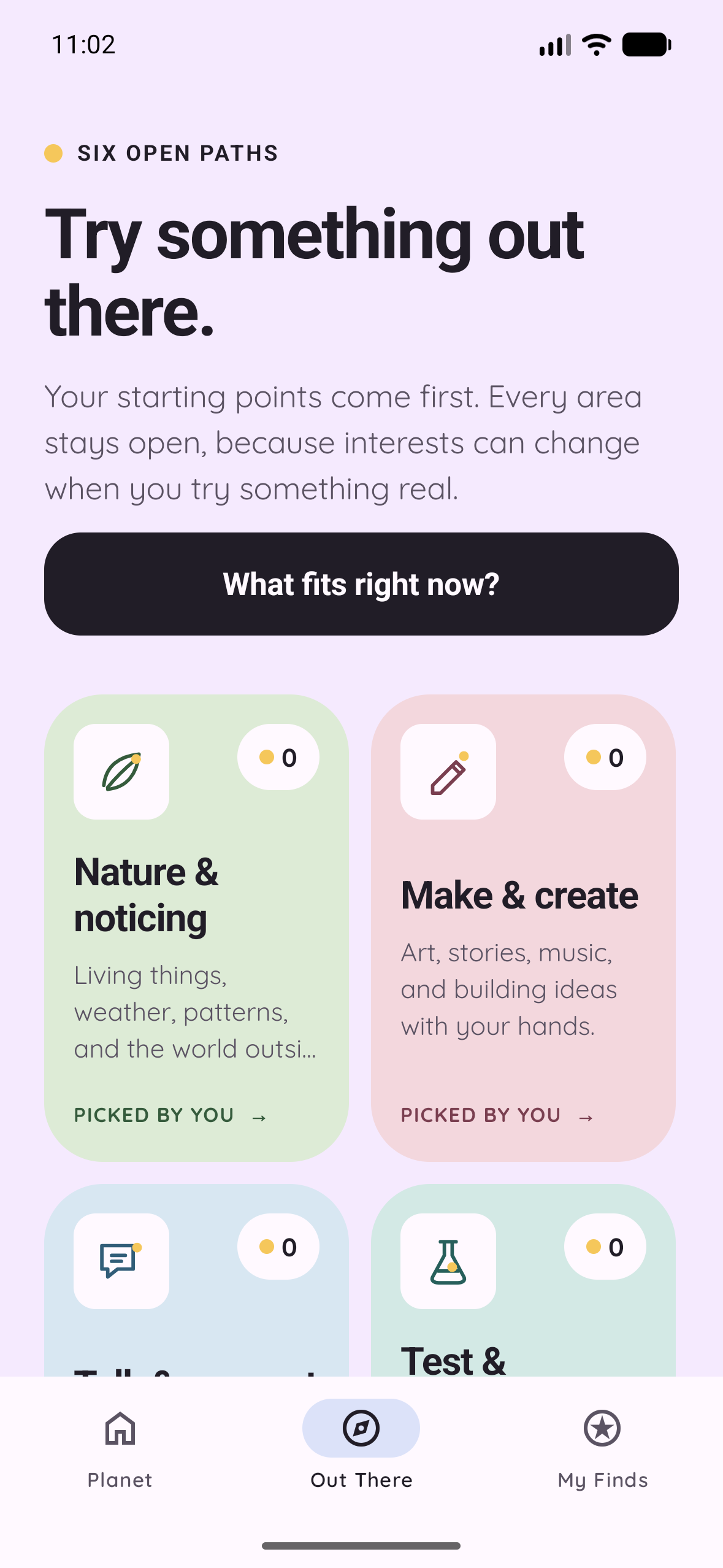
Try Out There Screen -1
-
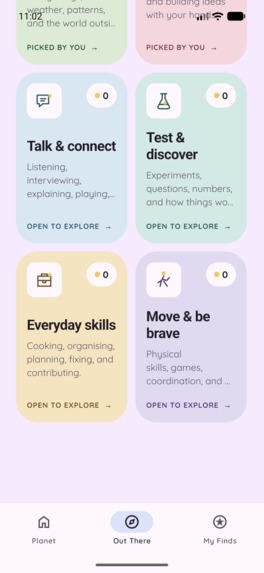
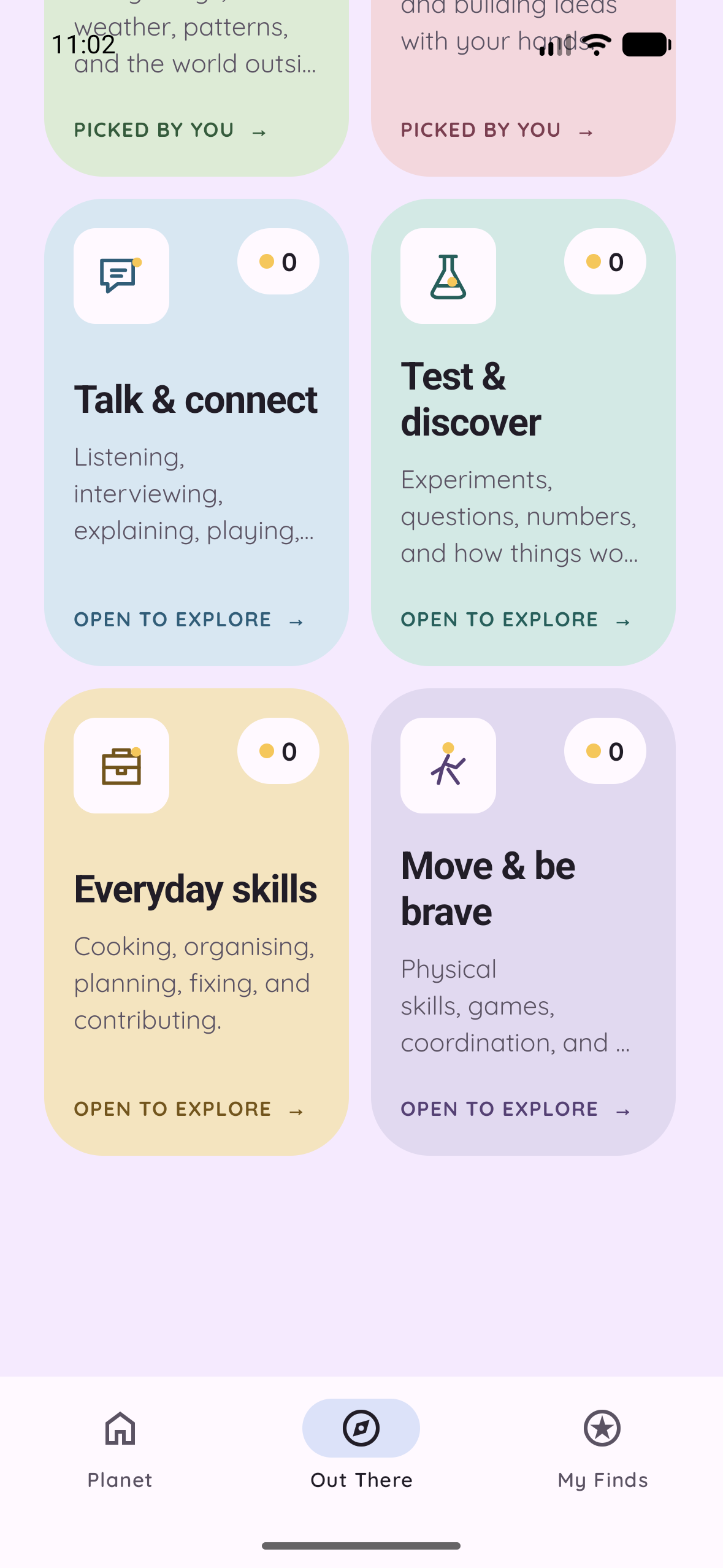
Try Out There Screen -2
-
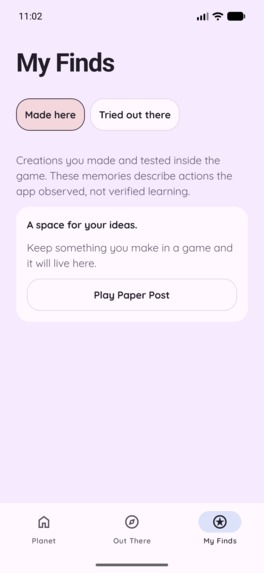
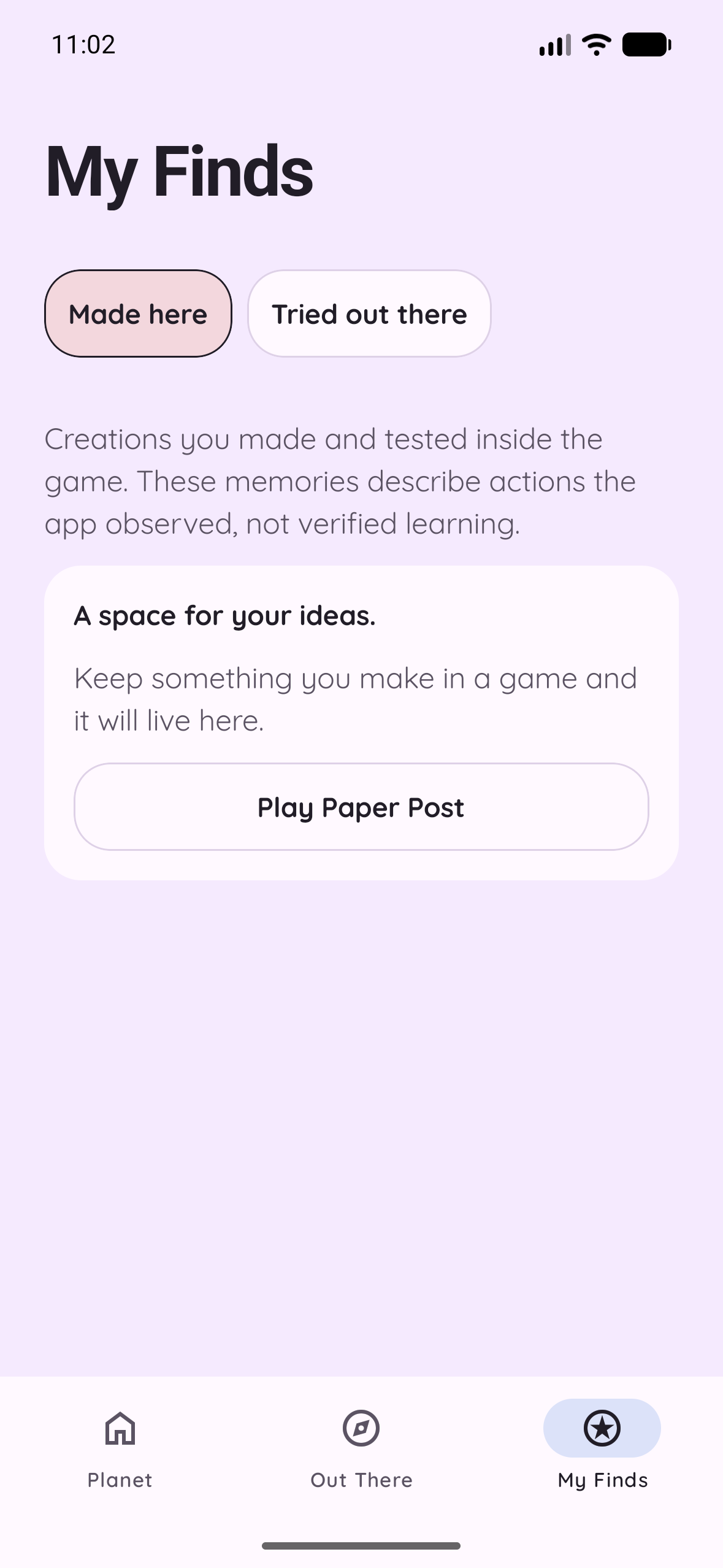
Constellation My Finds -1
-

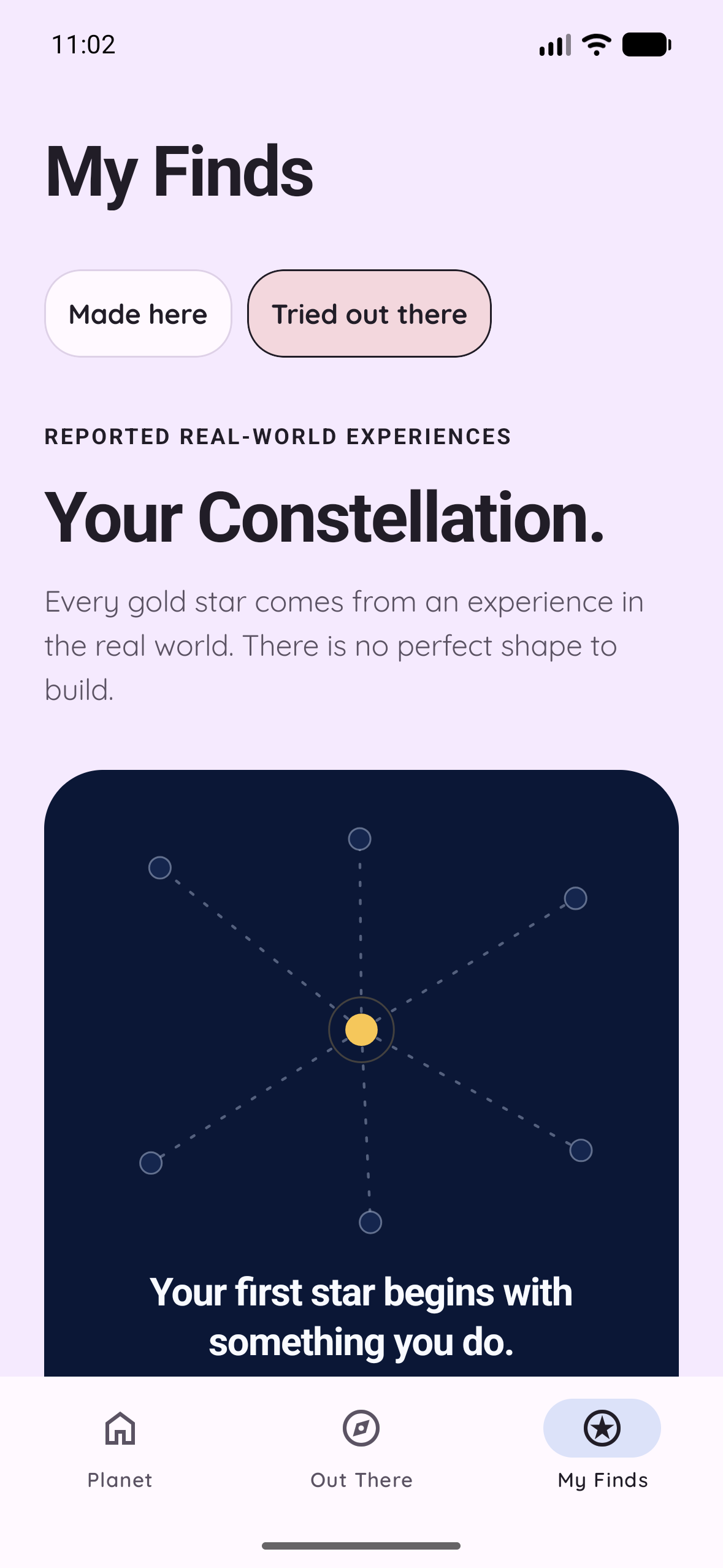
Constellation My Finds -2
-

icon


Inspiration
Children have so much to watch—but childhood is also for making things, asking questions, noticing the world, and trying ideas.
We remembered looking at the night sky with our families, hearing stories about stars, and discovering something through a simple conversation. We wanted to help families create more of those moments.
That inspired Constellation: a little world where digital play becomes a starting point for real-world curiosity.
Our guiding idea is simple:
Most technology competes for children’s attention. Constellation competes for their curiosity.
What it does
Constellation connects two ways to explore:
- Planet — play here: children manipulate objects, test ideas, and create things through interactive exercises.
- Out There — try it nearby: children take related ideas into the real world, with preparation and safety guidance.
- My Finds — remember discoveries: children revisit digital creations and reported real-world experiences, with their origins clearly distinguished.
Activities include experimenting with paper bridges, connecting imagined stars in The Night Letter, exploring number patterns through Vedic Maths, and investigating illustrated fruits, birds, and forest animals.
The real-world library spans six curiosity areas: Nature & Noticing, Make & Create, Talk & Connect, Test & Discover, Everyday Skills, and Move & Be Brave.
Guardian setup captures a nickname, age band, interests, support preferences, and allowed places. These choices help shape age-appropriate experiences for children ages 6–12.
Completed real-world missions become gold stars. These represent what a child reports trying—not grades, rankings, or verified mastery.
A protected grown-up area manages Constellation Family, powered by RevenueCat. Our Next Gen demonstration uses RevenueCat Test Store for simulated purchases without charging users.
How we built it
We built Constellation with Expo, React Native, TypeScript, and Expo Router, using SQLite for local persistence.
A structured experience catalog separates activity content from eligibility rules, recommendations, and progress. Real-world suggestions consider age, place, companions, materials, and other safety conditions before ranking experiences.
Interactive scenes use SVG artwork, touch controls, and animation. We carried a consistent visual language across the app: lavender backgrounds, Quicksand typography, rounded surfaces, near-black outlines, and purposeful color accents.
We integrated RevenueCat for paywalls, purchases, entitlement checking, restoration, and membership management. Purchasing uses an anonymous identity; we do not attach child names, mission answers, or progress as purchase attributes.
We also created a standalone Android judge build that embeds the app and supports RevenueCat’s Test Store configuration without requiring Expo Go or a development server.
Challenges we ran into
Our biggest challenge was making the experience feel like play, rather than a list of activities.
Early versions relied too heavily on descriptions, choices, and timers. We had to rethink the interaction: what can a child change, what happens because of that change, and why would they want to try again?
Touch behavior was another challenge. Drawing, sliders, and movement controls needed to work comfortably on a phone—not just look correct on a desktop preview.
We also had to distinguish digital simulation from real-world observation. A simulated bridge is not an engineering prediction, and finishing an activity does not prove that a child has mastered a concept.
Finally, Android packaging and RevenueCat Test Store compatibility required careful debugging so judges could install a standalone build and explore membership functionality.
Accomplishments that we're proud of
We’re proud of connecting playful screen interactions to concrete things children can do beyond the screen.
We established a consistent identity across games, field guides, real-world missions, and learning memories. We also built local persistence, resumable activity flows, and a clear separation between child exploration and grown-up purchasing.
Our automated checks cover important behavior, including eligibility, sanitized learning evidence, persistence, and duplicate-completion protection.
Most importantly, Constellation does not depend on streaks, rankings, advertising, or an open-ended AI chat to give children a reason to explore.
What we learned
We learned that attractive artwork alone does not make an engaging learning experience. Children need a clear invitation, a meaningful action, and a response they can understand.
We learned to ask a stronger design question:
What can the child discover by doing this—not merely by reading it?
We also learned that parent trust comes from honest boundaries: explaining what stays local, separating observed digital actions from reported physical experiences, and avoiding claims of mastery.
Testing and iteration remain essential. Technical checks can verify behavior, but observing children and families is necessary to understand whether the experience is clear, enjoyable, and useful.
What's next for Constellation
Our next priority is testing with families across the three age bands and improving the moments where children hesitate or need help.
We want to refine touch interactions, expand accessible voice guidance, strengthen content and safety review, and give every exercise a clearer purpose and satisfying outcome.
We also plan to expand the living world with more connected discoveries—while keeping purchases guardian-only and preserving the distinction between playing here and trying something out there.
Our ambition is not to make children stay longer.
It is to help them leave with an idea worth trying.
Built With
- expo-router
- expo.io
- figma
- react-native
- revenuecat
- sqlite
- typescript


Log in or sign up for Devpost to join the conversation.